Tag: ATUM

  • (355690) ATUM Convertible Bond Issuance: A 2024 Investor’s Guide to Stock Price Impact & Risks

    (355690) ATUM Convertible Bond Issuance: A 2024 Investor’s Guide to Stock Price Impact & Risks

    The recent announcement regarding the ATUM convertible bond issuance has sent ripples through the investment community. ATUM CO., LTD. (에이텀) has decided to raise ₩2 billion through private placement convertible bonds (CBs), a strategic move that presents both significant opportunities and potential risks for current and prospective shareholders. While fundraising is often a positive signal for future growth, the mechanics of a CB issuance, particularly the risk of equity dilution, demand a closer look.

    This comprehensive guide will dissect the ATUM CB issuance, analyzing its potential impact on the ATUM stock price and overall corporate value. We’ll explore the strategic rationale behind this move, weigh the pros and cons for investors, and provide a clear action plan for navigating this complex financial event. Whether you’re a seasoned investor or new to ATUM, this analysis will equip you with the knowledge to make informed decisions.

    The Details: ATUM’s ₩2 Billion Convertible Bond Issuance

    On October 17, 2025, ATUM CO., LTD. officially announced its plan to issue ₩2 billion in private placement convertible bonds. This method of corporate fundraising is a hybrid security, starting as a bond and offering the holder the option to convert it into company stock later. The full details can be reviewed in the Official Disclosure (DART Report). Here are the key terms:

    • Total Issuance Amount: ₩2 billion
    • Issuance Method: Private placement to NH Investment & Securities (as trustee)
    • Conversion Price: ₩9,501 per share
    • Coupon Rate (Interest): 0.0%
    • Maturity Yield: 2.0%
    • Payment Date: October 27, 2025
    • Conversion Period: October 27, 2026 – September 27, 2030

    Essentially, ATUM is securing capital now without any immediate interest payments. The investor, NH Investment & Securities, is betting on the future growth of the ATUM stock price, hoping to convert their bonds into shares at a profit after October 2026. For a deeper dive into these financial instruments, Investopedia provides an excellent overview of convertible bonds.

    Strategic Rationale: Why Now?

    The primary motivation behind the ATUM CB issuance is to secure vital operating funds to fuel growth. This ₩2 billion infusion can be used for research and development, market expansion, or strategic acquisitions. The 0% coupon rate is exceptionally favorable, as it allows ATUM to access this capital without the financial drag of interest expenses that would come with a traditional loan.

    By opting for a convertible bond, ATUM signals confidence in its future stock performance. The structure incentivizes the bondholder to become a shareholder, aligning their interests with the company’s long-term success.

    Investor Impact Analysis: The Bull vs. The Bear Case

    The Bull Case (Potential Positives)

    • Fuel for Growth: The capital injection provides the resources needed to execute growth strategies, potentially leading to increased revenue and profitability down the line.
    • Institutional Vote of Confidence: The participation of a reputable firm like NH Investment & Securities suggests they have performed due diligence and see significant upside potential in ATUM’s future.
    • Minimal Financial Strain: A 0% coupon rate means the company avoids immediate interest costs, preserving cash flow for core operations.

    The Bear Case (Potential Negatives)

    • Equity Dilution Risk: This is the primary concern. If the bonds are converted, the total number of outstanding shares will increase. This means each existing share represents a smaller percentage of the company, potentially reducing earnings per share (EPS).
    • Future Selling Pressure (Overhang): The market knows that a large block of shares could be created and potentially sold after the conversion period begins. This ‘overhang’ can sometimes suppress the stock price as investors anticipate future supply.
    • Information Asymmetry: Private placements are negotiated directly with specific investors, meaning the public may not have access to all the background details of the deal.

    Investor Action Plan: How to Respond

    Given the dual nature of this ATUM convertible bond news, a measured and informed approach is critical. Short-term market reactions can be volatile. Prudent investors should focus on the following strategic actions:

    • Monitor Fund Utilization: The key question is: how will ATUM use the ₩2 billion? Look for company announcements, press releases, and quarterly reports that detail the specific investments made with these funds. Successful deployment is the ultimate validation of this strategy.
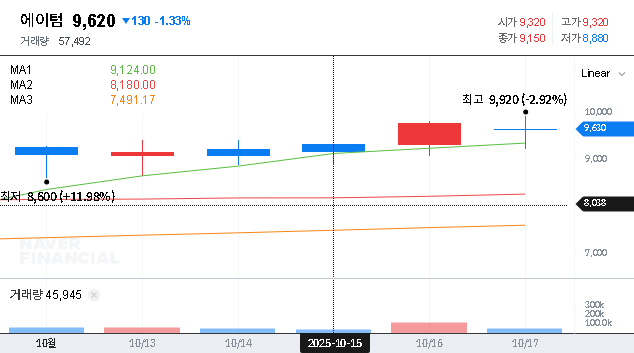
    • Track Key Metrics: Keep an eye on the ATUM stock price relative to the ₩9,501 conversion price. A stock price well above this level increases the likelihood of conversion and dilution. Also, monitor trading volume for signs of accumulation or distribution.
    • Focus on Fundamentals: Ultimately, the long-term value of your investment depends on the company’s performance. For guidance, you might want to review our guide on How to Analyze Company Fundamentals. Is the business growing? Are profit margins improving? These are the questions that matter more than the short-term noise of a CB issuance.

    The final verdict on this ATUM CB issuance will be written by the company’s actions over the coming years. By staying informed and focusing on the underlying business value, investors can navigate this period with confidence.

    (355690) ATUM Convertible Bond Issuance: A 2024 Investor's Guide to Stock Price Impact & Risks 관련 이미지
  • (355690) ATUM Convertible Bond: A ₩2B Growth Catalyst or Share Dilution Risk?

    (355690) ATUM Convertible Bond: A ₩2B Growth Catalyst or Share Dilution Risk?

    The recent announcement of the ATUM Convertible Bond issuance has sent ripples through the investment community. ATUM CO., LTD. (에이텀) has decided to raise ₩2 billion through this strategic financial instrument, a move that presents both significant opportunities and potential risks for the company and its shareholders. While convertible bonds can fuel ambitious growth, they inherently carry the risk of ATUM share dilution. This analysis unpacks the details of this corporate financing decision to help investors navigate its implications.

    We will explore the specifics of ATUM’s CB issuance, dissect the strategic reasoning behind it, and weigh the promising upside against the considerable downside of dilution. This deep dive will provide a clear framework for understanding this pivotal moment for ATUM CO., LTD.

    Is this ₩2 billion capital injection the high-octane fuel ATUM needs to accelerate growth, or will the looming threat of share dilution put the brakes on its stock valuation? The answer lies in the details.

    Core Details of the ATUM Convertible Bond Issuance

    On October 17, 2025, ATUM CO., LTD. formally announced its resolution to issue ₩2 billion in Convertible Bonds (CBs) via a private placement. A convertible bond is a type of debt security that the holder can convert into a specified number of the issuing company’s common stock. Here are the crucial terms of this issuance:

    • Total Issuance Amount: ₩2 billion (representing approximately 3.75% of the company’s market capitalization).
    • Issuance Method: Private Placement, targeted at specific institutional investors.
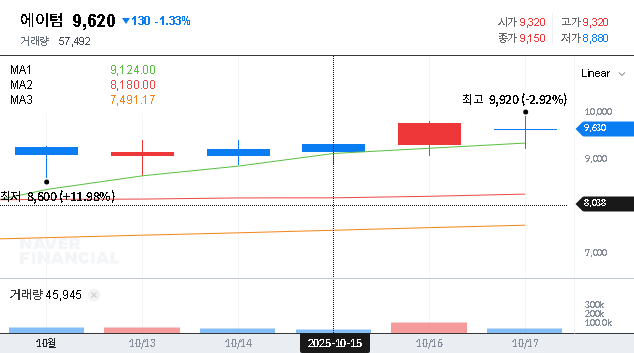
    • Conversion Price: ₩9,501 per share (set closely to the current market price of ₩9,690).
    • Minimum Adjustment Price (Refixing): ₩6,651, the lowest price the conversion can be adjusted to if the stock price falls.
    • Interest Rates: 0% surface interest rate and a 2.0% maturity interest rate, making it a low-cost financing option for ATUM.
    • Official Source: The full details can be reviewed in the Official Disclosure filed with DART.

    Strategic Rationale: Why Raise Funds Now?

    Fueling the Growth Engine

    The primary motivation behind this ATUM Convertible Bond is to secure vital operational and investment capital. The ₩2 billion infusion provides significant financial flexibility, enabling the company to pursue strategic initiatives such as R&D for new technologies, expansion into new markets, or strengthening its operational infrastructure. The attractive 0% surface interest rate means ATUM can deploy this capital without the immediate burden of interest payments, a major advantage for a growing enterprise. For more on this type of funding, you can learn about mezzanine financing strategies.

    A Vote of Confidence from Institutional Investors

    The investors in this private placement are noteworthy: Korea Investment & Securities and NH Investment & Securities. These are sophisticated institutional players specializing in KOSDAQ venture and mezzanine investments. Their participation signals a strong vote of confidence in ATUM’s underlying business model and its future growth prospects. They have effectively bet on the company’s ability to generate value that will make converting their bonds into equity a profitable decision.

    The Double-Edged Sword: Dilution vs. Value Creation

    The Looming Risk of ATUM Share Dilution

    The most significant concern for existing shareholders is the risk of share dilution. When the bonds are converted into stock, the total number of outstanding shares increases, which can dilute the ownership percentage and earnings per share (EPS) for existing investors. With a conversion price of ₩9,501, the full ₩2 billion issuance would create approximately 210,504 new shares. The refixing clause, which allows the conversion price to drop to ₩6,651, could exacerbate this dilution if the stock performs poorly, as more shares would be issued upon conversion. This potential for an equity overhang can create short-term volatility and downward pressure on the stock price.

    The Potential for Long-Term Value Creation

    Conversely, if ATUM deploys the capital effectively, the resulting business growth could far outweigh the dilutive effect. Successful R&D, market share gains, or strategic acquisitions funded by this capital can lead to higher revenues and profits, ultimately increasing the company’s intrinsic value. In this scenario, the stock price would appreciate, benefiting all shareholders, including those who converted their bonds. Furthermore, a successful conversion of debt to equity strengthens the balance sheet by lowering the debt-to-equity ratio, improving the company’s overall financial health. For related news, see our latest KOSDAQ market analysis.

    Investor Action Plan & Final Thoughts

    For those invested or considering an investment in ATUM, this corporate bond issuance is a critical event to monitor. Both existing and prospective investors should:

    • Monitor Fund Usage: Pay close attention to company announcements regarding how the ₩2 billion is being spent. Evidence of productive investment is a key positive signal.
    • Track Stock Performance: Observe the stock’s price action relative to the conversion and refixing prices, as this will influence the likelihood and timing of conversion.
    • Re-evaluate Fundamentals: Use this event as an opportunity to conduct a thorough fundamental analysis of ATUM’s business, competitive advantages, and long-term strategy.

    In conclusion, the ATUM Convertible Bond issuance is a strategic gamble. The company is trading potential future equity for immediate capital to accelerate its growth. The ultimate outcome for shareholders will depend entirely on ATUM’s execution and its ability to generate a return on this investment that significantly surpasses the cost of dilution.

    (355690) ATUM Convertible Bond: A ₩2B Growth Catalyst or Share Dilution Risk? 관련 이미지
