Tag: Anticancer drug

  • Onconic Therapeutics Nesuparib Enters Phase 2 for Pancreatic Cancer: Analyzing Growth Potential and Pipeline Strength

    Onconic Therapeutics Nesuparib Enters Phase 2 for Pancreatic Cancer: Analyzing Growth Potential and Pipeline Strength 대표 차트 이미지

    Onconic Therapeutics Nesuparib Enters Phase 2 for Pancreatic Cancer: Analyzing Growth Potential and Pipeline Strength

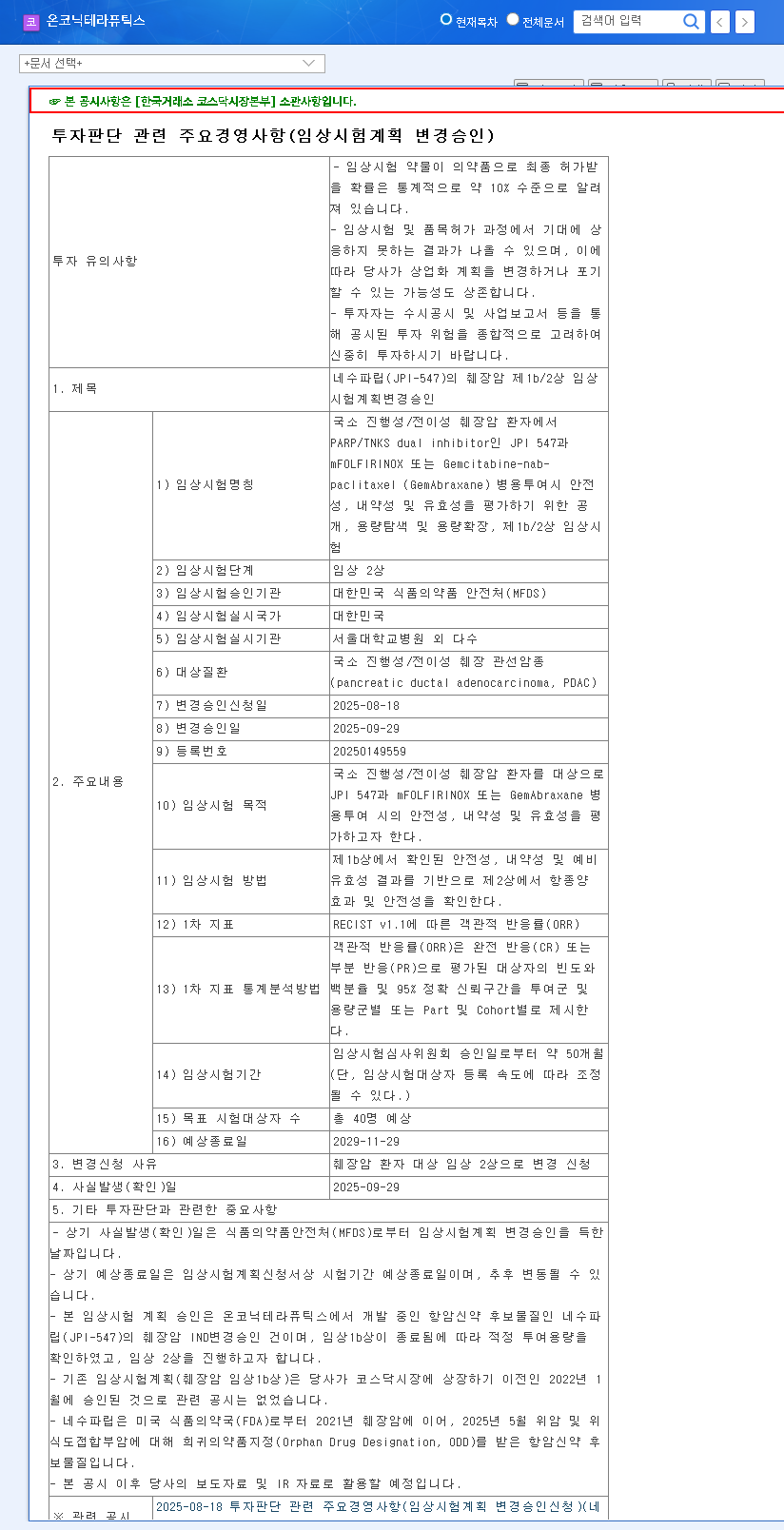
    In a major development for the oncology sector and for patients facing the challenge of pancreatic cancer, Onconic Therapeutics has officially advanced its key anticancer drug candidate, ‘Nesuparib (JPI-547),’ into Phase 2 clinical trials. This significant milestone follows the approval of its Phase 1b/2 clinical trial protocol amendment from the Ministry of Food and Drug Safety (MFDS).

    The advancement of Onconic Therapeutics Nesuparib is far more than a regulatory formality; it represents a crucial pivot point that could profoundly impact the company’s future growth drivers and corporate valuation. Given the substantial unmet medical needs in treating locally advanced/metastatic Pancreatic Ductal Adenocarcinoma (PDAC)—one of the deadliest forms of cancer—investors and the scientific community are keenly watching the trajectory of this novel therapeutic agent.

    The Strategic Milestone: Nesuparib’s Phase 2 Entry for PDAC

    Onconic Therapeutics received formal approval from the MFDS for the amendment to its Nesuparib (JPI-547) Phase 1b/2 clinical trial plan specifically targeting pancreatic cancer. This achievement confirms the successful conclusion of the Phase 1b safety and initial efficacy assessments, allowing the official commencement of the more rigorous Phase 2 efficacy testing.

    Nesuparib is being developed for patients suffering from locally advanced or metastatic PDAC. Its importance is underscored by its designation as an Orphan Drug by both the US FDA and the Korean MFDS. Orphan Drug designation often grants accelerated review processes, market exclusivity, and tax incentives, acknowledging the dire need for new treatments in this indication.

    Key Facts about the Clinical Advancement:

    • Event Date: Approval of Nesuparib Phase 1b/2 clinical trial amendment (September 29, 2025).
    • Target Disease: Locally Advanced/Metastatic Pancreatic Ductal Adenocarcinoma (PDAC).
    • Clinical Stage: Official entry into Phase 2 efficacy trials.
    • Drug Mechanism: PARP/TNKS dual-target anticancer inhibitor.

    Analyzing the Power of Onconic Therapeutics Nesuparib: A Dual-Target Approach

    What sets Nesuparib apart from conventional treatments is its dual-target mechanism, focusing on both PARP (Poly(ADP-ribose) polymerase) and TNKS (Tankyrase). Both enzymes play critical roles in DNA damage repair, genomic stability, and tumor cell proliferation. By inhibiting both pathways simultaneously, Onconic Therapeutics Nesuparib aims to overcome resistance mechanisms often observed when tumors are treated with single-target inhibitors.

    PARP inhibitors are already established treatments for certain cancers, particularly those with BRCA mutations. However, TNKS inhibition introduces a novel layer of therapeutic impact, potentially disrupting the Wnt signaling pathway—a key driver in many cancers, including PDAC. This dual inhibition strategy holds promise for significantly improving patient outcomes where treatment options are currently limited to highly toxic chemotherapy regimens.

    For more detailed information on the mechanism of action of similar drugs, readers can consult authoritative scientific sources on innovative PARP inhibitors.

    Corporate Health and Synergy: Zastaprazan Fuels the Pipeline

    The acceleration of Nesuparib’s pipeline occurs against a backdrop of remarkable corporate success. According to its 2025 semi-annual report, Onconic Therapeutics demonstrated exceptional financial stability, reporting explosive sales revenue growth of 362.4% year-over-year, reaching 18.6 billion KRW.

    This financial turnaround is primarily attributed to the robust performance of its flagship product, ‘Zastaprazan,’ a treatment for gastroesophageal reflux disease. The successful transition from a previous significant deficit to achieving a surplus in both operating profit and net income provides a solid financial foundation, minimizing the reliance on external funding solely for R&D activities.

    The synergistic relationship between the commercial success of Zastaprazan and the clinical advancement of Onconic Therapeutics Nesuparib reaffirms the company’s strong drug development capabilities across diverse therapeutic areas, from gastrointestinal diseases to cutting-edge oncology. (For more details, see our previous analysis on the global expansion of Zastaprazan).

    Impact Assessment: What Phase 2 Means for Investors and Global Partnerships

    The progression into Phase 2 significantly increases the drug candidate’s commercial viability and corporate value, especially in the context of global pharmaceutical partnering:

    • Accelerated Licensing Potential: Phase 2 data is often the critical trigger point for global pharmaceutical companies seeking to license promising oncology assets. This advancement strengthens Onconic’s negotiating position for technology transfer (licensing-out) agreements, potentially leading to more favorable terms.
    • Enhanced Credibility: Orphan Drug designation combined with MFDS approval validates the company’s scientific rigor and R&D competence, attracting higher investor attention and building trust in the market.
    • Addressing Unmet Needs: Given the aggressive nature of PDAC, any successful therapeutic agent, particularly one with an orphan drug status, commands significant market interest due to the high global demand for effective treatments.

    Navigating Future Challenges and Risks

    While the momentum is positive, drug development remains inherently uncertain. Investors must remain cognizant of the potential risk factors associated with Onconic Therapeutics Nesuparib:

    1. Clinical Development Risk: The outcome of Phase 2 trials is not guaranteed. If the results do not meet primary efficacy endpoints, corporate valuation and stock performance could be negatively impacted.
    2. Competitive Landscape: The pancreatic cancer market is dynamic and competitive. Continuous monitoring of rival drugs, especially novel targeted therapies or immunotherapies, is essential.
    3. Commercialization Uncertainty: Even after clinical success, challenges in securing optimal licensing deals, navigating complex international regulatory hurdles, and ensuring effective commercialization remain.

    In summary, Onconic Therapeutics Nesuparib represents a high-potential asset in a high-need indication. The successful entry into Phase 2, supported by strong corporate financials driven by Zastaprazan, positions Onconic Therapeutics for continued growth. Continuous monitoring of clinical data and licensing negotiations will be key for assessing its long-term investment potential.
    Onconic Therapeutics Nesuparib Enters Phase 2 for Pancreatic Cancer: Analyzing Growth Potential and Pipeline Strength 관련 이미지
    Onconic Therapeutics Nesuparib Enters Phase 2 for Pancreatic Cancer: Analyzing Growth Potential and Pipeline Strength 관련 이미지
  • Peptron Reclaims Global Rights for Anticancer Drug After Termination of Licensing Agreement: What’s Next?

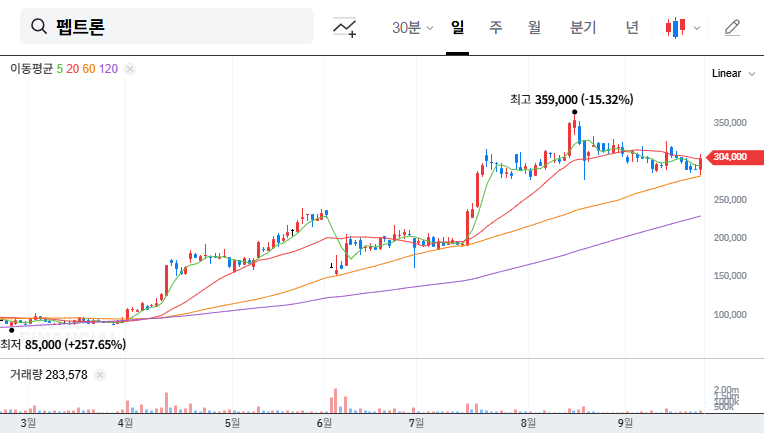
    Peptron Reclaims Global Rights for Anticancer Drug After Termination of Licensing Agreement: What's Next? 대표 차트 이미지

    What Happened?

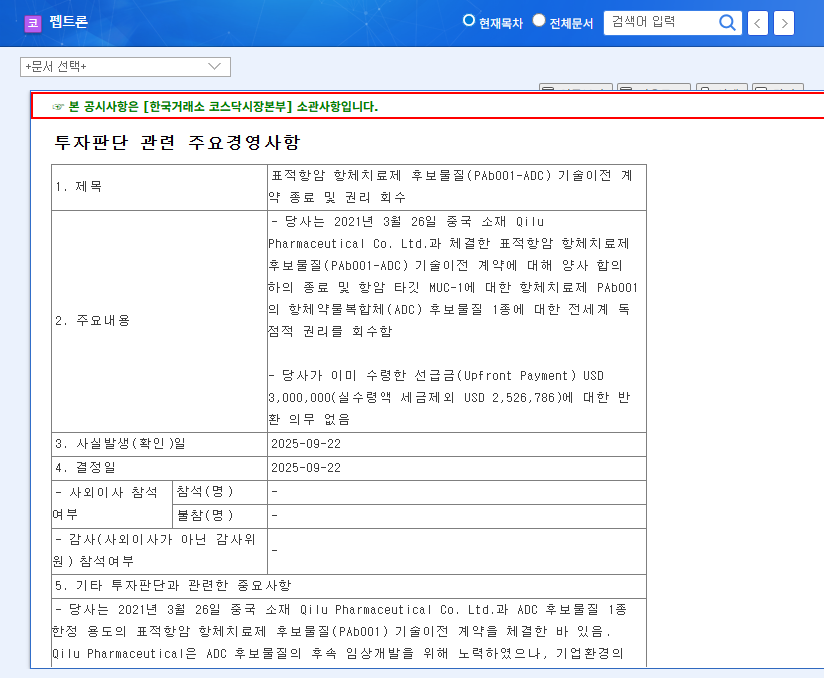
    On September 22, 2025, Peptron announced the termination of its licensing agreement with Qilu Pharmaceutical for PAb001-ADC. Peptron now holds exclusive global rights to the drug candidate and is not obligated to return the upfront payment of $3 million.

    Why the Termination?

    The official announcement states that the termination was by mutual agreement. However, the specific reasons remain undisclosed, leading to market speculation. Possibilities include Peptron’s desire for greater control over development, changes in Qilu’s strategy, or other factors.

    What are the Implications?

    • Positive Aspects:
      • Potential for greater revenue through independent development and commercialization
      • Opportunity to pursue new partnerships
      • No obligation to return upfront payment
    • Negative Aspects:
      • Need to revise China market entry strategy
      • Increased time and cost associated with independent development
      • Potential for short-term stock price volatility

    What Should Investors Do?

    This event presents both opportunities and challenges for Peptron. Investors should carefully consider the following:

    • Peptron’s independent development strategy for PAb001-ADC
    • The likelihood of securing new licensing partnerships
    • The development progress of existing pipelines (e.g., PT320)
    • Overall pharmaceutical/biotech market conditions and macroeconomic factors

    Frequently Asked Questions

    Q: Why did Peptron terminate the licensing agreement?

    A: Officially, the termination was by mutual agreement, but the specific reasons have not been disclosed. Speculation includes Peptron’s desire for greater control over development, changes in Qilu’s strategy, among other factors.

    Q: How will the termination impact Peptron’s stock price?

    A: In the short term, increased uncertainty may lead to greater stock price volatility. However, the long-term impact will depend on Peptron’s development capabilities and its ability to secure new partnerships.

    Q: What should investors pay attention to?

    A: Investors should consider Peptron’s PAb001-ADC development strategy, the potential for new partnerships, the progress of its existing pipeline, and overall market conditions when making investment decisions.

    Peptron Reclaims Global Rights for Anticancer Drug After Termination of Licensing Agreement: What's Next? 관련 이미지
    Peptron Reclaims Global Rights for Anticancer Drug After Termination of Licensing Agreement: What's Next? 관련 이미지
  • PXS-15A Approval Expanded: Investment Opportunity in Pharmicell?

    PXS-15A Approval Expanded: Investment Opportunity in Pharmicell? 대표 차트 이미지

    1. What Happened? : PXS-15A License Amended

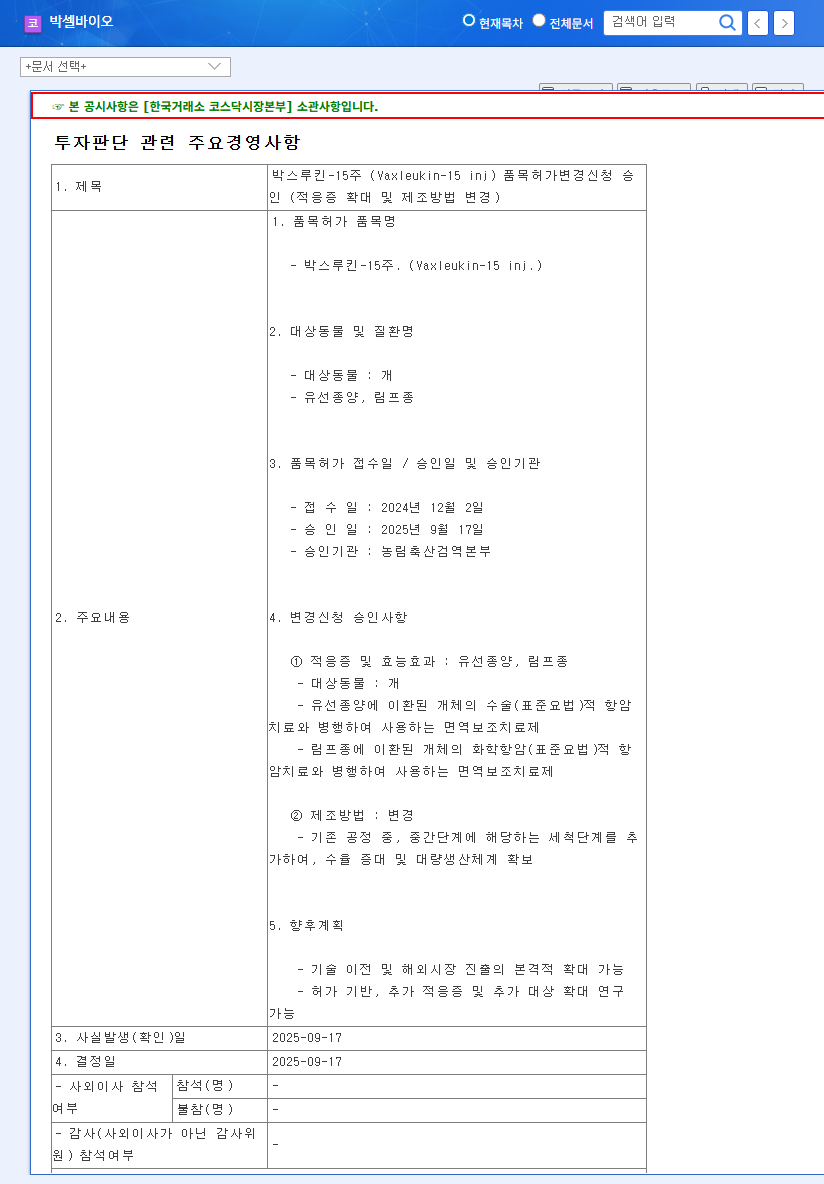
    Pharmicell received approval from the Animal and Plant Quarantine Agency for changes to the canine PXS-15A license. The key changes are expanded indications (addition of mammary tumors and lymphoma) and manufacturing process changes (increased yield and mass production).

    2. Why is it Important? : Positive Impact on Fundamentals Expected

    • Expanding Pet Healthcare Market: The rapidly growing pet market and increased demand for mammary tumor/lymphoma treatments provide a favorable environment for Pharmicell.
    • Foundation for Tech Transfer and Global Expansion: Establishing a mass production system will serve as a springboard for technology export and entry into the global market.
    • Strengthening the Vax-NK Platform’s Competitiveness: The success of PXS-15A enhances the value of the Vax-NK platform and is expected to positively influence the development of other anticancer pipelines.
    • Increased Sales and R&D Efficiency: Sales expansion for the new indication will lead to increased revenue and enhance R&D investment efficiency.

    3. What’s Next? : Expected Growth Momentum

    This approval is very positive for Pharmicell’s mid- to long-term growth. There is a possibility of increased stock price volatility, but in the long run, it will act as a factor that increases investment attractiveness. Global interest rates and exchange rate fluctuations can act as both opportunities and threats for technology transfer and overseas expansion.

    4. What Should Investors Do? : Active Monitoring Required

    The investment outlook is positive, but it is necessary to continuously monitor actual sales performance and the development status of other pipelines. Aggressive sales and marketing activities are also important variables. Investments should always be made cautiously, based on your own judgment and responsibility.

    Frequently Asked Questions

    What is PXS-15A?

    It is a canine anti-cancer immunotherapy developed by Pharmicell. It induces an immune response that attacks cancer cells by activating NK cells.

    What is the significance of this license amendment?

    It allows PXS-15A to be used for the treatment of mammary tumors and lymphoma, in addition to existing indications, and also establishes a mass production system. This is an important stepping stone that can lead to market expansion and increased sales.

    What are the precautions for investment?

    While this is positive news, it is essential to continuously monitor actual sales performance and the development status of other pipelines. Investments should always be made cautiously and at your own discretion and responsibility.

    PXS-15A Approval Expanded: Investment Opportunity in Pharmicell? 관련 이미지
    PXS-15A Approval Expanded: Investment Opportunity in Pharmicell? 관련 이미지
  • Onconics Therapeutics Announces Bonus Issue: A Catalyst for Stock Price Rise?

    Onconics Therapeutics Announces Bonus Issue: A Catalyst for Stock Price Rise? 대표 차트 이미지

    1. What’s Happening? – The Bonus Issue

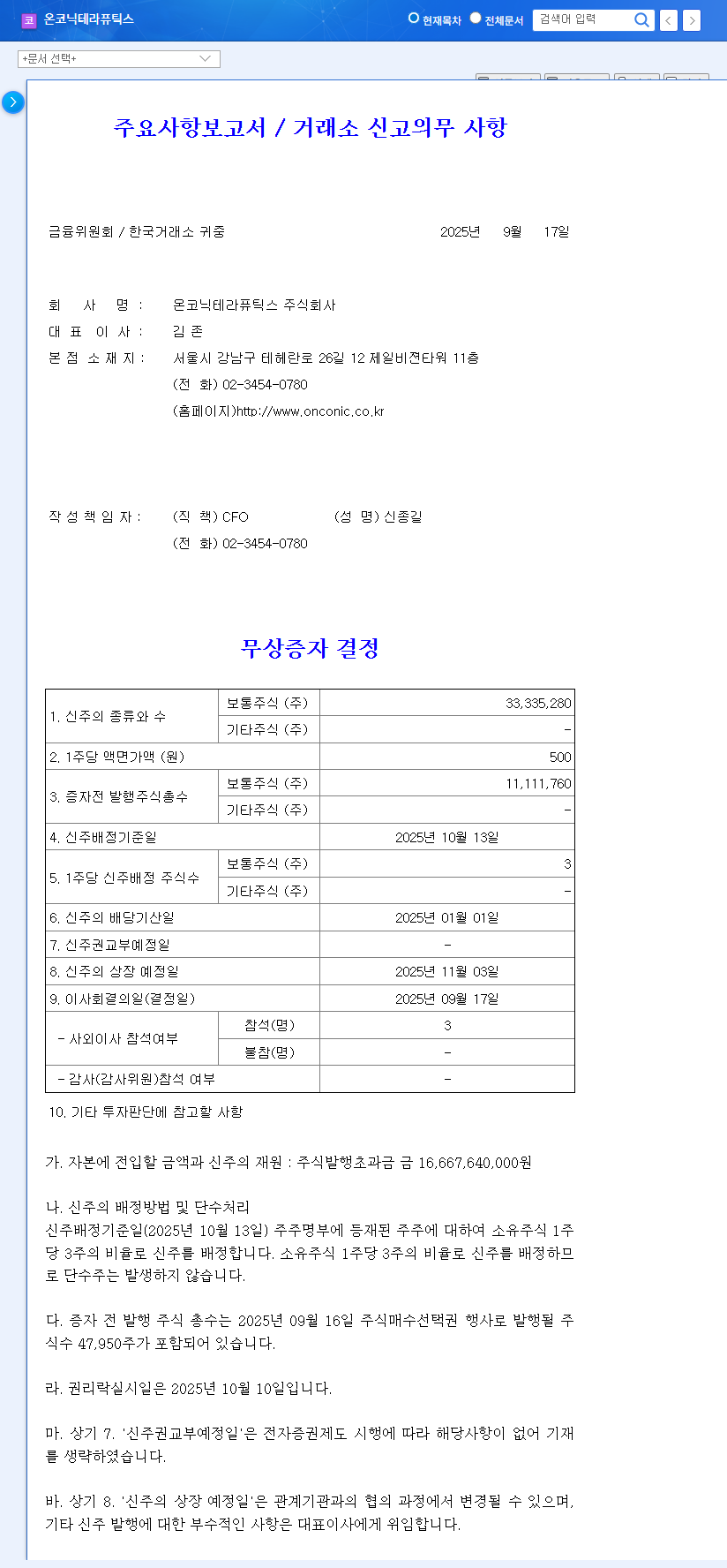
    Onconics Therapeutics announced a 3% bonus share issue on September 17, 2025. The new shares are expected to be listed on November 3, 2025.

    2. Why the Bonus Issue? – Fundamental Analysis

    Onconics Therapeutics is experiencing robust growth, driven by the successful domestic launch of its digestive disease treatment, Zastaprazan, and ongoing R&D for its next-generation anticancer drug, Nesuparib. As of H1 2025, the company reported revenue of KRW 18.6 billion and a positive operating cash flow of KRW 1.73 billion, demonstrating improved financial health. The bonus issue is interpreted as a move to enhance shareholder value and increase liquidity.

    • Zastaprazan: Continued positive momentum with steady sales growth since its domestic launch, expansion of indications, and overseas licensing agreements.
    • Nesuparib: A differentiated anticancer drug with orphan drug designation, pursuing technology transfer or joint ventures with global big pharma.
    • Financial Health: Achieving profitability and increased retained earnings, leading to a stable financial structure.

    3. What’s the Impact on Stock Price? – Analysis

    In the short term, the bonus issue is likely to act as a positive catalyst for the stock price. The increase in the number of outstanding shares and the resulting decrease in price per share can stimulate investor buying interest. However, the potential for short-term volatility should also be considered. In the long term, while there’s no direct impact on the company’s intrinsic value, the increased liquidity and the effort to enhance shareholder value can be interpreted as positive signals.

    • Short-term impact: Potential for stock price increase, increased short-term volatility, possible improvement in trading volume.
    • Long-term impact: No change in intrinsic value, minimal concern about dilution of shareholder value, potential for positive interpretation.

    4. What Should Investors Do? – Investment Strategy

    Short-term investors can consider capitalizing on the potential stock price increase driven by expectations surrounding the bonus issue, but should be mindful of price volatility around the listing date. Long-term investors should focus on the company’s fundamentals and growth prospects when making investment decisions.

    • Short-term investment: Consider buying (beware of volatility).
    • Long-term investment: Maintain a positive outlook (focus on fundamentals and growth potential).
    What is a bonus share issue?

    It’s when existing shareholders receive additional shares for free. The number of shares increases, lowering the price per share, but the company’s total value remains unchanged.

    What is the bonus share ratio for Onconics Therapeutics?

    The bonus share ratio is 3%.

    Does a bonus issue always have a positive impact on the stock price?

    Not necessarily. While there might be short-term positive sentiment, price adjustments can occur after the issue.

    Onconics Therapeutics Announces Bonus Issue: A Catalyst for Stock Price Rise? 관련 이미지
    Onconics Therapeutics Announces Bonus Issue: A Catalyst for Stock Price Rise? 관련 이미지
  • Onconik Therapeutics IR Analysis: Zastaprazan Growth Momentum and Nesuparib Clinical Expectations

    Onconik Therapeutics IR Analysis: Zastaprazan Growth Momentum and Nesuparib Clinical Expectations 대표 차트 이미지

    1. Onconik Therapeutics IR: What to Expect

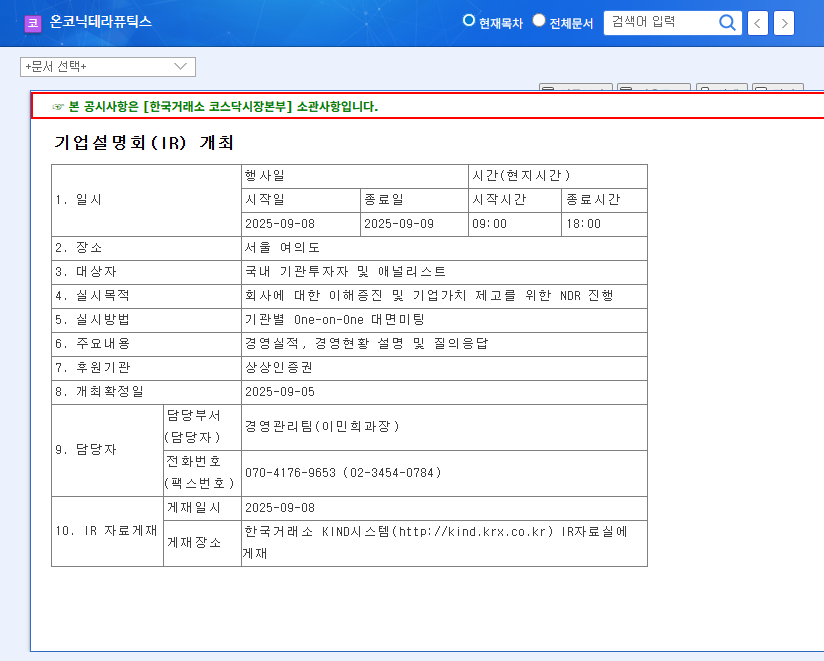
    Onconik Therapeutics will hold an investor relations (IR) meeting on September 8th at 9:00 AM. This IR, part of a Non-Deal Roadshow (NDR), aims to enhance corporate value by providing updates on business performance, current status, and a Q&A session. Key information disclosures are expected, including Zastaprazan sales growth, Nesuparib clinical trial progress, and future business plans.

    2. Why Pay Attention?: Growth Driver Analysis

    • Zastaprazan Growth: The successful launch of Zastaprazan for erosive esophagitis and the additional approval for gastric ulcer treatment are expected to drive sales growth. Technology transfer agreements with China, India, and South America have also secured a foundation for royalty revenue.
    • Nesuparib Clinical Expectations: Clinical development of the anticancer drug Nesuparib for pancreatic cancer, endometrial cancer, and other major cancers is progressing smoothly. Its designation as an orphan drug increases the likelihood of development and approval.
    • Solid Financial Structure: Onconik successfully raised capital through its KOSDAQ listing and maintains a stable financial structure with KRW 45.1 billion in cash and cash equivalents.

    3. Post-IR Stock Outlook and Investment Strategy

    Stock prices may fluctuate in the short term depending on the information disclosed at the IR. Positive information may create upward momentum, but failure to meet expectations could lead to selling pressure. In the mid-to-long term, Zastaprazan’s sales growth and the success of Nesuparib’s clinical trials will be key factors determining the stock’s trajectory. Investors should carefully analyze the IR content, future performance trends, and clinical results before making investment decisions.

    4. Action Plan for Investors

    If you are considering investing in Onconik Therapeutics, thoroughly review the information presented at the IR and the key points to watch. It is crucial to continuously monitor Zastaprazan sales, Nesuparib clinical results, and potential further technology transfer agreements. Changes in macroeconomic indicators, such as interest rates and exchange rates, should also be considered in your investment decision.

    What are Onconik Therapeutics’ main business areas?

    Onconik Therapeutics focuses on developing innovative new drugs for acid-related gastrointestinal diseases and cancer.

    What conditions is Zastaprazan used to treat?

    Zastaprazan is a P-CAB class drug used to treat erosive esophagitis and gastric ulcers.

    What stage of clinical trials is Nesuparib currently in?

    Nesuparib is currently undergoing clinical trials for several major cancers, including pancreatic and endometrial cancer, and has been designated as an orphan drug.

    When is Onconik Therapeutics’ IR scheduled?

    Onconik Therapeutics’ IR is scheduled for September 8, 2025, at 9:00 AM.

    Onconik Therapeutics IR Analysis: Zastaprazan Growth Momentum and Nesuparib Clinical Expectations 관련 이미지
    Onconik Therapeutics IR Analysis: Zastaprazan Growth Momentum and Nesuparib Clinical Expectations 관련 이미지
  • Intocell Applies for Phase 1 IND for Anticancer Drug: Investment Opportunity Analysis

    Intocell Applies for Phase 1 IND for Anticancer Drug: Investment Opportunity Analysis 대표 차트 이미지

    What Happened?

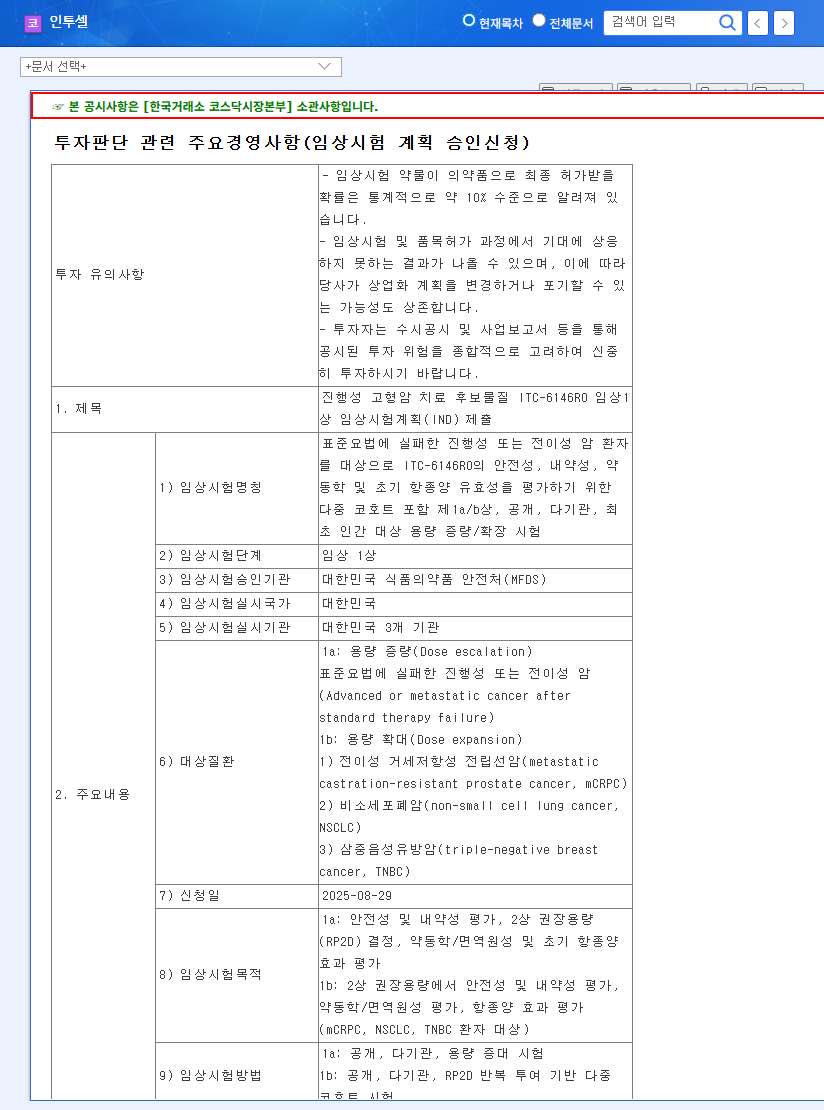
    Intocell announced on August 29, 2025, that it had completed the application for Investigational New Drug (IND) approval for a Phase 1 clinical trial of its anti-B7-H3 antibody-drug conjugate (ADC), ITC-6146RO, in Korea. ITC-6146RO is Intocell’s core pipeline, and this IND application is a significant milestone marking the entry into the clinical stage.

    Why is it Important?

    This IND application is a significant event showcasing Intocell’s differentiated ADC platform technology and growth potential. ITC-6146RO, developed based on OHPAS linker and PMT technology, is expected to demonstrate high efficacy and safety compared to existing anticancer treatments and contribute to securing a competitive edge in the global ADC market.

    What’s Next?

    Once the IND is approved and the Phase 1 clinical trial verifies safety and efficacy, the possibility of technology transfer and partnership agreements is expected to increase, positively impacting Intocell’s future revenue generation. Furthermore, successful clinical results are likely to enhance market confidence and act as a momentum for stock price increases.

    What Should Investors Do?

    • Monitor Clinical Progress: After IND approval, investors should closely watch the results of Phase 1 clinical trials and the progress towards subsequent clinical phases.
    • Check for Technology Transfer and Partnership Opportunities: Successful clinical results can lead to technology transfer and partnerships, so pay attention to related news.
    • Analyze Competitors: Analyze the competitive landscape of the ADC market and evaluate Intocell’s relative competitiveness.
    • Check Financial Soundness: It is crucial to confirm funding plans for continued R&D and the company’s financial stability.
    • Consider Risk Factors: Make informed investment decisions by considering potential risks such as the possibility of clinical trial failure, regulatory approval uncertainty, and intensifying competition.
    What are Intocell’s core technologies?

    Intocell’s core competencies are its OHPAS linker platform and PMT technology. The OHPAS linker has advantages in drug applicability, blood stability, and drug release rate, while PMT technology aims to improve the therapeutic index (TI) by minimizing normal cell entry.

    What is ITC-6146RO?

    ITC-6146RO is Intocell’s core pipeline anti-B7-H3 ADC. B7-H3 is a protein expressed in various cancer cells, and ITC-6146RO targets it for anticancer effects.

    When will the IND be approved?

    The timing of IND approval depends on the MFDS’s review schedule and is difficult to predict accurately.

    Intocell Applies for Phase 1 IND for Anticancer Drug: Investment Opportunity Analysis 관련 이미지
    Intocell Applies for Phase 1 IND for Anticancer Drug: Investment Opportunity Analysis 관련 이미지
  • Phacell Bio (323990) Q2 2025 Earnings Surprise: KRW 1.7 Billion in Revenue, Investment Analysis

    1. What Happened: Phacell Bio’s Q2 2025 Earnings Release

    Phacell Bio announced its Q2 2025 earnings on August 28, 2025. The key highlights are:

    • Revenue: KRW 1.7 Billion (Expected: KRW 0)
    • Operating Income: KRW -4.3 Billion (Expected: KRW 0)
    • Net Income: KRW -2.6 Billion (Expected: KRW 0)

    2. Why It Matters: Exceeding Expectations, Potential for Successful Diversification

    This performance significantly surpasses market expectations. Notably, it suggests growth potential in Phacell Bio’s companion animal healthcare business (‘Paxleukin-15’) and pharmaceutical distribution business, indicating that the company’s diversification strategy is yielding tangible results.

    3. What’s Next: Outlook and Investment Considerations

    Despite the positive revenue growth, the continued operating loss remains a challenge. Investors should focus on the following:

    • Continued performance of the companion animal healthcare business
    • Clinical progress of key anti-cancer immunotherapy pipelines
    • Securing financial soundness and managing regulatory risks

    4. Investor Action Plan: Focus on Key Metrics for Long-Term Growth

    When considering investing in Phacell Bio, focus on the long-term growth potential rather than short-term stock price fluctuations. Continuously monitoring clinical trial results of key pipelines, the performance of business diversification, and financial soundness indicators is crucial for developing a robust investment strategy.

    Frequently Asked Questions (FAQ)

    Why did Phacell Bio’s Q2 earnings outperform expectations?

    Strong sales of the companion animal anticancer drug ‘Paxleukin-15’ and growth in the pharmaceutical distribution business are considered the main drivers.

    Is it safe to invest despite the continued operating loss?

    Investment decisions should be made by comprehensively considering revenue growth trends, clinical progress of key pipelines, and financial soundness indicators.

    What are Phacell Bio’s main pipelines?

    ‘Vax-NK,’ targeting hepatocellular carcinoma and small cell lung cancer, and ‘Vax-CAR,’ targeting hematologic and solid cancers, are among the key pipelines.

  • Cell Biotech’s H1 2025 Earnings Disappoint: What’s Next for Investors?

    1. Cell Biotech H1 2025 Earnings Analysis: What Happened?

    Cell Biotech reported revenue of KRW 23.1 billion and operating profit of KRW 2.6 billion for the first half of 2025, representing a 9.6% and 26.1% decrease year-over-year, respectively. Q2 earnings showed a further decline in profit with revenue at KRW 11.9 billion and operating profit at KRW 1.2 billion.

    2. Reasons for Underperformance: Why These Results?

    The primary reasons are declining finished product sales and increased selling, general, and administrative expenses. Worsening financial results further amplified the decline in net profit. A challenging macroeconomic environment and increased competition in the probiotics market likely contributed to these results.

    3. Cell Biotech’s Business and Future Outlook: What’s Next?

    • Probiotics Business: Cell Biotech continues to focus on expanding its global presence with its ‘DUOLAC’ brand, leveraging its dual-coating technology. However, increasing marketing costs due to heightened competition pose a challenge to profitability.
    • Anticancer Drug Development: Phase 1 clinical trials are underway for ‘PP-P8,’ a kimchi-derived, anticancer drug candidate. Success could significantly boost Cell Biotech’s value, but uncertainty remains.
    • New Businesses: The company is pursuing new ventures, including the launch of ‘Cellbiome,’ a microbiome-based healthcare platform. These efforts to secure long-term growth drivers are positive.

    4. Action Plan for Investors: What to Do?

    Investors should be mindful of potential short-term price volatility due to the weak earnings. A prudent long-term strategy involves monitoring the progress of anticancer drug development and new business initiatives. While Cell Biotech holds growth potential, cautious investment decisions are warranted.

    Frequently Asked Questions

    Q: How did Cell Biotech perform in the first half of 2025?

    A: Cell Biotech reported revenue of KRW 23.1 billion and operating profit of KRW 2.6 billion, down 9.6% and 26.1% year-over-year, respectively.

    Q: What are the main reasons for the decline in performance?

    A: Declining finished product sales, increased SG&A expenses, and worsening financial results are the primary contributing factors.

    Q: What is the status of Cell Biotech’s anticancer drug development?

    A: Cell Biotech is currently conducting Phase 1 clinical trials for ‘PP-P8,’ a kimchi-derived anticancer drug candidate.

    Q: What should investors consider before investing in Cell Biotech?

    A: Investors should carefully consider potential short-term price volatility and the inherent uncertainties of drug development. Monitoring the progress of drug development and new business initiatives is crucial for long-term investment strategies.

  • Onconik Therapeutics’ Stomach Cancer Trial Expansion: A Potential Catalyst for Growth?

    Onconik Therapeutics Expands Nesuparib Trials to Stomach Cancer: What Happened?

    On July 30, 2025, Onconik Therapeutics announced the filing of an amendment to its Nesuparib clinical trial plan for stomach cancer, marking a progression from the existing Phase 1b pancreatic cancer trial to Phase 1b/2 for stomach cancer. The company awaits approval from the Ministry of Food and Drug Safety (MFDS).

    Why is This Trial Expansion Significant?

    Nesuparib has already received Orphan Drug Designation (ODD) for pancreatic, stomach, and gastroesophageal junction cancers. This expansion holds significant implications for Onconik Therapeutics:

    • Pipeline Diversification: Reduces reliance on Zastaprazan and diversifies its business portfolio, mitigating risks.
    • Market Expansion Potential: Stomach cancer has a larger market than pancreatic cancer, and the ODD provides a favorable position for market entry. Successful clinical results could lead to more favorable terms in licensing agreements with global pharmaceutical companies.
    • Potential Catalyst for Stock Price Increase: Positive news regarding clinical progress can act as a positive signal for investors, potentially driving stock price appreciation.

    Investment Strategy: Opportunities, Risks, and Action Plan

    While this expansion presents numerous positive aspects, investors should also consider the following risks:

    • Uncertainty of Clinical Success
    • Launch of Competing Drugs
    • Potential Failure of Licensing Agreements

    Therefore, investors should consider the following action plan:

    • Monitor upcoming clinical trial results and licensing agreement announcements.
    • Analyze the development status and market competitiveness of competing stomach cancer treatments.
    • Continuously monitor details of Zastaprazan’s licensing agreement and Onconik Therapeutics’ funding plans.

    ※ This content is not intended as investment advice. Investment decisions are the sole responsibility of the investor.

    What stage is Nesuparib’s stomach cancer clinical trial in?

    Nesuparib has applied for an amendment to its clinical trial plan for stomach cancer, transitioning to Phase 1b/2. The company is currently awaiting approval from the Ministry of Food and Drug Safety (MFDS).

    What types of cancer is Nesuparib effective against?

    Nesuparib has received Orphan Drug Designation (ODD) for pancreatic, stomach, and gastroesophageal junction cancers. Clinical trials are currently underway for pancreatic and stomach cancers.

    What is Onconik Therapeutics’ main business?

    Onconik Therapeutics is a biopharmaceutical company focused on developing anticancer drugs. Its main pipelines include Zastaprazan, a gastric ulcer treatment, and Nesuparib, an anticancer drug.

  • Onconik Therapeutics Stock: Soaring on Gastric Cancer Trial Expansion? Analysis of Nesuparib and Investment Strategy

    1. Onconik Therapeutics Expands Clinical Trials to Gastric Cancer

    Onconik Therapeutics applied to the Ministry of Food and Drug Safety (MFDS) on July 30, 2025, for approval to amend its Phase 1b/2 clinical trial plan for the anticancer drug candidate Nesuparib to include gastric cancer. This expansion, following the existing pancreatic cancer clinical trial, represents a significant step in demonstrating Nesuparib’s market scalability.

    2. Analyzing Key Growth Drivers: Zaqub & Nesuparib

    2.1 Zaqub: Steady Growth, but Concerns about Intensifying Competition

    Zaqub showed a successful market entry, achieving close to 7 billion won in sales in the first quarter of 2025. Technology transfer agreements with 19 countries are expected to act as a long-term growth momentum. However, the possibility of intensifying competition and uncertainties surrounding the technology transfer agreements require continuous monitoring.

    2.2 Nesuparib: A High-Risk, High-Return Investment

    Nesuparib has increased its chances of successful drug development by receiving FDA Orphan Drug Designation. Its differentiated mechanism as a PARP/Tankyrase dual inhibitor is advantageous for securing global competitiveness. However, being in the Phase 1b/2 clinical trial stage, considerable time and funds are required until market launch, and the uncertainty of clinical trial results remains high.

    3. Macroeconomic Impact on Onconik Therapeutics

    • Positive Factors: Low South Korean base rate is positive for Zaqub’s sales growth, low US 10-year Treasury yield is positive for the overall investment environment.
    • Negative Factors: High US base rate could increase Nesuparib’s development funding costs and investment risks.

    4. Investment Strategy: Thorough Analysis and Risk Management are Essential

    Onconik Therapeutics has growth potential, but the results of Nesuparib’s clinical trials will significantly impact its corporate value. Investment decisions should be made after thorough analysis of clinical results, progress of technology transfer agreements, changes in macroeconomic indicators, and the competitive landscape, along with a well-defined risk management strategy.

    Frequently Asked Questions

    What stage are the Nesuparib clinical trials in?

    Nesuparib is currently in the phase of applying for approval to amend the Phase 1b/2 clinical trial plan for gastric cancer. The decision to proceed to Phase 2 will be based on the DLT (Dose Limiting Toxicity) assessment results of Phase 1b.

    What is the sales status of Zaqub?

    Zaqub achieved close to 7 billion won in sales in Q1 2025. It is expected to secure long-term growth momentum through overseas technology transfer agreements.

    What are the key considerations when investing in Onconik Therapeutics?

    Carefully analyze the uncertainties surrounding the Nesuparib clinical trial results, the progress of technology transfer agreements, changes in macroeconomic indicators, and establish a risk management strategy.