Tag: AICC

  • (058860) ktis Corporation Earnings (058860): Q3 2025 Analysis & Stock Outlook

    (058860) ktis Corporation Earnings (058860): Q3 2025 Analysis & Stock Outlook

    This in-depth analysis of the ktis Corporation earnings for Q3 2025 unpacks the preliminary results that have captured investor attention. With a staggering four-fold increase in net profit, it’s crucial for stakeholders to understand the underlying drivers. This report provides a comprehensive look at the company’s fundamentals, market position, and the sustainability of this growth to help you make informed decisions about the ktis Corporation stock.

    Q3 2025 Financial Highlights at a Glance

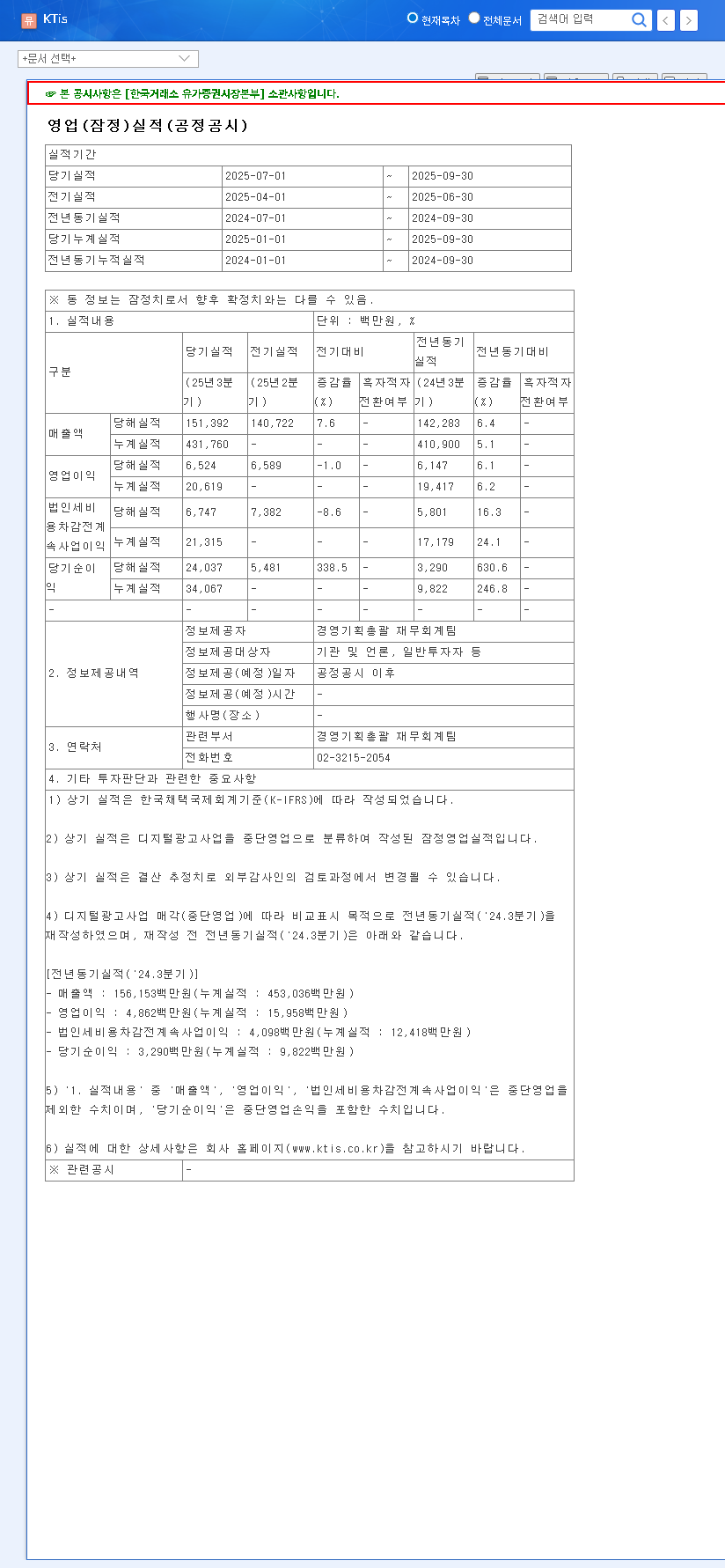
    ktis Corporation (ticker: 058860) released its preliminary Q3 2025 results, revealing a mixed but intriguing picture. While revenue saw modest growth and operating profit remained steady, the net profit figure tells a more dramatic story.

    • Revenue: KRW 156 billion, showing a slight increase from the previous quarter.
    • Operating Profit: KRW 6.6 billion, maintaining a stable level compared to Q2.
    • Net Profit: KRW 24.1 billion, a remarkable surge from KRW 5.5 billion in Q2 2025.

    This significant jump in net profit, despite flat operating profit, suggests the influence of non-operating or one-time financial events, a critical point for any ktis investment outlook.

    Dissecting the Net Profit Surge: A One-Time Event?

    The primary driver behind the explosive net profit growth is likely linked to non-operating activities. Analysis points towards gains from the divestiture of assets, specifically the spin-off and sale of its digital advertising business unit. Such events, while boosting the bottom line in a single quarter, are not indicative of core operational performance improvements.

    Investors must differentiate between sustainable operational growth and one-off financial gains. The key question for the ktis Corporation stock is whether its core businesses can generate long-term value, independent of asset sales. For full transparency, see the company’s Official Disclosure.

    Core Business and Financial Health Analysis

    Pivoting to High-Value AI Solutions

    ktis Corporation’s strategy centers on enhancing its core segments. The Contact Center Business remains a stable revenue generator, but the real future growth lies in its transformation into a high-value AICC (AI Contact Center) provider. This pivot towards AI is crucial for maintaining a competitive edge. Meanwhile, the Distribution Business aims for stability by focusing on 5G and bundled services, and the legacy Directory Assistance Business is being streamlined with AICC systems to improve efficiency as usage declines. Learn more about how companies are leveraging this technology in our guide on The Future of AI in Customer Service.

    A Check on Financial Soundness

    While the H1 2025 report showed revenue growth, operating profit declined due to increased investments and costs like depreciation. However, the company maintains healthy operating cash flow (KRW 38.077 billion), a positive sign of operational liquidity. Its debt-to-equity ratio of 84.85% is moderate, and when viewed alongside a Return on Equity (ROE) of 5.11%, it suggests a fair level of financial soundness. The divestiture of the digital ad business is a strategic move to focus on core competencies and enhance long-term value.

    Investment Outlook: Bull vs. Bear Case

    The latest ktis Corporation earnings present a nuanced picture for potential investors. Macroeconomic factors, such as stabilizing interest rates, could ease funding costs and create a favorable environment. For insights on global trends, investors often consult sources like Bloomberg Economics.

    The Bull Case (Reasons for Optimism)

    • AICC Growth Potential: Successful expansion into the AICC market could unlock significant high-margin revenue streams.
    • Strategic Focus: Divesting non-core assets shows a clear strategy to strengthen its main business lines.
    • Stable Core Operations: The company maintains stable operating profit and healthy cash flow from its foundational businesses.

    The Bear Case (Points of Caution)

    • Unsustainable Profit: The Q3 net profit is inflated by a one-time event and doesn’t reflect underlying profitability.
    • Cost Pressures: Rising costs and investment-related expenses (depreciation, leases) have been squeezing operating profit margins.
    • Competitive Market: The AICC space is becoming increasingly competitive, and ktis must execute flawlessly to capture market share.

    Final Recommendation: A Neutral Stance

    Given the current information, an investment opinion of ‘Neutral’ is prudent. While the Q3 2025 report contained positive signals, the headline net profit figure requires careful interpretation. True long-term value will be determined by the successful execution of the AICC strategy and the company’s ability to manage its cost structure effectively.

    Investors should monitor the tangible results from the AICC business expansion and upcoming quarterly reports for signs of sustained operational improvement before committing capital.
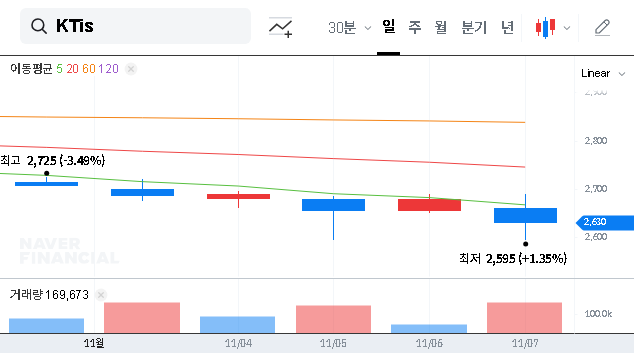
    (058860) ktis Corporation Earnings (058860): Q3 2025 Analysis & Stock Outlook 관련 이미지
  • (094280) HYOSUNG ITX Dividend & AI Strategy: 2025 Investor Analysis

    (094280) HYOSUNG ITX Dividend & AI Strategy: 2025 Investor Analysis

    HYOSUNG ITX (효성ITX) has captured significant market attention with its recent announcement of a 2025 quarterly dividend. This move is more than just a routine distribution of profits; it’s a powerful statement about the company’s robust financial health and unwavering confidence in its forward-looking strategy, particularly its deep investment in AI transformation. For investors, this raises critical questions: How does this dividend impact the HYOSUNG ITX stock outlook? And what does its pivot to technologies like the AI Contact Center (AICC) mean for long-term growth and shareholder value?

    This comprehensive analysis will unpack HYOSUNG ITX’s current position and future potential. We will explore its stable core business, delve into its ambitious AI initiatives, examine its financial soundness, and evaluate the tangible impact of its shareholder return policy. Whether you’re a current shareholder or considering an investment, this article provides the essential insights needed for an informed decision.

    The Dividend Announcement: A Signal of Strength

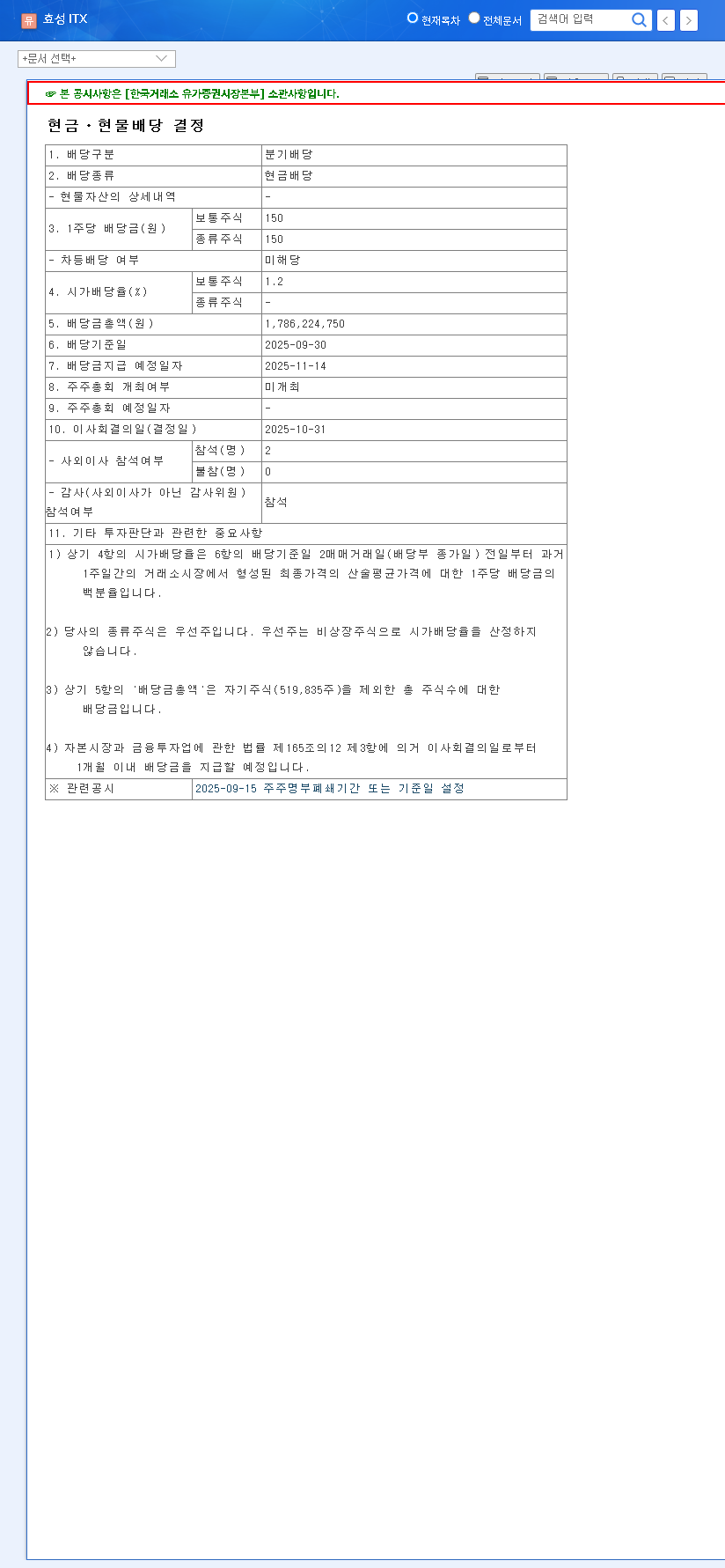
    On October 31, 2025, HYOSUNG ITX officially declared a cash quarterly dividend of KRW 150 per common share, based on the shareholder registry as of September 30, 2025. The payment is scheduled for November 14, 2025. According to the Official Disclosure (DART), this decision reflects a commitment to enhancing shareholder value. A common share dividend yield of 1.2% offers a compelling return in today’s market, signaling that the company is not only profitable but also eager to share its success directly with its investors.

    A consistent quarterly dividend is a hallmark of a mature, financially stable company. For a tech firm like HYOSUNG ITX, it demonstrates that its foundational business can fund both shareholder returns and ambitious future growth in areas like AI.

    Under the Hood: Fusing Stability with AI Innovation

    HYOSUNG ITX’s confident dividend policy is built on a dual-engine strategy: a stable, cash-generating core business and aggressive expansion into high-growth technology sectors.

    The Bedrock: Contact Center Dominance

    The company’s contact center business remains its financial backbone, accounting for over 77% of total revenue. Long-term contracts with major clients like Hyundai Card and Capital provide a predictable and substantial revenue stream. This division acts as a reliable cash cow, funding the company’s strategic investments without taking on excessive debt.

    The Future: AI and Digital Transformation

    The most exciting aspect of the HYOSUNG ITX story is its proactive investment in future growth engines. The company is channeling significant resources into two key areas:

    • AI Contact Center (AICC): This is a natural evolution of their core business. By integrating generative AI, HYOSUNG ITX aims to transform traditional call centers into intelligent, automated customer experience hubs. AICC solutions can handle inquiries, analyze sentiment, and provide human agents with real-time insights, dramatically improving efficiency and customer satisfaction. The AICC market is a key battleground for enterprise tech, and you can learn more about its growth from industry analysts like Gartner.
    • Smart Factory Solutions: Leveraging IoT and AI, HYOSUNG ITX is developing solutions to optimize manufacturing processes. This includes predictive maintenance, quality control automation, and supply chain optimization, tapping into the massive global trend of industrial digital transformation.

    Financial Health and Performance Analysis

    A look at the semi-annual report ending June 2025 reveals a company in robust financial health. With total assets of KRW 178.39 trillion against liabilities of KRW 106.10 trillion, the balance sheet is solid. While the debt-to-equity ratio saw a slight uptick, this was due to lease liabilities—an operational necessity—rather than high-interest borrowings. More importantly, cash and cash equivalents have been steadily increasing, a strong indicator of healthy liquidity and cash flow management.

    Profitability is also on an upward trajectory. After facing challenges in 2022-2023, the company is showing a strong recovery. In Q2 2025, sales grew 3.21% year-on-year, and the operating profit margin surged by 3.58 percentage points to 6.38%. This demonstrates that strategic adjustments and investments are beginning to pay off, enhancing the company’s capacity for sustained dividend payments and future growth.

    Investment Thesis: Evaluating HYOSUNG ITX Stock

    So, what does this all mean for investors? The quarterly dividend decision has both short-term and long-term positive implications for HYOSUNG ITX stock.

    Key Investment Points (The Bull Case):

    • Strong Shareholder Returns: The consistent dividend signals financial discipline and builds trust with investors, attracting a stable, long-term investor base.
    • High-Growth AI Exposure: Investment in AICC and Smart Factories positions HYOSUNG ITX to capitalize on major secular growth trends. For more on this, you might read our guide on How to Invest in AI Technology Stocks.
    • Improving Profitability: The recovery in profit margins suggests operational efficiency and a successful turnaround, creating a strong foundation for future earnings growth.
    • Valuation Potential: With the current stock price still below historical peaks, the combination of fundamental improvements and a reliable dividend could serve as a powerful catalyst for price appreciation.

    Potential Risk Factors (The Bear Case):

    • Intense Competition: The AI and IT services markets are crowded with both established giants and nimble startups. HYOSUNG ITX must continuously innovate to maintain its edge.
    • Macroeconomic Headwinds: Global interest rate policies and currency fluctuations can impact investment sentiment and export competitiveness.
    • Execution Risk: The success of the company’s AI strategy hinges on its ability to develop, market, and scale its new AICC and Smart Factory solutions effectively.

    Conclusion: A Positive Outlook

    HYOSUNG ITX presents a compelling case for investors seeking a blend of stability and growth. The company is skillfully using its dominant contact center business to fund a strategic and promising transition into the AI-driven future. The recent quarterly dividend is not just a reward for shareholders; it is a clear indicator of management’s confidence and the company’s strengthening financial position. While risks related to competition and execution remain, the positive momentum in profitability and the clear commitment to enhancing shareholder value make HYOSUNG ITX an attractive name to watch in the evolving tech landscape.

    Disclaimer: This article is for informational purposes only and should not be considered investment advice. All investment decisions should be made with caution and based on your own research.

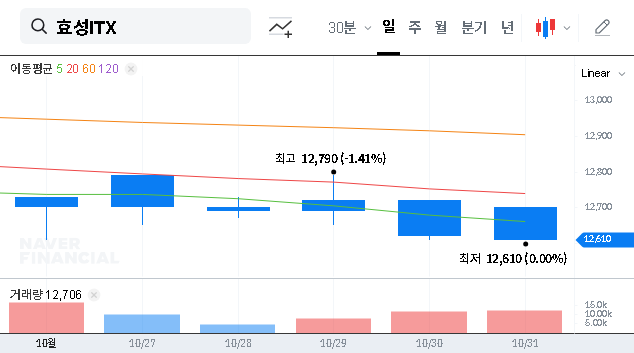
    (094280) HYOSUNG ITX Dividend & AI Strategy: 2025 Investor Analysis 관련 이미지
  • (094280) HYOSUNG ITX Q3 2025 Earnings Analysis: AI Growth Potential vs. IT Sector Headwinds

    (094280) HYOSUNG ITX Q3 2025 Earnings Analysis: AI Growth Potential vs. IT Sector Headwinds

    The latest HYOSUNG ITX Q3 2025 earnings report, released on October 31, 2025, presents a complex picture for investors. As a pivotal force in South Korea’s IT service and contact center industries, HYOSUNG ITX’s performance is a key indicator of broader market trends. The report reveals a contraction in key financial metrics, signaling immediate challenges. However, beneath the surface, the company is making strategic investments in high-potential areas like Artificial Intelligence (AI), which could redefine its future growth trajectory.

    This comprehensive analysis delves into the official Q3 2025 figures, dissects the performance of each business segment, and evaluates the macroeconomic factors at play. We will provide a clear-eyed view of both the risks and the promising opportunities, including the company’s ambitious push into HYOSUNG ITX AI growth initiatives, to help investors make well-informed decisions.

    Unpacking the HYOSUNG ITX Q3 2025 Earnings Report

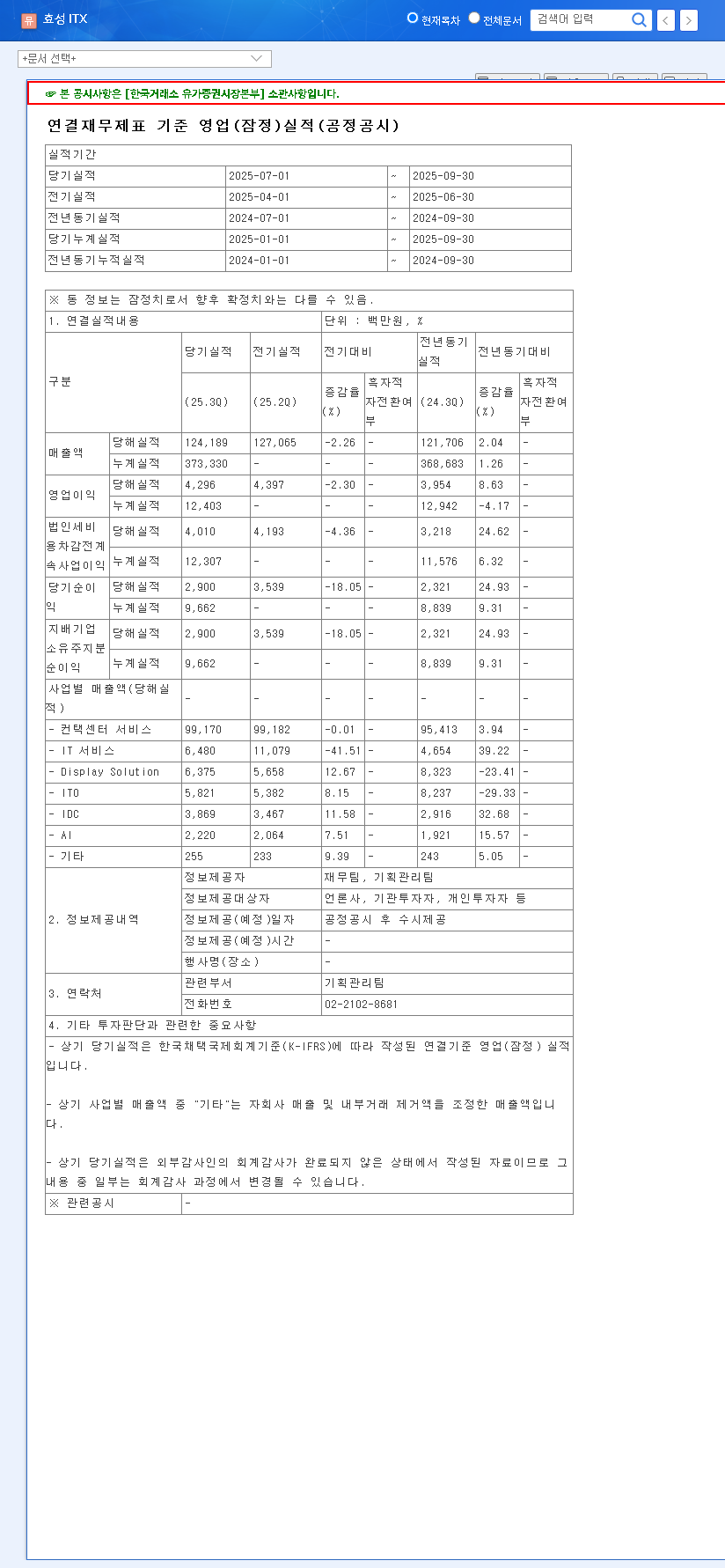
    According to the preliminary consolidated financial results, HYOSUNG ITX posted numbers that suggest a period of consolidation and challenge. You can view the complete filing in the Official Disclosure on DART. The key metrics are as follows:

    • Revenue: KRW 124.2 billion, a 2.3% decrease quarter-over-quarter (QoQ).
    • Operating Profit: KRW 4.3 billion, also down 2.3% QoQ.
    • Net Profit: KRW 2.9 billion, marking a notable decline from the previous quarter.

    These figures continue the trend of revenue contraction seen in the first half of 2025, raising valid concerns about the company’s short-term profitability. While revenue saw a marginal increase compared to the same period last year, the slow improvement in operating profit margins indicates persistent cost pressures or a challenging sales environment.

    Segment Performance: A Tale of Two Businesses

    HYOSUNG ITX’s overall performance is a story of divergence between its core, stable business and its more volatile segments.

    Contact Center Services: The Resilient Core

    The Contact Center division, which accounts for a substantial 77.11% of total revenue, remains the company’s bedrock. Its stability is anchored in long-term contracts with major corporate clients, providing a predictable and robust revenue stream. More importantly, HYOSUNG ITX is proactively future-proofing this segment by integrating advanced AI technologies. The deployment of AICC (AI Contact Center) solutions is not just a defensive move; it’s a strategic enhancement designed to boost efficiency, improve customer service quality, and secure higher-margin contracts. This focus on AI is a key element of any long-term HYOSUNG ITX stock analysis.

    IT Services & Display Solutions: Facing Headwinds

    In stark contrast, the IT Service and Display Solution segments are the primary source of the recent earnings drag. These divisions have experienced a significant revenue decline, battered by a confluence of negative factors. The broader Korea IT service market has become fiercely competitive, while macroeconomic uncertainty has led many client companies to scale back on IT investments. Furthermore, the global video equipment market is undergoing shifts in demand, impacting the Display Solution business. The company’s IDC (data center) business also appears to have contributed to the revenue decline, highlighting the need for strategic realignment in these areas.

    While the legacy IT segments face challenges, the company’s pivot towards AI-driven solutions represents a critical investment in its future. The successful monetization of these new ventures will be the key determinant of long-term value creation.

    Financial Health and Macro-Economic Outlook

    A Solid Financial Foundation

    Despite the profitability slowdown, HYOSUNG ITX maintains a relatively solid financial position. With a debt-to-equity ratio of 146.77% and a current ratio of 118.25%, the company demonstrates stable leverage and good short-term liquidity. This financial health is crucial, as it provides the necessary runway to invest in growth areas like its AI platforms and Smart Factory solutions without undue financial strain. This stability is a key pillar for more information about our long-term corporate analyses.

    Navigating External Pressures

    The macroeconomic environment, as reported by sources like Bloomberg, presents both risks and neutral factors. The weaker Korean Won (KRW) increases costs for imported hardware, potentially squeezing margins in the Display Solution segment. However, the stable interest rate environment in both the US and Korea provides a predictable financing landscape. Fluctuating sea freight rates could also impact logistics costs, requiring vigilant supply chain management. Overall, while external pressures exist, they do not appear to pose an existential threat to the company’s core operations at this time.

    Strategic Outlook and Investor Takeaway

    The HYOSUNG ITX Q3 2025 earnings report necessitates a nuanced investment perspective.

    • The Bull Case: The bull case hinges on the immense growth potential of the AI business. If the AICC and Smart Factory solutions gain significant market traction and begin contributing meaningfully to the top line, the current stock price may represent an attractive entry point for long-term investors focused on HYOSUNG ITX AI growth.
    • The Bear Case: The bear case points to the persistent weakness in the IT and Display segments. If these divisions continue to decline without a clear turnaround strategy, they could offset any gains from the AI ventures, leading to continued stock price pressure in the short to medium term.

    For short-term traders, caution is advised as the market digests the negative earnings data. For long-term investors, the key is to monitor for tangible signs of progress in the AI division and evidence that management is effectively addressing the challenges in its underperforming segments. The upcoming Q4 results will be critical in determining whether this quarter was a temporary setback or the start of a prolonged downturn.

    (094280) HYOSUNG ITX Q3 2025 Earnings Analysis: AI Growth Potential vs. IT Sector Headwinds 관련 이미지
  • KTis Merges with HNC Network: Impact Analysis for Investors

    KTis Merges with HNC Network: Impact Analysis for Investors 대표 차트 이미지

    What Happened?

    KTis will merge with its subsidiary HNC Network, with the merger date set for December 1, 2025. KTis will be the surviving entity, and HNC Network will be dissolved. By merging with HNC Network, which operates call centers and provides staffing services, KTis aims to strengthen its business competitiveness and improve management efficiency.

    Why the Merger?

    KTis has been focusing on its core contact center and distribution businesses after divesting its digital advertising division. This merger is interpreted as a strategy to enhance core business competitiveness by creating synergy in the call center business and increasing management efficiency. Cost reduction effects are also expected through organizational integration and operational streamlining.

    Potential Impact of the Merger

    • Positive Impacts: Synergy in call center business, enhanced management efficiency, potential improvement in financial structure.
    • Negative/Neutral Impacts: Potential short-term financial burden, uncertainty regarding synergy creation, potential lack of relevance with existing core businesses.

    While positive effects can be expected from the merger, factors such as short-term financial burden and uncertainty regarding synergy must also be considered.

    Action Plan for Investors

    Investors should closely monitor the synergy creation after the merger, its relevance to KTis’s core businesses, and the actual improvement in financial performance. It is crucial to pay attention to how KTis secures growth momentum and maintains competitiveness amidst the growth and intensifying competition in the AICC market. Carefully reviewing post-merger earnings announcements and management’s business strategies is essential.

    Frequently Asked Questions

    When is the merger date?

    December 1, 2025.

    What is the purpose of the merger?

    To strengthen business competitiveness and improve management efficiency.

    How will the merger affect KTis stock price?

    The potential impact of the merger can be both positive and negative. Stock price volatility may occur depending on various factors, including synergy creation and market conditions.

    KTis Merges with HNC Network: Impact Analysis for Investors 관련 이미지
    KTis Merges with HNC Network: Impact Analysis for Investors 관련 이미지
  • KTis (058860) Investment Analysis: Contact Center Growth vs. Distribution Business Decline

    1. What’s Happening with KTis?

    KTis continues its robust growth in the contact center business, but faces headwinds in its distribution segment, including declining sales of KT wired and wireless products and KT Plaza consignment business. The divestiture of the Townboard TV business signifies a shift in the company’s structure.

    2. Why These Developments?

    The decline in the distribution business is attributed to the changing telecommunications market environment and intensifying competition. The divestiture of the digital advertising business is a strategic move aimed at improving profitability and adjusting the business portfolio. Increased competition in the contact center market reflects the advancements in AI technology and market dynamics.

    3. What’s Next for KTis?

    KTis plans to strengthen its contact center business competitiveness by expanding its AICC business. It’s also pursuing diversification through new ventures such as financial product sales, product wholesale and brokerage, and paid job placement services. However, the recovery of the distribution business and the success of new ventures require ongoing monitoring.

    4. What Should Investors Do?

    KTis presents both growth potential and uncertainty. Investors should closely monitor the growth of the AICC business, the performance of new ventures, and the restructuring results before making investment decisions. The current investment recommendation is ‘Neutral’, with adjustments to strategy depending on future business performance and market conditions.

    What are KTis’s main businesses?

    KTis primarily focuses on contact center operations, alongside distribution and digital advertising businesses. The company is currently expanding its AI Contact Center (AICC) operations and pursuing new ventures like financial product sales.

    What is the investment outlook for KTis?

    While the growth in the contact center business is positive, the declining distribution business and uncertainties surrounding the restructuring pose challenges. Careful monitoring of AICC business growth and new business performance is crucial.

    What are the key factors to consider when investing in KTis?

    Investors should consider the performance of the distribution business, the company’s strategy following the digital advertising divestiture, the success of new ventures, and changes in macroeconomic indicators.

  • KTis H1 2025 Earnings Analysis: Navigating Growth in the AICC Market Amidst Revenue Decline

    1. KTis H1 2025 Earnings: Key Highlights

    KTis reported KRW 140.7 billion in revenue (-8.0% YoY), KRW 6.5 billion in operating profit (+2.0%), and KRW 5.4 billion in net profit (+23.0%) for Q2 2025. While revenue fell short of market projections, both operating and net profits exceeded expectations, presenting a mixed performance.

    2. Analyzing Revenue Decline and Growth Drivers

    The revenue decline can be attributed to intensified competition in the telecommunications market and the overall economic slowdown. The divestiture of the digital advertising division also contributed to the decline. However, continued growth in the AICC segment provides a positive counterpoint. KTis benefits from a stable business foundation through synergies with the KT Group and strengthens its competitive edge through AICC solution development and operational expertise.

    3. Business Restructuring and Future Strategy

    The sale of the digital advertising business unit signifies KTis’s strategic focus on core competencies and strengthening its financial health. This move is interpreted as a strategy to secure long-term growth drivers. Furthermore, KTis is increasing investment in AI technology, aligning with the growth trajectory of the AICC market, which is expected to propel future growth.

    4. Action Plan for Investors

    In the short term, concerns regarding revenue decline may coexist with optimism surrounding improved profitability. For a mid-to-long-term perspective, investors should consider the overall picture, including AICC market growth, synergies with the KT Group, and the outcomes of business restructuring, to inform their investment decisions. Key factors to monitor include AICC project wins, progress in the sale of the digital advertising division, and maintaining a technological edge over competitors.

    What are KTis’s main businesses?

    KTis focuses on contact centers, distribution, and directory assistance services, with a strong emphasis on targeting the AI Contact Center (AICC) market.

    How did KTis perform in H1 2025?

    While revenue was below expectations, operating and net profit exceeded forecasts. KTis recorded KRW 140.7 billion in revenue, KRW 6.5 billion in operating profit, and KRW 5.4 billion in net profit.

    What is the outlook for KTis?

    Long-term growth is expected due to benefits from the growing AICC market and business restructuring. However, continuous monitoring is necessary regarding revenue recovery.

  • KTcs (058850) Q2 2025 Earnings Analysis: Unpacking the Surprise Performance and Investment Strategy

    1. KTcs Q2 2025 Earnings: Key Highlights

    KTcs reported revenue of KRW 248 billion, operating profit of KRW 12.8 billion, and net income of KRW 10 billion for the first half of 2025. While revenue saw a slight decline, operating profit experienced remarkable growth of 179% year-over-year. The preliminary Q2 results showcased a near doubling of operating profit compared to Q1, solidifying the trend of improving profitability.

    2. Decoding the Strong Performance: AICC and Efficient Management

    This impressive performance can be attributed to the stable operation of the contact center business, growth in the education sector, and most notably, the successful transition to AICC (AI Contact Center). The commercialization of the ‘HiQri’ AICC solution has significantly strengthened KTcs’s market competitiveness. Furthermore, improvements in cost of goods sold and effective control of SG&A expenses have contributed substantially to increased profitability.

    3. Key Investment Considerations

    Positive Factors

    • Improved Profitability: Aggressive cost management measures have significantly boosted operating margins.
    • AICC Growth Potential: The foray into the AI-powered contact center market holds immense promise for future growth.
    • Robust Financial Position: A stable debt-to-equity ratio and improved operating cash flow underscore the company’s financial health.

    Potential Risks

    • Declining Distribution Revenue: The decline in revenue from the traditional distribution business remains an ongoing challenge.
    • Macroeconomic Volatility: Unpredictable macroeconomic conditions could impact the business environment.

    4. Investment Strategy: Short-Term vs. Long-Term

    Short-Term: The Q2 earnings surprise and the anticipated growth of the AICC business could provide positive momentum for the stock price in the short term.

    Long-Term: Investors should continuously monitor the performance of the AICC business, the growth potential of new ventures, and KTcs’s efforts to enhance competitiveness in its distribution business to adjust their long-term investment strategies.

    Frequently Asked Questions

    What are KTcs’s main business segments?

    KTcs operates in contact centers, 114 directory assistance, distribution, and educational consulting.

    What is AICC?

    AICC (AI Contact Center) utilizes artificial intelligence to provide customer service and support.

    What are the key risks to consider when investing in KTcs?

    Investors should be mindful of increasing competition in the contact center market, the pace of AI technological advancements, and macroeconomic volatility.

  • Bridgetec (064480) Q2 2025 Earnings: Growth Potential vs. Sluggish Performance

    1. Bridgetec Q2 2025 Earnings: A Mixed Bag

    Bridgetec reported KRW 9.7 billion in revenue, with an operating loss and net loss of KRW -1.2 billion each. While revenue beat market forecasts, profitability remained a concern.

    2. Positive Factors: Seeds of Future Growth

    • New Business Ventures: Diversification efforts through entry into the telecommunications sector, including secure phone number services, are underway. Synergies with existing AICC and voicebot solutions are expected.
    • Cloud Contact Center (CCaaS) Expansion: Strategic partnership with KT for the SaaS-based ‘A’cen Cloud’ and CSAP certification pave the way for entry into the public sector market.
    • Core Business Strengths: AI-powered AICC solutions enhance market competitiveness, while IP-based multimedia services provide a stable revenue stream. Voice biometric technology presents new opportunities through fintech integration.
    • Efforts to Improve Financial Health: Decreasing debt ratios and improved operating cash flow are positive signs. A robust order backlog of KRW 24.78 billion supports future revenue stability.

    3. Negative Factors and Risks: Challenges to Overcome

    • Continuous Losses: Four consecutive quarters of operating losses raise concerns.
    • Investment and Initial Costs of New Businesses: Can weigh on short-term profitability.
    • Intensifying Competition: The AICC and CCaaS market is highly competitive, requiring differentiated offerings.
    • Macroeconomic Environment: High interest rates, exchange rate volatility, and inflation create headwinds.

    4. Investment Strategy: A Long-Term Perspective

    While Bridgetec invests in future growth drivers, the near-term performance challenges remain a risk. Investors should carefully monitor the success of new ventures, growth in AICC and cloud services, and the evolving market landscape, adopting a long-term investment horizon.

    Frequently Asked Questions

    How did Bridgetec perform in Q2 2025?

    Revenue exceeded expectations at KRW 9.7 billion, but operating profit and net profit reported losses of KRW -1.2 billion each.

    What are Bridgetec’s main businesses?

    Bridgetec provides AI contact center (AICC) solutions, IP-based multimedia services, and voice biometric technology. They are currently expanding into cloud contact center (CCaaS) and telecommunication services, including secure phone numbers.

    What is the outlook for Bridgetec?

    While new ventures and cloud expansion offer growth potential, continuous losses and intense competition pose challenges. A long-term perspective, focusing on the success of new businesses and market dynamics, is crucial for investors.

  • MediaZen Q2 2025 Earnings Analysis: Revenue Growth, Persistent Losses – Investment Opportunity?

    1. What Happened? Q2 Earnings Breakdown

    MediaZen reported Q2 revenue of ₩4.8 billion, surpassing expectations. However, the company recorded an operating loss of ₩1.1 billion. Increased investment and R&D expenses related to post-delisting review and trading resumption are cited as primary factors. While H1 revenue grew by 134% YoY to ₩12.946 billion, the company still posted an operating loss of approximately ₩1.865 billion for the half-year.

    2. Why These Results? Fundamental Analysis

    MediaZen possesses promising growth drivers, including in-vehicle voice recognition, AICC, and AI EdTech. However, rising debt levels and intensifying competition pose potential risks.

    • Strengths: In-vehicle voice business, AICC expansion, AI EdTech growth, LLM-based new business development
    • Weaknesses: Increasing debt-to-equity ratio, rising operating expenses, intensifying competition, macroeconomic uncertainty

    3. What’s Next? Future Outlook

    Positive developments include MediaZen’s successful appeal against delisting and the securing of key contracts. However, persistent operating losses and a rising debt-to-equity ratio remain challenges. Future stock performance will likely depend on the timing and scale of achieving operating profitability, improvements in financial health, and the successful commercialization of new businesses.

    4. What Should Investors Do? Investment Strategy

    MediaZen currently presents a balance of growth potential and financial risks. Investors should carefully monitor the company’s fundamental improvements and financial stabilization trends before making investment decisions.

    Frequently Asked Questions

    What are MediaZen’s main businesses?

    MediaZen focuses on voice AI technology-based businesses, including in-vehicle voice recognition, AI contact centers (AICC), and AI EdTech.

    How did MediaZen perform in Q2 2025?

    While revenue exceeded expectations, the company reported an operating loss. See the article for details.

    Should I invest in MediaZen?

    MediaZen presents both growth potential and financial risks. Careful analysis is crucial before making any investment decisions.

  • KTis Q2 2025 Earnings: Declining Revenue, but Hidden Growth Potential?

    What Happened? KTis Announces Q2 2025 Earnings

    KTis reported revenue of KRW 140.7 billion, operating income of KRW 6.6 billion, and net income of KRW 5.5 billion for Q2 2025. While revenue decreased compared to Q1, both operating and net income saw slight increases, demonstrating stable profitability.

    Why the Revenue Drop? Analyzing the KRW 12.6 Billion Decline

    The decrease in revenue compared to Q1 could be attributed to seasonal factors or one-off events. Further investigation is needed to pinpoint the exact cause and assess the potential impact on future performance.

    KTis’s Future: Key Growth Drivers and Investment Strategies

    KTis is focusing on growth through its AICC business and the divestiture of its digital advertising segment. The AICC market is expected to continue its steady growth trajectory, while the divestiture allows KTis to focus on core competencies and secure additional capital. Investors should monitor these developments closely and analyze the company’s strategic plans for resource allocation.

    Investor Action Plan: Navigating KTis Investment Opportunities

    • In the short term, investors should focus on the company’s ability to maintain earnings momentum and further investigate the reasons behind the revenue decline.
    • Long-term investors should pay close attention to KTis’s post-divestiture strategy and the growth potential of its AICC business.
    • Continuous monitoring of macroeconomic factors and the competitive landscape is crucial for informed investment decisions.
    Why did KTis’s Q2 revenue decline?

    Potential factors include seasonality or one-time events. Further analysis is necessary to determine the precise cause and monitor future performance.

    What are KTis’s core businesses?

    KTis operates in contact centers, distribution, and directory assistance, with a particular focus on the growing AICC market.

    How will the sale of KTis’s digital advertising business affect the company?

    The divestiture is a strategic move to streamline operations and secure capital, leading to anticipated changes in revenue and profit structure.