Investors in AI Korea Co., Ltd. (364950) are closely watching the recent announcement regarding its convertible bond exercise. This financial maneuver raises critical questions: How will the listing of new shares affect the stock price, and what does this mean for the company’s promising future in the secondary battery sector? This comprehensive analysis will break down the AI Korea convertible bond event, providing clarity on short-term volatility and long-term potential.
Understanding the AI Korea Convertible Bond Exercise
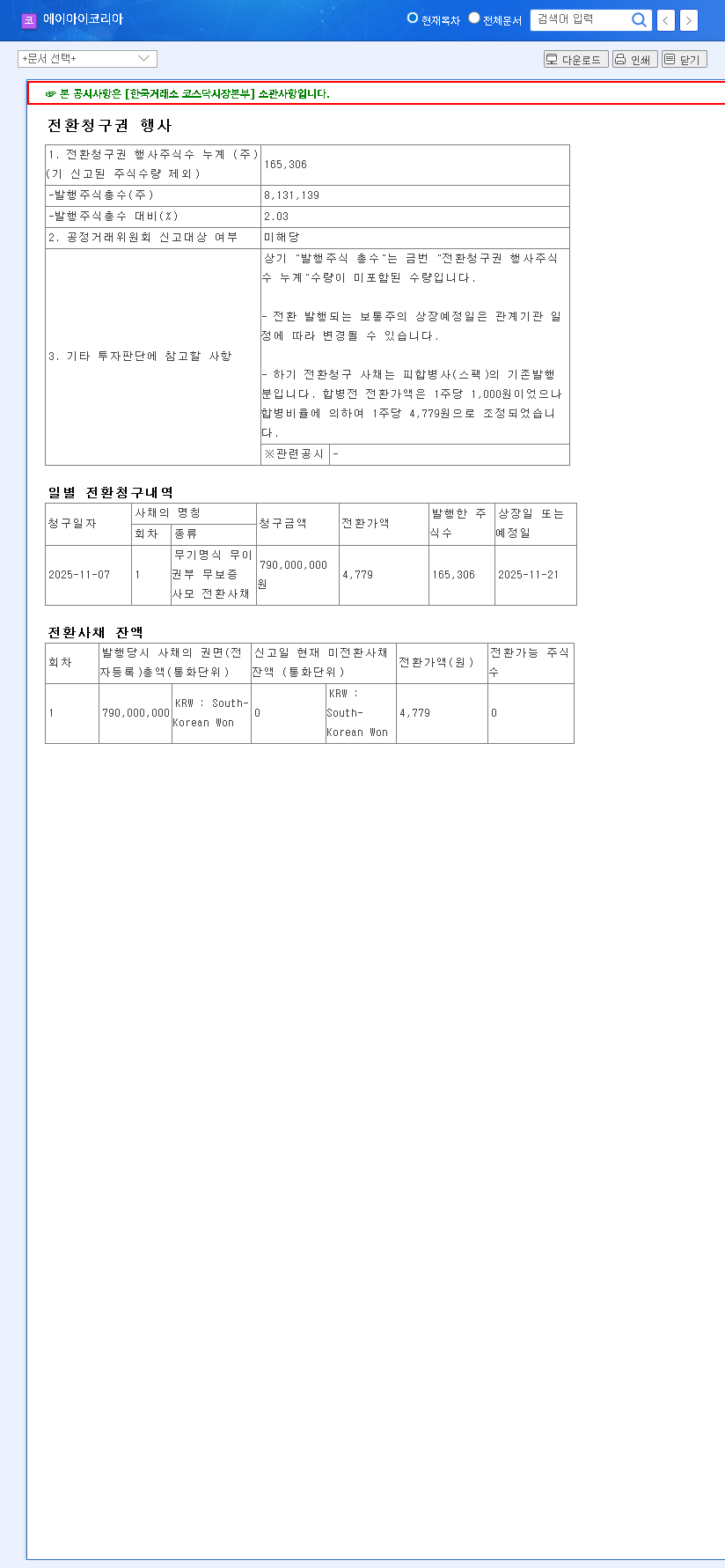
On November 7, 2025, AI Korea officially announced the exercise of rights for its 1st series convertible bonds. According to the Official Disclosure, this action will result in the issuance of 165,306 new shares. These shares are set to be listed on the KOSDAQ market on November 21, 2025, constituting 2.03% of the company’s total outstanding shares. A convertible bond gives bondholders the right, but not the obligation, to convert their debt investment into a predetermined number of company shares. It’s a hybrid financial instrument that blends features of both debt and equity.
The core issue for current shareholders is the potential for share dilution and increased selling pressure as these new shares enter the market, a common short-term effect of a convertible bond exercise.
Key Factors Driving Short-Term Stock Volatility
Two primary forces could create downward pressure on AI Korea’s stock price in the immediate future:
- •Supply Overhang: The introduction of over 165,000 new shares can create a temporary supply-demand imbalance. This influx, often referred to as ‘overhang,’ can weigh on the stock price until the market fully absorbs the new equity.
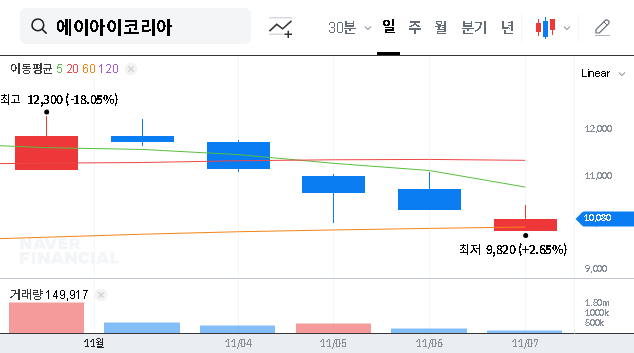
- •Profit-Taking Incentive: The conversion price for these bonds is KRW 4,779. With the current stock price hovering around KRW 10,080, bondholders who convert their debt to equity are sitting on an unrealized gain of over 111%. This creates a strong incentive for them to sell their newly acquired shares to lock in profits, increasing selling pressure.
Fundamental Analysis: AI Korea’s Long-Term Outlook
While the AI Korea convertible bond event may cause short-term market noise, it does not alter the company’s underlying business value. A thorough AI Korea stock analysis must focus on its core operations and future growth drivers.
Positive Growth Drivers
- •Thriving Secondary Battery Business: AI Korea’s Central Electrolyte Supply System (CESS) and process piping business is directly tied to the explosive growth of the Electric Vehicle (EV) and Energy Storage System (ESS) markets. As Korea’s top three battery manufacturers expand globally, AI Korea stands to benefit significantly. For more on this trend, see this report on global EV market growth.
- •Strategic Diversification: The company is wisely expanding into high-growth technology sectors, including AI-based Autonomous Mobile Robot (AMR) automation and ESS device development. This diversification mitigates risk and builds new revenue streams for the future.
- •Strengthened Financial Health: A significant improvement in the company’s debt-to-equity ratio, which fell from 94% to 63%, demonstrates a commitment to financial stability and resilience.
Key Risk Factors to Monitor
- •System Business Headwinds: The company’s system business segment faces challenges from a cooling display market and heightened competition. Investors should monitor for strategic adjustments in this area.
- •Low R&D Investment: An R&D expense ratio of 0.76% of sales is relatively low. To maintain a competitive edge, particularly in its new tech ventures, increased investment in innovation will be crucial.
- •Ongoing Litigation: Outstanding lawsuits with Haedong Co., Ltd. and Joosung Co., Ltd. introduce a level of uncertainty. The outcomes could have financial implications that investors need to be aware of.
Investment Strategy for AI Korea (364950)
Navigating the current environment requires a dual-focus strategy. Investors should differentiate between short-term market reactions and the company’s long-term value trajectory. To learn more about similar opportunities, you can explore our analysis of other secondary battery stocks.
Short-Term Approach
Pay close attention to trading volumes and price action around the November 21, 2025, listing date. Any significant price dip driven by this temporary supply increase could present a tactical buying opportunity for investors who believe in the company’s strong secondary battery outlook and new business potential.
Mid-to-Long-Term Perspective
Ultimately, AI Korea’s stock performance will reflect its business execution. Keep a close watch on key performance indicators such as revenue growth in the battery segment, milestones in the AMR and ESS ventures, and any resolutions to the outstanding litigation. A continued focus on fundamentals is the most prudent path for long-term investors.