Tag: AI Investment

  • (047560) ESTsoftCorp. Q3 2025 Earnings Deep Dive: AI Investment Costs & Stock Outlook

    (047560) ESTsoftCorp. Q3 2025 Earnings Deep Dive: AI Investment Costs & Stock Outlook

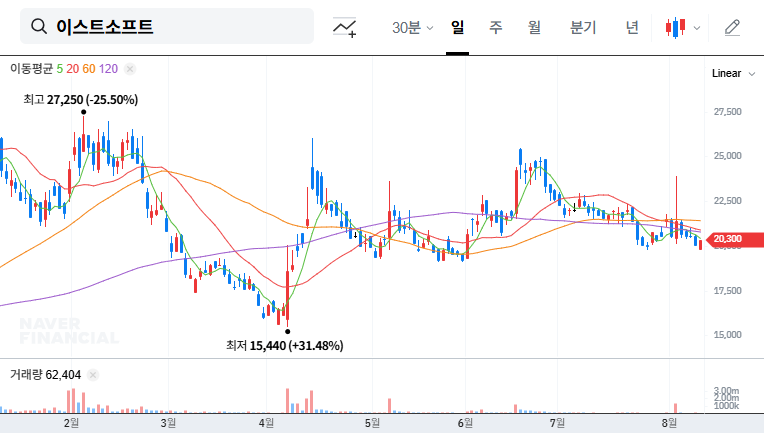
    The release of ESTsoftCorp.’s (047560) Q3 2025 earnings has sent a ripple of concern through the investment community. After a promising second quarter, the company reported a significant revenue decline and an unexpected shift to an operating loss, challenging the prevailing optimism surrounding its aggressive AI-centric strategy. This detailed analysis will dissect the official financial results, explore the profound impact of its ongoing ESTsoftCorp. AI investment, and provide a clear-eyed ESTsoftCorp. stock outlook for current and prospective shareholders.

    We will unpack the numbers, weigh the short-term costs against long-term potential, and outline strategic considerations to help you navigate this pivotal moment for ESTsoftCorp.

    A Deep Dive into ESTsoftCorp.’s Q3 2025 Earnings Report

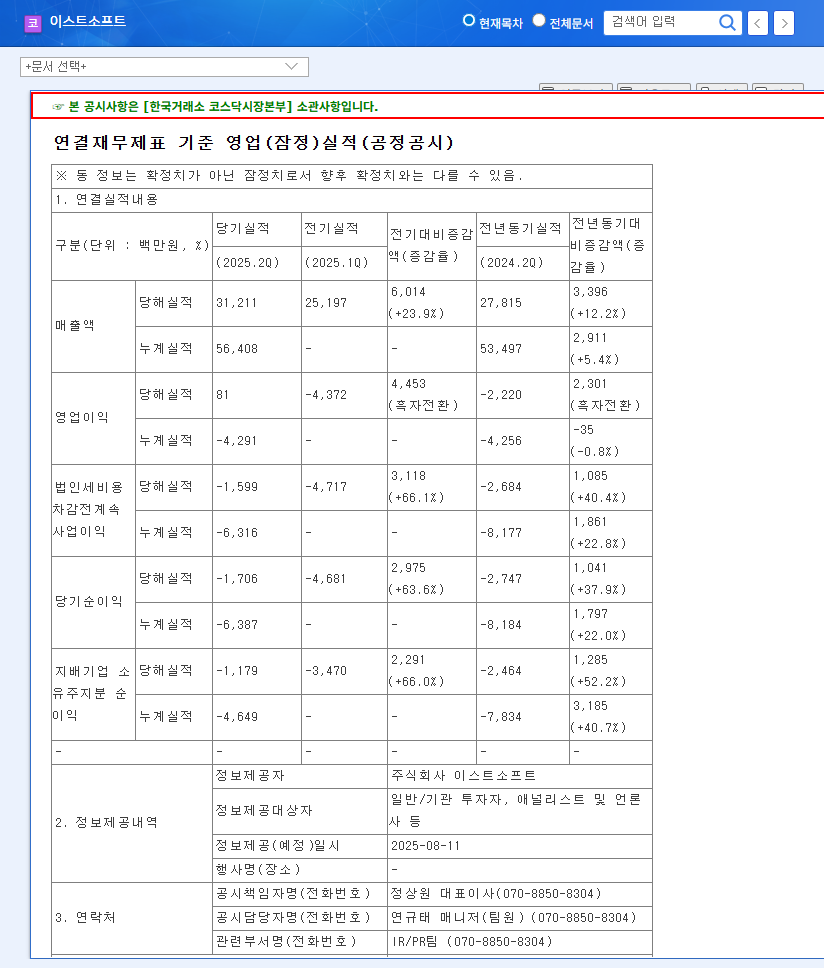
    On November 11, 2025, ESTsoftCorp. released its preliminary consolidated financial results for the third quarter. The figures, which starkly contrasted with market expectations, painted a picture of a company in a deep investment phase. The key takeaways from the official disclosure (Official Disclosure) are as follows:

    • Revenue: 24.9 billion KRW, a significant 20.2% decrease from the previous quarter.
    • Operating Profit: -4.5 billion KRW, a disappointing shift into deficit.
    • Net Profit: -4.7 billion KRW, mirroring the operating loss.

    This downturn is particularly jarring for investors who had anticipated a continued operating profit turnaround. The results immediately raise a critical question: what is driving this underperformance?

    The Double-Edged Sword: AI Ambition vs. Financial Reality

    The core reason for the Q3 deficit is the company’s unwavering commitment to becoming a leader in the AI space. This strategic pivot is a classic example of a high-risk, high-reward scenario where short-term profitability is sacrificed for long-term market dominance.

    Escalating Costs from Aggressive AI Investment

    The company’s P&L statement reflects substantial spending across several key AI initiatives, including R&D, talent acquisition, and global marketing. These investments are directed at building a robust AI ecosystem:

    • PERSO.ai (Global AI SaaS): This platform has shown impressive traction, exceeding 200,000 subscribers with a strong international user base. However, scaling globally requires immense marketing spend and continuous feature development, like the new AI dubbing technology.
    • Alan (Korean AI Search): Differentiating with deep research and YouTube summarization features, Alan is a long-term play that demands heavy R&D to refine its LLM and RAG technology before monetization can be fully realized. For more on this, see our full analysis of ESTsoftCorp.’s AI technology stack.
    • AI Education: While a promising venture, establishing the K-Digital Training program involves upfront costs for curriculum development and infrastructure.

    ESTsoftCorp. is betting its future on AI dominance, a high-stakes wager that is currently testing investor patience. The key question is not if the investment is bold, but when it will begin to yield tangible returns.

    Revenue Strain from Legacy Segments

    Compounding the issue of rising costs is the simultaneous decline in revenue. The 20.2% quarter-over-quarter drop suggests that legacy business segments—portal (Zum.com), commerce (Rounz), and gaming (Cabal Online)—were unable to generate enough cash flow to offset the heavy AI spending. This could be due to macroeconomic headwinds, increased competition, or other seasonal factors, but the result is a magnified negative impact on the bottom line.

    ESTsoftCorp. Stock Outlook and Investor Strategy

    The negative ESTsoftCorp. Q3 2025 earnings will undoubtedly create short-term volatility. The market dislikes uncertainty, and the shift to a deficit introduces concerns about cash flow and the timeline for profitability.

    Short-Term Outlook: Caution is Advised

    In the immediate future, we can expect negative pressure on the 047560 stock price. Investors who prioritize immediate profitability may exit their positions, leading to a potential dip. Short-term traders should exercise extreme caution, as the stock may be susceptible to disappointment selling. A conservative approach, waiting for the price to stabilize or for a clear signal from the company’s Q4 guidance, is prudent.

    Mid- to Long-Term Outlook: AI Performance is the Decisive Factor

    For long-term investors, the focus shifts entirely to the AI business’s trajectory. The potential market for AI SaaS tools is enormous, as validated by industry reports from authorities like Gartner. Success will be determined by ESTsoftCorp.’s ability to convert its investments into market share and revenue. Key metrics to watch include:

    • Subscriber Growth & Paid Conversion Rate for PERSO.ai.
    • User Adoption and Monetization Timeline for Alan AI search.
    • The company’s ability to manage cash burn and maintain financial stability during this investment phase.

    Conclusion: A Painful but Potentially Necessary Transition

    ESTsoftCorp.’s Q3 2025 earnings are a clear signal of a ‘painful transition period.’ The company is consciously absorbing short-term financial pain to build what it believes will be a long-term competitive advantage in the AI era. While the immediate results are concerning, the underlying growth story of its AI assets remains intact. The path forward for the stock price will be determined by the company’s ability to demonstrate tangible progress and a clear path to profitability in its AI ventures. Investors must now weigh the long-term vision against the short-term financial realities with careful, continuous analysis.
    (047560) ESTsoftCorp. Q3 2025 Earnings Deep Dive: AI Investment Costs & Stock Outlook 관련 이미지
    (047560) ESTsoftCorp. Q3 2025 Earnings Deep Dive: AI Investment Costs & Stock Outlook 관련 이미지
  • (259960) KRAFTON Q3 2025 Earnings Report: A Deep Dive into Record Profits & Future Growth

    (259960) KRAFTON Q3 2025 Earnings Report: A Deep Dive into Record Profits & Future Growth

    The latest KRAFTON Q3 2025 earnings report has sent a complex but ultimately compelling message to the market. The gaming powerhouse behind global hits like PUBG has posted financials that showcase incredible profitability, with net profits soaring past expectations. However, a simultaneous miss on operating profit has left investors and analysts digging deeper. Is this a sign of trouble, or a calculated move in a much larger strategic game? This comprehensive analysis will unpack the numbers, explore the fundamentals, and provide a clear outlook on what this means for the future of KRAFTON stock.

    KRAFTON Q3 2025 Earnings: The Official Numbers

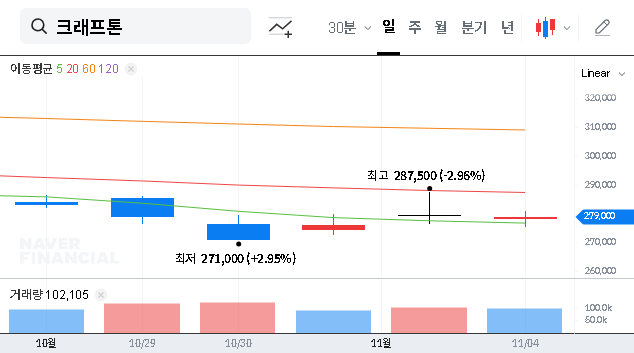
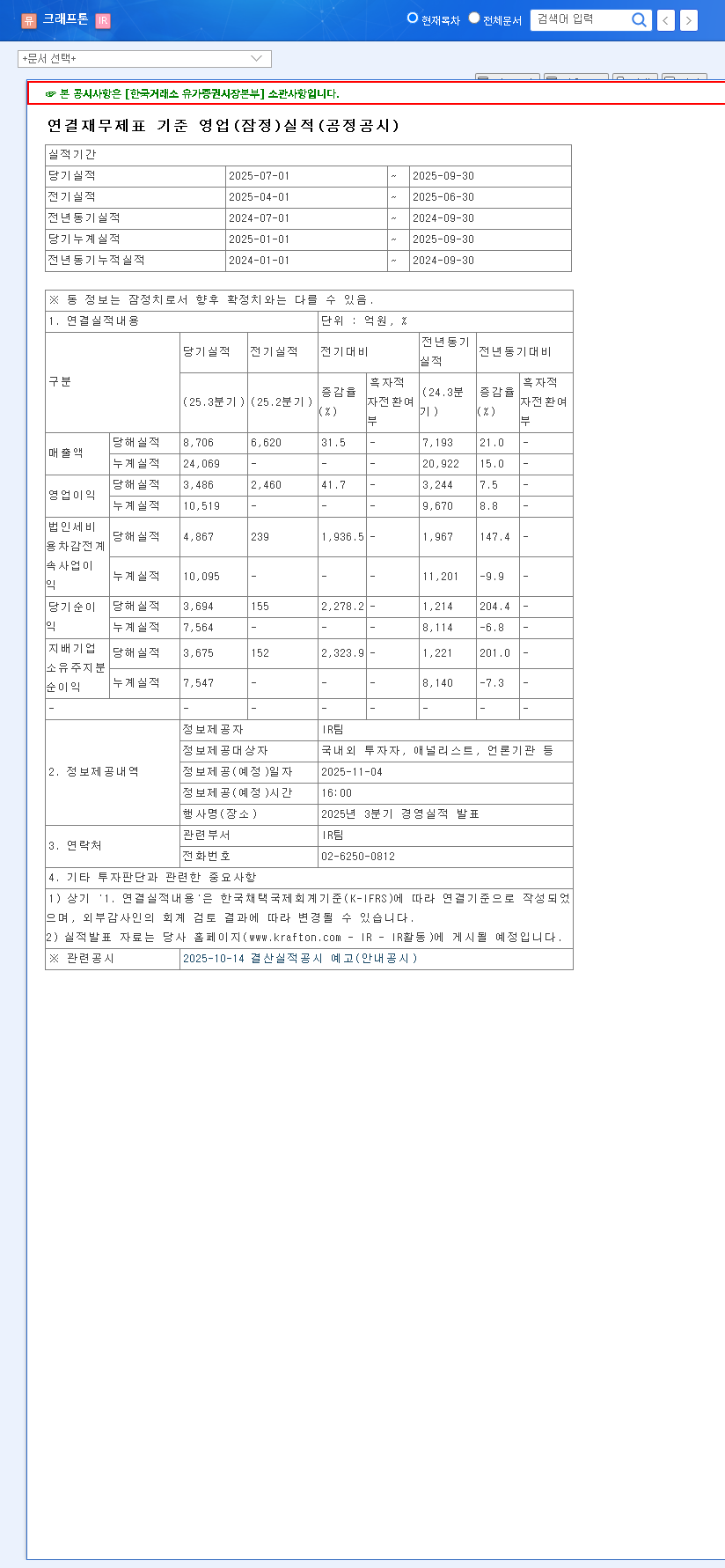
    On November 4, 2025, KRAFTON released its provisional consolidated KRAFTON financial results for the third quarter. The report revealed a company firing on all cylinders in terms of revenue and pure profit, while strategically increasing investment for future endeavors. The key figures, when compared to market consensus, paint a fascinating picture:

    • Revenue: KRW 870.6 billion, a solid 2% above the market expectation of KRW 849.8 billion.
    • Net Profit: KRW 367.5 billion, an impressive 24% surge above the market expectation of KRW 296.6 billion.
    • Operating Profit: KRW 348.6 billion, falling 5% short of the market expectation of KRW 368.5 billion.

    These figures are based on the company’s official filing. For a detailed breakdown, investors can refer to the Official Disclosure on DART.

    The dip in operating profit isn’t a sign of weakness, but rather a deliberate investment in KRAFTON’s future. Increased spending on R&D, new IP development, and AI integration is a strategic cost essential for long-term dominance.

    Analyzing KRAFTON’s Core Strengths & Strategy

    To understand the long-term potential, it’s crucial to look beyond a single quarter’s operating profit. KRAFTON’s foundation is built on several key pillars that continue to drive its growth and insulate it from market volatility.

    Global Dominance and Financial Fortitude

    KRAFTON is a truly global entity, with a staggering 95% of its total revenue originating from overseas markets. This demonstrates not just brand power but a diversified revenue stream that is less susceptible to regional economic downturns. Financially, the company is a fortress, boasting total assets of KRW 7.6 trillion against liabilities of only KRW 0.84 trillion, resulting in immense financial soundness and flexibility for future investments.

    The ‘Scale-up the Creative’ IP Pipeline

    The company’s core ‘Scale-up the Creative’ strategy is focused on building massive, enduring franchise IPs. This involves both strengthening existing titles and aggressively developing new ones. Projects like the highly anticipated life-sim game inZOI and the multimedia expansion of The Bird That Drinks Tears IP are prime examples of this long-term vision in action. These are not just new games; they are foundational pillars for future revenue, merchandising, and entertainment ecosystems. You can learn more by reading about KRAFTON’s deep IP development strategy.

    Navigating Potential Risks and Market Headwinds

    Despite its strengths, KRAFTON operates in a highly dynamic and competitive environment. Investors should remain aware of several key risks that could impact future performance.

    • New Game Performance: The ultimate success of major investments hinges on the market reception of new titles. A blockbuster launch can send the stock soaring, while a miss can temper growth expectations.
    • Intense Market Competition: The global gaming industry is fiercely competitive. As documented by industry analysts at major publications like Bloomberg, maintaining market share requires constant innovation and significant marketing spend.
    • M&A Integration: Successfully integrating acquired companies like Neptune and realizing the projected synergies from strategic investments is crucial for validating the company’s expansion strategy.
    • Macroeconomic Factors: With its high proportion of overseas sales, fluctuations in currency exchange rates (KRW/USD, KRW/EUR) can significantly impact reported earnings.

    Investment Outlook for KRAFTON Stock

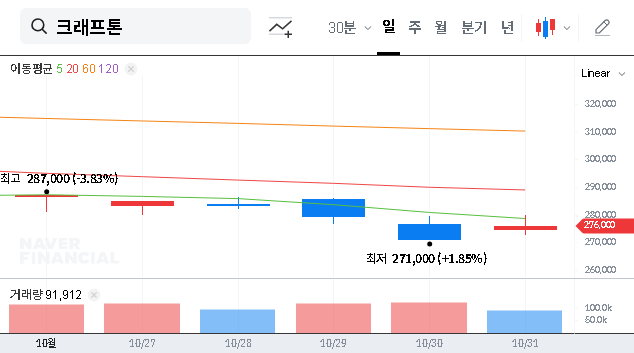
    The KRAFTON Q3 2025 earnings report solidifies a ‘cautiously neutral’ to ‘long-term positive’ outlook. The market may react with short-term uncertainty to the operating profit miss, potentially creating price adjustments. However, the underlying strength shown in revenue and KRAFTON net profit provides a strong floor.

    The long-term value of KRAFTON stock will be determined by the successful execution of its growth strategy. Astute investors should monitor the progress of new IP launches, the tangible results from AI technology investments, and the synergistic performance of its M&A activities. While short-term patience may be required, KRAFTON is clearly investing today for a more dominant and profitable tomorrow.

    (259960) KRAFTON Q3 2025 Earnings Report: A Deep Dive into Record Profits & Future Growth 관련 이미지
  • (259960) KRAFTON Q3 IR Deep Dive: Stock Analysis, Investment Strategy & Key Forecasts

    (259960) KRAFTON Q3 IR Deep Dive: Stock Analysis, Investment Strategy & Key Forecasts

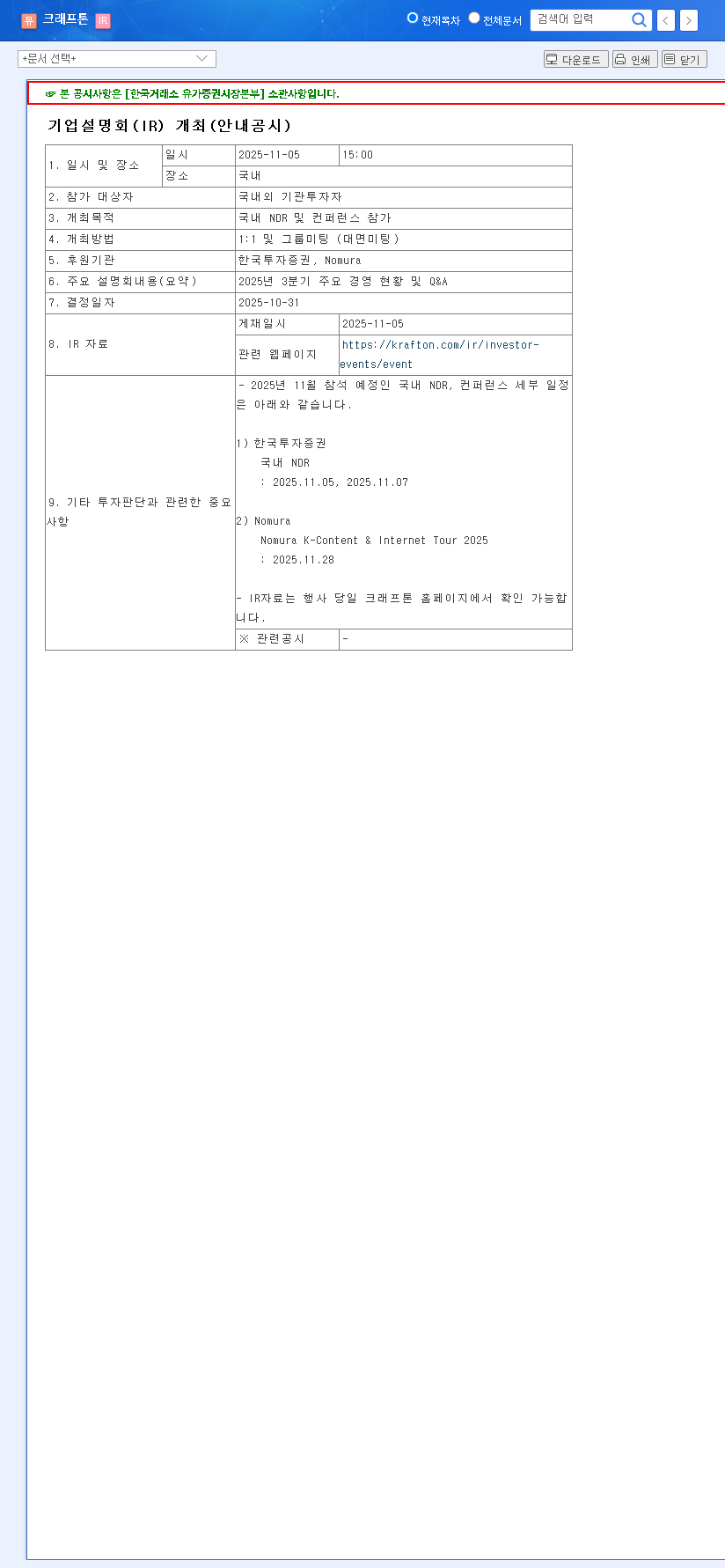
    The upcoming KRAFTON Q3 IR conference, scheduled for November 5, 2025, represents a pivotal moment for investors and the global gaming market. As a titan built on the phenomenal success of ‘PUBG: Battlegrounds,’ KRAFTON is at a crossroads, actively diversifying with new IP expansions like <inZOI> and significant investments in AI. This event is far more than a simple earnings call; it’s a window into the company’s long-term vision and its strategy to maintain a competitive edge. This deep-dive analysis will dissect the critical factors influencing KRAFTON stock performance and provide a clear roadmap for your investment strategy.

    Will KRAFTON’s leadership successfully articulate a compelling growth narrative that satisfies market expectations, or will lingering uncertainties cast a shadow on its stock? The details revealed in this IR will be crucial.

    Decoding the KRAFTON Q3 IR: Fundamentals and Future Outlook

    KRAFTON’s upcoming presentation and Q&A session, part of its domestic NDR and conference participation, provides a crucial opportunity to assess the company’s health. Information regarding this event can be found in their Official Disclosure (Source: DART). Analyzing the company’s fundamentals reveals a landscape of robust strengths balanced by significant risks.

    Core Strengths: The Bull Case for KRAFTON Investment

    • IP Diversification: The planned inZOI launch and development based on ‘The Bird That Drinks Tears’ IP are critical steps to reduce reliance on the core PUBG IP, a topic we’ve covered extensively. Success here would create powerful new, long-term revenue streams.
    • AI Technology Frontier: Investment in proprietary AI research and the ‘ORAK’ deep learning model is a forward-thinking move. This can dramatically increase development efficiency, create more dynamic in-game experiences, and establish a significant technological moat.
    • Strategic Ecosystem Growth: Investments in companies like SPOON LABS and NEPTUNE are not just financial plays; they are strategic moves to build a wider content ecosystem, unlocking synergies and new market opportunities.
    • Proven Global Infrastructure: With worldwide development studios and best-in-class gunplay technology, KRAFTON has a proven ability to develop and service games at a global scale, reducing execution risk for new titles.
    • Shareholder-Friendly Policies: Active share buyback and cancellation programs signal confidence from management and are a direct method of enhancing shareholder value, which is a positive signal for any KRAFTON investment.

    Potential Risks: The Bear Case Considerations

    • Over-Reliance on PUBG IP: With mobile platforms contributing over 62% of revenue, the company’s financial health is heavily tied to the aging PUBG IP. Any significant decline in its popularity or intensifying competition could severely impact the bottom line.
    • New IP Execution Risk: The success of ambitious projects like <inZOI> is not guaranteed. High R&D costs associated with these new ventures could strain profitability in the short term if they fail to capture a significant market share.
    • M&A and Investment Uncertainty: While strategic, large acquisitions carry inherent financial risks and performance uncertainties. The integration and ultimate return on these investments remain a key variable.
    • Macroeconomic Headwinds: As a global company, KRAFTON is exposed to foreign exchange rate volatility, which can directly impact reported earnings. Furthermore, intensifying competition from other major studios, as reported by leading industry analysts, demands continuous innovation.

    Investor Action Plan: Key Watch Points for the IR Event

    To make an informed decision on KRAFTON stock, investors should focus on the following critical areas during the Q3 IR presentation. The answers to these questions will likely dictate market sentiment and stock trajectory in the subsequent weeks.

    • Q3 Financials vs. Expectations: How do revenue, operating profit, and net income compare to consensus market forecasts? Any significant beat or miss will be an immediate catalyst.
    • Concrete New IP Timelines: Look for specific data on <inZOI>’s early access performance and a clear, updated timeline for the ‘The Bird That Drinks Tears’ project. Vague answers could spook investors.
    • AI Strategy Monetization: How will KRAFTON translate its investment in AI into tangible results? Ask for specific examples of how it’s impacting development costs, timelines, or player engagement.
    • Future Shareholder Returns: Are the current buyback programs continuing? Are there plans for dividends or other methods to enhance shareholder value?
    • Global Market Performance: Beyond overall numbers, which regions are growing and which are struggling? What are the specific strategies for key markets like North America, Europe, and emerging markets?

    Ultimately, the KRAFTON Q3 IR is an exercise in narrative management. A positive report coupled with a confident, clear vision for the future could propel the stock to new highs. Conversely, underwhelming results or a lack of clarity on key risks could lead to a short-term correction. Investors must weigh the long-term potential against these immediate catalysts and make decisions based on a comprehensive view of the company’s trajectory.

    (259960) KRAFTON Q3 IR Deep Dive: Stock Analysis, Investment Strategy & Key Forecasts 관련 이미지
  • (005930) SAMSUNG ELECTRONICS Earnings H1 2025: In-Depth Analysis of Surprise Growth & Stock Outlook

    (005930) SAMSUNG ELECTRONICS Earnings H1 2025: In-Depth Analysis of Surprise Growth & Stock Outlook

    The latest SAMSUNG ELECTRONICS earnings report for the first half of 2025 has sent a clear message to the market: the tech giant is not just resilient, it’s thriving. Defying global economic headwinds, Samsung delivered a stunning ‘earnings surprise,’ significantly outperforming analyst expectations. This comprehensive analysis will dissect the factors behind this remarkable performance, evaluate the potential risks on the horizon, and provide a strategic outlook for investors weighing their position in Samsung’s stock performance.

    H1 2025 Financial Highlights: A Decisive Beat

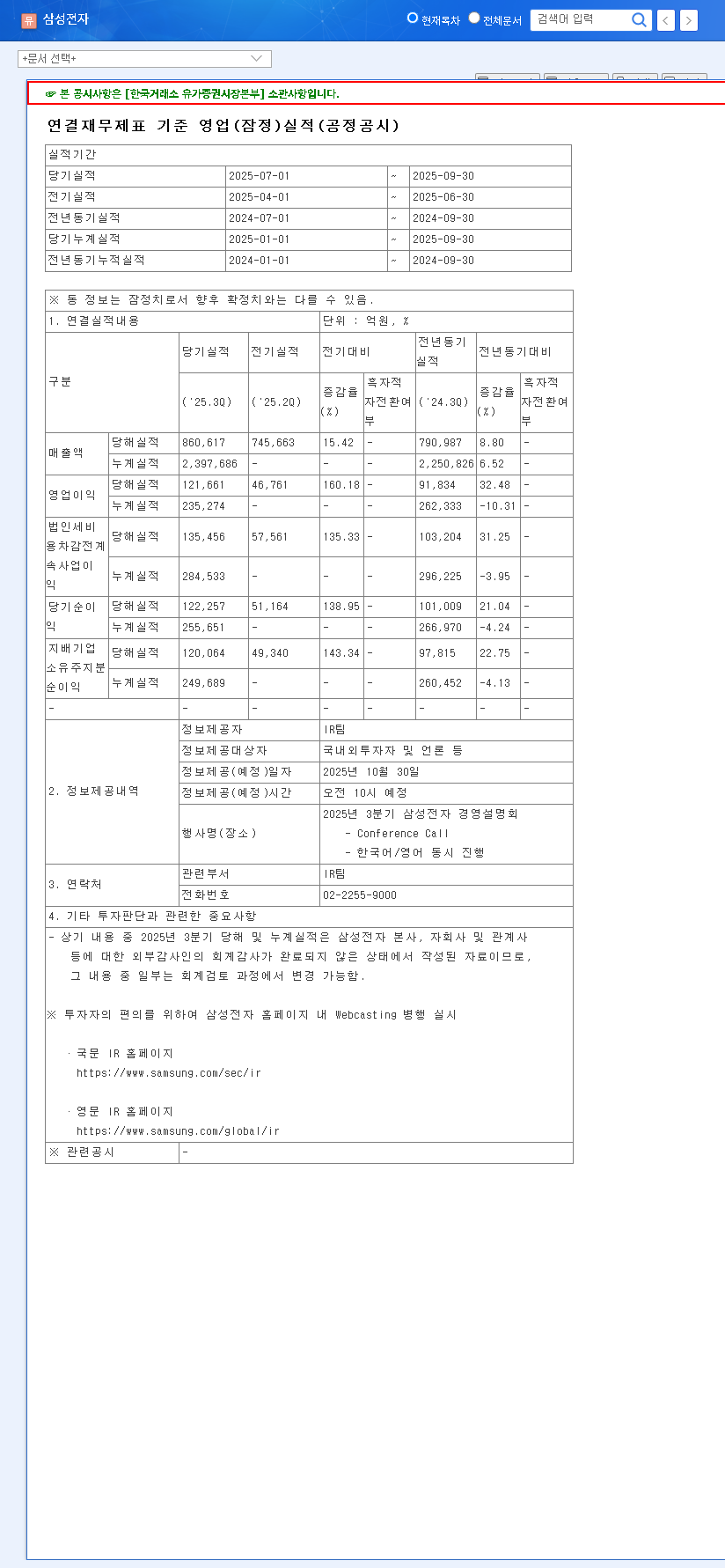
    In the first half of 2025, SAMSUNG ELECTRONICS posted consolidated results that painted a picture of robust health and operational excellence. The figures, confirmed by the company’s official filing, reveal significant outperformance. You can view the complete data in the Official Disclosure from DART.

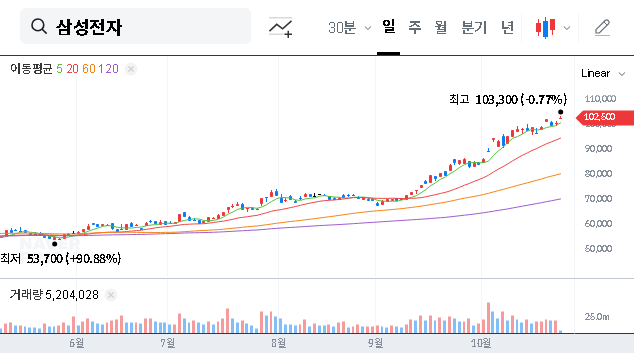
    • Revenue: KRW 860.617 trillion (a 2.7% beat over market consensus)
    • Operating Profit: KRW 121.661 trillion (an impressive 20.4% beat)
    • Net Profit: KRW 120.064 trillion (a staggering 33.8% beat)

    Crucially, the operating profit margin held strong at approximately 14.1%. This indicates that Samsung successfully defended its profitability through strategic pricing and cost management, even as concerns about falling product prices lingered in the market.

    With operating profit soaring over 20% above consensus, Samsung has unequivocally demonstrated its strategic prowess and operational resilience in a volatile global market. This is a testament to its diversified business and technology leadership.

    Analyzing the Key Growth Drivers

    This outstanding SAMSUNG ELECTRONICS earnings report wasn’t an accident. It was the result of a powerful combination of internal strategic execution and a more favorable external economic climate.

    Internal Strengths: Dominance and Efficiency

    • Dual-Engine Growth: Both the Device Solutions (DS) division, home to its crucial semiconductor business, and the Device eXperience (DX) division, covering mobiles and home appliances, fired on all cylinders. A strong recovery in memory chip demand coincided with sustained premium sales from the DX side.
    • High-Value Product Strategy: Samsung focused on high-margin products, such as HBM (High Bandwidth Memory) for AI servers and its flagship Galaxy S series smartphones. This premium mix was vital for maintaining a high operating profit margin.
    • Cost Optimization: Efficient supply chain management and disciplined cost controls across the organization helped buffer against inflationary pressures on raw materials.

    External Tailwinds: A Favorable Macro Shift

    The broader economic environment also played a supportive role. Anticipation of interest rate stabilization from central banks, as reported by major financial outlets like Reuters, helped improve overall investment sentiment and reduce corporate borrowing costs. Furthermore, Samsung’s consistent shareholder return policies, including dividends and share buybacks, bolstered investor confidence and provided a stable floor for its stock performance.

    Navigating Potential Risks and Headwinds

    Despite the stellar H1 2025 results, a prudent Samsung investor outlook must acknowledge several unavoidable risks that require careful monitoring.

    • Exchange Rate Volatility: A strengthening Korean Won (KRW) against the US Dollar can negatively impact the profitability of exports, as revenues earned in dollars translate into fewer won.
    • Geopolitical & Macro Uncertainty: Ongoing global trade tensions and the persistent risk of a broader economic slowdown could dampen consumer demand and disrupt supply chains.
    • Intense Competition: The semiconductor market is fiercely competitive. Samsung faces constant pressure from rivals in both the memory and foundry sectors, requiring massive, ongoing investments in R&D and capital expenditures (CAPEX) to maintain its edge. For more on this, read our deep dive into the 2025 semiconductor market trends.

    Future Outlook: The AI Revolution and Beyond

    Looking ahead, the primary catalyst for Samsung’s growth is undoubtedly the artificial intelligence boom. The explosive demand for generative AI is fueling an unprecedented need for high-performance semiconductors, positioning Samsung’s DS division at the epicenter of this technological shift. Dominance in HBM and advancements in next-generation process nodes are critical Samsung growth drivers. Concurrently, its push into new markets like automotive semiconductors and continued innovation in foldable phones and premium home appliances provide diversified avenues for long-term expansion.

    Frequently Asked Questions (FAQ)

    Q1: By how much did the SAMSUNG ELECTRONICS earnings exceed forecasts in H1 2025?

    A1: The company delivered a significant ‘earnings surprise,’ beating market expectations by 20.4% for operating profit and 33.8% for net profit, showcasing a very strong performance.

    Q2: What were the main reasons for Samsung’s strong H1 2025 results?

    A2: Key factors included a sharp recovery in the semiconductor (DS) division, particularly in memory chips for AI, combined with steady, high-margin sales from the mobile and home appliance (DX) division. Efficient cost management also played a crucial role.

    Q3: What are the primary risks for Samsung’s stock performance going forward?

    A3: Investors should monitor currency risks from a stronger Korean Won, potential global economic slowdowns, geopolitical tensions impacting trade, and intense competition within the semiconductor industry.

    Q4: What are Samsung’s most important future growth drivers?

    A4: The biggest growth driver is the surging demand for AI, which requires Samsung’s advanced semiconductors like HBM. Other key areas include its leadership in premium smartphones, expansion into automotive chips, and innovations in its foundry business.

    (005930) SAMSUNG ELECTRONICS Earnings H1 2025: In-Depth Analysis of Surprise Growth & Stock Outlook 관련 이미지
  • (017670) SK Telecom Earnings Shock: In-Depth Analysis & 2025 Investment Strategy

    (017670) SK Telecom Earnings Shock: In-Depth Analysis & 2025 Investment Strategy

    The recent SK Telecom earnings shock has sent ripples through the market, leaving investors questioning the telecom giant’s trajectory. In a stunning announcement for its provisional Q3 2025 results, the company reported figures that fell dramatically short of market consensus, revealing substantial losses in operating and net income. This has understandably triggered significant concern among shareholders and market analysts.

    What confluence of factors led to this precipitous downturn? What does this mean for the company’s future, and how should investors navigate this volatile period? This in-depth analysis provides a clear diagnosis of SK Telecom’s current financial health, explores the underlying causes of its performance, and outlines a strategic investment approach for the road ahead.

    Deconstructing the SK Telecom Q3 2025 Earnings Shock

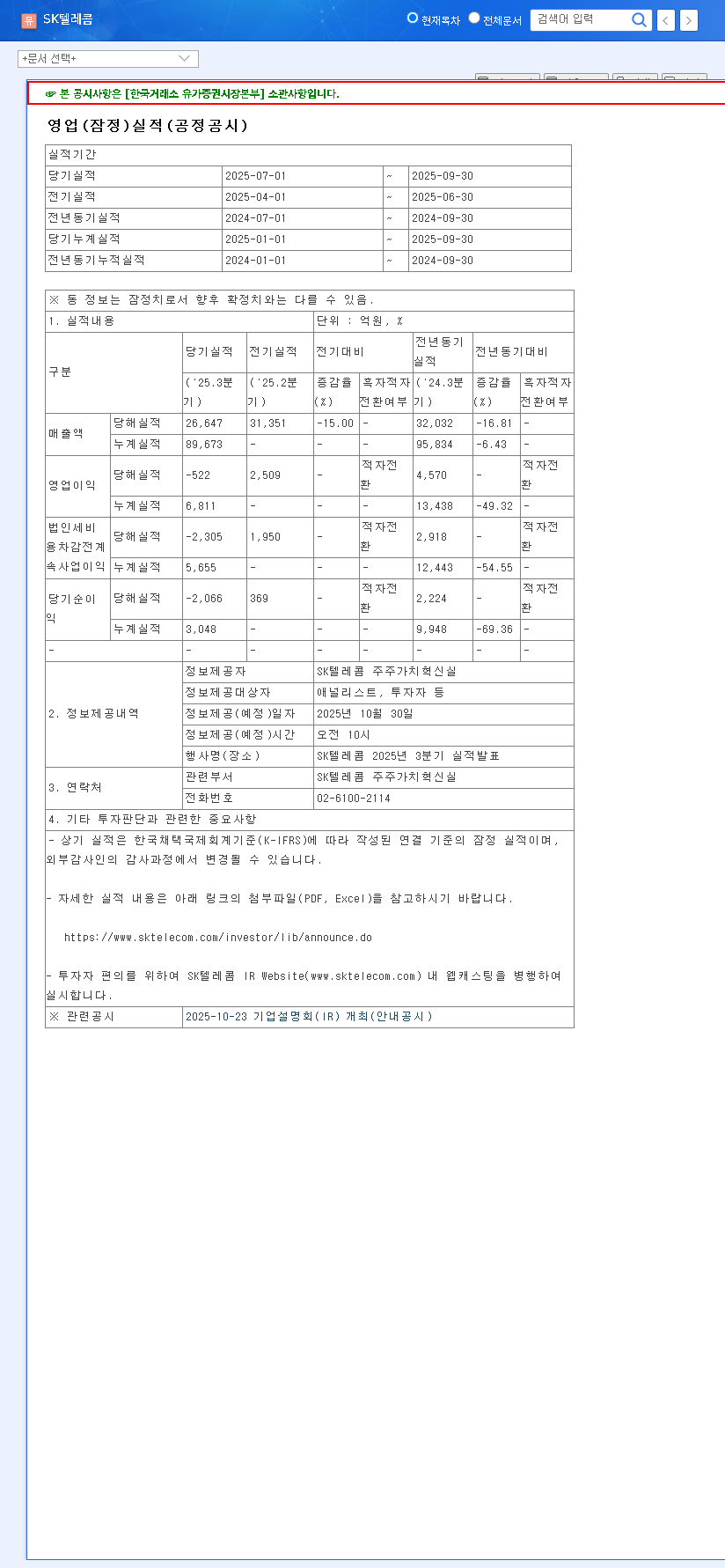
    SK Telecom’s provisional Q3 2025 operating results, as filed in their Official Disclosure, presented a stark picture that confirmed a full-blown ‘earnings shock’. The numbers were as follows:

    • Revenue: KRW 2.6647 trillion
    • Operating Income: KRW -52.2 billion (a significant turn to loss)
    • Net Income: KRW -206.6 billion (a substantial turn to loss)

    These results didn’t just miss expectations; they shattered them. The market had anticipated revenue around KRW 3.9421 trillion and a modest operating income. The reality represented an approximate 32% miss on revenue and a staggering 588% deviation on operating income. This massive discrepancy has forced a complete re-evaluation of the company’s short-term prospects.

    Unpacking the Root Causes of Poor Performance

    A multi-faceted crisis led to this financial downturn. No single issue is to blame; rather, a combination of external pressures and internal challenges created a perfect storm for SK Telecom.

    Macroeconomic Headwinds & Fierce Competition

    Global economic uncertainty, as reported by leading financial news outlets, has weakened consumer sentiment. This directly impacts telecommunication spending and new subscriber growth. Simultaneously, the 5G market is reaching maturity. This leads to a deceleration in ARPU (Average Revenue Per User) growth. To maintain market share, SK Telecom likely incurred higher-than-expected marketing costs, squeezing profit margins in its core business.

    The High Cost of Future Growth

    SK Telecom has been aggressively investing in future growth engines like Artificial Intelligence (AI), cloud services, and data centers. While crucial for long-term viability, these ventures are capital-intensive and carry a significant initial cost burden. With some initiatives like MyData yet to generate revenue, the short-term impact on the bottom line has been profoundly negative. This is a classic case of spending for the future at the expense of present-day profitability.

    Compounding Factors: Data Breach & Currency Woes

    Two other critical issues exacerbated the situation. A recent customer USIM data breach not only tarnished the brand’s image but also necessitated costly investments in security, recovery, and potential compensation. Furthermore, adverse exchange rate fluctuations, particularly the rising KRW against the USD and EUR, increased the cost of importing essential telecom equipment and servicing foreign currency debt.

    Future Outlook: What’s Next for SKT Stock?

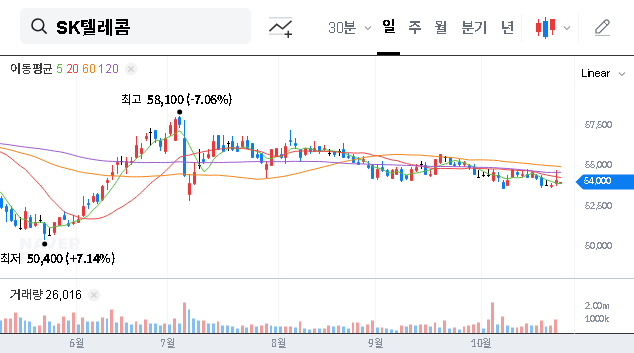
    The aftermath of this SK Telecom earnings shock will likely be characterized by heightened volatility and investor caution. The shift to a significant operating loss is a major red flag that will trigger target price downgrades from brokerage firms, adding downward pressure on the stock. For more information, you can review our previous analysis of the 5G market landscape.

    The key question now is the timing of recovery. This will depend on a swift and effective management response, stabilization of macroeconomic conditions, and tangible results from the company’s new business ventures. The large losses may also force the company to re-evaluate the pace and scale of its investment plans, potentially delaying its long-term growth strategy.

    In the short term, a conservative and watchful investment approach is paramount. Investors should prioritize capital preservation and await clearer signals of a financial turnaround before making aggressive moves.

    Action Plan & SK Telecom Investment Strategy

    Navigating the fallout from this report requires a disciplined SK Telecom investment strategy. Here are key actions for investors to consider:

    • Adopt a Wait-and-See Stance: Avoid reactionary decisions. It’s prudent to observe the market’s response and await the Q4 earnings report for signs of stabilization or further decline.
    • Monitor Key Performance Indicators (KPIs): Pay close attention to ARPU trends, marketing expense ratios, subscriber growth, and any revenue generated by the AI and data center businesses in upcoming reports.
    • Evaluate Long-Term Fundamentals: Despite the current turmoil, assess the long-term potential of SK Telecom’s strategic pivot. If you believe in the AI and digital transformation vision, this dip could present a long-term entry point, but only after the dust settles.
    • Scrutinize Management’s Response: Listen closely to the company’s next earnings call for their official explanation and a detailed plan for course correction. A clear, confident strategy to improve cost efficiency and monetize new ventures will be crucial for restoring investor confidence.

    Frequently Asked Questions (FAQ)

    What were SK Telecom’s provisional Q3 2025 earnings?

    SK Telecom reported revenue of KRW 2.6647 trillion, an operating loss of KRW -52.2 billion, and a net loss of KRW -206.6 billion, significantly underperforming market expectations and confirming an ‘earnings shock’.

    What caused SK Telecom’s poor performance?

    The primary causes include macroeconomic pressures, intense 5G market competition, heavy initial costs from new business investments (AI, data centers), the financial impact of a customer data breach, and unfavorable currency exchange rates.

    How might this earnings shock affect SKT’s stock price?

    A sharp short-term decline is likely due to negative investor sentiment. Target price downgrades from analysts could add further downward pressure, and overall stock price volatility is expected to increase until a clear recovery path is established.

    (017670) SK Telecom Earnings Shock: In-Depth Analysis & 2025 Investment Strategy 관련 이미지
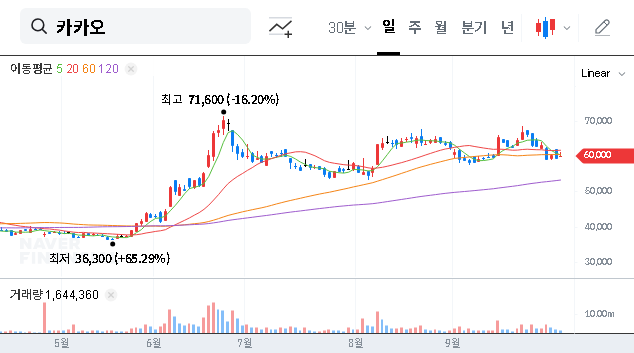
  • (035720) Kakao Stock Outlook 2025: NPS Boosts Stake to 7.41% – A Deep Dive Analysis

    (035720) Kakao Stock Outlook 2025: NPS Boosts Stake to 7.41% – A Deep Dive Analysis

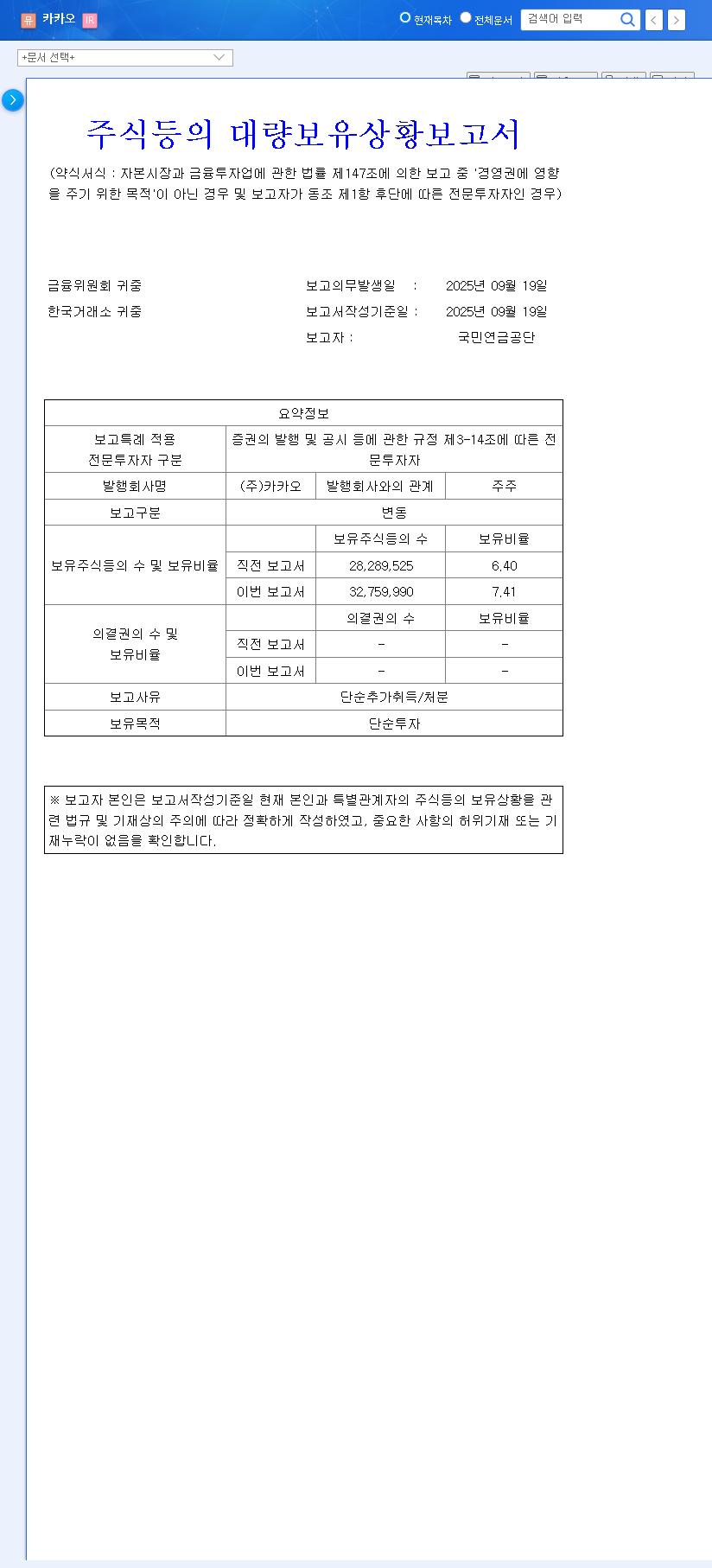
    The Kakao stock outlook has become a focal point for investors after a significant move by South Korea’s largest institutional investor. On October 1, 2025, the National Pension Service (NPS) disclosed it had increased its stake in Kakao (035720) to 7.41%, a notable jump of 1.01%. This ‘simple investment’ in a tech giant valued at over KRW 26 trillion raises a critical question: Is this a definitive buy signal, or are there underlying risks that warrant caution? This in-depth Kakao stock analysis will dissect the fundamentals, explore the implications of the NPS investment, and provide a clear, actionable investment strategy.

    A Vote of Confidence: National Pension Service Increases Kakao Stake

    The move by the National Pension Service in Kakao is more than just a headline. The acquisition, detailed in an official disclosure (Source), signals a strong vote of confidence from a highly influential market player. An investment of this magnitude, classified for ‘simple investment’ purposes, suggests that the NPS sees long-term value in Kakao’s current market position and future growth trajectory, independent of any desire to influence company management. For many market participants, this endorsement provides a bullish signal, suggesting that Kakao’s fundamentals are sound despite recent market volatility.

    In-Depth Kakao Stock Analysis: Strengths vs. Headwinds

    A comprehensive Kakao investment decision requires looking beyond a single news event. We must weigh the company’s powerful growth engines against the significant challenges it faces.

    The Bull Case: Kakao’s Enduring Growth Engines

    • Dominant Platform Business: The KakaoTalk messenger app remains the bedrock of the company. Its Talk Biz segment, encompassing advertising and e-commerce, continues to deliver stable, predictable growth, acting as a cash cow for funding new ventures.
    • Subsidiary Momentum: Key subsidiaries like Kakao Pay and Kakao Mobility are demonstrating improved financial performance. The profitability of Kakao Pay Securities, in particular, signals a strengthening position in the lucrative financial sector.
    • Future-Proofing with AI: Strategic investments in Artificial Intelligence and proprietary data center infrastructure are crucial for long-term competitiveness. These initiatives aim to unlock new revenue streams and solidify Kakao’s role as a technology leader.

    The Bear Case: Navigating Kakao’s Potential Risks

    • Content Division Stagnation: The games and music segments are facing intense competition and market saturation, leading to declining sales. This slowdown in a previously high-growth area is a significant concern for overall growth momentum.
    • High Debt Ratio: With a debt ratio exceeding 82%, Kakao’s financial stability is vulnerable to macroeconomic pressures. As noted by financial analysts at authoritative sources like Bloomberg, rising interest rates can significantly increase debt servicing costs and squeeze profitability.
    • Regulatory Scrutiny: Kakao operates in a tough regulatory environment. Past legal issues and the constant threat of new platform regulations can impact business operations and tarnish its corporate image. Understanding these challenges is key, as discussed in our guide to South Korea’s Tech Regulations.

    Investment Strategy: How to Approach Kakao Stock Now

    Given the balanced bull and bear cases, the optimal Kakao investment strategy is one of cautious optimism. While the NPS’s move is a positive catalyst, it doesn’t erase the underlying risks. We maintain a ‘Neutral’ opinion, recommending that investors closely monitor key performance indicators before committing capital.

    The NPS’s additional stake reflects a long-term positive assessment of Kakao’s intrinsic value, rather than a reaction to short-term market noise. Investors should adopt a similar long-term perspective when evaluating the stock.

    Key Indicators to Monitor for Your Kakao Investment

    • AI Business Monetization: Track the progress of AI initiatives from investment to actual revenue generation.
    • Platform Business Growth: Monitor user growth and revenue diversification within the KakaoTalk ecosystem.
    • Content Business Turnaround: Look for signs of recovery, such as new hit games or music licensing deals, that can improve profitability.
    • Financial Health Improvement: Watch for efforts to manage the high debt ratio and improve free cash flow.

    Frequently Asked Questions (FAQ)

    Q1: Why did the National Pension Service increase its stake in Kakao?

    The NPS increased its stake for ‘simple investment’ purposes, which is widely interpreted as a positive, long-term assessment of Kakao’s fundamental value and future growth potential, particularly in areas like AI and its core platform business.

    Q2: What is the current stock outlook for Kakao?

    The prevailing Kakao stock outlook is ‘Neutral’. While the NPS investment is a positive signal, the stock’s performance will ultimately depend on the company’s ability to execute its AI strategy, revive its content business, and manage its debt in a volatile economy.

    Q3: Is Kakao’s investment in AI a positive sign for investors?

    Absolutely. The investments in AI and data infrastructure are critical for securing future growth and maintaining a competitive edge. However, these are long-term plays, and investors should be patient, as the financial returns will take time to materialize and initial costs can be a burden.


    Disclaimer: This analysis is based on publicly available information and is for informational purposes only. It is not intended as investment advice. All investment decisions should be made by the investor after conducting their own due diligence.

    (035720) Kakao Stock Outlook 2025: NPS Boosts Stake to 7.41% - A Deep Dive Analysis 관련 이미지
  • Stonebridge Ventures: Soaring with AI or Stumbling? Q2 Earnings and Growth Potential Analysis

    1. What Happened? : Stonebridge Ventures Q2 Earnings Analysis

    Stonebridge Ventures’ Q2 2025 operating revenue decreased by 22.77% YoY to 8.749 billion KRW, and operating profit fell by 39.58% YoY to 2.296 billion KRW. This decline is attributed to fluctuations in fund operating income, decreased proprietary investment returns, and increased operating expenses.

    2. Why These Results? : Understanding the Decline and Identifying Positives

    Despite the short-term setback, positive indicators exist. Proactive investments across the AI value chain and a cumulative investment balance of 300 billion KRW signal future growth potential. Furthermore, fund commitments totaling 1.3947 trillion KRW demonstrate consistent AUM growth, providing a stable foundation for management fees. Low debt reliance and a high equity ratio also contribute to financial stability.

    3. What’s Next? : Long-Term Growth Outlook

    Entering the AI investment recovery cycle is expected to be a key growth driver for Stonebridge Ventures. However, actual recovery amounts and profitability require ongoing monitoring. Furthermore, attention should be paid to macroeconomic variables (interest rates, exchange rates, etc.) and trends in the venture capital market.

    4. What Should Investors Do? : Investment Strategies and Considerations

    • Monitor changes in AI portfolio recovery rates and profitability.
    • Review new fund formation size and target expansion plans.
    • Assess the persistence of the Q2 earnings decline.
    • Monitor changes in the macroeconomic and regulatory environment.
    • Conduct a valuation analysis comparing enterprise value to market expectations.

    FAQ

    What are Stonebridge Ventures’ primary investment areas?

    Stonebridge Ventures makes proactive investments across the AI value chain and has invested over 300 billion KRW specifically in AI.

    How did Stonebridge Ventures perform in Q2 2025?

    Q2 2025 operating revenue was 8.749 billion KRW (-22.77% YoY), and operating profit was 2.296 billion KRW (-39.58% YoY), showing a decline compared to the same period last year.

    What is the financial health of Stonebridge Ventures?

    Stonebridge Ventures maintains a stable financial structure with low debt and a high equity ratio. However, it is exposed to equity price fluctuation risks.

  • Naver Q1 2025 Earnings: Increased AI Investment, Growth Potential Intact?

    1. Naver Q1 2025 Earnings: What Happened?

    Naver reported revenue of KRW 2.915 trillion, operating profit of KRW 521.6 billion, and net profit of KRW 488.8 billion for Q1 2025. While revenue met expectations, operating profit missed the mark. Conversely, net profit significantly exceeded expectations.

    2. Why the Operating Profit Miss?

    The primary drivers for the operating profit miss are increased investments in future technologies like AI and robotics, coupled with global economic uncertainty and foreign exchange volatility. Increased facility investment likely played a significant role. The higher net profit is attributed to non-operating gains or one-time gains.

    3. Business Segment Performance and Core Competencies

    • Search Platform: Continued growth in search and display advertising, contributing 36.3% of total revenue.
    • Commerce: Strong performance in advertising, brokerage, sales, and membership services, accounting for 28.3% of revenue.
    • Fintech: Expansion of digital financial services centered around Naver Pay, achieving a 14.1% revenue share.
    • Content: Global expansion of webtoon and web novel businesses, securing a 16.5% revenue share.
    • Cloud: Expanding influence in the B2B market with AI-powered Naver Cloud Platform, contributing 4.8% of revenue.

    4. Action Plan for Investors: Opportunities and Risks

    Naver maintains growth momentum with a robust business foundation and investments in future technologies. While there are short-term concerns about the operating profit miss, the long-term growth potential remains intact. Investors should monitor AI commercialization, global expansion, and competitive strategies when making investment decisions.

    What was Naver’s revenue for Q1 2025?

    Naver’s revenue for Q1 2025 was KRW 2.915 trillion, largely in line with market expectations.

    Why did Naver’s operating profit miss expectations?

    The operating profit miss is attributed to increased investments in future technologies like AI and robotics, global economic uncertainty, foreign exchange volatility, and increased facility investment.

    What is the outlook for investing in Naver?

    Naver has long-term growth potential driven by stable growth in core businesses and investments in future technologies. However, investors should consider competitive landscape and macroeconomic factors when making investment decisions.