Tag: AI Healthcare

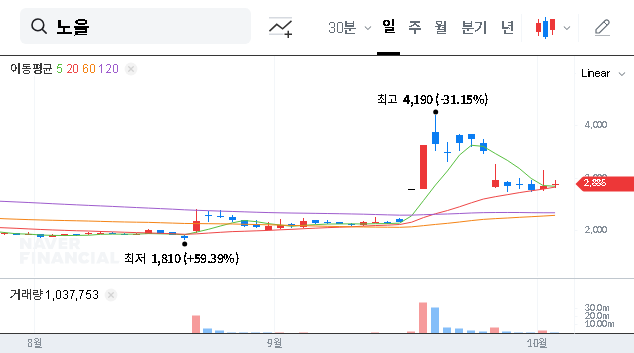
  • (376930) Noul Co., Ltd. IR: An Expert Investment Analysis on Financial Risks & Growth

    (376930) Noul Co., Ltd. IR: An Expert Investment Analysis on Financial Risks & Growth

    The upcoming Noul Co., Ltd. IR (Investor Relations) session presents a critical juncture for the company and its investors. Noul, a pioneering force in the global healthcare market with its innovative on-device AI solutions, stands at a crossroads between groundbreaking technological achievement and significant financial headwinds. This comprehensive Noul investment analysis will dissect the company’s fundamentals, from its core growth drivers to its persistent deficit structure, providing you with the crucial insights needed to make an informed decision.

    Noul Co., Ltd. embodies the classic growth-stage dilemma: world-changing innovation funded by a balance sheet that keeps investors on edge. The upcoming IR is their chance to prove the long-term vision is worth the short-term risk.

    Noul Co., Ltd. IR Session: What to Expect

    On November 5, 2025, at 10:00 AM, Noul Co., Ltd. (market cap: 83.9B KRW) will host its corporate IR session. The event is designed to clarify the company’s strategic direction and business status for its investors. The agenda promises a company introduction, a detailed overview of major business operations, and a crucial Q&A segment where management will face tough questions about the company’s financial health. Stakeholders can view the official filing for this event in the Official Disclosure on DART.

    The Bull Case: Unrivaled Technology & Global Momentum

    Noul’s primary strength lies in its revolutionary technology and aggressive, successful global expansion strategy. These are the pillars that attract growth-focused investors.

    Core Strengths Driving Growth

    • Innovative miLab™ Diagnostic Solution: The cornerstone of Noul’s success, this on-device AI healthcare platform represented 63.4% of revenue in H1 2025. It is a powerful engine for future growth.
    • Explosive Global Market Penetration: With EU CE certification, Noul has expanded into North America, Europe, Africa, and beyond, leading to a staggering export growth of over 1,270%. The installation of over 200 devices in Africa alone highlights its impact in decentralized diagnostic markets, a key area of focus for organizations like the World Health Organization.
    • Robust Future Revenue Stream: A substantial order backlog of 25.469 billion KRW provides clear visibility into stable future revenue, reassuring investors of continued demand.
    • Commitment to Innovation: Aggressive R&D investment of 4.088 billion KRW (146.3% of revenue) shows a fierce dedication to maintaining a competitive edge in the fast-evolving on-device AI healthcare space.
    • Validation Through Partnerships: Securing over 23 billion KRW in government subsidies and collaborating with the prestigious Bill & Melinda Gates Foundation validates both Noul’s technology and its business model.

    The Bear Case: Navigating Serious Financial Risks

    Despite its technological prowess, the significant Noul financial risks cannot be ignored. The company’s aggressive growth strategy has come at a considerable cost, creating a precarious financial situation that requires immediate and transparent attention during the IR.

    Key Financial Challenges

    • Persistent Deficit Structure: High R&D and expansion costs led to a net loss of 9.639 billion KRW. Investors will demand a clear and credible roadmap to profitability.
    • High Debt Ratio: With total debt at 18.528 billion KRW (around 63% of total assets), the company’s financial leverage is a major concern that requires prudent management.
    • Low Profitability Metrics: An estimated H1 2025 net profit margin of just 0.97% and an ROE of 1.23% underscore the urgent need for operational efficiency and improved profitability.
    • External Pressures: Navigating complex international regulatory approvals and staying ahead of potential competitors remain ongoing challenges.

    Final Verdict: Why ‘Hold’ is the Prudent Call

    Noul Co., Ltd. possesses immense potential to disrupt the medical diagnostic market with its miLab diagnostic solution. The technology is proven, and the global traction is undeniable. However, the path to profitability is fraught with the financial risks outlined above. The upcoming Noul Co., Ltd. IR will be the ultimate test of management’s ability to articulate a convincing strategy to bridge this gap.

    Therefore, the current investment opinion for Noul Co., Ltd. is ‘Hold’.

    Investors should watch the IR closely and base future decisions on the following key factors:

    • Clarity of the Profitability Roadmap: Does the company present a detailed, data-backed plan to achieve profitability and improve cost efficiency?
    • Confidence in Q&A Responses: How does management handle tough questions about debt, deficits, and regulatory hurdles?
    • Macroeconomic Strategy: How is the company preparing for continued volatility in exchange rates (EUR/KRW, USD/KRW) and interest rates?

    Cautious observation is recommended. A successful IR that addresses these concerns could shift the stock’s outlook positively, but any ambiguity could reinforce existing fears. Wait for the market’s reaction and the detailed information released post-event before committing capital.

    (376930) Noul Co., Ltd. IR: An Expert Investment Analysis on Financial Risks & Growth 관련 이미지
  • (032620) UBCARE Q3 2025 Earnings: A Deep Dive into Profitability Challenges & Future Outlook

    (032620) UBCARE Q3 2025 Earnings: A Deep Dive into Profitability Challenges & Future Outlook

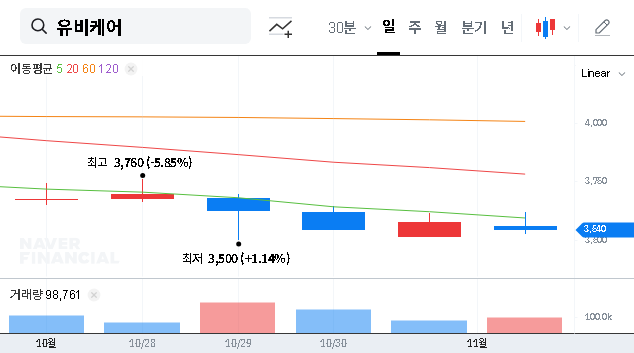
    The latest UBCARE Q3 2025 earnings report has sent ripples through the investment community, painting a complex picture of a company at a crossroads. While UBCARE CO., LTD. (유비케어) managed to post a slight increase in revenue, a notable decline in operating and net profits has raised significant questions about its underlying financial health and future trajectory. This analysis will provide a comprehensive breakdown of the report, diagnose the core causes of this profitability squeeze, and offer a forward-looking perspective for investors.

    We will explore how strategic investments in AI and digital healthcare are weighing on short-term results and what the current macroeconomic climate means for the company’s path forward. This deep dive offers the essential UBCARE stock analysis needed to navigate the challenges and opportunities ahead.

    Breaking Down the UBCARE Q3 2025 Earnings Report

    According to the preliminary operating results, UBCARE’s financial performance for the third quarter of 2025 reveals a critical disconnect between top-line growth and bottom-line results. These figures, released in their official corporate filing (Source: Official DART Disclosure), lay out the core numbers:

    • Revenue: KRW 50.6 billion (a slight increase quarter-over-quarter)
    • Operating Profit: KRW 3 billion (a significant decrease)
    • Net Profit: KRW 1.9 billion (a notable decline)

    The trend is concerning. After a brief recovery in profitability in late 2024, the downward slide has resumed in 2025. The most alarming signal is the drop in operating profit despite higher revenues, pointing toward fundamental issues in cost structure or business segment performance.

    Unpacking the Core Reasons for Profitability Deterioration

    Several factors are converging to erode UBCARE’s margins. Understanding them is key to assessing the company’s ability to orchestrate a turnaround.

    1. Margin Compression and Rising SG&A Costs

    The preliminary operating profit margin stands at a low 5.93%. This is a direct result of two pressures: declining sales in the lower-margin distribution business and a simultaneous increase in Selling, General, and Administrative (SG&A) expenses. These expenses often include crucial investments in marketing, R&D personnel, and administrative overhead. The inability to translate higher revenue into higher profit suggests that cost controls are not keeping pace with growth, or the revenue mix is shifting towards less profitable activities.

    2. Financial Complexities from Subsidiary Investments

    Corporate structuring has introduced new financial variables. The consolidation of Vivbros Co., Ltd. has increased intangible assets (goodwill) on UBCARE’s balance sheet. While this reflects the value of the acquisition, it also carries future risk. Goodwill must be tested for impairment annually, and if its value is deemed to have decreased, it can lead to significant write-downs that hurt net income. The deconsolidation of Crener Healthcom Co., Ltd. further complicates year-over-year comparisons, making a clear analysis of UBCARE profitability more challenging.

    3. The Lag Between Innovation Investment and Monetization

    UBCARE is commendably investing in future growth engines like AI-powered contact centers and advanced digital healthcare platforms. However, these ambitious projects require substantial upfront capital and operational expenditure. Currently, these investments are a drag on profitability without contributing meaningfully to revenue. This highlights a classic growth-stage dilemma: the immediate need for profit versus the long-term imperative to innovate. The market is now keenly watching for a clear strategy to monetize these technological advancements.

    UBCARE finds itself at a critical juncture: balancing long-term innovation with the immediate need for improved cost control and profitability. The path to monetizing its advanced digital healthcare solutions is now under intense scrutiny.

    Investor Outlook: Navigating the Path Forward

    Given the challenges highlighted in the UBCARE Q3 2025 earnings, investors should adopt a cautious and analytical approach. In the short term, the disappointing results may exert downward pressure on the stock price. The long-term trajectory, however, will be defined by management’s ability to execute on several key fronts.

    Key Areas for Investor Scrutiny

    • Profitability Improvement Strategy: Look for concrete plans to enhance cost efficiency, particularly in the distribution segment, and to rein in SG&A growth.
    • Monetization Milestones: The company must demonstrate tangible progress in turning its AI and digital health investments into revenue streams. This aligns with broader trends in the Korean digital healthcare market, where profitability is becoming a key differentiator.
    • Transparent Communication: Proactive and clear communication from management regarding these challenges and their strategic solutions will be crucial for restoring market confidence. Investors can gain further context by reading reports on the global digital health market from authoritative sources like reputable business analysts.

    In conclusion, while UBCARE holds a strong position in a promising industry, its current profitability issues are a significant hurdle. The Q3 2025 results serve as a wake-up call. The company’s future success, and its stock’s performance, will depend entirely on its ability to navigate these operational and financial challenges while proving the long-term value of its technological bets.

    (032620) UBCARE Q3 2025 Earnings: A Deep Dive into Profitability Challenges & Future Outlook 관련 이미지
  • (004920) CITECH Investment Analysis (004920): 15B Won Hyeopjin Acquisition Deep Dive

    (004920) CITECH Investment Analysis (004920): 15B Won Hyeopjin Acquisition Deep Dive

    CITECH’s High-Stakes Bet: Analyzing the 15 Billion Won Hyeopjin Investment

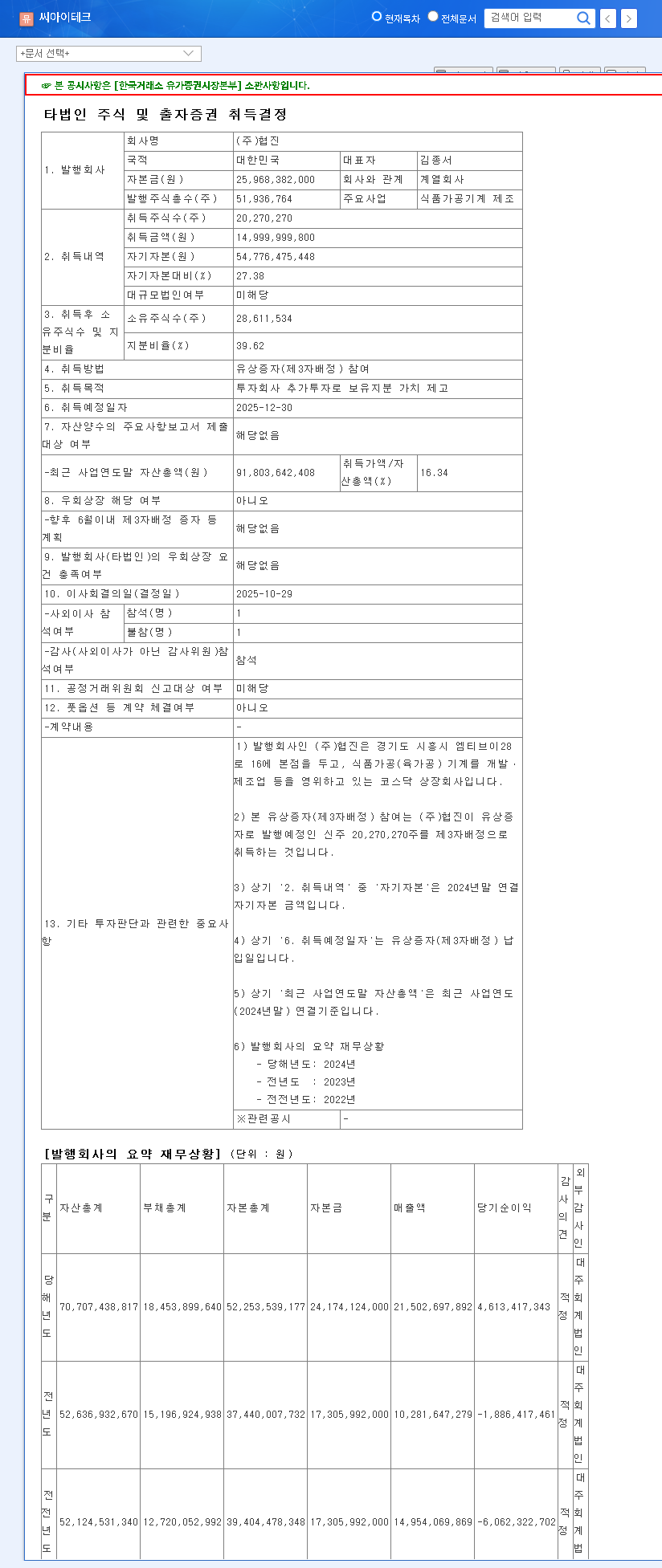
    The recent CITECH investment into Hyeopjin, a food processing machinery manufacturer, has sent ripples through the market. CITECH CO.,LTD (004920) has committed a substantial 15 billion Korean Won to acquire a 39.62% stake, a move that raises critical questions about its strategic direction. While the company is pivoting towards high-tech growth sectors like AI healthcare and advanced Public Address (PA) systems, this significant capital allocation into an unrelated industry demands a thorough CITECH financial analysis. Is this a savvy diversification play to unlock future value, or a risky gamble that could strain its already burdened finances? This deep dive will explore the fundamentals, risks, and potential rewards of the Hyeopjin acquisition.

    The Details of the Deal: What We Know

    According to an official disclosure filed on October 30, 2025, CITECH will acquire its stake by participating in Hyeopjin’s third-party allocation paid-in capital increase, with the transaction scheduled for completion by December 30, 2025. This investment represents a significant 27.38% of CITECH’s own capital, making it a major financial event for the company. The officially stated purpose is to “enhance the value of its equity stake through additional investment in the investee company.” You can view the full details in the official filing. Official Disclosure (Source: DART).

    This large-scale CITECH investment is a classic double-edged sword. It offers the potential for portfolio diversification and equity growth but simultaneously introduces considerable financial risk and a potential distraction from its core technology ventures.

    CITECH’s Strategic Pivot vs. Financial Reality

    To truly grasp the implications of the Hyeopjin acquisition, we must place it in the context of CITECH’s current business strategy and financial health. The company is at a crucial inflection point, investing heavily in what it deems its future.

    Future Growth Engines: AI Healthcare & PA Systems

    CITECH has clearly signaled its future lies in technology. Its primary new ventures are an AI healthcare platform and advanced PA systems, leveraging its proprietary ‘Hi-Fi Rose’ audio brand. Furthermore, a planned merger with its subsidiary, MOD Co., Ltd., aims to internalize smart hospital solutions, creating a vertically integrated health-tech service. This focus is evidenced by a consolidated R&D expense ratio of 10%. However, these ventures are still in their nascent stages and have yet to generate substantial revenue, making them a long-term play requiring sustained investment. For more on this, see our deep dive into CITECH’s AI strategy.

    A Look at the Financials: The Burden of Debt

    A critical part of any 004920 analysis is its balance sheet. CITECH is navigating a challenging financial landscape. With a reported debt-to-equity ratio of 66.9% and total debt obligations listed at a staggering 37.88 trillion Won, the company’s leverage is a significant concern. The recent issuance of 3 billion Won in convertible bonds further highlights its need for capital. This existing financial pressure makes the 15 billion Won cash outlay for the CITECH investment particularly noteworthy, as it could strain short-term liquidity and heighten financial risk.

    Investor Action Plan: Key Factors to Monitor

    Given the high degree of uncertainty, investors should adopt a ‘Neutral’ stance and closely monitor several key performance indicators. A prudent approach is essential to navigate the risks associated with the CITECH stock. As noted by analysts at authoritative financial publications like Bloomberg, assessing synergy is key in cross-industry acquisitions.

    • Hyeopjin’s Performance: Scrutinize Hyeopjin’s quarterly revenue, profit margins, and market position. Is the food machinery industry growing, and can Hyeopjin capture that growth?
    • Synergy Materialization: Look for concrete plans or announcements from CITECH’s management detailing how they plan to create synergy between their tech ventures and Hyeopjin. The absence of a clear plan is a major red flag.
    • CITECH’s Financial Health: Analyze CITECH’s upcoming financial reports for changes in cash flow, debt levels, and profitability. Are they managing their existing debt effectively while absorbing this new investment?
    • Core Business Momentum: Track the progress of the AI healthcare and PA system businesses. Are they hitting milestones, signing clients, and moving towards profitability? This CITECH investment is more justifiable if the core business is strong.

    Conclusion: A Calculated Risk with an Uncertain Payoff

    Ultimately, CITECH’s acquisition of a stake in Hyeopjin is a bold, contrarian move. If Hyeopjin performs exceptionally well, it could provide a stable, profitable anchor that funds CITECH’s more speculative tech ventures. However, if it underperforms, it will be a costly diversion of capital and management focus at a time when the company can least afford it. Only time will reveal whether this was a strategic masterstroke or a critical misstep. For now, diligent monitoring and a cautious outlook are the best tools for any investor considering CITECH stock.

    (004920) CITECH Investment Analysis (004920): 15B Won Hyeopjin Acquisition Deep Dive 관련 이미지
  • (004920) CITECH Rights Issue 2025: A Deep-Dive Analysis for Investors

    (004920) CITECH Rights Issue 2025: A Deep-Dive Analysis for Investors

    The recent announcement of the CITECH rights issue has sent ripples through the investment community, sparking a critical debate: is this a strategic masterstroke to secure future growth or a move that could lead to significant short-term share dilution? For investors holding or considering CITECH stock, understanding the nuances of this capital increase is paramount.

    This comprehensive CITECH stock analysis provides a detailed breakdown of the rights issue, the company’s underlying financial health, its ambitious new ventures, and the potential impact on shareholder value. Our goal is to provide a clear, data-driven investor guide to help you navigate this pivotal moment for CITECH CO.,LTD.

    Decoding the CITECH Rights Issue: The Core Details

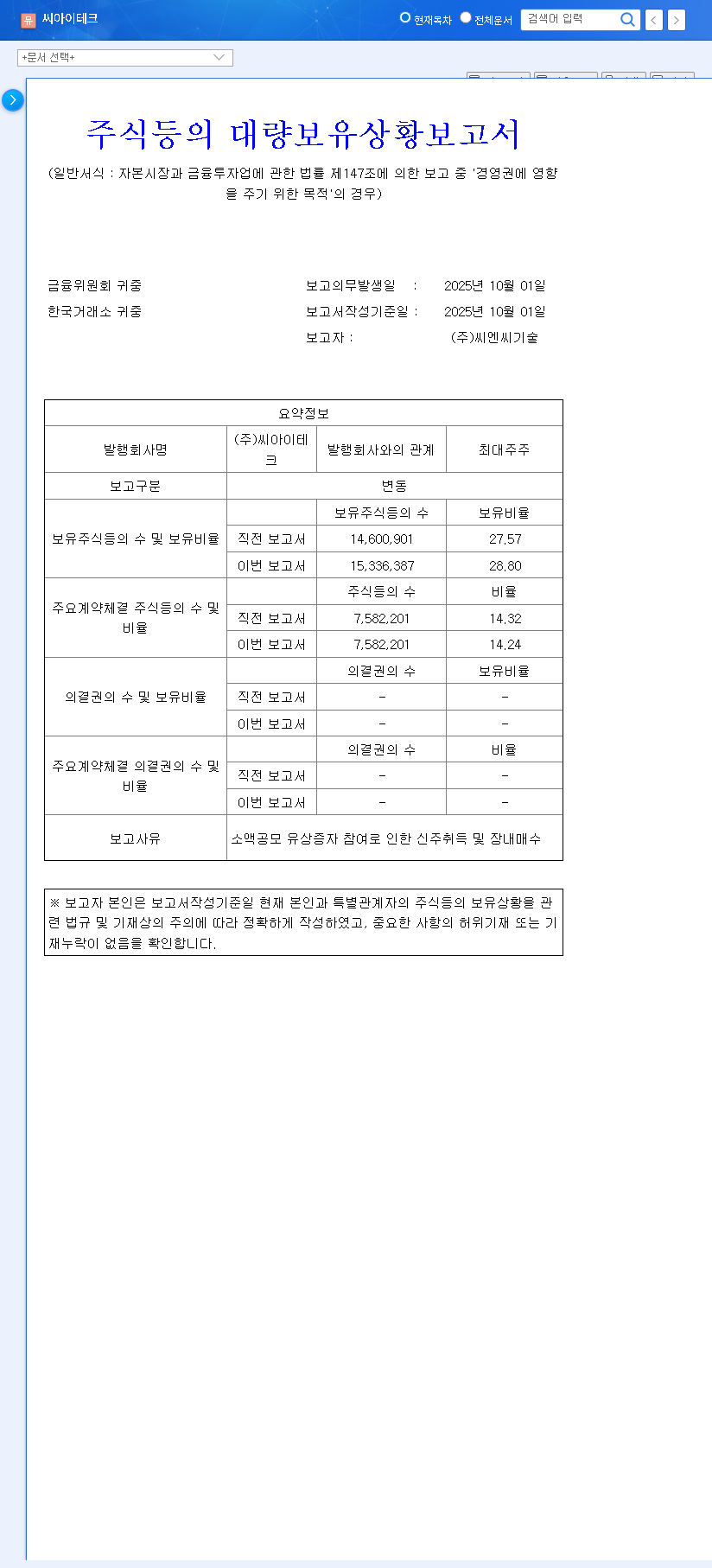
    On October 27, 2025, CITECH CO.,LTD formally announced its plan for a significant capital increase through a rights issue. The company aims to raise approximately 2 billion KRW by issuing 1,833,181 new common shares at a price of 1,091 KRW per share. According to the Official Disclosure (DART Report), the payment date for these new shares is set for November 6, 2025, with an expected listing date of November 28, 2025.

    Crucially, major shareholders including CNC Tech and Song Yong-wook have committed to participating, a move that bolsters confidence in the success of the offering. This isn’t merely a fundraising exercise; it’s positioned as a foundational step to overhaul CITECH’s financial structure and fuel its next wave of innovation.

    The Financial Health of CITECH: A Turnaround Story?

    Positive Profitability Amidst Revenue Headwinds

    A look at CITECH’s 2025 half-year report reveals a mixed but intriguing financial picture. The company impressively swung to a profit in both operating and net income, a testament to successful cost-efficiency measures. However, this profitability was achieved against a backdrop of declining revenue (a 37.53% decrease in consolidated revenue). This suggests that while internal optimization is working, the company faces significant external pressures in its core IT business segment. To learn more about financial metrics, you can read our guide on analyzing company earnings reports.

    The Lingering Burden of Accumulated Deficit

    Despite the recent profitability, a significant accumulated deficit (negative retained earnings) remains a major concern for CITECH’s long-term financial stability. This historical burden weighs on the balance sheet and restricts financial flexibility. The CITECH rights issue is a direct and necessary measure to address this, injecting fresh capital to shore up its financial foundation.

    The success of this capital increase is critical. It’s not just about funding new projects, but about healing past financial wounds and creating a more resilient company for the future.

    Impact on CITECH Stock: Opportunities vs. Risks

    For investors, the central question revolves around the stock price. A rights issue inherently introduces both positive and negative catalysts. Understanding this duality is key to making a sound investment decision.

    • Opportunity: Strengthened Financials. The 2 billion KRW injection will improve the company’s capital base, reduce debt ratios, and provide the necessary funding for its promising new ventures in AI Healthcare and Process Automation (PA).
    • Opportunity: Major Shareholder Confidence. The active participation of key insiders signals strong belief in the company’s long-term strategy and potential for recovery and growth.
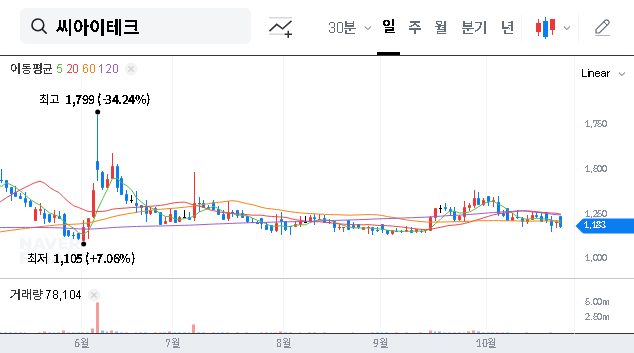
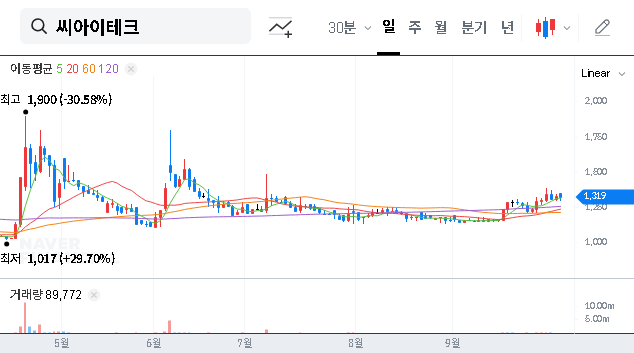
    • Risk: Short-Term Share Dilution. The issuance of 1.8 million new shares will dilute the ownership stake of existing shareholders. This is a fundamental concept investors must grasp, as explained by financial authorities like Investopedia. The discounted issue price of 1,091 KRW compared to the recent price of 1,196 KRW could also create immediate downward pressure.
    • Risk: Increased Volatility. The period surrounding a rights issue is often marked by high stock price volatility as the market digests the news and the new shares enter circulation.

    Strategic Investor Playbook for the CITECH Rights Issue

    For Short-Term Traders

    Caution is advised. The risk of downward pressure from the new share listing is significant. Traders should closely monitor volume and price action around the November 28, 2025 listing date. The gap between the market price and the issue price (1,091 KRW) will be a key indicator of short-term sentiment.

    For Mid-to-Long-Term Investors

    The focus should be on execution. The key question is how effectively CITECH will deploy the new capital. Long-term value will be created if the funds are used to generate tangible results from the AI Healthcare and PA businesses and to stabilize the core IT segment. Diligent monitoring of quarterly reports for progress in these areas is essential.

    Conclusion: A Calculated Risk

    The CITECH rights issue is a defining moment for the company. It presents a clear path to rectify financial weaknesses and invest in high-potential growth sectors. However, it comes with the unavoidable short-term risks of share dilution and market volatility. For investors, this is not a simple ‘buy’ or ‘sell’ event but a complex situation that demands careful analysis and continuous monitoring. The future trajectory of CITECH’s stock will ultimately depend on management’s ability to turn this capital into sustainable, profitable growth.

    (004920) CITECH Rights Issue 2025: A Deep-Dive Analysis for Investors 관련 이미지
  • (460470) IVIM Technology Stock Analysis: Can a Landmark Japan Deal Spark a Turnaround?

    (460470) IVIM Technology Stock Analysis: Can a Landmark Japan Deal Spark a Turnaround?

    Biotech innovator IVIM Technology, Inc. has made headlines by securing a significant supply contract in Japan, a move that could signal a pivotal moment for the company and its investors. This ₩500 million (approx. $370,000 USD) deal for its advanced microscopy systems is more than just a number on a balance sheet; it’s a strategic entry into one of the world’s most sophisticated tech markets. But does this contract have the power to steer IVIM Technology out of its financial difficulties and unlock its long-term potential? This comprehensive analysis delves into the company’s core technology, financial health, and the critical factors investors must consider for the future of IVIM stock.

    A Landmark Deal: IVIM Technology Enters Japan

    On October 27, 2025, IVIM Technology finalized a landmark supply contract for its state-of-the-art live cell microscope systems with Japan’s Neuroscience Inc. The deal, valued at ₩500 million, will be fulfilled by the end of 2025 and accounts for a substantial 14.13% of the company’s total projected revenue for the year. The details of this agreement were confirmed in an Official Disclosure (Source). Securing a partner in Japan is a critical step, providing a foothold for broader global expansion and validating the company’s cutting-edge technology.

    “This contract with Neuroscience Inc. is a powerful proof-of-concept for IVIM Technology’s global strategy. While the immediate financial impact is moderate, the long-term strategic value of penetrating the Japanese market cannot be overstated. It builds credibility and opens doors for future, larger-scale collaborations.”

    Deconstructing IVIM Technology: A Trio of High-Tech Ventures

    To perform a thorough IVIM stock analysis, one must understand its three core business pillars. Each holds unique potential and inherent risks that shape the company’s investment profile.

    Pillar 1: ‘All-in-One’ Live Cell Microscopy

    The company’s flagship product is a revolutionary ‘All-in-One’ live cell microscopy system. This technology enables researchers to visualize cellular and molecular activities in 3D, in real-time, within a living organism. This is a significant leap forward from traditional static imaging, offering invaluable insights for drug discovery and disease research. You can learn more about the fundamentals of live cell imaging from Nature Methods, a leading scientific journal.

    Pillar 2: CRO (Contract Research Organization) Services

    Leveraging its unique imaging platform, IVIM Technology offers CRO services to pharmaceutical and biotech companies. By providing integrated research solutions, they help clients accelerate their R&D pipelines. While this creates a valuable revenue stream, it’s subject to the cyclical nature of R&D spending, leading to potential revenue volatility.

    Pillar 3: The Future: AI-Powered Medical Devices

    As a forward-looking growth engine, IVIM is developing AI-based medical devices. The goal is to use machine learning to analyze the vast amounts of imaging data generated by their microscopes, potentially leading to faster diagnostics and personalized medicine. This venture is promising but remains in an early, capital-intensive stage.

    The Investor’s Dilemma: Analyzing Financial Health

    Despite its technological prowess, the financial landscape for IVIM Technology remains challenging. As of the first half of 2025, the company reported sales of ₩870 million, a decrease year-over-year, alongside a continued operating loss of ₩2.7 billion. These persistent deficits have eroded total equity, raising concerns about long-term profitability.

    On a positive note, the debt-to-equity ratio improved to a healthy 49.01%. However, the stock price has been on a downward trend since its public listing, reflecting market uncertainty. For those new to this sector, understanding the unique financial hurdles is crucial; consider reading our guide on investing in biotech startups for more context.

    Future Outlook: Catalysts and Risks

    Investing in biotech investment opportunities like IVIM Technology requires a balanced view of potential catalysts and significant risks.

    Potential Catalysts (The Bull Case)

    • Global Expansion: Successful execution in Japan could lead to further contracts in other key markets like the US and Europe.
    • Technology Validation: Each new contract with a reputable firm enhances IVIM’s credibility and validates its live cell microscopy platform.
    • AI Milestones: Any positive clinical data or developmental progress in the AI division could significantly improve market sentiment.

    Key Risks (The Bear Case)

    • Profitability Hurdles: The primary challenge is the company’s ability to translate technological wins into sustainable profitability.
    • Cash Burn: High R&D costs for the AI division and continued operating losses pose a risk to financial soundness without further funding or a rapid increase in sales.
    • Market Competition: The microscopy and CRO fields are competitive, with larger, more established players.

    The Final Verdict for Investors

    The contract with Neuroscience Inc. is undeniably a positive step for IVIM Technology. It provides a short-term revenue boost and, more importantly, a long-term strategic foothold. However, investors must look beyond this single event. The core issue remains the company’s path to profitability.

    A cautious but optimistic approach is warranted. Investment decisions should be based on tangible evidence of improving fundamentals, such as a stabilization of CRO revenue, recovery in microscopy sales, and clear progress in the AI venture. This Japan deal could very well be the spark, but investors need to see it ignite a larger fire of sustainable growth before committing significant capital.

    (460470) IVIM Technology Stock Analysis: Can a Landmark Japan Deal Spark a Turnaround? 관련 이미지
    (460470) IVIM Technology Stock Analysis: Can a Landmark Japan Deal Spark a Turnaround? 관련 이미지
  • (376930) Noul Investment Strategy 2025: A Deep Dive into the miLab™ IR Event & Stock Analysis

    (376930) Noul Investment Strategy 2025: A Deep Dive into the miLab™ IR Event & Stock Analysis

    For those developing a Noul investment strategy, the company’s upcoming Investor Relations (IR) event on October 27, 2025, represents a pivotal moment. Noul Co., Ltd. (노을, KRX: 376930), a pioneer in on-device AI healthcare, stands at a crossroads. On one hand, its revolutionary miLab™ technology holds the potential to disrupt global diagnostics. On the other, significant financial hurdles cast a shadow over its future. This comprehensive Noul stock analysis will unpack the company’s fundamentals, the critical questions the Noul Co., Ltd. IR must address, and what investors should watch for.

    Noul’s future hinges on its ability to translate groundbreaking technology into a sustainable, profitable business model. The upcoming IR is their chance to convince the market they have a credible plan.

    The Core Innovation: What is miLab™ Technology?

    At the heart of any Noul investment strategy is an understanding of its core product. The miLab™ platform is not just another diagnostic tool; it’s an all-in-one, on-device AI healthcare solution. Imagine a high-powered laboratory capable of AI-driven blood analysis and cancer screening, miniaturized into a single device that functions entirely without an internet connection. This unique capability is its greatest strength, unlocking the potential for a ‘decentralized diagnostic market.’ It’s a game-changer for regions with limited IT infrastructure, mobile clinics, and remote healthcare settings, bringing advanced diagnostics to the point of care. This on-device approach places Noul at the cutting edge of a major technological shift, which you can learn more about in our guide to The Future of AI in Healthcare.

    Analyzing the Noul Investment Strategy: A Two-Sided Coin

    A thorough analysis reveals a classic growth-stage dilemma: immense technological promise weighed down by financial realities. Investors must carefully consider both sides.

    The Bull Case: Pillars of Growth

    • Market-Leading Tech: The offline capability of miLab™ technology provides a powerful moat, giving Noul a significant competitive edge in underserved small-to-medium diagnostic markets globally.
    • Aggressive Global Expansion: With EU CE certification secured and over 200 devices already installed in Africa, Noul is demonstrating tangible progress. Upcoming MDSAP, CE IVDR, and FDA certifications are poised to unlock major markets and accelerate revenue growth.
    • Portfolio Diversification: Expanding beyond its initial focus on malaria—a challenge highlighted by the World Health Organization—into blood analysis and cancer diagnostics (cervical, breast) creates multiple revenue streams and enhances market resilience.
    • Strong Institutional Backing: Collaborations with prestigious partners like the Bill & Melinda Gates Foundation and WHO-affiliated bodies lend immense credibility and validate the technology’s potential and reliability.

    The Bear Case: Key Risks to Consider

    A key concern for any prudent Noul stock analysis is the company’s financial health. These headwinds must be addressed at the IR event.

    • High Cash Burn: With an R&D expenditure-to-sales ratio soaring at 146.30% and continuous operating losses, the path to profitability is unclear. These figures, detailed in the company’s Official Disclosure (Source: DART report), highlight the urgent need for a sustainable financial structure.
    • History of Missed Forecasts: Previous failures to meet revenue and operating profit targets have created investor uncertainty. The management must convincingly explain past shortfalls and present a more reliable future outlook.
    • Regulatory Hurdles: Navigating the strict, country-specific approval processes for medical devices is a costly and time-consuming burden that can delay market entry and revenue generation.
    • Customer Concentration: A high dependency on a few key customers (Companies A, B, and C) poses a significant risk. Diversifying the revenue base is critical for long-term stability.

    Key Questions the Noul Co., Ltd. IR Must Answer

    The success of the IR event will depend on management’s ability to provide clear, convincing answers to the market’s most pressing questions. A positive outcome could boost investor confidence and lift the stock price, while an unconvincing presentation could amplify concerns.

    Investors should listen for:

    • A Concrete Roadmap to Profitability: What are the specific steps and timelines for reducing R&D costs as a percentage of sales and achieving positive operating income?
    • A Tangible Global Sales Strategy: Beyond certifications, what is the plan to build sales channels, secure contracts, and generate visible, recurring revenue streams?
    • Transparent Risk Acknowledgment: How will the company address past forecast misses and rebuild trust? What measures are in place to mitigate customer concentration risk?

    Conclusion: A Prudent Investment Approach

    Noul Co., Ltd. is a high-risk, high-reward proposition. The miLab™ technology is undeniably impressive, but the financial metrics are concerning. The October 27th IR is a crucial data point. Rather than trading on short-term volatility, a wise Noul investment strategy involves using the information from the event to assess the long-term viability of the business. Focus on the management team’s execution capabilities and their plan to turn revolutionary science into a profitable enterprise. Careful analysis and continuous monitoring will be key to navigating this compelling but challenging investment opportunity.

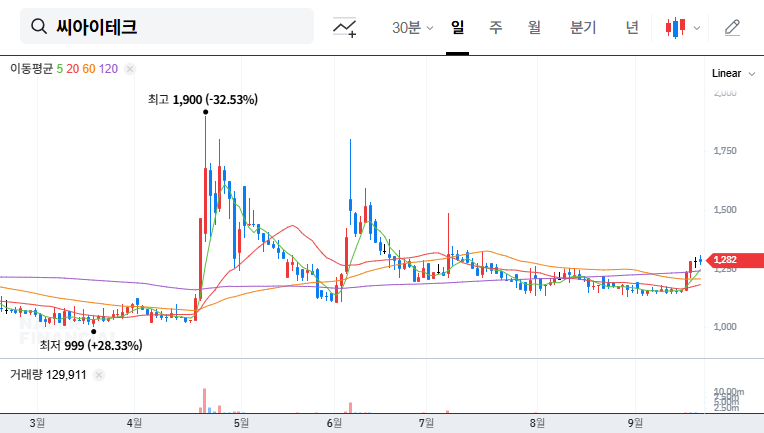
  • CI Tech’s Rights Offering: Opportunity or Risk? Key Analysis and Investment Strategies


    CI Tech's Rights Offering: Opportunity or Risk? Key Analysis and Investment Strategies 대표 차트 이미지


    CI Tech Announces 28 Billion Won Rights Offering! What’s Happening?

    CI Tech announced a rights offering of 280,898 shares on September 18, 2025. The offering price is 1,068 won, representing about 1% of the total number of outstanding shares. The payment date is scheduled for September 30th, and the new listing date is October 30th.

    Why the Rights Offering? Analysis of Fundraising Objectives

    Although the official purpose of the funds has not yet been revealed, considering CI Tech’s recent active investments in new businesses such as AI healthcare and Public Address (PA) systems, it is highly likely that the funds secured through this rights offering will be used for new business investments and operating funds.

    How Will the Rights Offering Affect the Stock Price?

    In the short term, there is a possibility of a stock price decline due to the dilution effect caused by the increase in the number of shares. However, in the long term, if the funds secured through the rights offering promote the growth of new businesses and ultimately lead to an increase in corporate value, it can have a positive impact on the stock price. The participation of the largest shareholder, CNC Technology, is interpreted as a positive signal in terms of financial stability.

    What Should Investors Do? Key Checkpoints

    • Monitor New Business Performance: Continuously check the progress and performance of new businesses such as AI healthcare and PA systems.
    • Check Financial Soundness: It is important to thoroughly check the financial soundness, including changes in debt ratio and fund management plans after the rights offering.
    • Monitor Market Conditions: Continuously grasp macroeconomic conditions such as interest rate and exchange rate fluctuations, as well as industry trends.
    • Check the Maintenance of Existing Business Competitiveness: Maintaining the competitiveness of existing businesses, such as IT services and manufacturing, is also an important investment criterion.


    FAQ

    What is the purpose of CI Tech’s rights offering?

    While not officially disclosed, it’s presumed to be for new business investments and securing operating funds.

    How will the rights offering affect the stock price?

    Short-term, a price drop is possible due to dilution, but long-term, it could positively impact depending on the success of new ventures.

    What precautions should investors take?

    Carefully monitor new business performance, financial health, and market conditions before making investment decisions.


    CI Tech's Rights Offering: Opportunity or Risk? Key Analysis and Investment Strategies 관련 이미지
    CI Tech's Rights Offering: Opportunity or Risk? Key Analysis and Investment Strategies 관련 이미지


  • Noeul(376930) Q2 2025 Earnings Analysis: Growth Slowdown or Future Potential?

    1. Noeul’s Q2 2025 Earnings: What Happened?

    Noeul recorded ₩1.4 billion in revenue, ₩-50 billion in operating loss, and ₩-53 billion in net loss in Q2 2025. While revenue surpassed the expected ₩0, growth has stalled, remaining at the same level as the previous quarter. Operating and net losses continue.

    2. Analyzing Positive and Risk Factors: Why These Results?

    Positive Factors

    • • 74.6% year-over-year revenue growth
    • • Decrease in loss margin
    • • Global market expansion (EU CE certification, achievements in the African market)
    • • Differentiated technology (On-device AI, solid staining technology)

    Risk Factors

    • • Slowing revenue growth in Q2
    • • High R&D and SG&A expenses
    • • High debt ratio
    • • Proportion of service revenue
    • • Exchange rate and interest rate volatility

    3. Investment Strategy: What Should Investors Do?

    Noeul possesses differentiated technology in the high-growth potential diagnostic testing market. However, securing short-term profitability and financial stability remain key challenges. Investors should closely monitor the following:

    • • Ability to accelerate sustainable revenue growth
    • • Improvement in profitability through R&D and SG&A efficiency
    • • Efforts to stabilize financial structure

    A cautious approach is recommended at this point. It’s advisable to observe future quarterly results and business progress before formulating an investment strategy.

    Frequently Asked Questions

    What is Noeul’s main business?

    Noeul is an AI-powered, on-device healthcare solution company. Its ‘miLab™’ product automates microscopic diagnostic testing and integrates AI interpretation.

    How was Noeul’s Q2 2025 performance?

    Noeul recorded ₩1.4 billion in revenue, ₩-50 billion in operating loss, and ₩-53 billion in net loss in Q2 2025.

    What are the key considerations when investing in Noeul?

    Slowing revenue growth, high cost structure, and financial stability are key risk factors. Closely monitoring future earnings trends and business progress is crucial.

  • Mediana (041920) Stock Forecast: Will AI Healthcare Drive Future Growth? H1 2025 Earnings Report Analysis

    1. What Happened at Mediana?

    Mediana released its H1 2025 earnings report on August 14, 2025, reporting KRW 15.6 billion in revenue (YoY decrease), KRW 1.2 billion in operating profit (YoY increase), and a net loss of KRW 0.4 billion. The decline in defibrillator exports is identified as the primary cause of the revenue decrease.

    2. Why These Results?

    Despite the decline in revenue, the increase in operating profit is attributed to cost control and a potential increase in sales of high-value-added products. The net loss is likely due to increased R&D investment in AI healthcare and other non-operating expenses. The key takeaway is Mediana’s expansion into AI healthcare, demonstrated by proactive steps such as synergy with Selvas AI and the launch of MASA. Financial health also significantly improved, with the debt-to-equity ratio decreasing to 10.33%.

    3. So, What’s Mediana’s Future Outlook?

    Considering the high growth potential of the AI healthcare market and synergy with Selvas AI, Mediana’s venture holds significant promise. However, the timing of monetization for the AI healthcare business and exchange rate volatility remain cautionary risk factors. Despite the short-term sluggish performance, the long-term focus should be on the performance of the AI business.

    4. What Should Investors Do?

    Investment in Mediana should be approached with a focus on the long-term growth potential of its AI healthcare business. Investors should look beyond the short-term performance dip and closely monitor concrete achievements in the AI healthcare sector and the execution of its business expansion strategy, considering a long-term investment horizon. Risk management, including exchange rate fluctuations and the timing of AI business monetization, is crucial. Continuously reviewing future disclosures and adjusting investment strategies accordingly is essential.

    What is Mediana’s main business?

    Mediana is pursuing AI healthcare solution development and services as a new business, along with its existing medical device business.

    What were Mediana’s H1 2025 financial results?

    Revenue was KRW 15.6 billion (YoY decrease), operating profit was KRW 1.2 billion (YoY increase), and net loss was KRW 0.4 billion.

    What should investors be aware of when considering Mediana?

    Investors should consider risk factors such as uncertainty regarding the monetization timing of the AI healthcare business and exchange rate volatility.

  • CI Tech (004920) H1 2025 Earnings Analysis: A Leap into AI Healthcare? Key Investment Points

    1. CI Tech H1 2025: What Happened?

    CI Tech recorded consolidated revenue of KRW 15.9 billion, operating profit of KRW 900 million, and net income of KRW 900 million in H1 2025, marking a return to profitability. However, revenue from the IT business segment decreased by approximately 38% year-on-year. Meanwhile, the company actively pursued business diversification by entering the AI healthcare platform and PA system businesses and resolving to merge with Mody. Additionally, CI Tech issued convertible bonds worth KRW 300 billion to secure funds.

    2. Reasons for Profitability and Growth Drivers

    The company’s return to operating profit through cost reduction efforts is a positive sign. Entering the AI healthcare and PA system markets are strategic choices to secure future growth engines, with high long-term growth potential. The merger with Mody is expected to strengthen the business portfolio and create synergy effects.

    3. Key Considerations for Investors

    While there are positive aspects, the continued decline in revenue from the IT business segment remains a challenge. New businesses are in their early stages, so their contribution to short-term earnings may be limited. While the issuance of KRW 300 billion in convertible bonds helps secure funding, the potential for future stock dilution due to increased shares outstanding needs to be considered.

    4. Investment Action Plan

    • Short-term Investment: A cautious approach is advised, observing whether the IT business segment improves and new businesses generate tangible results.
    • Mid-to-Long-term Investment: Investment decisions can be made by focusing on the growth potential of new businesses and synergy effects from the merger. It is advisable to continuously monitor the conversion trend of convertible bonds and adjust investment proportions accordingly.

    Frequently Asked Questions

    What are CI Tech’s main businesses?

    CI Tech currently focuses on its IT business segment and is pursuing new businesses such as AI healthcare platforms and PA (Public Address) systems.

    How was CI Tech’s performance in the first half of 2025?

    CI Tech recorded consolidated revenue of KRW 15.9 billion, operating profit of KRW 900 million, and net income of KRW 900 million in H1 2025.

    What are the key considerations when investing in CI Tech?

    Investors should consider factors such as the recovery of the IT business segment, the growth potential of new businesses, and the possibility of stock dilution due to the issuance of convertible bonds.