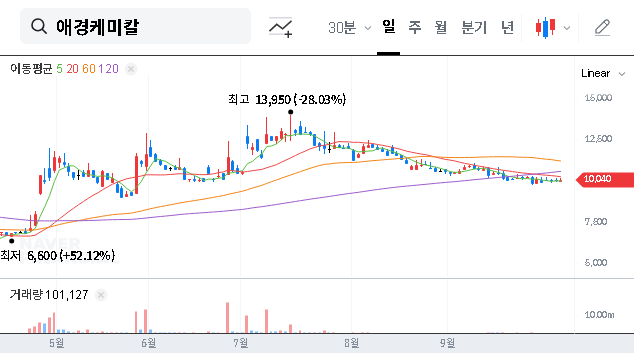
In a move that has captured the market’s attention, chemical giant AK ChemTech has made a significant foray into the financial sector. The core of this development is a massive AK ChemTech investment of ₩130 billion (approx. $95 million USD) into a real estate fund. This decision, made through its subsidiary Gwangju Investment Development Co., Ltd., comes at a time when the company’s primary chemical business is facing headwinds. This raises a critical question for investors and market analysts alike: Is this a shrewd strategic pivot towards diversification, or a high-stakes gamble that introduces unnecessary financial risk? This comprehensive analysis will dissect every facet of the deal.
The Landmark Transaction: What Happened?
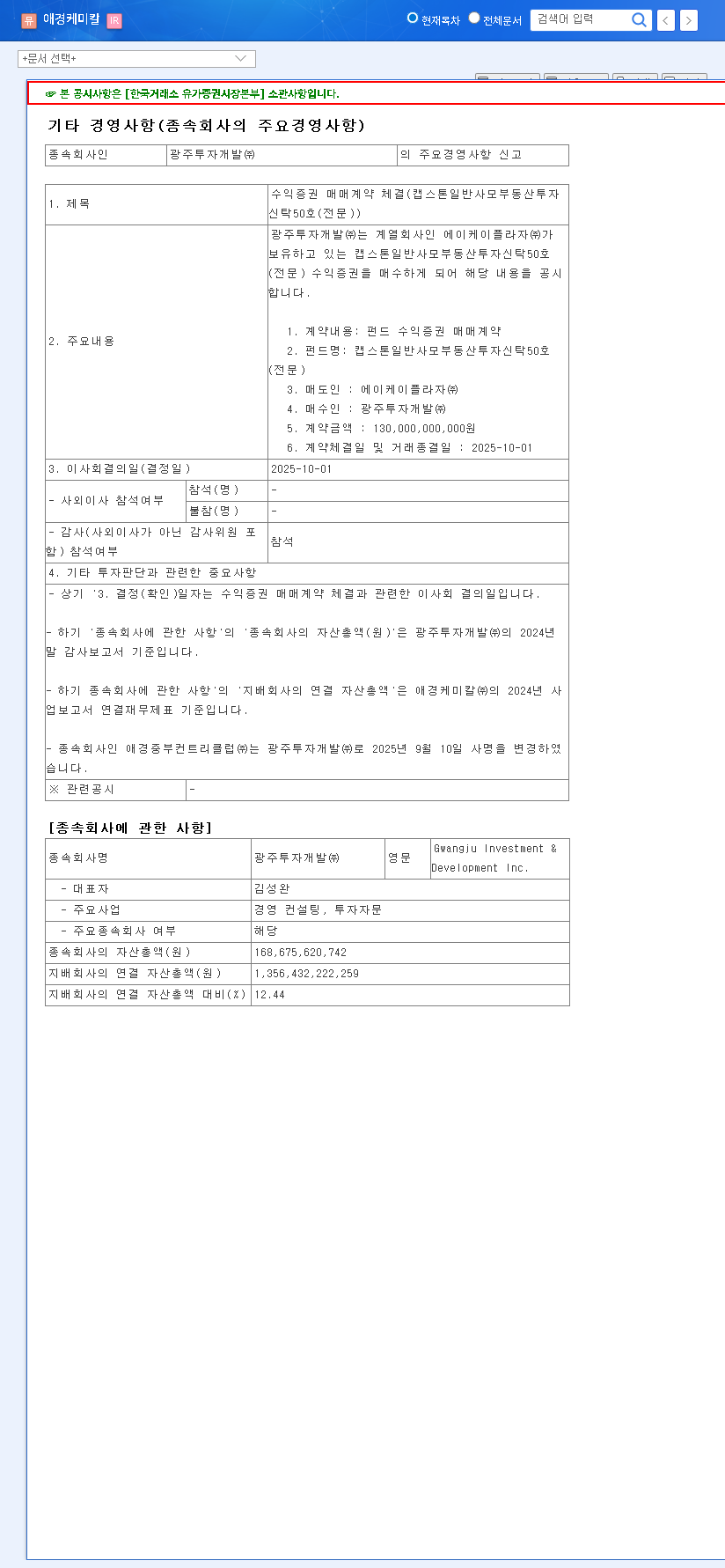
On October 1, 2025, AK ChemTech’s subsidiary, Gwangju Investment Development Co., Ltd., finalized an agreement to acquire beneficiary certificates for the ‘Capstone General Private Real Estate Investment Trust 50 (Professional)’. The seller was an affiliate company, AK Plaza Co., Ltd., and the transaction value was a substantial ₩130 billion. This major financial move was officially reported as a significant management matter, as detailed in the Official Disclosure (DART). This investment is not just a simple purchase; it signifies a potential strategic shift for a company historically rooted in the chemical industry.
Strategic Rationale: Why This AK ChemTech Investment Now?
At first glance, a chemical company buying into an AK ChemTech real estate fund may seem disconnected. However, the logic appears to be rooted in long-term strategy and diversification, especially considering the recent slump in their core operations. The company appears to be pursuing several key objectives:
- •Aggressive Business Diversification: AK ChemTech has already been expanding beyond traditional petrochemicals into bio & energy. This ₩130 billion investment signals a deeper push into the financial and real estate sectors to create new, non-correlated revenue streams.
- •Securing Future Growth Engines: The subsidiary’s name change from AK Jungbu Country Club to Gwangju Investment Development is telling. It marks a deliberate pivot from leisure operations to a dedicated investment vehicle, positioning it to capture long-term growth opportunities outside of manufacturing.
- •Asset Value Optimization: By acquiring the trust from an affiliate, AK ChemTech might be restructuring assets within the group to optimize its balance sheet and potentially unlock latent value.
While this investment can be seen as a bold move towards long-term diversification, its execution amidst the core business’s underperformance introduces significant short-term financial burdens and uncertainty.
Financial Implications & Potential Risks
A ₩130 billion investment is a massive capital outlay. This amount represents approximately 9.1% of AK ChemTech’s total consolidated assets from year-end 2024, making its impact on the company’s financial health undeniable. The key concerns revolve around funding, debt, and returns.
The Funding Question and Debt Burden
The official disclosure lacks specifics on the funding source. This ambiguity is a primary source of investor concern. If the acquisition was financed heavily through borrowing, it could significantly increase the debt-to-equity ratio for both Gwangju Investment Development and its parent, AK ChemTech. This concern is magnified by the fact that AK ChemTech’s short-term borrowings already saw a notable increase of nearly ₩99 billion in the first half of 2025. Adding more debt could strain cash flow and limit future operational flexibility.
Investment Performance and Market Volatility
The asset itself—beneficiary certificates in a real estate investment trust—carries its own set of risks. The profitability of such an investment is directly tied to the performance of the underlying real estate assets and the volatility of the broader property market. To learn more about these financial vehicles, you can consult authoritative resources like Investopedia’s guide on REITs. Any downturn in the real estate market could negatively impact AK ChemTech’s consolidated financial results, making this diversification a source of instability rather than strength.
Investor Action Plan & Key Monitorables
For current and potential investors in AK ChemTech, a prudent, watchful approach is necessary. The success or failure of this AK ChemTech real estate fund venture hinges on several key factors that must be monitored closely:
- •Funding Method Clarity: The top priority is to ascertain how the ₩130 billion was sourced. Future financial reports should be scrutinized for details on new debt or asset sales.
- •Investment Performance Tracking: Keep an eye on the quarterly performance, yields, and asset value fluctuations of the ‘Capstone General Private Real Estate Investment Trust 50’.
- •Core Business Recovery: Ultimately, the health of AK ChemTech’s main chemical business is paramount. A strong recovery in sales and profitability will provide the financial cushion needed to support this new venture. For more on this, consider our analysis on evaluating the core operations of chemical companies.
Conclusion: A Neutral Stance with Cautious Optimism
The AK ChemTech investment in a real estate fund is a classic case of risk versus reward. While it represents a proactive effort to build long-term value and diversify revenue, the timing and scale of the investment introduce considerable short-term AK ChemTech financial risk. Therefore, our outlook remains ‘Neutral’. Success will depend on prudent financial management, a stable-to-growing real estate market, and, most importantly, a robust turnaround in the company’s core chemical operations. Investors should proceed with caution and maintain rigorous due diligence in the coming quarters.