Tag: ABKO

  • (129890) ABKO Share Cancellation: A Deep-Dive Investor Analysis (2025)

    (129890) ABKO Share Cancellation: A Deep-Dive Investor Analysis (2025)

    The recent ABKO share cancellation announcement has sent ripples through the investment community. ABKO CO., LTD. has declared a significant share buyback and cancellation plan valued at 6.8 billion KRW, representing an impressive 12.99% of its market capitalization. This move is a powerful statement about the company’s commitment to boosting shareholder value.

    But for investors, this news raises critical questions. Is this a surefire catalyst for stock price growth, or are there hidden risks to consider? This comprehensive ABKO stock analysis will dissect the event, exploring the mechanics, the pros and cons, and the long-term strategic implications for your portfolio.

    Understanding the ABKO Share Buyback and Cancellation

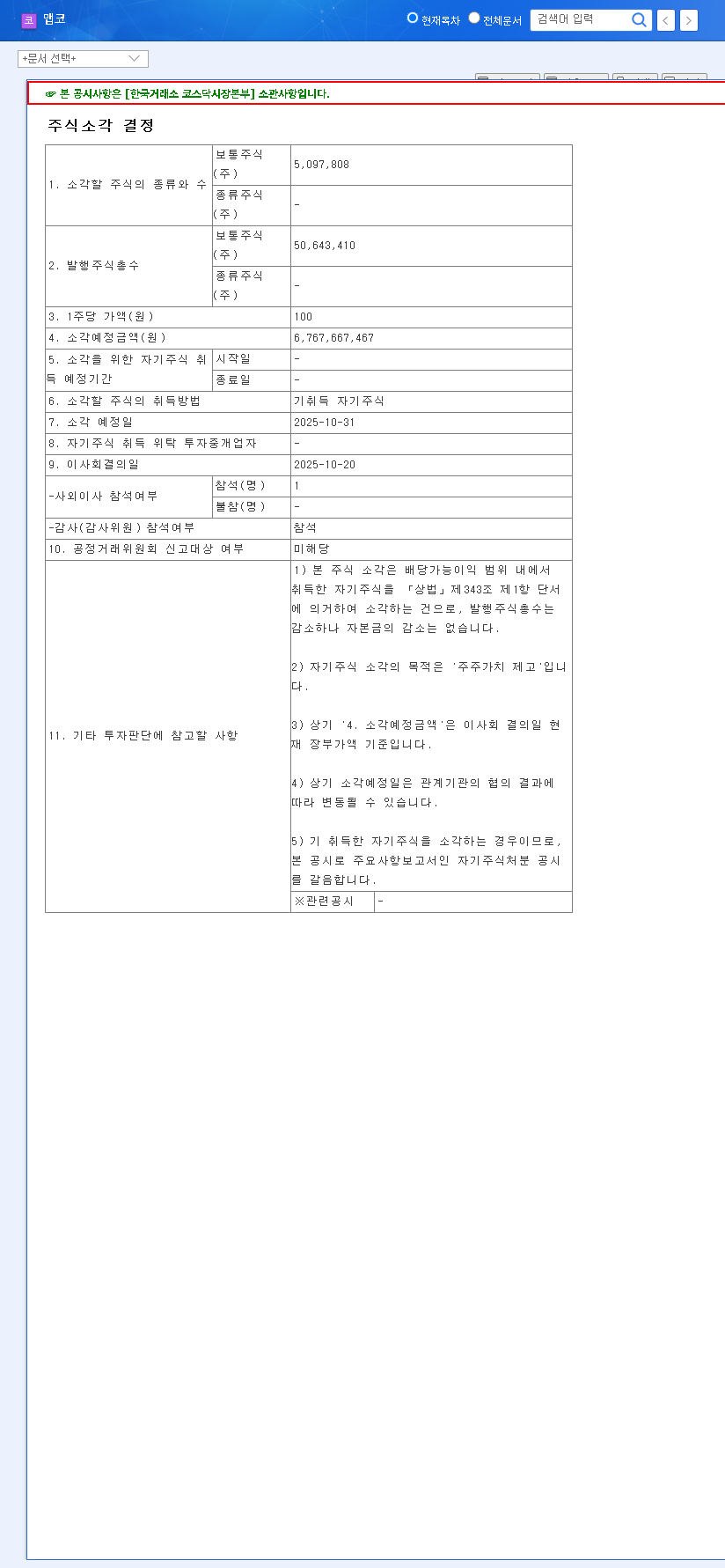
    On October 20, 2025, ABKO officially announced its plan to cancel 5,097,808 of its own common shares, which it had previously acquired as treasury stock. The cancellation, scheduled for October 31, 2025, effectively removes these shares from existence. Think of it as a company reducing the total number of slices in a pizza. While the pizza (the company’s total worth) remains the same size, each remaining slice (each share) becomes proportionally larger and more valuable.

    This action directly impacts key financial metrics and is often seen as a more tax-efficient way to return capital to shareholders compared to dividends. The full details were filed publicly, and you can view the Official Disclosure (Source: DART) for specific figures.

    A share cancellation of this magnitude—nearly 13% of market cap—is an unambiguous signal from management that they believe their stock is undervalued and are confident in future cash flow.

    The Bull Case: Why This Is Great News for Shareholders

    From a short-to-medium term perspective, the arguments in favor of this move are compelling. Investors have several reasons to be optimistic about the focus on shareholder value.

    Immediate Enhancement of Per-Share Metrics

    The most direct benefit is the mathematical improvement of per-share metrics. With fewer shares outstanding, key indicators like Earnings Per Share (EPS) and Book Value Per Share (BPS) automatically increase. For example, if ABKO’s net income remains constant, its EPS will rise by over 12% purely due to the reduced share count. This makes the stock appear cheaper on a P/E basis and fundamentally more valuable, which can attract new investors.

    Positive Market Sentiment and Price Support

    Large-scale buybacks are a powerful signaling mechanism. They communicate management’s confidence in the company’s financial health and future prospects. This proactive approach to capital management can significantly improve investor sentiment. Furthermore, the act of reducing the supply of available stock can create a natural support level for the price and act as a powerful tailwind for upward momentum, especially if buying interest remains constant or increases.

    The Bear Case: A Prudent Investor’s Concerns

    However, a thorough investor analysis requires looking at the other side of the coin. The 6.8 billion KRW used for this action is a significant capital outflow that carries potential long-term risks.

    Opportunity Cost and Reduced Investment Capacity

    That 6.8 billion KRW could have been deployed elsewhere. For a company in a competitive industry, these funds could have been allocated to Research & Development (R&D), strategic acquisitions, or capital expenditures to build new growth engines. By choosing the buyback, ABKO may be foregoing opportunities that could generate higher returns in the future. Investors must question if this is the absolute best use of capital for long-term enterprise value creation.

    Is This a Sustainable Strategy?

    Is this massive cancellation a one-time event designed to provide a temporary boost to the stock, or is it the beginning of a sustained, shareholder-friendly capital return policy? The long-term impact on the stock’s valuation will depend on the answer. A one-off event may provide a short-lived rally, while a consistent policy could lead to a permanent re-rating of the stock by the market. Future communications from ABKO’s management will be crucial here.

    Your Investor Checklist for the ABKO Stock Analysis

    To make an informed decision, investors should move beyond the headline and conduct deeper due diligence. Here are the key areas to investigate:

    • Financial Health: Scrutinize ABKO’s balance sheet and cash flow statements. Is the company generating enough free cash flow to comfortably fund this buyback and its operational needs? Or is it taking on debt or depleting essential cash reserves?
    • Growth Strategy: Look for information on ABKO’s future investment plans. How will they continue to innovate and compete? A company’s true value comes from its ability to grow earnings, not just manipulate its share count. You can learn more by reading our guide on how to conduct fundamental analysis.
    • Market Context: How does this move compare to competitors? Are other companies in the sector also returning capital, or are they investing heavily in growth? Understanding the industry context is vital. For broader market trends, consulting sources like The Wall Street Journal can be insightful.

    Conclusion: A Promising Sign, But Diligence is Key

    The ABKO share cancellation is undoubtedly a positive short-term catalyst that rewards existing shareholders. It demonstrates confidence and immediately enhances per-share financial metrics. However, for long-term investors, the real test is whether this move is part of a broader strategy that includes sustainable operational growth. The true appreciation of enterprise value will only be realized if the company’s fundamental business performance continues to improve. This event should be seen as a compelling reason to conduct a fresh, in-depth ABKO stock analysis, not as a blind signal to buy.
    (129890) ABKO Share Cancellation: A Deep-Dive Investor Analysis (2025) 관련 이미지
  • ABKO Stock Forecast: Major Shareholder Sells Stake, What Should Investors Do?

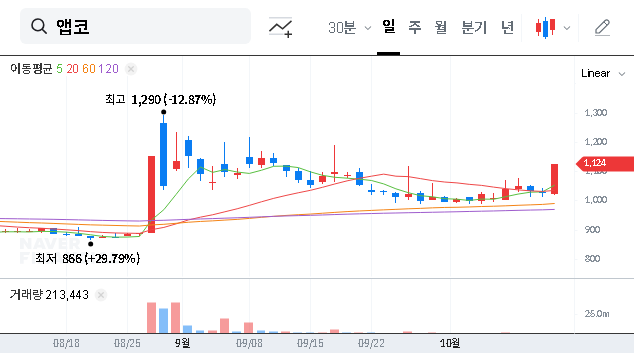
    ABKO Stock Forecast: Major Shareholder Sells Stake, What Should Investors Do? 대표 차트 이미지

    1. What Happened?: Major Shareholder Stake Sale

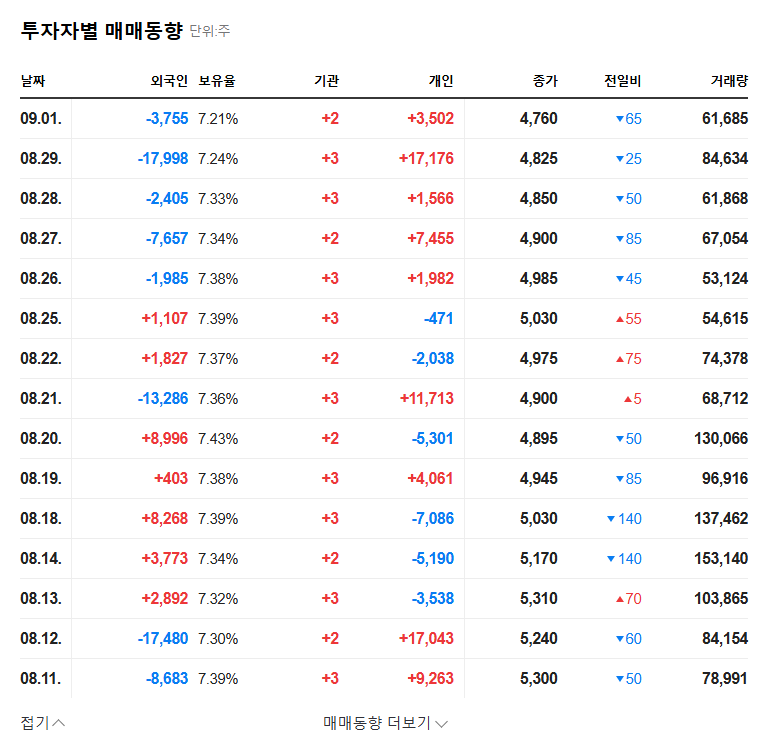
    Major shareholders of ABKO, including Taehwa Lee and 2 others, announced a change in their stake through a public disclosure on September 2, 2025. They sold a total of 1,337,000 shares, reducing their stake from 7.50% to 3.15%.

    2. Why the Sale?: Analyzing the Background

    • Profit-Taking: The sale likely stems from profit-taking following the recent rise in stock price.
    • Securing Liquidity: The purpose could be to secure liquidity for personal financial needs or new investments.
    • Change in Investment Objectives: The possibility of a sale for stake management purposes cannot be ruled out.

    3. About ABKO: Fundamental Analysis

    As of the first half of 2025, ABKO recorded sales growth (9.9% increase) but a decrease in operating profit (6.3% decrease). The gaming gear sector showed solid growth (19.6% increase), and the company is pursuing business diversification by adding ‘import of non-ferrous metals and other raw materials’ as a new business. Financially, assets increased due to the completion and lease decision of the Gimpo logistics center, but liabilities also increased.

    4. Future Stock Price Outlook: Forecast and Investment Strategy

    The sale of shares by major shareholders could negatively impact the stock price in the short term. However, depending on ABKO’s fundamentals, growth potential, and the performance of its new business, the stock price could recover. Investors should analyze ABKO’s business competitiveness and growth potential from a long-term perspective, rather than focusing on short-term stock price fluctuations.

    5. What Should Investors Do?: Action Plan

    • Short-Term Investors: A conservative approach is necessary considering the downward pressure on the stock price. Closely monitor the process of absorbing the sold shares and market reactions.
    • Mid-to-Long-Term Investors: Continuously monitor ABKO’s fundamental improvements and the performance of its new business.
    Why did the major shareholders sell their stake?

    There could be various reasons, such as profit-taking, securing liquidity, or changes in investment objectives, but the exact background is unknown. It’s crucial to focus on the company’s fundamentals rather than short-term price fluctuations.

    What is the outlook for ABKO’s stock price?

    There may be downward pressure on the stock price in the short term, but the price could recover depending on ABKO’s growth potential and the performance of its new business.

    How should investors react?

    Short-term investors should take a conservative approach, while mid-to-long-term investors should continuously monitor the company’s fundamentals and new business performance.

    ABKO Stock Forecast: Major Shareholder Sells Stake, What Should Investors Do? 관련 이미지
    ABKO Stock Forecast: Major Shareholder Sells Stake, What Should Investors Do? 관련 이미지
  • ABKO (129890) Earnings Surprise! Is It a Real Turnaround? H1 2025 Earnings Analysis and Investment Strategy

    1. What Happened? ABKO’s H1 2025 Earnings Release

    ABKO reported revenue of KRW 15.8 billion, operating profit of KRW 800 million, and net income of KRW 800 million for H1 2025. This is a substantial improvement, especially considering the market’s zero earnings expectation.

    2. Why This Result? Analyzing the Drivers

    The earnings surprise is partly attributed to low market expectations. However, the improved operating margin compared to Q4 2024 and Q2 2024 is a positive sign. On the other hand, both revenue and profit are still down year-over-year.

    • Positive Factors: Low market expectations, improved operating margin compared to the previous quarter
    • Negative Factors: Year-over-year decline in revenue and profit, continued inventory increase and debt burden

    3. What’s Next? Outlook and Investment Strategy

    While there is short-term momentum for stock price appreciation, the mid-to-long-term outlook requires further observation. The success of new businesses, inventory management, and debt reduction are key monitoring points.

    • Short-term Investment Strategy: Capitalize on positive momentum, maintain a short-term perspective (Neutral)
    • Mid-to-long-term Investment Strategy: Monitor earnings sustainability and new business performance (Hold)

    4. Investor Action Plan: Key Checklist

    Before making any investment decisions, be sure to check the following:

    • Next quarter’s earnings results
    • Progress and performance of new businesses
    • Improvements in inventory management
    • Debt ratio management status

    How did ABKO perform in H1 2025?

    ABKO reported KRW 15.8 billion in revenue, KRW 800 million in operating profit, and KRW 800 million in net income for the first half of 2025, significantly exceeding market expectations.

    Will this earnings announcement positively impact ABKO’s stock price?

    In the short term, it is highly likely to have a positive impact on the stock price. However, from a mid-to-long-term perspective, careful observation of inventory management, debt reduction, and new business performance is necessary.

    Is it a good idea to invest in ABKO?

    Short-term investment can capitalize on positive momentum but should be approached with a short-term perspective. Mid-to-long-term investment decisions are best made after confirming earnings sustainability and new business performance.