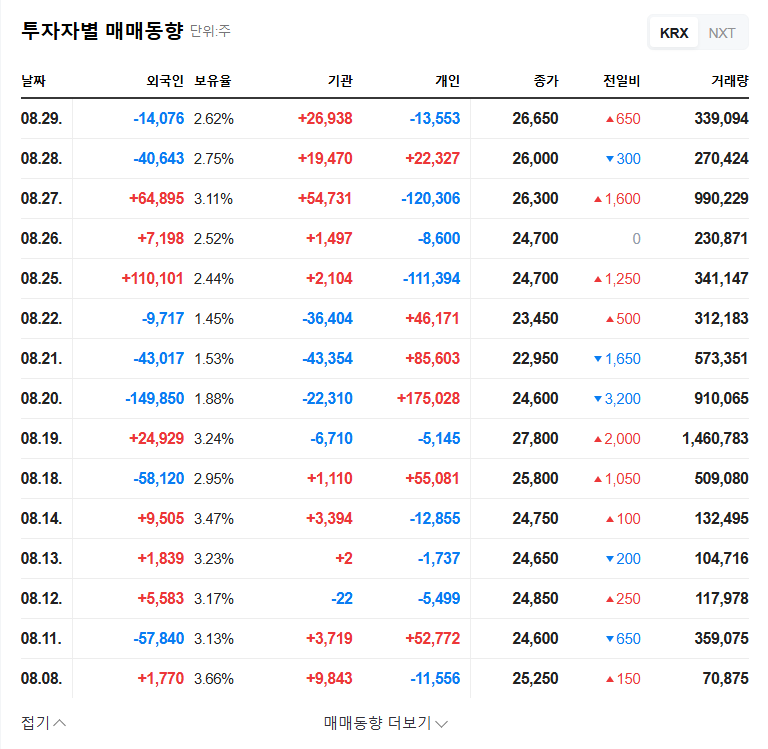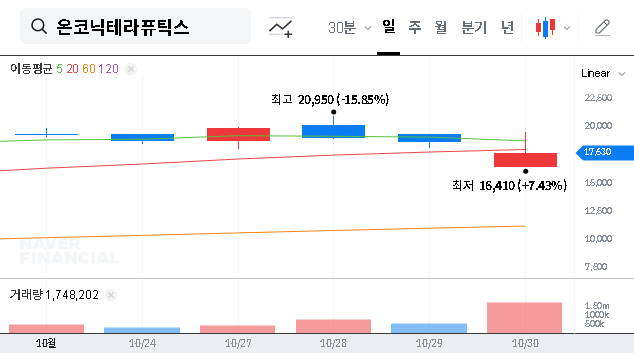
Tag: 476060

  • (476060) Zacubo ODT Approved: Onconic Therapeutics’ Strategic Leap in the P-CAB Market

    (476060) Zacubo ODT Approved: Onconic Therapeutics’ Strategic Leap in the P-CAB Market

    A significant development has emerged for patients with gastroesophageal reflux disease (GERD) and gastric ulcers. Onconic Therapeutics Inc. has officially secured product approval for Zacubo ODT (Orally Disintegrating Tablet), a groundbreaking new formulation of its P-CAB class drug, Zastaprazan. This approval is more than just a product line extension; it represents a major strategic move that enhances patient convenience, strengthens the company’s foothold in the competitive P-CAB market, and presents new considerations for investors. This analysis will explore the profound implications of the Zacubo ODT launch.

    Official Approval: The Details on Zacubo ODT

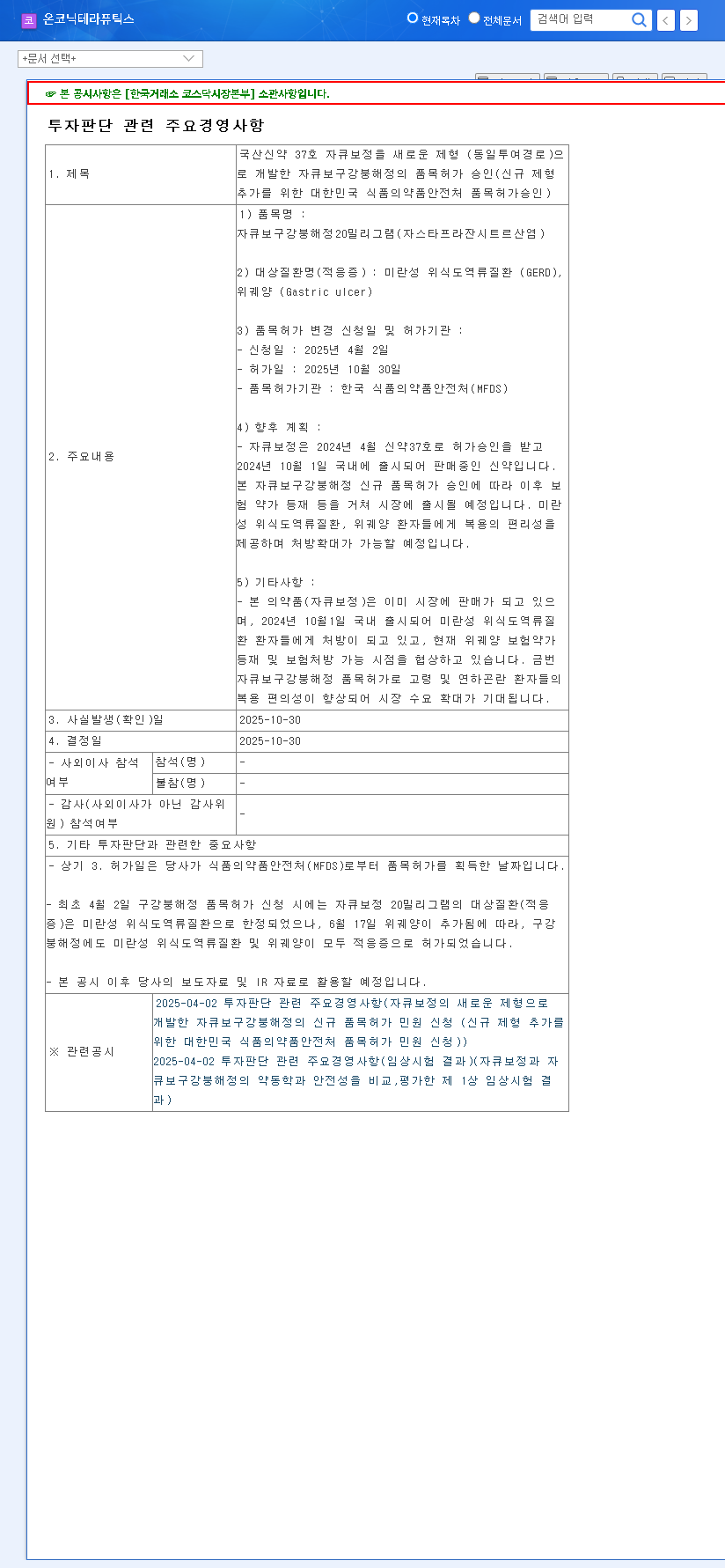
    On October 30, 2025, Onconic Therapeutics announced that it received approval from the Ministry of Food and Drug Safety (MFDS) for ‘Zacubo Orally Disintegrating Tablet 20 mg’. This critical milestone, detailed in the company’s Official Disclosure (Source), adds a highly patient-centric option to its existing GERD treatment portfolio. The key advantage of Zacubo ODT is its ability to dissolve quickly in the mouth without water, a feature designed to significantly improve treatment adherence for specific patient populations.

    Key Approval Information:

    • Product Name: Zacubo Orally Disintegrating Tablet 20 mg (Zastaprazan Citrate)
    • Indications: Erosive Esophagitis (GERD), Gastric Ulcers
    • Next Steps: Market launch pending insurance reimbursement listing.

    The P-CAB Revolution and Patient-Centric Innovation

    To understand the significance of this approval, it’s essential to recognize the shift in the GERD treatment landscape. For decades, Proton Pump Inhibitors (PPIs) were the standard of care. However, Potassium-Competitive Acid Blockers (P-CABs), like Zastaprazan, offer faster onset of action and more consistent acid suppression. The global P-CAB market is rapidly expanding as it replaces the legacy PPI market. Within this competitive arena, innovation in drug delivery is a key differentiator. By launching Zacubo ODT, Onconic Therapeutics is targeting a crucial unmet need: medication convenience.

    This is particularly important for the growing elderly population and patients with dysphagia (difficulty swallowing), a common condition that can severely impact quality of life and medication compliance. As noted by authoritative sources like the Mayo Clinic, dysphagia can make taking traditional pills challenging. An ODT formulation directly addresses this problem, making Onconic Therapeutics a more attractive option for prescribers managing these patient groups.

    The launch of Zacubo ODT is not merely a product line extension; it is a strategic move to capture a valuable, underserved patient segment and build a competitive moat based on user experience and superior convenience.

    Investment Analysis: Opportunities and Considerations

    From an investor’s perspective, the approval of Zacubo ODT presents several compelling opportunities balanced by manageable risks. This new formulation is expected to act as a significant growth catalyst for Onconic Therapeutics.

    Potential Upside

    • Expanded Market Share: The ODT formulation can attract new patients who were previously non-compliant or struggled with tablet forms, directly expanding the total addressable market for the Zacubo brand. For more details, see our analysis of the P-CAB market landscape.
    • Revenue & Profitability Growth: Increased prescription volume is expected to directly boost top-line revenue and contribute to improving operating margins, building on the company’s recent positive financial performance.
    • Enhanced Brand Value: Successfully launching an innovative, patient-focused formulation elevates the company’s reputation and strengthens investor confidence in its R&D and commercialization capabilities.

    Key Monitoring Points for Investors

    While the outlook is positive, savvy investors should monitor several key factors that will determine the ultimate success of the launch:

    • Insurance Reimbursement Timeline: The speed and terms of the insurance listing are the most critical near-term hurdles. Delays could postpone revenue generation.
    • Market Adoption Rate: Monitor early prescription data to gauge how effectively the ODT formulation is complementing, rather than cannibalizing, the existing Zacubo tablet sales.
    • Competitive Response: The P-CAB market is dynamic. Keep an eye on how competitors react and whether they introduce similar patient-friendly formulations.

    Frequently Asked Questions (FAQ)

    What is Onconic Therapeutics Inc.’s ‘Zacubo ODT’?

    Zacubo ODT is a new formulation of Zacubo (Zastaprazan), a P-CAB class medication from Onconic Therapeutics used for GERD and gastric ulcers. Its key feature is that it’s an orally disintegrating tablet, designed to dissolve in the mouth without water for easier administration.

    Who will benefit most from Zacubo ODT?

    The primary beneficiaries are patients who have difficulty swallowing pills, such as many elderly individuals and people with a medical condition called dysphagia. This formulation significantly improves convenience and treatment adherence for these groups.

    How does this impact Onconic Therapeutics’ market position?

    It strengthens the company’s competitive edge in the growing P-CAB market by offering a differentiated, patient-centric product. This is expected to drive market share growth, increase revenue, and enhance the overall brand value of the Zacubo franchise.
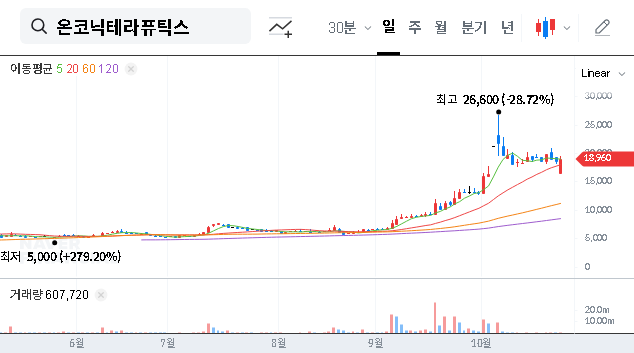
    (476060) Zacubo ODT Approved: Onconic Therapeutics' Strategic Leap in the P-CAB Market 관련 이미지
  • (476060) Onconic Therapeutics Stock: Zacuvo Sales Power Record Q3 2025 Earnings

    (476060) Onconic Therapeutics Stock: Zacuvo Sales Power Record Q3 2025 Earnings

    An in-depth analysis of Onconic Therapeutics Inc. (476060) reveals a pivotal moment for the pharmaceutical trailblazer following its impressive Q3 2025 preliminary earnings announcement. Propelled by the phenomenal market performance of its flagship drug, ‘Zacuvo’, the company has posted revenue figures that have captivated investors and analysts alike. This report will dissect the latest financial data from Onconic Therapeutics, evaluate the driving forces behind its growth, and provide a comprehensive outlook on its future prospects, including the highly anticipated ‘Nesuparib’ pipeline.

    Q3 2025 Earnings: A Story of Impressive Growth

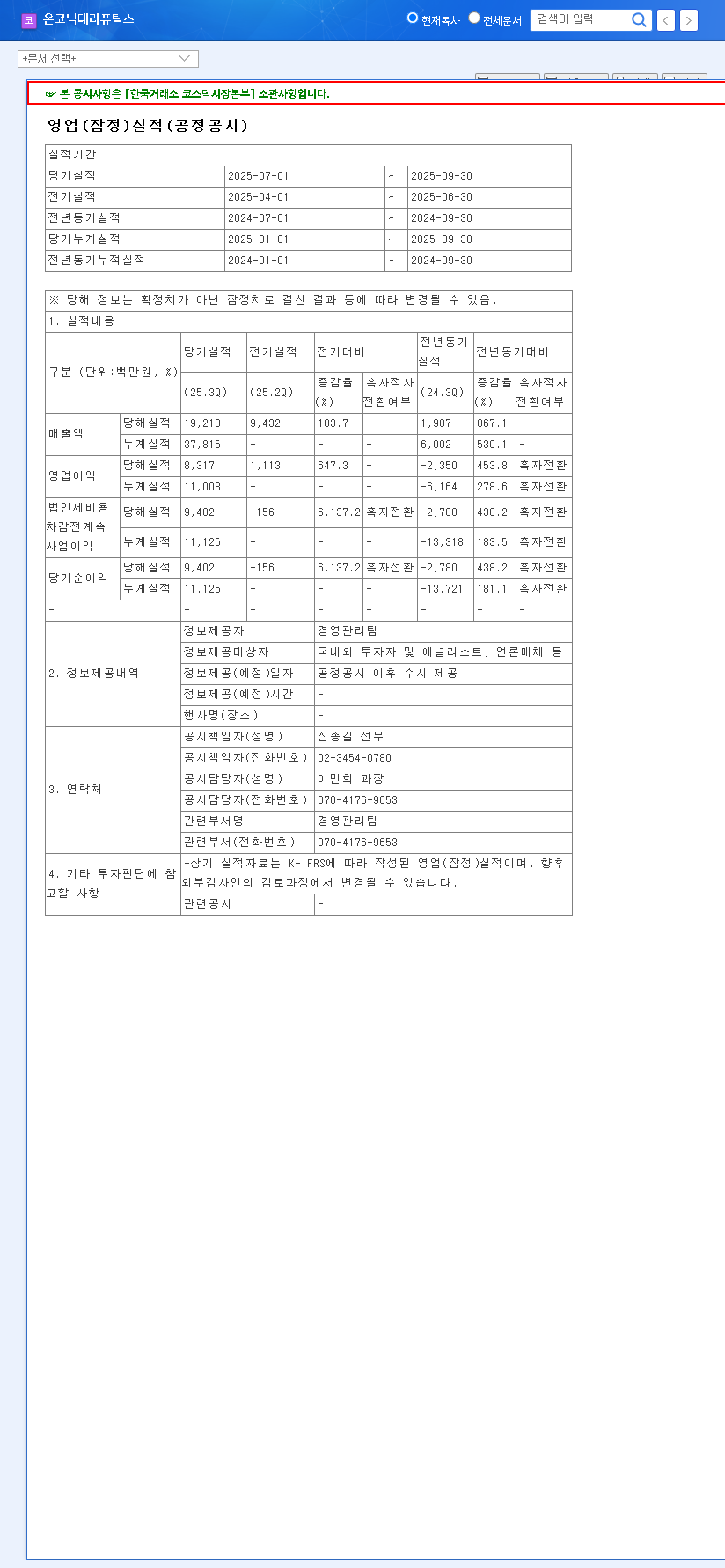
    On October 30, 2025, Onconic Therapeutics released its preliminary operating results, which can be viewed in the Official Disclosure. The key financial indicators showcase a company on a powerful upward trajectory:

    • Revenue: KRW 19.2 billion, a remarkable 14% beat over the estimated KRW 16.9 billion.
    • Operating Profit: KRW 8.3 billion, a slight 6% miss compared to the estimated KRW 8.8 billion.
    • Net Income: KRW 9.4 billion, soaring 25% above the estimated KRW 7.5 billion.

    The headline is clear: demand is exceptionally strong. While the minor shortfall in operating profit might raise questions, it could also signal strategic reinvestment in R&D and marketing to fuel long-term dominance.

    ‘Zacuvo’: The Engine Behind Onconic Therapeutics’ Success

    The undeniable star of the Onconic Therapeutics earnings report is Zacuvo. As Korea’s 37th new drug, its market penetration has been nothing short of spectacular, establishing a new benchmark in the P-CAB (Potassium-Competitive Acid Blocker) market for gastroesophageal reflux disease.

    Explosive Revenue and Profitability

    The numbers speak for themselves. Cumulative revenue for the first half of 2025 surged by an astonishing 461% year-over-year to KRW 18.6 billion. The Q3 revenue of KRW 19.2 billion alone more than doubled the previous quarter, confirming an accelerating growth curve. This rapid expansion allowed Onconic Therapeutics to achieve a crucial milestone: turning a profit in H1 2025. This profitability is reinforced by disciplined R&D spending, with the cost ratio dropping from 73.66% to a more sustainable 22.35%.

    Zacuvo’s success is not just a financial win; it’s a validation of Onconic Therapeutics’ R&D capabilities and a powerful catalyst for funding future innovation.

    Financial Health and Future Growth Drivers

    A strong product is only part of the equation. A robust balance sheet is essential for sustained growth in the capital-intensive biotech sector. As of H1 2025, Onconic Therapeutics holds a very stable financial position with KRW 45.18 billion in cash and equivalents and negative net debt. This financial fortress provides the flexibility to navigate market volatility and aggressively pursue new opportunities.

    Beyond Zacuvo: The Promise of ‘Nesuparib’

    While Zacuvo continues its impressive run, the next major catalyst for the Onconic Therapeutics stock is ‘Nesuparib’. This next-generation pipeline asset is a PARP/Tankyrase dual-target inhibitor designed to treat intractable cancers. Its designation as an orphan drug by regulatory bodies could accelerate its development and approval timeline. For investors, the progress of Nesuparib’s Phase 2 clinical trials represents a key long-term value driver. For more information on clinical trial phases, you can consult authoritative sources like the FDA’s official website.

    Investor Outlook: Balancing Opportunity and Risk

    The outlook for Onconic Therapeutics is overwhelmingly positive, but a prudent investor must consider all angles. Continued market share expansion for Zacuvo and successful clinical milestones for Nesuparib are the primary catalysts for share price appreciation. However, risks are inherent in the industry.

    Key Considerations & Risk Factors

    • Clinical Trial Uncertainty: The success of new drugs is never guaranteed. Failure in late-stage trials is a significant risk for any biotech firm.
    • Market Competition: The P-CAB and oncology markets are fiercely competitive. Maintaining a competitive edge requires continuous innovation and marketing prowess.
    • Regulatory Hurdles: Changes in drug approval processes or new regulations can disrupt development timelines and business plans.
    • Macroeconomic Headwinds: High interest rates and currency fluctuations can impact R&D costs and international expansion efforts.

    In conclusion, Onconic Therapeutics Inc. has demonstrated exceptional performance, transforming its financial landscape with the success of Zacuvo. The company’s solid financial health and promising pipeline with Nesuparib create a compelling case for long-term growth. Investors should monitor ongoing Zacuvo sales data and Nesuparib clinical news closely. For a deeper dive into market dynamics, read our analysis on Understanding the P-CAB Market Landscape.

    (476060) Onconic Therapeutics Stock: Zacuvo Sales Power Record Q3 2025 Earnings 관련 이미지
  • (476060) Onconic Therapeutics Analysis: Zastaprazan & Nesuparib Poised for Growth

    (476060) Onconic Therapeutics Analysis: Zastaprazan & Nesuparib Poised for Growth

    In the dynamic world of biotech investing, identifying companies with a clear path to profitability and groundbreaking pipelines is paramount. The recent Investor Relations (IR) conference held by Onconic Therapeutics Inc. (476060) on October 14, 2025, provided a critical window into its strategy, showcasing a company at an inflection point. With the successful commercial launch of its novel drug Zastaprazan and the promising clinical advancement of its next-generation cancer therapy, Nesuparib, Onconic Therapeutics is signaling a robust future. This analysis will dissect the key takeaways from the IR, evaluate the company’s core assets, and outline a strategic outlook for potential investors.

    Dual Growth Engines: Zastaprazan and Nesuparib

    The cornerstone of the Onconic Therapeutics IR presentation was the potent one-two punch of its leading pipelines. These are not just promising molecules; they represent a fully-realized commercial product generating revenue and a high-potential asset poised to address significant unmet medical needs.

    Zastaprazan: Building a Commercial Fortress

    Zastaprazan, approved as Korea’s 37th domestic new drug, is a powerful Potassium-Competitive Acid Blocker (P-CAB) for treating gastroesophageal reflux disease. Its successful launch is already impacting the company’s bottom line. For those interested in the science, you can learn more about the evolving landscape of P-CAB inhibitors in modern medicine. The IR highlighted several key milestones that solidify its growth trajectory:

    • Robust Sales Momentum: Following its October 2024 launch, Zastaprazan has been a primary driver of sales growth through the first half of 2025.
    • Indication Expansion: The approval for an additional gastric ulcer indication in June 2025 is set to significantly broaden its market reach and revenue potential.
    • Global Footprint: Strategic technology transfer agreements with partners in China, India, Mexico, and South America are crucial first steps in establishing Zastaprazan as a global brand.

    Nesuparib: The High-Stakes Future of Oncology

    While Zastaprazan secures the present, Nesuparib represents the company’s high-growth future. As a next-generation PARP inhibitor, it is being evaluated in difficult-to-treat cancers. Its progress is validated by key regulatory milestones, including an Orphan Drug Designation from the U.S. Food and Drug Administration (FDA), a status given to drugs that show promise in treating rare diseases. Key developments for this pipeline include:

    • Advanced Clinical Trials: Nesuparib is actively advancing through Phase 1b/2 and Phase 2 trials for pancreatic cancer, endometrial cancer, and other solid tumors.
    • Licensing-Out Potential: Management emphasized the high probability of a major licensing-out (L/O) deal or co-development partnership with a global pharmaceutical giant following the successful completion of Phase 2 trials, which could unlock substantial value.

    Onconic Therapeutics has crafted a compelling, de-risked growth strategy: leveraging near-term revenue from Zastaprazan to fund the high-upside development of its oncology game-changer, Nesuparib.

    Financial Health: A Foundation of Stability

    A brilliant pipeline is only as valuable as the company’s ability to fund it. The IR conference underscored the dramatic improvement in Onconic Therapeutics’ financial structure. The successful KOSDAQ listing and subsequent rights offerings in 2024 were instrumental in securing vital R&D capital. Most impressively, the company achieved a critical milestone by turning profitable at the end of 2024, a clear testament to Zastaprazan’s commercial success. This financial turnaround, detailed in the company’s Official Disclosure (Source: DART), provides a stable foundation for management to execute its long-term vision without immediate financing pressures.

    Investor Action Plan & Strategic Outlook

    For those considering an investment in Onconic Therapeutics, this IR provides clarity but also highlights key areas to monitor moving forward. The company’s value will be driven by continued execution on several fronts.

    • Zastaprazan Sales Velocity: Track quarterly sales figures to ensure growth meets expectations, especially following the new indication launch.
    • Nesuparib Clinical Data: Watch for press releases on clinical trial milestones and data readouts. Positive Phase 2 results will be a major catalyst.
    • Partnership News: Any announcement of a Nesuparib partnership or a new Zastaprazan regional deal would significantly de-risk the investment and validate the pipelines.
    • Macroeconomic Resilience: Pay attention to how management navigates industry-wide challenges like interest rate changes and supply chain logistics in their future reports.

    In conclusion, the October 2025 IR successfully framed Onconic Therapeutics not as a speculative biotech, but as an emerging pharmaceutical company with a solid commercial product and a pipeline capable of generating transformative value. The path forward is clear, and consistent execution on these stated goals could lead to a significant re-rating of the company’s valuation.

    (476060) Onconic Therapeutics Analysis: Zastaprazan & Nesuparib Poised for Growth 관련 이미지
  • (476060) Nesuparib for Ovarian Cancer: Onconic Therapeutics’ Phase 2 Trial Explained for Investors

    (476060) Nesuparib for Ovarian Cancer: Onconic Therapeutics’ Phase 2 Trial Explained for Investors

    Biotech investors understand that a single regulatory filing can represent a major value inflection point. Onconic Therapeutics has just created such a moment, submitting a critical Investigational New Drug (IND) amendment for its flagship anti-cancer agent, Nesuparib (JPI-547). This move initiates a Phase 2 clinical trial for its Nesuparib ovarian cancer program, a development that could reshape the company’s trajectory and the treatment landscape for a challenging disease. This analysis provides a comprehensive breakdown of the announcement, its fundamental impact, and a strategic roadmap for investors.

    The Milestone: A Phase 2 Trial for Nesuparib in Ovarian Cancer

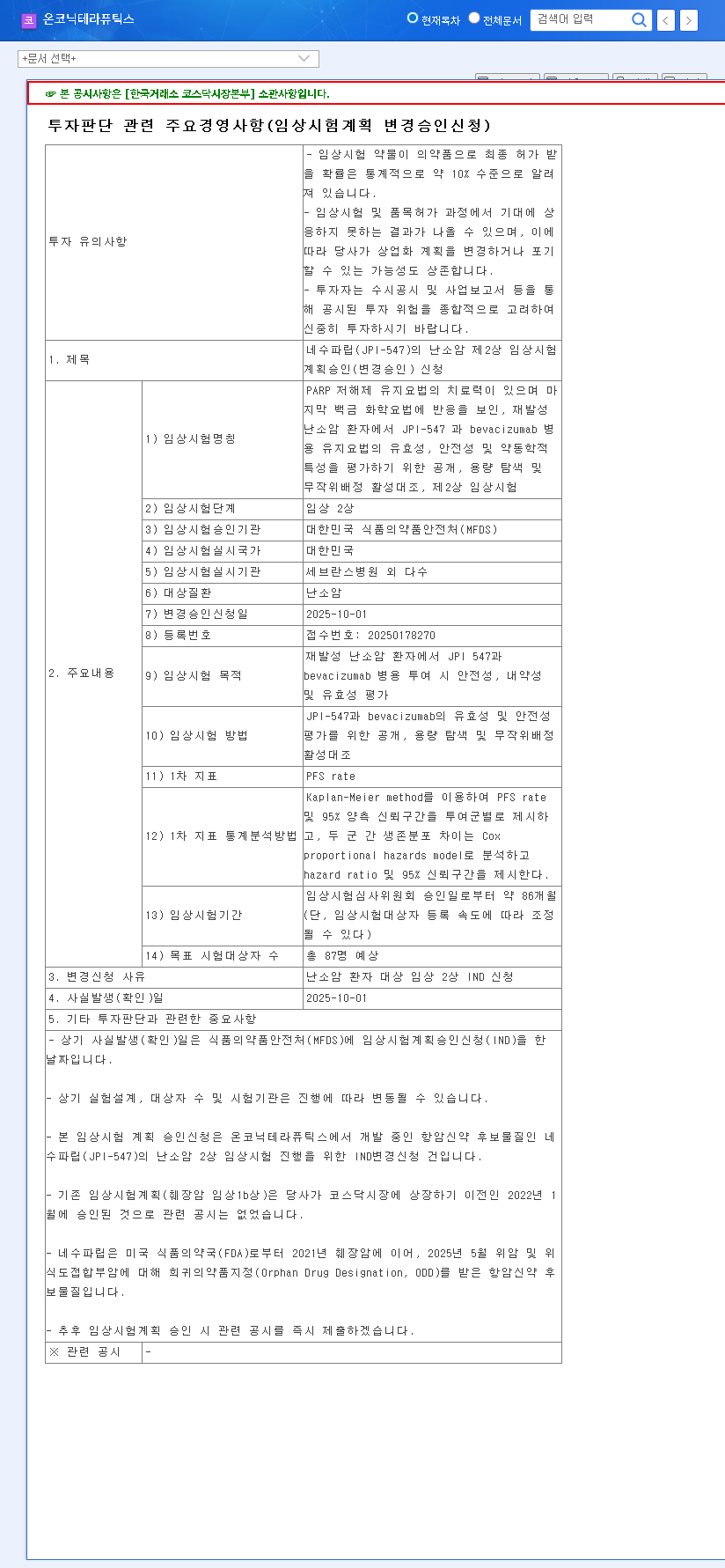
    On October 1, 2025, Onconic Therapeutics officially submitted its IND amendment to South Korea’s Ministry of Food and Drug Safety (MFDS). This filing seeks approval to begin a Phase 2 study evaluating the efficacy and safety of Nesuparib. The trial is designed as an open-label, dose-finding, and randomized active-controlled study. It will test Nesuparib in combination with bevacizumab as a maintenance therapy for patients with recurrent ovarian cancer who have previously responded to platinum-based chemotherapy. The official filing can be reviewed in the Official Disclosure. This advancement from early-stage research to mid-stage clinical validation is a crucial step towards potential commercialization.

    Phase 2 trials are a critical proving ground. They are the first time a drug candidate’s effectiveness is rigorously tested in a specific patient population, moving beyond the initial safety focus of Phase 1.

    Fundamental Impact: Why This Development Matters

    Accelerating a High-Potential Pipeline

    Nesuparib is Onconic’s leading pipeline asset. Advancing the Nesuparib ovarian cancer program into Phase 2 significantly de-risks the asset and builds development momentum. Ovarian cancer continues to have high unmet medical needs, particularly in the recurrent setting. A successful therapy in this space promises not only a profound impact on patients’ lives but also substantial market potential. This trial propels Nesuparib closer to becoming a tangible revenue-generating product.

    Building on Regulatory Validation

    This progress is amplified by Nesuparib’s existing regulatory accolades. The drug has already received U.S. FDA Orphan Drug Designation (ODD) for pancreatic cancer, gastric cancer, and gastroesophageal junction cancer. ODD provides powerful incentives, including market exclusivity for seven years post-approval, tax credits for clinical trials, and a waiver of prescription drug user fees. This pattern of regulatory recognition suggests that agencies see scientific merit in Nesuparib’s mechanism and potential.

    Creating Synergistic Data and Partnership Appeal

    Running this trial alongside the ongoing Phase 1b trial for pancreatic cancer allows Onconic to build a comprehensive data package. This diverse clinical evidence showcases Nesuparib’s potential across multiple tumor types, strengthening its profile as a ‘pipeline-in-a-product’. Such a robust dataset is highly attractive to potential global pharmaceutical partners, positioning Onconic for lucrative technology transfer or licensing deals in the future.

    The Inherent Risks of Biotech Investing

    While the news is overwhelmingly positive, prudent investors must weigh the potential against the significant risks inherent in drug development.

    • Clinical Trial Uncertainty: The path of drug development is fraught with failure. A large percentage of drugs entering Phase 2 trials do not succeed due to insufficient efficacy or unexpected safety issues. Industry data from organizations like BIO.org consistently show that oncology has one of the highest failure rates.
    • Financial Pressures: Phase 2 trials are substantially more expensive than Phase 1 studies. This increases the company’s cash burn rate and may necessitate future financing rounds, which could dilute existing shareholders’ equity.
    • Extended Timelines: Even with positive Phase 2 results, the journey is long. A subsequent Phase 3 trial and regulatory review will take several more years before any revenue is generated. Biotech investing requires a long-term horizon.
    • Competitive Landscape: The ovarian cancer market is competitive, with established PARP inhibitors and other targeted therapies. Nesuparib must demonstrate a clear clinical advantage—be it superior efficacy, an improved safety profile, or effectiveness in a new patient subset—to capture market share.

    Investor Roadmap: Key Catalysts to Monitor

    The IND submission is a starting gun, not a finish line. Astute investors should establish a clear monitoring plan focused on the following key milestones. For a deeper dive into financial due diligence, consider reviewing our guide on how to evaluate early-stage biotech stocks.

    • MFDS Trial Approval: The first catalyst will be the official green light from the MFDS. Monitor the timeline and any conditions attached to the approval.
    • Patient Enrollment Updates: Tracking the speed of patient enrollment can be an early indicator of clinical site engagement and physician interest.
    • Interim and Final Data Readouts: These are the most significant catalysts. Pay close attention to press releases and presentations at scientific conferences for any data on efficacy (e.g., response rates, progression-free survival) and safety.
    • Financial Health: Keep a close watch on the company’s quarterly financial reports to ensure they have a sufficient cash runway to complete the trial.

    In conclusion, Onconic Therapeutics’ move to a Phase 2 trial for its Nesuparib ovarian cancer treatment is a significant and positive step. It validates the asset and opens a path toward a major market. However, the potential reward is balanced by substantial clinical and financial risks. Success will hinge on compelling clinical data that can pave the way for a pivotal Phase 3 trial and, ultimately, a valuable partnership or acquisition.

    (476060) Nesuparib for Ovarian Cancer: Onconic Therapeutics' Phase 2 Trial Explained for Investors 관련 이미지
  • Onconic Therapeutics Nesuparib Enters Phase 2 for Pancreatic Cancer: Analyzing Growth Potential and Pipeline Strength

    Onconic Therapeutics Nesuparib Enters Phase 2 for Pancreatic Cancer: Analyzing Growth Potential and Pipeline Strength 대표 차트 이미지

    Onconic Therapeutics Nesuparib Enters Phase 2 for Pancreatic Cancer: Analyzing Growth Potential and Pipeline Strength

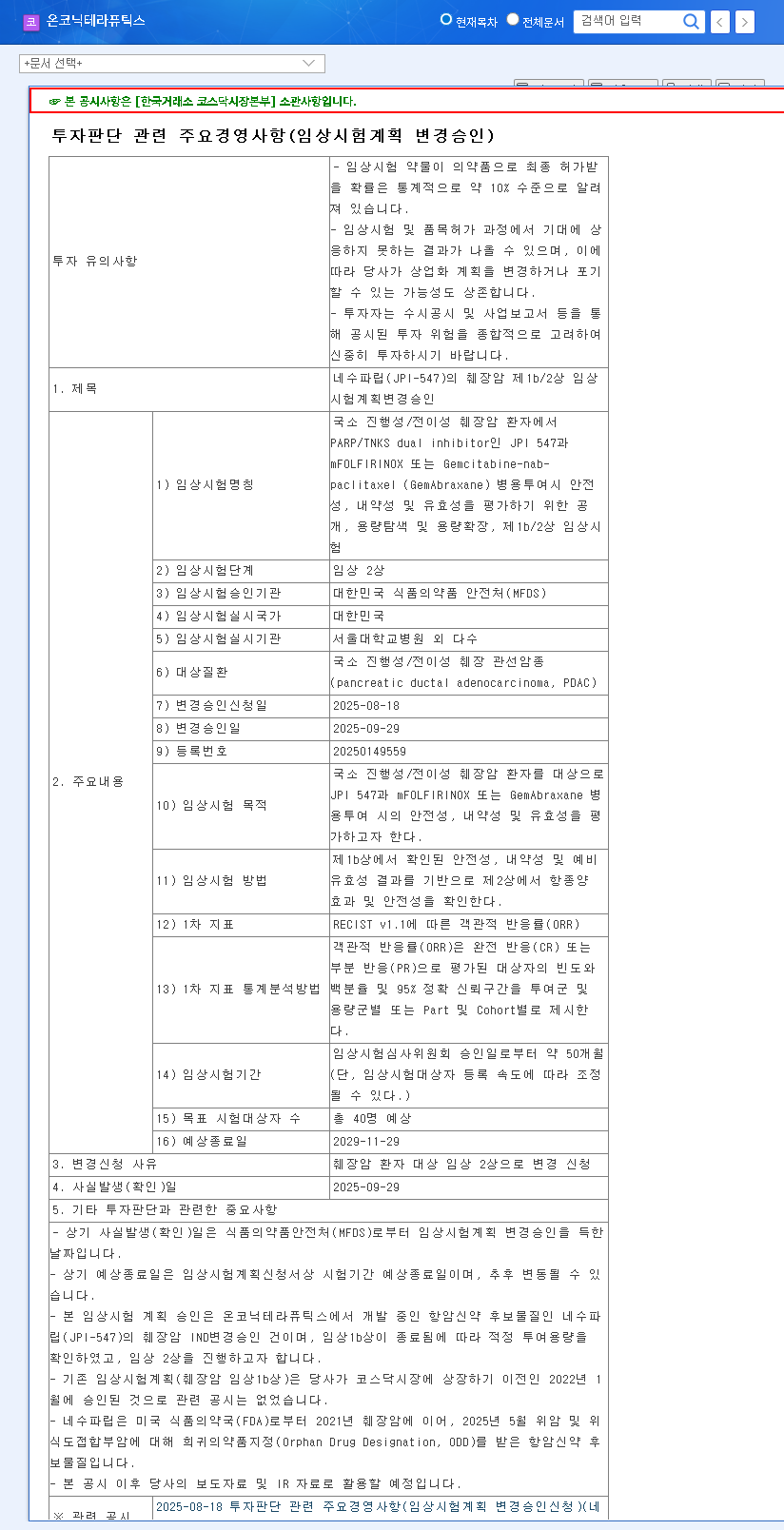
    In a major development for the oncology sector and for patients facing the challenge of pancreatic cancer, Onconic Therapeutics has officially advanced its key anticancer drug candidate, ‘Nesuparib (JPI-547),’ into Phase 2 clinical trials. This significant milestone follows the approval of its Phase 1b/2 clinical trial protocol amendment from the Ministry of Food and Drug Safety (MFDS).

    The advancement of Onconic Therapeutics Nesuparib is far more than a regulatory formality; it represents a crucial pivot point that could profoundly impact the company’s future growth drivers and corporate valuation. Given the substantial unmet medical needs in treating locally advanced/metastatic Pancreatic Ductal Adenocarcinoma (PDAC)—one of the deadliest forms of cancer—investors and the scientific community are keenly watching the trajectory of this novel therapeutic agent.

    The Strategic Milestone: Nesuparib’s Phase 2 Entry for PDAC

    Onconic Therapeutics received formal approval from the MFDS for the amendment to its Nesuparib (JPI-547) Phase 1b/2 clinical trial plan specifically targeting pancreatic cancer. This achievement confirms the successful conclusion of the Phase 1b safety and initial efficacy assessments, allowing the official commencement of the more rigorous Phase 2 efficacy testing.

    Nesuparib is being developed for patients suffering from locally advanced or metastatic PDAC. Its importance is underscored by its designation as an Orphan Drug by both the US FDA and the Korean MFDS. Orphan Drug designation often grants accelerated review processes, market exclusivity, and tax incentives, acknowledging the dire need for new treatments in this indication.

    Key Facts about the Clinical Advancement:

    • Event Date: Approval of Nesuparib Phase 1b/2 clinical trial amendment (September 29, 2025).
    • Target Disease: Locally Advanced/Metastatic Pancreatic Ductal Adenocarcinoma (PDAC).
    • Clinical Stage: Official entry into Phase 2 efficacy trials.
    • Drug Mechanism: PARP/TNKS dual-target anticancer inhibitor.

    Analyzing the Power of Onconic Therapeutics Nesuparib: A Dual-Target Approach

    What sets Nesuparib apart from conventional treatments is its dual-target mechanism, focusing on both PARP (Poly(ADP-ribose) polymerase) and TNKS (Tankyrase). Both enzymes play critical roles in DNA damage repair, genomic stability, and tumor cell proliferation. By inhibiting both pathways simultaneously, Onconic Therapeutics Nesuparib aims to overcome resistance mechanisms often observed when tumors are treated with single-target inhibitors.

    PARP inhibitors are already established treatments for certain cancers, particularly those with BRCA mutations. However, TNKS inhibition introduces a novel layer of therapeutic impact, potentially disrupting the Wnt signaling pathway—a key driver in many cancers, including PDAC. This dual inhibition strategy holds promise for significantly improving patient outcomes where treatment options are currently limited to highly toxic chemotherapy regimens.

    For more detailed information on the mechanism of action of similar drugs, readers can consult authoritative scientific sources on innovative PARP inhibitors.

    Corporate Health and Synergy: Zastaprazan Fuels the Pipeline

    The acceleration of Nesuparib’s pipeline occurs against a backdrop of remarkable corporate success. According to its 2025 semi-annual report, Onconic Therapeutics demonstrated exceptional financial stability, reporting explosive sales revenue growth of 362.4% year-over-year, reaching 18.6 billion KRW.

    This financial turnaround is primarily attributed to the robust performance of its flagship product, ‘Zastaprazan,’ a treatment for gastroesophageal reflux disease. The successful transition from a previous significant deficit to achieving a surplus in both operating profit and net income provides a solid financial foundation, minimizing the reliance on external funding solely for R&D activities.

    The synergistic relationship between the commercial success of Zastaprazan and the clinical advancement of Onconic Therapeutics Nesuparib reaffirms the company’s strong drug development capabilities across diverse therapeutic areas, from gastrointestinal diseases to cutting-edge oncology. (For more details, see our previous analysis on the global expansion of Zastaprazan).

    Impact Assessment: What Phase 2 Means for Investors and Global Partnerships

    The progression into Phase 2 significantly increases the drug candidate’s commercial viability and corporate value, especially in the context of global pharmaceutical partnering:

    • Accelerated Licensing Potential: Phase 2 data is often the critical trigger point for global pharmaceutical companies seeking to license promising oncology assets. This advancement strengthens Onconic’s negotiating position for technology transfer (licensing-out) agreements, potentially leading to more favorable terms.
    • Enhanced Credibility: Orphan Drug designation combined with MFDS approval validates the company’s scientific rigor and R&D competence, attracting higher investor attention and building trust in the market.
    • Addressing Unmet Needs: Given the aggressive nature of PDAC, any successful therapeutic agent, particularly one with an orphan drug status, commands significant market interest due to the high global demand for effective treatments.

    Navigating Future Challenges and Risks

    While the momentum is positive, drug development remains inherently uncertain. Investors must remain cognizant of the potential risk factors associated with Onconic Therapeutics Nesuparib:

    1. Clinical Development Risk: The outcome of Phase 2 trials is not guaranteed. If the results do not meet primary efficacy endpoints, corporate valuation and stock performance could be negatively impacted.
    2. Competitive Landscape: The pancreatic cancer market is dynamic and competitive. Continuous monitoring of rival drugs, especially novel targeted therapies or immunotherapies, is essential.
    3. Commercialization Uncertainty: Even after clinical success, challenges in securing optimal licensing deals, navigating complex international regulatory hurdles, and ensuring effective commercialization remain.

    In summary, Onconic Therapeutics Nesuparib represents a high-potential asset in a high-need indication. The successful entry into Phase 2, supported by strong corporate financials driven by Zastaprazan, positions Onconic Therapeutics for continued growth. Continuous monitoring of clinical data and licensing negotiations will be key for assessing its long-term investment potential.

    Onconic Therapeutics Nesuparib Enters Phase 2 for Pancreatic Cancer: Analyzing Growth Potential and Pipeline Strength 관련 이미지
    Onconic Therapeutics Nesuparib Enters Phase 2 for Pancreatic Cancer: Analyzing Growth Potential and Pipeline Strength 관련 이미지
  • Onconik Therapeutics Announces Stock Dividend: A Catalyst for Growth? (476060)

    What is the Stock Dividend?

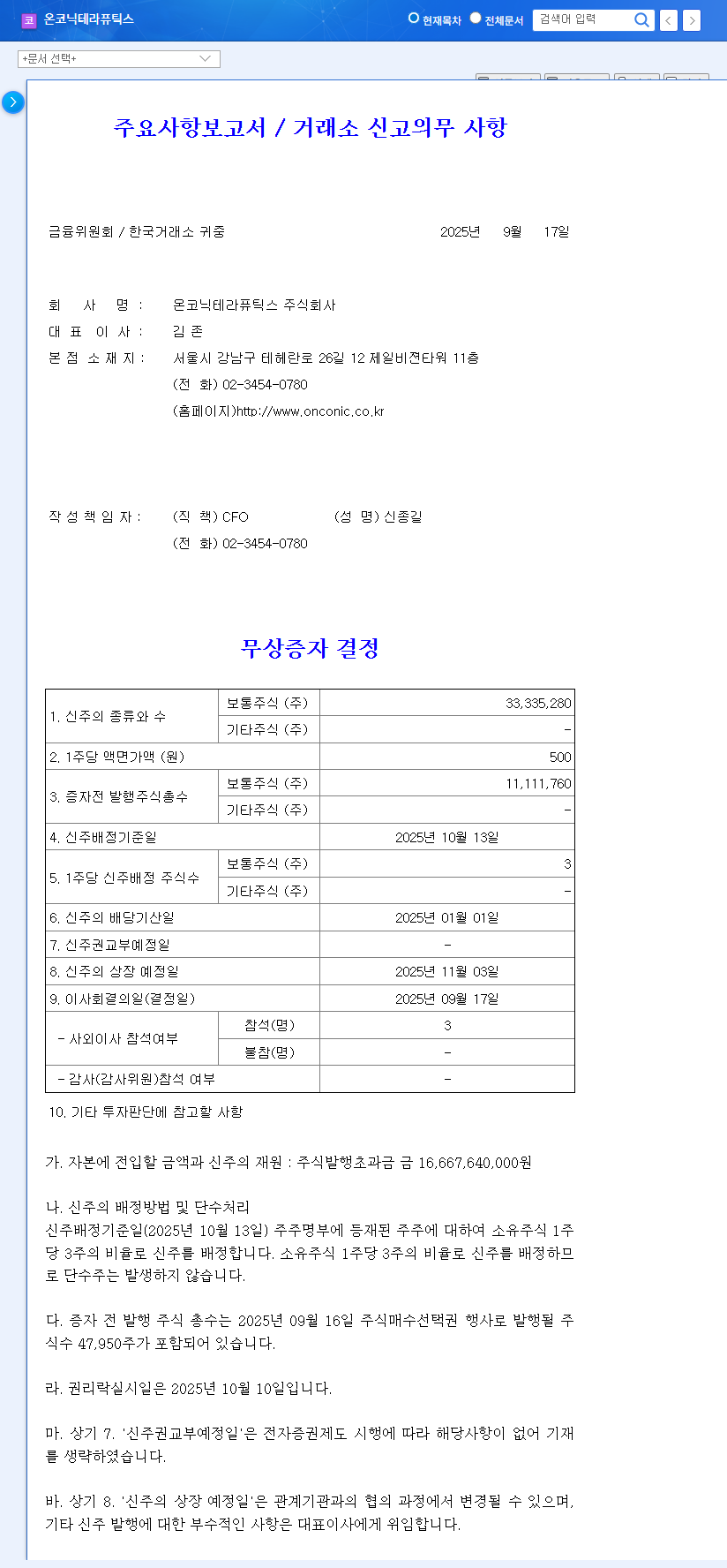
    Onconik Therapeutics officially announced a stock dividend on September 17, 2025. This means existing shareholders will receive additional shares free of charge, increasing the total number of outstanding shares. This typically leads to increased stock liquidity and potentially drives up the share price.

    Why the Stock Dividend?

    Onconik Therapeutics is riding a wave of positive momentum with the successful launch of Zastaprazan and ongoing clinical trials for Nesuparib. The stock dividend can be interpreted as a strategic move to enhance shareholder value and attract further investor interest. Their robust financial position (returned to profitability in the first half of 2025, negative net debt) also supports this decision.

    How Will the Stock Dividend Impact the Share Price?

    • Positive Impacts: Increased shareholder value, enhanced liquidity, potential upward momentum in share price, improved corporate image and investment attractiveness.
    • Potential Considerations: Short-term stock dilution effect, market volatility.

    In the long term, the market expansion of Zastaprazan and the success of Nesuparib’s clinical trials will be the key determinants of the company’s value.

    What Should Investors Do?

    While a stock dividend is generally perceived as a positive signal, careful analysis is crucial before making any investment decisions. Investors should thoroughly examine the stock dividend ratio, the record date, and the overall market conditions. Consider the company’s fundamentals and growth potential before investing.

    FAQ

    What is a stock dividend?

    A stock dividend is a payment made to shareholders in the form of additional shares, rather than cash.

    Why do companies issue stock dividends?

    Companies issue stock dividends to enhance shareholder value, increase liquidity, and potentially drive up the share price.

    What are Onconik Therapeutics’ key pipeline products?

    The key pipeline products are Zastaprazan, a P-CAB acid suppressant, and Nesuparib, an anti-cancer drug.

  • Onconics Therapeutics Announces Bonus Issue: A Catalyst for Stock Price Rise?

    Onconics Therapeutics Announces Bonus Issue: A Catalyst for Stock Price Rise? 대표 차트 이미지

    1. What’s Happening? – The Bonus Issue

    Onconics Therapeutics announced a 3% bonus share issue on September 17, 2025. The new shares are expected to be listed on November 3, 2025.

    2. Why the Bonus Issue? – Fundamental Analysis

    Onconics Therapeutics is experiencing robust growth, driven by the successful domestic launch of its digestive disease treatment, Zastaprazan, and ongoing R&D for its next-generation anticancer drug, Nesuparib. As of H1 2025, the company reported revenue of KRW 18.6 billion and a positive operating cash flow of KRW 1.73 billion, demonstrating improved financial health. The bonus issue is interpreted as a move to enhance shareholder value and increase liquidity.

    • Zastaprazan: Continued positive momentum with steady sales growth since its domestic launch, expansion of indications, and overseas licensing agreements.
    • Nesuparib: A differentiated anticancer drug with orphan drug designation, pursuing technology transfer or joint ventures with global big pharma.
    • Financial Health: Achieving profitability and increased retained earnings, leading to a stable financial structure.

    3. What’s the Impact on Stock Price? – Analysis

    In the short term, the bonus issue is likely to act as a positive catalyst for the stock price. The increase in the number of outstanding shares and the resulting decrease in price per share can stimulate investor buying interest. However, the potential for short-term volatility should also be considered. In the long term, while there’s no direct impact on the company’s intrinsic value, the increased liquidity and the effort to enhance shareholder value can be interpreted as positive signals.

    • Short-term impact: Potential for stock price increase, increased short-term volatility, possible improvement in trading volume.
    • Long-term impact: No change in intrinsic value, minimal concern about dilution of shareholder value, potential for positive interpretation.

    4. What Should Investors Do? – Investment Strategy

    Short-term investors can consider capitalizing on the potential stock price increase driven by expectations surrounding the bonus issue, but should be mindful of price volatility around the listing date. Long-term investors should focus on the company’s fundamentals and growth prospects when making investment decisions.

    • Short-term investment: Consider buying (beware of volatility).
    • Long-term investment: Maintain a positive outlook (focus on fundamentals and growth potential).
    What is a bonus share issue?

    It’s when existing shareholders receive additional shares for free. The number of shares increases, lowering the price per share, but the company’s total value remains unchanged.

    What is the bonus share ratio for Onconics Therapeutics?

    The bonus share ratio is 3%.

    Does a bonus issue always have a positive impact on the stock price?

    Not necessarily. While there might be short-term positive sentiment, price adjustments can occur after the issue.

    Onconics Therapeutics Announces Bonus Issue: A Catalyst for Stock Price Rise? 관련 이미지
    Onconics Therapeutics Announces Bonus Issue: A Catalyst for Stock Price Rise? 관련 이미지
  • Onconik Therapeutics Receives Approval for Zacuvo Phase 1 Trial Modification: Investment Analysis


    Onconik Therapeutics Receives Approval for Zacuvo Phase 1 Trial Modification: Investment Analysis 대표 차트 이미지


    What Happened?

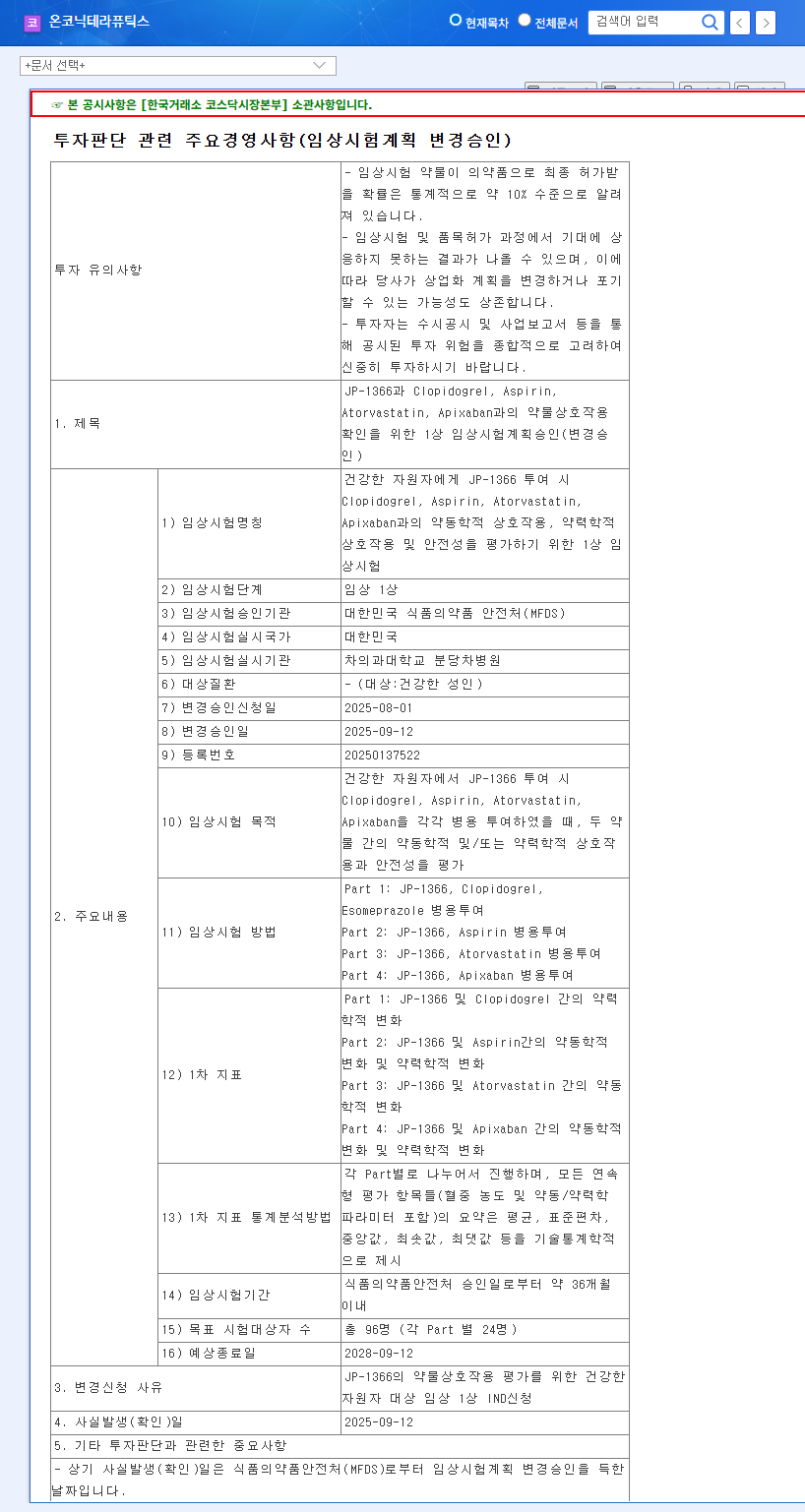
    Onconik Therapeutics announced on September 15, 2025, that it received approval from the Ministry of Food and Drug Safety (MFDS) for a modification to its Phase 1 clinical trial plan for Zastaprazan (Zacuvo), a treatment for digestive diseases caused by excessive gastric acid secretion. The purpose of this clinical trial is to evaluate the safety and efficacy of Zacuvo when administered in combination with other medications.

    Why is This Approval Important?

    This clinical trial modification approval is more than just a procedural step. It holds the key to Onconik Therapeutics’ future, influencing Zacuvo’s safety verification, potential expansion of indications, and even its global market entry.

    • Enhanced Safety and Increased Trust: Securing safety data on combination therapy with various drugs can enhance trust among medical professionals and patients.
    • Expansion of Indications and Enhanced Competitiveness: Securing additional indications and developing combination therapies can give Zacuvo a competitive edge over other drugs.
    • Accelerated Technology Export and Global Market Entry: Robust clinical data can positively influence negotiations for overseas market entry and technology export.

    So, What’s the Investment Strategy?

    In the short term, a buy or hold strategy is valid due to the positive momentum and the high potential for stock price increase. In the medium to long term, continuous monitoring of clinical results, sales growth trends, and Nesuparib’s development status is necessary.

    Investment Considerations

    • Pay attention to the timing and content of clinical trial results announcements.
    • Understand Zacuvo’s market share and competitive landscape.
    • Analyze the progress and likelihood of success of Nesuparib development.


    FAQ

    What is Zacuvo?

    Zacuvo is the 37th domestically developed new drug in Korea, used to treat conditions caused by excessive gastric acid secretion, such as gastroesophageal reflux disease (GERD) and gastric ulcers.

    What is the significance of this clinical trial modification approval?

    It’s a crucial step towards evaluating the safety and efficacy of Zacuvo when used in combination with other medications, paving the way for broader prescription and enhanced market competitiveness.

    What other pipelines does Onconik Therapeutics have?

    In addition to Zacuvo, Onconik Therapeutics is developing Nesuparib, a dual PARP/Tankyrase inhibitor for cancer treatment.


    Onconik Therapeutics Receives Approval for Zacuvo Phase 1 Trial Modification: Investment Analysis 관련 이미지
    Onconik Therapeutics Receives Approval for Zacuvo Phase 1 Trial Modification: Investment Analysis 관련 이미지


  • Onconik Therapeutics IR Analysis: Zastaprazan Growth Momentum and Nesuparib Clinical Expectations

    Onconik Therapeutics IR Analysis: Zastaprazan Growth Momentum and Nesuparib Clinical Expectations 대표 차트 이미지

    1. Onconik Therapeutics IR: What to Expect

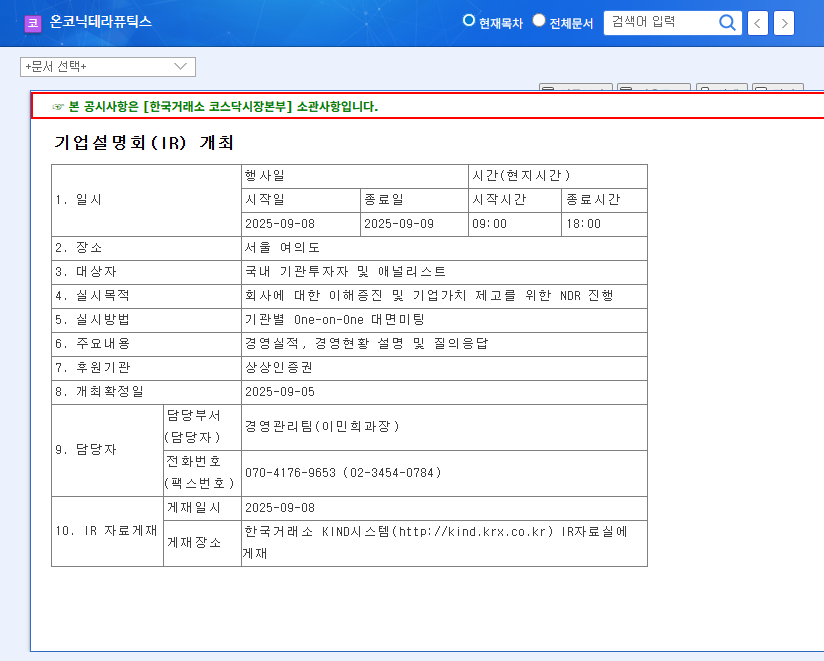
    Onconik Therapeutics will hold an investor relations (IR) meeting on September 8th at 9:00 AM. This IR, part of a Non-Deal Roadshow (NDR), aims to enhance corporate value by providing updates on business performance, current status, and a Q&A session. Key information disclosures are expected, including Zastaprazan sales growth, Nesuparib clinical trial progress, and future business plans.

    2. Why Pay Attention?: Growth Driver Analysis

    • Zastaprazan Growth: The successful launch of Zastaprazan for erosive esophagitis and the additional approval for gastric ulcer treatment are expected to drive sales growth. Technology transfer agreements with China, India, and South America have also secured a foundation for royalty revenue.
    • Nesuparib Clinical Expectations: Clinical development of the anticancer drug Nesuparib for pancreatic cancer, endometrial cancer, and other major cancers is progressing smoothly. Its designation as an orphan drug increases the likelihood of development and approval.
    • Solid Financial Structure: Onconik successfully raised capital through its KOSDAQ listing and maintains a stable financial structure with KRW 45.1 billion in cash and cash equivalents.

    3. Post-IR Stock Outlook and Investment Strategy

    Stock prices may fluctuate in the short term depending on the information disclosed at the IR. Positive information may create upward momentum, but failure to meet expectations could lead to selling pressure. In the mid-to-long term, Zastaprazan’s sales growth and the success of Nesuparib’s clinical trials will be key factors determining the stock’s trajectory. Investors should carefully analyze the IR content, future performance trends, and clinical results before making investment decisions.

    4. Action Plan for Investors

    If you are considering investing in Onconik Therapeutics, thoroughly review the information presented at the IR and the key points to watch. It is crucial to continuously monitor Zastaprazan sales, Nesuparib clinical results, and potential further technology transfer agreements. Changes in macroeconomic indicators, such as interest rates and exchange rates, should also be considered in your investment decision.

    What are Onconik Therapeutics’ main business areas?

    Onconik Therapeutics focuses on developing innovative new drugs for acid-related gastrointestinal diseases and cancer.

    What conditions is Zastaprazan used to treat?

    Zastaprazan is a P-CAB class drug used to treat erosive esophagitis and gastric ulcers.

    What stage of clinical trials is Nesuparib currently in?

    Nesuparib is currently undergoing clinical trials for several major cancers, including pancreatic and endometrial cancer, and has been designated as an orphan drug.

    When is Onconik Therapeutics’ IR scheduled?

    Onconik Therapeutics’ IR is scheduled for September 8, 2025, at 9:00 AM.

    Onconik Therapeutics IR Analysis: Zastaprazan Growth Momentum and Nesuparib Clinical Expectations 관련 이미지
    Onconik Therapeutics IR Analysis: Zastaprazan Growth Momentum and Nesuparib Clinical Expectations 관련 이미지
  • Onconik Therapeutics IR Analysis: Zastaprazan Launch, Nesuparib Development, and Investment Strategies

    Onconik Therapeutics IR Analysis: Zastaprazan Launch, Nesuparib Development, and Investment Strategies 대표 차트 이미지

    1. What to Expect from the Onconik Therapeutics IR?

    This IR, in the format of a Non-Deal Roadshow (NDR), is an important opportunity for investors to understand the company’s vision and growth potential. Specifically, the release of concrete information on key projects, such as the launch of ‘Zastaprazan’ and the clinical development status of ‘Nesuparib,’ is anticipated.

    2. Why is it Important?

    ‘Zastaprazan,’ designated as the 37th domestically developed new drug, is scheduled to launch in October 2025. A successful launch will be a key driver of the company’s sales growth. ‘Nesuparib’ is a new drug candidate with differentiated competitiveness in the anti-cancer market, and its clinical results could significantly impact the company’s value. This IR, therefore, is a crucial opportunity for investors to gauge the future of Onconik Therapeutics.

    3. Key IR Content and Investment Strategies

    • Zastaprazan: Initial sales performance, progress of overseas technology transfer contracts, and plans for expanding indications will be announced. Positive information could act as momentum for stock price increases.
    • Nesuparib: The efficacy and safety of Phase 2 clinical data and future clinical development plans are key points of interest. Positive clinical results could significantly increase the company’s value.
    • Overall Financials and Management: Investors should check future R&D investment plans, fundraising plans, and business performance forecasts. A reasonable management strategy increases investor confidence.

    4. Action Plan for Investors

    Investors should carefully analyze the information released at the IR to make investment decisions. The market settlement of ‘Zastaprazan’ and the success of ‘Nesuparib’s clinical trials will be important criteria for long-term investment perspectives.

    Frequently Asked Questions

    What are Onconik Therapeutics’ main pipelines?

    Onconik Therapeutics’ main pipelines are ‘Zastaprazan,’ a digestive disease treatment, and ‘Nesuparib,’ an anti-cancer pipeline.

    What should I pay attention to in this IR?

    Key points include the initial sales performance and progress of overseas technology transfer contracts for ‘Zastaprazan,’ the Phase 2 clinical data for ‘Nesuparib,’ and future R&D investment plans.

    What precautions should I take when investing in Onconik Therapeutics?

    Considerations include the potential for increased market competition for ‘Zastaprazan’ and the uncertainty surrounding the clinical development of ‘Nesuparib.’

    Onconik Therapeutics IR Analysis: Zastaprazan Launch, Nesuparib Development, and Investment Strategies 관련 이미지
    Onconik Therapeutics IR Analysis: Zastaprazan Launch, Nesuparib Development, and Investment Strategies 관련 이미지