Tag: 468530

  • (468530) PROTEINA AI Drug Development: An In-Depth Investment Analysis of a National Project Win

    (468530) PROTEINA AI Drug Development: An In-Depth Investment Analysis of a National Project Win

    The intersection of artificial intelligence and biotechnology is creating unprecedented opportunities, and at the forefront of this revolution is PROTEINA CO.,LTD.. A recent announcement has solidified its position as a market leader: PROTEINA has been selected to spearhead a large-scale national project, a development that serves as a critical indicator for its future growth and overall investment value. This analysis delves into the core of PROTEINA’s strategy, its technological prowess in AI drug development, and the profound implications of this national project for the company and its investors.

    We will provide a comprehensive overview of the essential information investors need, from PROTEINA’s foundational technology and financial health to the strategic opportunities and potential risks stemming from this pivotal event.

    A Landmark Achievement: Securing the National Project Bid

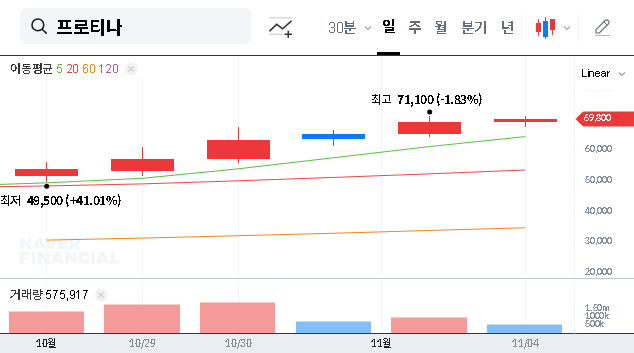
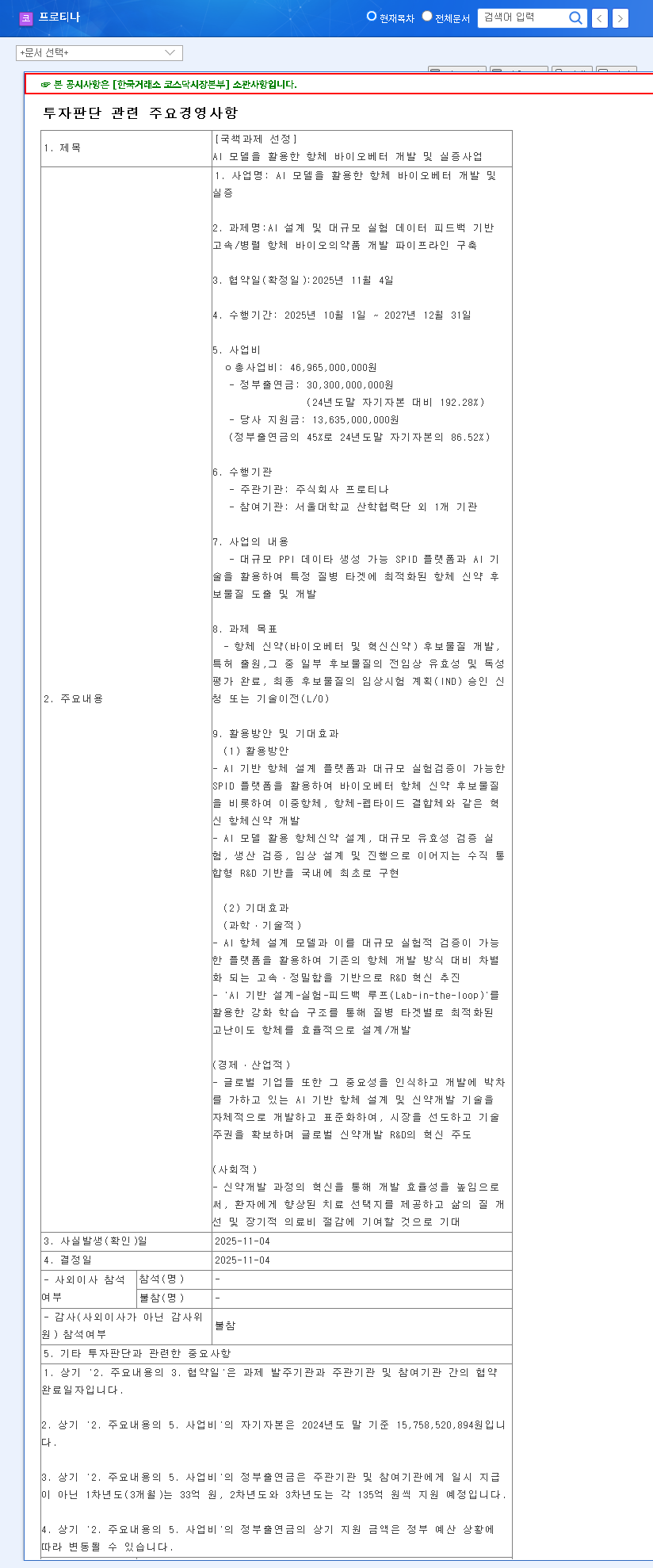
    PROTEINA CO.,LTD. has officially been chosen as the lead institution for the ‘AI model-based antibody biobetter development and demonstration project’. This isn’t just a win; it’s a powerful endorsement of its innovative approach. The project, backed by a total budget of 46.965 billion KRW (with 30.3 billion KRW in government funding), is scheduled to run from October 2025 to December 2027. The primary objective is to build a high-speed, parallel antibody biopharmaceutical development pipeline. This pipeline will leverage a sophisticated feedback loop between AI-driven design and large-scale experimental data, promising to accelerate the discovery of new therapeutics. Further details can be found in the Official Disclosure (DART).

    Company Fundamentals: Technology and Financial Trajectory

    The Core Engine: The SPID Platform

    At the heart of PROTEINA’s competitive advantage is its proprietary SPID Platform. This cutting-edge technology provides comprehensive solutions for protein-protein interaction (PPI) analysis and antibody development. Understanding PPI is fundamental to modern biology, as these interactions govern nearly every cellular process. By accurately mapping and analyzing these interactions, the SPID Platform enables a more precise and efficient approach to drug discovery, setting PROTEINA apart from competitors. This technological differentiation is crucial for any biotech investment thesis.

    Financial Health and Growth Momentum

    The first half of 2025 saw PROTEINA achieve explosive growth, with revenue soaring to 2.025 billion KRW—a 165.67% increase year-over-year. This surge was propelled by sales of its SPID Platform System and its PPI PathFinder® service. While the company posted an operating loss of -3.973 billion KRW, this marks a significant improvement from the -9.121 billion KRW loss in the previous year, signaling a clear path toward financial stability. The successful IPO on the KOSDAQ exchange in July 2025 provided a vital capital injection to fuel R&D and global market expansion, further strengthening the foundation for its PROTEINA AI drug development initiatives.

    This national project selection is a Strong Positive signal for PROTEINA, validating its technology and securing a critical growth engine for the future. The government funding significantly de-risks R&D and enhances the probability of success for its new drug pipeline.

    PROTEINA Investment Analysis: Opportunities vs. Risks

    Positive Catalysts for Growth

    The national project win unlocks several key opportunities that should be central to any PROTEINA investment analysis:

    • Technology Validation: Selection by a government body provides objective validation of PROTEINA’s technology and business model, boosting credibility in the market.
    • R&D Funding Secured: The 30.3 billion KRW in government funds will dramatically accelerate new drug development pipelines and fortify R&D capabilities without excessive shareholder dilution.
    • Enhanced Commercialization Potential: The project’s goals—including IND applications and technology transfers (L/O)—directly align with commercial outcomes. Combining AI with the SPID Platform will improve development speed and precision. For more on this trend, see the latest research on AI in Drug Discovery from leading institutions.
    • Market Leadership: The project reinforces PROTEINA’s potential to lead the innovative antibody biobetter development sector, a rapidly growing field.

    Potential Risks and Investor Considerations

    A prudent investor must also consider the potential challenges:

    • Financial Contribution: PROTEINA must self-fund 13.635 billion KRW. This represents a significant portion of its equity, requiring careful financial management and alignment with funds raised during the IPO.
    • Long-Term Horizon: The project concludes in late 2027, meaning a direct impact on short-term financials is unlikely. The investment thesis is contingent on achieving long-term project milestones.
    • Macroeconomic Factors: With a high proportion of revenue in USD, the company is exposed to currency fluctuations. Global interest rates and economic conditions are also important variables.

    Conclusion: An Investor’s Path Forward

    The selection of PROTEINA for this national project is a powerful validation of its strategy and a significant de-risking event for its long-term R&D roadmap. While short-term stock price appreciation is possible due to positive sentiment, the real value lies in the successful execution of the project. Investors should closely monitor project progress, the company’s management of its financial contribution, and any announcements regarding technology transfers or commercialization milestones. To learn more about the industry, read our guide on Understanding the Global Proteomics Market.

    By successfully leveraging its SPID Platform within this government-backed initiative, PROTEINA has a clear opportunity to establish an enduring leadership position in the global AI-based drug development arena, offering a compelling long-term growth story for investors.
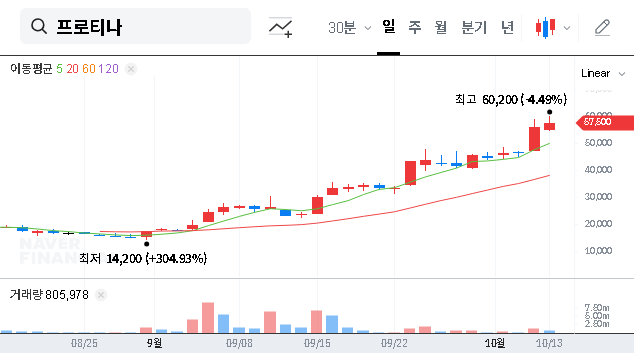
    (468530) PROTEINA AI Drug Development: An In-Depth Investment Analysis of a National Project Win 관련 이미지
  • (468530) PROTEINA Stock Analysis: VC Share Sale Sparks Concern – What Investors Must Know

    (468530) PROTEINA Stock Analysis: VC Share Sale Sparks Concern – What Investors Must Know

    News of a significant share sale has sent ripples through the investment community, putting the spotlight directly on PROTEINA stock (KOSDAQ: 468530). A recent public disclosure revealed that major venture capital (VC) shareholders, including the LB Next Unicorn Fund, have offloaded a substantial portion of their holdings. This move has triggered short-term volatility and raised critical questions: Is this a red flag regarding PROTEINA’s future, or a standard VC profit-taking maneuver? This comprehensive analysis delves into the event, the company’s core fundamentals, and provides actionable strategies for investors navigating the uncertainty surrounding PROTEINA stock.

    The Catalyst: A Major Shareholder Sells PROTEINA Stock

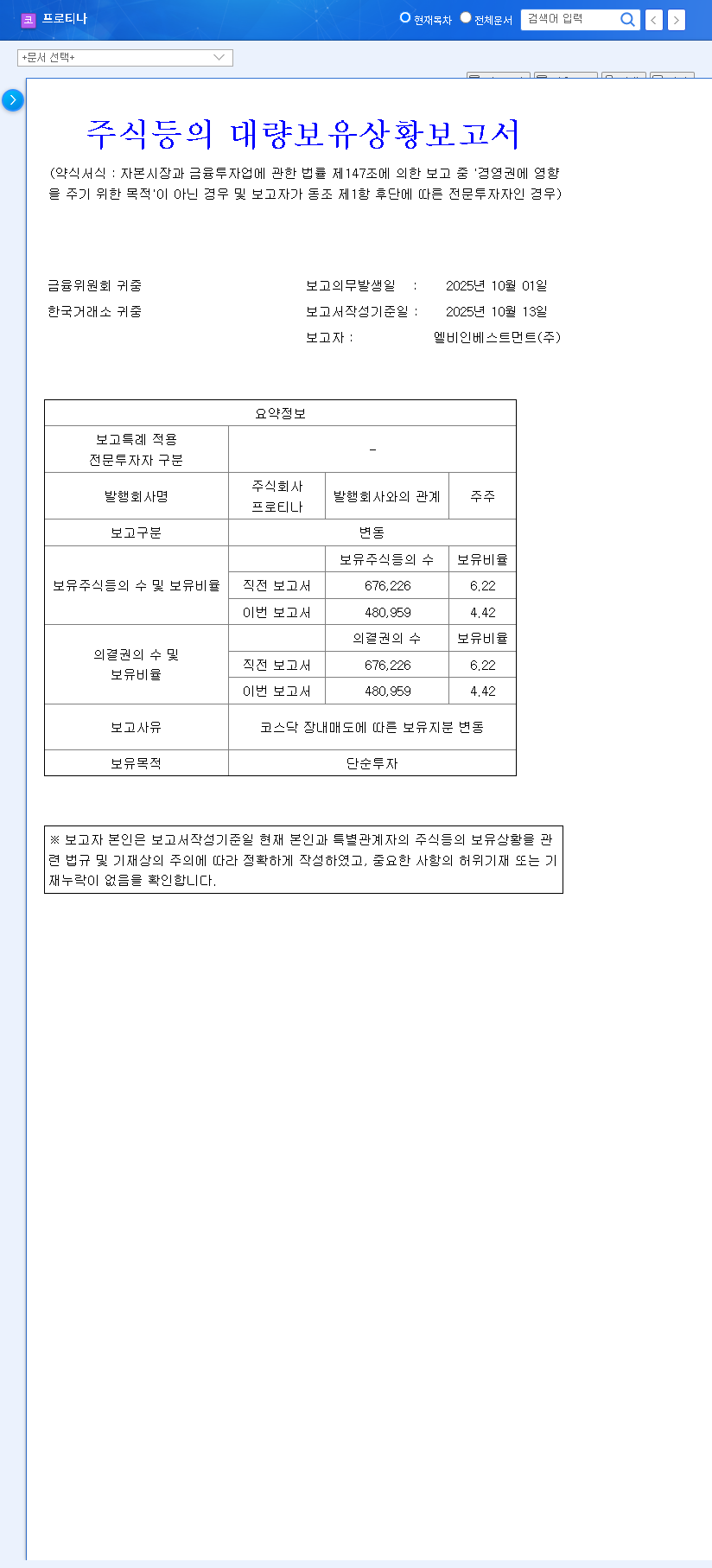
    On October 13, 2025, PROTEINA CO.,LTD. filed a mandatory disclosure detailing a significant change in its major shareholder structure. The report confirmed that LB Next Unicorn Fund and its affiliate, LB Promising Venture Industry Fund, had reduced their combined stake through open market sales on the KOSDAQ. You can view the Official Disclosure (DART) for complete details. This event is a pivotal moment for anyone following PROTEINA stock.

    Key Details of the Transaction

    • Selling Entities: LB Next Unicorn Fund & LB Promising Venture Industry Fund
    • Holdings Before Sale: 6.22%
    • Holdings After Sale: 4.42%
    • Total Stake Reduced: 1.80%
    • Reason Provided: Change in holdings due to KOSDAQ open market sale

    This type of sale, known as a venture capital exit, is a common part of the investment lifecycle. VCs invest in early-stage companies with the goal of eventually selling their stake for a significant return. However, the timing and size of the exit can be interpreted by the market as a signal about the company’s prospects, often leading to increased selling pressure.

    Under the Hood: PROTEINA’s Corporate Fundamentals

    To understand the long-term outlook for PROTEINA stock, we must look beyond the recent sale and examine the company’s core business and financial health. PROTEINA is a biotech firm specializing in new drug development solutions built upon its proprietary protein-protein interaction (PPI) analysis technology.

    Technology and Growth vs. Profitability Hurdles

    PROTEINA’s recent performance showcases a classic dilemma for high-growth tech companies. On one hand, its technology is gaining traction. The SPID Platform System saw domestic sales surge 165.7%, and its service revenue streams are diversifying. This indicates strong market demand for its innovative solutions. On the other hand, the company remains unprofitable, recording an operating loss of KRW 3.973 billion in the first half of 2025. This is primarily due to aggressive R&D spending, which equated to 134% of sales—a clear sign the company is prioritizing future innovation over current profits. This is a common strategy for similar tech-exempt IPO companies we’ve analyzed.

    As a tech-exempt IPO, the market has priced in initial losses. The key long-term driver for PROTEINA stock will be its ability to translate its world-class R&D into commercially viable products and achieve profitability.

    Impact Analysis: What Does This Mean for Investors?

    The impact of the LB Next Unicorn Fund’s sale can be viewed through two distinct lenses: short-term market mechanics and long-term fundamental value.

    Short-Term: Heightened Volatility and Negative Sentiment

    In the immediate term, the sale is likely to exert downward pressure on the PROTEINA stock price. An increased supply of shares on the market (a 1.80% stake is not insignificant) combined with negative investor sentiment can create a challenging environment. Traders may see this as a bearish signal, leading to further selling.

    Mid-to-Long-Term: A Focus on Intrinsic Value

    The long-term picture is more nuanced. The critical question is the *reason* for the sale. Was it a simple act of portfolio management to realize profits, a common practice explained well in this guide to venture capital? Or was it driven by a loss of faith in PROTEINA’s future? If it’s the former, the company’s intrinsic value—its innovative PPI technology and growth potential in the drug development market—remains unchanged. A temporary price dip could even be seen as a buying opportunity for those with a long-term bullish thesis.

    Investor Action Plan & Strategic Outlook

    Given the current situation, a one-size-fits-all approach is not advisable. Your strategy should align with your investment horizon and risk tolerance.

    • For Short-Term Traders: Caution is key. It may be prudent to wait for the selling pressure to subside and for the stock price to find a new support level before considering an entry.
    • For Long-Term Investors: This event could present an opportunity. If you believe in PROTEINA’s technology and long-term vision, a price correction may offer a more attractive entry point. Your focus should be on monitoring the company’s progress towards profitability and the commercialization of its R&D pipeline.

    Moving forward, investors should watch for any follow-up communication from PROTEINA’s investor relations team. A clear explanation of their path to profitability and updates on their business plan for 2026 will be crucial for restoring market confidence.

    Frequently Asked Questions (FAQ)

    Q1: Why is the PROTEINA stock price falling?

    A1: The primary reason for the recent downward pressure is the disclosure that a major shareholder, the venture capital firm LB Next Unicorn Fund, sold a 1.80% stake in the company. This can weaken investor sentiment and increase the supply of shares in the market.

    Q2: Is the share sale a sign of fundamental problems at PROTEINA?

    A2: Not necessarily. Venture capital funds typically exit their investments after a certain period to realize profits for their own investors. While it can be perceived negatively, it doesn’t automatically mean there are new, underlying problems with PROTEINA’s technology or business prospects.

    Q3: What are PROTEINA’s main strengths?

    A3: PROTEINA’s core strength is its innovative protein-protein interaction (PPI) analysis technology, which is critical for modern drug development. This is evidenced by growing sales of its SPID Platform System and its strong R&D pipeline, backed by numerous patents.

    (468530) PROTEINA Stock Analysis: VC Share Sale Sparks Concern – What Investors Must Know 관련 이미지
  • Protina Designated as Investment Warning Issue: Stock Forecast and Fundamental Analysis


    What Happened to Protina?

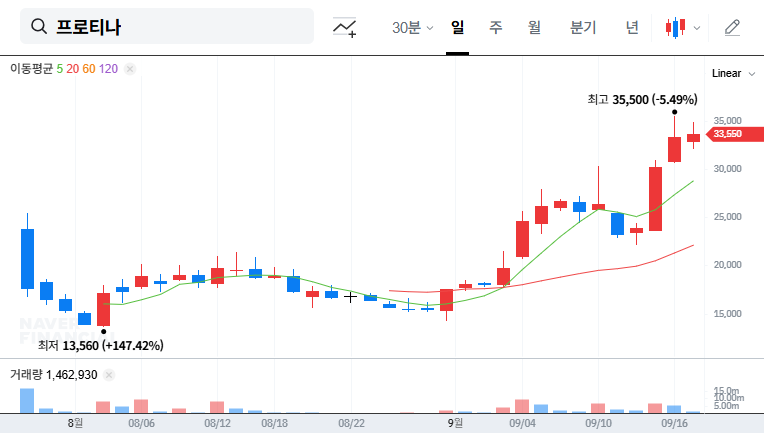
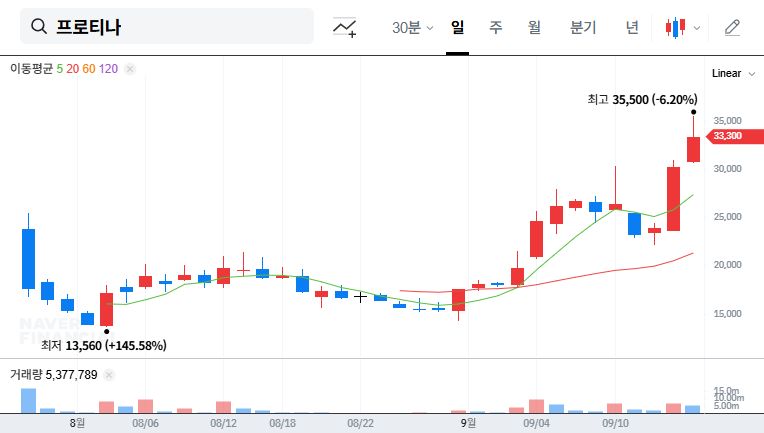
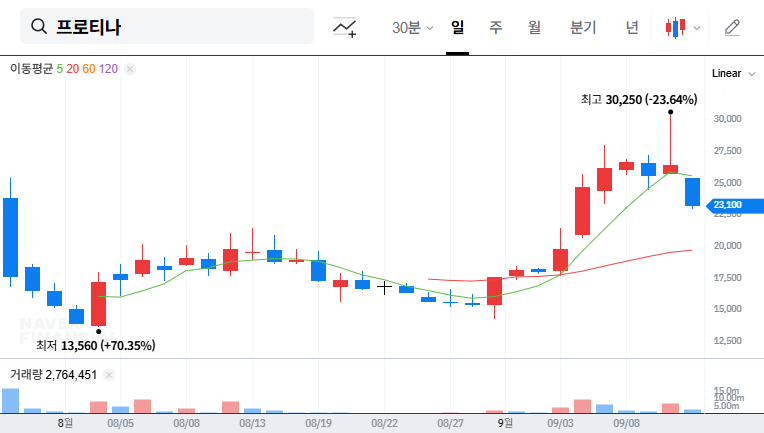
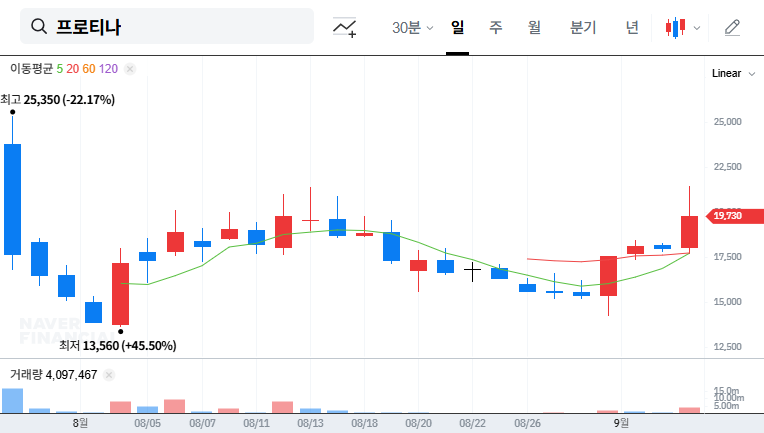
    Protina was designated as an investment warning issue on September 17, 2025, primarily due to its sharp stock price increase after its KOSDAQ listing. The stock price, which was 13,800 KRW on the listing date of July 29th, soared to 33,300 KRW by September 16th.

    Why is the Investment Warning Designation a Concern?

    This designation can trigger selling pressure in the short term, potentially leading to a stock price decline. Measures like trading volume restrictions and limitations on credit transactions may also be implemented. However, it doesn’t directly impact the company’s fundamentals.

    Are Protina’s Fundamentals Sound?

    • Positive Factors: Accelerating sales growth, strong technology, promising market environment
    • Negative Factors: Continuous operating losses, high R&D expenses, exchange rate volatility

    Protina has growth potential based on its innovative technology, but it faces the challenge of improving profitability.

    What Should Investors Do?

    Instead of reacting to short-term stock fluctuations, it’s crucial to analyze the company’s fundamentals from a long-term perspective. Investors should carefully consider the following:

    • Core technology competitiveness and progress of the new drug development pipeline
    • Profitability improvement trend and global market expansion strategy
    • Changes in macroeconomic indicators such as exchange rates, interest rates, and oil prices
    • Foreign investment trends

    Protina’s future could be positive or negative. Making investment decisions based on careful analysis is essential.


    Frequently Asked Questions

    What is an Investment Warning Issue designation?

    It’s a system designed to alert investors to stocks experiencing unusual price surges and to prevent speculative trading.

    What are the penalties for being designated as an Investment Warning Issue?

    Penalties can include suspension of trading and restrictions on credit financing.

    What is the outlook for Protina’s stock price?

    Short-term volatility may increase, but the long-term outlook depends on the commercialization of its core technologies and improvement in profitability.


  • Protina Secures $1.2B Contract with US Pharma Giant: A Catalyst for Growth?


    Protina Secures $1.2B Contract with US Pharma Giant: A Catalyst for Growth? 대표 차트 이미지


    Protina’s $1.2 Billion Deal: Wings for Takeoff

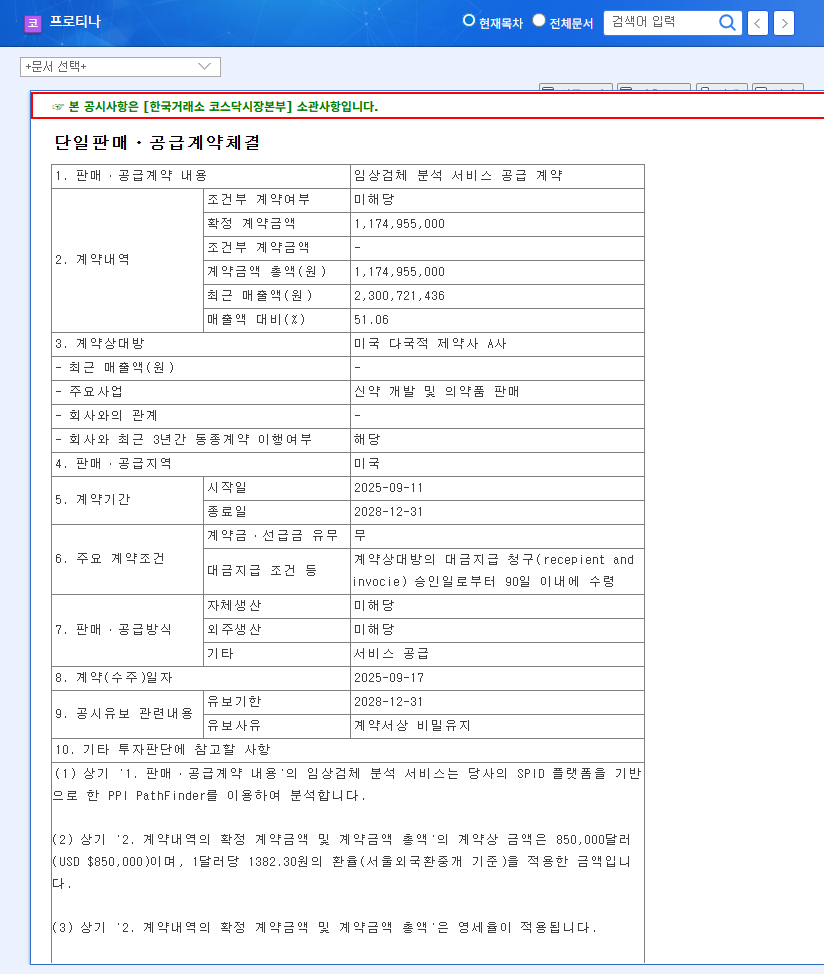
    On September 17, 2025, Protina announced a substantial $1.2 billion contract with a leading US pharmaceutical company for the provision of clinical sample analysis services. The contract spans 3 years and 3 months, ending on December 31, 2028. This represents a significant portion (51.06%) of Protina’s first-half 2025 revenue ($2.025 billion) and is expected to contribute significantly to the company’s top-line growth.

    Beyond the Deal: Strategic Implications

    • Revenue Growth and Stability: The long-term $1.2 billion contract provides not only short-term revenue growth but also a stable revenue stream for the next three years.
    • US Market Penetration: Partnering with a major US pharmaceutical player accelerates Protina’s entry into the lucrative US market and strengthens its brand recognition.
    • Validation of SPID Platform: The deal serves as a strong validation of Protina’s core technology, the SPID platform, showcasing its competitiveness in the market.
    • Positive Investor Sentiment: For a newly listed company, securing a large contract can boost investor confidence and create positive momentum for stock price appreciation.

    Key Considerations for Investors

    • Profitability: Investors should monitor whether the revenue growth translates into improved profitability.
    • Currency Exchange Risk: Given the involvement of a US company, managing currency exchange rate fluctuations is crucial.
    • Long-Term Growth Strategy: Assessing how this contract aligns with Protina’s overall long-term growth strategy is essential.

    Protina: Poised for Global Bio Leadership?

    This contract represents a pivotal moment for Protina, highlighting its significant growth potential. Continued monitoring of the company’s progress is warranted as it strives to become a global leader in the biopharmaceutical space.


    Frequently Asked Questions

    What is the value of the contract between Protina and the US pharmaceutical company?

    $1.2 billion.

    What is the duration of the contract?

    3 years and 3 months, from September 11, 2025, to December 31, 2028.

    Why is this contract significant for Protina?

    It is expected to positively impact revenue growth, US market entry, technology validation, and investor sentiment.

    What are the key investment considerations?

    Investors should consider profitability improvements, currency exchange risks, and the company’s long-term growth strategy.


    Protina Secures $1.2B Contract with US Pharma Giant: A Catalyst for Growth? 관련 이미지
    Protina Secures $1.2B Contract with US Pharma Giant: A Catalyst for Growth? 관련 이미지


  • Protina Investment Warning: A Deep Dive into the Recent Stock Surge and Future Outlook


    1. What Happened?: Protina’s Investment Warning

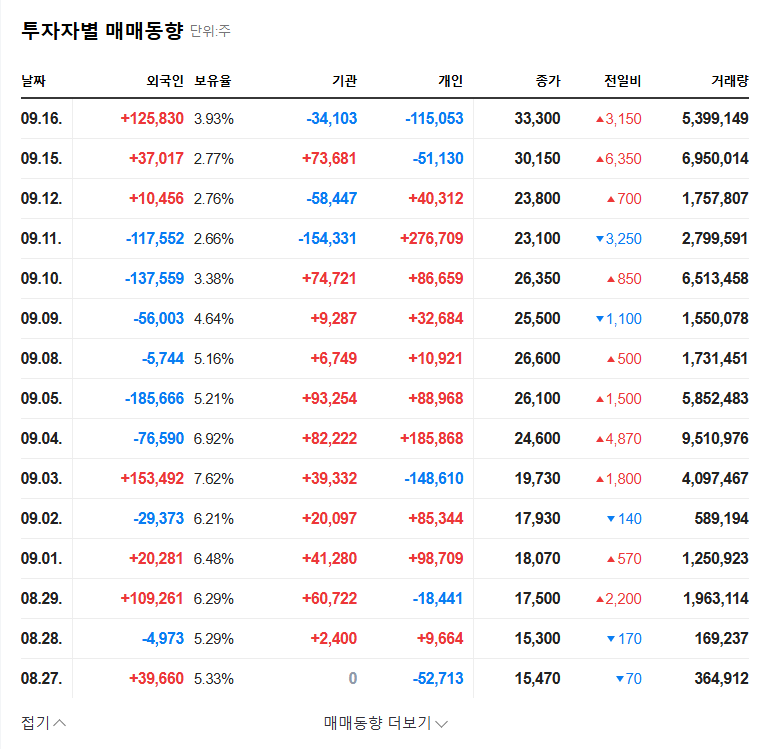
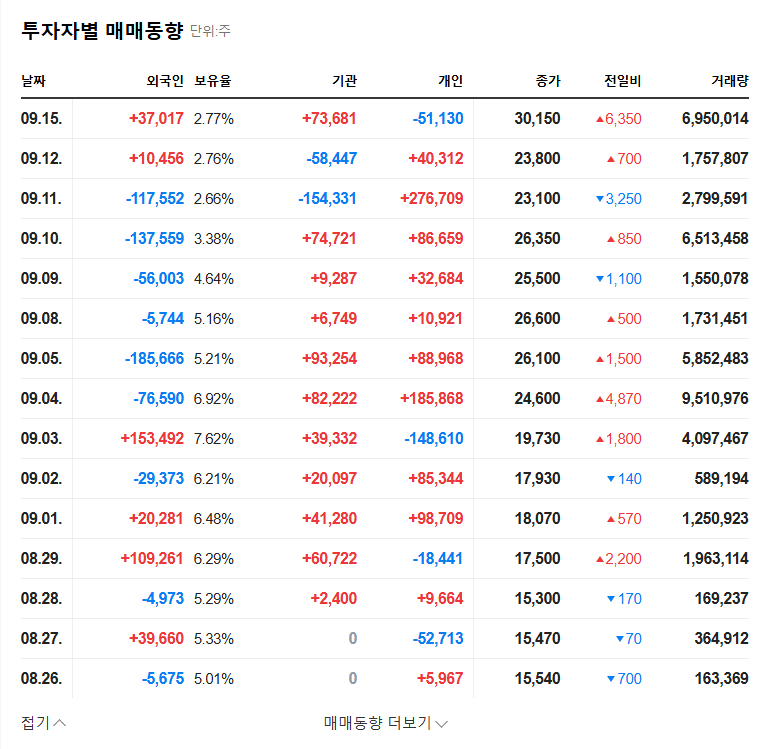
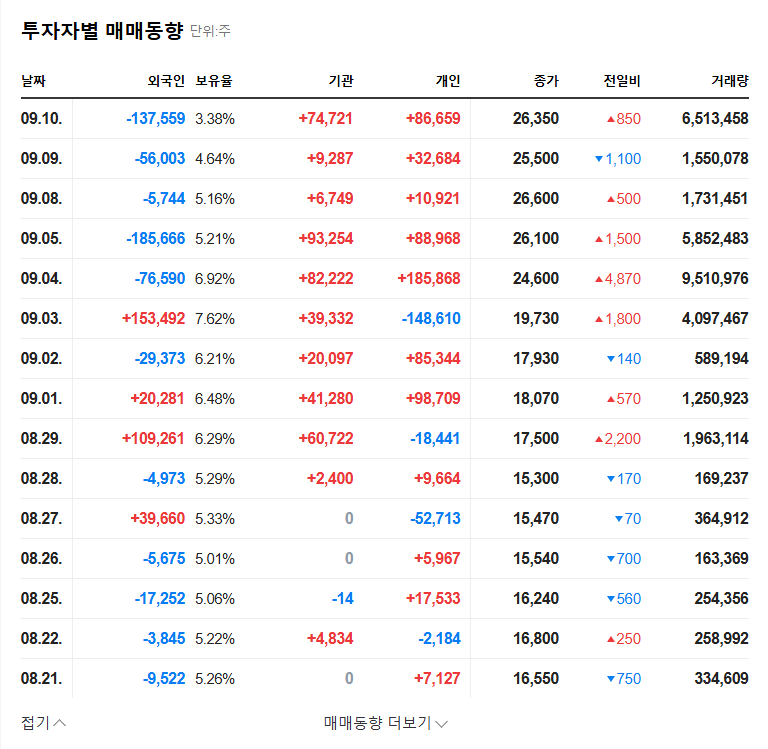
    Protina received an investment warning on September 16, 2025, primarily due to a recent surge in its stock price. The price jumped approximately 35% from 24,600 KRW on September 4th to 33,300 KRW on September 16th. This was accompanied by a significant increase in trading volume, suggesting speculative demand. The surge and subsequent decline in foreign ownership warrants particular attention.

    2. Why?: The Reasons Behind the Surge and the Investment Warning

    Protina has been recognized for its growth potential in the drug and antibody development market, driven by its innovative SPID Platform technology. However, its continued losses due to high R&D expenses require careful consideration from investors. The investment warning is likely a technical correction in response to the rapid price surge rather than a reflection of worsening fundamentals. However, the potential for negative investor sentiment and increased foreign selling pressure should not be ignored.

    3. What’s Next?: Future Outlook and Investment Strategies

    In the short term, increased price volatility and negative investor sentiment could put downward pressure on the stock. The continued selling by foreign investors will be a key factor to watch. In the medium to long term, Protina’s fundamentals, particularly its ability to improve profitability, will determine the stock’s direction.

    4. What Should Investors Do?: Action Plan

    • Short-term investors: Proceed with caution given the potential for increased volatility. Avoid chasing the stock and consider a wait-and-see approach. Current holders should monitor the timing of the warning lift and closely watch foreign selling trends.
    • Long-term investors: If you are confident in Protina’s technological competitiveness and long-term growth potential, you may choose to maintain your investment with a long-term perspective. However, it is crucial to continuously monitor the company’s progress towards profitability.

    5. Protina’s Response: Strengthening IR Activities

    Protina needs to strengthen its communication with the market through proactive investor relations activities, clearly communicating its fundamentals and future growth strategies to alleviate investor concerns.


    FAQ

    Does an investment warning affect a company’s fundamentals?

    Not directly, but it can lead to negative investor sentiment and short-term price declines.

    What is the outlook for Protina’s stock price?

    Increased volatility is expected in the short term. The medium to long-term outlook depends on the company’s fundamentals, especially its profitability.

    How should investors respond to this news?

    Short-term investors should proceed with caution. Long-term investors should reassess the fundamentals and monitor profitability.


  • Protina: KDB Divests Stake – Opportunity or Threat? Key Analysis and Future Outlook


    Protina: KDB Divests Stake - Opportunity or Threat? Key Analysis and Future Outlook 대표 차트 이미지


    1. KDB Divests Protina Stake: What Happened?

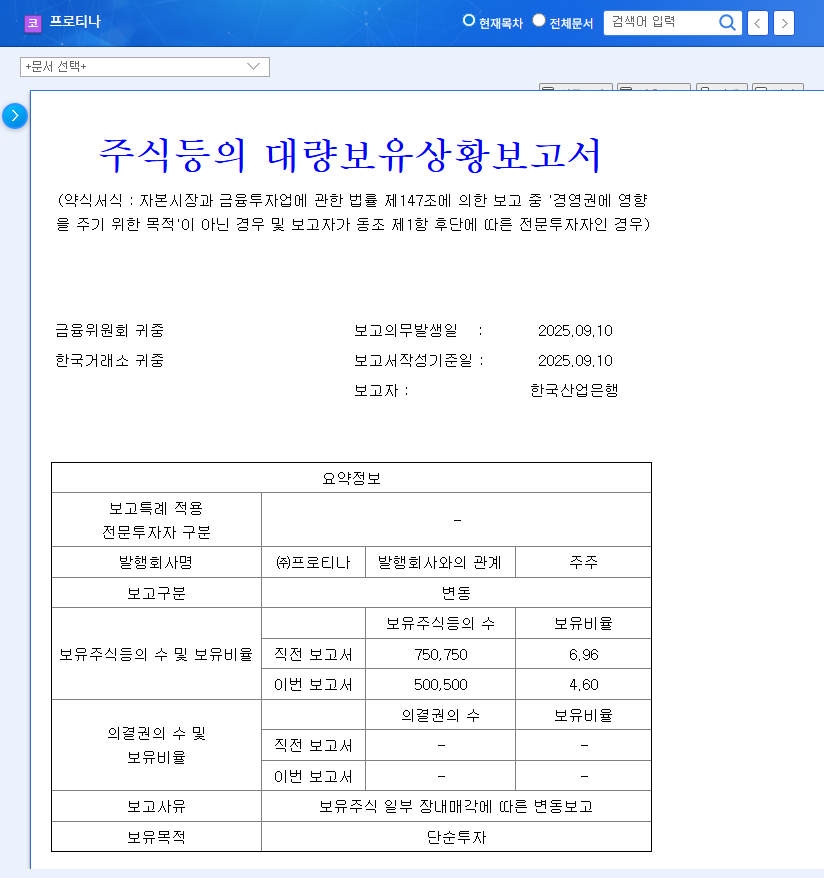
    On September 16, 2025, KDB sold 250,250 shares of Protina stock on the open market. This reduced KDB’s stake from 6.96% to 4.60%. The reason for the sale was disclosed as “simple investment.”

    2. Why the Divestment? Protina’s Fundamental Analysis

    Protina demonstrated positive growth in the first half of 2025. Revenue increased by 167.6% year-on-year to KRW 2.025 billion, and the company successfully expanded its business through global partnerships and entry into the US market. In July, Protina completed its KOSDAQ listing through the special technology listing system, securing funding and boosting brand awareness. However, the company continues to report operating losses (KRW -3.972 billion) and faces challenges such as dependence on specific clients, high R&D investment, and intensifying market competition.

    3. Impact of KDB’s Divestment on Protina’s Stock Price

    In the short term, increased stock price volatility is possible. The sale by a major shareholder can create selling pressure and potentially dampen investor sentiment. However, the stated reason for the sale, “simple investment,” could be interpreted positively. In the long term, given KDB’s remaining 4.60% stake and the fact that the sale isn’t related to deteriorating fundamentals, the negative impact on Protina’s value is expected to be limited. The divestment could even lead to increased liquidity. It’s common for early investors in special technology listing companies to sell shares for profit-taking, and this doesn’t necessarily indicate a decline in company value.

    4. Investor Action Plan: What Should You Do?

    • Short-term investors: Monitor market absorption of the divested shares and stock price trends, paying close attention to short-term volatility.
    • Long-term investors: Focus on monitoring Protina’s fundamental improvement trends, including earnings announcements, new contracts, and R&D achievements.
    • All investors: Continuously observe any further changes in shareholdings and the actions of other major shareholders.

    This event is just one variable in Protina’s growth story. Investors should make informed decisions based on a comprehensive assessment of the company’s fundamental improvement trends and overall market conditions.


    FAQ

    Will KDB’s divestment negatively impact Protina’s stock price?

    Short-term volatility and potentially dampened investor sentiment are possible. However, considering the “simple investment” rationale and Protina’s fundamentals, the long-term negative impact is expected to be limited.

    What is the future outlook for Protina’s stock price?

    The future stock price will depend on various factors such as the company’s earnings, new contracts, R&D performance, and overall market conditions. Investors should consider these factors comprehensively.

    What precautions should investors take when considering Protina?

    Be mindful of short-term price volatility and consistently monitor the company’s fundamental improvement trends. Observing any further changes in shareholdings and the actions of other major shareholders is also crucial.


    Protina: KDB Divests Stake - Opportunity or Threat? Key Analysis and Future Outlook 관련 이미지
    Protina: KDB Divests Stake - Opportunity or Threat? Key Analysis and Future Outlook 관련 이미지


  • Protina: JP Morgan Dumps Shares – What Investors Need to Know (September 2025 Analysis)


    Protina: JP Morgan Dumps Shares – What Investors Need to Know (September 2025 Analysis) 대표 차트 이미지


    What Happened? JP Morgan Sells Off Protina Shares

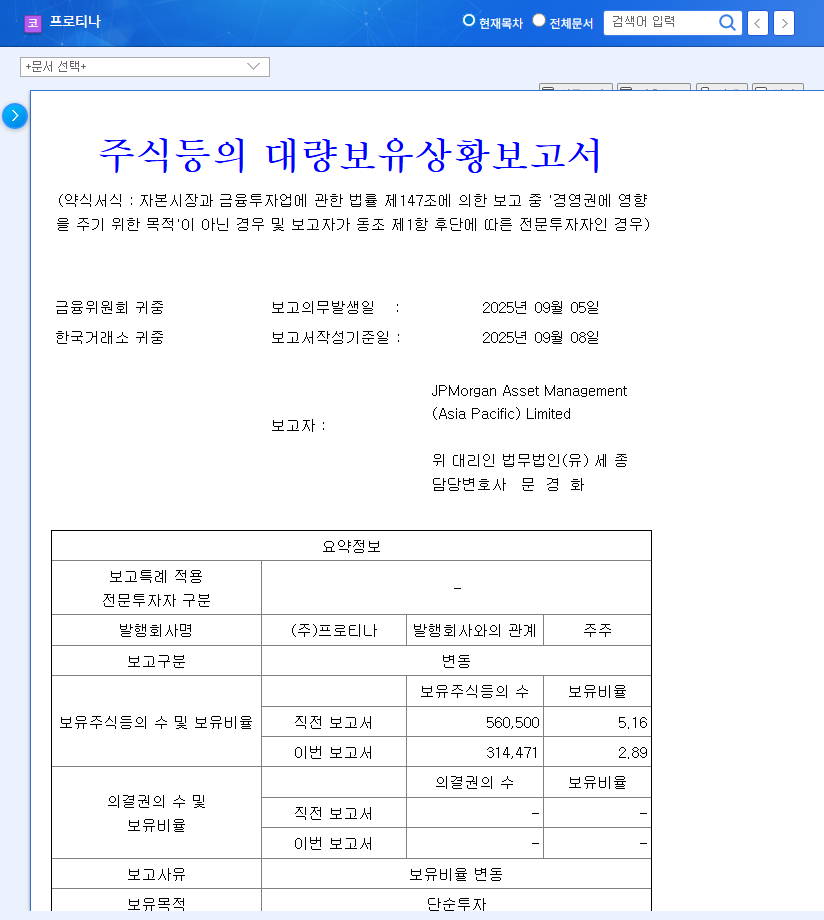
    On September 10, 2025, JP Morgan Asset Management sold 12,408 shares of Protina, reducing its stake from 5.16% to 2.89%. This sell-off occurred between September 5th and 8th.

    Why Did JP Morgan Sell? Analyzing the Motives

    While JP Morgan stated the purpose as ‘simple investment,’ various interpretations are circulating in the market. Profit-taking after the recent IPO and portfolio adjustments due to changes in investment strategy are among the primary speculated reasons. It’s crucial to understand that based on currently available information, it’s difficult to definitively conclude that this sell-off reflects a negative assessment of Protina’s fundamentals.

    Protina’s Current State: Fundamental Analysis

    • Positive Factors:
      • Growth of PPI analysis platform-based services
      • Funds secured through KOSDAQ listing
    • Negative Factors:
      • Continued operating losses and decline in sales in H1 2025
      • Increased sensitivity to USD exchange rate fluctuations

    What Should Investors Do? Investment Strategy Recommendations

    • Short-term Investors: A cautious approach is advised, considering the potential for short-term price decline.
    • Long-term Investors: Carefully analyze upcoming earnings announcements, service sector performance, and new contract signings to reassess the company’s long-term growth potential.
    • All Investors: Monitor changes in macroeconomic indicators such as exchange rates and interest rates, and adjust investment positions accordingly.


    Frequently Asked Questions

    What does JP Morgan’s selling of Protina shares mean?

    While JP Morgan officially stated the reason as ‘simple investment,’ it is likely due to profit-taking after the recent IPO or portfolio adjustments following changes in investment strategy. This doesn’t necessarily indicate a deterioration in the company’s fundamentals.

    Is it a good idea to invest in Protina now?

    A cautious approach is needed in the short term due to potential downward pressure on the stock price. From a long-term perspective, investment decisions should be made after carefully analyzing factors such as future earnings improvements, growth in the service sector, and management of exchange rate volatility.

    What is the outlook for Protina?

    Protina possesses innovative technology, but faces short-term challenges related to profitability and exchange rate volatility. Future earnings performance and growth momentum in the service sector will be key determinants of the stock’s direction.


    Protina: JP Morgan Dumps Shares – What Investors Need to Know (September 2025 Analysis) 관련 이미지
    Protina: JP Morgan Dumps Shares – What Investors Need to Know (September 2025 Analysis) 관련 이미지


  • Protina: LB Investment Reduces Stake. Bad News or Good Opportunity? In-Depth Analysis & Investment Strategy


    Protina: LB Investment Reduces Stake. Bad News or Good Opportunity? In-Depth Analysis & Investment Strategy 대표 차트 이미지


    1. What Happened? LB Investment Reduces Stake in Protina

    LB Investment reduced its stake in Protina from 7.98% to 6.22%. This was publicly announced as a stake change for simple investment purposes.

    2. Why the Stake Reduction? Background and Interpretation

    LB Investment officially stated the reason as ‘simple investment purposes.’ It is highly likely that the decision was made for profit-taking or portfolio adjustments after a certain period following Protina’s KOSDAQ listing. It’s reasonable to interpret this as a change in LB Investment’s own investment strategy rather than a negative judgment on Protina’s fundamentals.

    3. Impact of the Stake Change on Protina

    • Short-term impact: Potential increase in stock price volatility and negative investor sentiment. However, an upward trend in stock price was observed at the time of the sale.
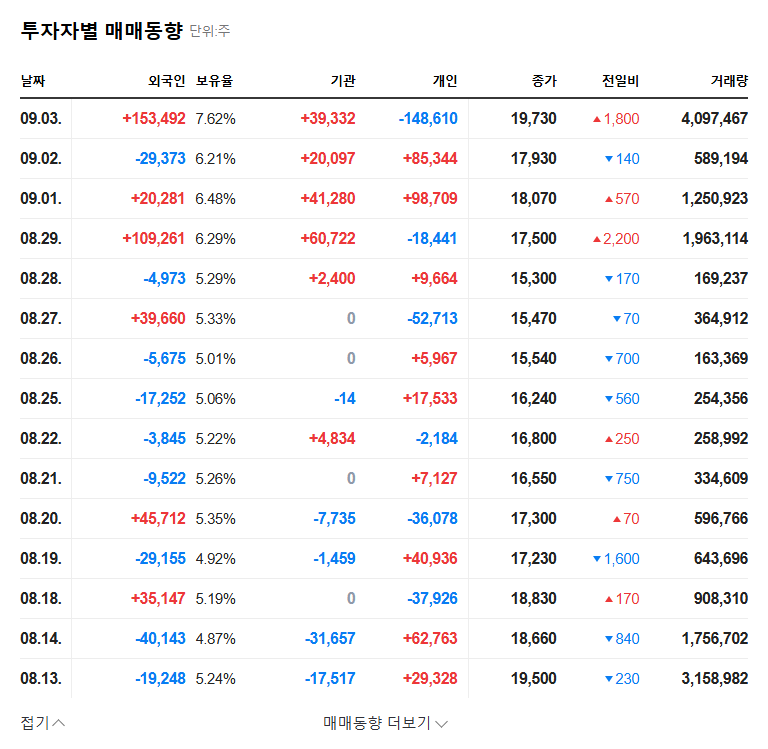
    • Long-term impact: No change in fundamentals. The increasing trend of foreign investors’ interest (rising foreign ownership rate) is a positive sign.

    4. What Should Investors Do? Short-term/Long-term Investment Strategies

    • Short-term investment: Be mindful of increased stock price volatility. Short-term stock price declines can be used as opportunities for bargain hunting.
    • Mid-to-long-term investment: Focus on Protina’s core technological competitiveness and growth potential. Continuous monitoring of SPID Platform market expansion and profitability improvement is necessary.

    LB Investment’s stake reduction can be interpreted as short-term noise, and Protina’s mid-to-long-term growth outlook remains valid. It is crucial for investors to focus on the company’s fundamentals and growth potential rather than short-term stock price fluctuations.


    FAQ

    Why did LB Investment sell its stake in Protina?

    Officially, it was stated as for ‘simple investment purposes.’ It is highly likely that it was for profit-taking or portfolio adjustments after Protina’s KOSDAQ listing.

    Is this stake sale bad news for Protina?

    While it may increase stock price volatility in the short term, it doesn’t affect the company’s fundamentals. The growing interest from foreign investors is a positive sign.

    Should I invest in Protina?

    Protina has high growth potential based on its SPID Platform. Investment decisions should be made at your own discretion and responsibility, focusing on the company’s fundamentals and growth potential rather than short-term stock price fluctuations.


    Protina: LB Investment Reduces Stake. Bad News or Good Opportunity? In-Depth Analysis & Investment Strategy 관련 이미지
    Protina: LB Investment Reduces Stake. Bad News or Good Opportunity? In-Depth Analysis & Investment Strategy 관련 이미지


  • JPMorgan Acquires 5.16% Stake in Protina: Investment Analysis and Future Outlook

    JPMorgan Acquires 5.16% Stake in Protina: Investment Analysis and Future Outlook 대표 차트 이미지

    1. What Happened? JPMorgan Acquires 5.16% Stake in Protina

    JPMorgan Asset Management has acquired 513,000 shares of Protina, securing a 5.16% stake. While categorized as a passive investment, the move by a global investment giant is expected to significantly influence market perception.

    2. Why Did JPMorgan Invest in Protina? Strong Fundamentals and Growth Potential

    • Proprietary Technology: Protina possesses a competitive edge in the drug discovery and companion diagnostics market with its proprietary SPID platform technology. Its AI-driven antibody design technology is particularly noteworthy as a future growth engine.
    • Rapid Revenue Growth: Protina has demonstrated remarkable growth, with a 194% year-over-year increase in revenue in the first half of 2025. Long-term contracts with major clients and expansion into international markets are expected to create a stable revenue base.
    • Active R&D: Continuous investment in R&D, including securing key research personnel, winning government grants, and filing patents, strengthens Protina’s technological competitiveness.
    • KOSDAQ Listing: Protina’s successful listing on the KOSDAQ exchange in July 2025 through the special technology listing process has enhanced its corporate value and facilitated investment attraction.

    3. JPMorgan’s Investment: What are the Implications? Improved Investor Sentiment and Stock Price Momentum

    JPMorgan’s investment is expected to boost market confidence in Protina and improve investor sentiment. This is likely to translate into upward momentum for the stock price. The possibility of further investment from JPMorgan cannot be ruled out, potentially serving as a long-term growth catalyst.

    4. What Should Investors Do? Positive Outlook Requires Risk Management

    Given Protina’s promising growth outlook, it appears to be an attractive investment opportunity. However, continuous monitoring of potential risk factors, including profitability, cost management, and exchange rate volatility, is crucial. Investors should also stay informed about market conditions and adjust their investment strategies accordingly.

    What percentage of Protina’s shares did JPMorgan acquire?

    JPMorgan acquired a 5.16% stake in Protina.

    What is Protina’s main business?

    Protina is engaged in drug discovery and companion diagnostics based on its SPID platform technology.

    What are the key factors to consider when investing in Protina?

    Potential risks such as profitability, cost management, and exchange rate fluctuations should be considered.

    JPMorgan Acquires 5.16% Stake in Protina: Investment Analysis and Future Outlook 관련 이미지
    JPMorgan Acquires 5.16% Stake in Protina: Investment Analysis and Future Outlook 관련 이미지
  • Protina Stock Analysis: LB Investment Sells Stake – Should You Invest Now? (468530)

    Protina Stock Analysis: LB Investment Sells Stake - Should You Invest Now? (468530) 대표 차트 이미지

    1. What Happened? LB Investment Sells 1.34%p Stake in Protina

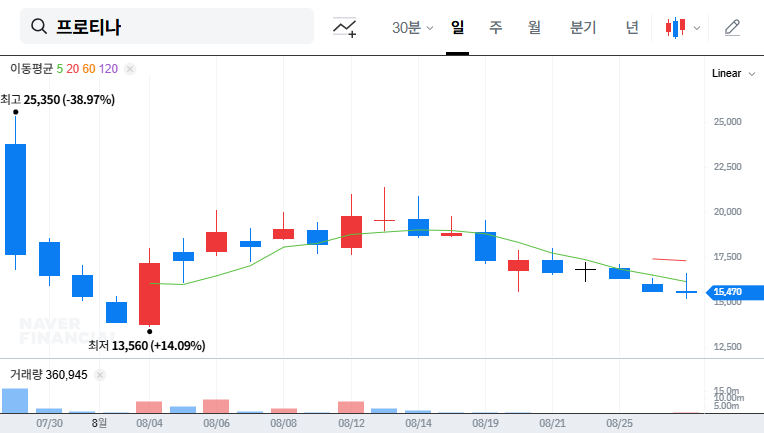
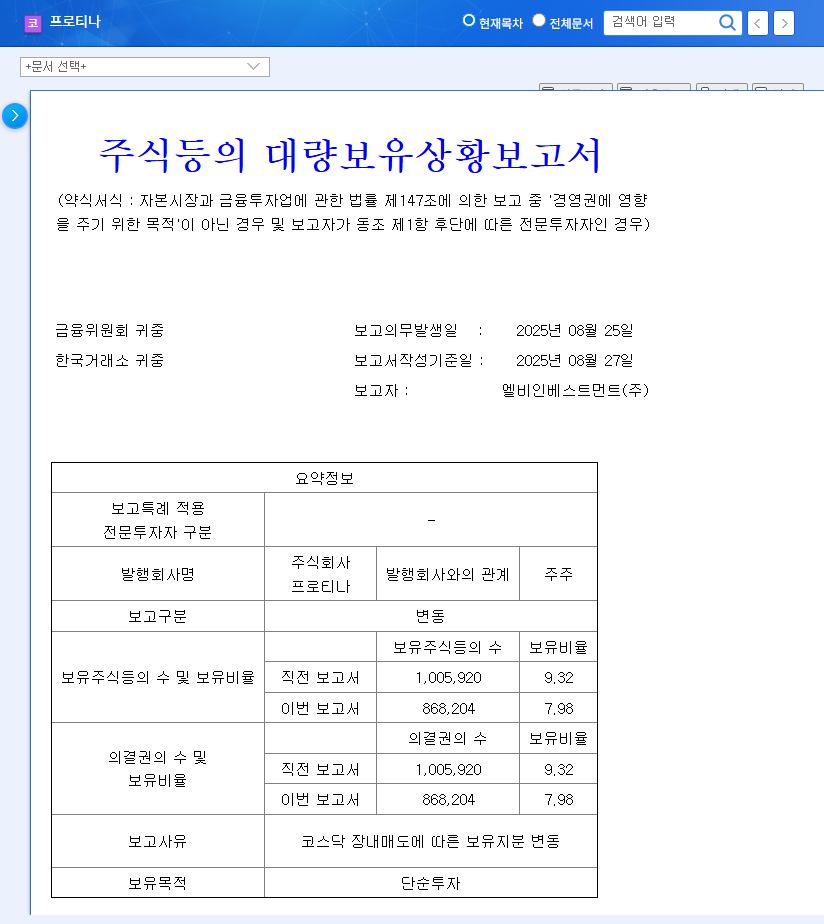
    LB Investment sold Protina shares on the market in five separate transactions between August 5th and 27th. This reduced LB Investment’s stake in Protina from 9.32% to 7.98%, a decrease of 1.34%p.

    2. Why the Sale? Likely Profit-Taking or Portfolio Adjustment

    LB Investment held Protina shares for ‘simple investment’ purposes. Therefore, this sale is likely profit-taking or portfolio adjustment, possibly capitalizing on the stock price increase after the IPO.

    3. What is Protina? An Innovative Biotech Company Focused on PPI Analysis

    Protina is a bio company with protein-protein interaction (PPI) analysis technology. It was listed on KOSDAQ in July 2025 through a special technology listing. While it has innovative technology and high growth potential, it has not yet secured profitability. High R&D costs continue to result in operating losses, and securing financial soundness is an urgent task.

    • Strengths: Innovative technology, growing bio market, potential for increased equipment sales
    • Weaknesses: Lack of profitability, accumulated deficit, volatility in sales structure, high R&D costs

    4. What Should Investors Do? Cautious Approach, Consider Dollar-Cost Averaging

    While Protina has high growth potential, investors should carefully monitor short-term stock price volatility and profitability improvements. The current stock price decline could be a buying opportunity for long-term investors, but it’s advisable to manage risk through a dollar-cost averaging strategy.

    • Key Checkpoints: Technology commercialization, operating profit turnaround, institutional investor movements
    What does LB Investment’s sale of Protina shares mean?

    Since LB Investment held Protina’s shares for ‘simple investment’ purposes, the sale is likely for profit-taking or portfolio adjustment. While it can negatively impact the stock price in the short term, it may not significantly affect the long-term corporate value.

    What investment strategy should I consider for Protina?

    Protina has high growth potential, but it hasn’t achieved profitability yet. Therefore, a cautious approach is necessary, and a dollar-cost averaging strategy is recommended. It’s crucial to monitor the company’s technology commercialization progress, operating profit turnaround timing, and institutional investor movements.

    Protina Stock Analysis: LB Investment Sells Stake - Should You Invest Now? (468530) 관련 이미지
    Protina Stock Analysis: LB Investment Sells Stake - Should You Invest Now? (468530) 관련 이미지