An In-Depth Analysis of OCI Company Ltd. Q3 2025 Earnings
The preliminary OCI Company Ltd. Q3 2025 earnings report, announced on October 28, has sent significant ripples through the investment community. The results reveal a concerning trend of declining revenue coupled with substantial operating and net losses, raising critical questions about the company’s fundamental health and future prospects. This analysis provides a deep dive into OCI’s latest financial results, unpacks the root causes behind the disappointing performance, and offers a clear-eyed outlook and actionable recommendations for investors navigating this turbulent period.
As detailed in the Official Disclosure filed with DART, the key financial figures paint a challenging picture:
- •Revenue: KRW 476.4 billion
- •Operating Profit: KRW -6.6 billion (a significant shift to loss)
- •Net Profit: KRW -48.3 billion (a widening loss)
These numbers not only represent a sequential decrease in revenue from Q2 2025 but also highlight a severe deterioration in profitability. The consistent quarterly revenue decline throughout 2025 has culminated in this third-quarter shock, signaling deep-seated operational and market-related challenges.
Deconstructing the OCI Performance Decline
The sharp OCI performance decline is not the result of a single issue but a confluence of internal segment weaknesses and adverse external macroeconomic pressures. A thorough review of the OCI financial results reveals three primary areas of concern.
1. Widespread Business Segment Weakness
Core revenue streams faltered significantly. The Basic Chemical Business was hit by reduced demand for hydrogen peroxide, a direct consequence of lower semiconductor fab utilization rates globally. The much-discussed EV “chasm”—the slowdown in adoption between early enthusiasts and the mass market—also curtailed demand. Simultaneously, the Carbon Chemical Business suffered from weak global oil prices and persistent oversupply, which depressed prices for key products like benzene and pitch.
2. Eroding Financial Health and Stability
The substantial losses are amplifying concerns about OCI’s fundamental financial strength. With a debt-to-equity ratio already at 105.73% in the first half of 2025, the Q3 losses likely pushed this metric higher, weakening financial stability. This situation creates a vicious cycle where deteriorating operating cash flow can hinder necessary investments and financing activities, thereby increasing liquidity pressure on the company.
3. Unfavorable Market and Macroeconomic Headwinds
External factors exacerbated OCI’s internal issues. A rising KRW/USD exchange rate increased the cost of importing raw materials, squeezing margins. Furthermore, the sustained high-interest-rate environment, a trend confirmed by authoritative global economic reports, has inflated the company’s borrowing costs. The sluggish recovery in key downstream industries like semiconductors and construction compounded these challenges.
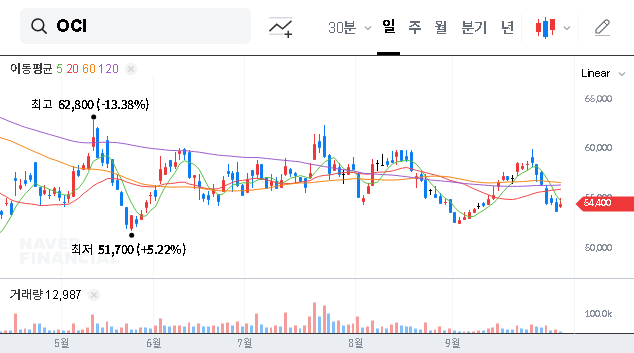
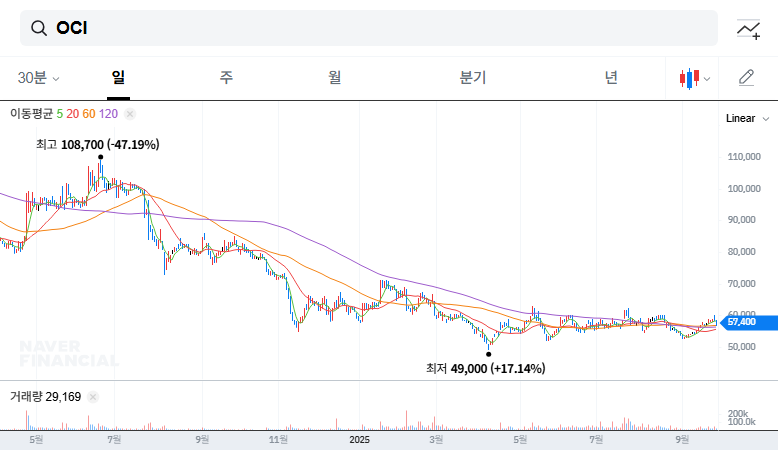
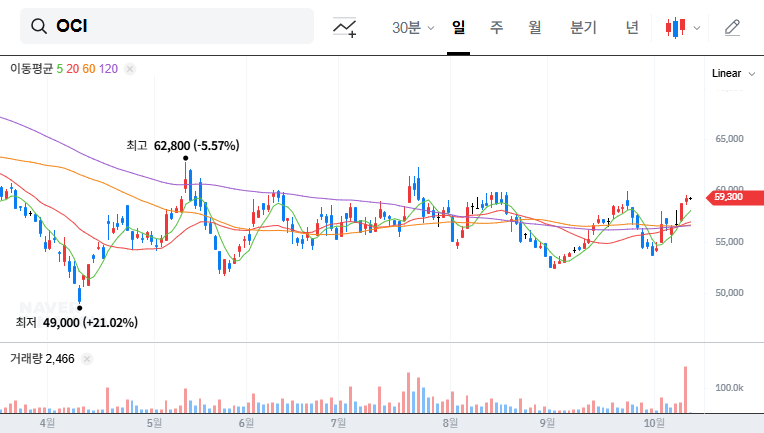
Given the unexpected depth of the losses, the OCI Company Ltd. Q3 2025 earnings report is expected to exert significant downward pressure on the stock price. Investor sentiment is likely to be dampened, leading to increased short-term volatility.
Navigating the Future: OCI Stock Analysis & Outlook
In the short term, a highly cautious and prudent approach is warranted. The market will be looking for clear signals from management about a turnaround strategy before confidence is restored. The long-term recovery of OCI’s corporate value hinges almost entirely on its ability to generate tangible performance from its newer ventures in high-growth sectors. For context on these initiatives, you can review our previous analysis of OCI’s strategic pivots. Success in the semiconductor and secondary battery materials businesses is no longer optional—it is essential for survival and growth.
Strategic Recommendations for Investors and Management
Based on this OCI stock analysis, both investors and the company’s leadership must take decisive action.
Actionable OCI Investor Guidance
- •Defer New Investments: Initiating new positions in OCI is highly risky until a clear path to profitability is demonstrated. A wait-and-see approach is advisable.
- •Monitor Turnaround Signals: Pay close attention to subsequent quarterly reports and management’s strategic announcements for concrete evidence of business normalization and cost control.
- •Long-Term Value (with Caution): For investors with a high-risk tolerance, the current price could be a long-term entry point, but this must be backed by rigorous due diligence and risk management protocols.
Priorities for OCI Company Ltd.
- •Radical Transparency: The company must communicate openly about the crisis and its recovery plans to rebuild investor trust and reduce market uncertainty.
- •Execute on Cost Reduction: Announce and vigorously implement a clear, feasible plan to address the substantial losses and restore a positive operating margin.
- •Accelerate New Ventures: All available resources should be channeled into achieving commercial breakthroughs and meaningful revenue from the semiconductor and battery materials businesses.
In conclusion, the OCI Company Ltd. Q3 2025 earnings are a clear wake-up call. The path forward requires a comprehensive overhaul of strategy, aggressive cost management, and flawless execution on its future growth engines. For investors, vigilance and prudence are the most valuable assets in the coming quarters.