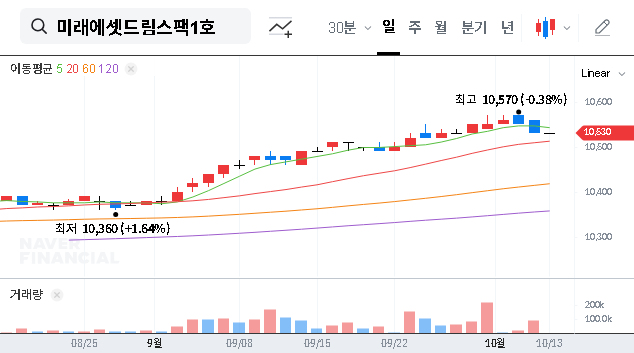
For investors in Mirae Asset Dream SPAC 1 (KOSDAQ: 442900), recent news has confirmed a significant turning point. The company has officially announced its failure to secure a merger, triggering its dissolution and the start of a SPAC liquidation process. This development moves the investment from a story of potential growth to one of capital recovery.
This comprehensive guide will break down exactly what the failed SPAC merger of Mirae Asset Dream SPAC 1 means for you as an investor. We’ll analyze the official announcement, detail the step-by-step liquidation process, assess the financial impact, and provide a clear action plan to navigate the coming weeks and months.
The Official Announcement: Dissolution Confirmed
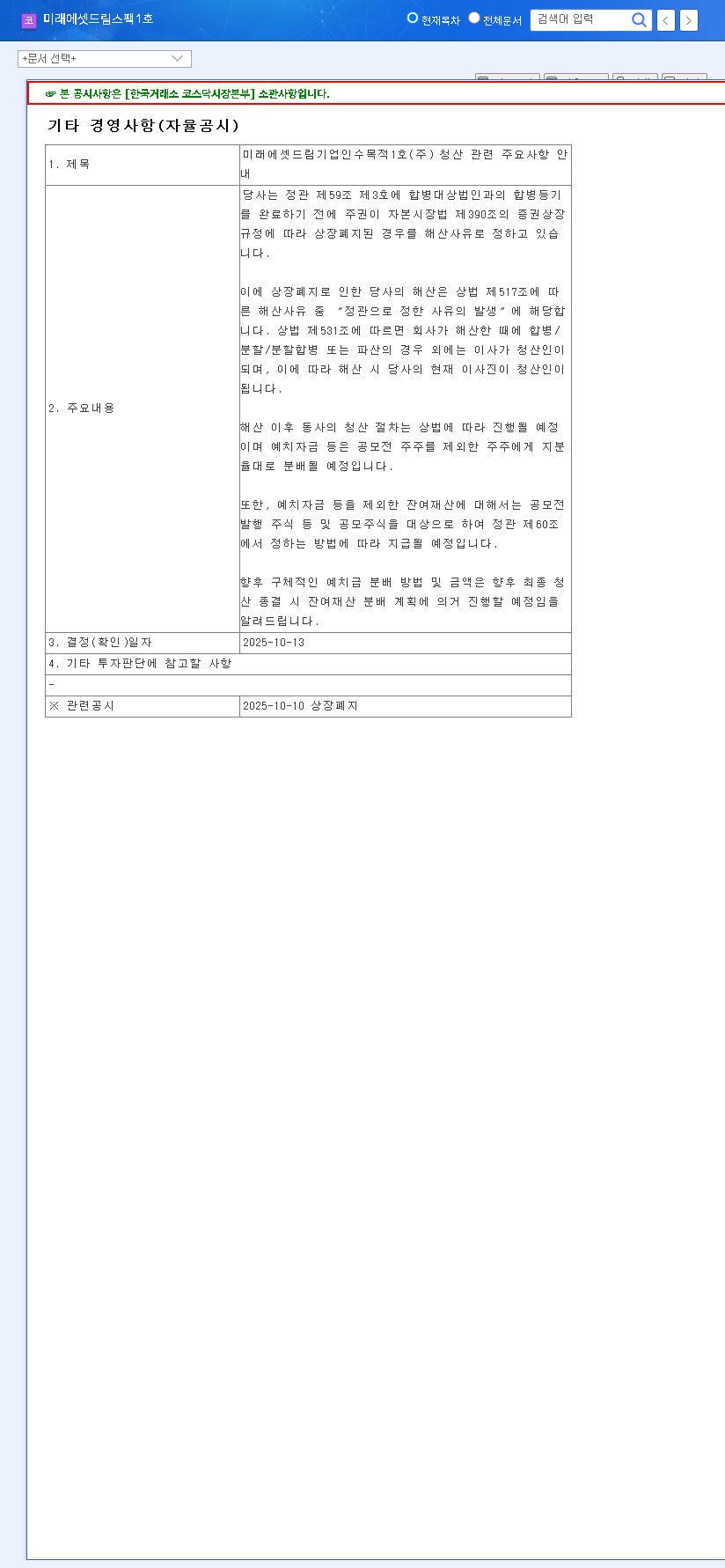
On October 13, 2025, Mirae Asset Dream SPAC 1 formally declared its intent to dissolve and liquidate. This decision was unavoidable after the company failed to complete a merger registration with a target entity within its legally mandated timeframe. The company’s business activities will now cease, and the core focus will shift entirely to distributing its remaining assets—primarily cash held in trust—to its shareholders.
The official disclosure, which outlines the cause for delisting, can be viewed directly on Korea’s DART system. This is the primary source for all procedural updates. Official Disclosure: View DART Report.
Understanding the SPAC Liquidation Process
A Special Purpose Acquisition Company (SPAC) is a publicly-traded shell company created solely to merge with a private company, thereby taking it public. For more on the mechanics, you can reference this helpful overview from Investopedia. When a SPAC fails to merge, as is the case with Mirae Asset Dream SPAC 1, a structured dissolution process begins.
Key Stages of Liquidation:
- •Cessation of Business: The company stops all operations related to finding a merger target. Its sole purpose becomes winding down affairs.
- •Asset Distribution Plan: Management creates a plan to return the trust funds to shareholders. This plan is governed by the company’s Articles of Association.
- •Deduction of Expenses: Any outstanding liabilities and liquidation costs are deducted from the trust assets before distribution.
- •Payment to Shareholders: The remaining net assets are paid out to shareholders on a per-share basis.
- •Delisting: Following the final distribution, the stock (ticker: 442900) is permanently delisted from the KOSDAQ exchange.
The primary goal for investors in a SPAC liquidation is no longer capital appreciation but the efficient and timely recovery of the initial investment principal from the trust account.
Financial Impact: What Investors Can Expect
The financial implications of the failed SPAC merger are direct and significant. The focus immediately shifts from the company’s market valuation to its liquidation value.
Impact on Stock Price
With the prospect of a merger gone, the stock price of Mirae Asset Dream SPAC 1 will inevitably converge towards its net asset value per share. Any premium that was priced in for a potential successful merger will evaporate. Investors should anticipate a sharp initial price decline, followed by trading that closely mirrors the expected final payout amount. Trading volume will likely diminish as the delisting date approaches.
Broader Market Sentiment
The failure of a high-profile vehicle like Mirae Asset Dream SPAC 1 can cast a shadow over the broader SPAC market. It serves as a reminder of the inherent risks involved. This could lead to increased scrutiny and caution from investors considering other SPACs, potentially making it harder for new SPACs to find quality merger targets in a challenging macroeconomic environment.
Investor Action Plan: Your Next Steps
Navigating a SPAC liquidation requires a proactive and informed approach. Here are the crucial steps to take:
- •Monitor Official Disclosures: Your most reliable source of information will be the DART filings. Keep a close watch for announcements regarding the liquidation timeline, expected distribution per share, and the final delisting date.
- •Confirm Key Dates: Be aware of the last trading day and the record date for the final asset distribution. This will determine who is eligible to receive the liquidation payout.
- •Understand the Payout: Do not assume a 100% return of the IPO price. The final payout will be the total cash in trust minus all operational and liquidation costs. Await the official calculation to be announced.
- •Re-evaluate Your Strategy: This event concludes the investment thesis for Mirae Asset Dream SPAC 1. Consider this an opportunity to learn more about the risks involved. You can explore other articles on our site, such as our guide to portfolio diversification.
Frequently Asked Questions (FAQ)
Why did Mirae Asset Dream SPAC 1 fail to merge?
The company could not identify and complete a merger with a suitable private company within its mandated 36-month operational window. This is a primary risk for all SPAC investments.
Will I get all my money back?
Shareholders will receive a pro-rata share of the funds held in the trust account after all expenses and liabilities are paid. While this is often close to the initial IPO price, it is not guaranteed to be a 100% return.
Do I need to sell my shares now?
You have two options: sell the shares on the open market before the delisting date at the prevailing market price, or hold them through the delisting process to receive the final cash distribution from the company. The decision depends on your individual financial situation and tax considerations.
Leave a Reply