Tag: 3D Bioprinting

  • (246710) T&R Biofab Stock Analysis: KIP Increases Stake – Bullish Signal or Strategic Exit?

    (246710) T&R Biofab Stock Analysis: KIP Increases Stake – Bullish Signal or Strategic Exit?

    A recent disclosure has stirred the market’s attention on T&R Biofab, a pioneering company in 3D bioprinting. Korean Investment Partners (KIP), a major institutional investor, announced an adjustment to its holdings, increasing its stake from 7.35% to 7.97%. While an increased stake from a savvy investor often signals confidence, the mechanics behind this move are complex, involving both new capital injection via a rights issue and profit-taking through the sale of Bonds with Warrants (BW). This mixed signal leaves investors wondering: is this a bullish endorsement or a carefully managed portfolio adjustment?

    This comprehensive investment analysis will dissect the nuances of KIP’s actions, evaluate the fundamental health of T&R Biofab, and provide a clear, actionable investment strategy. We will explore the company’s groundbreaking technology, its pressing financial challenges, and the potential impact on T&R Biofab stock for both long-term and short-term investors.

    Deconstructing KIP’s Complex Maneuver

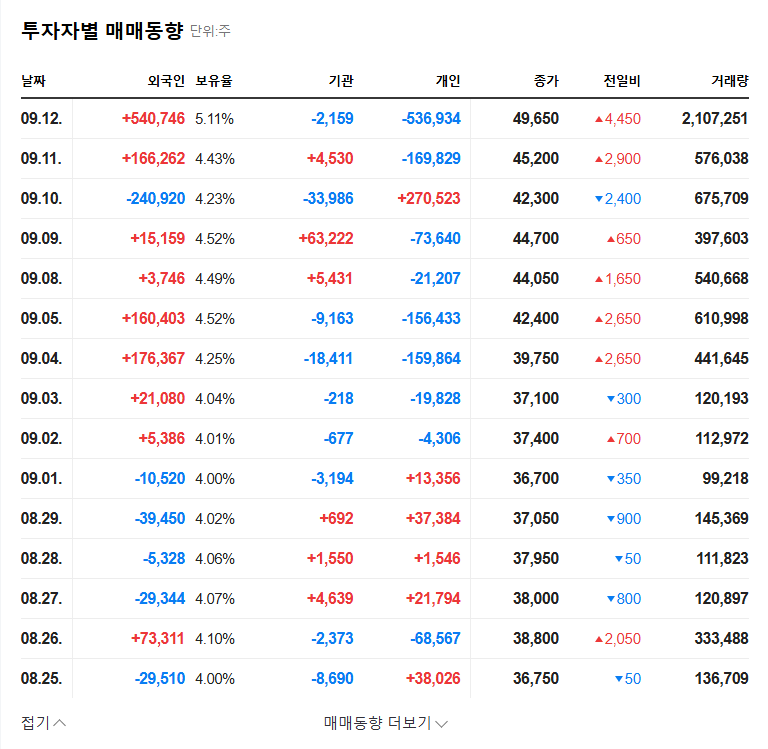
    On October 2, 2025, Korean Investment Partners filed a report detailing the change in its shareholding. The stated purpose was ‘simple investment,’ but the reality is more layered. The specifics of this transaction were detailed in an Official Disclosure (Source) on the DART system. The change was a result of two concurrent activities:

    • Participation in Rights Issue: KIP subscribed to new shares issued by T&R Biofab. This is a classic sign of support, providing the company with much-needed capital for R&D and expansion. It suggests KIP sees long-term value in the company’s trajectory.
    • Sale of Bond with Warrants (BW) Shares: Simultaneously, KIP exercised warrants from previously held bonds and sold a portion of these acquired shares on the open market. This action points towards profit realization and portfolio rebalancing, which can create selling pressure and temper bullish sentiment.

    Fundamental Analysis of T&R Biofab

    The Promise of 3D Bioprinting Technology

    T&R Biofab is at the forefront of the regenerative medicine revolution with its core competency in 3D bioprinting. This cutting-edge technology involves using ‘bio-ink’—a substance containing living cells—to print complex biological structures like tissues and organs layer by layer. The potential applications are immense, from creating patient-specific implants to developing tissues for drug testing, drastically reducing reliance on animal trials. As reported in its 2025 semi-annual filing, this innovation is driving impressive top-line growth, with revenues soaring approximately 156% year-over-year. This growth stems from a balanced portfolio of 3D printers, consumable products, and active government-funded R&D projects. To learn more about this field, investors can explore resources on regenerative medicine from authoritative health institutes.

    The Weight of Financial Realities

    Despite the stellar revenue growth, the company’s bottom line tells a different story. Profitability remains elusive, with persistent operating losses fueled by high cost of goods sold and escalating Selling, General & Administrative (SG&A) expenses—a common challenge for R&D-intensive biotech firms. More concerning is the significant financial burden from outstanding convertible bonds and preferred shares. This debt overhang not only drains cash but also poses a dilution risk to common shareholders. The company’s total equity has been shrinking due to accumulated losses, signaling an urgent need to translate its technological prowess into sustainable profits.

    “For T&R Biofab, the central conflict is one of immense potential versus immediate financial pressure. The recent move by Korean Investment Partners perfectly encapsulates this duality: betting on the future while hedging the present.”

    Investment Strategy and Action Plan

    Given the mixed signals from KIP and the dichotomy in T&R Biofab’s fundamentals, a one-size-fits-all approach is unwise. Investors should tailor their strategy based on their risk tolerance and investment horizon. The KIP event itself is not a catalyst for a fundamental re-rating but rather a data point in a larger narrative.

    For the Long-Term Investor

    If you believe in the disruptive potential of 3D bioprinting and are willing to weather volatility, the focus should be on key performance indicators beyond this single event. Monitor milestones such as:

    • Progress toward profitability and margin improvement.
    • Successful commercialization of new products in the pipeline.
    • Strengthening of the balance sheet and reduction of debt.

    KIP’s participation in the rights issue offers a glimmer of institutional confidence in this long-term vision.

    For the Short-Term Trader

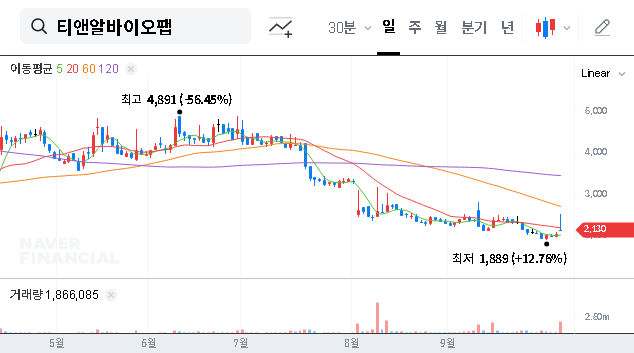
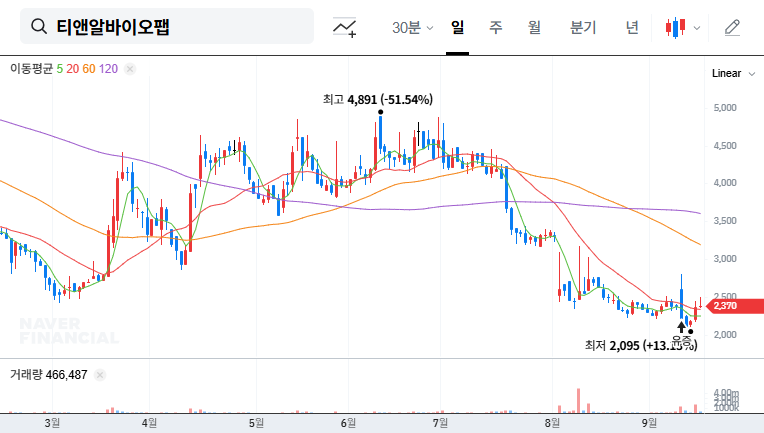
    Short-term momentum is likely to be choppy. The positive news of a rights issue is counteracted by the potential overhang of BW share sales. Without clear guidance or target prices from brokerage reports, the T&R Biofab stock may trade sideways or be dictated by broader market sentiment rather than this company-specific news. Traders should be cautious of potential selling pressure and manage risk accordingly. For guidance on this type of investment, consider reviewing our internal post on strategies for trading volatile biotech stocks.

    Conclusion: A Call for Cautious Optimism

    In conclusion, the increase in Korean Investment Partners’ stake in T&R Biofab is not a straightforward bullish signal. It reflects a sophisticated investor capitalizing on an opportunity to increase its core holding at a favorable price while simultaneously de-risking by realizing some profits. The ultimate driver of T&R Biofab stock value will not be these shareholder movements, but the company’s ability to convert its visionary technology into a financially sustainable and profitable enterprise. Investors should proceed with cautious optimism, keeping a close eye on fundamental progress.

    (246710) T&R Biofab Stock Analysis: KIP Increases Stake – Bullish Signal or Strategic Exit? 관련 이미지
  • T&R Biofab IR Analysis: Can 3D Bioprinting Overcome Financial Risks?


    T&R Biofab IR Analysis: Can 3D Bioprinting Overcome Financial Risks? 대표 차트 이미지


    IR Event: T&R Biofab Presents Future Growth Strategy

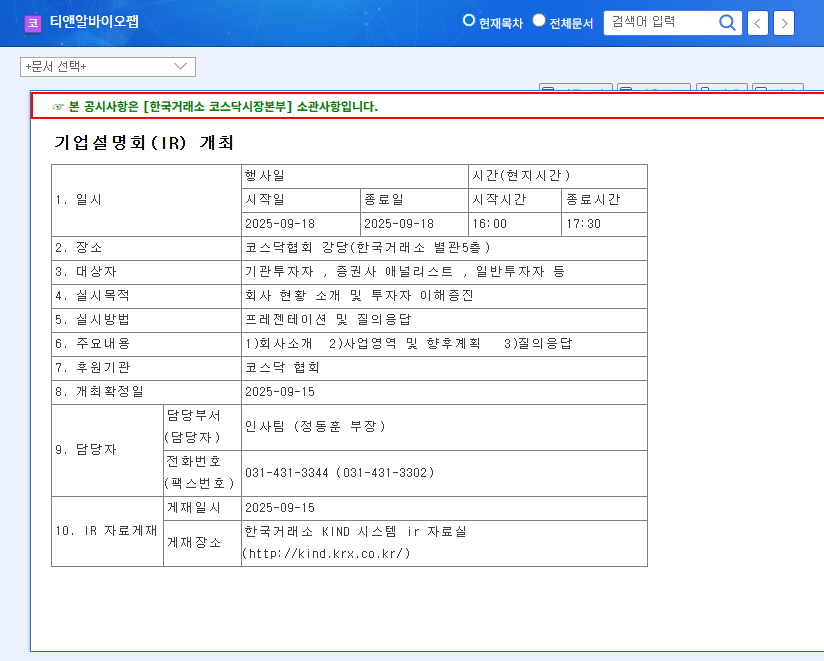
    T&R Biofab will hold an IR session at 4 PM on September 18, 2025. The event aims to introduce the company’s current status and enhance investor understanding, covering company introductions, business areas and future plans, and a Q&A session.

    Company Overview and Core Business: Leading 3D Bioprinting Technology

    T&R Biofab excels in the regenerative medicine field with its 3D bioprinting technology, developing artificial supports and biosurgical solutions. The recent acquisition of BlissPack marks their diversification into the cosmetics business. However, with operating losses continuing into the first half of 2025, improving profitability is a pressing issue.

    Key IR Issues: Addressing Financial Risks and Securing Growth Momentum

    The core focus of this IR is on addressing financial stability and outlining future growth drivers. Investors have expressed concerns about excessive debt and convertible bond issuance, and they expect tangible results from R&D investments. T&R Biofab needs to address these concerns and emphasize the competitiveness and growth potential of its 3D bioprinting technology.

    Investor Action Plan: Review IR Content Before Making Investment Decisions

    Investors should carefully review the financial stability measures, growth strategies for core businesses, and synergy effects from the BlissPack acquisition presented at the IR. It is crucial to assess the feasibility of the profitability improvement plan and the concrete roadmap for future growth drivers before making investment decisions.


    FAQ

    What is T&R Biofab’s core technology?

    T&R Biofab’s core technology is 3D bioprinting, used to develop artificial supports and biosurgical solutions.

    What are T&R Biofab’s main business areas?

    They have a diverse portfolio including regenerative medicine, 3D bioprinting, and cosmetics through their recent acquisition of BlissPack.

    What is T&R Biofab’s current financial status?

    As of the first half of 2025, they continue to experience operating losses, with excessive debt and convertible bond issuance posing financial burdens.

    What should investors focus on during this IR?

    Investors should pay close attention to the company’s plans for financial stability, growth strategies for core businesses, and synergy effects from the BlissPack acquisition.


    T&R Biofab IR Analysis: Can 3D Bioprinting Overcome Financial Risks? 관련 이미지
    T&R Biofab IR Analysis: Can 3D Bioprinting Overcome Financial Risks? 관련 이미지


  • T&R Biofab’s 2025 Half-Year Report: Balancing Innovation and Financial Challenges

    1. What Happened? – Key Takeaways from the 2025 Half-Year Report

    T&R Biofab reported increased revenue of KRW 12.49 billion in the first half of 2025, yet operating and net losses widened to KRW -5.49 billion and KRW -9.68 billion, respectively. Q2 2025 also saw losses, with revenue at KRW 6.5 billion, operating loss at KRW -1.9 billion and net loss at KRW -4.2 billion. The company’s financial health is concerning, with equity significantly decreased to KRW 19.2 billion and accumulated losses reaching KRW 147.9 billion.

    2. Why These Results? – Analyzing Positive & Negative Factors

    • Positive Factors:
      • Strong core technologies in 3D bioprinting, bio-ink, and patented technologies creating a competitive edge
      • Diversification efforts, including acquisition of BlissPack and expansion into cosmetics
      • Significant R&D investment, representing 18.1% of revenue
    • Negative Factors:
      • Deteriorating financial health due to BlissPack acquisition costs and derivative valuation losses
      • Widening operating and net losses driven by increased SG&A and financial expenses
      • High debt ratio and increased financial risks from interest rate fluctuations and market volatility
      • Intensifying competition in the 3D bioprinting market and global economic uncertainty

    3. What’s Next? – Market Analysis and Future Outlook

    While the global 3D bioprinting market is projected to grow rapidly, T&R Biofab’s financial struggles could hinder its ability to capitalize on this potential. The high debt ratio poses vulnerability to interest rate and currency fluctuations, and could erode investor confidence. Diversification into cosmetics presents a new growth avenue, but the company must address the increased financial burden and improve profitability in its core business.

    4. What Should Investors Do? – Action Plan

    T&R Biofab possesses innovative technology, but financial restructuring and improved profitability are crucial. Investors should carefully consider the following:

    • The feasibility of the company’s financial restructuring plans and funding strategies
    • The potential for profitability improvement in core business and the early monetization of new ventures
    • Management’s commitment to transparent information disclosure and proactive communication with the market

    Investment decisions should prioritize a holistic assessment of the company’s long-term growth potential and risks, rather than short-term stock price fluctuations.

    How did T&R Biofab perform in the first half of 2025?

    While revenue increased year-over-year, the company reported operating and net losses. Accumulated losses increased significantly, impacting financial health.

    What are T&R Biofab’s main business areas?

    The company possesses core technologies in regenerative medicine, including 3D bioprinting, bio-ink, and biodegradable scaffolds. They have also expanded into the cosmetics market.

    What are key considerations for investing in T&R Biofab?

    Investors should be aware of risks related to the company’s financial health and increasing market competition. Careful evaluation of the company’s financial restructuring and profitability improvement plans is crucial.