Tag: 307870

  • (307870) B2En Name Change to BuildAI: An Investor’s Deep Dive into AI Transition Risks & Opportunities

    (307870) B2En Name Change to BuildAI: An Investor’s Deep Dive into AI Transition Risks & Opportunities

    The recent announcement of the B2En name change to ‘BuildAI Co., Ltd.’ represents a pivotal moment for the company, signaling a decisive shift towards the booming artificial intelligence sector. This strategic pivot, driven by the immense growth potential of the AI market, raises a critical question for stakeholders and investors: is this a genuine springboard to future success or a high-risk gamble masking underlying financial distress? This analysis delves deep into the fundamentals behind this transformation, evaluating the opportunities against the substantial challenges that lie ahead for the newly christened BuildAI.

    This transition is more than a rebranding; it’s a declaration of intent. The success of BuildAI will hinge not on its name, but on its ability to execute a tangible AI strategy while navigating fierce market competition and restoring investor confidence.

    Deconstructing the B2En Name Change to ‘BuildAI’

    Pending shareholder approval on November 27, 2025, B2En Co., Ltd. will officially become BuildAI Co., Ltd. This move is explicitly designed to overhaul the company’s corporate image and signal a strategic diversification into AI and data-centric business models. It marks a deliberate pivot away from its legacy consulting services in data and IT to capture a share of the AI market, which many see as the primary engine of future economic growth. The official documentation for this corporate action is publicly available, as seen in this Official Disclosure from DART.

    Key Details of the Corporate Transition:

    • Former Name: B2En Co., Ltd.
    • New Name: BuildAI Co., Ltd.
    • Primary Rationale: To enhance corporate identity and aggressively pursue an AI business transition.
    • Shareholder Meeting Date: November 27, 2025

    The Financial Imperative: Why Pivot to AI Now?

    This rebranding is not a move made from a position of strength. A closer look at B2En’s recent financial performance reveals a company grappling with significant challenges, making the pivot to the high-growth AI sector a strategic necessity for survival and future relevance.

    A Shadow of Deteriorating Performance

    The 2024 fiscal year was particularly harsh for B2En. A domestic economic slowdown, coupled with reduced IT spending from public institutions, led to a severe business downturn. The company’s financial metrics paint a stark picture:

    • Revenue Collapse: Plummeted from KRW 67.3 billion in 2022 to just KRW 33.4 billion in 2024.
    • Profitability Crisis: Swung from a KRW 0.9 billion operating profit to a staggering KRW -59.4 billion loss.
    • Shareholder Value Erosion: Return on Equity (ROE) fell from 5.12% to a deeply negative -46.01%.

    Despite these alarming figures, there is a silver lining. The company’s debt-to-equity ratio improved dramatically to 38.67%. However, this is likely a consequence of asset reduction and business restructuring rather than organic growth. Amid this crisis, the B2En name change is a clear signal of intent to find a new, more promising growth trajectory in the AI market, a sector where tech giants are currently pouring billions, as documented by sources like Forbes.

    Evaluating the Impact on B2En’s Corporate Value

    The rebranding to BuildAI can influence the company’s valuation in both positive and negative ways. Investors must weigh the potential upside against the significant execution risks.

    Potential Positives (The Bull Case)

    • Market Anticipation: The ‘BuildAI’ name clearly signals a focus on a high-growth sector, which can generate positive market sentiment and attract new investors.
    • Improved Image: A modern, tech-forward brand can help attract top talent and appeal to a new class of enterprise customers.
    • Strategic Clarity: The pivot provides a clear narrative for the company’s future, moving beyond its struggling legacy businesses.

    Potential Negatives and Risks (The Bear Case)

    • Substance vs. Style: A name change doesn’t fix a broken balance sheet. Without tangible results from the AI business transition, it remains superficial branding.
    • Intense Competition: The AI landscape is dominated by well-funded giants and agile startups. BuildAI will need significant capital and a unique technological edge to compete.
    • Trust Deficit: A history of being designated as a dishonest disclosure corporation presents a major hurdle. Restoring market trust is paramount.
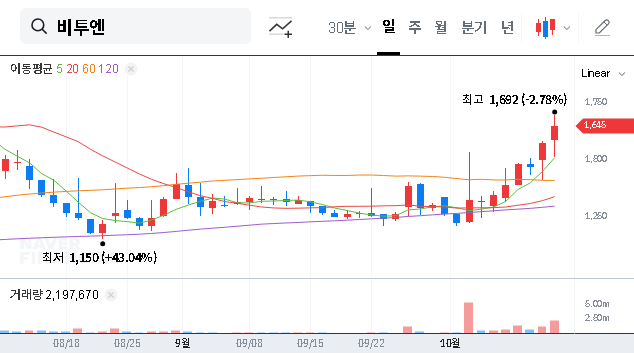
    • Stock Volatility: The stock may see a short-term boost from AI hype, but it could face a sharp correction if the company fails to deliver on its promises.

    Investor Action Plan: Navigating the Transition

    For investors, the B2En name change demands a cautious and analytical approach. Instead of chasing short-term speculation, focus on the following key performance indicators. For a broader perspective, you may want to review our guide on analyzing tech stock turnarounds.

    1. Demand a Concrete AI Roadmap

    Look beyond buzzwords. Scrutinize the company’s specific plans for its AI business. What problems will it solve? Who are the target customers? What is the technology development timeline and the path to monetization?

    2. Monitor Financial Health Diligently

    The company’s top priority must be to reverse its massive operating losses. Track quarterly financial reports for signs of improved cost efficiency, operational streamlining, and any early revenue from new AI initiatives.

    3. Assess Management’s Transparency

    Given past issues, transparent communication is non-negotiable. The company must proactively and accurately disclose its progress, challenges, and financial performance to rebuild trust with the market and its shareholders.

    Conclusion: B2En’s transformation into BuildAI is a bold and necessary move, but its success is far from guaranteed. It is a classic high-risk, high-reward scenario. Long-term success will depend entirely on the management’s ability to execute a sound AI strategy, stabilize financials, and operate with transparency. Investors are advised to proceed with caution, basing their decisions on tangible results rather than speculative promise.

    (307870) B2En Name Change to BuildAI: An Investor's Deep Dive into AI Transition Risks & Opportunities 관련 이미지
  • (307870) B2En Capital Increase: A Deep-Dive Analysis for Investors (2025)

    (307870) B2En Capital Increase: A Deep-Dive Analysis for Investors (2025)

    The recent announcement of the B2En capital increase has captured significant attention within the investment community. This strategic financial maneuver, often called a rights offering, presents a dual-edged sword for current and prospective shareholders. On one hand, it promises a vital injection of capital to fuel growth; on the other, it introduces risks like shareholder dilution and short-term market volatility. This in-depth analysis will dissect the official disclosure, explore the potential impacts, and provide a clear outlook to help you navigate your investment strategy concerning B2En stock.

    This article provides a detailed breakdown of B2En’s strategic move, its implications for the company’s financial health, and what it means for your portfolio. We will examine the core details of the offering, weigh the potential rewards against the inherent risks, and outline a clear action plan for investors.

    Unpacking the B2En Rights Offering: The Core Details

    According to the company’s public filing, the decision for a major capital increase was finalized on October 20, 2025. This move is designed to secure essential operating funds. The primary details, sourced directly from the Official Disclosure (DART Report), are as follows:

    • Shares Issued: 5,392,912 new common shares.
    • Issuance Price: 1,298 KRW per share.
    • Total Capital Raised: Approximately 7 billion KRW.
    • Primary Investor: ‘Strategy No. 1 Fund’.
    • Payment & Listing Dates: Payment is due by November 26, 2025, with the new shares expected to be listed on December 15, 2025.
    • Dilution Scale: This issuance represents approximately 9% of the total outstanding shares post-offering, a significant figure for existing shareholders to consider.

    A capital increase of this magnitude is a pivotal moment for any company. For B2En, it’s a strategic gamble: securing nearly 7 billion KRW for future growth while navigating the immediate challenge of a 9% shareholder dilution.

    The Investor’s Dilemma: Pros vs. Cons

    Understanding the dual nature of this B2En rights offering is crucial. Let’s break down the potential upsides and the considerable downsides.

    The Bull Case: Fueling Future Growth

    • Strategic Investments: The new capital can be deployed into high-growth areas, such as enhancing their data solutions, investing in AI-driven R&D, or expanding into new markets. This is the primary justification for such a move.
    • Improved Financial Stability: The funds can be used to pay down debt, improving the balance sheet and reducing interest expenses. This strengthens the company’s financial foundation, making it more resilient to economic headwinds.

    The Bear Case: Shareholder Dilution and Uncertainty

    • Inevitable Stock Dilution: The most immediate negative impact. By increasing the total number of shares by 9%, each existing share now represents a smaller percentage of the company. This can exert significant downward pressure on the stock price. For a deeper understanding, you can review our internal guide on evaluating company financials.
    • Price Discrepancy Risk: The issue price of 1,298 KRW is a critical number. If this is significantly below the market price at the time of issuance, it can be perceived negatively by the market, potentially triggering a sell-off as investors react to the discount.
    • Concentrated Influence: The entry of a single large investor, ‘Strategy No. 1 Fund,’ could alter B2En’s corporate governance and strategic direction. Investors must consider if this fund’s objectives align with their own long-term vision for the company.

    B2En Stock Outlook: Short-Term Pain for Long-Term Gain?

    The timeline of the B2En capital increase dictates a two-phase outlook for its stock price.

    Short-Term (Now through Q1 2026)

    In the weeks leading up to the December 15, 2025, listing date, expect heightened volatility. The market will be pricing in the dilution effect, which typically leads to downward pressure. Any lack of clarity from B2En’s management on the specific use of funds will only amplify this uncertainty and could negatively impact B2En stock analysis models.

    Long-Term (Mid-2026 and Beyond)

    The long-term success of this capital raise hinges entirely on execution. If B2En effectively deploys the 7 billion KRW into projects that generate substantial revenue and improve profitability, the initial dilution will become a footnote in a larger growth story. The corporate value could increase significantly, lifting the stock price well beyond its pre-announcement levels. Conversely, if the funds are mismanaged or fail to produce a return, the dilution will have permanently damaged shareholder value.

    Investor Action Plan & Final Thoughts

    For those investing in B2En, now is a time for diligence, not panic. Before making any decisions, you should:

    • Monitor Management Communication: Watch for detailed announcements from B2En on exactly how the new capital will be used. A clear, compelling roadmap is a strong positive signal.
    • Analyze the ‘Strategy No. 1 Fund’: Research this investor. Are they known for long-term strategic partnerships or short-term gains? Their track record can provide clues about their future influence.
    • Assess the Price Gap: Keep a close eye on B2En’s market price relative to the 1,298 KRW issue price. A smaller gap reduces the immediate negative sentiment.

    In conclusion, the B2En capital increase is a classic high-risk, high-reward scenario. The infusion of funds creates a significant opportunity for growth, but the path forward is laden with the challenge of shareholder dilution and the pressure to execute flawlessly. Careful monitoring and thorough due diligence are paramount for any investor involved.

    Disclaimer: This content is for informational purposes only and is based on public disclosures. It should not be construed as financial or investment advice. All investment decisions should be made with the consultation of a qualified professional.

    (307870) B2En Capital Increase: A Deep-Dive Analysis for Investors (2025) 관련 이미지
  • (307870) B2EN Convertible Bond (307870): A Deep Dive into Stock Impact & Investment Strategy

    (307870) B2EN Convertible Bond (307870): A Deep Dive into Stock Impact & Investment Strategy

    The recent announcement regarding the B2EN convertible bond (CB) conversion for its 4th series has sent ripples through the investment community. For stakeholders of B2EN (307870), this is a pivotal event. A convertible bond issuance and its subsequent conversion into equity is a complex financial maneuver that can significantly alter a company’s stock value and financial stability. This comprehensive B2EN stock analysis will dissect the implications of this event, evaluate the company’s fundamentals, and formulate a clear investment strategy to navigate the potential volatility and opportunities ahead.

    Decoding the B2EN Convertible Bond Conversion

    Event Overview and Official Details

    On October 2, 2025, B2EN (307870) confirmed that holders of its 4th series convertible bonds have exercised their right to convert debt into equity. This means new company shares will be issued. The key specifics of this conversion claim, as per the official disclosure, are critical for understanding its scale.

    • Number of Shares Claimed: 633,412 shares
    • Proportion of Market Cap: Approximately 1.07% of total outstanding shares
    • Conversion Price: 1,263 KRW per share
    • Scheduled Listing Date: October 27, 2025

    For complete verification, investors should review the Official Disclosure (DART Report).

    The Core Impact: Share Dilution and Financial Restructuring

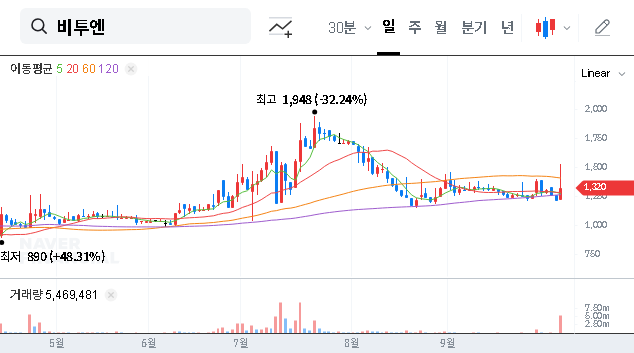
    The primary consequence of this event is share dilution. When new shares are created, the total number of outstanding shares increases, which can dilute the ownership percentage and earnings per share (EPS) for existing stockholders. This concept is a fundamental part of stock valuation, as explained by financial authorities like Investopedia. Since the conversion price of 1,263 KRW is below the recent market price (approx. 1,320 KRW), there is a strong incentive for CB holders to convert and sell their new shares for a quick profit. This creates significant selling pressure and can lead to short-term price drops around the listing date.

    On the positive side, converting debt to equity strengthens the balance sheet. The company’s debt liability decreases, and its equity capital increases. This lowers the debt-to-equity ratio, a key metric of financial health, signaling improved stability to the market.

    Fundamental Analysis: Is B2EN Positioned for Growth?

    To form a robust investment strategy, we must look beyond the immediate effects of the B2EN convertible bond conversion and assess the company’s core operational health.

    Business Diversification: A High-Stakes Pivot

    B2EN has signaled an aggressive push into new, high-growth sectors, including semiconductors, renewable energy, pet care, and healthcare. This ambition to diversify revenue streams is commendable and necessary for long-term survival. However, these are capital-intensive and highly competitive industries. The key question for investors is whether B2EN can translate these ambitions into tangible revenue and profit. Success in even one of these areas could be transformative, but failure could strain resources further.

    While financial restructuring from the B2EN convertible bond conversion provides a temporary boost, the company’s core challenge remains unsolved: reversing declining revenue and achieving sustainable profitability.

    Financial Health Under the Microscope

    A diagnosis of B2EN’s recent financials reveals a mixed picture. The company has struggled with decreasing revenue and persistent operating losses. Profitability metrics like ROE are projected to decline further. This is a significant red flag. However, management is actively raising capital to fund its growth initiatives and improve its balance sheet. The debt-to-equity ratio is improving, and increased retained earnings point towards a gradual strengthening of financial stability. This proactive financial management is a positive sign, but it must be paired with operational turnarounds to be meaningful.

    A Strategic Investment Plan for B2EN Stock

    Given the short-term downside pressure from share dilution and the long-term uncertainty of its strategic pivot, a cautious and well-informed approach is essential. The success of the B2EN convertible bond strategy ultimately depends on the company’s ability to generate future growth.

    Action Plan: What to Monitor

    Investors should adopt a vigilant monitoring strategy focused on key performance indicators. This involves more than just tracking the stock price; it requires a deep dive into the company’s progress. To learn more about this process, you can explore our guide on fundamental analysis.

    • Quarterly Earnings Reports: Scrutinize upcoming reports for any sign of revenue stabilization or growth. An operating profit turnaround would be the most powerful catalyst for the stock.
    • New Business Milestones: Track announcements related to the diversification strategy. Look for partnerships, product launches, or initial revenue figures from the semiconductor or renewable energy ventures.
    • Macroeconomic Trends: Keep an eye on interest rate policies. Expected rate cuts could increase market liquidity and boost investor sentiment for growth-oriented stocks like B2EN.

    In conclusion, investing in B2EN (307870) at this juncture requires an acceptance of short-term volatility. The downward pressure from the CB conversion is a tangible risk. However, for investors with a longer time horizon, the key is to evaluate whether the company’s bold diversification strategy can fundamentally reshape its future and create lasting value.

    (307870) B2EN Convertible Bond (307870): A Deep Dive into Stock Impact & Investment Strategy 관련 이미지
  • (307870) B2EN (307870) ₩3.3B Data Project: A Deep-Dive Stock Analysis for Investors

    (307870) B2EN (307870) ₩3.3B Data Project: A Deep-Dive Stock Analysis for Investors

    South Korean data solutions provider B2EN (307870) has captured investor attention by securing a significant government contract. The recently announced B2EN data project, valued at ₩3.3 billion, with the Korea Institute of S&T Evaluation and Planning (KISTEP) raises a critical question: is this the catalyst needed to reverse the stock’s long-term decline? This comprehensive B2EN stock analysis will dissect the contract’s implications, weigh the opportunities against the risks, and provide a clear, actionable investment outlook.

    We’ll explore the immediate financial impact, the validation of B2EN’s technology, and the persistent profitability concerns that prudent investors must consider before making a decision.

    Unpacking the ₩3.3 Billion KISTEP Contract

    On October 1, 2025, B2EN formally announced a major supply contract. The project involves a ‘DB Advancement Project for Building a Data-centric R&D Integrated Information System’ for KISTEP, a key public institution. This isn’t just another IT contract; it’s a strategic win in the company’s core domain.

    • Contract Value: ₩3.3 billion, which represents a substantial 13.1% of B2EN’s recent annual revenue.
    • Client: Korea Institute of S&T Evaluation and Planning (KISTEP), a reputable public sector entity.
    • Contract Period: A 15-month timeline from September 30, 2025, to December 31, 2026.

    This KISTEP contract is a significant development that warrants a closer look at both the bullish and bearish arguments for the company’s future.

    The Bull Case: Why This Contract Matters

    Immediate Revenue Injection and Financial Stability

    The most direct impact is on the top line. An injection of ₩3.3 billion provides a predictable revenue stream over the next year. Public sector projects are known for their stability and low counterparty risk, bolstering B2EN’s order book. As of late 2024, the company maintained a healthy financial posture with a low debt-to-equity ratio (19.77%) and a strong current ratio (265.81%). This new revenue stream should further solidify its financial base, which is a crucial factor for investors seeking stability. For a deeper dive, you can learn more about understanding financial ratios for tech stocks.

    Validation of Core Technology and Market Leadership

    This is more than just revenue; it’s a powerful endorsement. The project’s focus on a ‘Data-centric R&D Integrated Information System’ aligns perfectly with B2EN’s specialization. It highlights the market’s confidence in the company’s advanced capabilities, particularly its proprietary ‘SDQ for AI’—an AI Learning Data Quality Management Solution. Successfully delivering on this high-profile B2EN data project can serve as a powerful case study, enhancing its reputation and paving the way for future contracts in the lucrative public and private sectors.

    This contract win validates B2EN’s technological edge in a competitive market. It’s a signal that their specialized solutions, like ‘SDQ for AI,’ are gaining critical traction with high-value clients.

    The Bear Case: Potential Risks and Headwinds

    The Critical Issue of Declining Profitability

    While revenue is set to increase, profitability remains a major concern. The IT services industry can be notorious for tight margins. B2EN’s own history is a cautionary tale: its operating profit margin has seen a dramatic decline from 11.85% in 2022 to a razor-thin 0.66% in 2024. The success of this contract will not be measured by revenue alone but by its ability to contribute meaningfully to the bottom line. Efficient project management will be paramount to prevent this large contract from becoming a low-profit endeavor.

    Stock Performance and Market Sentiment

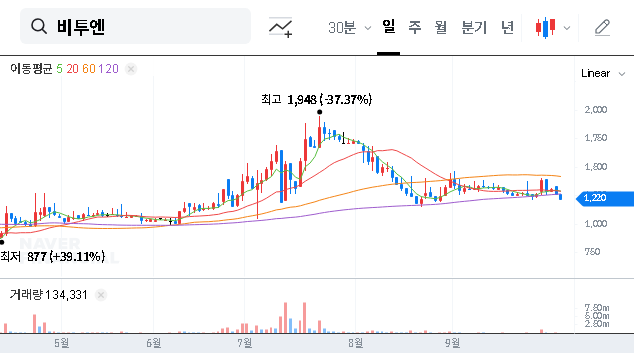
    A look at B2EN’s stock chart reveals a challenging history. After peaking at ₩4,410 in May 2021, the stock entered a prolonged downtrend, settling in the ₩1,000s-₩2,000s range where it has languished. This decline reflects the market’s reaction to deteriorating financials and a broader slowdown. While the macro trend towards big data and AI is a powerful tailwind, as noted in reports by firms like Gartner on the data industry, B2EN must prove it can translate industry growth into company profit. This single contract, while positive, may not be enough to single-handedly shift market sentiment and reverse years of downward momentum.

    Official Disclosure and Verification

    For complete transparency and verification of the contract details discussed in this analysis, investors are encouraged to review the company’s official filing. The information is publicly available through Korea’s Financial Supervisory Service.

    Source: Click to view the Official DART Disclosure.

    Conclusion: A Neutral Stance with a Clear Action Plan

    The ₩3.3 billion KISTEP contract is an undeniable short-term positive for B2EN. It provides revenue stability and validates its technical expertise. However, this must be viewed in the context of the company’s significant profitability challenges and negative stock performance history. Therefore, our investment opinion is ‘Neutral.’ This contract is a promising step, but it is not a silver bullet.

    Action Plan for Prudent Investors

    • Monitor Profitability: Scrutinize the upcoming quarterly reports to see if this contract is improving operating margins, not just revenue.
    • Track New Orders: Look for evidence that this win is a springboard to more contracts. Consistent order flow is key to a sustainable turnaround.
    • Adopt a Long-Term View: Avoid chasing a short-term pop. A true recovery will be a multi-quarter process based on fundamental improvements.
    • Holistic Analysis: Continue to weigh the positive contract news against the company’s overall financial health and the broader market environment.

    (307870) B2EN (307870) ₩3.3B Data Project: A Deep-Dive Stock Analysis for Investors 관련 이미지
  • BTuen Q2 2025 Earnings Shock: Continued Losses Raise Concerns

    1. BTuen Q2 Earnings: Key Figures

    BTuen reported revenue of KRW 4.3 billion, an operating loss of KRW 1.4 billion, and a net loss of KRW 1.4 billion for Q2 2025. While revenue slightly increased compared to the previous quarter, the company continues to bleed red ink, significantly missing market expectations.

    2. Reasons for Underperformance: A Deeper Dive

    The continued losses stem from the aftermath of previous restructuring efforts, including the sale of the digital silver care division and the disposal of SusKorea. While these strategic moves might benefit the company in the long run, they have undoubtedly impacted short-term profitability. The lack of visible returns from new business ventures also contributes to the current underperformance.

    3. Financial Health Assessment: A Mixed Bag

    • Positive: Debt-to-equity and current ratios are showing signs of improvement, indicating a gradual recovery in financial health.
    • Negative: An extremely low retained earnings ratio limits future investment capacity. Furthermore, the convertible bonds (CBs) issued in 2024 introduce potential volatility to shareholder value depending on stock price fluctuations.

    4. Investor Action Plan: Proceed with Caution

    BTuen’s Q2 results are a clear warning sign for investors. Short-term downward pressure on the stock price is expected, and the long-term growth outlook remains uncertain. Investors should closely monitor the company’s ability to improve earnings and stabilize its financial structure. Caution is advised, and a wait-and-see approach may be the most prudent strategy at this time.

    Q: What are the main reasons for BTuen’s poor Q2 performance?

    A: The lingering effects of past restructuring and the delayed impact of new business initiatives are the primary factors.

    Q: What is the current state of BTuen’s finances?

    A: While debt-to-equity and current ratios are improving, retained earnings remain critically low. Investors should also be mindful of the potential impact of convertible bonds on stock price volatility.

    Q: Should I invest in BTuen?

    A: Caution is advised. It’s prudent to wait for tangible signs of earnings improvement and financial stabilization before making any investment decisions.

  • Bitween Stock Forecast: CEO’s Stake Sale, What Should Investors Do?

    1. What Happened? : CEO Sells 7% Stake

    Bitween CEO Kwangwon Cho has sold 7.04% of his stake, reducing his ownership to 4.91%. Although stated as for investment purposes, this move has amplified investor anxieties, especially considering the company’s recent poor performance.

    2. Why the Sale? : Uncertain Background and Investor Sentiment

    The official reason for the sale is ‘for investment purposes,’ but various interpretations are circulating in the market given Bitween’s recent earnings decline. Speculations about declining management confidence, fund retrieval, etc., are contributing to a potential downturn in investor sentiment.

    3. What’s Next? : Short-Term Downward Pressure, Long-Term Growth Potential

    The CEO’s stake sale is likely to negatively impact the stock price in the short term. It could act as an additional negative catalyst for already fragile investor confidence due to poor performance. However, there are positive factors such as the company’s competitive edge in its own solutions, new business expansion efforts, and the rising USD/KRW exchange rate. In the long term, the company’s fundamental recovery and the visibility of new business performance will be key to a stock rebound.

    • Positive Factors: Competitive solutions, new business expansion, rising USD/KRW exchange rate
    • Negative Factors: Poor performance, weakened investor sentiment due to stake sale, macroeconomic uncertainty, intensifying competition

    4. What Should Investors Do? : Careful Analysis and Observation Needed

    Instead of being swayed by short-term price fluctuations, investors should analyze the situation calmly. It is crucial to monitor the company’s future earnings announcements, business strategy presentations, etc., and make investment decisions from a medium- to long-term perspective.

    Frequently Asked Questions

    Is the CEO’s stake sale a negative signal for Bitween’s future?

    It may negatively impact the stock price in the short term, but the company’s fundamentals and new business performance are more critical factors in the long run.

    Is it a good time to buy Bitween stock now?

    Investment decisions are ultimately up to the individual, but Bitween currently faces uncertainties due to poor performance and the CEO’s stake sale. Careful analysis is recommended before making any investment decisions.

    What is the outlook for Bitween’s stock price?

    Downward pressure is expected in the short term, but there is a possibility of a rebound depending on the company’s fundamental recovery and the visibility of new business performance.

  • Bituen (307870) Convertible Bond Conversion: Impact on Stock Price

    What Happened?

    Bituen announced the exercise of conversion rights for its 3rd and 4th convertible bonds. The conversion price is 1,275 KRW, and the new shares are expected to be listed on August 25, 2025. This will lead to an increase in the number of outstanding shares, potentially impacting the stock price.

    Why Does It Matter?

    Convertible bond conversions can significantly impact a company’s financial structure and stock price. This conversion could improve Bituen’s financial health but also carries the risk of stock dilution and a potential price decline. This is particularly relevant given Bituen’s current struggles with declining earnings and a high debt-to-equity ratio.

    What’s the Potential Impact?

    Short-Term Impact:

    • Downward pressure on the stock price due to increased outstanding shares.
    • Potential for profit-taking as the current stock price is higher than the conversion price.

    Long-Term Impact:

    • Decrease in debt and increase in equity due to the conversion.
    • However, the positive impact on financial health may be limited without improved profitability.
    • The success of new business ventures will likely determine the stock’s future direction.

    What Should Investors Do?

    • Proceed with Caution: Considering Bituen’s current financial state and performance, investors should exercise caution.
    • Monitor Fundamentals: Closely monitor future earnings announcements and the progress of new business ventures.
    • Consider Market Conditions: Factor in the overall market environment and interest rate trends when making investment decisions.
    What are convertible bonds?

    Convertible bonds are a type of debt security that gives the holder the option to convert the bond into a predetermined number of shares of the issuer’s common stock.

    Do convertible bond conversions always negatively impact stock prices?

    Not necessarily. While the increased supply of shares can put downward pressure on the price in the short term, if the company’s fundamentals improve, the conversion can have a positive impact.

    What is the outlook for Bituen’s stock price?

    The company’s ability to improve profitability and the success of its new business ventures will significantly influence the stock price. Investors should approach with caution.

  • Bitween Stock Forecast: Opportunity or Risk with Ribbon Material Holdings’ Acquisition?

    What Happened?

    On July 24, 2025, Ribbon Material Holdings acquired 6,525,553 shares (12.84%) of Bitween, becoming the largest shareholder. This acquisition, aimed at participating in management, foreshadows significant changes for Bitween’s future.

    Why is it Important?

    Bitween is struggling with a sharp decline in sales and continued losses in the first quarter of 2025. Factors such as sluggish big data platform business, intensified competition, and reduced government R&D budget are cited as causes. The high debt ratio also raises concerns about financial soundness. In this situation, the emergence of new management is a crucial variable that will determine the fate of the company.

    So What Happens Next?

    • Positive Scenario: Bitween’s corporate value may increase through Ribbon Material Holdings’ management improvement, financial structure improvement, and new business investments.
    • Negative Scenario: Corporate value may decline due to management disputes, difficulties in the post-acquisition integration process, and conflicts among shareholders.

    What Should Investors Do?

    Increased short-term stock price volatility is expected, requiring careful investment decisions. It is advisable to closely monitor Ribbon Material Holdings’ future management plans, financial structure improvement measures, changes in shareholder relations, and make investment decisions after obtaining additional information.

    Frequently Asked Questions

    What kind of company is Ribbon Material Holdings?

    At the time of writing this report, detailed information on Ribbon Material Holdings is limited. Further research is needed to ascertain the company’s financial status, business details, and the purpose of the Bitween acquisition.

    What will Bitween’s Q2 earnings look like?

    Bitween’s earnings improvement can be confirmed through future disclosures of Q2 and subsequent reports. Continuous monitoring is necessary as earnings trends can significantly impact stock prices.

    Should I invest in Bitween?

    Investment decisions are at the individual’s discretion and responsibility. This analysis is not an investment recommendation, and sufficient information gathering and risk management are essential before investing.