Tag: 295310

  • (295310) HVM CO.,LTD. Block Deal: Expert Stock Analysis & 2025 Investment Strategy

    (295310) HVM CO.,LTD. Block Deal: Expert Stock Analysis & 2025 Investment Strategy

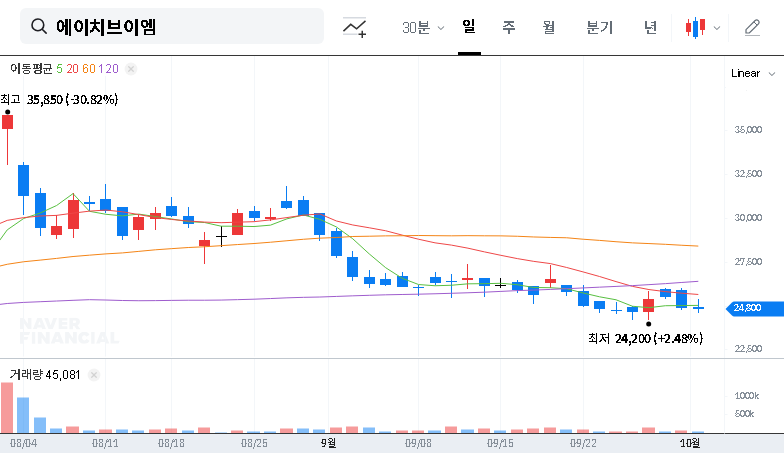
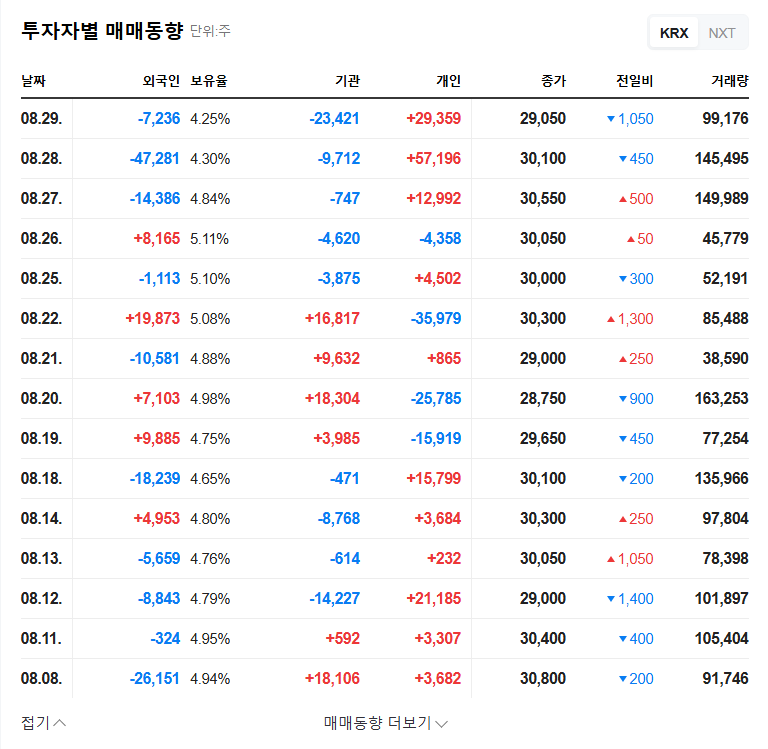
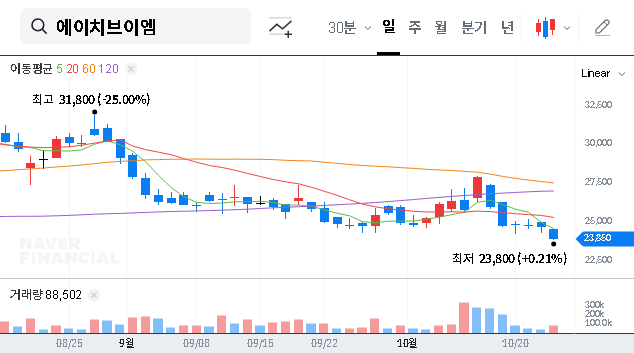
    A significant HVM CO.,LTD. block deal has sent ripples through the investment community, raising questions about the company’s future stock performance and management stability. On October 27, 2025, a major shareholder executed a large share sale explicitly for ‘management influence,’ a move that warrants careful examination. While this event may introduce short-term volatility for HVM stock, a deeper look reveals a company with robust fundamentals poised for long-term growth.

    This comprehensive HVM stock analysis will dissect the block deal, evaluate the company’s intrinsic value, and provide a clear HVM investment strategy to help you navigate the market noise and make informed decisions.

    Decoding the HVM CO.,LTD. Block Deal

    On October 27, 2025, the market took note of a disclosure regarding a change in large-scale shareholding for HVM CO.,LTD. (에이치브이엠). The shareholder, Choi Jae-young, executed an after-hours block trade, selling a substantial portion of his holdings.

    Transaction Snapshot:
    Seller: Choi Jae-young
    Shares Sold: 230,000 common shares
    Stake Change: Reduced from 10.00% to 8.07%
    Stated Purpose: ‘Management influence’
    Source: Official Disclosure (DART)

    The term ‘management influence’ is what sets this transaction apart from a typical sale for profit-taking. It suggests a strategic motive related to corporate control or direction, which can create uncertainty among investors. This ambiguity often leads to short-term price pressure as the market digests the potential implications for HVM’s leadership and strategic stability.

    Fundamental Analysis: HVM’s Unwavering Growth Drivers

    Beyond the immediate noise of the HVM CO.,LTD. block deal, the company’s core fundamentals remain exceptionally strong. HVM is a specialist in advanced metals, leveraging proprietary high-purity vacuum melting technology to produce materials critical for high-growth industries.

    Core Technological Competitiveness

    HVM’s competitive edge is rooted in its unique technology. The company’s proprietary vacuum melting facilities allow it to produce high-purity metals and sputtering targets that are essential for manufacturing semiconductors, displays, and aerospace components. This technological moat, protected by patents and continuous R&D, ensures its relevance in a demanding market.

    Financial Health and Strategic Expansion

    As of the first half of 2025, HVM’s financial reports show a company in a strong growth phase. Consistent revenue increases and a successful turnaround to profitability underscore its operational efficiency. While an increase in inventory assets warrants monitoring, it’s largely tied to strategic investments in production capacity, including a new factory and advanced melting furnaces. This signals management’s confidence in future demand within the advanced metals market.

    Market Outlook & Stock Impact

    Short-Term Volatility vs. Long-Term Value

    The immediate aftermath of a block deal like this often involves heightened stock volatility. The large volume of shares creates a temporary supply overhang, and the ambiguous ‘management influence’ motive can spook risk-averse investors, leading to short-term price dips. However, these movements are often detached from the company’s operational reality.

    From a mid-to-long-term perspective, the narrative shifts back to fundamentals. HVM operates in a sector with explosive growth potential. The global demand for advanced materials is surging, and HVM is well-positioned to capture a larger share, both domestically and through overseas expansion. Paradoxically, the shareholder’s reduced stake could even lead to greater management stability by consolidating the control of the existing leadership team. Ultimately, the company’s intrinsic value, driven by earnings and innovation, will be the primary determinant of its long-term stock trajectory.

    A Smart HVM Investment Strategy for 2025

    Given the circumstances, a prudent HVM investment strategy requires looking beyond the short-term market drama. Here are key points to consider:

    • Focus on the Fundamentals: Prioritize analysis of HVM’s technological leadership, market position, and financial health over reactionary news. The company’s ability to innovate and execute is what will create shareholder value.
    • Adopt a Long-Term Horizon: Short-term volatility can present buying opportunities for investors who believe in the company’s long-term growth story. Avoid emotional decisions based on daily price swings.
    • Monitor Key Metrics: Keep an eye on major shareholder trends, but also track macroeconomic factors like exchange rates, which can impact HVM’s import/export business. Follow the company’s progress on its capacity expansion plans.

    In conclusion, while the recent HVM CO.,LTD. block deal has created temporary uncertainty, the company’s underlying strengths—its proprietary technology, expanding production capacity, and alignment with high-growth industries—present a compelling case for long-term investors.

    Frequently Asked Questions (FAQ)

    Why was the HVM block deal significant?

    The deal was significant due to its stated purpose of ‘management influence.’ This implies strategic motivations beyond simple profit-taking, which can create uncertainty about corporate governance and future direction, often impacting investor sentiment.

    How might this block deal affect HVM’s stock price?

    In the short term, it could lead to increased stock volatility and downward pressure due to the large supply of shares and market uncertainty. In the long term, the stock price is more likely to be driven by HVM’s fundamental performance, profitability, and market growth.

    What is the long-term investment outlook for HVM CO.,LTD.?

    The outlook remains positive. HVM has strong fundamentals, unique technology in the growing advanced metals industry, and is expanding its production capacity. These factors suggest that its intrinsic business value is positioned for growth, irrespective of short-term shareholder movements.
  • (295310) HVM CEO Share Sale: Full Analysis of Stock Price Impact & 2025 Investor Strategy

    (295310) HVM CEO Share Sale: Full Analysis of Stock Price Impact & 2025 Investor Strategy

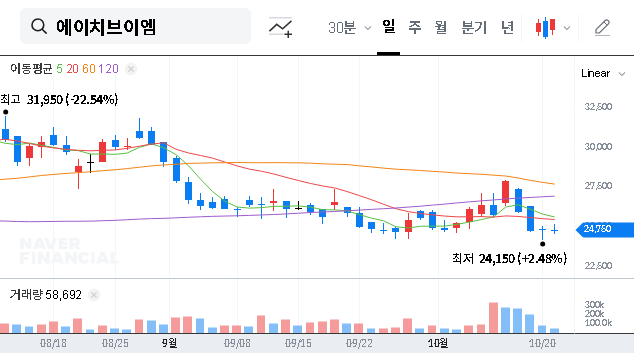
    The recent HVM CEO share sale has sent ripples through the investment community, leaving many to question the future of HVM’s stock price and management stability. On October 21, 2025, a significant disclosure revealed that CEO Choi Jae-young divested a substantial portion of his holdings. This move, involving shares initially held for ‘management influence,’ has understandably put the market on high alert. For investors, this isn’t just news; it’s a critical event that demands a deep, strategic analysis to navigate the resulting uncertainty and protect their portfolios.

    In this comprehensive breakdown, we will dissect the transaction, analyze the potential short-term and long-term consequences for the HVM stock price, and provide a clear, actionable investor strategy. Making informed decisions is paramount when a company’s leadership makes such a significant financial move.

    Deconstructing the HVM CEO Share Sale: Key Facts

    An Overview of the Transaction

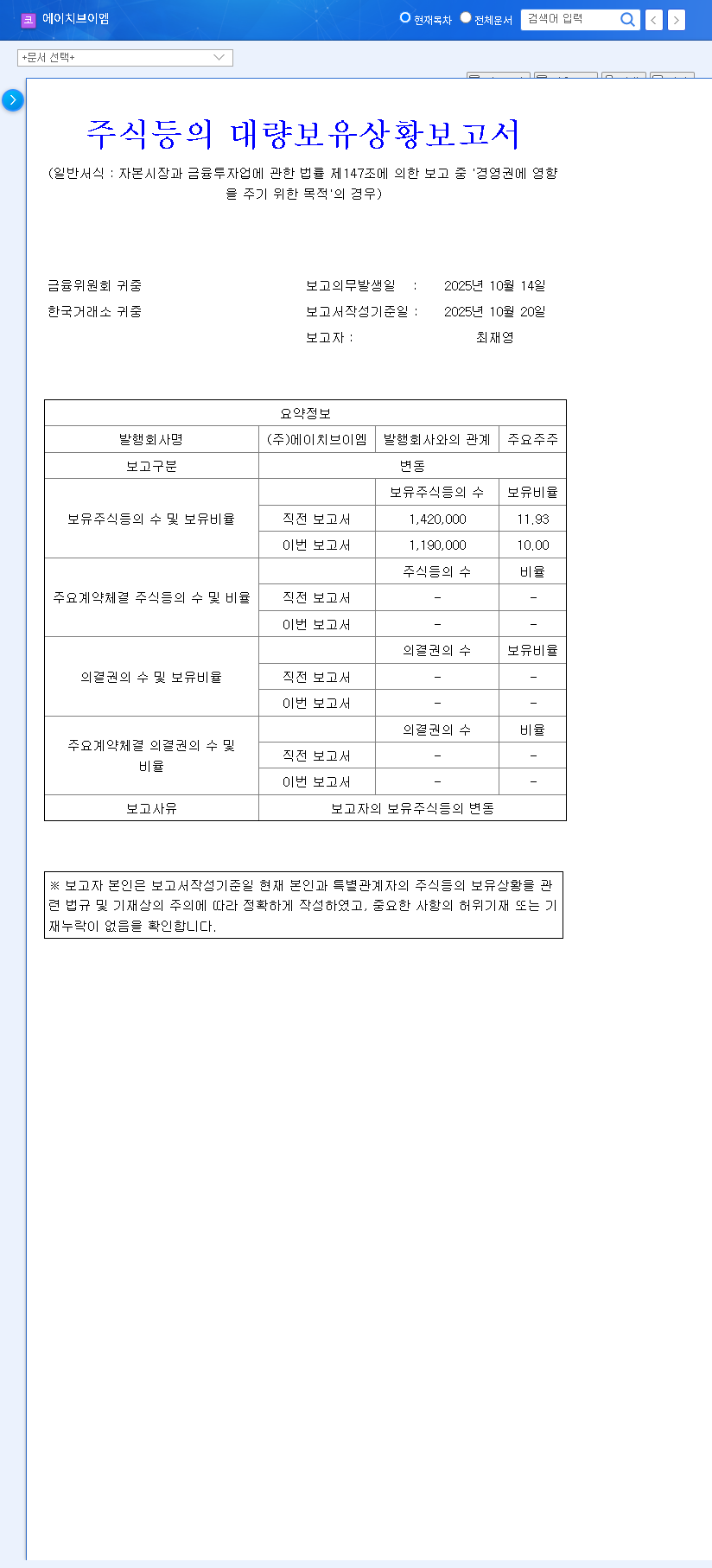
    The core event revolves around the disclosure made by HVM CO.,LTD. (HVM) regarding its CEO, Choi Jae-young. The official details, as per the public disclosure, are crucial for a clear understanding.

    • Seller: Choi Jae-young, CEO of HVM CO.,LTD.
    • Date of Sale: October 14, 2025
    • Method of Sale: After-hours block deal
    • Volume Sold: 230,000 common shares
    • Change in Ownership: Dropped from 11.93% to 10.00% (a 1.93% decrease)
    • Original Holding Purpose: ‘Management influence’

    The critical takeaway is the shift in the purpose of the shares. When a CEO reduces a stake designated for ‘management influence,’ it’s interpreted by the market as more than just a personal financial transaction; it’s a potential signal about their long-term confidence and control. You can view the Official Disclosure (Source: DART) for primary verification.

    Analyzing the Market Impact: Short & Long-Term

    Short-Term: Volatility and Negative Sentiment

    The immediate aftermath of a major insider sale is often predictable. The market reacts swiftly, usually negatively, due to a few key factors:

    • Selling Pressure: The introduction of 230,000 shares into the market via a block deal creates a supply-demand imbalance. This can trigger a dip in the HVM stock price as the market absorbs the new supply.
    • Erosion of Investor Confidence: The market often follows the lead of insiders. A CEO selling shares can be perceived as a lack of faith in the company’s near-term prospects, leading to panic selling among retail investors.
    • Algorithmic Trading Triggers: Modern markets are heavily influenced by automated trading systems that are programmed to react to news like insider sales, which can amplify the downward price movement.

    Mid-to-Long-Term: Questions of Stability and Value

    Beyond the initial shock, the Choi Jae-young share sale raises more profound questions that will influence the stock over the coming months and years:

    • Management Stability: A CEO’s ownership stake is a pillar of management control. A reduced stake might be perceived as a chink in the armor, potentially inviting shareholder activism or, in extreme cases, hostile takeover speculation.
    • Corporate Value Perception: Without a clear, positive reason for the sale (e.g., funding a charitable foundation), the market may default to a negative interpretation—that the CEO believes the stock is currently overvalued.

    “Insider selling, especially from a CEO, is one of the most powerful negative signals in the market. While there can be benign reasons, the default assumption is that the person with the most information sees limited upside in the near future.”

    Investor Strategy HVM: A Cautious and Analytical Approach

    Reacting emotionally is the worst course of action. A prudent investor strategy for HVM stock now involves diligent research and a level-headed assessment. Here’s what to focus on:

    1. Deep-Dive Fundamental Analysis

    Ignore the noise and focus on the company’s actual health. A thorough HVM stock analysis should re-evaluate its intrinsic value. Look at:

    • Financial Health: Scrutinize recent quarterly reports. Are revenue and profit margins growing? How is the company’s debt-to-equity ratio and cash flow?
    • Growth Drivers: Is the company innovating with new products? Have there been any recent major contract wins or market expansions?
    • Valuation Metrics: How does its Price-to-Earnings (P/E) ratio compare to industry peers? Does the current stock price reflect its fundamental value? For more on this, check out this guide on fundamental analysis from Investopedia.

    2. Monitor for Further Information and Context

    The reason behind the sale is everything. Watch for official company statements or interviews where the CEO might clarify his motives. Legitimate reasons could include portfolio diversification, tax planning, or funding a separate venture. The absence of a clear reason is, in itself, a red flag. For ongoing updates, you might consult our dedicated HVM corporate news section.

    3. Assess the Overall Shareholder Structure

    Even with this sale, is the CEO’s control and the broader management’s position still secure? Analyze the total ownership of insiders and institutional investors. If control remains firmly consolidated, the risk of management instability is significantly lower.

    Frequently Asked Questions (FAQ)

    Why did the HVM CEO sell his shares?

    The official disclosure does not state the specific reason for the sale. While the transaction details are public, CEO Choi Jae-young’s personal motivation—be it for personal finances, diversification, or a change in strategy—has not been officially communicated. The market dislikes ambiguity, which is contributing to the negative sentiment.

    Is HVM stock a ‘Sell’ now?

    A hasty decision is ill-advised. While the HVM CEO share sale is a significant bearish signal, it should be weighed against the company’s fundamental strength. If your analysis shows HVM is fundamentally sound and potentially undervalued after a price drop, it could even present a long-term buying opportunity for contrarian investors. The key is to base your decision on comprehensive research, not a single news event.

    What should current HVM investors do?

    Current investors should remain calm and re-evaluate their thesis for owning HVM stock. Does this news change the company’s long-term business prospects? If not, the short-term volatility might be something to ride out. If this event shakes your confidence in management’s vision, it may be time to reconsider your position. Focus on the action plan outlined above before making any trades.

    (295310) HVM CEO Share Sale: Full Analysis of Stock Price Impact & 2025 Investor Strategy 관련 이미지
  • (295310) HVM Stock Forecast 2025: A Deep Dive After National Pension Service Increases Stake

    (295310) HVM Stock Forecast 2025: A Deep Dive After National Pension Service Increases Stake

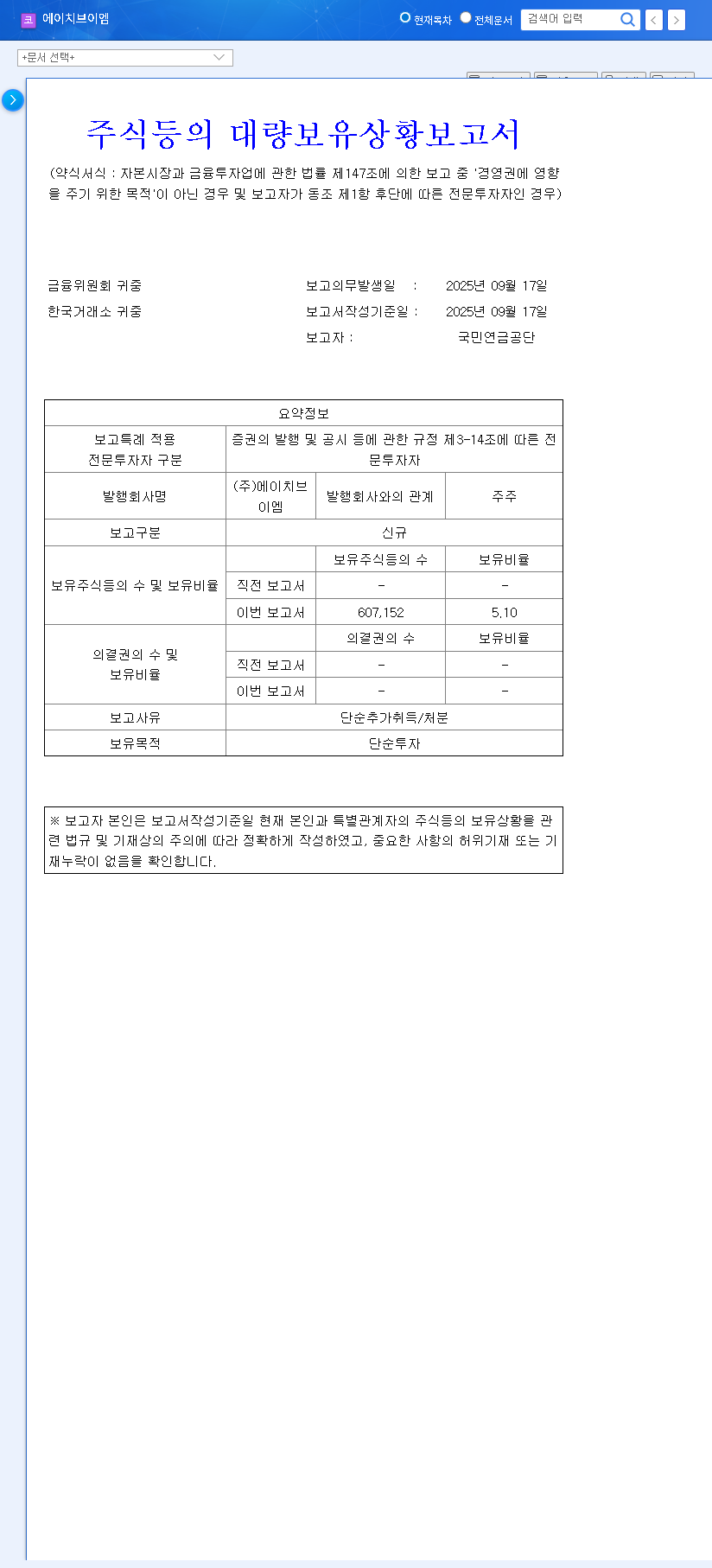
    This HVM stock forecast provides a detailed analysis following the significant news that the National Pension Service (NPS), South Korea’s largest institutional investor, has increased its stake in the company. While officially cited as a ‘simple investment’, such a move by a market heavyweight often signals deep confidence in a company’s fundamentals and future prospects. Does this catalyst warrant a complete re-evaluation of HVM’s investment value? Let’s dive in.

    Drawing from HVM’s latest half-year report and public disclosures, we will dissect the financial health, market position, and potential trajectory of HVM stock to provide clear insights for your investment strategy.

    The Catalyst: NPS Increases Stake in HVM

    On October 1, 2025, the market took notice as the National Pension Service filed a large shareholding report. According to the Official Disclosure, the NPS acquired an additional 5.10% stake in HVM. This action increases their total holding and is interpreted by analysts as a powerful vote of confidence. An institution like the NPS performs exhaustive due diligence, suggesting they see significant, sustainable growth potential that justifies a larger position in their portfolio.

    In-Depth HVM Investment Analysis: The Fundamentals

    The NPS’s decision is not arbitrary; it’s rooted in HVM’s strengthening fundamentals. A close look at the company’s 2025 half-year report reveals a compelling story of growth, stability, and market leadership.

    1. Exceptional Financial Performance

    • Impressive Revenue Growth: HVM reported a half-year revenue of 29.699 billion KRW, a remarkable 25.25% increase year-over-year. This indicates strong market demand and effective sales execution.
    • Turnaround to Profitability: The company achieved an operating profit of 4.895 billion KRW and a net profit of 3.577 billion KRW. This shift from loss to profit is a critical milestone, proving the business model’s viability and operational efficiency.
    • Rock-Solid Financial Structure: With a debt-to-equity ratio of just 25.82%, HVM maintains an exceptionally healthy balance sheet. This low leverage minimizes financial risk and provides flexibility for future investments and expansion.

    2. Strategic Business & Market Positioning

    HVM operates in a sector with high barriers to entry, manufacturing special alloys and advanced metal materials. These components are indispensable for high-growth industries like aerospace, defense, renewable energy, and semiconductors. For further reading, you can explore the latest trends in the advanced materials market from leading analysts.

    HVM’s competitive advantage is solidified by its expertise in sputtering target manufacturing and its strategic expansion into high-melting point advanced metals and powder alloys—key materials for next-generation technologies.

    This forward-looking strategy not only secures its current market share but also positions it as a key supplier for future technological advancements, which is a crucial element of any long-term HVM stock forecast.

    3. Favorable Macroeconomic Tailwinds

    Several macroeconomic factors are aligning in HVM’s favor. Stabilizing interest rates globally are expected to reduce borrowing costs and encourage corporate investment. Furthermore, as an export-focused company, a stable or slightly weaker KRW exchange rate enhances the price competitiveness of its products on the global stage. While raw material prices show some volatility, HVM’s specialized product line generally allows for costs to be passed on, protecting profit margins. You can track commodity prices on authoritative sites like Bloomberg.

    Impact Analysis: The Bull Case vs. Potential Risks

    The NPS investment creates a strong bullish signal for HVM stock, but prudent investors must consider all angles.

    The Bull Case for HVM Stock

    • Institutional Stamp of Approval: The NPS’s backing enhances credibility and is likely to attract other institutional and retail investors.
    • Corporate Value Re-evaluation: The market may have previously undervalued HVM. This high-profile investment forces a re-evaluation, potentially leading to a higher stock price that better reflects its intrinsic value.
    • Improved Market Sentiment: Positive news flow can create a self-reinforcing cycle, driving momentum and lifting the HVM stock price.

    Key Risks and Considerations

    • Short-Term Volatility: The sudden influx of attention could lead to price swings as the market digests the news.
    • Future NPS Actions: While the intent is ‘simple investment’, the NPS could sell its shares in the future, which would create downward pressure on the stock.
    • Execution Risk: HVM must continue to execute its business plan flawlessly and deliver on its growth promises to sustain investor confidence.

    Investor’s Guide & Final Verdict

    Overall, the National Pension Service’s increased stake is a significant positive catalyst for HVM. When combined with the company’s robust performance, improving profitability, and strategic position in growing high-tech industries, the outlook for the HVM stock forecast appears highly favorable.

    Investors should adopt a long-term perspective, focusing on the company’s intrinsic value rather than short-term market noise. Cautious decision-making involves continuous monitoring of HVM’s quarterly performance and any further disclosures from major shareholders like the NPS.

    Frequently Asked Questions (FAQ)

    What does the NPS’s increased stake in HVM truly signify?

    It signifies a strong vote of confidence from a major institutional investor in HVM’s financial health, business strategy, and long-term growth potential. It’s a powerful positive signal for the market.

    How strong was HVM’s performance in the first half of 2025?

    Performance was very strong. Revenue grew over 25% year-over-year, and the company achieved a significant turnaround to profitability, demonstrating excellent operational improvements.

    What gives HVM a competitive edge in its market?

    HVM’s edge comes from its specialization in advanced metal materials for critical industries like aerospace and its strategic expansion into next-generation materials, securing its role in future technologies.

    Should I expect short-term volatility in HVM stock?

    Yes, it’s possible. Major news like this can cause increased trading activity and short-term price swings. Long-term investors should focus on the underlying business fundamentals instead of this noise.

    (295310) HVM Stock Forecast 2025: A Deep Dive After National Pension Service Increases Stake 관련 이미지
  • HVM Investor Relations Analysis: Is it a Good Investment Opportunity?

    HVM Investor Relations Analysis: Is it a Good Investment Opportunity? 대표 차트 이미지

    HVM IR Analysis: What Was Discussed?

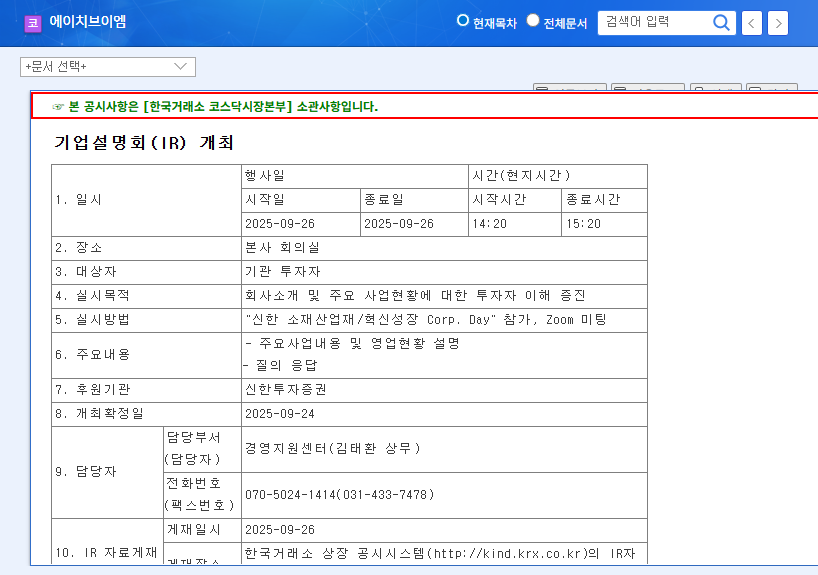
    HVM presented its current business status and future growth strategies at its IR meeting on September 26, 2025. The company’s remarkable growth in the aerospace sector and its plan to expand production capacity through the construction of a second factory garnered significant attention.

    Growth Drivers and Risk Analysis: Why Should Investors Pay Attention?

    Growth Drivers

    • Rapid Growth in Aerospace: Sales in the aerospace sector surged by 196% in the first half of 2025, driving overall revenue growth to 29.7 billion KRW.
    • Strong Technological Capabilities: HVM’s competitive edge stems from its vacuum melting technology for high-purity metal manufacturing and its secured patents.
    • Solid Order Backlog: An order backlog of 61.66 billion KRW ensures future sales stability.
    • New Growth Engines: Expansion into the high-melting-point advanced metals and powder alloy market secures future growth momentum.

    Risk Factors

    • Increasing Inventory: Inventory rose by 29.6% compared to the end of the previous year, reaching 49.39 billion KRW, necessitating efficient inventory management.
    • High Debt Ratio: A debt ratio of 160.13% indicates high reliance on borrowing, requiring careful financial management.
    • Fluctuating Operating Profit Margin: Profitability may fluctuate due to external factors such as raw material price volatility.

    Investment Outlook and Action Plan: What Should Investors Do?

    HVM holds high growth potential alongside the growth of the aerospace advanced materials market. However, investors should approach with caution due to risk factors such as inventory management and debt ratio.

    Investor Action Plan

    • Carefully analyze IR materials and Q&A sessions.
    • Continuously monitor risk factors such as inventory and debt ratio.
    • Stay informed about trends in related industries, including aerospace and semiconductors.
    • Consider macroeconomic variables such as interest rates and exchange rates.
    What is HVM’s main business?

    HVM specializes in the manufacturing of high-purity and special metals, supplying key materials to various industries including aerospace, semiconductors, and displays.

    What are the key investment points for HVM?

    Rapid growth in the aerospace sector, strong technological capabilities, and a solid order backlog are the main investment points for HVM.

    What should investors be aware of when investing in HVM?

    Investors should be aware of risk factors such as increasing inventory, high debt ratio, and fluctuating operating profit margin.

    HVM Investor Relations Analysis: Is it a Good Investment Opportunity? 관련 이미지
  • KB Asset Management Increases Stake in HVM: Investment Analysis and Outlook


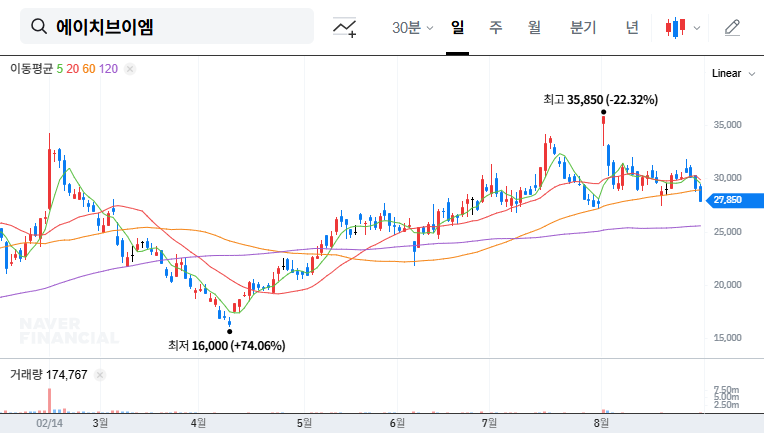
    KB Asset Management Increases Stake in HVM: Investment Analysis and Outlook 대표 차트 이미지


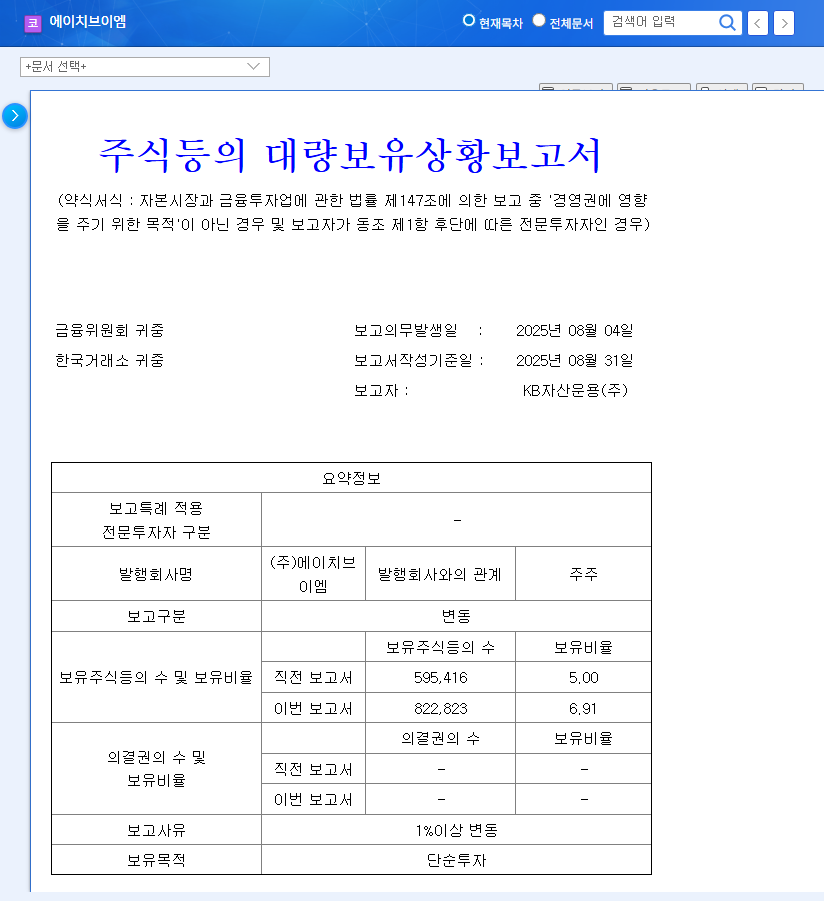
    KB Asset Management Acquires 6.91% Stake in HVM: What Happened?

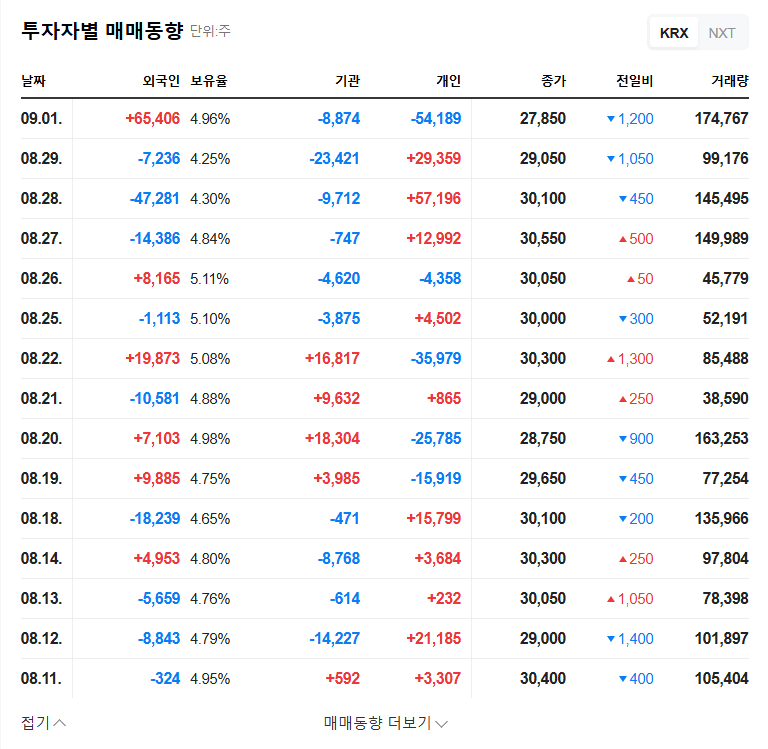
    KB Asset Management increased its stake in HVM from 5.00% to 6.91% through on and off-market purchases between August 21 and 29, 2025. While the stated purpose is simple investment, the market sees it as a factor raising expectations for HVM’s growth potential.

    Why the Stake Increase Matters: HVM’s Growth Potential

    HVM supplies high-value-added metal materials essential for future growth industries such as aerospace, semiconductors, and displays. According to the 2025 semi-annual report, HVM is solidifying its growth foundation by increasing orders and diversifying its customer base based on its advanced materials technology. It is also expanding production capacity through the construction of a second plant and facility investment.

    Impact of KB’s Investment on the Market

    • Improved Supply and Demand, Strengthened Investor Sentiment: Institutional investors’ buying can attract market attention and provide upward momentum for stock prices.
    • Reinforced Positive Outlook: KB Asset Management’s investment can be interpreted as a positive assessment of HVM’s growth potential.
    • Enhanced Long-Term Stability: KB Asset Management’s increased influence can enhance management transparency and stability.

    Action Plan for Investors

    • Short-Term Investors: Focus on the continuation of improved supply and demand and short-term stock price trends.
    • Long-Term Investors: Closely monitor the implementation of HVM’s growth strategies, earnings improvement, and securing orders in key industries.

    Macroeconomic risks such as global economic slowdown, potential interest rate hikes, exchange rate fluctuations, raw material price volatility, and HVM’s profitability management should also be considered when investing. Before making an investment decision, carefully consider your investment propensity and goals.


    FAQ

    Why is KB Asset Management’s increased stake in HVM significant?

    KB Asset Management’s increased stake can be interpreted as a positive market assessment of HVM’s growth potential. Investments from institutional investors generally increase a company’s value and can provide upward momentum for stock prices.

    What is HVM’s main business?

    HVM produces high-value-added metal materials used in advanced industries such as aerospace, semiconductors, and displays. They possess differentiated competitiveness based on vacuum melting technology.

    What are the key considerations when investing in HVM?

    Investors should continuously monitor macroeconomic risks, including a potential global economic slowdown, interest rate hikes, exchange rate fluctuations, raw material price volatility, and HVM’s profitability management.


    KB Asset Management Increases Stake in HVM: Investment Analysis and Outlook 관련 이미지
    KB Asset Management Increases Stake in HVM: Investment Analysis and Outlook 관련 이미지


  • HVM Stock Forecast: Jae-young Choi Acquires 11.93% Stake, What’s Next for Management?

    HVM Stock Forecast: Jae-young Choi Acquires 11.93% Stake, What's Next for Management? 대표 차트 이미지

    1. Jae-young Choi Acquires 11.93% of HVM: What Happened?

    On September 1, 2025, Jae-young Choi disclosed the acquisition of 1,420,000 shares (11.93%) of HVM. While reported as a new holding due to the dissolution of a special relationship, the stated purpose of ‘management influence’ has captured market attention.

    2. Why Does This Matter? Potential Management Changes and Investment Strategies

    Choi’s stake acquisition is interpreted as a strategic move towards management participation, not merely an investment. This suggests potential changes in HVM’s management strategies and potential increases in corporate value, making it crucial information for investors. While short-term stock price momentum is expected due to anticipated management premiums, the long-term perspective hinges on Choi’s management capabilities and their impact on improving HVM’s fundamentals.

    3. Understanding HVM: Fundamental and Market Analysis

    HVM is a prominent player in the advanced metals manufacturing sector, supplying essential materials to future growth industries such as aerospace, semiconductors, and displays. The company faces both opportunities and challenges, with positive factors like strengthening technological competitiveness and expanding production capacity, alongside the need for improved profitability and inventory management. The high growth potential of the advanced metals market presents opportunities for HVM, while intensifying competition and macroeconomic variables require continuous monitoring.

    4. Action Plan for Investors

    • Monitor HVM’s management strategy announcements and performance changes, verifying whether Choi’s participation translates into tangible fundamental improvements.
    • Assess the transparency of information disclosure regarding management changes and prepare for macroeconomic and market volatility.

    Frequently Asked Questions

    Who is Jae-young Choi?

    Jae-young Choi is the individual who acquired the 11.93% stake in HVM, stating ‘management influence’ as the purpose of the investment. Further information is needed regarding their specific background and relationship with HVM.

    What is HVM’s main business?

    HVM manufactures advanced metal materials, producing high-value-added metals required for various industries, including aerospace, semiconductors, and displays.

    What are the key considerations when investing in HVM?

    Investors should consider whether Choi’s management participation leads to actual fundamental improvements, the transparency of information disclosure related to management changes, and preparedness for macroeconomic and market volatility.

    HVM Stock Forecast: Jae-young Choi Acquires 11.93% Stake, What's Next for Management? 관련 이미지
    HVM Stock Forecast: Jae-young Choi Acquires 11.93% Stake, What's Next for Management? 관련 이미지