This comprehensive S&D Co., Ltd stock analysis unpacks the recent news of Tiger Asset Management significantly reducing its stake in the company (ticker: 260970). The move, which saw their holdings drop from 5.08% to 3.12%, has understandably raised questions among investors about the potential impact on the S&D stock price and its underlying value. Is this institutional sell-off a red flag signaling deeper issues, or is it merely short-term market noise? We will explore the company’s fundamentals, growth prospects, and the potential fallout from this key event to provide investors with a clear, data-driven perspective.
When a major institutional holder like Tiger Asset Management divests a significant portion of its shares, the market pays close attention. It often prompts a re-evaluation of a company’s financial health and future trajectory.
This article provides an in-depth look at S&D Co., Ltd’s current situation, helping you understand the full context before making any investment decisions. We will cover the specifics of the sale, analyze the company’s financial health, and provide an actionable outlook for current and prospective shareholders.
The Tiger Asset Management Divestment: A Closer Look
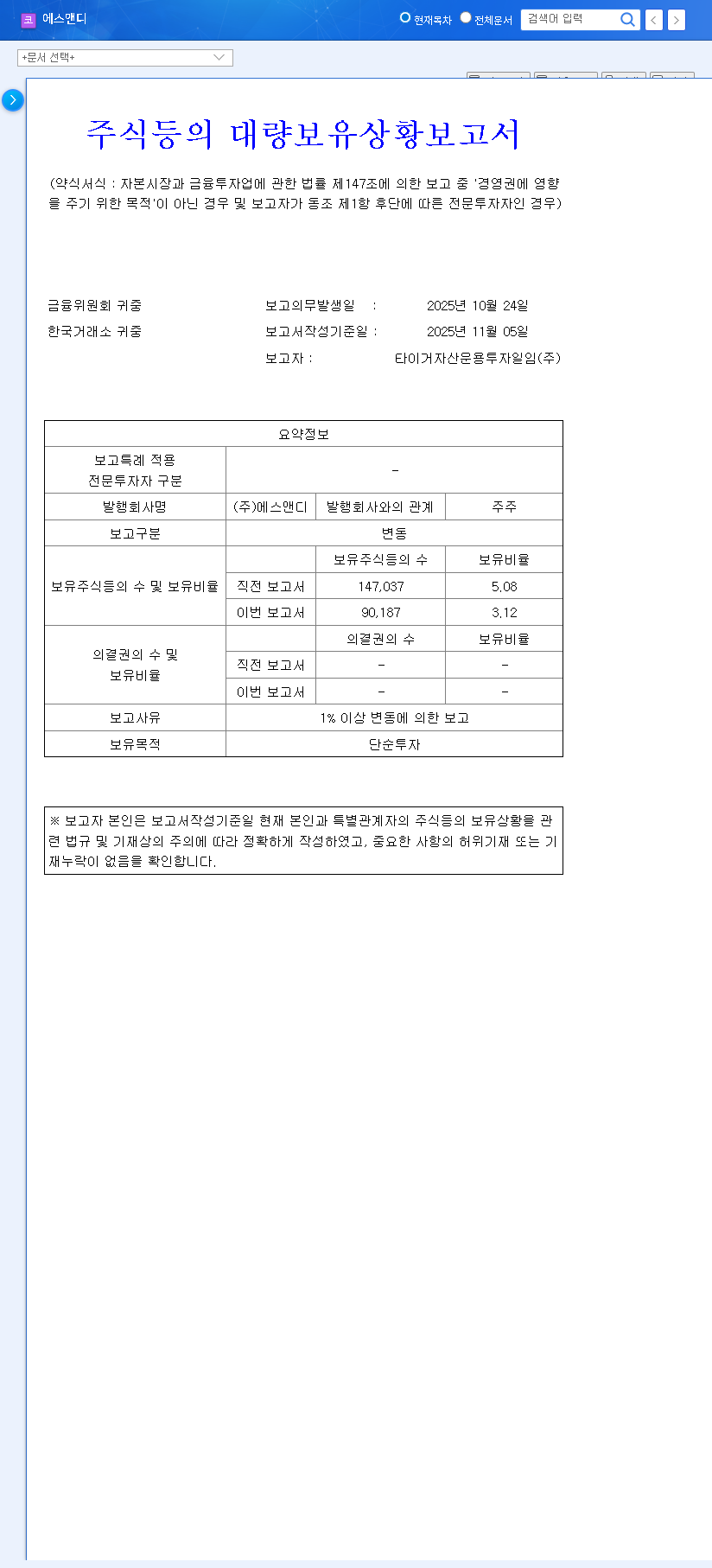
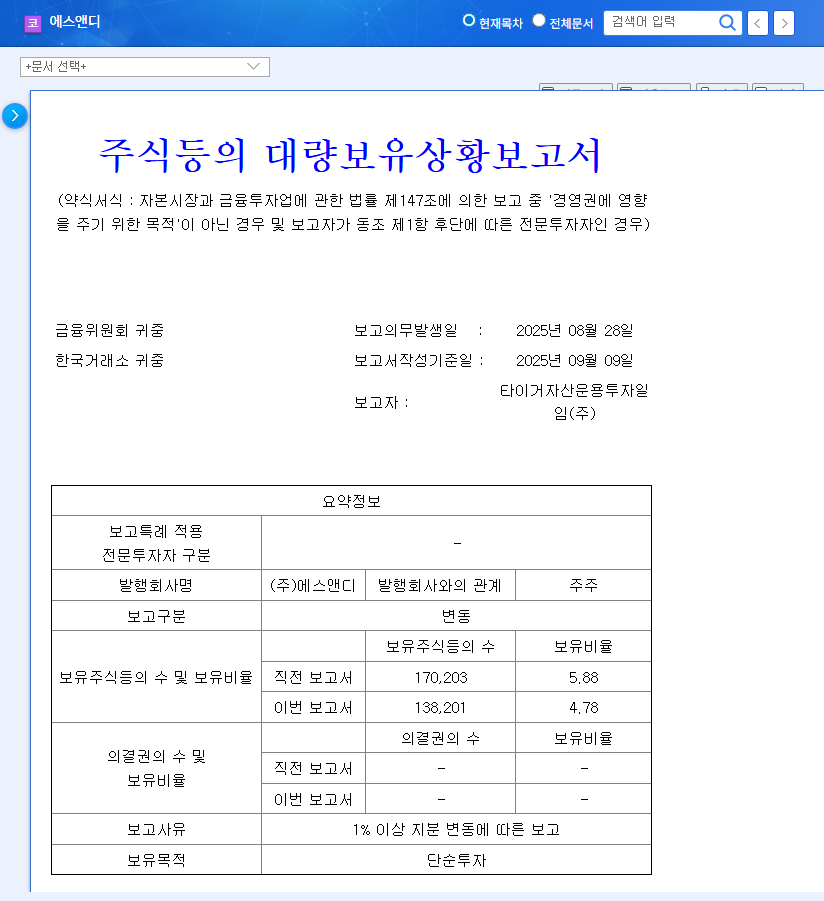
The core event triggering this analysis is the stake sale by Tiger Asset Management. Understanding the details is the first step in assessing its impact. The sale was not a minor portfolio adjustment; it represents a substantial reduction in their position.
Key Details of the Transaction
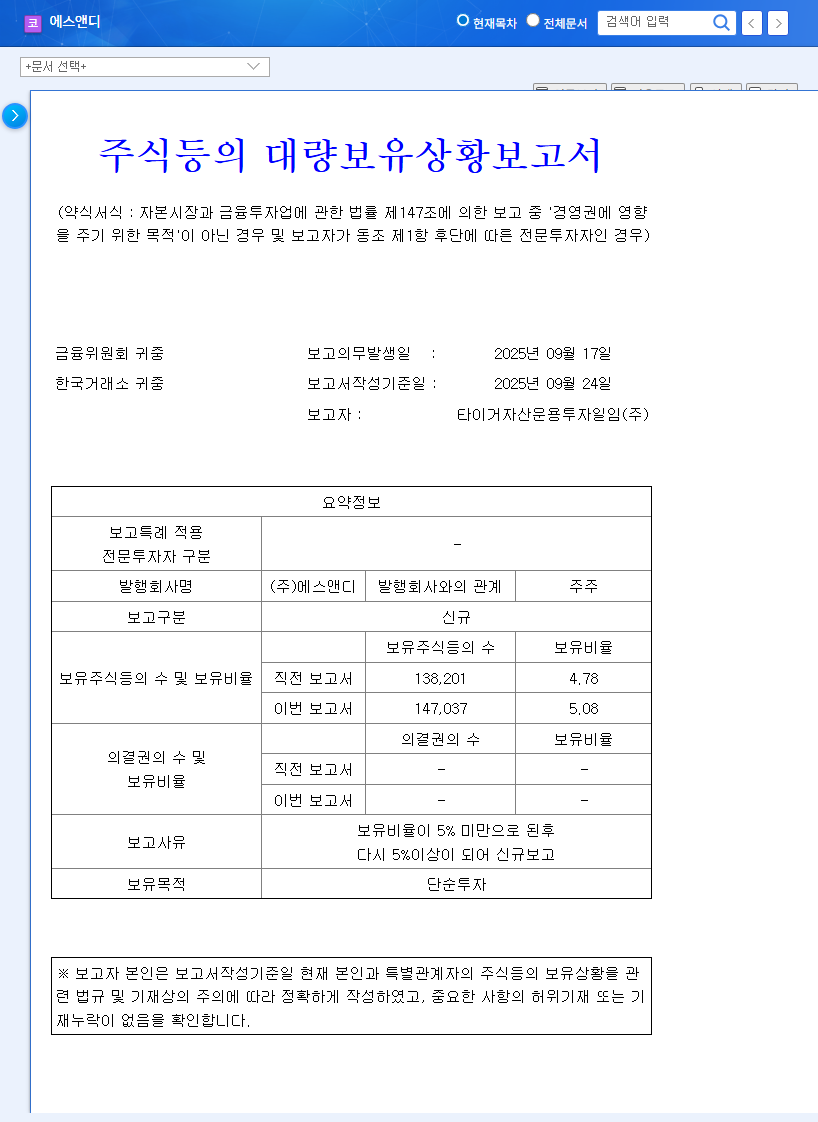
- •Previous Holding: 5.08%
- •Current Holding: 3.12%
- •Stated Purpose: Originally held for ‘simple investment’ purposes.
- •Transaction Period: Primarily executed via market sales between October 30 and November 5, 2025.
- •Disclosure Trigger: Mandatory reporting was required due to the change in shareholding exceeding 1%. You can view the Official Disclosure here.
Such a sale can be interpreted as a bearish signal, suggesting that a well-informed institutional investor has lost confidence in the company’s short-to-medium term prospects. This action invariably influences broader market sentiment and requires a deeper look into the S&D fundamentals.
In-Depth S&D Co., Ltd Stock Analysis: Fundamentals Under the Microscope
To understand if Tiger Asset Management’s move is justified, we must analyze S&D’s core business and financial health. A company’s stock price may fluctuate on news, but its long-term value is rooted in its fundamentals. For more on this, consider reading a Guide to Analyzing Corporate Fundamentals.
Financial Performance: A Mixed Picture
S&D’s recent financial performance presents a conflicting narrative. While the first half of 2025 showed impressive growth, the longer-term trend raises significant concerns.
- •H1 2025 Positives: The company reported a 40% year-over-year revenue increase and a 37% rise in operating profit. Crucially, operating cash flow turned positive, indicating improved operational efficiency.
- •Long-Term Concerns: Despite this recent surge, both revenue and operating profit have been on a downward trajectory since late 2022. Full-year forecasts for 2025 predict an overall revenue decrease and a shift to an operating loss. This suggests the H1 performance may not be sustainable.
Business Structure and Growth Initiatives
S&D’s revenue is heavily concentrated, with over 92% coming from general functional food materials. While this specialization can be a strength, it also introduces risk. To counter this, the company is actively pursuing new growth drivers:
- •Health Functional Foods: Acquiring new certifications, such as for Ecklonia cava extract, signals a push into higher-margin health products.
- •Infrastructure Investment: The completion of a new factory, backed by a 17 billion KRW investment, significantly boosts production capacity and signals long-term confidence from management.
Projected Impact on the S&D Stock Price
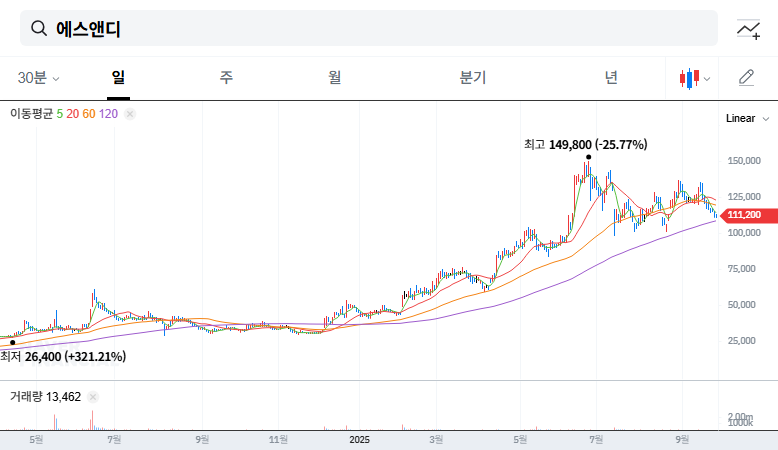
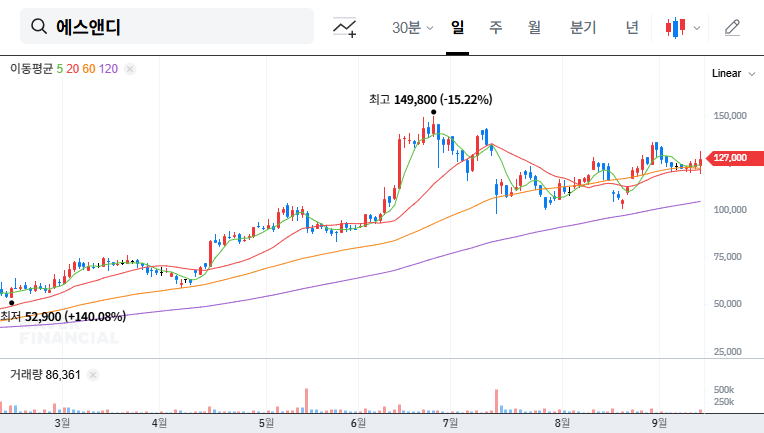
The sale by Tiger Asset Management is likely to have immediate and lasting effects on the S&D stock price.
Short-Term Outlook: Increased Volatility and Selling Pressure
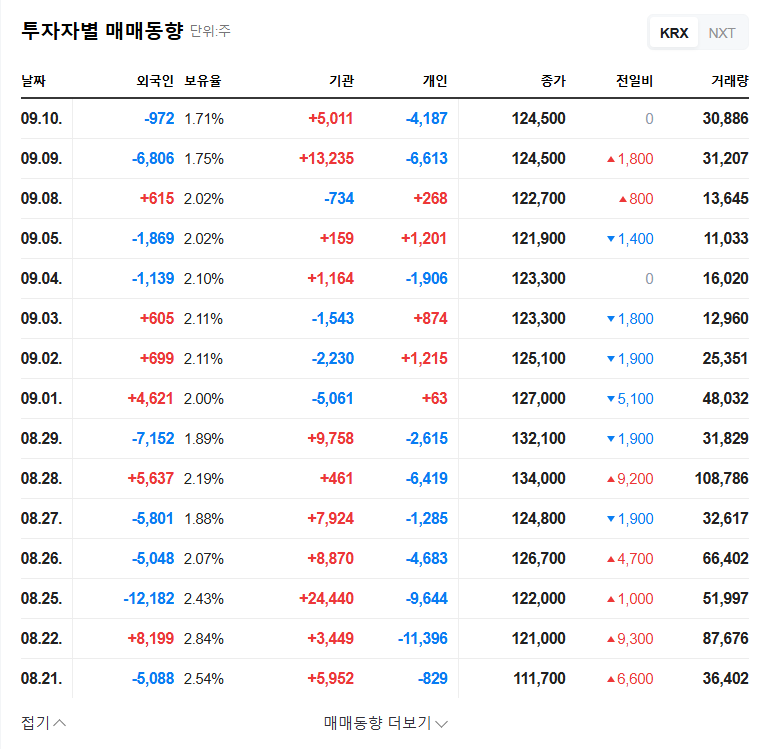
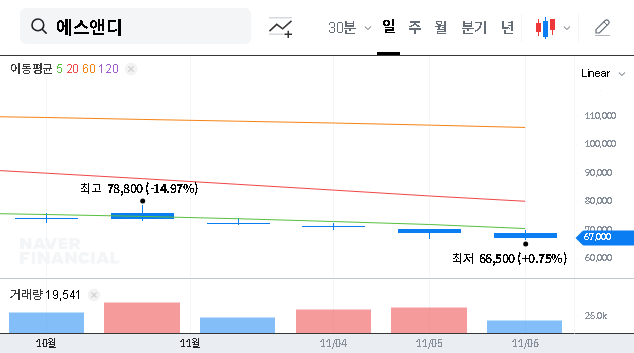
In the short term, the market’s reaction is often driven by sentiment. A large institutional sell-off creates a supply-demand imbalance, which typically pushes prices down. Retail investors may follow suit, fearing that Tiger Asset Management possesses negative information, thus amplifying the downward pressure. For more on market psychology, see analysis from authoritative sources like Bloomberg.
Long-Term Outlook: A Return to Fundamentals
Over the long term, the stock price will realign with the company’s actual performance. The critical question is whether the deteriorating profitability trend is a temporary blip or a systemic issue. The success of their new facility and expansion into health functional foods will be the ultimate determinant of long-term value. Tiger’s exit could be a preemptive move based on a negative assessment of this very turnaround potential.
Conclusion: An Action Plan for Investors
The S&D Co., Ltd stock analysis reveals a company at a crossroads. While H1 2025 results were positive, they are overshadowed by a concerning long-term financial decline and a significant vote of no-confidence from a major institutional investor. The S&D stock price will likely face short-term headwinds.
Investors should exercise caution. Prudent decision-making requires careful monitoring of the following factors:
- •Monitor Q3 and Q4 Earnings: Upcoming financial reports are critical. Look for evidence that the revenue and profit decline is reversing and that the H1 2025 performance was not an anomaly.
- •Track New Business Performance: Pay close attention to announcements regarding the output of the new factory and the market reception of new health functional food products.
- •Watch for Further Institutional Moves: Keep an eye on any changes in holdings by other major investors, as this can indicate a broader shift in institutional sentiment.