Tag: 156100

  • (156100) L&K Biomed Stock: Full Investment Analysis After Tiger Asset Management Sale

    (156100) L&K Biomed Stock: Full Investment Analysis After Tiger Asset Management Sale

    A significant institutional sell-off can send ripples of uncertainty through the market, leaving investors wondering if it’s a sign of trouble or a strategic shift. This is the exact situation facing L&K Biomed (156100), a prominent player in the spinal implant market. Recently, major investor Tiger Asset Management reduced its holdings, prompting a closer look at the company’s health. This comprehensive L&K Biomed investment analysis will dissect this event, evaluate the company’s core fundamentals, and provide a clear outlook for potential and current investors.

    We’ll move beyond the headlines to explore L&K Biomed’s robust sales growth, promising new ventures, and the financial headwinds that demand careful monitoring. Is the market overreacting, or are there genuine concerns investors should heed? Let’s find out.

    The Catalyst: Tiger Asset Management’s Stake Reduction

    On November 13, 2025, the market took note as Tiger Asset Management filed a mandatory disclosure revealing a change in its holdings of L&K Biomed stock. According to the Official Disclosure (DART Report), the investment firm’s position changed as follows:

    • Previous Holding: 5.82%
    • Current Holding: 4.41%
    • Change: A reduction of 1.41% (107,638 shares) through open market sales.

    Crucially, the filing stated the reason for holding was ‘simple investment purposes’. This suggests the sale is more likely part of a portfolio rebalancing strategy or profit-taking rather than a bearish verdict on L&K Biomed’s fundamental value. While such a sale can create short-term selling pressure on the L&K Biomed stock price, it doesn’t automatically signal a decline in the company’s long-term prospects. To understand the full picture, we must look at the company itself.

    Analyzing L&K Biomed’s Financial Health & Growth Prospects

    A balanced investment decision requires looking at both the strengths and weaknesses. L&K Biomed presents a compelling case with clear positive drivers, but also notable challenges that require strategic resolution.

    The Bull Case: Strong Fundamentals and New Ventures

    • Impressive Sales Growth: In the first half of 2025, sales surged to KRW 202,133 million, a 23.9% year-over-year increase. This growth is anchored by its core ‘Thoraco Lumbar’ spinal implant segment and a dominant international footprint, with 97% of sales originating overseas, primarily in the Americas.
    • New Growth Engine: The company is strategically expanding into the thoracic implant sector with its ‘Pectus Bar System’. Having already secured US FDA and Thailand FDA approvals, L&K Biomed is poised to generate new revenue streams from the lucrative US market starting in the second half of 2025.
    • Strengthened Financials: The company has made progress in improving its balance sheet. Total debt decreased by 8.1%, largely due to reductions in convertible bonds, which improved the overall debt ratio.

    The Bear Case: Areas Requiring Urgent Attention

    Despite the positive momentum, several financial metrics warrant caution:

    • Negative Operating Cash Flow: A critical indicator of financial health, operating cash flow turned to a net outflow in H1 2025. This means the core business operations are currently using more cash than they are generating, a situation that needs to be reversed. To learn more about this metric, you can review this guide to cash flow analysis.
    • Profitability Challenge: The company reported a net loss of KRW 3 billion in the first half of the year. Sustaining growth requires a clear path back to profitability.
    • Asset Management: Efficient management of inventory and accounts receivable is crucial to improving cash flow and overall operational efficiency.

    The central challenge for L&K Biomed is to translate its impressive top-line sales growth into bottom-line profitability and positive cash flow. Its future stock performance hinges on this execution.

    Macroeconomic Factors and Investment Outlook

    With 97% of its sales from overseas, L&K Biomed is highly sensitive to global economic trends, especially currency fluctuations. The strengthening of the US Dollar against the Korean Won (from 1,354.00 in June to 1,466.60 in November 2025) provides a significant tailwind, as it boosts the value of US-based revenue when converted back to KRW. The company estimates a 10% rise in the USD can increase its operating profit by KRW 574.26 million.

    Meanwhile, stable interest rates in the US and Korea, along with steady oil and shipping costs, suggest a relatively neutral external cost environment. For a broader view, consider our 2025 Medical Device Market Overview.

    Conclusion: A Smart Investment Strategy for L&K Biomed Stock

    L&K Biomed stands at a crossroads. It has undeniable long-term growth potential fueled by a strong market position and new product innovation. However, its short-term financial weaknesses, particularly in cash flow and profitability, cannot be ignored. The Tiger Asset Management sale appears to be market noise rather than a fundamental red flag.

    Investors should focus on the following key points going forward:

    • The successful rollout and revenue generation of the Pectus Bar System in the US.
    • Quarterly earnings reports showing a trend toward positive operating cash flow.
    • Management’s execution of specific strategies to improve profitability.

    Ultimately, investing in L&K Biomed requires a belief in its growth story while closely monitoring its ability to navigate current financial challenges. Prudent investors will weigh the long-term potential against these short-term risks.
    (156100) L&K Biomed Stock: Full Investment Analysis After Tiger Asset Management Sale 관련 이미지
  • (156100) L&K BIOMED CB Conversion: A Deep Dive on Stock Dilution & Future Growth

    (156100) L&K BIOMED CB Conversion: A Deep Dive on Stock Dilution & Future Growth

    The recent L&K BIOMED CB conversion has become a major talking point for investors. L&K BIOMED CO., LTD. announced the exercise of convertible bond (CB) conversion rights, a financial maneuver that, while common, often creates uncertainty. The impending listing of over 240,000 new shares understandably raises concerns about short-term stock dilution. However, it also serves as a strong signal of positive company valuation, as the current stock price is trading well above the bond’s conversion price. This comprehensive analysis will explore the nuances of this event, dissecting the company’s fundamentals and the macroeconomic factors at play to provide investors with a clear, actionable outlook.

    While the L&K BIOMED CB conversion may introduce short-term volatility, the company’s long-term trajectory hinges on fundamental improvements in profitability and strategic execution in its high-growth markets.

    Event Overview: Deconstructing the CB Conversion

    What Exactly Happened?

    On October 27, 2025, L&K BIOMED (156100) confirmed that holders of its convertible bonds were exercising their right to convert that debt into equity. According to the Official Disclosure filed on DART, this action will result in the issuance of 245,313 new common shares. These shares, scheduled for listing on November 20, 2025, represent approximately 1.18% of the company’s market capitalization at the time of the announcement. The established conversion price is 6,371 KRW per share.

    Why Is This Happening Now?

    The primary catalyst for this conversion is a simple but powerful financial incentive. The market price of L&K BIOMED stock (9,680 KRW) is substantially higher—by over 50%—than the conversion price (6,371 KRW). This significant premium creates a compelling arbitrage opportunity for bondholders to convert their debt into more valuable stock and realize an immediate profit. From a broader perspective, this is a bullish indicator, suggesting that the market’s valuation of the company has grown considerably since the bonds were first issued. A convertible bond is a hybrid security that offers investors features of both debt and equity. For a deeper understanding, you can learn more about their mechanics from a high-authority source like Investopedia.

    Analyzing the Impact on L&K BIOMED Stock

    The convertible bond impact can be bifurcated into immediate, short-term effects and more crucial mid-to-long-term considerations tied to the company’s underlying health.

    Short-Term: Navigating Dilution and Sentiment

    The most immediate consequence is the potential for stock dilution. An increase in the number of outstanding shares means that the company’s earnings are spread thinner, which can negatively affect Earnings Per Share (EPS).

    • Price Pressure: The introduction of 1.18% new shares can create an overhang, potentially leading to downward pressure on the stock price as the market absorbs the new supply.
    • Investor Psychology: Existing shareholders may react cautiously, concerned about the dilution of their ownership stake. This can temporarily weaken investor sentiment.
    • Profit-Taking: The converting bondholders are likely to sell some of their newly acquired shares to lock in profits, adding to the selling pressure in the near term.

    Mid-to-Long-Term: Fundamentals are Paramount

    While the capital structure changes, the L&K BIOMED CB conversion has a limited direct effect on the company’s core business operations. The long-term stock performance will be dictated by its ability to generate profits and execute its growth strategy. A critical point of concern is the reported net loss of 30.14 billion KRW in the first half of 2025. This was attributed to rising SG&A expenses and other costs. Future stock appreciation depends heavily on management’s ability to control these costs and improve profitability. On the other hand, L&K BIOMED has several powerful growth drivers:

    • Strong Overseas Growth: Sales from the Americas have been robust, showcasing strong international demand.
    • Market Potential: The global spinal implant market is a growing sector, providing a favorable tailwind.
    • Innovation Pipeline: With FDA-approved products and expansion into new areas like thoracic implants, the company demonstrates strong R&D capabilities. For more detail, you can read our complete overview of L&K BIOMED’s product pipeline.

    Investor Action Plan & Strategic Outlook

    Given the circumstances, a measured and informed approach is essential. Investors should consider the following strategic points:

    • Monitor Profitability Metrics: Pay close attention to upcoming quarterly earnings reports. Look for signs of improving margins, effective cost controls, and tangible revenue from new business segments.
    • Assess Further Dilution Risk: Keep an eye on the company’s balance sheet and financial statements for any indication of future convertible bond issuances or other dilutive financing activities.
    • Track Macroeconomic Factors: As a global company, L&K BIOMED is exposed to currency fluctuations. Monitor the USD/KRW exchange rate and global interest rate trends, as they can impact both revenue and investor sentiment.

    In conclusion, the L&K BIOMED CB conversion is a classic case of short-term pain for potential long-term gain. While the immediate stock dilution is a valid concern, the event itself underscores the market’s growing confidence in the company’s value. Prudent investors should look past the near-term noise and focus on the fundamental execution that will truly drive the value of their L&K BIOMED stock over time.

    (156100) L&K BIOMED CB Conversion: A Deep Dive on Stock Dilution & Future Growth 관련 이미지
  • (156100) L&K BIOMED Conversion Claim Exercise: A Deep Dive for Investors

    (156100) L&K BIOMED Conversion Claim Exercise: A Deep Dive for Investors

    Investors in L&K BIOMED CO., LTD. are closely watching the recent announcement of a L&K BIOMED conversion claim exercise. This corporate action, which involves issuing new shares from convertible bonds, has significant implications for both the company’s stock price and its long-term financial stability. Understanding this event is not just important; it’s critical for making informed investment decisions.

    This comprehensive guide will break down the mechanics of this conversion exercise, analyze its potential market impact, explore the effects on L&K Biomed’s financial health, and provide a strategic action plan for current and prospective shareholders. We’ll move beyond the headlines to give you the depth you need.

    Decoding the L&K BIOMED Conversion Claim Exercise

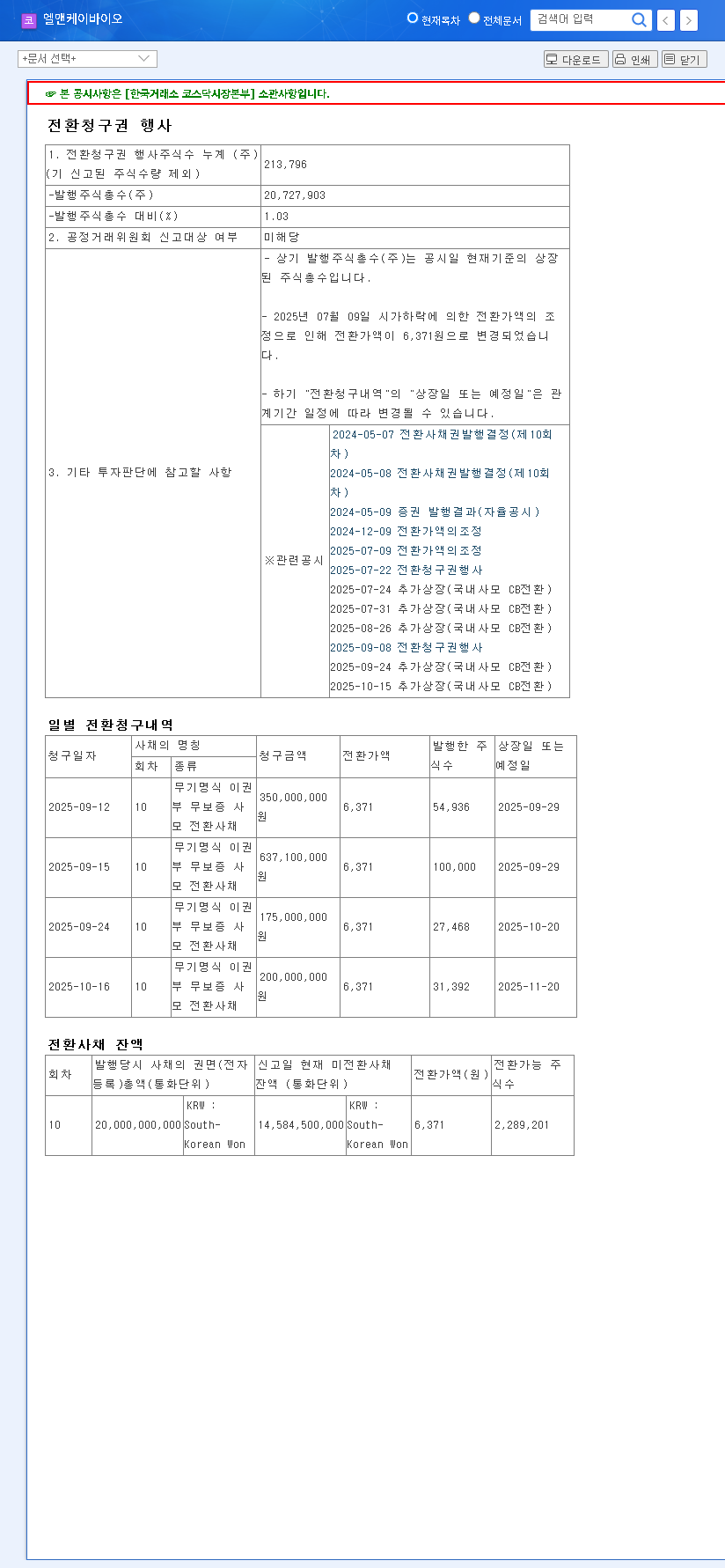
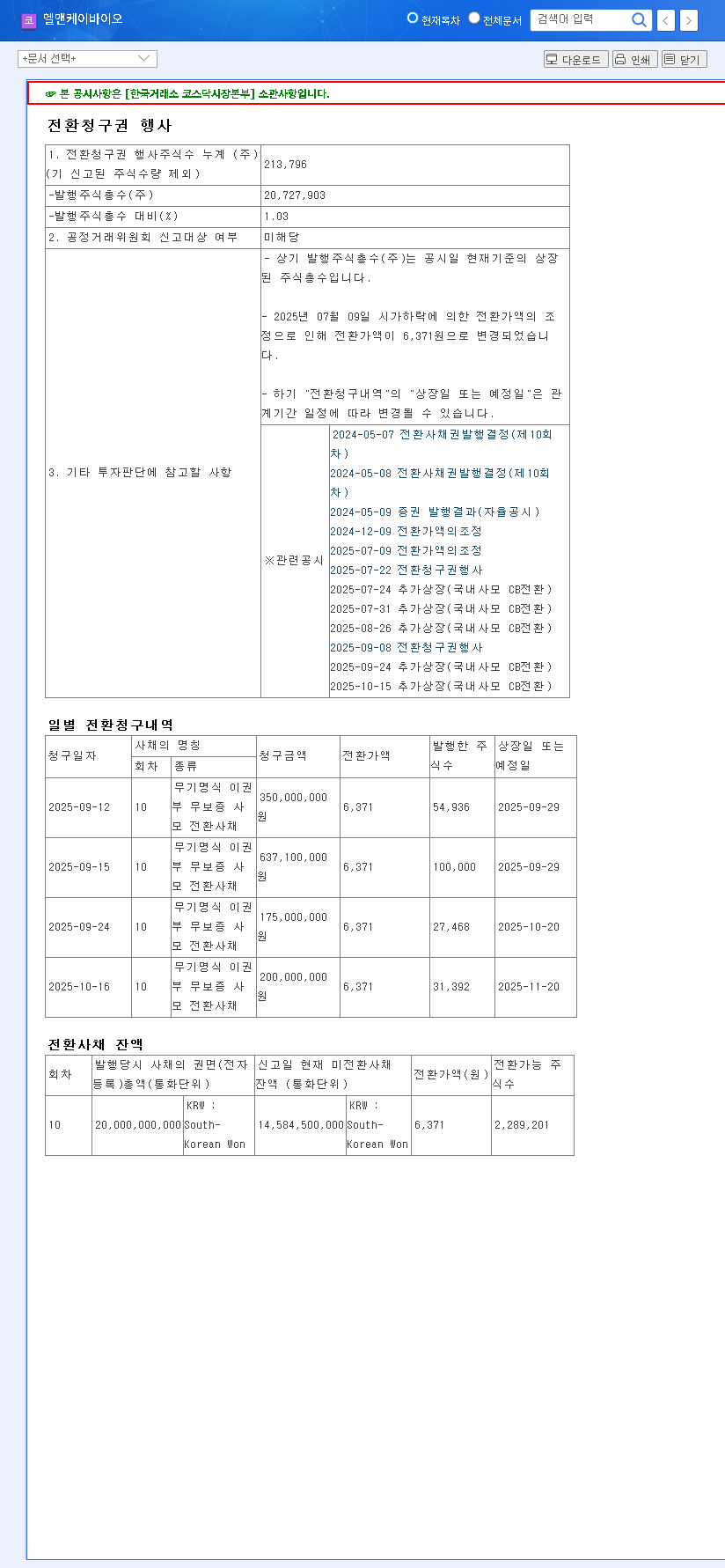
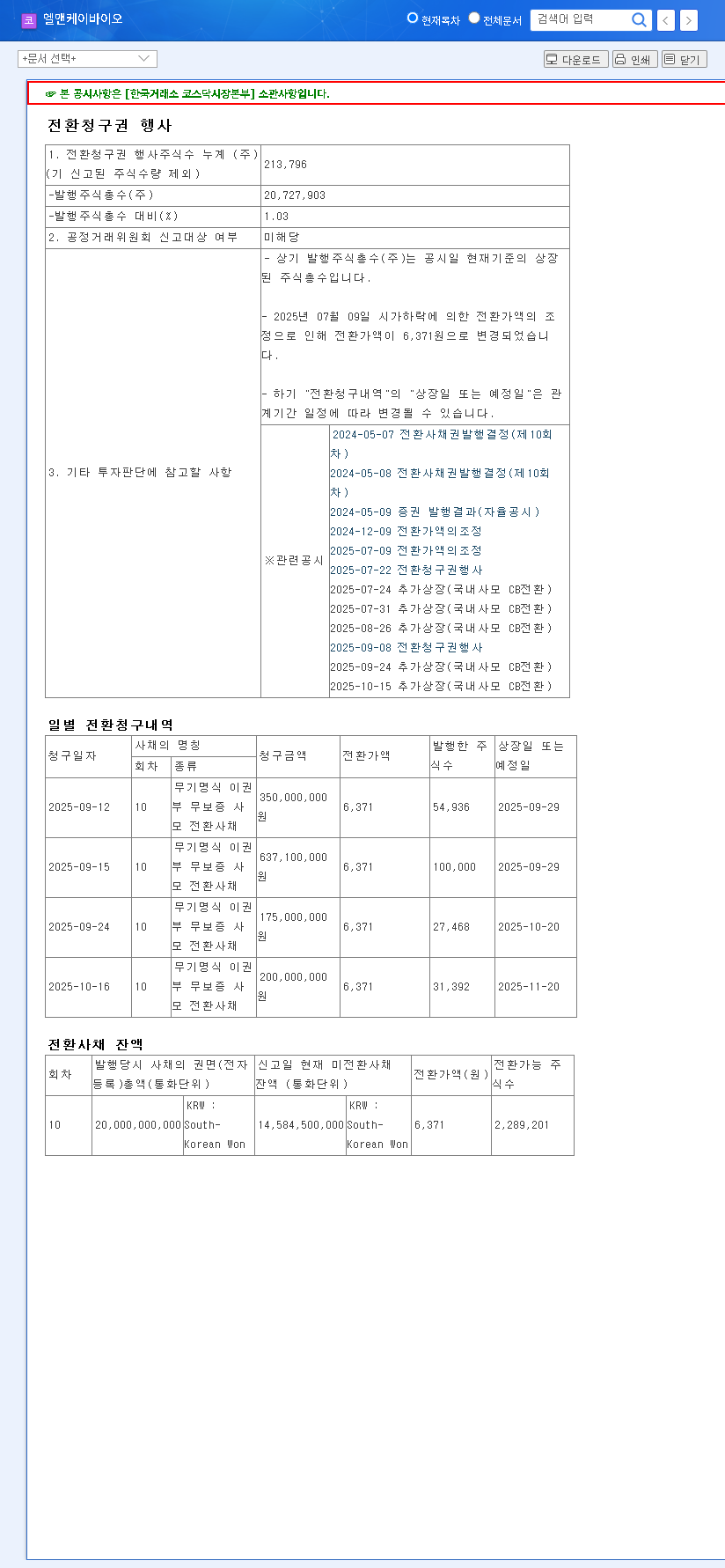
    On October 16, 2025, L&K BIOMED officially disclosed the details of a conversion claim exercise. In simple terms, this means that holders of the company’s convertible bonds (CBs) are choosing to swap their debt instruments for company stock. The key details from the Official Disclosure (DART) are as follows:

    • Total New Shares Issued: 213,796 shares
    • Percentage of Market Cap: Approximately 1.03%
    • Conversion Price: 6,371 KRW per share
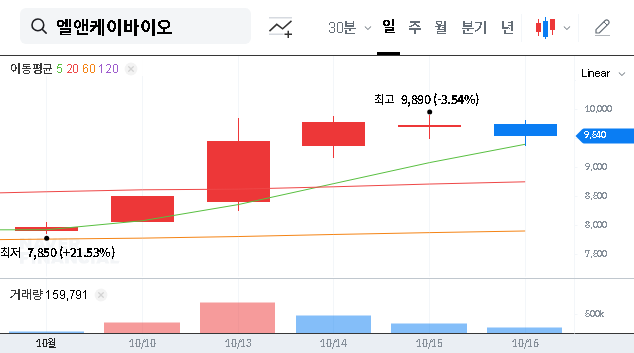
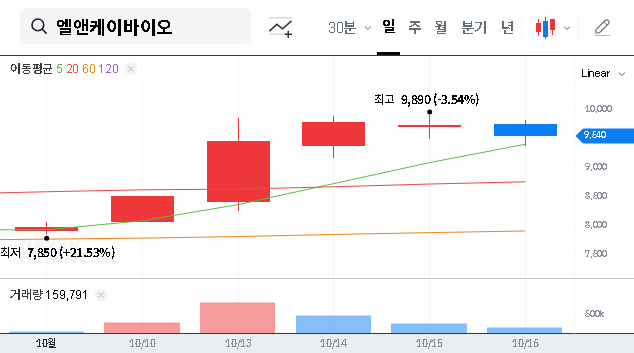
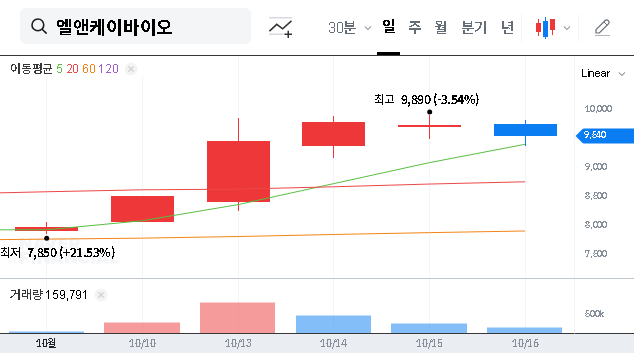
    • Stock Price (at time of announcement): 9,540 KRW

    Why Is This Happening Now? The Key Motivations

    Two primary forces are driving this conversion. First, for the bondholders, it’s a matter of profitability. With a conversion price of 6,371 KRW and a market price of 9,540 KRW, there is a substantial, immediate profit to be made by converting the bonds to stock and selling on the open market. This arbitrage opportunity is a powerful incentive.

    Second, for L&K BIOMED, this action significantly strengthens its financial structure. Convertible bonds are carried on the balance sheet as debt. By converting them to equity (stock), the company reduces its debt-to-equity ratio, making it appear financially healthier and more stable to potential future investors and lenders. This is a strategic move to de-leverage the balance sheet without needing new cash.

    While the issuance of new shares can cause short-term market anxiety, the underlying financial benefit is a stronger, less indebted company, which is a positive signal for long-term value.

    Investor Impact Analysis: Stock Price and Financials

    1. The Short-Term: Share Dilution and Selling Pressure

    The most immediate concern for existing shareholders is share dilution. When new shares are created, the total number of outstanding shares increases, meaning each existing share now represents a slightly smaller percentage of ownership. With 213,796 new shares entering the market (a 1.03% increase), there is a mathematical dilution of value. This can create downward pressure on the stock price as the market absorbs the new supply. Furthermore, since bondholders can sell their newly acquired shares for a profit, the market may experience increased selling volume, which could temporarily depress the L&K Biomed stock price.

    2. The Long-Term: A Healthier Balance Sheet

    Looking past the short-term market noise, the financial impact is positive. As debt is swapped for equity, L&K Biomed’s financial statements will show:

    • Reduced Debt: The liability associated with the convertible bonds is extinguished.
    • Increased Equity: The company’s capital base expands, improving its solvency ratios.
    • Enhanced Financial Flexibility: A stronger balance sheet can make it easier and cheaper to secure financing for future growth projects.

    Strategic Action Plan for L&K BIOMED Investors

    Reacting to this news requires a measured approach. Rather than focusing solely on the dilution, investors should conduct deeper due diligence. For more background on these types of financial instruments, you can read our guide to understanding convertible bonds.

    Assess Core Business Fundamentals

    Is L&K Biomed’s core business in the medical device sector (specifically spinal implants) growing? Analyze their product pipeline, competitive advantages, and market share. Strong fundamentals can easily outweigh the minor impact of a 1% dilution over the long term. Research recent earnings reports and analyst commentary from sources like Bloomberg or Reuters for a broader market perspective.

    Review Overall Financial Health

    Look beyond the debt reduction from this specific event. Examine the company’s revenue growth, profit margins, and cash flow trends over the past several quarters. A company with consistent growth and healthy cash flow is better positioned to thrive, making this conversion a footnote in a larger success story.

    Conclusion: A Long-Term Perspective is Key

    The L&K BIOMED conversion claim exercise presents a classic case of short-term risk versus long-term benefit. While the immediate effects of share dilution and potential selling pressure are real concerns, they are balanced by the significant positive of a deleveraged and financially more robust company. Prudent investors should avoid knee-jerk reactions to temporary stock fluctuations and instead focus their energy on evaluating the intrinsic value and long-term growth trajectory of L&K BIOMED’s underlying business. This strategic financial maneuver, when viewed in the context of the company’s overall health and strategy, is likely a net positive for its future.

    (156100) L&K BIOMED Conversion Claim Exercise: A Deep Dive for Investors 관련 이미지
  • L&K Biomed’s Warrant Exercise: Impact Analysis and Investment Strategies


    L&K Biomed's Warrant Exercise: Impact Analysis and Investment Strategies 대표 차트 이미지


    Understanding L&K Bio’s Warrant Exercise

    L&K Bio announced on September 8, 2025, the exercise of warrants for 397,173 shares, representing 1.97% of its total outstanding shares. The exercise price is ₩6,371, and these shares are scheduled to be listed on September 29 and August 29, 2025, respectively. Warrants give the holder the right to convert them into shares under specific conditions, leading to an increase in the total number of L&K Bio’s outstanding shares.

    Impact on Stock Price

    • Short-Term Impact: The increased number of shares could lead to a dilution effect, potentially lowering the stock price. The current stock price (₩9,220) is higher than the exercise price (₩6,371), increasing the likelihood of profit-taking and potentially creating downward pressure.
    • Long-Term Impact: The decrease in convertible bond liabilities is positive for the company’s financial structure. L&K Bio’s strong fundamentals (revenue growth, return to profitability, new business ventures) could drive long-term growth.

    Key Investment Considerations

    • Timing of the listing of the new shares and overall market conditions
    • Spread between the current stock price and the warrant exercise price
    • Changes in L&K Bio’s fundamentals (earnings, new business performance)
    • Macroeconomic environment (interest rates, exchange rates)

    Investment Strategies for L&K Bio

    Given the potential for short-term volatility, a cautious approach is recommended. Long-term investors who believe in L&K Bio’s fundamentals and growth potential might consider any short-term price dips as buying opportunities. However, a thorough assessment of the factors mentioned above is crucial before making any investment decisions.


    FAQ

    What is a warrant exercise?

    A warrant exercise is when the holder of a warrant chooses to convert it into shares of the underlying company’s stock.

    Is a warrant exercise always bad for the stock price?

    Not necessarily. While the increased number of shares can cause short-term dilution, it can also improve the company’s financial structure in the long run.

    Is it a good time to invest in L&K Bio?

    The decision to invest is ultimately yours. Carefully consider both the short-term volatility and the long-term growth potential. Thoroughly analyze the company’s fundamentals, market conditions, and other relevant factors.


    L&K Biomed's Warrant Exercise: Impact Analysis and Investment Strategies 관련 이미지
    L&K Biomed's Warrant Exercise: Impact Analysis and Investment Strategies 관련 이미지


  • L&K Bio IR Analysis: Growth Momentum vs. Financial Risks, Investment Opportunity?

    L&K Bio IR Analysis: Growth Momentum vs. Financial Risks, Investment Opportunity? 대표 차트 이미지

    1. L&K Bio’s IR: What was discussed?

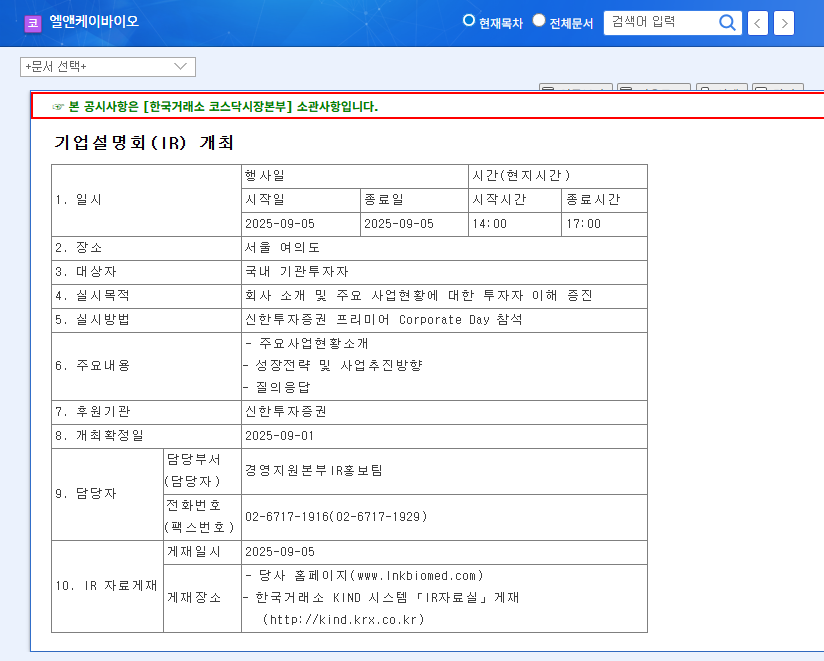
    L&K Bio’s IR meeting on September 5, 2025, covered key business updates including the US market entry plan for its Pectus chest implant, strong overseas revenue growth, and R&D investment status. The company also addressed investor concerns regarding continued net losses, convertible bonds, and raw material price volatility.

    2. Positive vs. Negative Factors: Where lies the investment opportunity?

    2.1. Positive Factors: Growth Momentum

    • Robust revenue growth: 97% of revenue from overseas markets demonstrates global competitiveness, particularly in the Americas, creating synergy expectations for Pectus’ US market entry.
    • New business momentum: FDA approval for Pectus sets the stage for full-scale US market entry, a key driver of future revenue growth.
    • Strong R&D capabilities: Continuous R&D investment reinforces technological competitiveness and fuels new pipeline development.

    2.2. Negative Factors: Challenges to overcome

    • Continued net loss: Increased R&D expenses contribute to the need for improved profitability.
    • High volume of convertible bonds: Potential stock dilution and interest expense burden.
    • Raw material price volatility: Requires effective cost management and supply stabilization strategies.

    3. Post-IR: What should investors do?

    The IR meeting highlighted both L&K Bio’s growth potential and risks. Investors should carefully review the presented plans for profitability improvement, convertible bond management, and new business performance. It’s crucial to monitor subsequent earnings announcements to confirm tangible improvements and assess the company’s strategies for navigating macroeconomic changes.

    Frequently Asked Questions

    What is L&K Bio’s main business?

    L&K Bio develops, manufactures, and sells medical devices, including spinal and chest implants.

    When will Pectus, the chest implant, launch in the US market?

    Pectus is expected to launch in the US market in the second half of 2025.

    What is L&K Bio’s financial status?

    While the company is experiencing robust revenue growth, it continues to report net losses, requiring improvements in profitability. The large volume of convertible bonds also raises concerns about potential stock dilution.

    L&K Bio IR Analysis: Growth Momentum vs. Financial Risks, Investment Opportunity? 관련 이미지
    L&K Bio IR Analysis: Growth Momentum vs. Financial Risks, Investment Opportunity? 관련 이미지