Tag: 101670

  • (101670) Hydrolithium Treasury Stock Disposal (101670): A Critical Analysis for Investors

    (101670) Hydrolithium Treasury Stock Disposal (101670): A Critical Analysis for Investors

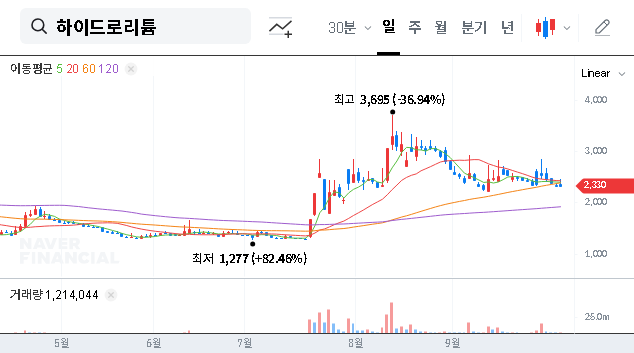
    The recent news concerning the Hydrolithium treasury stock disposal has sent ripples through the investment community. With Hydrolithium (101670) planning to sell shares worth 1.6 billion KRW, investors are at a crossroads: does this move signal a strategic step towards resolving liquidity issues, or is it a desperate measure that highlights deeper financial instability? This comprehensive Hydrolithium stock analysis will dissect the event, evaluate the company’s precarious financial health, and provide actionable investor guidance.

    The Official Announcement: What Happened?

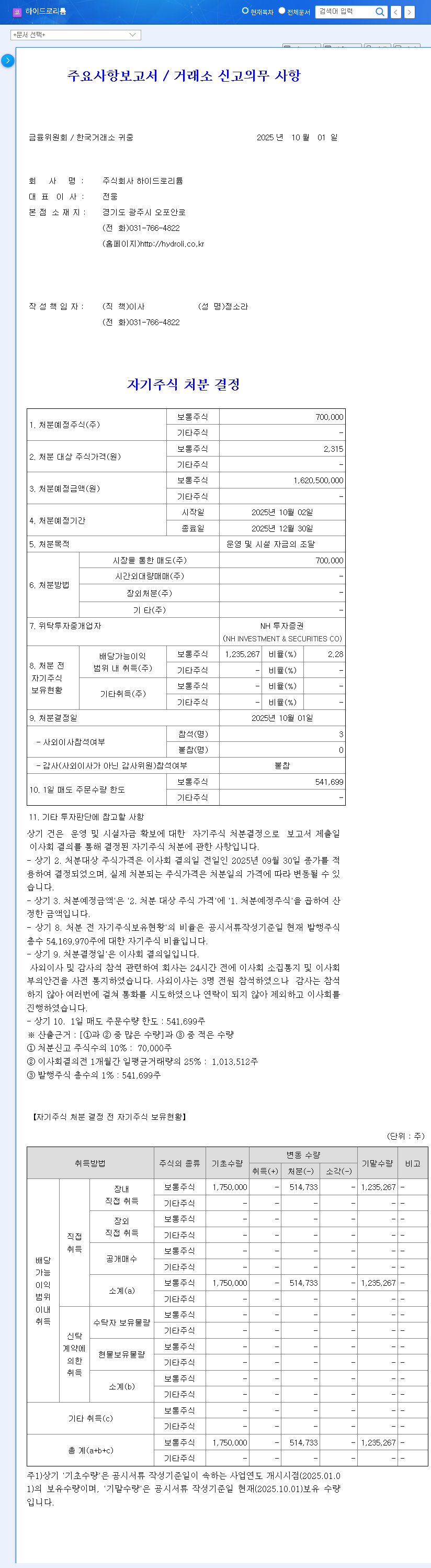
    On October 1, 2025, Hydrolithium formally announced its decision to dispose of a significant portion of its treasury shares. According to the company’s filing, the plan involves selling 700,000 common shares, which accounts for approximately 1.29% of the total outstanding shares. The transaction, facilitated by NH Investment & Securities, is expected to raise around 1.6 billion KRW, earmarked for securing essential operating and facility funds. You can view the complete details in the Official Disclosure (DART Source).

    While seemingly a standard corporate finance maneuver, this treasury share sale cannot be viewed in isolation. To grasp its true implications, one must examine the turbulent financial waters Hydrolithium is currently navigating.

    Unpacking the Financial Crisis: Why Now?

    Hydrolithium is in the midst of a strategic pivot, scaling down its legacy civil engineering materials business to focus on the high-growth secondary battery materials sector. The potential to produce high-quality lithium hydroxide is a compelling narrative. However, the company’s financial statements paint a grim picture that demands scrutiny.

    Key Financial Red Flags

    • Persistent Losses: The first half of 2025 saw a continuation of declining sales and significant operating losses, signaling a severe profitability crisis.
    • Weakening Balance Sheet: A rapidly increasing debt-to-equity ratio combined with dwindling cash reserves has critically weakened the company’s financial structure and liquidity.
    • Default and Seizures: The failure to make convertible bond interest payments, subsequent loss of benefit of time, and provisional seizures have raised serious doubts about the company’s ability to continue as a going concern.

    Given this immense financial pressure, the Hydrolithium treasury stock disposal appears to be an unavoidable, last-ditch effort to secure immediate cash. This move is a short-term fix for a company grappling with long-term systemic issues.

    For investors, a treasury stock sale from a financially distressed company is often a double-edged sword. It provides immediate cash but simultaneously signals to the market that internal cash flow is insufficient to cover operations, potentially eroding confidence.

    Impact Analysis: Short-Term Relief vs. Long-Term Pain

    The consequences of this treasury share sale must be weighed carefully. While there is a clear, immediate benefit, the potential long-term negative impacts are substantial.

    The Upside: A Temporary Lifeline

    The primary positive outcome is the injection of 1.6 billion KRW. This capital can temporarily alleviate the pressing liquidity crunch, fund daily operations, and perhaps even be used to partially service debt. It buys the company precious time to address its deeper operational and financial challenges.

    The Downside: Share Dilution and Negative Signaling

    The most significant risk for existing shareholders is share value dilution. By increasing the number of shares in circulation, the ownership stake and potential earnings per share for each existing shareholder are reduced. While a 1.29% increase may seem minor, it sets a precedent for future capital raises that could further dilute value. Moreover, this action serves as a public admission of financial distress, which can spook investors, damage market confidence, and attract short-sellers, putting further downward pressure on the 101670 stock price.

    Investor Guidance: A Prudent Action Plan

    In light of this analysis, a highly cautious and defensive investment strategy is warranted. The Hydrolithium treasury stock disposal is a symptom of a larger illness, not a cure.

    • Adopt a ‘Hold/Suspend’ Stance: Given the extreme financial instability, initiating a new position is highly risky. Existing investors should consider a ‘Neutral’ or ‘Hold’ position, avoiding further capital allocation until there is clear evidence of a fundamental turnaround.
    • Monitor Key Turnaround Metrics: Closely watch for tangible progress. This includes how the newly raised funds are utilized, resolutions regarding the convertible bond defaults, and any concrete revenue generation from the secondary battery business.
    • Prioritize Rigorous Risk Management: Acknowledge the high probability of further stock price volatility. This event underscores the company’s severe financial risks, and any investment should be managed with extreme caution. For more on this topic, see our guide on Analyzing High-Risk Tech Stocks.

    Frequently Asked Questions

    What is Hydrolithium’s recent treasury stock disposal decision?

    On October 1, 2025, Hydrolithium announced a plan to sell 700,000 treasury shares (about 1.29% of total shares) to raise approximately 1.6 billion KRW for operating and facility funds.

    How might this disposal affect Hydrolithium’s stock price?

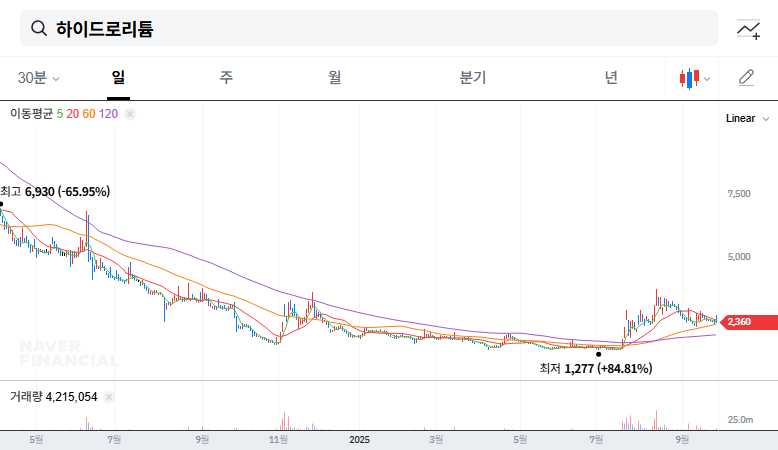
    While providing a short-term cash infusion, the sale is a strong indicator of financial distress. This can negatively impact investor sentiment, dilute existing shareholder value, and ultimately place downward pressure on the stock price.

    Is Hydrolithium a good investment right now?

    No, Hydrolithium is currently a high-risk investment. The company is in a very unstable financial position, and the treasury stock disposal does not solve its fundamental problems. A conservative ‘Hold’ or ‘Neutral’ stance with rigorous risk management is advisable until a clear and sustainable turnaround is evident.
    (101670) Hydrolithium Treasury Stock Disposal (101670): A Critical Analysis for Investors 관련 이미지
  • Hydrol Lithium: Major Shareholder Reduces Stake – What Does It Mean for Investors?


    Hydrol Lithium: Major Shareholder Reduces Stake - What Does It Mean for Investors? 대표 차트 이미지


    What Happened?

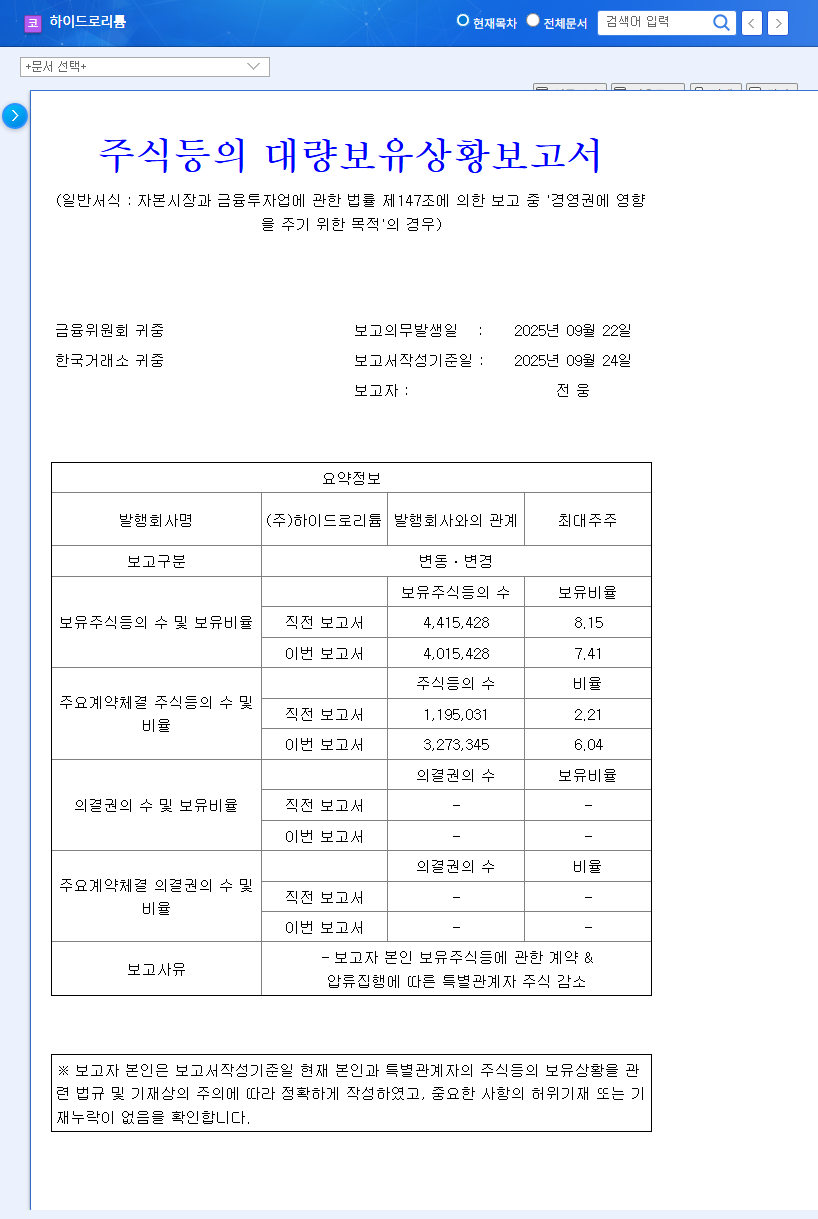
    Jeon Woong (born in 1964), a major shareholder of Hydrol Lithium, announced on September 24, 2025, a decrease in his stake from 8.15% to 7.41%. The reason cited was ‘decrease in shares of related parties due to contracts and seizure execution related to owned shares.’ The shares were sold on the market through Lithium Plus Co., Ltd. on September 16 and 19, 2025, with 200,000 shares sold each day.

    Why the Stake Reduction?

    While the reason given, ‘contracts and seizure execution,’ suggests personal circumstances related to Mr. Jeon, the specifics remain undisclosed. The crucial question is the impact of this stake reduction on the market. Particularly, as Mr. Jeon held the stake for ‘management influence’ purposes, this reduction raises concerns about potential management changes.

    What are the Potential Impacts?

    • Stock Price Decline: The sale of shares by a major shareholder can put downward pressure on the stock price in the short term.
    • Negative Investor Sentiment: A major shareholder reducing their stake in a financially struggling company can amplify investor anxieties.
    • Loss of Confidence: A stake reduction by a shareholder involved in management raises uncertainty about the company’s leadership and can erode confidence.

    What Should Investors Do?

    Hydrol Lithium is attempting a transition to the secondary battery materials business, but it has yet to show significant results, and its financial situation remains precarious. This stake reduction serves as a warning sign for investors. Investors should consider the following:

    • Cautious Investment: Investment decisions should be based on thorough research and analysis, and investors should avoid being swayed by short-term price fluctuations.
    • Monitor for Further Information: Continuously monitor Hydrol Lithium’s announcements and news, paying close attention to its financial restructuring progress and new business developments.
    • Risk Management: Before making any investment decisions, carefully consider the potential for loss and invest only what you can afford to lose.


    FAQ

    Does Jeon Woong’s stake reduction directly impact Hydrol Lithium’s financials?

    No, the stake reduction itself does not worsen the company’s financial status. However, it can have an indirect impact by negatively influencing investor sentiment.

    Is it a good idea to invest in Hydrol Lithium?

    Hydrol Lithium currently carries high investment risks. Before making any investment decisions, thoroughly analyze the company’s financial status, business prospects, and market conditions.

    What is the future outlook for Hydrol Lithium’s stock price?

    Downward pressure on the stock price is expected in the short term. The long-term outlook will depend on the company’s financial restructuring progress and the success of its new business ventures.


    Hydrol Lithium: Major Shareholder Reduces Stake - What Does It Mean for Investors? 관련 이미지


  • Hydrolit: Major Shareholder Sells Stake – Should You Be Concerned?

    Hydrolit: Major Shareholder Sells Stake - Should You Be Concerned? 대표 차트 이미지

    What happened?

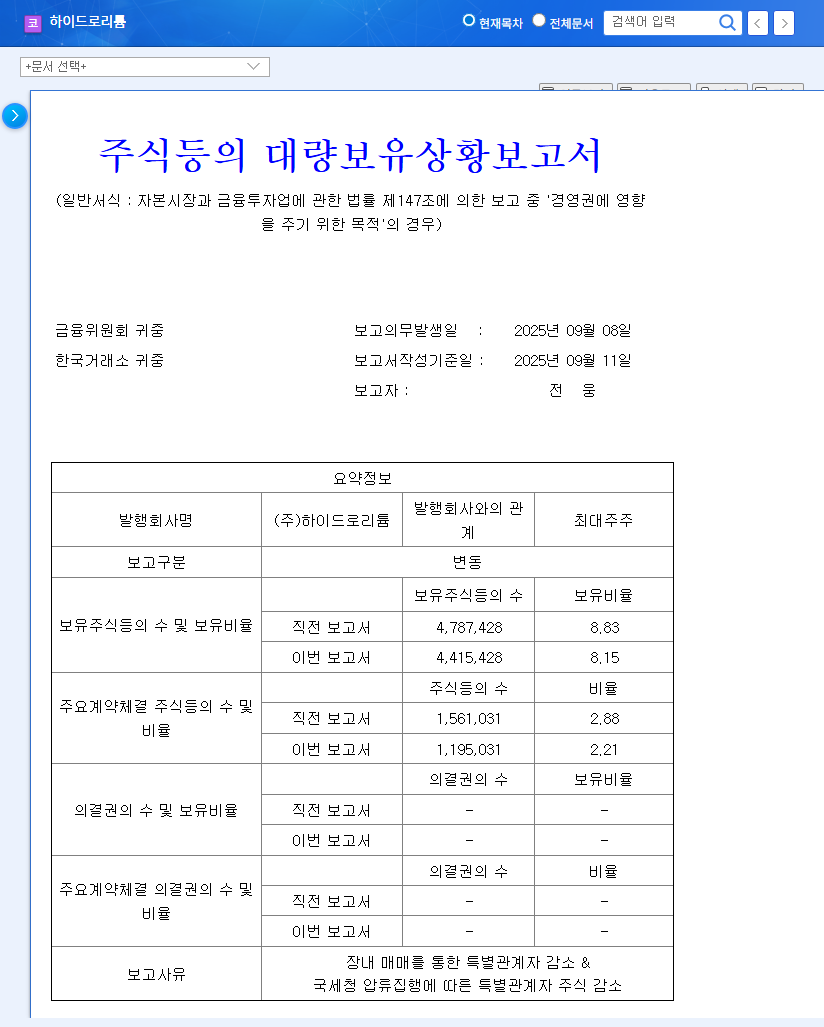
    On September 11, 2025, a public announcement revealed that Hydrolit’s major shareholder, Jeon Woong, and related parties had sold off part of their stakes. This 0.68% decrease, partially due to a seizure by the tax authorities, has sent ripples through the market.

    Why the stake sale?

    Hydrolit’s dire financial situation is the likely culprit. Significant operating and net losses in the first half of 2025, coupled with substantial capital erosion, likely fueled shareholder anxieties. Furthermore, missed convertible bond interest payments and asset seizures have compounded the issues, potentially prompting shareholders to liquidate their holdings. The tax authority seizure, in particular, suggests serious problems with the company’s cash flow.

    What are the implications?

    This stake sale is likely to negatively impact Hydrolit’s stock price. The already weak fundamentals, combined with the news of major shareholders divesting, will likely dampen investor sentiment. Downward pressure on the stock price is expected in the short term.

    What should investors do?

    Investing in Hydrolit at this point carries significant risk. Caution is advised until the company presents and implements concrete plans to improve its financial structure and ensure sustainability. Closely monitor the company’s efforts to improve its financial health, the performance of its lithium business, and any further changes in shareholdings. The current investment recommendation is to sell or significantly reduce holdings.

    What is Hydrolit’s main business?

    Hydrolit is transitioning from construction to lithium material manufacturing and sales, but is currently financially unstable.

    What recent event impacted Hydrolit’s stock price?

    The sale of stakes by major shareholders and related parties, along with a seizure by tax authorities.

    Should I invest in Hydrolit?

    Extreme caution is advised. The company’s financials are very weak and its future is uncertain.

    Hydrolit: Major Shareholder Sells Stake - Should You Be Concerned? 관련 이미지
    Hydrolit: Major Shareholder Sells Stake - Should You Be Concerned? 관련 이미지
  • Hydrolittium: A Risky Investment Despite Transition to Lithium Business

    1. What Happened? Hydrolittium’s Disappointing 2025 Half-Year Results

    Hydrolittium’s 2025 half-year results revealed a significant downturn, with revenue at ₩500 million, operating loss at ₩3 billion, and a net loss of ₩28.3 billion. The poor performance is attributed to struggling construction operations and impairment losses, indicating that the benefits of the lithium transition are yet to materialize.

    2. Why Did This Happen? Financial Vulnerability Exposed During Business Transition

    While the acquisition of Lithium Plus and construction of the Saemangeum plant represent long-term potential, they’ve placed a significant strain on Hydrolittium’s finances. Combined with the default on convertible bonds, unpaid interest, and creditor seizures, the company’s financial health has deteriorated significantly. The increasing debt and negative operating cash flow raise concerns about Hydrolittium’s ability to continue as a going concern.

    3. What Should Investors Do? Proceed with Extreme Caution – Not a Recommended Investment

    Despite the growth potential of the lithium market and the potential benefits of South Korea’s localization policies, investing in Hydrolittium is currently considered high risk. Until there’s tangible improvement in the company’s financial structure, resolution of the convertible bond issue, and positive operating cash flow, investment should be avoided.

    4. Investor Action Plan: Monitor Closely and Seek Expert Advice

    • Closely monitor Hydrolittium’s financial situation and business progress, paying close attention to news and official disclosures.
    • Before making any investment decisions, consult with a financial advisor and develop a thorough risk management plan.
    What is Hydrolittium’s main business?

    Hydrolittium is currently transitioning to a focus on lithium hydroxide and lithium carbonate production for batteries. Previously, its primary business was construction.

    Why is Hydrolittium’s recent performance so poor?

    A combination of factors, including struggling construction operations, impairment losses, and increased investment costs associated with the transition to lithium production, contributed to the decline.

    Is Hydrolittium a good investment?

    Due to its current financial difficulties and uncertainty surrounding its ability to continue as a going concern, Hydrolittium is currently considered a high-risk investment and is not recommended.