Tag: 066980

  • (066980) HANSUNG CLEANTECH (066980) Stock: Can a ₩11.2B Ultrapure Water Contract Fuel a Turnaround?

    (066980) HANSUNG CLEANTECH (066980) Stock: Can a ₩11.2B Ultrapure Water Contract Fuel a Turnaround?

    A significant development has emerged for HANSUNG CLEANTECH CO., LTD. (066980), a company navigating a period of financial turbulence. The announcement of a massive new ultrapure water contract has injected a wave of optimism, but it comes against a backdrop of declining revenue and investor skepticism. The critical question for investors is whether this contract is a sustainable turning point or merely a temporary reprieve.

    This comprehensive analysis will dissect the contract’s impact on HANSUNG CLEANTECH stock, evaluate the company’s precarious financial health, and provide an actionable framework for making an informed investment decision. We’ll explore the company’s core business, the market dynamics, and the essential factors to monitor moving forward.

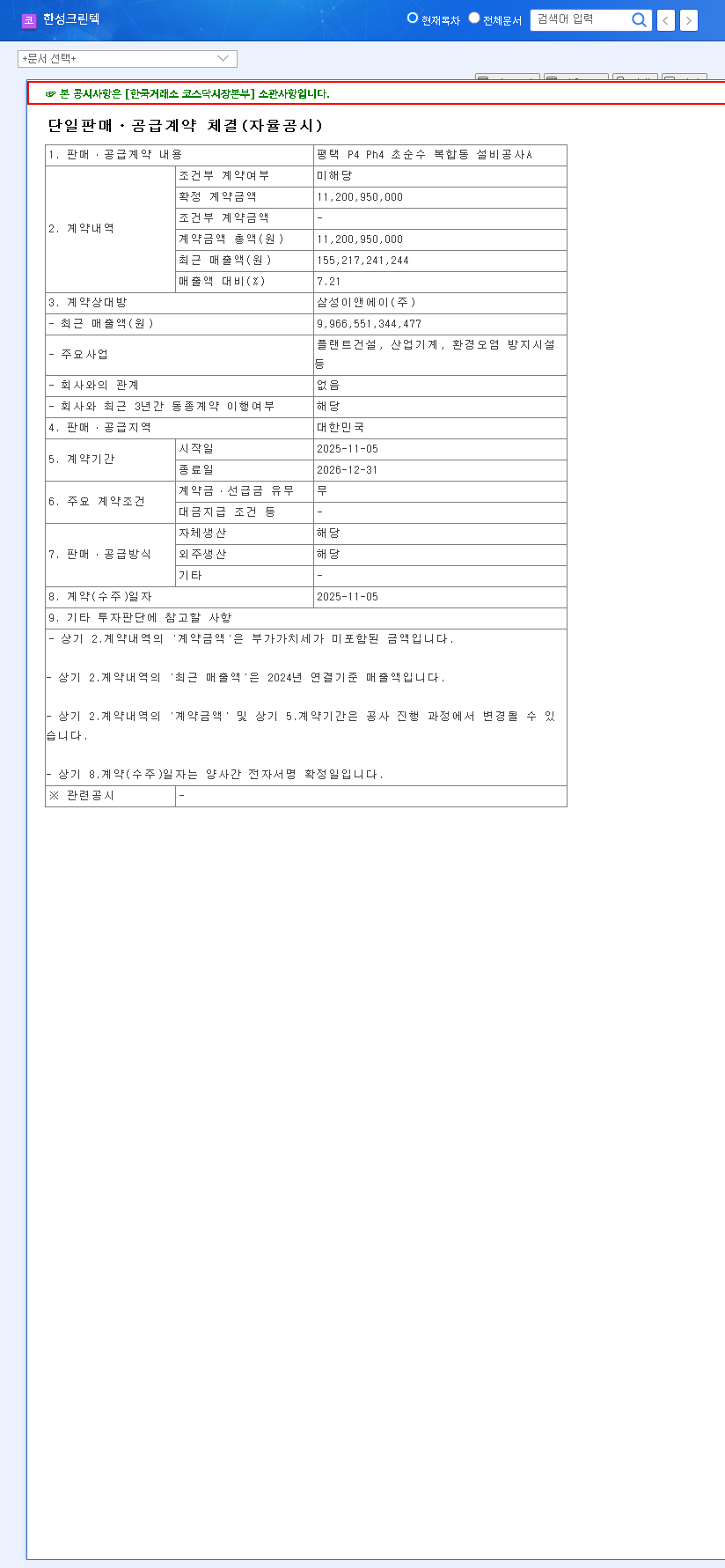
    The Landmark ₩11.2 Billion Samsung E&A Contract

    On November 5, 2025, HANSUNG CLEANTECH officially disclosed a pivotal agreement with Samsung E&A Co., Ltd. for the ‘Pyeongtaek P4 Ph4 Ultrapure Water Complex Facility Construction A’. (Source: Official Disclosure). The contract is valued at ₩11.2 billion, a figure that represents approximately 180% of the company’s entire 2024 revenue. The project is scheduled to run for over a year, from November 2025 to the end of December 2026, promising a sustained revenue stream.

    The Critical Role of Ultrapure Water

    To grasp the significance of this deal, it’s essential to understand ultrapure water (UPW). UPW is water purified to an exceptionally high standard, removing virtually all contaminants. It is a non-negotiable, mission-critical component in the semiconductor manufacturing process, where even the smallest impurity can ruin entire batches of microchips. Securing a major UPW facility contract with a global leader like Samsung reaffirms HANSUNG CLEANTECH’s technical expertise in a highly demanding field.

    A Deep Dive into HANSUNG CLEANTECH’s Financial Health

    This new contract doesn’t exist in a vacuum. It arrives at a time when HANSUNG CLEANTECH’s financial foundations have been severely weakened, a crucial part of any 066980 analysis.

    Persistent Performance Decline

    • Shrinking Revenue: A consistent downward trend from ₩11.4 billion (2022) to just ₩6.27 billion (2024).
    • Plummeting Profits: Operating profit collapsed from ₩1.75 billion (2022) to a mere ₩0.19 billion (2024).
    • Net Losses: The company fell into a net loss of ₩1.28 billion by the end of 2024, with losses projected to continue.

    Eroding Investor Trust and Financial Soundness

    The company’s stability metrics are equally concerning. The Debt-to-Equity ratio climbed from 92% to over 114%, while the Current Ratio, a key measure of liquidity, fell drastically from 340% to a precarious 58% in the same period.

    Compounding these issues was a major financial statement restatement, which revealed a ₩28.2 billion overstatement in 2024 revenue. This correction led to a staggering restated operating loss of ₩50.73 billion, severely damaging investor confidence in the company’s accounting and governance.

    Investment Outlook: Hope vs. Hurdles

    The new ultrapure water contract is undeniably a powerful positive catalyst. It provides a much-needed revenue infusion, reinforces the company’s market position, and offers a clear path toward improved financial performance in 2025-2026. However, long-term success for HANSUNG CLEANTECH depends on overcoming significant challenges.

    While this is a domestic contract with limited direct exposure to currency fluctuations, broader macroeconomic factors like high interest rates and volatile material costs remain a risk. The primary hurdle, however, is internal: rebuilding trust and demonstrating consistent, transparent financial management.

    Actionable Plan for Investors

    Given the balance of strong positive momentum and significant underlying risks, a cautious but watchful approach is warranted. For those considering an investment in HANSUNG CLEANTECH stock, here is a checklist of key areas to monitor.

    • Track Contract Execution: Scrutinize quarterly reports in 2025 and 2026 to verify that revenue from the Samsung E&A contract is being recognized as planned and contributing positively to the bottom line.
    • Monitor Governance Improvements: Look for clean auditor opinions and company announcements regarding the strengthening of internal accounting controls to ensure past mistakes are not repeated.
    • Assess New Business Development: Sustainable long-term growth will require more than one large contract. Watch for efforts in business diversification and new market penetration.

    For more general guidance, you can also read our guide on how to analyze industrial technology stocks.

    Investment Opinion: We maintain a “Neutral” rating. The potential for a turnaround is real, but the risks associated with its past financial instability are too significant to ignore. The rating will be re-evaluated as the company demonstrates tangible progress in its financial performance and governance.

    Frequently Asked Questions (FAQ)

    What is the new contract secured by HANSUNG CLEANTECH?

    HANSUNG CLEANTECH secured a ₩11.2 billion contract with Samsung E&A for the construction of an ultrapure water facility at the Pyeongtaek P4 site, a project almost double its 2024 revenue.

    How will this contract impact HANSUNG CLEANTECH’s finances?

    It is expected to significantly boost revenue and profitability in 2025 and 2026, potentially serving as a crucial catalyst for improving the company’s deteriorating financial health.

    What are the main risks for HANSUNG CLEANTECH stock?

    The key risks are the company’s history of financial underperformance, poor liquidity, and the severe erosion of investor trust stemming from a major financial statement restatement issue.
    (066980) HANSUNG CLEANTECH (066980) Stock: Can a ₩11.2B Ultrapure Water Contract Fuel a Turnaround? 관련 이미지
  • (066980) Hansung Clean Tech Major Shareholder Change: An In-Depth 2025 Investment Analysis (066980)

    (066980) Hansung Clean Tech Major Shareholder Change: An In-Depth 2025 Investment Analysis (066980)

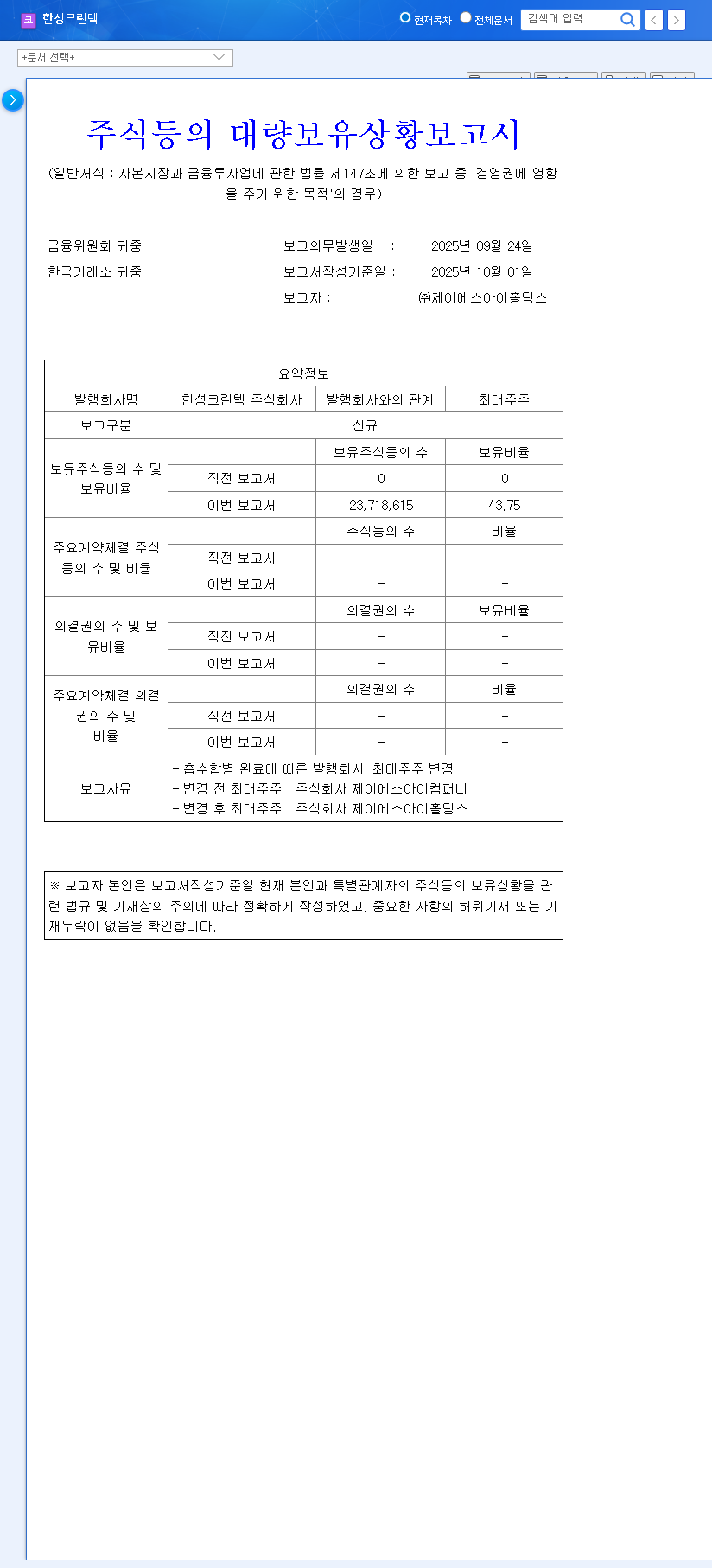
    The Hansung Clean Tech major shareholder landscape has been dramatically reshaped. Through a pivotal absorption merger, JSI Holdings Co., Ltd. has emerged as the new controlling entity, securing a substantial 43.75% stake. Such a significant shift in ownership is often a critical turning point for any company, signaling potential changes in strategy, finances, and market perception. For investors in Hansung Clean Tech (066980), this development raises urgent questions.

    Does this represent a golden opportunity for Hansung Clean Tech to finally address its persistent financial vulnerabilities and breathe life into its stagnant stock price? Or are there underlying risks that demand a more cautious approach? This comprehensive analysis will dissect the implications of the JSI Holdings takeover, evaluating its potential impact on corporate fundamentals and the future of the Hansung Clean Tech stock.

    Analyzing the Hansung Clean Tech Major Shareholder Change

    On October 1, 2025, Hansung Clean Tech, a specialist in environmental facilities, formally announced the change via a Report on the Status of Large-Volume Shareholdings. The transaction saw the previous major shareholder, JSI Company Co., Ltd., being absorbed by JSI Holdings Co., Ltd., which consequently inherited the controlling stake. The purpose of this holding is explicitly stated as ‘influence over management rights,’ confirming a strategic takeover. You can view the Official Disclosure on the DART system for full details.

    Key Transaction Details:

    • New Major Shareholder: JSI Holdings Co., Ltd.
    • Post-Merger Stake: 43.75% (from 0%)
    • Reason: Absorption merger of JSI Company Co., Ltd.
    • Stated Purpose: To exert influence over management rights.

    The Investor’s Dilemma: Synergy Hopes vs. Financial Reality

    Any change in control brings a mix of optimism and concern. For Hansung Clean Tech, this is particularly true given its recent history. Let’s weigh the potential outcomes.

    Potential Positives of the JSI Holdings Merger

    • Enhanced Management Stability: With a 43.75% stake, JSI Holdings has a firm grip on control. This stability can eliminate boardroom uncertainty and empower leadership to execute long-term, strategic initiatives without fear of internal challenges.
    • Synergistic Growth Opportunities: The JSI Holdings merger could unlock new avenues for growth. If JSI Holdings has expertise in related sectors—such as renewable energy, advanced materials, or smart infrastructure—it could integrate these into Hansung’s operations, creating powerful new business lines and securing a competitive edge.

    Persistent Risks and Red Flags

    • Deteriorating Financial Health: The core problem remains. Hansung Clean Tech has been plagued by a sharp decline in revenue from its environmental facility construction division and significant impairment losses on goodwill (which you can learn more about in this Investopedia explanation). This has led to shrinking capital and a dangerously high debt-to-equity ratio.
    • Conflicting Business Performance: The company presents a mixed bag. While the high-margin construction segment is faltering, its Operations & Maintenance (O&M) and wastewater treatment businesses are showing modest growth. The new leadership’s primary task will be to stabilize the portfolio and improve overall profitability.
    • Legacy of Losses: The company has been bleeding money, posting operating and net losses since 2022. The 2023 figures (an operating loss of 58.6 billion KRW and a net loss of 56.8 billion KRW) cast a long shadow, creating immense pressure for a rapid turnaround.

    Market Outlook and Strategic Investment Checklist

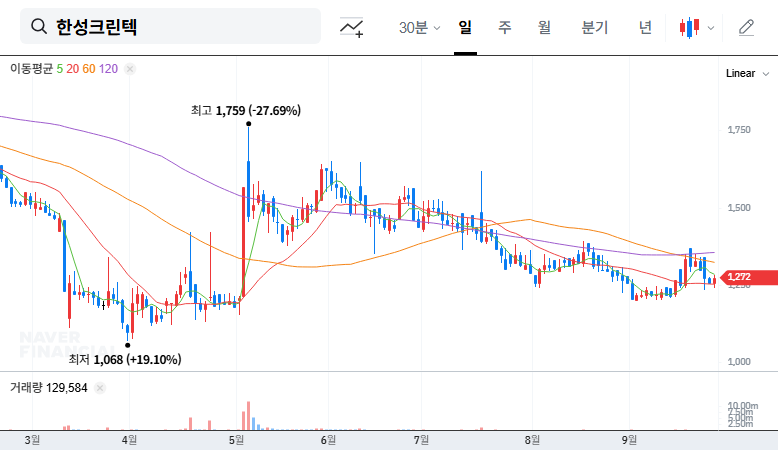
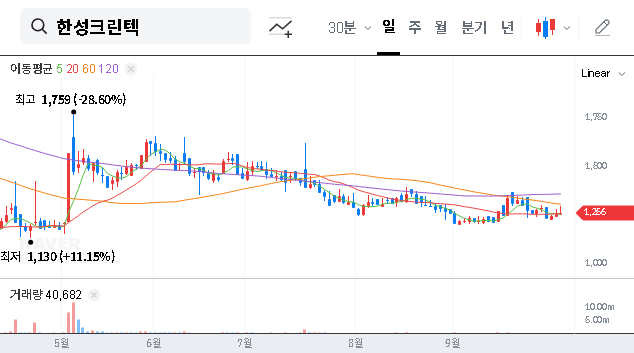
    The market’s reaction to the Hansung Clean Tech major shareholder change will depend entirely on the new leadership’s subsequent actions. The stock price has been on a clear downward trajectory since 2023, reflecting the deep fundamental issues. A reversal of this trend is not guaranteed by the merger alone.

    While the change in control provides a catalyst for positive momentum, tangible results in overcoming financial weaknesses and demonstrating a clear path to sustainable growth are essential for any real appreciation in enterprise value.

    Investors considering a position in 066980 should monitor the following key factors closely. For more on this, check out our guide to analyzing corporate mergers.

    Key Factors for Investors to Watch:

    • JSI Holdings’ Strategic Plan: Look for immediate, concrete announcements from the new leadership. What is their 100-day plan? How will they address the cash burn and declining revenue? Vague promises are a red flag.
    • Profitability Recovery Path: The next few quarterly reports are crucial. Investors need to see signs of stabilization in the construction segment or accelerated, high-margin growth in the O&M and wastewater divisions to justify a turnaround narrative.
    • Financial Restructuring: How will the company manage its debt? Will JSI Holdings inject new capital, renegotiate loans, or sell non-core assets? A clear plan to improve the balance sheet is non-negotiable.

    Frequently Asked Questions

    1. Who is Hansung Clean Tech’s new major shareholder?

    As of October 1, 2025, the new major shareholder is JSI Holdings Co., Ltd. They acquired a controlling 43.75% stake in Hansung Clean Tech after absorbing the previous major shareholder, JSI Company Co., Ltd.

    2. What are the potential positive impacts of this change?

    The primary positive impact is the stabilization of management control, which allows for decisive long-term planning. Additionally, the merger opens the door for potential business synergies, where JSI Holdings could introduce new technologies or market access to revitalize Hansung Clean Tech’s growth.

    3. How is Hansung Clean Tech’s current financial status?

    The company’s financial health is poor. It faces challenges from declining revenue in its main construction business, significant past losses, a rising debt-to-equity ratio, and decreasing total capital. Addressing these deep-seated financial issues will be the top priority for the new leadership.

    (066980) Hansung Clean Tech Major Shareholder Change: An In-Depth 2025 Investment Analysis (066980) 관련 이미지
  • Hansung Cleantech’s Change in Major Shareholder: Investment Strategies Amidst Deteriorating Fundamentals


    Hansung Cleantech's Change in Major Shareholder: Investment Strategies Amidst Deteriorating Fundamentals 대표 차트 이미지


    What Happened? Change in Major Shareholder

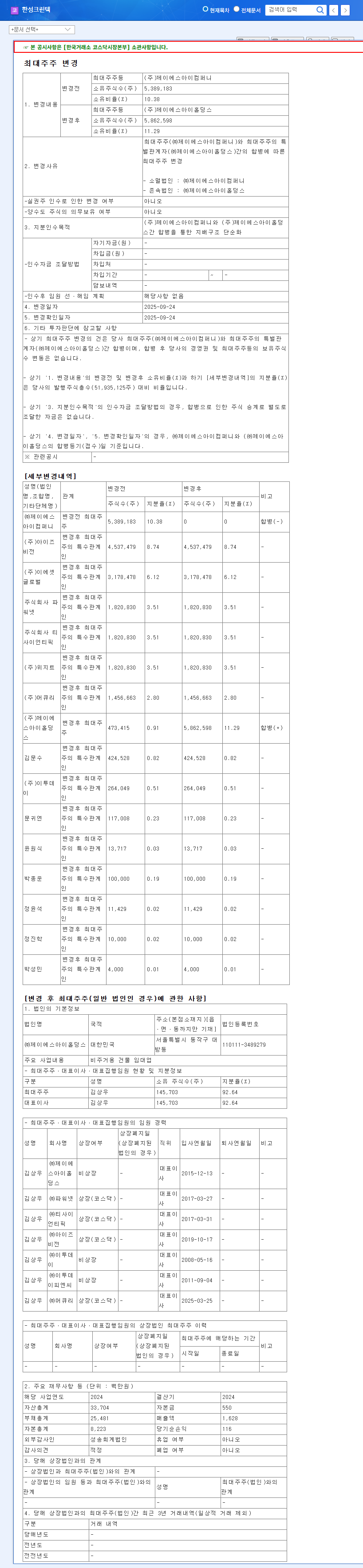
    On September 24, 2025, Hansung Cleantech’s major shareholder changed from JSI Company to JSI Holdings. This change resulted from a merger between the two companies, with no actual change in management rights or shareholding structure.

    Why the Change? Streamlining Corporate Governance

    The change in major shareholder aims to simplify the corporate governance structure. Following the merger, there are no changes to Hansung Cleantech’s management or the major shareholder’s stake.

    What’s the Impact? Fundamental Analysis and Investment Strategies

    The change itself has no direct impact on the company’s fundamentals. However, the sharp decline in sales, the shift to negative operating and net income, and the deterioration of financial health revealed in the 2024 business report remain key challenges. In this context, the change in major shareholder is unlikely to significantly impact short-term stock prices. Rather, the company’s future performance improvements will be a more critical factor.

    • Positive Aspect: Potential for increased management efficiency through simplified governance.
    • Negative Aspect: Continued deterioration of fundamentals and potential negative impact on investor sentiment.

    What Should Investors Do? Careful Observation and Consistent Monitoring

    Investors should focus on the company’s future performance improvement efforts and business plans rather than the change in major shareholder itself. It is particularly important to consistently monitor sales recovery in the environmental equipment construction business, new orders, and improvements in financial health indicators.


    FAQ

    How will Hansung Cleantech’s stock price be affected by the change in major shareholder?

    Short-term stock price fluctuations are expected to be limited. Future earnings improvements will have a greater impact on the stock price.

    How was Hansung Cleantech’s performance in 2024?

    The company recorded negative results, including a sharp drop in sales, a shift to losses in operating and net income, and deterioration in financial health.

    What should investors pay attention to?

    Investors should focus on the company’s future performance improvements and business plans rather than the change in major shareholder. It is important to monitor sales recovery, new orders, and financial soundness.


    Hansung Cleantech's Change in Major Shareholder: Investment Strategies Amidst Deteriorating Fundamentals 관련 이미지


  • Hansung Cleantech (066980) H1 2025 Earnings Analysis: Back in Black, But is There a Catch?

    1. What Happened? Hansung Cleantech H1 2025 Earnings Breakdown

    Hansung Cleantech returned to profitability in the first half of 2025, posting an operating profit of KRW 4.073 billion. Q2 2025 showed growth compared to Q1, with revenue of KRW 54.1 billion, operating profit of KRW 2.2 billion, and net profit of KRW 2.1 billion. However, revenue decreased by 44.9% year-over-year, and the debt-to-equity ratio climbed to 150.88%.

    2. Why These Results? Analyzing Positive & Negative Factors

    • Positive Factors:
      • Recovery in the environmental business sector
      • New business ventures, including participation in domestic ultrapure water technology development
      • Positive growth outlook for the environmental industry due to stricter global regulations
    • Negative Factors:
      • Decline in revenue compared to the same period last year
      • High debt-to-equity ratio exceeding 150%
      • High dependence on specific clients for revenue
      • Macroeconomic uncertainties such as global interest rate hikes and exchange rate fluctuations

    3. What’s Next? Investment Implications

    While Hansung Cleantech shows potential for a turnaround, declining sales and financial burdens remain significant challenges. Investors should pay close attention to the following:

    • Monitoring sales recovery trends and new business performance
    • Reviewing debt management plans and debt repayment schedules
    • Analyzing the impact of changes in the macroeconomic environment

    4. Investor Action Plan

    It is crucial to adopt a long-term perspective when evaluating the company’s growth potential and formulating an investment strategy. Investment decisions should be based on a comprehensive consideration of changes in financial indicators, new business performance, and the macroeconomic landscape.

    Frequently Asked Questions

    What is Hansung Cleantech’s main business?

    Hansung Cleantech’s primary business is the construction, operation, and maintenance of environmental facilities. They specialize in water treatment and desalination plants, and waste treatment facilities.

    What were Hansung Cleantech’s H1 2025 financial results?

    Hansung Cleantech reported revenue of KRW 101.079 billion, operating profit of KRW 4.073 billion, and net profit of KRW 3.849 billion in H1 2025, marking a return to profitability.

    What are the key factors to consider when investing in Hansung Cleantech?

    Investors should consider the year-over-year decline in revenue, the high debt-to-equity ratio, and macroeconomic volatility. Ongoing monitoring of new business performance and financial health management is also crucial.