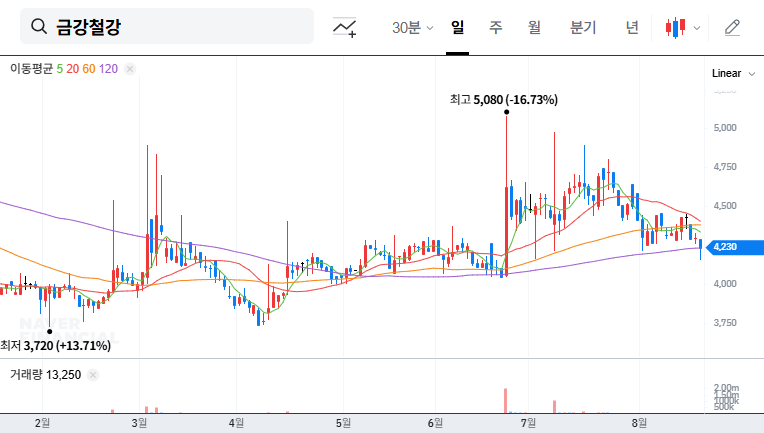
Tag: 053260

  • (053260) KEUM KANG STEEL’s ₩2B Share Buyback: An In-Depth Analysis for Investors

    (053260) KEUM KANG STEEL’s ₩2B Share Buyback: An In-Depth Analysis for Investors

    In a volatile market, investors are keenly watching for signs of corporate confidence and shareholder-friendly actions. A significant KEUM KANG STEEL share buyback announcement has captured the market’s attention, signaling a pivotal moment for the company and its stakeholders. On November 14, 2025, KEUM KANG STEEL CO., LTD. committed to a ₩2 billion trust agreement, a move designed to bolster stock prices and reinforce investor protection. This deep-dive analysis will unpack the specifics of this agreement, evaluate the company’s underlying fundamentals, and provide a strategic outlook for current and potential investors.

    We will explore how this buyback fits into the broader context of a challenging steel industry and what it truly means for the long-term corporate value of KEUM KANG STEEL.

    The ₩2 Billion Share Buyback Agreement: Key Details

    KEUM KANG STEEL’s board has decisively moved to inject confidence into the market by finalizing a substantial share repurchase plan. This action is often interpreted as management’s belief that the current KEUM KANG STEEL stock is undervalued. Here are the crucial details of the agreement:

    • Contract Value: ₩2 billion (approximately $1.5 million USD)
    • Contract Period: November 15, 2025, to November 15, 2026 (One full year)
    • Contracting Partner: Daishin Securities
    • Stated Purpose: Stock price stabilization and robust investor protection.
    • Official Source: Details of this agreement can be verified via the Official Disclosure on DART.

    This buyback represents approximately 2.58% of the company’s total market capitalization, a significant figure that underscores the seriousness of this initiative. For a deeper understanding of the mechanics and implications of such corporate actions, you can read more about stock repurchase strategies on high-authority financial education sites.

    In-depth Analysis of KEUM KANG STEEL’s Financial Health

    A share buyback is only as credible as the financial foundation it’s built upon. A look at KEUM KANG STEEL’s fundamentals as of Q3 2025 reveals a company with a strong defensive posture but notable challenges that require strategic navigation.

    Strengths and Shareholder-Friendly History

    The company exhibits robust financial health, characterized by a low debt-to-equity ratio of just 17.44% and significant liquidity. This strong balance sheet provides the stability needed to weather economic storms and fund initiatives like the current KEUM KANG STEEL share buyback. Furthermore, the company has a proven track record of prioritizing shareholder returns, evidenced by 23 consecutive years of dividend payouts and an existing treasury stock ownership of around 16%.

    Challenges and Market Headwinds

    Despite its strengths, KEUM KANG STEEL is not immune to market pressures. The company’s business is 100% domestic, which insulates it from direct currency exchange risks but makes it highly dependent on the health of the South Korean economy. The global economic slowdown and geopolitical tensions have suppressed the steel market, impacting sales. Moreover, its investment and agricultural segments (Keum Kang Ecotergy) have been underperforming, creating a drag on overall profitability. These factors are critical to consider when performing a complete steel industry analysis for investment purposes.

    While the share buyback offers a short-term psychological boost, long-term appreciation of the KEUM KANG STEEL stock will ultimately depend on fundamental improvements and a broader recovery in the steel sector.

    Impact of the Share Buyback on Stock Price and Corporate Value

    The immediate market reaction to a share buyback announcement is typically positive. By reducing the number of outstanding shares, a buyback can increase Earnings Per Share (EPS) and send a powerful message about future prospects.

    Short-Term and Long-Term Effects

    In the short term, the active purchasing of shares can create a price floor, stabilizing the stock and improving investor sentiment. The substantial size of this buyback (2.58% of market cap) amplifies this effect. Over the long term, the impact is more nuanced. While the buyback itself doesn’t change core business operations, combining it with the existing 16% treasury stock opens up strategic possibilities for enhancing corporate value, such as future dividend increases, bonus issues, or strategic M&A activity.

    Strategic Recommendations for Investors

    For those considering an investment in KEUM KANG STEEL, a multi-faceted approach is recommended. The share buyback is a positive catalyst, but it should be viewed alongside other critical variables.

    • Monitor Buyback Execution: Keep a close eye on the actual pace and volume of share repurchases over the one-year contract period. This will be the clearest indicator of the company’s commitment.
    • Track Industry Recovery: The company’s fortunes are tied to the steel industry. Watch for improvements in key demand sectors like automotive, construction, and appliances, as well as trends in global steel prices.
    • Assess New Business Performance: Look for tangible signs of a turnaround or a clear strategic plan for the underperforming investment and agricultural segments. These are crucial for long-term, diversified growth.
    • Analyze Macroeconomic Factors: Pay attention to interest rate policies and currency fluctuations, as these can indirectly but significantly impact net income and borrowing costs.

    In conclusion, the KEUM KANG STEEL share buyback is a strong, positive step towards enhancing shareholder value and reflects management confidence. However, savvy investors will balance this optimism by closely monitoring the company’s fundamental performance and the broader market recovery to make well-informed decisions.
    (053260) KEUM KANG STEEL's ₩2B Share Buyback: An In-Depth Analysis for Investors 관련 이미지
  • Kumgang Steel (053260) Q2 Earnings Shock: Operating Profit at Zero, What’s the Investment Strategy?

    1. Kumgang Steel Q2 Earnings: Key Findings

    Kumgang Steel recorded sales of KRW 47.8 billion in Q2 2025, but operating profit fell to zero, and the company swung to a net loss of KRW 4.3 billion. This “earnings shock” significantly missed market expectations, raising concerns among investors.

    2. Reasons for the Decline: A Multifaceted Analysis

    This underperformance is attributed to a combination of factors, including the overall downturn in the steel industry, high logistics costs, exchange rate volatility, and high interest rates. The sharp decline following a strong performance in Q4 2024 is particularly worrisome.

    3. Market Environment and Outlook: Continued Uncertainty

    • Interest Rates: High interest rates in the US and Korea increase interest expense burdens and dampen investor sentiment.
    • Exchange Rates: Fluctuations in the KRW/USD and KRW/EUR exchange rates impact the steel industry’s cost burden and profitability.
    • Raw Materials and Logistics: Volatility in international oil prices and freight rates contributes to cost pressures.
    • Industry Trends: Challenges in the steel industry are expected to persist due to the global economic slowdown and geopolitical risks.

    4. Investment Strategy: A Cautious Approach is Necessary

    Kumgang Steel’s stock price is likely to face downward pressure in the short term. In the medium to long term, the key variable will be whether the company can turn its performance around. Investors should carefully monitor the company’s future business plans, cost reduction and profitability improvement measures, and changes in macroeconomic indicators before making investment decisions.

    Frequently Asked Questions

    What are the main reasons for Kumgang Steel’s poor Q2 performance?

    A combination of factors contributed, including the overall downturn in the steel industry, high logistics costs, exchange rate fluctuations, and high interest rates.

    Should I invest in Kumgang Steel?

    A cautious approach is recommended due to expected short-term downward pressure on the stock price. It is essential to monitor the company’s performance for signs of improvement in the medium to long term.

    What is the outlook for Kumgang Steel?

    The outlook is uncertain. It’s crucial to monitor the company’s business plans and changes in macroeconomic indicators.

  • Kumgang Steel Faces Management Dispute: What Investors Need to Know

    1. The Management Dispute: Unpacking the Issue

    The request for access to company records, filed by Choi et al., is more than just a request for information; it’s a challenge to the existing management. This situation creates instability, potentially delaying decision-making, hindering investments, and disrupting Kumgang Steel’s long-term growth strategy. Ongoing efforts for customer diversification and business expansion are particularly vulnerable.

    2. Impact on Stock Price: Navigating Volatility

    Management disputes often lead to increased stock price volatility. With a market capitalization of KRW 86.5 billion, Kumgang Steel is susceptible to market uncertainty. Investors should anticipate potential price swings depending on the lawsuit’s outcome and proceed with caution.

    3. Potential Upsides: A Glimmer of Hope?

    While management disputes are generally negative, they can sometimes lead to positive outcomes. Increased transparency, improved management efficiency, and the adoption of shareholder-friendly policies are potential benefits. However, these are contingent on the lawsuit’s resolution and subsequent actions, making it crucial to avoid undue optimism.

    4. The Future of Kumgang Steel: Charting the Course

    The management dispute adds another layer of uncertainty to the challenges Kumgang Steel already faces, including the global economic slowdown, China’s economic downturn, and intensified competition in the domestic steel market. Investors need to closely monitor the legal proceedings and adjust their portfolios accordingly.

    5. Investor Action Plan: Protecting Your Investment

    If you’re invested in Kumgang Steel, consider the following action plan:

    • • Monitor the situation: Stay updated on news and official announcements related to the dispute.
    • • Manage risk: Diversify your portfolio to minimize potential losses.
    • • Seek expert advice: Consult with a financial advisor for personalized guidance.

    Frequently Asked Questions

    What is a management dispute?

    A management dispute refers to a conflict over the control of a company. It can involve shareholders, management, or external parties and can manifest through lawsuits, proxy fights, and other actions.

    How do management disputes affect stock prices?

    Management disputes create uncertainty around a company’s future, increasing stock price volatility. Prices can fluctuate significantly based on the outcome of the dispute, management changes, and shifts in corporate strategy.

    What precautions should investors take with Kumgang Steel?

    Investors should closely monitor the ongoing management dispute, its outcome, and any changes to the company’s fundamentals. Careful risk management is crucial during this period.