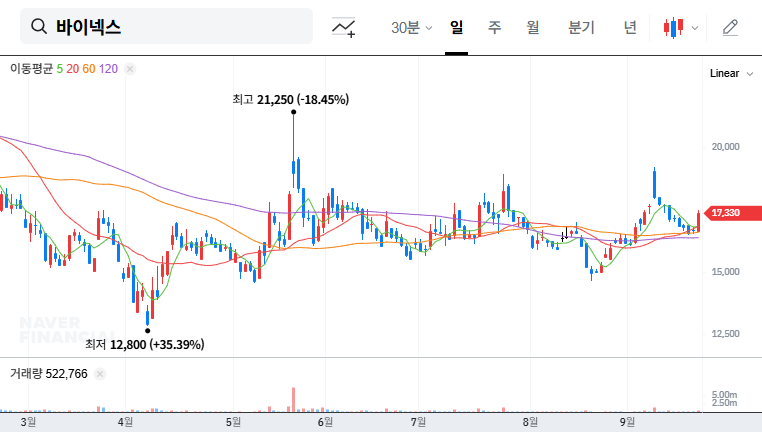
The recent announcement of the Binex Exchangeable Bonds (EB) issuance, valued at ₩15.5 billion, has sent ripples through the investment community. As a leading biopharmaceutical company, this strategic capital raise by Binex Co., Ltd. presents both significant opportunities and potential risks. For investors, the key question is whether this move will fuel future growth and positively impact the Binex stock price, or if challenges like potential dilution and a high exchange price will create downward pressure. This comprehensive analysis will explore the issuance details, evaluate Binex’s fundamentals, and provide a strategic roadmap for investors.
Understanding the Binex Exchangeable Bonds Issuance
On the heels of its H1 2025 financial report, Binex confirmed a private placement of ₩15.5 billion in Exchangeable Bonds. An Exchangeable Bond gives the bondholder the right to exchange their bond for shares of a company other than the issuer (in this case, treasury stock owned by Binex). This differs from a Convertible Bond (CB), which converts into new shares of the issuing company itself.
Key Details of the Issuance
- •Issuance Amount: ₩15.5 billion (approx. 2.56% of market capitalization)
- •Exchange Price: ₩18,587 per share (a significant premium over the current stock price)
- •Interest Rate: 0.0% coupon rate and maturity yield, minimizing direct interest costs for the company.
- •Exchange Period: December 6, 2025, to October 6, 2030.
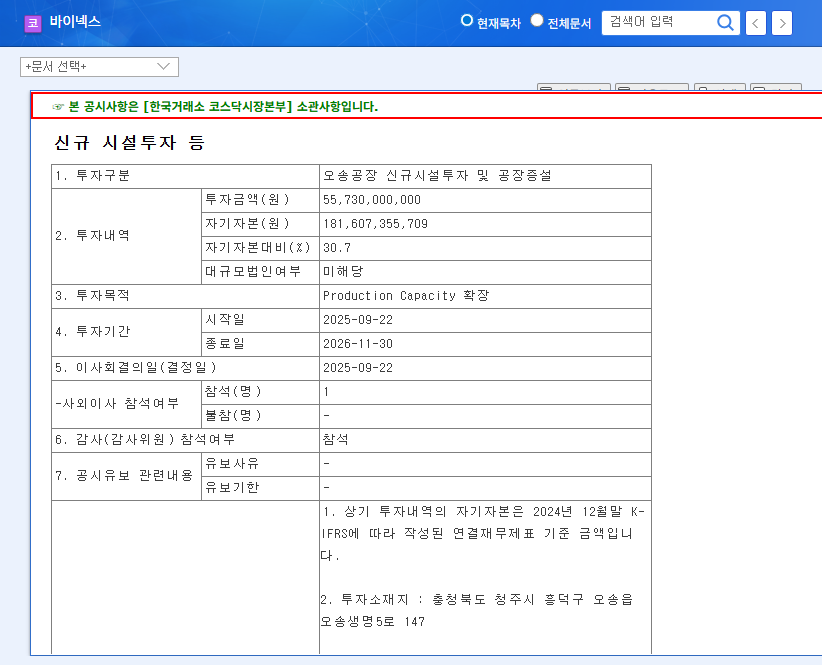
- •Official Disclosure: Full details can be verified in the company’s public filing. (Source)
Analyzing Binex’s Fundamentals: The Engine for Growth
This capital raise is not happening in a vacuum. It comes at a time of strengthening Binex fundamentals, driven by two powerful business divisions. The decision to secure funds now suggests a forward-looking strategy to accelerate an already positive trajectory.
1. The Stable Foundation: Chemical Pharmaceutical Division
The company’s traditional pharmaceutical business acts as a reliable cash cow. Strong sales from products like bowel regulators and ophthalmic solutions provide consistent revenue. The expansion of the Busan plant and adherence to cGMP-level production standards not only increase capacity but also enhance quality, setting a stable base from which the company can pursue higher-growth ventures.
2. The Growth Catalyst: Bio CDMO Division
Binex’s competitive edge lies in its Bio CDMO (Contract Development and Manufacturing Organization) business. As a pioneer in Korea’s CDMO market, Binex offers one-stop services and holds critical FDA cGMP certification. This positions it perfectly to capitalize on the booming global CDMO market, which is being fueled by an aging population, the rise of biosimilars, and a trend for pharmaceutical giants to outsource manufacturing. According to market analysis from industry experts like Grand View Research, this sector is projected for double-digit annual growth, and the funds from the EB issuance are likely earmarked to capture a larger share of this lucrative market.
This EB issuance appears to be a strategic move to pour fuel on the fire of Binex’s most promising growth engine—the global Bio CDMO business—while leveraging its stable pharmaceutical arm for financial solidity.
A Balanced View: Pros and Cons for Investors
The issuance of the Binex Exchangeable Bonds creates a duality of outcomes that investors must carefully weigh.
Potential Positives
- •Growth Capital Secured: The ₩15.5 billion provides vital resources for R&D, facility upgrades, and expanding CDMO capacity without immediate interest payments.
- •Improved Financial Structure: If the stock price rises above ₩18,587 and bonds are exchanged, the company’s debt is reduced, strengthening the balance sheet.
- •Vote of Confidence: A successful private placement to institutional investors can be seen as a strong endorsement of the company’s long-term vision.
Key Risks and Considerations
- •High Exchange Price Burden: The ₩18,587 exchange price is substantially higher than the current trading price. A failure to reach this level means Binex must repay the principal in cash at maturity, which could strain finances.
- •Potential for Stock Dilution: If the bonds are exchanged, the increase in outstanding shares will dilute the ownership stake and earnings per share for existing shareholders.
- •Short-Term Market Pressure: News of future potential share supply can create an overhang on the stock, potentially capping short-term price appreciation.
Investor Action Plan and Conclusion
A prudent biopharmaceutical investment strategy in Binex requires a nuanced approach that aligns with your time horizon.
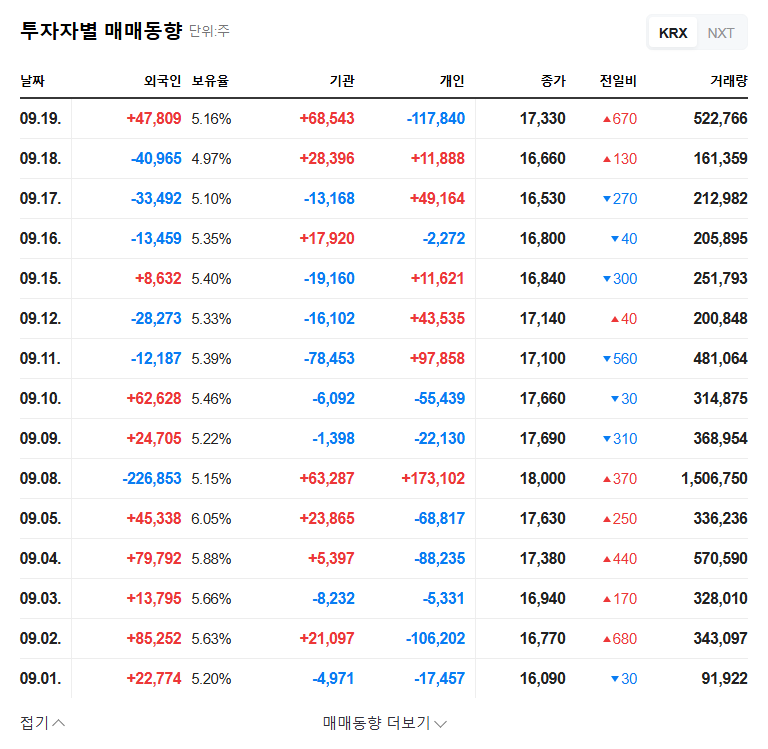
For short-term investors, caution is advised. The announcement may induce volatility. Monitor trading volumes and technical indicators, but be wary of speculative moves not backed by fundamental progress.
For long-term investors, the focus should be on the execution of the growth strategy. This EB issuance is a positive signal for long-term ambition. The primary task is to track the company’s ability to translate this capital into tangible results within the CDMO sector. Investors should monitor key metrics such as new client contracts, facility utilization rates, and margin improvements in quarterly earnings reports. You can read more about how to evaluate CDMO company performance in our related guide.
In conclusion, the issuance of Binex Exchangeable Bonds is a calculated risk to accelerate growth. While short-term pressure on the Binex stock price is a real possibility due to the high exchange price, the long-term value creation hinges on the successful expansion of its high-potential CDMO business. A thorough analysis of company performance against its strategic goals will be the ultimate determinant of investment success.
Leave a Reply