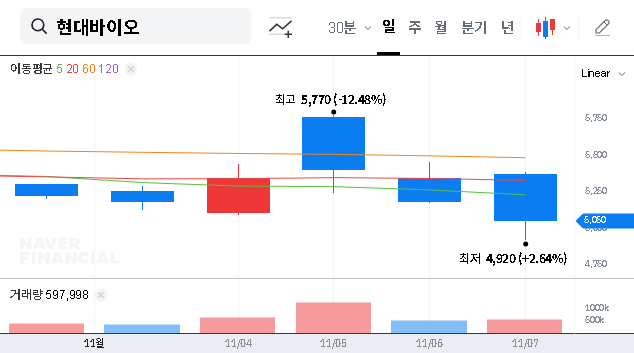
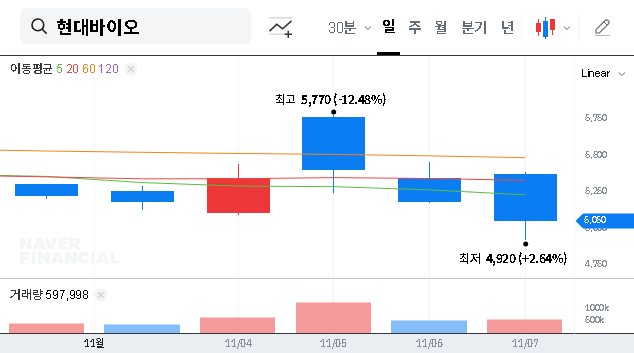
Tag: 048410

  • (048410) HYUNDAI BIOSCIENCE CP-COV03: A Deep Dive into its Dengue Treatment Clinical Trial for Investors

    (048410) HYUNDAI BIOSCIENCE CP-COV03: A Deep Dive into its Dengue Treatment Clinical Trial for Investors

    The world of biotech investing is often defined by pivotal moments, and for HYUNDAI BIOSCIENCE, a significant development has emerged. The company recently announced a key amendment approval for the clinical trial of its broad-spectrum antiviral candidate, HYUNDAI BIOSCIENCE CP-COV03, specifically targeting Dengue fever. This news has sparked considerable interest among investors, who are keen to understand the implications for the company’s future and stock value. In this comprehensive analysis, we will dissect this development, exploring the potential upside and the inherent risks to provide a clear roadmap for informed investment decisions.

    The Core Development: CP-COV03 Clinical Trial Amendment

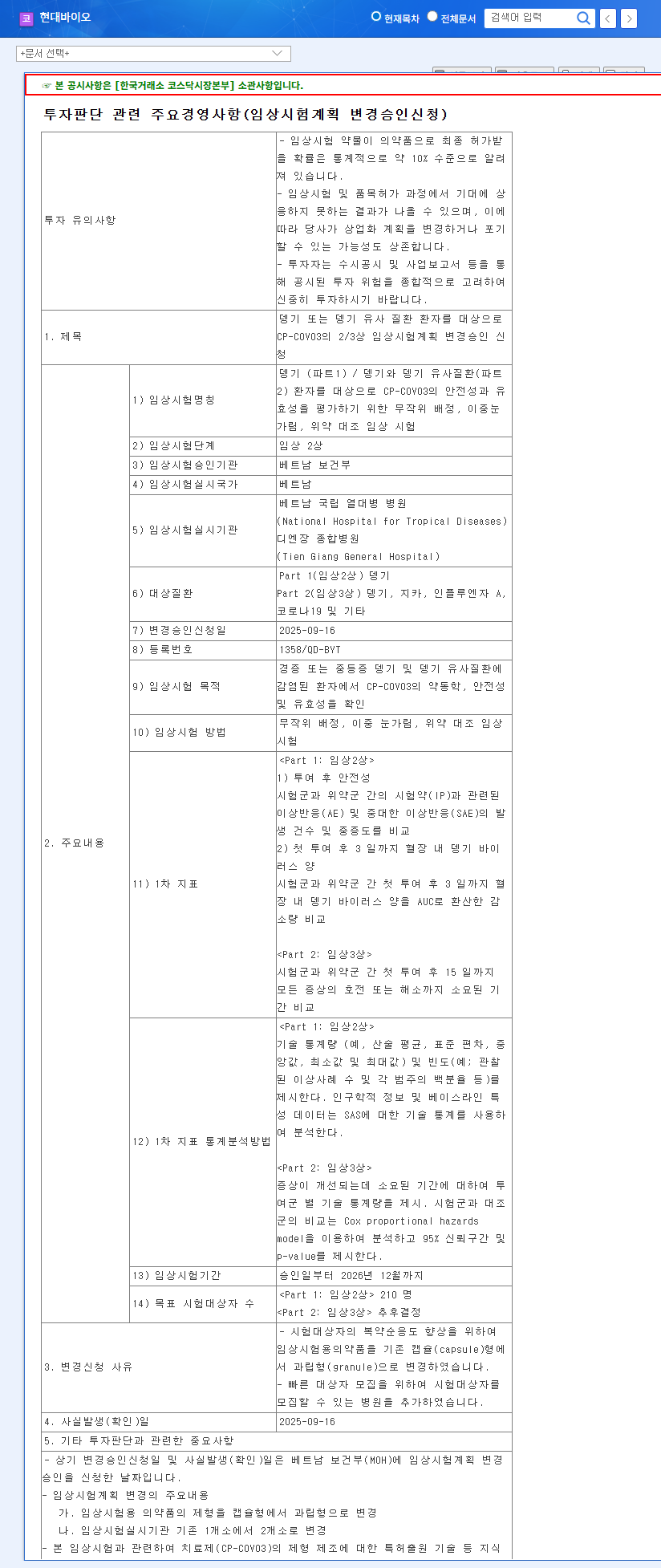
    Hyundai Bioscience has secured approval from the Vietnamese Ministry of Health to amend its Phase 2/3 clinical trial plan for CP-COV03. According to the Official Disclosure, this strategic move is designed to streamline and enhance the trial focused on patients with Dengue fever and similar viral illnesses. This isn’t just a procedural step; it signals tangible progress in the drug’s development pathway.

    Key Details of the Amendment

    • Trial Focus: The randomized, double-blind, placebo-controlled trial will evaluate the safety and efficacy of CP-COV03 in patients with Dengue (Part 1) and expand to Dengue-like diseases such as Zika, Influenza A, and COVID-19 in Part 2.
    • Formulation Change: The investigational drug has been changed from a capsule to a granule formulation. This could improve patient compliance, especially in pediatric or geriatric populations, and potentially alter drug absorption rates.
    • Site Expansion: The number of clinical trial sites has been increased from one to two, which is expected to accelerate patient recruitment and data collection, thereby shortening the overall trial timeline.

    The Bull Case: Why This Is a Positive Catalyst

    This approval is more than just a regulatory checkmark; it represents a multi-faceted positive signal for Hyundai Bioscience and its investors. The potential impact extends from drug pipeline validation to market access.

    Validating the Broad-Spectrum Antiviral Strategy

    The greatest potential of HYUNDAI BIOSCIENCE CP-COV03 lies in its ambition to be a broad-spectrum antiviral. By targeting Dengue fever—a mosquito-borne illness that, according to the World Health Organization (WHO), infects up to 400 million people annually—the company is tackling a massive unmet medical need. Success in this area could serve as a proof-of-concept for its efficacy against other viral threats listed in Part 2 of the trial, significantly amplifying its total addressable market and long-term value.

    Operational Efficiency and Market Access

    Expanding to two trial sites in Vietnam is a savvy operational move. It not only accelerates the research timeline but also builds a strong foundation for regulatory approval and commercialization within the Southeast Asian market, a region where Dengue is highly endemic. This provides a clear, strategic path to an initial target market upon successful trial completion.

    The amendment approval for the CP-COV03 clinical trial is a critical step forward, demonstrating regulatory confidence and operational progress. For investors, it reinforces the narrative that Hyundai Bioscience is actively advancing its most promising pipeline asset.

    The Bear Case: Navigating Potential Risks

    Despite the optimism, investing in a clinical-stage biotech company carries substantial risks. Acknowledging these hurdles is essential for a balanced investment thesis. For those new to this sector, understanding the common challenges is crucial. You can learn more by reading our Guide to Investing in Biotech Stocks.

    • Clinical Uncertainty: The primary risk is always the clinical outcome. Positive results in Phase 2 are not guaranteed. Any negative or inconclusive data regarding the safety or efficacy of CP-COV03 would be a significant setback, likely impacting the company’s valuation and development strategy.
    • Financial Health and Cash Burn: Clinical trials are expensive. Expanding sites and advancing research increases the rate of cash burn. Investors must monitor Hyundai Bioscience’s financial statements, particularly its cash reserves and capital-raising activities, to ensure it has the runway to see this trial through to completion.
    • Formulation Risk: While the switch to granules has potential benefits, it also introduces a new variable. The company must demonstrate that this new formulation is safe, stable, and delivers the drug effectively. Any issues could cause delays or require further costly studies.

    Frequently Asked Questions (FAQ)

    What is the core significance of this clinical trial approval?

    It signifies tangible progress in the development of HYUNDAI BIOSCIENCE’s key drug, CP-COV03. Approval from the Vietnamese Ministry of Health advances its Dengue treatment program and signals potential expansion to other viral diseases, de-risking the development pathway to a small degree.

    Why was the CP-COV03 formulation changed to granules?

    The change from a capsule to a granule formulation is likely intended to improve patient convenience and compliance, particularly for those who have difficulty swallowing pills. However, its impact on the drug’s performance must be validated in the clinical trial.

    What should investors watch for next?

    The most critical upcoming catalyst will be the interim and final results from the Phase 2 portion of this trial. Positive safety and efficacy data will be essential for moving to Phase 3 and will be a major driver of the company’s valuation. Investors should also monitor financial reports for updates on R&D spending and cash position.
    (048410) HYUNDAI BIOSCIENCE CP-COV03: A Deep Dive into its Dengue Treatment Clinical Trial for Investors 관련 이미지
  • (048410) HYUNDAI BIOSCIENCE CP-PCA07: In-Depth Analysis of the Prostate Cancer Drug Phase 1 Trial

    (048410) HYUNDAI BIOSCIENCE CP-PCA07: In-Depth Analysis of the Prostate Cancer Drug Phase 1 Trial

    The latest development surrounding HYUNDAI BIOSCIENCE CP-PCA07, a novel prostate cancer drug, has captured significant attention from the investment community. The recent approval for an amendment to its Phase 1 clinical trial plan is a critical milestone, offering valuable insights into the company’s R&D capabilities and signaling a potentially powerful new growth engine. This in-depth analysis will break down the specifics of the trial, evaluate the company’s strategic position, and provide a clear outlook for investors monitoring this promising biotech venture.

    Understanding the Milestone: CP-PCA07 Phase 1 Approval

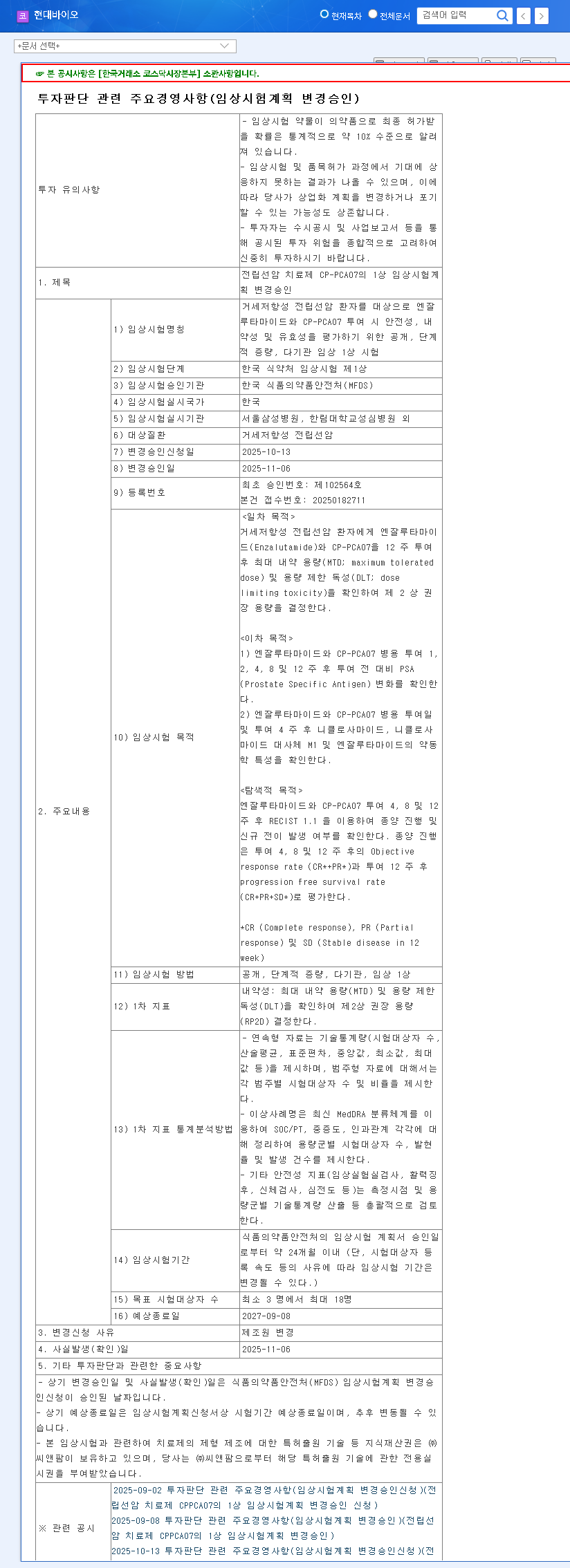
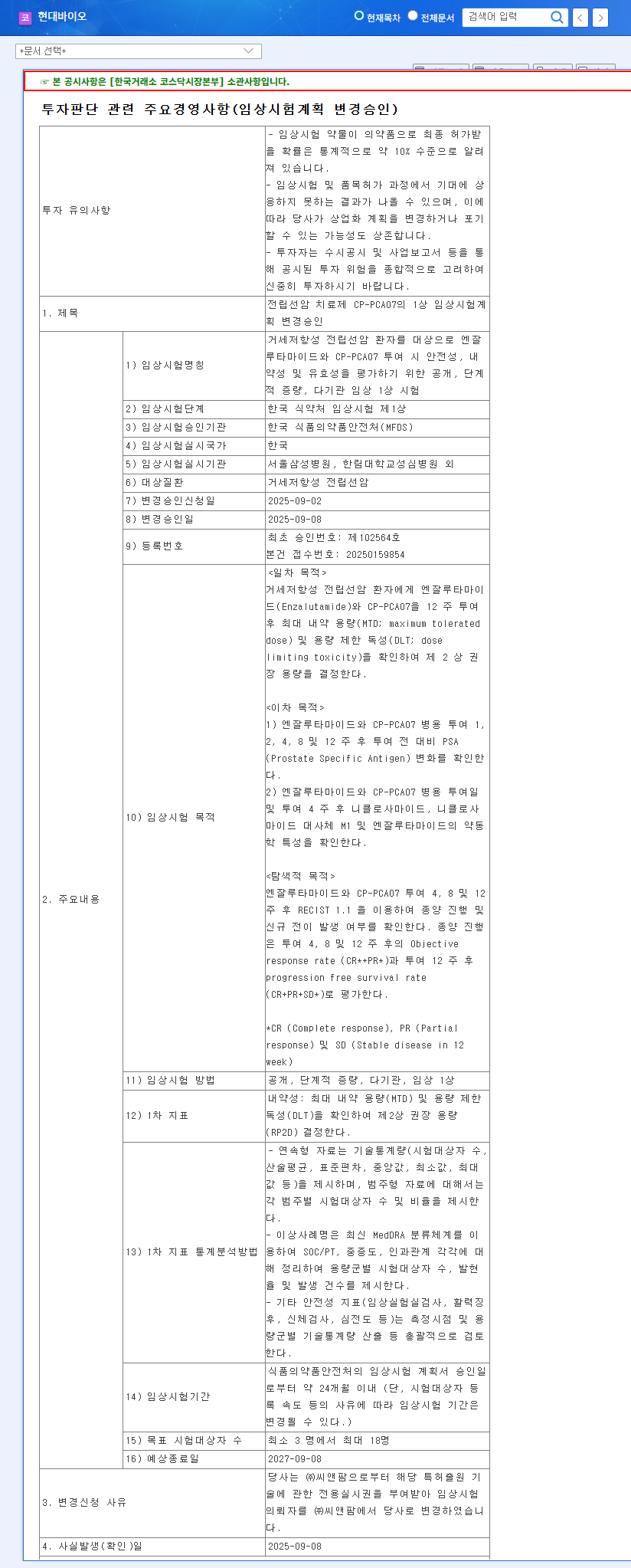
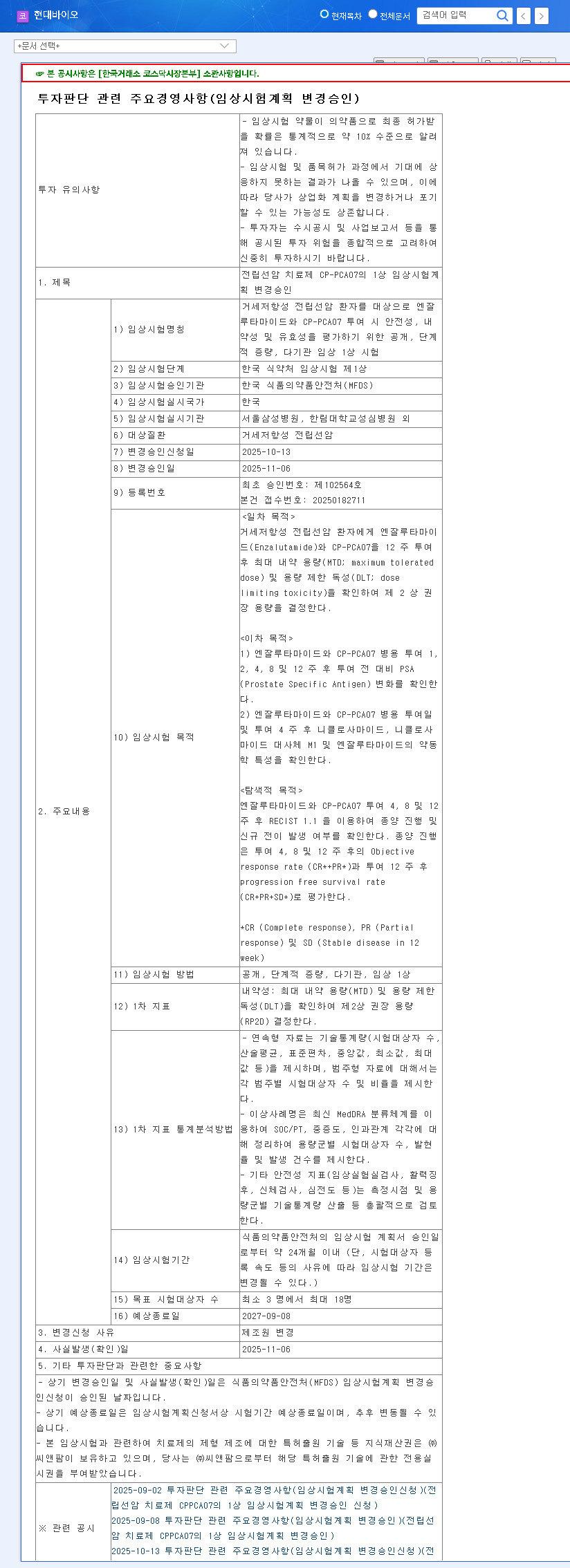
    On November 7, 2025, HYUNDAI BIOSCIENCE announced it had received regulatory approval for an amended Phase 1 clinical trial plan for its prostate cancer drug, CP-PCA07. This crucial study focuses on patients with castration-resistant prostate cancer (CRPC), a form of the disease that continues to progress despite hormone therapy. According to the Official Disclosure, the trial employs a combination therapy approach, pairing CP-PCA07 with Enzalutamide, a standard-of-care anti-androgen medication.

    Primary Objectives of the Phase 1 Clinical Trial

    The core goals of this early-stage trial are fundamental to the drug’s future development. Researchers aim to establish safety and dosing parameters, which are essential before advancing to larger, more complex trials. The key objectives include:

    • Maximum Tolerated Dose (MTD): Determining the highest dose of CP-PCA07 that can be administered without causing unacceptable side effects.
    • Dose Limiting Toxicity (DLT): Identifying potential severe side effects that would prevent further dose increases.
    • Recommended Phase 2 Dose (RP2D): Establishing the optimal dose to be used in subsequent Phase 2 efficacy trials.

    Success in this phase is not about curing the disease but about proving the drug is safe enough to move forward, a critical hurdle in the long journey of pharmaceutical development. For more information on prostate cancer, authoritative sources like the National Cancer Institute provide extensive resources.

    Why This Development Bolsters the HYUNDAI BIOSCIENCE Investment Case

    This clinical trial approval doesn’t exist in a vacuum. It arrives amidst several other positive developments that collectively strengthen the company’s fundamentals and long-term potential.

    • Enhanced Credibility: The company recently corrected a past accounting error in its R&D cost reporting, a move that significantly improves the transparency and credibility of its financial information.
    • Improved Financial Health: A recent capital increase secured 85.8 billion KRW, allowing for the full repayment of short-term debt. This financial fortification provides a stable runway for sustained R&D investments.
    • Expanding Drug Pipeline: The progression of HYUNDAI BIOSCIENCE CP-PCA07 adds another high-potential asset to a pipeline that already includes a COVID-19 treatment (CP-COV03) and a pancreatic cancer therapy (POLYTAXEL). Diversification is key to mitigating risk in the biotech sector.
    • Validated Technology: The core formulation technology, patented by partner CNPharm and licensed exclusively to HYUNDAI BIOSCIENCE, serves as an indirect validation of the company’s competitive technological edge.

    Investor Outlook: A Balanced Perspective

    Given the high uncertainty and long timeline of drug development, a long-term perspective is crucial. Focus on clinical progress and tangible outcomes rather than short-term market fluctuations.

    Potential Positives

    The advancement of the HYUNDAI BIOSCIENCE CP-PCA07 trial is a clear positive. It signals pipeline progression, boosts investor confidence, and, if successful, could unlock a significant revenue stream in the multi-billion dollar prostate cancer treatment market. Each successful step de-risks the asset and adds tangible value to the company.

    Risks and Considerations

    Investors must remain pragmatic. Drug development is inherently risky, with a high failure rate. This is only a Phase 1 clinical trial, meaning commercialization is still many years and several successful trials away. Furthermore, macroeconomic factors like high interest rates can increase fundraising costs and dampen investor sentiment across the biotech sector. For a deeper understanding of these market forces, you can read our guide on Navigating Biotech Investments.

    Frequently Asked Questions

    What is the significance of the approved HYUNDAI BIOSCIENCE trial?

    HYUNDAI BIOSCIENCE received approval for an amended Phase 1 clinical trial of its prostate cancer drug, CP-PCA07. It’s a safety and dosage study for patients with castration-resistant prostate cancer, a critical first step toward potential commercialization.

    How does this approval impact the company’s outlook?

    The approval is a positive catalyst. It validates their R&D progress, expands their clinical pipeline, and can improve investor sentiment. Long-term, a successful drug could become a major revenue driver.

    What should investors consider before investing?

    Investors should adopt a long-term view. Key considerations include the inherent risks and high failure rates of clinical trials, the extended timeline to market, and broader macroeconomic factors affecting the biotech industry.

    In conclusion, the approval of the amended Phase 1 trial for HYUNDAI BIOSCIENCE CP-PCA07 is a tangible and encouraging step forward. Paired with a strengthened financial position and a growing pipeline, the company is building a compelling growth story. However, a prudent investment strategy requires continuous monitoring of clinical data and a clear-eyed view of the associated risks.

    (048410) HYUNDAI BIOSCIENCE CP-PCA07: In-Depth Analysis of the Prostate Cancer Drug Phase 1 Trial 관련 이미지
  • (048410) HYUNDAI BIOSCIENCE CP-PCA07: Phase 1 Trial & Stock Analysis for Investors

    (048410) HYUNDAI BIOSCIENCE CP-PCA07: Phase 1 Trial & Stock Analysis for Investors

    The latest developments surrounding HYUNDAI BIOSCIENCE’s CP-PCA07 have captured significant attention in the biopharmaceutical and investment communities. As the company advances its innovative prostate cancer treatment into a new stage of its Phase 1 clinical trial, investors are closely evaluating the potential impact on HYUNDAI BIOSCIENCE’s stock and long-term value. This comprehensive analysis breaks down the significance of this milestone, assesses the company’s fundamentals, and provides a strategic outlook for potential investors.

    We will explore the science behind CP-PCA07, the financial health of HYUNDAI BIOSCIENCE, and the critical factors that could influence its journey from clinical trial to commercialization. Whether you are a current shareholder or considering an entry point, this guide offers the expert perspective needed to navigate this high-stakes opportunity.

    Advancement in the Fight Against Prostate Cancer: The CP-PCA07 Trial

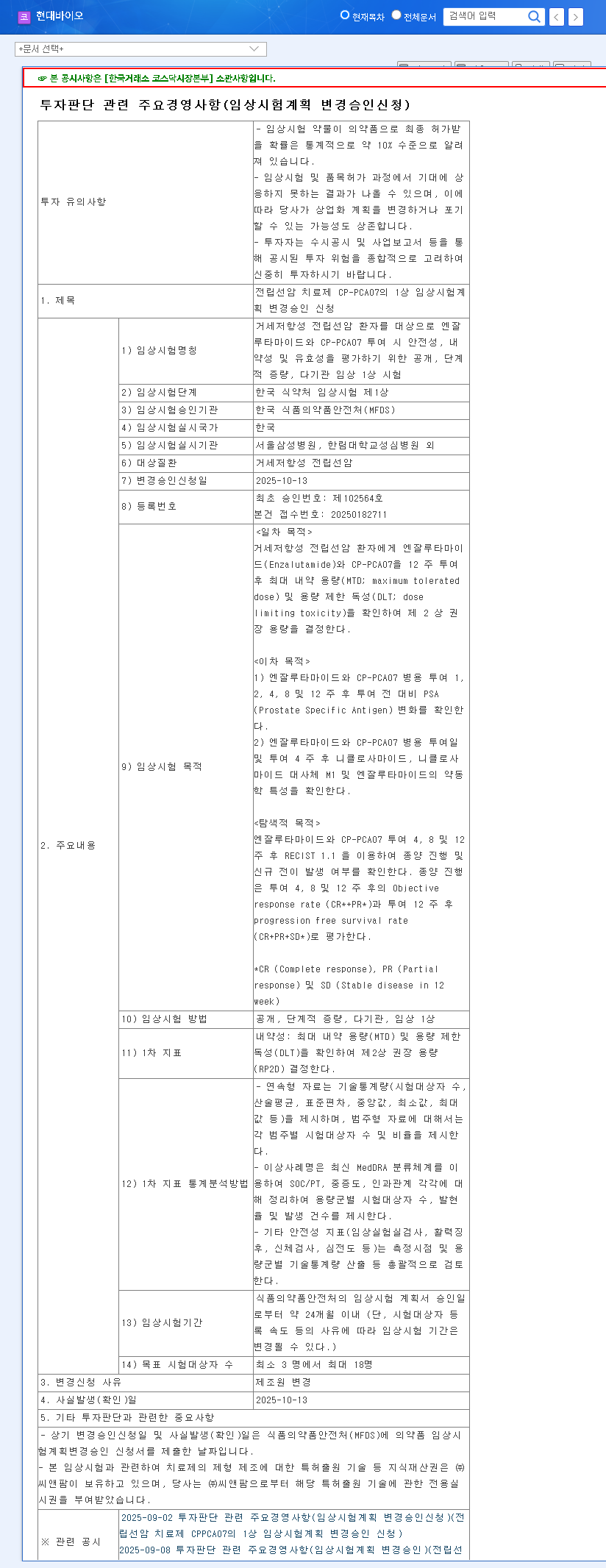
    On October 13, 2025, HYUNDAI BIOSCIENCE CO., LTD. officially submitted an amendment application for its Phase 1 clinical trial protocol for CP-PCA07. This is not merely a procedural step; it marks a pivotal advancement in developing a treatment for Castration-Resistant Prostate Cancer (CRPC), a particularly challenging form of the disease. According to the National Cancer Institute, CRPC is cancer that continues to grow even when testosterone levels are reduced to very low levels. The official filing can be viewed here: Official Disclosure.

    Key Objectives of the Amended Phase 1 Trial

    The amended trial aims to evaluate the safety, tolerability, and efficacy of CP-PCA07 when used in combination with enzalutamide, a current standard-of-care treatment. This strategy is crucial as it explores a potential combination therapy that could significantly improve patient outcomes.

    • Primary Goal: To determine the Maximum Tolerated Dose (MTD) and identify any Dose-Limiting Toxicity (DLT), which will establish a safe and effective recommended dose for the larger Phase 2 trials.
    • Secondary Goal: To monitor changes in Prostate-Specific Antigen (PSA) levels, a key biomarker for prostate cancer, and analyze the drug’s pharmacokinetic characteristics (how it is absorbed, distributed, and metabolized by the body).
    • Exploratory Goal: To assess the drug’s impact on tumor progression and the potential for new metastasis.

    The progression of a Phase 1 trial, especially with a combination therapy approach for a high-need area like CRPC, is a powerful signal of a company’s research and development maturity. Investors should view this as a de-risking event, albeit an early one.

    Fundamental Analysis: HYUNDAI BIOSCIENCE’s Investment Profile

    Beyond the promising news of the HYUNDAI BIOSCIENCE CP-PCA07 trial, a prudent investor must examine the company’s overall financial and operational health. For a comprehensive guide on this, consider reading our article on How to Analyze Biotech Stocks.

    Strengths and Opportunities

    • Maturing R&D Pipeline: The progress of CP-PCA07 demonstrates tangible execution and builds confidence in the company’s broader drug development pipeline.
    • Strategic Partnerships: The exclusive license from affiliate CNPharm for formulation technology creates valuable synergy and protects intellectual property.
    • Revenue Diversification: A noted increase in revenue from ‘Other’ segments in the 2024 business report hints at successful new ventures like technology licensing, reducing reliance on a single product.

    Risks and Considerations

    • Early-Stage Uncertainty: Phase 1 trials have a high rate of failure. Commercialization is still years away and requires navigating expensive and complex Phase 2 and 3 trials.
    • Financial Health: The company’s debt-to-equity ratio of 71.7% and persistent net losses (KRW 6,930 million) as of late 2024 require careful monitoring. Future clinical trials will demand significant capital.
    • R&D Investment Trends: A recent decrease in R&D expenditure as a percentage of revenue could be a red flag, as sustained investment is critical for long-term innovation in biotech.

    Investor Takeaway: A Strategic Outlook

    The advancement of the HYUNDAI BIOSCIENCE CP-PCA07 clinical trial is a significant positive catalyst. However, a balanced and cautious investment approach is paramount.

    For short-term traders, the positive news flow may create momentum and volatility. Risk management is key, as any setback in the trial could reverse gains quickly.

    For mid-to-long term investors, the focus should be on the forthcoming Phase 1 data. Positive results on safety and early efficacy signals would be a major validation. It is crucial to continuously monitor clinical trial progress, quarterly financial reports, and the company’s ability to fund its ambitious pipeline. While the risk is high, the successful commercialization of a novel prostate cancer treatment would fundamentally transform HYUNDAI BIOSCIENCE’s value proposition.

    Frequently Asked Questions (FAQ)

    What is HYUNDAI BIOSCIENCE’s CP-PCA07 Drug?

    CP-PCA07 is an investigational drug developed by HYUNDAI BIOSCIENCE for the treatment of Castration-Resistant Prostate Cancer (CRPC). It is currently in a Phase 1 clinical trial to evaluate its safety and efficacy, particularly in combination with the existing drug enzalutamide.

    What does the Phase 1 clinical trial amendment mean for the company?

    This amendment represents concrete progress in the development of CP-PCA07. It refines the study’s goals and moves the drug forward in the clinical pathway, which can boost investor confidence and signals the company’s commitment to its oncology pipeline.

    What are the main risks for investors in HYUNDAI BIOSCIENCE?

    The primary risks are the high uncertainty of early-stage clinical trials, the company’s current financial status (including debt and net losses), and the substantial capital required for future R&D. Clinical trial failure would significantly impact the HYUNDAI BIOSCIENCE stock price.

    (048410) HYUNDAI BIOSCIENCE CP-PCA07: Phase 1 Trial & Stock Analysis for Investors 관련 이미지
  • Hyundaibio Issues 15 Billion Won in Convertible Bonds: Impact and Investment Strategy


    Hyundaibio Issues 15 Billion Won in Convertible Bonds: Impact and Investment Strategy 대표 차트 이미지


    1. What is Hyundaibio’s CB Issuance?

    Hyundaibio has decided to issue 15 billion won worth of convertible bonds (CBs) through a private placement. The conversion price is set at 5,804 won, with a maturity interest rate of 4%. The funds raised will be used for operating capital.

    2. Why Issue Convertible Bonds?

    Hyundaibio has recently focused on improving its financial structure through rights offerings and debt repayment. This CB issuance is interpreted as a strategy to secure additional operating funds to strengthen R&D investment, including new drug development, and further solidify financial stability.

    3. How Will This Impact the Stock Price?

    Positive Impacts

    • • Increased R&D Investment: Expected acceleration of new drug development.
    • • Improved Financial Structure: Securing long-term stability.
    • • Enhanced Investor Confidence: Participation of savings banks.

    Negative Impacts

    • • Potential Stock Dilution: Upon conversion of CBs to shares.
    • • Conversion Price Adjustment Risk: In case of stock price decline.
    • • Potential Cash Outflow: Repayment burden at maturity.

    4. What Should Investors Do?

    Investors should carefully consider the following:

    • • Progress of key drug pipelines.
    • • Potential for conversion price adjustments.
    • • Changes in financial soundness.
    • • Company transparency and related issues.

    The CB issuance is a complex event that needs to be analyzed from both short-term and long-term perspectives. Prudent investment decisions are essential.


    FAQ

    What are convertible bonds (CBs)?

    Convertible bonds (CBs) are bonds that pay interest like regular bonds but also give the bondholder the option to convert the bond into a predetermined number of shares of the issuing company’s common stock at a specified price (conversion price) before maturity.

    Will this CB issuance positively affect the stock price?

    If the issuance leads to increased R&D investment and positive outcomes in new drug development, it could be a positive catalyst for the stock price. However, the potential for dilution upon conversion exists, requiring a comprehensive assessment of the situation.

    What’s the most important factor to consider when investing?

    It’s crucial to continuously monitor the development progress of core drug pipelines and any changes in the company’s financial soundness.


    Hyundaibio Issues 15 Billion Won in Convertible Bonds: Impact and Investment Strategy 관련 이미지


  • Hyundaibio Expands Dengue Fever Treatment Trials: Investment Opportunity?


    Hyundaibio Expands Dengue Fever Treatment Trials: Investment Opportunity? 대표 차트 이미지


    What Happened? Hyundaibio Applies for Clinical Trial Amendment Approval

    On September 16, 2025, Hyundaibio applied to the Vietnamese Ministry of Health (MOH) for approval to amend its Phase 2/3 clinical trial plan for CP-COV03 for dengue fever and dengue-like illnesses. The main changes are as follows:

    • • Change in drug formulation: Capsule → Granule
    • • Expansion of clinical trial sites: 1 → 2

    Why is Trial Expansion Important?

    This amendment to the clinical trial plan signifies Hyundaibio’s proactive commitment to developing a dengue fever treatment. Changing the dosage form to granules enhances patient convenience, and expanding the clinical trial sites allows for the collection of more patient data. These changes are expected to improve the reliability of clinical results and positively impact market entry for the dengue fever treatment.

    What’s Next? Analyzing Opportunities and Risks

    Positive Impacts

    • • Accelerated clinical trial progress and increased result reliability
    • • Expanded potential for entry into the Southeast Asian dengue fever treatment market
    • • Strengthening of technology and intellectual property rights

    Potential Risks

    • • Uncertainty of clinical trial results
    • • Financial burden due to increased R&D costs
    • • Intensified competition in the dengue fever treatment market
    • • Uncertainty regarding regulatory approval from the Vietnamese Ministry of Health

    What Should Investors Do? Action Plan

    If considering investing in Hyundaibio, investors should carefully check the following:

    • • Continuous monitoring of Phase 2/3 clinical trial progress and results
    • • Review of the company’s financial status and funding plans
    • • Analysis of the competitive landscape in the dengue fever treatment market
    • • Analysis of the impact of changes in macroeconomic indicators

    Hyundaibio has high growth potential but also carries risks. Investment decisions should be made carefully based on sufficient information.


    FAQ

    What is Hyundaibio’s dengue fever treatment?

    Hyundaibio’s dengue fever treatment candidate is CP-COV03. It is currently undergoing Phase 2/3 clinical trials in Vietnam to confirm its therapeutic effect on dengue fever and dengue-like illnesses (Zika, influenza A, COVID-19, etc.).

    What are the key changes in this clinical trial plan amendment?

    The main changes are the change in drug formulation from capsules to granules and the expansion of clinical trial sites from one to two.

    What are the key points to consider when investing?

    Investment decisions should be made cautiously, considering uncertainties such as the success of clinical trials, financial burden, market competition, and regulatory approvals. It is crucial to continuously monitor clinical results and the company’s financial status.


    Hyundaibio Expands Dengue Fever Treatment Trials: Investment Opportunity? 관련 이미지
    Hyundaibio Expands Dengue Fever Treatment Trials: Investment Opportunity? 관련 이미지


  • Hyundai Bioscience’s Prostate Cancer Drug Enters Phase 1 Clinical Trials: Investment Opportunity?

    Hyundai Bioscience's Prostate Cancer Drug Enters Phase 1 Clinical Trials: Investment Opportunity? 대표 차트 이미지

    What Happened?

    On September 8, 2025, Hyundai Bioscience received approval to amend the Phase 1 clinical trial plan for its prostate cancer drug, CPPCA07. This trial aims to evaluate the safety, tolerability, and efficacy of CP-PCA07 in combination with enzalutamide in patients with castration-resistant prostate cancer.

    Why is This Approval Important?

    Approval for the Phase 1 clinical trial amendment is a crucial first step in drug development. This is the first stage in confirming the safety and efficacy of CPPCA07 and serves as a stepping stone for future Phase 2 and 3 clinical trials. Specifically, this trial outlines clear objectives such as determining the Maximum Tolerated Dose (MTD) and Dose Limiting Toxicity (DLT), providing greater visibility into the potential for success.

    What’s Next?

    Positive Phase 1 results could drive an increase in Hyundai Bioscience’s corporate value. However, it’s crucial to understand that clinical trials are lengthy and costly processes. Investors should approach this with a long-term perspective rather than reacting to short-term stock fluctuations. It’s also important to watch the clinical progress and potential synergies with other pipeline developments, such as Hyundai Bioscience’s COVID-19 treatment and pancreatic cancer drug.

    Investor Action Plan

    • • Pay close attention to the upcoming Phase 1 clinical trial results.
    • • Analyze the development status of other pipelines and potential synergistic effects.
    • • Monitor financial soundness and potential for technology transfer.
    • • Maintain a long-term investment perspective.

    Frequently Asked Questions

    What is CPPCA07?

    CPPCA07 is a prostate cancer drug candidate being developed by Hyundai Bioscience.

    When will the Phase 1 trial begin?

    The exact start date of the clinical trial has not yet been disclosed.

    What are the key investment considerations?

    Careful investment decisions are needed, considering the uncertainties inherent in drug development.

    Hyundai Bioscience's Prostate Cancer Drug Enters Phase 1 Clinical Trials: Investment Opportunity? 관련 이미지
    Hyundai Bioscience's Prostate Cancer Drug Enters Phase 1 Clinical Trials: Investment Opportunity? 관련 이미지
  • Hyundai Bioscience Halts Pancreatic Cancer Drug Trial: Analysis and Outlook for Investors

    1. What Happened?

    On August 18, 2025, Hyundai Bioscience voluntarily withdrew its Phase 1 clinical trial plan for the pancreatic cancer drug, Polytaxel. This decision was made before the clinical trial received official approval.

    2. Why Was the Trial Halted?

    While the official reason remains undisclosed, several possibilities can be considered. These include resource reallocation based on strategic decisions, the discovery of unforeseen safety issues, or difficulties in conducting the clinical trial. The exact reason will be clarified upon the company’s official announcement.

    3. What’s Next?

    • Short-term Impact: Increased stock volatility is likely. Investors might temporarily sell shares due to the heightened uncertainty.
    • Long-term Impact: This could present an opportunity to focus on developing other pipelines. Hyundai Bioscience has a diverse portfolio, including treatments for COVID-19 and Dengue fever. Therefore, this decision could lead to positive long-term outcomes.

    A cautious approach is crucial at this point. Closely monitor the company’s further announcements and the progress of its other pipelines.

    4. What Should Investors Do?

    • Gather Information: Continuously monitor official company announcements and relevant news.
    • Comprehensive Analysis: Avoid being swayed by short-term stock fluctuations and conduct a comprehensive analysis of the company’s long-term growth potential.
    • Risk Management: Clearly define your investment objectives and risk tolerance before making any investment decisions.

    Frequently Asked Questions

    What is the exact reason for the Polytaxel trial halt?

    The company hasn’t officially disclosed the reason yet. While there are various speculations, we need to await further announcements for confirmed information.

    Will this trial halt affect Hyundai Bioscience’s other pipelines?

    The direct impact is expected to be limited. However, there might be changes in the company’s overall R&D strategy, necessitating continuous observation.

    Is it wise to invest in Hyundai Bioscience?

    Investment decisions should be based on individual judgment. Please refer to the information provided in this article and make a careful decision. Remember that investments always carry risks.

  • Hyundaibio Q2 2025 Earnings Analysis: Deepening Losses Despite ₩84.3B Rights Offering, What Should Investors Do?

    1. Hyundaibio’s Q2 2025 Performance: What Happened?

    Hyundaibio reported revenue of ₩300 million, an operating loss of ₩4.8 billion, and a net loss of ₩4.2 billion in Q2 2025. Revenue plummeted by approximately 92.7% year-over-year, accompanied by an expansion in losses. The discontinuation of the IT business and sluggish performance in the early stages of the bio business are cited as primary factors.

    2. Reasons for the Decline: Why These Results?

    The decline stems from a confluence of factors, including the rejection of the IND application for Phase 3 clinical trials of Hyundaibio’s COVID-19 treatment, delays in clinical trial preparations, high investment costs associated with new drug development, and low production capacity utilization. The uncertainty inherent in drug development and substantial financial burden pose significant risks for investors.

    3. Future Outlook and Investment Strategy: What Now?

    Hyundaibio is striving to secure future growth engines through a diversified pipeline of new biopharmaceuticals and improved financial stability through the rights offering. However, the uncertainties surrounding drug development and the potential deterioration of financial health persist. Therefore, investors should carefully monitor the progress of the drug pipeline, clinical trial results, changes in financial soundness, and macroeconomic conditions to make informed investment decisions.

    • Key Investment Considerations:
    • Success of new drug development
    • Financial soundness
    • Growth of the cosmetics business
    • Changes in the macroeconomic environment

    4. Investor Action Plan

    For those considering investing in Hyundaibio, it’s crucial to continuously monitor the company’s disclosures and relevant news, and to consult with financial experts. A long-term investment approach is recommended, prioritizing risk management through diversification rather than short-term gains.

    Frequently Asked Questions

    What are Hyundaibio’s main businesses?

    Hyundaibio engages in biopharmaceutical development and cosmetics.

    How did Hyundaibio perform in Q2 2025?

    The company reported revenue of ₩300 million, an operating loss of ₩4.8 billion, and a net loss of ₩4.2 billion.

    What precautions should investors take when considering Hyundaibio?

    Investors should carefully consider the uncertainties in new drug development and financial risks. Thoroughly reviewing company disclosures and related information before investing and consulting with financial experts is advisable.