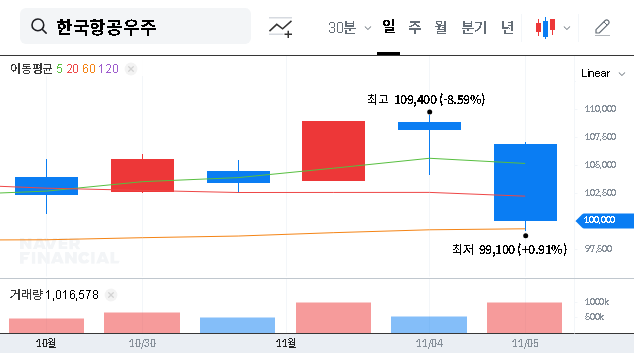
The latest KAI Q3 2025 earnings report has sent a shockwave through the market. On November 5, 2025, KOREA AEROSPACE INDUSTRIES, LTD. (KAI) unveiled preliminary financial results that fell significantly short of analyst consensus, raising critical questions about the company’s trajectory and the future of KAI stock. This comprehensive analysis will dissect the Q3 performance, explore the underlying causes for the downturn, and provide a forward-looking perspective for concerned investors.
The Q3 2025 Earnings Report: A Closer Look
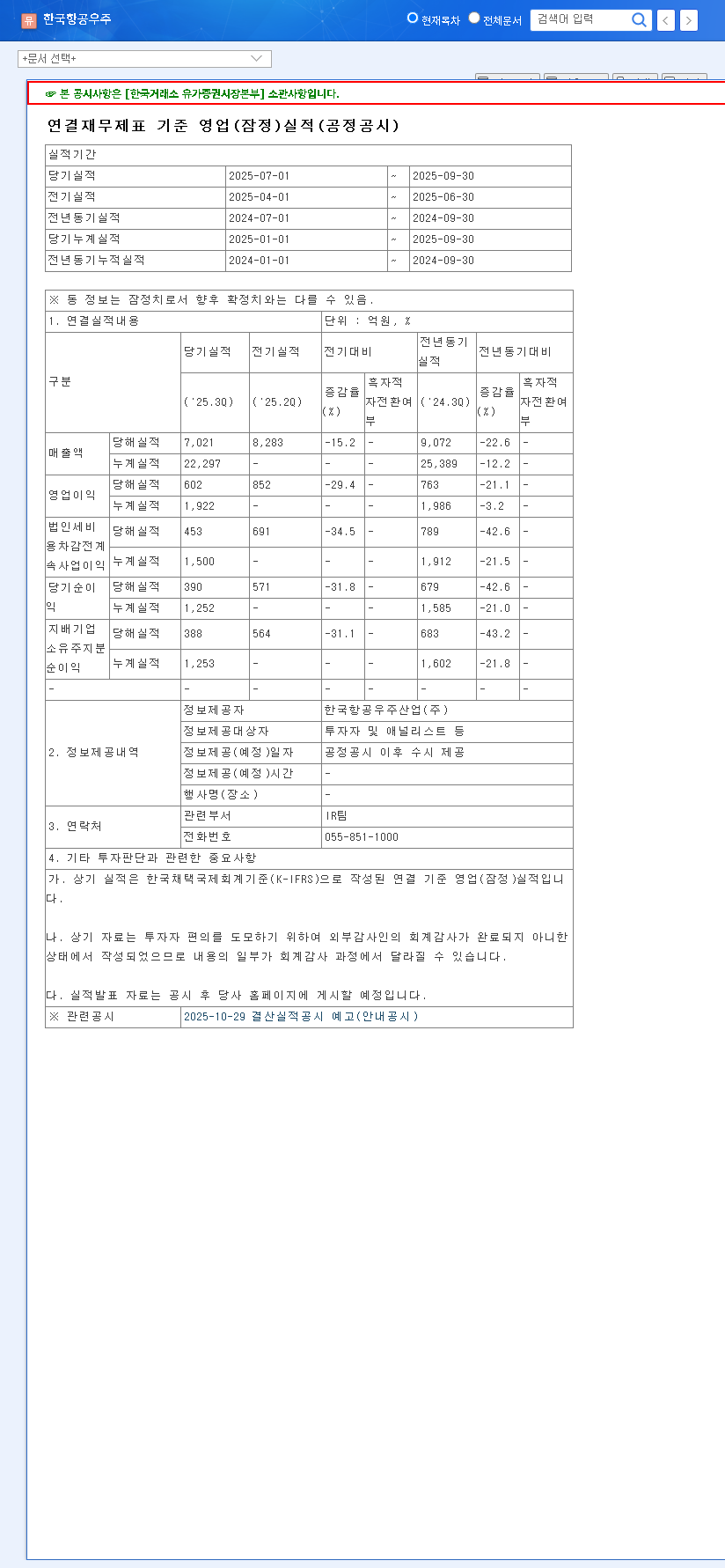
The preliminary consolidated financials for the third quarter revealed a substantial miss across all key metrics. The gap between expectations and reality was stark, signaling potential challenges ahead. The full details can be reviewed in the Official Disclosure filed with DART.
- •Revenue: KRW 702.1 billion, falling short of the KRW 940.9 billion market estimate by a staggering 25%.
- •Operating Profit: KRW 60.2 billion, approximately 17% below the consensus forecast of KRW 72.1 billion.
- •Net Profit: KRW 38.8 billion (attributable to controlling shareholders), a significant 29% miss compared to the expected KRW 55.0 billion.
Such a broad-based underperformance immediately erodes investor confidence and points to deeper issues beyond a simple miscalculation, making a thorough aerospace industry analysis of KAI’s position essential.
Dissecting the Underperformance: What Went Wrong?
The poor KAI financial results stem from a confluence of internal operational factors and challenging external macroeconomic conditions.
Fundamental Business Challenges
The core issue is a persistent decline in revenue. The Q3 figure represents a 22.6% drop year-over-year and a 15.2% decrease from the previous quarter. This top-line shrinkage directly squeezed profitability, with the operating profit margin falling to 8.57% from 10.29% in Q2 2025. This volatility suggests that revenue recognition may be lumpy, possibly due to the timing of milestone payments on large-scale defense projects or unforeseen delays in production schedules.
Macroeconomic Headwinds
The global economic climate has created a complex operating environment. While geopolitical tensions fuel demand in the military sector, the civil aviation market faces uncertainty from high interest rates and recessionary fears. Furthermore, exchange rate volatility presents a double-edged sword; a strong USD/KRW rate boosts the value of exports but also inflates the cost of imported components and raw materials, potentially negating the benefits. For a comprehensive overview of global economic trends, sources like Reuters’ market analysis provide valuable context. Rising energy prices and high interest rates in both Korea and the U.S. further compound these challenges by increasing logistics costs and the burden of servicing KAI’s significant debt.
This earnings shock is a critical stress test for KAI’s fundamentals. The market will now be scrutinizing whether this is a temporary setback or a sign of deeper structural weaknesses.
Impact on KAI Stock and Long-Term Value
Short-Term Pressure and Investor Sentiment
The immediate reaction to the KAI Q3 2025 earnings miss will almost certainly be negative. Downward pressure on the KAI stock price is expected as investors recalibrate their expectations and pricing models. The key concern is the erosion of trust, which can lead to a sustained sell-off until management provides a clear and convincing recovery plan.
Mid-to-Long-Term Growth Drivers Remain Key
Despite the current turmoil, KAI’s long-term value hinges on its key growth catalysts. The company’s massive order backlog, exceeding KRW 26 trillion, provides a theoretical revenue cushion. However, the focus now shifts to the profitability and execution of these contracts. The performance of flagship programs, such as the KF-21 Boramae fighter jet program and FA-50 light combat aircraft exports to nations like Poland and Malaysia, will be paramount. Success in these areas, along with advancements in its burgeoning space business, is crucial to restoring market confidence and justifying a higher valuation in the future.
The Path Forward: A Dual Mandate for Management and Investors
To navigate this crisis, both KAI’s leadership and its investors must adopt a strategic and clear-eyed approach.
- •Management’s Role: KAI’s leadership must prioritize transparent communication. This includes clarifying the specific reasons for the delays and cost overruns, presenting a tangible strategy to improve margins, and offering a concrete plan to manage its high debt-to-equity ratio of 432.37%.
- •Investor’s Prudence: A cautious approach is warranted. Investors should monitor management’s follow-up communications and look for tangible evidence of operational improvements. Rushing to ‘buy the dip’ without a clear understanding of the recovery path could be risky. It may be prudent to wait for signs of stabilization before making significant new investments in KAI stock.
Frequently Asked Questions
Q1: Did KOREA AEROSPACE INDUSTRIES (KAI) meet market expectations for Q3 2025?
No, KAI reported a significant ‘earnings shock’ for Q3 2025. Revenue, operating profit, and net profit all fell substantially below market consensus estimates, with revenue missing by approximately 25%.
Q2: What were the main reasons for KAI’s underperformance in Q3?
The underperformance was driven by a sharp decline in revenue compared to both the previous year and the prior quarter. This is likely due to a combination of factors including project timing/delays, rising costs for materials, and a challenging macroeconomic environment with high interest rates.
Q3: What does KAI’s high debt-to-equity ratio imply for investors?
KAI’s high debt ratio of 432.37% is a significant risk factor. It increases financial fragility, makes the company more vulnerable to interest rate hikes, and could limit its ability to invest in future growth if profitability and cash flow do not improve.
Q4: What should investors do after this KAI earnings report?
A cautious approach is highly recommended. Investors should wait for clear communication from KAI’s management regarding a recovery plan and monitor for tangible signs of improvement in financial health and project execution before making major investment decisions.
Leave a Reply