Tag: 046070

  • (046070) Kodaco Delisting Halted: A Complete 2025 Investor’s Guide to the Financial Crisis

    (046070) Kodaco Delisting Halted: A Complete 2025 Investor’s Guide to the Financial Crisis

    The sudden suspension of the Kodaco delisting procedure has sent shockwaves through the market, leaving Kodaco investors grappling with a mix of fragile hope and profound uncertainty. While the halt of liquidation trading offers a temporary reprieve, it fails to address the deep-seated financial crisis plaguing Kodaco Co., Ltd. Is this a genuine turning point, or merely a delay of the inevitable? This comprehensive analysis will dissect the situation, explore the severe underlying risks, and provide a clear strategy for investors navigating this volatile landscape.

    The Official Announcement: Kodaco Delisting Procedure Halted

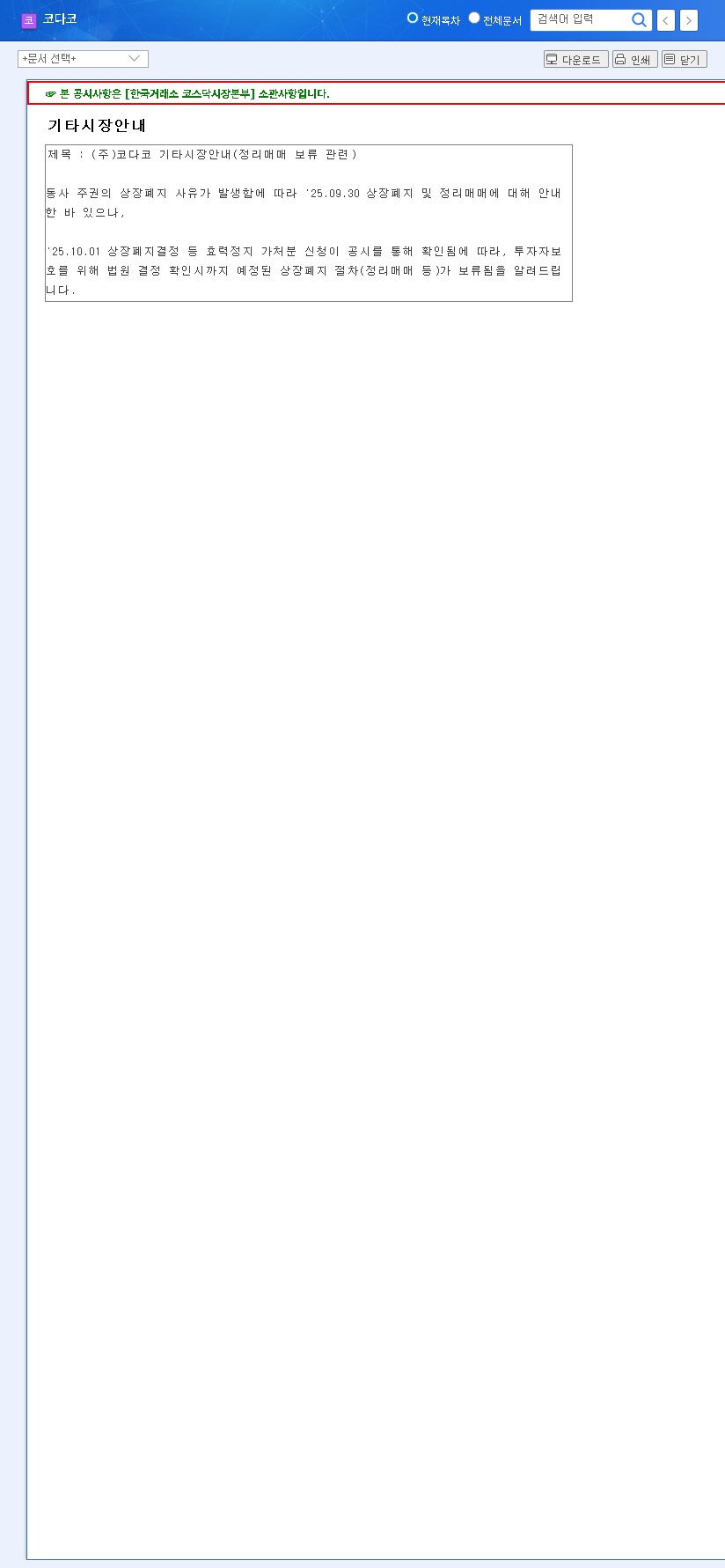
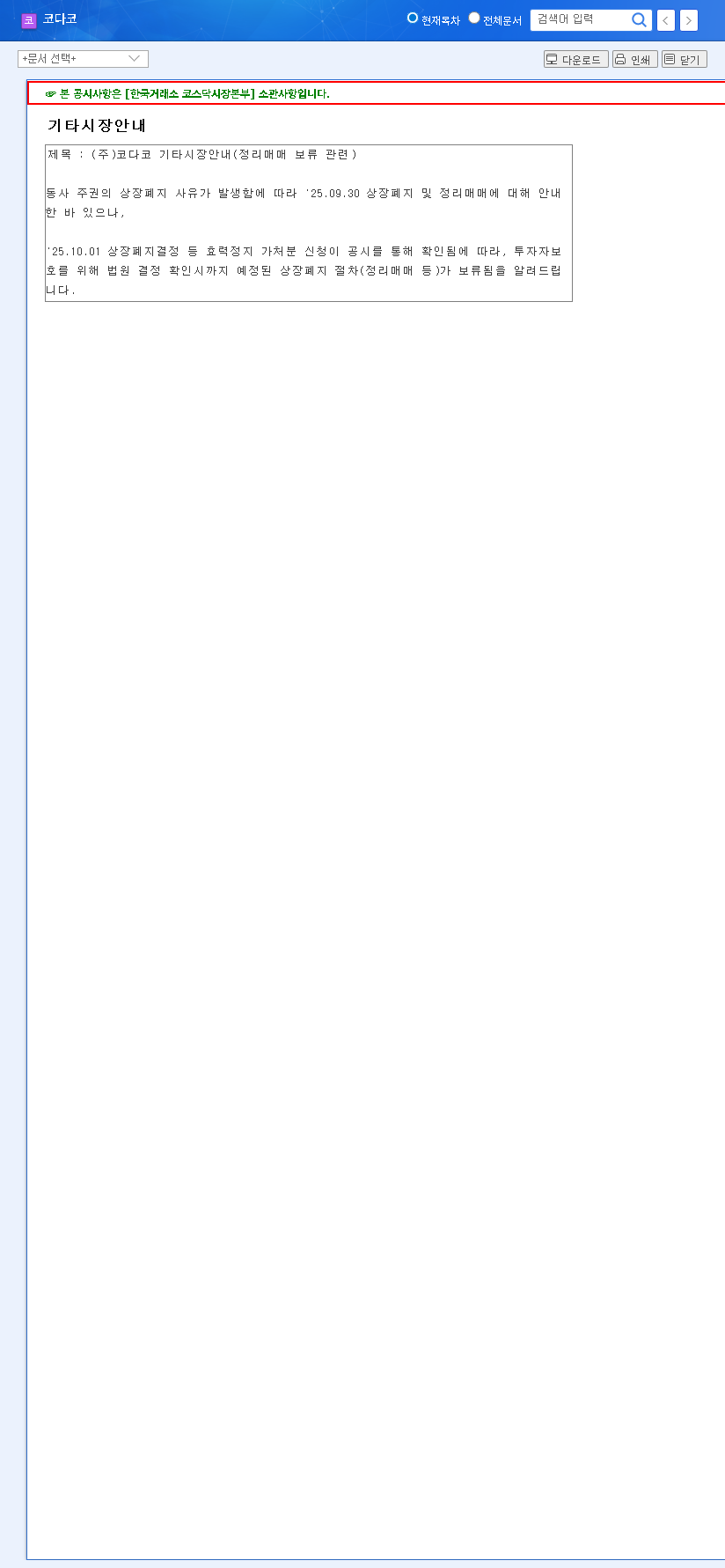
    On October 1, 2025, Kodaco Co., Ltd. confirmed the suspension of its scheduled delisting and liquidation trading. This decision was triggered by a ‘request for an injunction to suspend the effect of the delisting decision’ filed with the courts. As detailed in the company’s Official Disclosure to the Financial Supervisory Service, all procedures are on hold pending a final court ruling. This legal maneuver has bought the company time, but it simultaneously magnifies the uncertainty for all stakeholders.

    Unpacking the Severe Kodaco Financial Crisis

    Despite the legal pause, the fundamental financial health of Kodaco remains in critical condition. A close examination of its 2025 half-year report reveals a company on the brink.

    Going Concern Uncertainty: The Core Risk

    The most glaring red flag is the auditor’s warning of ‘events that raise significant doubt about the company’s ability to continue as a going concern.’ This is not a standard business challenge; it’s an existential threat. The primary driver for this is the delayed payment of rehabilitation claims from 2024. While the company is scrambling to raise funds by selling assets, any failure in this revised plan could trigger a complete collapse.

    A Mountain of Debt and Anemic Profits

    Kodaco’s financial structure is exceptionally fragile. Key indicators of this weakness include:

    • Astronomical Debt Ratio: The consolidated debt-to-equity ratio sits at a staggering 1,643.46%. This makes the company hyper-sensitive to any changes in interest rates or currency exchange rates.
    • Weak Profitability: While operating profit edged into the positive at 1.4 billion KRW, the net profit remains firmly in the red. This indicates that even with operations running, the company cannot cover its massive financial burdens.
    • Disclaimer of Audit Opinion: This is a critical blow to investor trust. When an auditor issues a disclaimer, it means they were unable to obtain sufficient evidence to form an opinion on the financial statements. This effectively renders the company’s financial reporting unreliable.

    The combination of a disclaimer of audit opinion and extreme debt creates a high-risk environment where the fundamental value of the Kodaco stock is nearly impossible to ascertain, making any investment highly speculative.

    Impact on Kodaco Investors: Navigating the Uncertainty

    The suspension of the Kodaco delisting process has distinct short-term and long-term consequences for investors. The immediate relief from delisting is overshadowed by prolonged ambiguity.

    Short-Term: Heightened Volatility

    In the short term, investors should brace for extreme price swings. The legal limbo creates a vacuum of information, where rumors can drive erratic trading. While the immediate threat of total loss is paused, the unresolved fundamentals mean that investor sentiment will remain overwhelmingly negative. This is not a stable environment for investment; it is a speculator’s arena where understanding risk management is paramount.

    Mid-to-Long-Term: Eroding Trust and Fundraising Hurdles

    Looking ahead, the path for Kodaco is fraught with challenges. The injunction prolongs the rehabilitation process, making it harder for the company to execute its turnaround plan. Securing new funding will be nearly impossible with the threat of delisting still looming, which in turn jeopardizes the very business operations needed for recovery. This cycle of uncertainty further erodes the trust of both investors and financial markets.

    Macroeconomic Headwinds Adding to the Pressure

    Kodaco’s internal problems are amplified by external economic pressures. As a company with a high debt load, it is extremely vulnerable to macroeconomic shifts. Global interest rate policies, such as those analyzed by sources like Bloomberg’s economic forecasts, could significantly increase Kodaco’s debt servicing costs. Furthermore, a slowdown in the global automotive parts industry, fluctuating raw material costs, and volatile exchange rates all add layers of risk that the company is ill-equipped to handle in its current state.

    Investment Strategy: The Final Verdict on Kodaco Stock

    Given the overwhelming evidence, the investment opinion on Kodaco Co., Ltd. remains ‘Highly Negative’ and ‘Unsuitable for Investment.’ The temporary halt in the delisting process does not change the fact that fundamental questions about the company’s survival are unresolved. The risk of a sudden resumption of the delisting procedure, which could lead to a total loss of investment, is exceptionally high.

    Investors must vigilantly monitor the following key variables, as they will determine the company’s fate:

    • Court’s Injunction Decision: This is the most critical near-term catalyst. A rejection will likely mean an immediate resumption of delisting.
    • Rehabilitation Plan Progress: Watch for concrete news on asset sales and fundraising. Failure to meet targets is a major red flag.
    • Future Audit Opinions: A clean audit opinion is a non-negotiable prerequisite for restoring any semblance of trust.
    • Macroeconomic Changes: Keep an eye on interest rates and industry trends that directly impact Kodaco’s thin margins.

    In conclusion, the Kodaco delisting saga is far from over. This suspension is a legal pause, not a financial rescue. For investors, the message is clear: the level of risk is extreme, and extreme caution is advised.
    (046070) Kodaco Delisting Halted: A Complete 2025 Investor's Guide to the Financial Crisis 관련 이미지
  • (046070) Kodaco Delisting Crisis (046070): Injunction Analysis & 2025 Investor Strategy

    (046070) Kodaco Delisting Crisis (046070): Injunction Analysis & 2025 Investor Strategy

    The Kodaco delisting situation has reached a critical juncture, placing investors of Kodaco (046070) on high alert. After the Korea Exchange announced its decision to delist the company, Kodaco responded with a crucial legal maneuver: filing an application for an injunction to suspend the decision. This court battle is more than a procedural step; it is the definitive turning point that will determine the company’s survival and the fate of shareholder investments.

    Can Kodaco navigate this perilous crisis and secure its place on the market? This comprehensive analysis provides an expert perspective on the background of the injunction, the company’s fragile financial state, potential scenarios following the court’s verdict, and a strategic guide for every investor caught in the uncertainty.

    The Brink of Delisting: What Caused the Kodaco Crisis?

    On October 1, 2025, Kodaco Co., Ltd. officially filed an application with the Seoul Southern District Court for an injunction to suspend the Korea Exchange’s delisting order. This legal action is a direct response to the exchange’s decision, which was triggered by a ‘disclaimer of audit opinion’ on the company’s recent financial statements. An audit disclaimer is one of the most severe red flags, signaling that auditors could not obtain sufficient evidence to form an opinion on the accuracy of the financial reports, raising fundamental questions about transparency and viability.

    The company is requesting that the delisting’s effect be paused until a final judgment is rendered in the primary legal case. The core issue is whether Kodaco can convince the court that it has a viable path forward. The official filing can be reviewed in the company’s public disclosure. (Official Disclosure: Source)

    A Deeper Dive into Kodaco’s Financial Health

    The Kodaco injunction application is a symptom of deeper, systemic problems within the company’s fundamentals. The ‘disclaimer of opinion’ highlights significant concerns about its financial stability and corporate governance.

    1. The Shadow of ‘Going Concern’ Uncertainty

    Currently undergoing rehabilitation proceedings, Kodaco’s ability to continue as a ‘going concern’ is in serious doubt. This accounting term refers to a company’s capacity to operate indefinitely without the threat of liquidation. The audit disclaimer makes it incredibly difficult for investors, creditors, and partners to trust the company’s financial statements, amplifying uncertainty around its rehabilitation plan and its need for additional funding.

    2. Analyzing Key Financial Indicators

    • Declining Performance: The company saw a noticeable decrease in both revenue and operating profit from 2022 to 2023, with operating profit taking a significant hit in 2024.
    • Misleading Net Profit: While a net profit turnaround was reported in 2024, this was largely due to one-time gains from financial restructuring during rehabilitation, not a fundamental improvement in core business operations.
    • Heavy Debt Burden: A persistently high debt-to-equity ratio remains a major financial burden, constraining the company’s flexibility and increasing its risk profile.

    3. Navigating Macroeconomic Headwinds

    External economic factors further complicate Kodaco’s situation. A rise in the KRW/USD and KRW/EUR exchange rates can benefit exports but also increases the cost of imported raw materials. Furthermore, a sustained high-interest-rate environment globally will exacerbate Kodaco’s financial strain by increasing its interest expenses. Slowdowns in the global automotive industry and rising prices for key materials like AL-INGOT add more pressure on both sales and costs.

    The court’s decision on the injunction is a binary event with massive consequences. For investors, this is the highest level of speculative risk, where the outcome could mean either a sliver of hope or a total loss of capital.

    Two Futures: Scenarios After the Court’s Decision

    The outcome of the Kodaco delisting injunction will create two vastly different futures for the company and its shareholders.

    Positive Scenario: Injunction Granted (Listing Maintained)

    If the court grants the injunction, stock trading could resume, providing desperate liquidity for investors. This would be a significant morale boost, potentially restoring some investor confidence and providing momentum for the company’s rehabilitation plan. However, this is only a temporary reprieve; the underlying financial issues must still be resolved for long-term survival. For more information on corporate turnarounds, authoritative sources like Reuters Business provide excellent case studies.

    Negative Scenario: Injunction Denied (Delisting Confirmed)

    If the injunction is denied, the stock delisting crisis concludes with the worst possible outcome. Delisting would be confirmed, stock trading permanently halted, and shareholder value would likely be wiped out. This would cripple the company’s ability to raise capital and severely damage its reputation, making a successful rehabilitation nearly impossible.

    Investor Action Plan: What to Watch For

    Investing in Kodaco (046070) is an extremely high-risk proposition. A cautious, informed approach is essential. Investors need a clear investment strategy focused on monitoring key developments.

    • Monitor the Injunction Verdict: This is the most critical short-term catalyst. The court’s decision will dictate the immediate future of your investment.
    • Track Fundamental Improvements: Look for tangible progress in the rehabilitation plan, meaningful efforts to reduce debt, and, most importantly, any change in the auditor’s opinion towards ‘unqualified’ in future reports.
    • Acknowledge Risk and Define Exit Points: Before making any decision, clearly define your tolerance for loss. Understand that this is a speculative play with a high probability of failure. It is important to learn about the process of handling delisted stocks in your portfolio.

    The fate of Kodaco rests on a legal judgment. Rather than making rash decisions based on speculation, investors should ground their actions in objective information and a clear understanding of the immense risks involved.

    (046070) Kodaco Delisting Crisis (046070): Injunction Analysis & 2025 Investor Strategy 관련 이미지
  • (046070) Kodaco Delisting (046070): A Complete Guide for Shareholders

    (046070) Kodaco Delisting (046070): A Complete Guide for Shareholders

    The news investors feared is now official: the Kodaco delisting has been formally confirmed. On September 30, 2025, the Korea Exchange announced its final resolution to delist all shares of Kodaco (046070), a decision that has sent shockwaves through its shareholder community. For anyone holding this stock, this event represents a critical moment that could potentially lead to a significant or total loss of investment capital. This comprehensive guide will break down the entire situation, from the underlying causes to the actionable steps you must consider to protect your assets.

    This situation underscores the inherent risks in equity markets, particularly with companies facing financial distress. We will explore the timeline, the financial red flags that led to this point, and provide a clear framework for shareholder response strategies.

    The Official Announcement: Kodaco’s Delisting Confirmed

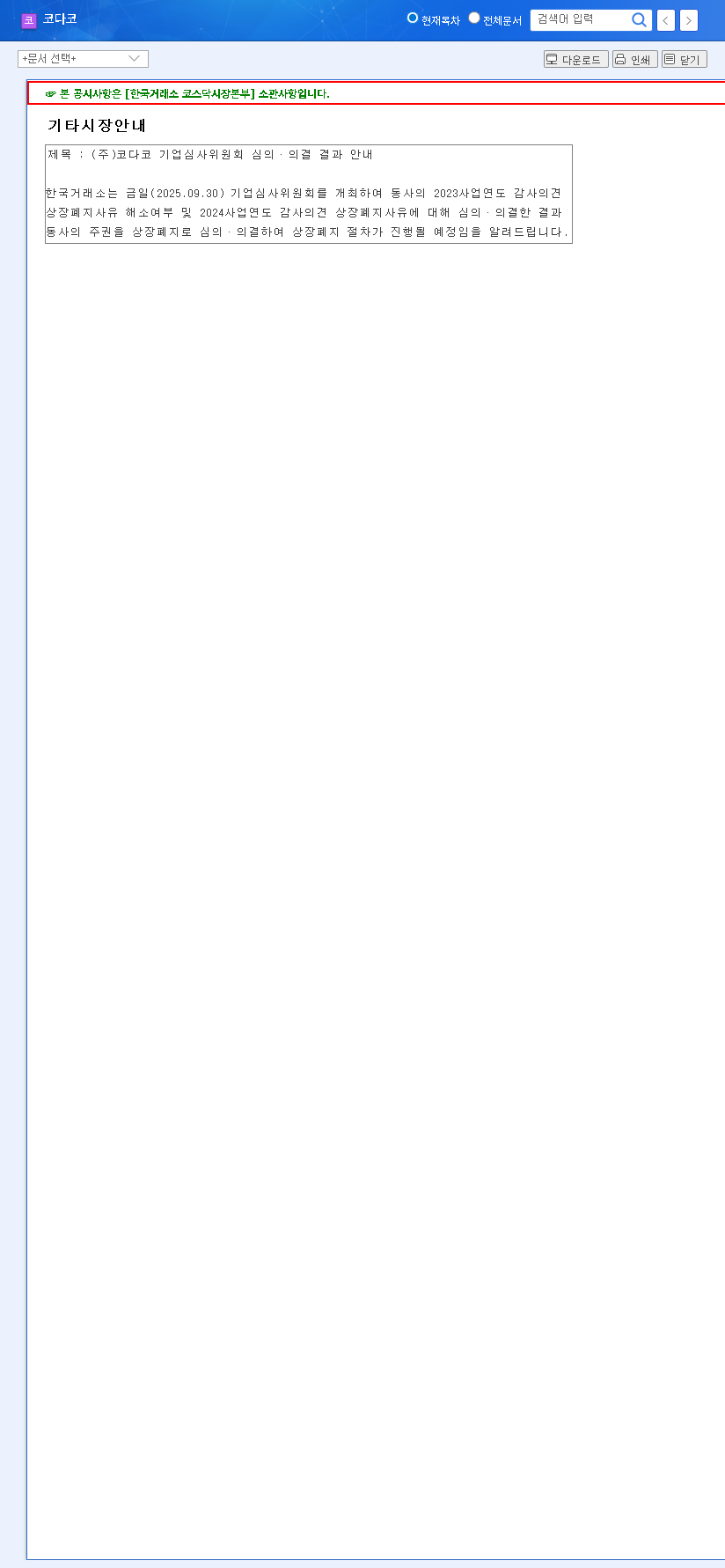
    The final decision was made public on September 30, 2025, when the Korea Exchange’s Corporate Review Committee concluded its review of Kodaco (046070). The committee determined that the company had not only failed to resolve the delisting grounds from its 2023 audit but had also incurred new grounds for delisting based on its 2024 audit. The official filing can be viewed directly on the DART system (Official Disclosure). Trading of Kodaco stock had already been suspended since March 21, 2025, following a disclaimer of audit opinion and the ongoing rehabilitation procedures, but this final decision seals its fate on the public exchange.

    A ‘disclaimer of opinion’ from an auditor is one of the most severe red flags for a publicly traded company. It means the auditor could not obtain sufficient evidence to form an opinion on the financial statements, indicating fundamental issues with the company’s financial records or viability.

    Core Reasons Behind the Kodaco Delisting

    The delisting wasn’t a sudden event but the culmination of prolonged financial and operational struggles. Understanding these root causes is crucial for any investor.

    1. Catastrophic Financial Instability

    At the heart of the Kodaco delisting was its precarious financial health. Despite entering a rehabilitation plan, the company failed to meet its obligations. Key indicators included:

    • Massive Debt Burden: The company’s consolidated debt-to-equity ratio reached an astronomical 1,643.46%. This signifies that its debts were over 16 times greater than its shareholder equity, a completely unsustainable level.
    • Failed Rehabilitation: Delays in repaying rehabilitation claims created severe doubts about its ability to continue as a ‘going concern’—a foundational accounting principle. You can learn more about this concept from authoritative sources like Investopedia.
    • Unsuccessful Fundraising: Efforts to raise capital through subsidiary sales and debt refinancing ultimately failed, leaving the company without the necessary cash flow to survive.

    2. Business Limitations & Market Headwinds

    While Kodaco’s core business in aluminum die-casting for automotive parts had stable sales, it wasn’t enough to overcome its financial woes. Attempts to pivot to higher-growth areas like EV and hybrid vehicle components did not gain traction. This was compounded by a harsh external environment, including a rising USD/KRW exchange rate, high interest rates, and soaring raw material costs, which further squeezed its already thin margins.

    Impact on Shareholders & What to Do Now

    For investors, a stock delisting is often the worst-case scenario. The termination of exchange trading means a complete loss of liquidity, making it nearly impossible to sell shares. The value of the stock will likely fall to zero. Given this irreversible decision, shareholders must act decisively.

    • Assess the Delisting Trading Period: The exchange typically provides a brief period for 정리매매 (delisting trading) before the stock is fully removed. This is a highly volatile, last-chance window to sell shares, often at a steep loss. Evaluate if cutting losses here is the best path.
    • Monitor for Liquidation Value: After delisting, if the company is liquidated, shareholders are last in line to receive any remaining assets after all creditors are paid. In cases of such high debt, the chance of recovering any residual value is extremely slim, but it’s a possibility to monitor.
    • Learn and Adapt Your Strategy: Use the painful lesson from the Kodaco delisting to improve your investment process. For more information, read our internal guide on how to analyze a company’s financial health before investing.

    Frequently Asked Questions

    Q1: Is the Kodaco delisting decision final?

    A1: Yes, the decision made on September 30, 2025, by the Korea Exchange’s Corporate Review Committee is the final resolution to delist the shares from the public market.

    Q2: What was the single biggest reason for the delisting?

    A2: The primary trigger was the ‘disclaimer of opinion’ from auditors for consecutive years, stemming from the company’s severe financial distress, failed rehabilitation, and inability to prove its viability as a going concern.

    Q3: Do my delisted Kodaco shares have any value?

    A3: Once delisted, the shares lose their market liquidity and, in most cases, their investment value converges to zero. There is a very remote chance of recovering a small fraction of value if the company is liquidated and has assets remaining after paying all debts, but this is highly unlikely.

    Q4: What’s the key lesson for investors from this case?

    A4: This case is a stark reminder to always conduct thorough due diligence. Pay close attention to audit reports, debt-to-equity ratios, and any mention of ‘going concern’ doubts. These are not minor details; they are critical indicators of a company’s survival risk.

    (046070) Kodaco Delisting (046070): A Complete Guide for Shareholders 관련 이미지
  • Kodako (046070) Delisting Crisis Deepens: Investor’s Guide


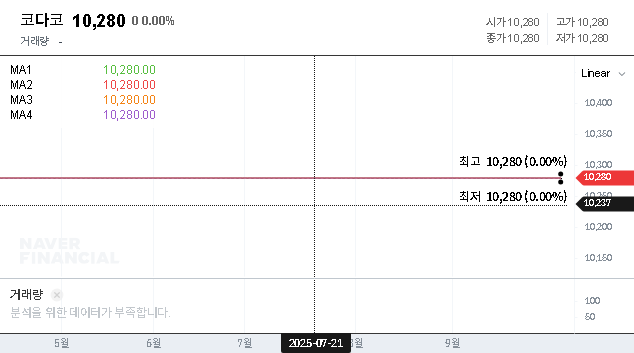
    Kodako (046070) Delisting Crisis Deepens: Investor's Guide 대표 차트 이미지


    What’s Happening with Kodako (046070)?

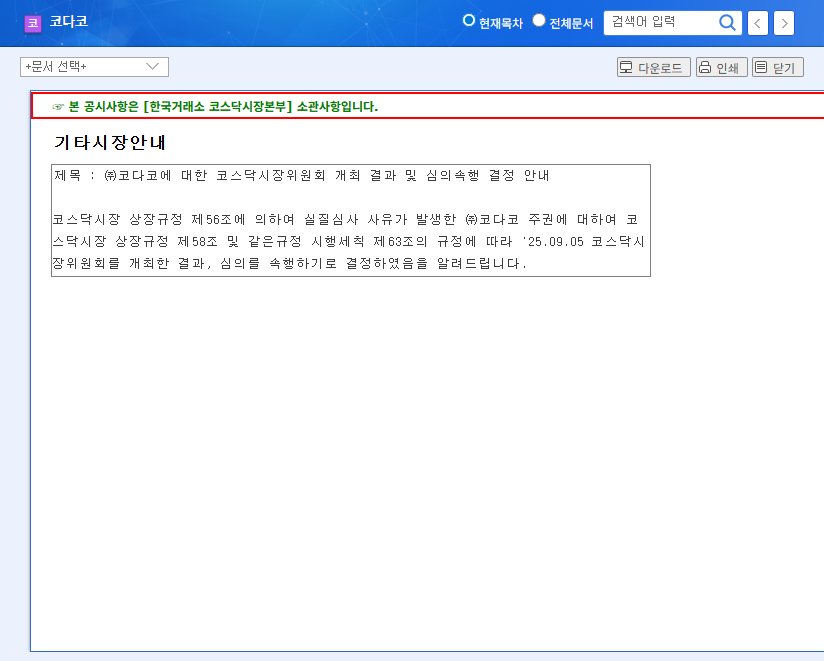
    The KOSDAQ Market Committee decided on September 5, 2025, to continue the delisting review for Kodako. This is a critical issue that could determine the company’s survival.

    Why is Kodako in this situation?

    Kodako is currently undergoing rehabilitation proceedings and received a “disclaimer of opinion” in its audit report. This raises serious questions about the company’s financial soundness and transparency. High debt ratios and continued losses further darken the company’s prospects for recovery.

    What should investors do?

    • Short-term impact: Increased stock price volatility, potential surge in trading volume and sell-off, deterioration of investor sentiment.
    • Mid- to long-term impact: Possibility of delisting, restrictions on corporate activities, accelerated deterioration of fundamentals.

    Macroeconomic uncertainties could further exacerbate Kodako’s situation.

    Investor Action Plan

    • Suspend investment: New investments should be carefully considered after confirming the review results and the company’s response.
    • Strengthen risk management: Existing investors need to strengthen risk management, considering the possibility of principal loss.
    • Obtain additional information: Carefully analyze all disclosed information, including review results and the company’s position.


    FAQ

    Is Kodako’s delisting confirmed?

    Not yet, but the decision to continue the review increases the likelihood of delisting.

    What are Kodako’s chances of recovery?

    Kodako is undergoing rehabilitation proceedings, but the disclaimer of opinion raises significant uncertainty.

    What should investors do?

    New investments should be put on hold, and existing investors should strengthen risk management. It’s crucial to closely monitor all disclosed information.


    Kodako (046070) Delisting Crisis Deepens: Investor's Guide 관련 이미지


  • Kodako (046070) Delisting Crisis: Analyzing the Appeal and Investment Strategies

    1. Kodako’s Delisting Appeal: What Happened?

    Kodako received a delisting decision on July 21, 2025, and subsequently filed an appeal on August 11th. The Korea Exchange will decide whether to delist or grant a grace period by September 9th through the KOSDAQ Market Committee.

    2. Why Did This Happen?

    Despite undergoing rehabilitation proceedings, Kodako still has a vulnerable financial structure with high debt-to-equity ratio and net loss on a consolidated basis. The possibility of a downturn in the automobile industry and rising raw material prices are also factors exacerbating Kodako’s business environment. While the operating profit turning to black in Q1 is positive, it’s considered insufficient to resolve the reasons for delisting.

    3. What’s Next?

    • If trading resumes: There is a possibility of a short-term stock price increase, but stock price volatility is expected to be high depending on whether the financial structure improves and business normalization occurs.
    • If delisted: Investors will suffer significant losses, and Kodako may experience difficulties in raising capital and face restrictions on business operations.

    Macroeconomic conditions, such as exchange rates, interest rates, and the automobile industry’s performance, can also affect Kodako’s future outlook.

    4. What Should Investors Do?

    Currently, investing in Kodako carries very high risks. It is advisable to hold off on investments until the KOSDAQ Market Committee’s decision on September 9th and carefully decide on investment after the announcement of the results.

    • If delisted: Completely withdraw investments and consider ways to minimize losses.
    • If trading resumes: Carefully monitor efforts to improve financial structure and normalize business operations.

    Frequently Asked Questions

    What are the reasons for Kodako’s delisting?

    The main reasons are its vulnerable financial structure, including a high debt-to-equity ratio and net loss on a consolidated basis. Despite the operating profit turning to black in the first quarter, it was deemed insufficient to resolve the reasons for delisting.

    When will the results of Kodako’s appeal be announced?

    The final decision will be announced by the KOSDAQ Market Committee on September 9, 2025.

    Is it a good idea to invest in Kodako stock now?

    Investing in Kodako currently carries very high risks. It is advisable to hold off on investments until the KOSDAQ Market Committee’s decision on September 9th.