Tag: 033920

  • (033920) Muhak Exchangeable Bond (EB) Issuance: A Deep Dive for Investors

    (033920) Muhak Exchangeable Bond (EB) Issuance: A Deep Dive for Investors

    The recent announcement of the Muhak exchangeable bond (EB) issuance has sent ripples through the investment community. The beverage company, Muhak, has confirmed its decision to issue ₩10 billion in exchangeable bonds, a significant financial maneuver that warrants a closer look. For investors, this move presents a complex picture of both compelling opportunity and potential risk. Is this a savvy strategy to fuel growth without immediate interest costs, or could it lead to future shareholder value dilution?

    This comprehensive analysis will delve into the specifics of the Muhak EB issuance, breaking down the terms, strategic implications, and potential outcomes for both the company and its shareholders. We will explore everything from the zero-interest financing benefit to the long-term repayment obligations, providing a clear roadmap for navigating this pivotal event.

    Understanding the Muhak Exchangeable Bond Issuance

    On October 17, 2025, Muhak publicly disclosed its decision to raise ₩10 billion via a private placement of exchangeable bonds. This type of financial instrument is a debt security that grants the bondholder the right to exchange the bond for a predetermined number of shares of a different company’s stock that the issuer owns. You can view the complete details in the Official Disclosure (DART). Here are the critical terms at a glance:

    • Issuance Amount: ₩10 Billion (representing 3.77% of total assets)
    • Coupon & Yield to Maturity: 0.0% (Interest-free financing)
    • Exchange Price: ₩9,319 per share
    • Maturity Date: October 28, 2030
    • Key Investors: A consortium of institutional investors including IBK Capital, Shinhan Investment Corp., and Mirae Asset Securities.

    Strategic Analysis: Why Issue Exchangeable Bonds Now?

    The Allure of Zero-Interest Capital

    The most immediate benefit of this Muhak exchangeable bond is securing ₩10 billion in capital with a 0% interest rate. In a climate of fluctuating interest rates, locking in funds without any associated financing costs is a significant financial advantage. This capital injection enhances Muhak’s liquidity, providing a war chest for operational needs, strategic investments, or strengthening the balance sheet without the drag of interest payments. For more on how these instruments work, you can read this guide on mezzanine financing options from authoritative sources.

    A Vote of Confidence from Institutional Investors

    The private placement nature of this deal and the high-profile list of participants is a powerful market signal. Institutional investors like IBK Capital and Mirae Asset Securities perform extensive due diligence. Their involvement suggests a strong belief in Muhak’s future trajectory and undervaluation at its current price. Furthermore, setting the exchange price (₩9,319) significantly above the current stock price (₩7,860) embeds a bullish outlook, indicating that these sophisticated investors anticipate substantial share price appreciation.

    Institutional participation in a 0% yield exchangeable bond is a strong indicator of perceived upside potential. These investors are betting on capital gains from the equity conversion, not from debt yield.

    Risks vs. Opportunities for Shareholders

    Potential Risks to Consider

    • Shareholder Dilution: This is the most significant risk. If Muhak’s stock price surpasses ₩9,319, bondholders will likely exchange their bonds for shares. This increases the total number of shares outstanding, potentially diluting the ownership stake and earnings per share (EPS) for existing shareholders.
    • Repayment Burden: If the stock price fails to reach the exchange price by maturity in 2030, Muhak is obligated to repay the full ₩10 billion principal. This could strain the company’s cash reserves if the funds raised were not used to generate sufficient returns.
    • Market & Operational Headwinds: The success of this strategy hinges on Muhak’s performance. Increased competition, shifting consumer tastes, or rising raw material costs could suppress the stock price, making both conversion and repayment challenging.

    Significant Opportunities Ahead

    The capital from the Muhak EB issuance could be a catalyst for significant growth. If deployed effectively into high-ROI projects—such as new product development, market expansion, or technology upgrades—it could generate value that far outweighs the potential dilution. This move provides the fuel for innovation and could solidify Muhak’s competitive position for years to come. For more on the company’s current standing, you might review our latest analysis of Muhak’s market position.

    Investor Action Plan and Key Takeaways

    For current and prospective investors, the Muhak exchangeable bond issuance is a critical event to monitor. The key is to watch how management utilizes the newly acquired capital.

    Pay close attention to future earnings calls and company announcements for details on their strategic investment plans. Track the stock’s performance relative to the ₩9,319 exchange price, as this will be the primary indicator of whether the bonds are likely to be converted. Ultimately, this move is a calculated bet on Muhak’s future. While risks like dilution and repayment exist, the backing of major institutional investors and the potential for strategic growth present a compelling case for cautious optimism.

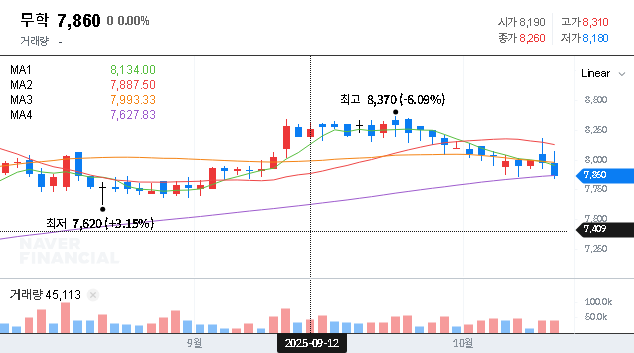
    (033920) Muhak Exchangeable Bond (EB) Issuance: A Deep Dive for Investors 관련 이미지
  • (033920) Muhak Treasury Stock Disposal: A Deep Dive into their ₩10B Exchangeable Bond Strategy

    (033920) Muhak Treasury Stock Disposal: A Deep Dive into their ₩10B Exchangeable Bond Strategy

    In a significant move capturing market attention, prominent liquor company Muhak has announced a major financial restructuring. The core of this news is the Muhak treasury stock disposal, a strategic decision to raise ₩10 billion through the issuance of Exchangeable Bonds (EBs). This action presents a classic dilemma for investors: is it a precursor to shareholder value dilution, or a savvy maneuver to fuel future growth? This comprehensive analysis will break down the mechanics of the deal, explore the potential impacts, and provide a clear framework for making an informed investment decision.

    The Announcement: Unpacking the ₩10 Billion Deal

    On October 27, 2023, Muhak officially disclosed its plan to dispose of 1,073,076 of its own common shares, which represents approximately 3.77% of its total outstanding shares. The total value of this disposal is estimated at ₩10 billion. The stated purpose is not a simple market sell-off, but rather to use these shares as the underlying asset for a new issuance of Exchangeable Bonds (EBs). For complete transparency, you can view the Official Disclosure on the DART system.

    What Are Exchangeable Bonds (EBs)?

    Before diving into the impact, it’s crucial to understand the financial instrument at play. Exchangeable Bonds are a form of hybrid debt security. Investors who purchase these bonds receive regular interest payments, much like a traditional bond. However, they also hold the option to exchange their bonds for a predetermined number of the company’s shares (in this case, the treasury stock being set aside) at a specified price. This offers investors the safety of a bond with the potential upside of stock appreciation. To learn more about complex financial instruments, you can consult authoritative sources like Investopedia for detailed explanations.

    Analyzing the Investment Impact: A Two-Sided Coin

    The Muhak treasury stock disposal carries both potential risks and significant rewards. A prudent investor must weigh both sides carefully.

    The Bear Case: Understanding the Risk of Share Dilution

    The primary concern for existing shareholders is the potential for dilution. This can occur in two stages:

    • Immediate Supply Increase: The disposal of nearly 4% of treasury stock effectively increases the number of shares available for trading, which can put short-term downward pressure on the stock price.
    • Future Conversion Overhang: If the company’s stock price rises above the EB conversion price, bondholders will be incentivized to convert their bonds into shares. This future influx of new shares would further dilute the ownership stake and earnings per share (EPS) for existing investors.

    The Bull Case: Fueling Strategic Long-Term Growth

    Conversely, this capital injection could be precisely what Muhak needs to accelerate its growth. The ₩10 billion secured can be a powerful catalyst if used effectively:

    • Financial Fortification: The funds can be used to pay down existing debt, improving the company’s balance sheet and reducing interest expenses.
    • Investment in Innovation: The capital could fund R&D for new products, helping Muhak compete in the dynamic and competitive liquor industry.
    • Market Expansion: These funds could be allocated to marketing campaigns or expansion into new geographic markets, driving top-line revenue growth.

    The success of this strategy hinges entirely on execution. If the ₩10 billion generates a return greater than the cost of dilution, long-term shareholders will be handsomely rewarded. If not, it will have been a costly fundraising exercise.

    Investor Checklist: What to Monitor Moving Forward

    To make an informed decision regarding your Muhak investment, it is critical to move beyond the initial announcement and monitor key subsequent details. Keep a close watch on the following:

    • Detailed EB Terms: Once published, scrutinize the final terms of the Exchangeable Bonds. The interest rate, maturity date, and especially the conversion price will determine the company’s financial burden and the likelihood of future dilution.
    • Clarity on Fund Usage: Look for specific company communications detailing how the ₩10 billion will be allocated. A clear, strategic plan for growth is a much stronger signal than a vague statement about ‘general corporate purposes’.
    • Market and Industry Trends: Context is key. Monitor Muhak’s performance relative to its competitors and overall trends in the liquor market. For more on this, you might read our guide on How to Analyze a Company’s Financial Health.

    Frequently Asked Questions (FAQ)

    What is the core of Muhak’s treasury stock disposal decision?

    Muhak is selling 1,073,076 of its own shares, worth about ₩10 billion, to serve as the underlying asset for an issuance of Exchangeable Bonds (EBs). This is a method of raising capital.

    How will this affect Muhak’s stock price?

    In the short-term, the risk of share dilution could create downward pressure on the stock. In the long-term, if the raised capital is invested successfully to grow the business, it could have a very positive impact on the company’s value and stock price.

    Is this a good or bad sign for investors?

    It is neither inherently good nor bad; it is a strategic trade-off. The outcome depends entirely on how effectively Muhak’s management team utilizes the newly acquired ₩10 billion to create future value that outweighs the cost of shareholder dilution.

    (033920) Muhak Treasury Stock Disposal: A Deep Dive into their ₩10B Exchangeable Bond Strategy 관련 이미지
  • Muhak (033920) 2025 Half-Year Report Analysis: Can Solar Power Drive a Stock Rebound?

    1. What Happened in Muhak’s First Half of 2025?

    Muhak’s 2025 half-year report unveiled new strategies, including the launch of Tok Soda products, expansion into overseas markets, and entry into the solar power business. However, net income decreased compared to the same period last year, and long-term financial assets increased due to changes in asset management strategies.

    2. Why These Results?

    The decline in net income is likely due to a combination of factors, including intensified competition, increased marketing expenses, and rising raw material prices. The venture into new businesses is a long-term growth strategy, and securing initial investment costs and operational efficiency is key.

    3. What’s Next for Muhak?

    Positive Factors

    • New product launches and overseas market expansion: New products like the ‘Tok Soda CAN’ series and strong performance in overseas markets could drive sales growth.
    • New business ventures: The solar power business holds the potential to become a new source of revenue.

    Negative Factors and Risks

    • Decline in net income: Improving profitability is crucial.
    • Uncertainty in financial asset management: Close monitoring of investment efficiency and profitability is necessary.
    • Pressure from rising costs: Fluctuations in international oil prices could lead to increased raw material costs.

    4. What Should Investors Do?

    In the short term, Muhak faces challenges such as sluggish performance and uncertainty in financial asset management. However, depending on the successful establishment of new businesses and the strengthening of competitiveness in existing businesses, there is potential for long-term growth. Investors should carefully monitor interest rate and exchange rate fluctuations, new business performance, and consumer spending trends when making investment decisions.

    Muhak Investment FAQs

    What is Muhak’s main business?

    Muhak is a beverage company primarily producing ‘Good Day’ soju. They have recently diversified their product portfolio with Tok Soda, beer, and other beverages, and have also entered the solar power business.

    How was Muhak’s performance in the first half of 2025?

    They recorded sales of KRW 38.7 billion, operating profit of KRW 4.1 billion, and net income of KRW 19.5 billion. Net income decreased compared to the same period last year.

    What is the outlook for Muhak?

    New business ventures and overseas market expansion are positive factors, but declining net income and uncertainty in financial asset management are risk factors. The success of new businesses and the strengthening of competitiveness in existing businesses will significantly impact future stock prices.

  • Muhak (033920) Dividend Announcement: Short-Term Gain, Long-Term Uncertainty?

    What Happened?

    Muhak announced a cash dividend of KRW 260 per share (dividend yield of 3.34%) on July 25, 2025. The ex-dividend date is yet to be announced.

    Why the Dividend Decision?

    Dividends are typically interpreted as a sign of confidence in a company’s financial health. However, Muhak’s Q1 2025 earnings were weak. Revenue, operating profit, and net income all declined year-over-year, driven by declining soju sales and rising raw material costs. The dividend decision in this context could be interpreted as an attempt to reassure investors and prevent a sharp decline in the stock price.

    What Should Investors Do?

    In the short term, the dividend could have a positive impact on the stock price. However, long-term investors should exercise caution. Significant uncertainties surround Muhak, including weak performance, economic slowdown, and raw material price fluctuations. Further analysis is needed before making any investment decisions. Consider the following:

    • Stock Chart Analysis: Assess market expectations and reaction to the dividend announcement.
    • Financial Metrics Analysis: Validate earnings forecasts using historical data.
    • Soju Sales Analysis: Determine the severity and sustainability of declining sales trends.
    • New Business Analysis: Evaluate the profitability potential of the solar power business and overseas expansion.

    Investor Action Plan

    Closely monitor the stock price movement after the ex-dividend date and adjust your investment strategy based on further analysis. Pay close attention to the recovery of core business sales and the growth potential of new ventures.

    Frequently Asked Questions

    When will Muhak’s dividend be paid?

    The exact payment date has not yet been announced.

    How can I receive the dividend?

    The dividend will be paid to shareholders registered on the record date (June 30, 2025).

    What is the outlook for Muhak’s stock price?

    While the dividend announcement may be positive in the short term, the long-term outlook is uncertain given weak performance and macroeconomic headwinds. Further analysis is recommended.
