Tag: 009450

  • (009450) KYUNG DONG NAVIEN Capital Increase: In-Depth Stock Analysis of Share Dilution vs. Growth

    (009450) KYUNG DONG NAVIEN Capital Increase: In-Depth Stock Analysis of Share Dilution vs. Growth

    The recent announcement of the KYUNG DONG NAVIEN capital increase has sent ripples through the investment community. The company, a dominant force in the living environment and energy sector, plans to inject ₩119.7 billion into its subsidiary, Kyung Dong Polium Co., Ltd. This move presents a classic investor dilemma: is it a strategic investment paving the way for future dominance, or will the resulting share dilution negatively impact current shareholder value? This in-depth KD Navien stock analysis will dissect the details, explore the potential outcomes, and provide investors with a clear framework for making informed decisions.

    We will examine the fundamentals driving this decision, the immediate financial implications, and the broader market context to understand whether this capital raise is a masterstroke for long-term growth or a necessary but painful short-term measure.

    Dissecting the KYUNG DONG NAVIEN Capital Increase

    On November 12, 2025, KYUNG DONG NAVIEN formally announced its decision to execute a significant capital increase valued at ₩119.7 billion. According to the Official Disclosure filed with DART, this transaction is structured as a shareholder-allocated rights offering. This means existing shareholders will have the right to purchase new shares, specifically at a ratio of 1.33 new shares for every existing share they hold. The explicitly stated purpose for this substantial fundraising effort is to secure crucial facility investment capital for its subsidiary, Kyung Dong Polium.

    This isn’t merely a financial transaction; it’s a strategic pivot. The allocation of funds to Kyung Dong Polium suggests a deliberate strategy to bolster a key part of their supply chain or venture into higher-margin, specialized materials, thereby fortifying their competitive moat.

    Company Fundamentals: The ‘Why’ Behind the Move

    A Story of Growth and Profitability Pressures

    KYUNG DONG NAVIEN’s recent performance paints a complex picture. The first half of 2025 saw impressive top-line growth, with consolidated sales reaching ₩757.45 billion—a 20.1% increase year-over-year. This surge was driven by strong overseas sales and the strategic acquisition of the SK Magic business unit. However, this growth came at a cost. Operating profit plummeted by 46.2% to ₩90.64 billion. This squeeze on profitability is a critical concern, stemming from a combination of rising raw material costs, higher administrative expenses, and the initial costs of new business investments. While the company’s debt ratio saw a slight improvement, an increasing net borrowing ratio signals a growing financial burden that this capital increase aims to address.

    Balancing Positives and Negatives

    • Strengths: The company maintains a dominant position in the domestic boiler market, is successfully expanding globally, and holds advanced technology in eco-friendly products. Its acquisition of SK Magic and strong credit rating are significant assets.
    • Weaknesses: The sharp decline in operating profit is the most pressing issue. The company is also vulnerable to volatile raw material prices and foreign exchange rates. A potential slowdown in the construction sector and fierce competition represent external threats. For more on market dynamics, you can read our guide on navigating volatile industrial markets.

    Potential Impacts on Investors and the Market

    The Double-Edged Sword: Financial Health vs. Share Dilution

    The infusion of ₩119.7 billion will undoubtedly strengthen KYUNG DONG NAVIEN’s balance sheet, likely lowering its debt-to-equity ratio and enhancing long-term financial stability. However, the high offering ratio of 1.33 new shares per existing one introduces the significant risk of share dilution. This means each existing share will represent a smaller percentage of ownership in the company, potentially decreasing earnings per share (EPS) in the short term. The ultimate impact will heavily depend on the final issue price of the new shares and the market’s reception.

    Market Reaction and Long-Term Outlook

    Historically, news of a capital increase can exert downward pressure on a company’s stock price. As noted by financial analysts at sources like Bloomberg, markets often react nervously to potential dilution. However, this initial pessimism can be overcome. If the funds from the KYUNG DONG NAVIEN capital increase are used efficiently and transparently, leading to tangible growth at Kyung Dong Polium and a subsequent boost in overall profitability, the long-term outlook for the stock could be very positive. The market will be watching closely to see if this facility investment translates into a sustainable competitive advantage.

    Investor Action Plan & Key Monitoring Points

    Given the conflicting factors, a ‘Neutral’ stance on KD Navien stock is prudent. The potential for long-term growth is balanced by short-term risks of dilution and ongoing profitability challenges. Investors should transition from a passive to an active monitoring mode.

    Investors should closely monitor the following key metrics:

    • New Share Issuance Details: The final issue price and the subscription rate will be the first indicators of market sentiment.
    • Kyung Dong Polium Performance: Track quarterly reports for updates on the facility investment’s progress and its impact on revenue and margins.
    • Macroeconomic Factors: Keep an eye on raw material prices (especially steel and copper) and currency exchange rates (KRW/USD), as these directly affect the company’s cost structure.
    • Profitability Metrics: Most importantly, watch for a turnaround in operating profit margins. A sustained improvement will signal that the growth strategy is succeeding.

    Disclaimer: This analysis is for informational purposes only and is based on publicly available data. Investment decisions should be made based on individual research and financial advice.
    (009450) KYUNG DONG NAVIEN Capital Increase: In-Depth Stock Analysis of Share Dilution vs. Growth 관련 이미지
    (009450) KYUNG DONG NAVIEN Capital Increase: In-Depth Stock Analysis of Share Dilution vs. Growth 관련 이미지
  • (009450) KYUNG DONG NAVIEN Asset Acquisition: A Deep Dive for Investors (2025 Analysis)

    (009450) KYUNG DONG NAVIEN Asset Acquisition: A Deep Dive for Investors (2025 Analysis)

    The recent announcement of the KYUNG DONG NAVIEN asset acquisition has sent ripples through the investment community. This strategic move, valued at a substantial ₩119.7 billion, involves its subsidiary purchasing a significant land and building portfolio in Pyeongtaek. More than a simple line item on a balance sheet, this decision offers a clear window into the company’s long-term vision, its commitment to innovation, and its strategy for dominating the future of the home comfort and HVAC market.

    This comprehensive report breaks down the multifaceted implications of this major investment. We will explore how consolidating its production base will impact KYUNG DONG NAVIEN’s operational efficiency, financial health, and overall competitive standing in an increasingly complex global and macroeconomic environment. For investors, understanding these dynamics is crucial for making informed decisions about the company’s future value.

    The Details of the Landmark Acquisition

    On November 12, 2025, KYUNG DONG NAVIEN confirmed that its subsidiary, Kyung Dong Polium, will acquire land, buildings, and facilities currently under construction within the Seotan General Industrial Complex in Pyeongtaek, Gyeonggi Province. The total transaction value is ₩119.7 billion, representing a significant 8.81% of the company’s total assets. According to the Official Disclosure, the stated purpose is to ‘adjust the asset portfolio between affiliated companies through production base integration.’ This strategic consolidation is expected to catalyze profound changes across the company’s business structure.

    This investment in a new Pyeongtaek production base is not merely an expansion; it’s a foundational move to build a more efficient, resilient, and innovative manufacturing ecosystem for the next decade.

    Strategic Vision: Pillars of Future Growth

    As a leader in living environment energy solutions, KYUNG DONG NAVIEN’s decision is underpinned by several strategic objectives designed to fortify its market position and drive future profitability.

    1. Production Integration and Efficiency Gains

    Centralizing production at the state-of-the-art Seotan General Industrial Complex is expected to yield significant long-term efficiencies. By streamlining logistics, reducing inter-facility operational costs, and optimizing supply chains, the company can improve its gross margins. This efficiency is a critical defensive measure, especially given the short-term sales decline observed in H1 2025, and it builds a more competitive cost structure for the future.

    2. Capitalizing on Eco-Friendly Product Demand

    Regulatory tailwinds, such as South Korea’s ‘Atmospheric Environment Management Act’ mandating condensing boilers, create a fertile market for KYUNG DONG NAVIEN. This investment directly supports the scaled production of high-efficiency products like the ‘Navien Condensing ON AI’ boiler. An expanded, modern production line will allow the company to better meet this growing demand and capture a larger share of the eco-conscious consumer market. For more on market trends, see our analysis of the global HVAC market.

    3. Diversification and Cross-Brand Synergy

    KYUNG DONG NAVIEN is strategically expanding beyond its core boiler and water heater business into the broader Total Air Care (TAC) and HVAC market. This new facility will provide the necessary infrastructure to support these new ventures. Furthermore, it enables potential manufacturing synergies with the recently acquired SK Magic cooktop lineup, allowing for shared resources and technological crossover.

    Financial Health and Risk Assessment

    A Kyung Dong Navien investment of this magnitude requires a careful analysis of its financial implications and potential risks. While the long-term strategic benefits are clear, investors must weigh them against the short-term financial pressures.

    • Capital Expenditure and Balance Sheet: The ₩119.7 billion outlay will impact the company’s cash flow. With a debt-to-equity ratio of 90.22% (as of H1 2025), the method of financing this acquisition is critical. However, a robust retained earnings ratio of 416.92% provides a substantial cushion, suggesting the company can absorb the cost without jeopardizing its short-term stability.
    • Return on Investment (ROI): The central question is how effectively this capital will be deployed. Investors will need to monitor the company’s execution closely, looking for tangible evidence of productivity gains and market share growth that justifies the investment. A detailed roadmap for investment recovery is essential.
    • Macroeconomic Headwinds: The boiler industry analysis is incomplete without considering external factors. A slowdown in the construction market could temporarily dampen domestic demand. Moreover, as a global player, KYUNG DONG NAVIEN is exposed to interest rate and currency fluctuations. The new production base may help mitigate some raw material cost volatility, but these macroeconomic risks persist, as noted by leading financial analysts at Bloomberg.

    Investor Outlook & Key Questions

    The KYUNG DONG NAVIEN asset acquisition is a bold, forward-looking move that signals a strong commitment to long-term growth and market leadership. The strategic rationale is sound, positioning the company to capitalize on efficiency gains and growing market segments.

    However, the significant capital outlay amidst a challenging macroeconomic climate warrants a ‘Neutral’ investment stance for now. The potential is immense, but execution risk is real. Investors should seek clarity on the following points before turning more bullish:

    • What are the specific timelines and expected efficiency metrics from the new facility?
    • How will the acquisition be financed, and what will be the immediate impact on key financial ratios?
    • What are the company’s revenue and profit projections for the next 3-5 years based on this increased capacity?
    • What are the company’s hedging strategies against currency and interest rate volatility?

    This analysis is based on currently available information and may be updated as new details emerge from the company or market conditions change.

    (009450) KYUNG DONG NAVIEN Asset Acquisition: A Deep Dive for Investors (2025 Analysis) 관련 이미지
    (009450) KYUNG DONG NAVIEN Asset Acquisition: A Deep Dive for Investors (2025 Analysis) 관련 이미지
  • (009450) Kyung Dong Navien’s ₩119.7B Asset Disposition: A Deep Dive into its Investment Strategy & Future Growth

    (009450) Kyung Dong Navien’s ₩119.7B Asset Disposition: A Deep Dive into its Investment Strategy & Future Growth

    The recent Kyung Dong Navien asset disposition has sent ripples through the market, signaling a pivotal moment for the global HVAC giant. On November 12, 2025, KYUNG DONG NAVIEN CO.,LTD (KDN) announced a significant sale of tangible assets valued at ₩119.7 billion. This isn’t merely a transaction; it’s a calculated maneuver designed to streamline operations, bolster financial health, and position the company for its next phase of growth. For investors and industry observers, understanding the nuances of this decision is critical to forecasting KDN’s future trajectory.

    This comprehensive financial analysis will dissect the deal’s structure, explore the long-term strategic goals like production base integration, and evaluate the potential impacts on KDN’s fundamentals amidst a complex global economic landscape.

    Unpacking the ₩119.7 Billion Deal

    The core of the transaction involves the sale of the A7-1B land and all facilities currently under construction within the Seotan General Industrial Complex in Pyeongtaek-si, Gyeonggi-do. The buyer is Kyung Dong Polium Co., Ltd., an affiliate company within the same corporate family. This sale, representing 8.81% of KDN’s total assets, is slated for completion by February 10, 2026. This intra-group transfer is a key detail, indicating a strategic reshuffling of assets rather than an exit from a business line. For full transparency, the company released an Official Disclosure which provides granular detail on the transaction, reinforcing the company’s commitment to corporate governance.

    This move is fundamentally about optimization. By reallocating assets within the group, Kyung Dong Navien is paving the way for a more integrated and efficient production network, unlocking long-term value.

    The Strategic Blueprint: Efficiency and Growth

    The primary driver behind this Kyung Dong Navien asset disposition is a dual-pronged strategy focused on enhancing operational efficiency and fortifying the company’s financial structure for future investments.

    Achieving Synergy Through Production Base Integration

    Consolidating production facilities is a classic strategy for achieving economies of scale. For KDN, this means creating a more streamlined manufacturing ecosystem. In the long run, this integration is expected to reduce redundant overhead, simplify supply chain logistics, and enhance quality control. A centralized production system allows for better resource allocation, faster innovation cycles, and a more agile response to shifts in global demand for their core products like gas boilers and water heaters. This is a critical component of any effective modern HVAC manufacturing strategy.

    Fueling Future Growth with Enhanced Liquidity

    The infusion of ₩119.7 billion in cash provides significant strategic flexibility. This newfound liquidity can be deployed in several high-impact areas:

    • Accelerating New Ventures: It provides capital to fully integrate and scale the recently acquired SK Magic business, unlocking synergies in the home appliance market.
    • Boosting R&D Investment: Sustained investment in research and development is crucial for maintaining a competitive edge in the rapidly evolving HVAC industry, particularly in eco-friendly and smart-home technologies.
    • Strengthening the Balance Sheet: The cash can be used to pay down debt, improve key financial ratios, and increase resilience against economic downturns, reinforcing its strong credit rating.

    Navigating Macroeconomic Headwinds

    KDN’s performance is intrinsically linked to the global economic climate. Investors conducting a thorough Kyung Dong Navien financial analysis must consider several external variables that could influence its operations and profitability:

    • Currency Fluctuations: As a major exporter, a weaker Korean Won against the US Dollar and Euro can make KDN’s products more competitive abroad. However, it also increases the cost of imported raw materials.
    • Interest Rate Environment: Global interest rate policies affect borrowing costs for capital expenditures and can influence investment sentiment. Potential rate cuts could be a positive catalyst.
    • Commodity Prices & Logistics: The price of crude oil, steel, and copper, along with global shipping costs (like the BDI and CCFI indices), directly impacts the company’s cost of goods sold.

    Investor Takeaway: A Long-Term Perspective

    The Kyung Dong Navien asset disposition should be viewed as a strategic realignment for long-term health, not a short-term catalyst. While the immediate cash injection is a clear positive, the true measure of success will be in the execution. Investors should look beyond immediate stock price movements and focus on monitoring key performance indicators in upcoming quarterly and annual reports. For more on market trends, see the latest global manufacturing outlook from Reuters.

    Moving forward, the critical factors will be the tangible cost savings and efficiency gains from the production base integration, the successful synergy realized from the SK Magic acquisition, and the company’s agility in navigating the macroeconomic environment. This strategic pivot demonstrates a forward-thinking management team focused on building a more resilient and competitive enterprise for the future.

    Frequently Asked Questions (FAQ)

    Why did Kyung Dong Navien sell these assets?

    The asset disposition is part of a larger strategy to integrate production bases, which aims to improve long-term operational efficiency, reduce costs, and optimize the company’s asset portfolio among its affiliates.

    How does this ₩119.7 billion sale affect KDN’s finances?

    It provides a significant cash infusion that immediately improves liquidity and strengthens the company’s financial structure. This shifts the balance sheet from fixed tangible assets to more flexible cash equivalents, enhancing overall financial health.

    What should investors monitor following this decision?

    Investors should focus on long-term indicators rather than short-term price fluctuations. Key areas to watch in future financial reports include improvements in operating margins, the progress of the SK Magic business integration, and the company’s management of macroeconomic risks.

    (009450) Kyung Dong Navien's ₩119.7B Asset Disposition: A Deep Dive into its Investment Strategy & Future Growth 관련 이미지
    (009450) Kyung Dong Navien's ₩119.7B Asset Disposition: A Deep Dive into its Investment Strategy & Future Growth 관련 이미지
  • (009450) KYUNG DONG NAVIEN Earnings (009450) Q3 2025: Analysis of a Major Miss & Stock Outlook

    (009450) KYUNG DONG NAVIEN Earnings (009450) Q3 2025: Analysis of a Major Miss & Stock Outlook

    The latest KYUNG DONG NAVIEN earnings report for Q3 2025 has sent a clear and concerning signal to the market. The preliminary results for KYUNG DONG NAVIEN CO.,LTD (009450) revealed a significant underperformance across all key metrics, falling drastically short of consensus expectations. This analysis unpacks the factors behind the disappointing quarter, evaluates the potential impact on the 009450 stock price, and provides a strategic outlook for investors navigating this new period of uncertainty.

    Decoding the Q3 2025 KYUNG DONG NAVIEN Earnings Shock

    On November 12, 2025, the company released its preliminary consolidated financial results, which immediately rattled investor confidence. The figures for sales, operating profit, and net income all failed to meet market forecasts by a wide margin, pointing to severe operational and market challenges. You can view the Official Disclosure on DART for the raw data.

    The deviation from expectations was not minor; it was a substantial blow:

    • Sales: Recorded at KRW 306.0 billion, a staggering 18% below the market consensus of KRW 372.9 billion.
    • Operating Profit: Came in at just KRW 8.0 billion, an alarming 81% below the expected KRW 43.2 billion.
    • Net Income: Reached KRW 14.0 billion, falling 67% short of the KRW 42.1 billion forecast.

    The 81% miss in operating profit is the most critical red flag. It signals a severe and rapid deterioration in profitability, completely reversing the robust growth trajectory seen in the first half of 2025 and raising serious questions about the company’s cost structure and market positioning.

    What Caused the Drastic Underperformance?

    The sharp decline in the Q3 KYUNG DONG NAVIEN earnings appears to be the result of a perfect storm of internal and external pressures. Several key headwinds converged to create this challenging environment:

    Domestic and International Headwinds

    • Deepening Domestic Construction Slump: The slowdown in South Korea’s domestic construction and housing market, a trend we covered in our previous HVAC market analysis, likely intensified, directly impacting boiler and water heater sales.
    • Overseas Market Volatility: The North American market, a primary growth engine in early 2025, may have faced an unexpected slowdown. This could be due to cooling housing demand, heightened competition, or rising logistics and export costs.
    • Raw Material Price Pressures: As reported by sources like Reuters, global commodity prices have remained elevated. Persistent high costs for steel, copper, and other components have likely squeezed profit margins significantly.

    Financial and Strategic Pressures

    • Macroeconomic Instability: Sustained high interest rates increase borrowing costs, while exchange rate fluctuations can erode the value of overseas earnings when repatriated, affecting the bottom line.
    • New Business Integration Costs: Initial costs related to the post-acquisition integration (PMI) of SK Magic or strategic investments in new ventures like air quality management could have been concentrated in this quarter, temporarily depressing profits.

    Implications for Investors and the 009450 Stock

    This earnings shock has both immediate and long-term consequences that investors must carefully consider.

    Short-Term Outlook: Expect Turbulence

    In the short term, the 009450 stock is likely to face significant downward pressure. The massive miss will trigger a wave of target price downgrades from brokerage firms and weaken overall investor sentiment. The market abhors negative surprises, and the severity of this miss could lead to a sustained sell-off until a clear bottom is established.

    Long-Term Outlook: A Call for Strategic Reassessment

    The more critical question is whether this is a temporary blip or the start of a structural decline. If the slowdown in overseas markets persists or if cost pressures become entrenched, a fundamental reassessment of the company’s long-term value will be necessary. Management’s response will be paramount. Investors should look for a clear strategy to diversify markets, control costs, and improve operational efficiency.

    Investment Strategy: A Time for Caution

    Given the highly disappointing Q3 KYUNG DONG NAVIEN earnings and the heightened uncertainty, a cautious and conservative approach is strongly advised. We recommend a “Neutral” or “Sell” rating at this juncture.

    Before considering a new position or adding to an existing one, investors should wait for:

    • Management’s Detailed Explanation: The upcoming full earnings call must provide a transparent and convincing explanation for the Q3 failure and a credible plan for recovery.
    • Evidence of Stabilization: Monitor Q4 data and industry trends for signs that the domestic and overseas markets are stabilizing or that cost-cutting measures are taking effect.
    • Stock Price Consolidation: Allow the market to digest the news and for the stock price to find a stable support level before re-evaluating its fundamental value.

    Frequently Asked Questions (FAQ)

    What were the key figures from KYUNG DONG NAVIEN’s Q3 2025 earnings?

    Sales were KRW 306.0 billion (18% below forecast), operating profit was KRW 8.0 billion (81% below forecast), and net income was KRW 14.0 billion (67% below forecast). The severe drop in operating profit was the most concerning aspect.

    What caused KYUNG DONG NAVIEN’s poor performance?

    The miss was attributed to a combination of a domestic construction downturn, slowing demand in key overseas markets, rising raw material costs, and adverse macroeconomic conditions like high interest rates and exchange rate volatility.

    What is the investment outlook for the 009450 stock?

    The short-term outlook is negative, with significant downward pressure expected on the stock price. A cautious “Neutral” or “Sell” rating is recommended until the company demonstrates a clear path to performance recovery and profitability stabilization.

    (009450) KYUNG DONG NAVIEN Earnings (009450) Q3 2025: Analysis of a Major Miss & Stock Outlook 관련 이미지
    (009450) KYUNG DONG NAVIEN Earnings (009450) Q3 2025: Analysis of a Major Miss & Stock Outlook 관련 이미지
  • Kyungdong Navien Q2 2025 Earnings: Growth Exceeds Expectations, But Hidden Risks Remain

    1. Kyungdong Navien’s Q2 Earnings: What Happened?

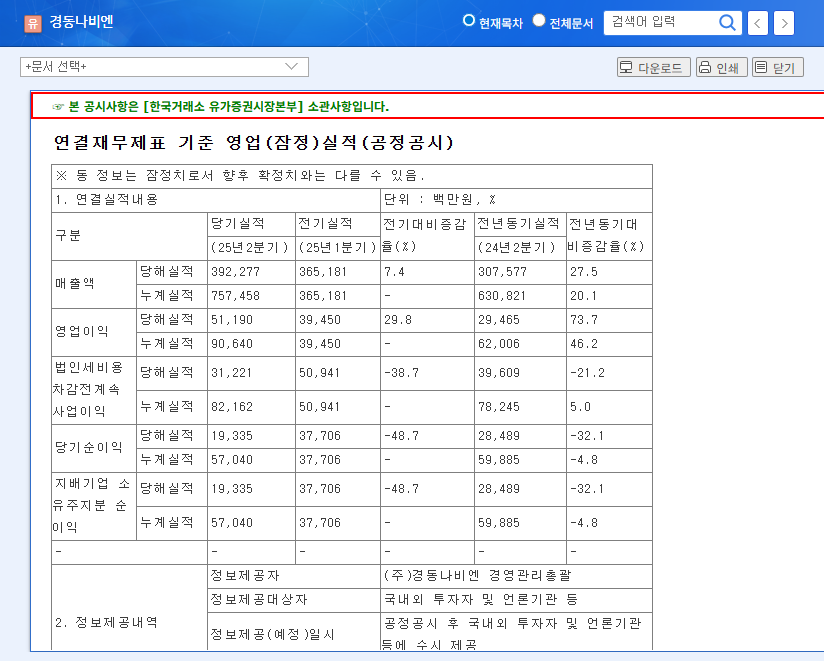
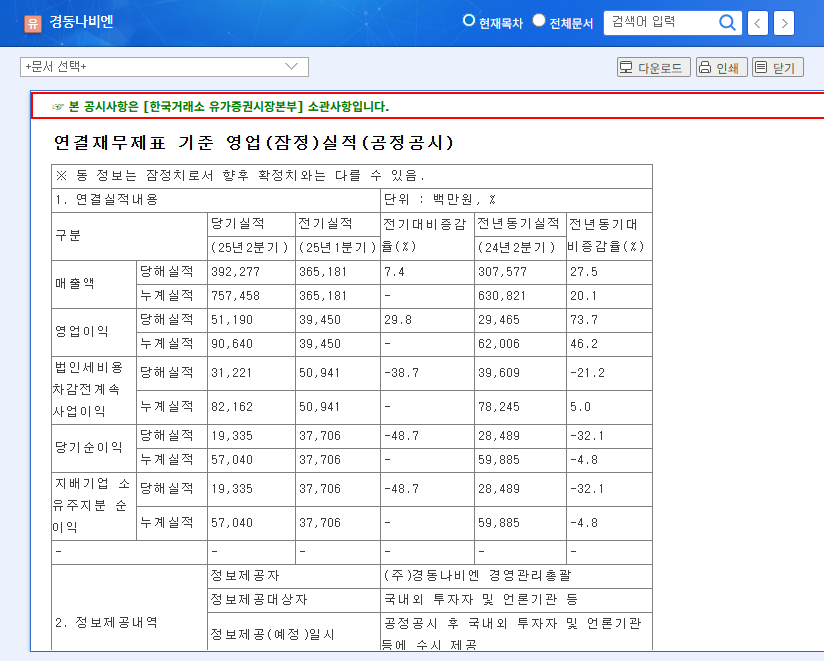
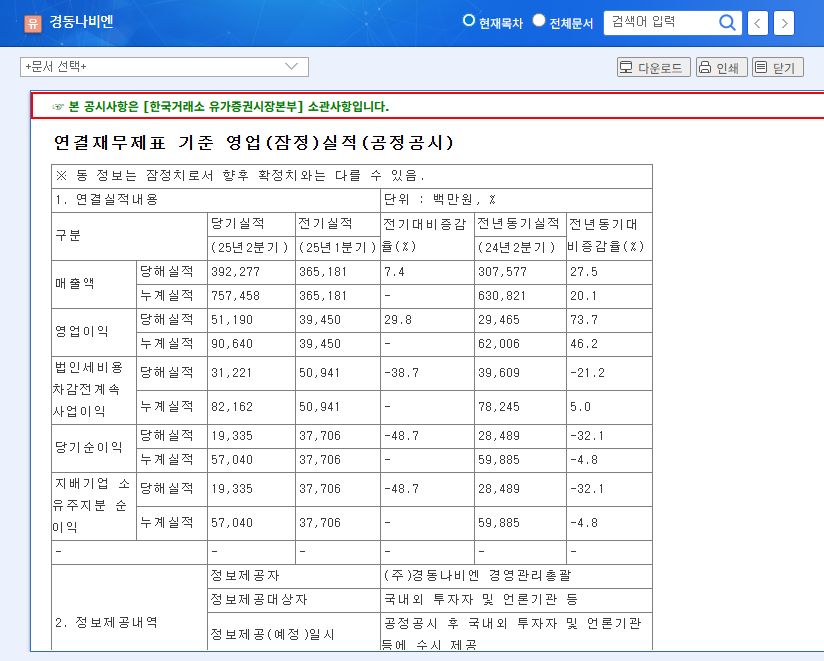
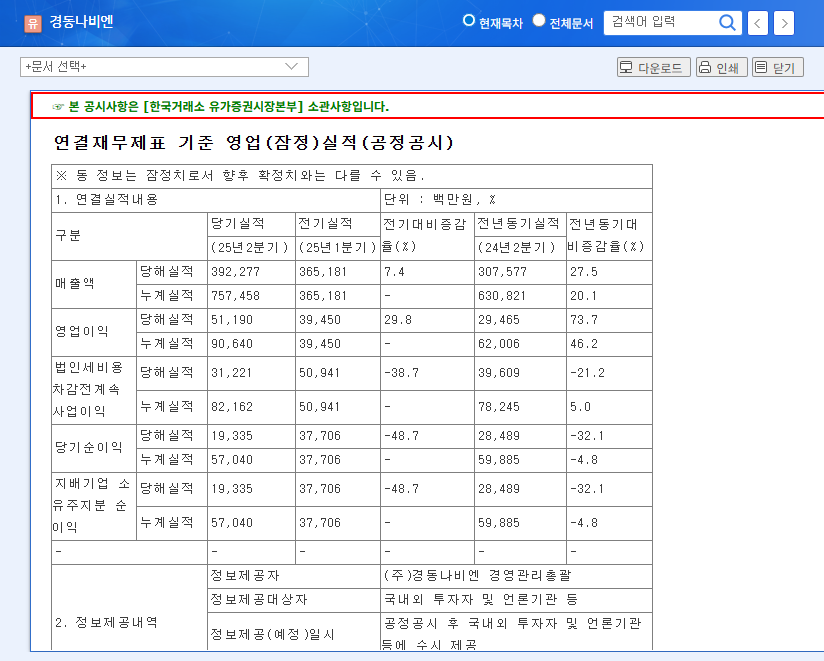
    On August 14, 2025, Kyungdong Navien released its preliminary Q2 2025 earnings. Revenue and operating profit surpassed market expectations, but net income fell short.

    Category Q2 2025 (Preliminary) Market Consensus (Q2 2025) % Change vs. Consensus
    Revenue KRW 392.2B KRW 348B +13.0%
    Operating Profit KRW 51.1B KRW 33.5B +52.8%
    Net Income KRW 19.3B KRW 30.4B -36.5%

    2. Analyzing the Earnings Fluctuations: Why These Results?

    Revenue and Operating Profit Growth: Growth in the eco-friendly/high-efficiency boiler market, new on-demand water heater product launches, and expansion of the ventilation and air purification system business contributed positively. Efforts to expand overseas market share also played a significant role.

    Net Income Decline: The decline is attributed to non-operating factors. Details will be available in future disclosures. The possibility of increased interest expenses due to rising debt should also be considered.

    3. Impact on Investors: What Should You Do?

    Positive Aspects: Revenue and operating profit growth can act as positive momentum. Expectations for overseas markets and new businesses are also high.

    Negative Aspects: The decline in net income could negatively impact investor sentiment. The possibility of deteriorating financial health due to increased debt is also a risk factor.

    4. Investment Action Plan: What Would a Wise Investor Do?

    Investors should consider both the positive business outlook and the potential financial risks comprehensively. It’s crucial to understand the reasons behind the net income decline through detailed earnings analysis and business reports to be released in the future, and to monitor debt management and profitability improvement efforts.

    What was Kyungdong Navien’s Q2 revenue?

    KRW 392.2 billion.

    What was Kyungdong Navien’s Q2 operating profit?

    KRW 51.1 billion.

    Why did Kyungdong Navien’s Q2 net income decrease?

    The exact cause is yet to be revealed, but it’s presumed to be due to non-operating factors. Increased interest expenses due to higher debt is a possibility. Further details will be available in future disclosures.

  • Kyungdong Navien (009450) Q2 2025 Earnings: A Mixed Bag for Investors

    1. Kyungdong Navien Q2 Earnings: What Happened?

    Kyungdong Navien reported consolidated revenue of KRW 392.3 billion, operating profit of KRW 51.2 billion, and net income of KRW 19.3 billion for Q2 2025. While sales and operating profit significantly surpassed market projections, net income fell short of expectations.

    2. Analyzing the Results: Why Did This Happen?

    • Positive Factors: Robust sales domestically and internationally, efficient cost management, growing demand for eco-friendly and high-efficiency products.
    • Negative Factors: Unclear reasons for lower net income (potential one-off costs, foreign exchange losses), exchange rate volatility, potential interest rate hikes.

    3. Future Outlook and Investment Strategy: What’s Next?

    Despite the overall positive performance, a ‘Neutral’ investment rating is maintained, considering the unclear reasons for the lower net income and macroeconomic uncertainties.

    • Investment Considerations: Analyze reasons for lower net income, monitor exchange rate and interest rate fluctuations, verify overseas market growth trends, and analyze new business performance.

    4. Key Checklist for Investors: Actions to Take Now

    • Review Kyungdong Navien’s business reports and public disclosures.
    • Consult analyst reports for diverse expert opinions.
    • Develop an investment strategy aligned with your investment style and goals.

    Frequently Asked Questions

    What is Kyungdong Navien’s main business?

    Kyungdong Navien primarily manufactures eco-friendly, high-efficiency boilers, water heaters, and other HVAC equipment.

    How will this earnings announcement affect the stock price?

    Strong sales and operating profit are positive, but lower net income and macroeconomic uncertainties could increase stock price volatility.

    Should I invest in Kyungdong Navien?

    Investment decisions are at the investor’s discretion. Consider this earnings announcement and future outlook comprehensively before making a decision.