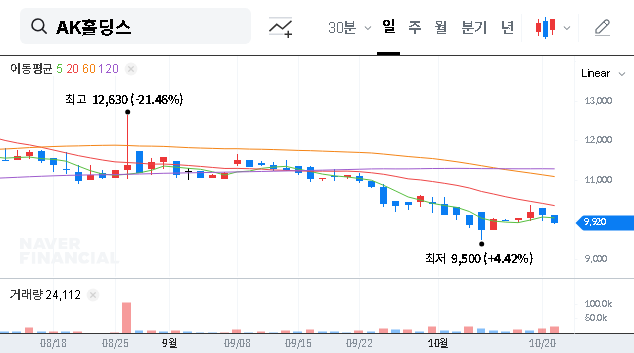
Tag: 006840

  • (006840) AK Holdings’ ₩470B Aekyung Industrial Sale: A Deep-Dive Analysis for Investors

    (006840) AK Holdings’ ₩470B Aekyung Industrial Sale: A Deep-Dive Analysis for Investors

    The AK Holdings Aekyung Industrial sale has sent shockwaves through the Korean investment market. In a landmark move, AK Holdings, Inc. announced the complete divestment of its majority stake in its core subsidiary, Aekyung Industrial. This strategic transaction, valued at a staggering ₩470 billion, promises to fundamentally reshape AK Holdings’ financial landscape and unlock new avenues for growth and investment. For investors, this deal presents both significant opportunities and critical questions about the future of both companies.

    This comprehensive analysis will delve into the specifics of the acquisition, the profound impact on AK Holdings’ balance sheet, the dawn of a new era for Aekyung Industrial under private equity leadership, and a strategic action plan for investors navigating this pivotal event.

    Anatomy of the ₩470 Billion Divestment

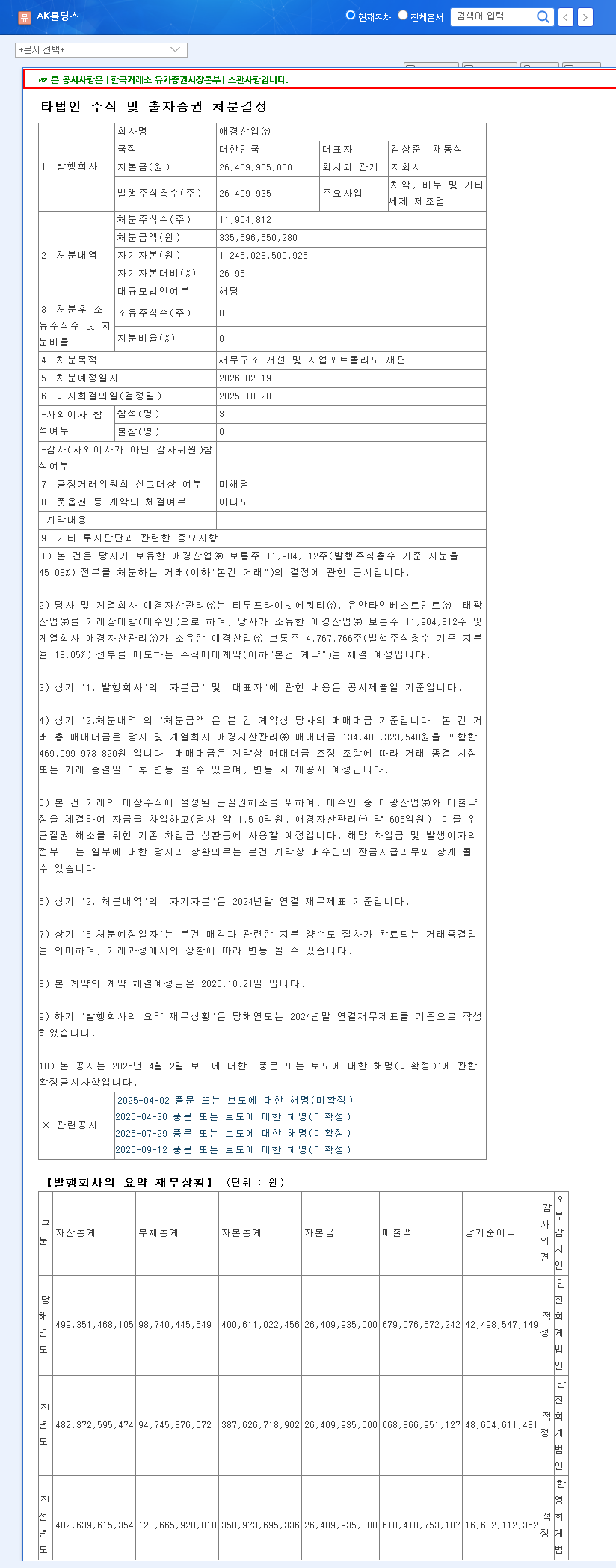
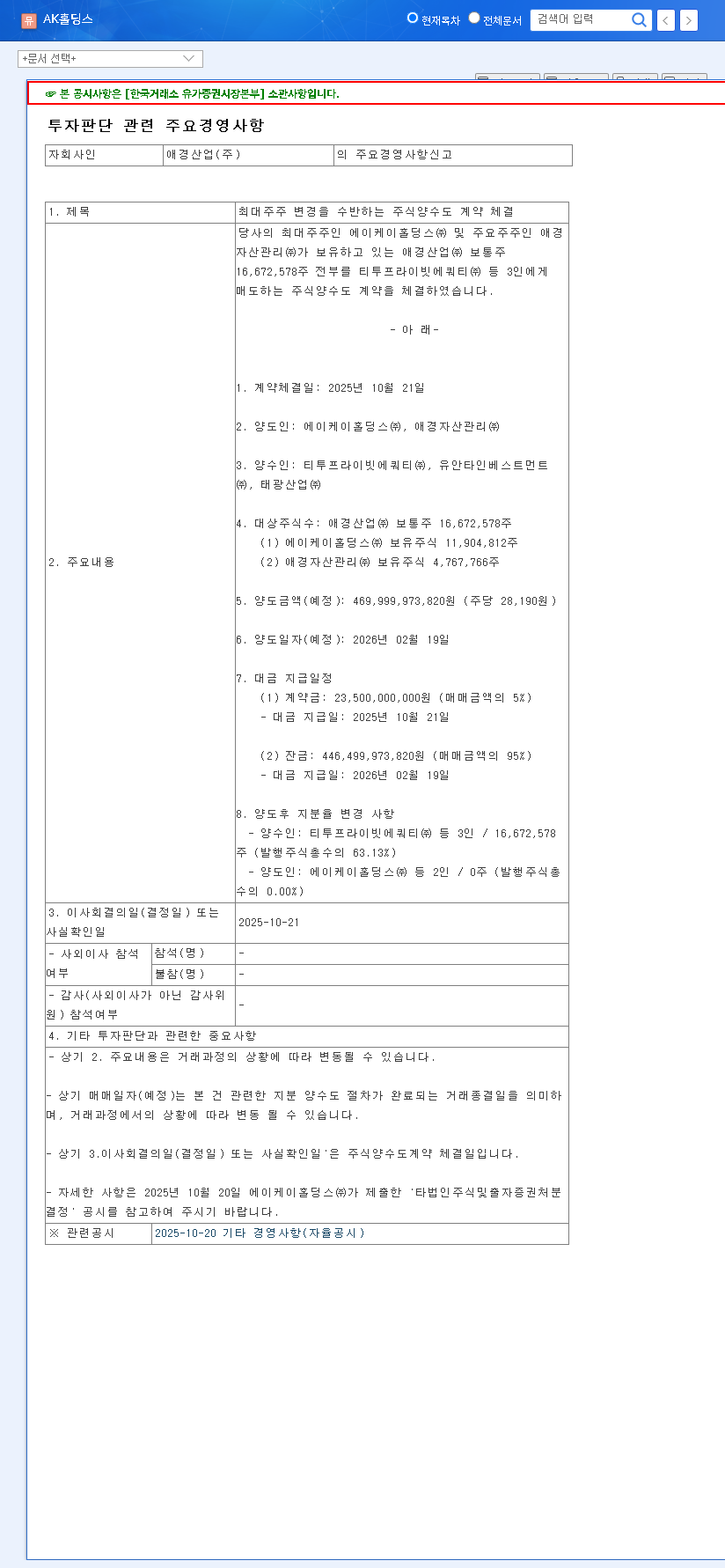
    AK Holdings has formally entered into a stock transfer agreement to sell its entire 63.13% stake in Aekyung Industrial. This move signals a complete exit from its long-held subsidiary, transferring control to a consortium of new majority shareholders. For full transparency, the official filing can be reviewed directly from the source.

    Official Disclosure: Click to view the DART report.

    Key Transaction Details

    • Sellers: AK Holdings, Inc. & Aekyung Asset Management Co., Ltd.
    • Buyers: A consortium led by T2 Private Equity, Yuanta Investment Co., Ltd., and Taekwang Industrial Co., Ltd.
    • Target Shares: 16,672,578 common shares (63.13% of total).
    • Transfer Amount: Approximately ₩470 billion (₩28,190 per share).
    • Estimated Closing Date: February 19, 2026.

    Analyzing the Profound Impact of the Sale

    This divestment is not merely a financial transaction; it’s a strategic pivot that will have lasting consequences for all parties involved, as well as the broader market.

    The infusion of ₩470 billion provides AK Holdings with an unprecedented war chest, enabling a fundamental restructuring of its corporate identity and investment thesis for the next decade.

    For AK Holdings: A New Financial Chapter

    The most immediate outcome for AK Holdings is a dramatic enhancement of its financial flexibility. This cash influx can be deployed in several strategic ways: deleveraging the balance sheet by repaying debt, launching aggressive new business ventures, funding R&D in emerging technologies, or increasing shareholder returns through dividends and buybacks. The sale of Aekyung Industrial will force a re-evaluation of AK Holdings’ role as a holding company, shifting its focus towards identifying and nurturing new growth engines. This strategic ambiguity is where both risk and opportunity lie for the AK Holdings stock.

    For Aekyung Industrial: New Ownership, New Direction

    With private equity firms at the helm, Aekyung Industrial is poised for significant operational changes. PEF ownership typically brings a sharp focus on efficiency, cost optimization, and aggressive market expansion. This could unlock new value and streamline operations. However, this often comes with pressure for short-term profitability, which could potentially conflict with long-term brand building and R&D investment. The involvement of a strategic player like Taekwang Industrial suggests a hybrid approach, blending financial discipline with industry expertise. For more on this dynamic, you can explore our guide on Understanding Private Equity in Corporate Acquisitions.

    Investor Action Plan & Key Considerations

    While the AK Holdings Aekyung Industrial sale is largely seen as a positive catalyst, prudent investors must weigh the uncertainties. The long-term success hinges entirely on the execution of AK Holdings’ subsequent investment strategy.

    Strategic Questions to Monitor

    • Capital Deployment Strategy: Where exactly will the ₩470 billion be invested? Will it be a single large acquisition or a series of smaller bets in high-growth sectors?
    • Execution Risk: Can the deal close smoothly by the February 2026 deadline without regulatory hurdles or changes in market conditions?
    • Market Reaction: How will institutional investors and analysts, like those at Bloomberg, react as more details about AK Holdings’ future plans emerge?
    • Growth Engine Void: Can AK Holdings successfully replace the stable earnings previously generated by Aekyung Industrial? Failure to do so could negatively impact long-term corporate value.

    Frequently Asked Questions (FAQ)

    Why did AK Holdings sell its stake in Aekyung Industrial?

    While not explicitly stated, the AK Holdings divestment is a strategic move to secure nearly half a trillion won in cash. This enhances financial health and provides capital to pivot towards new, potentially higher-growth business areas.

    What is the short-term outlook for AK Holdings’ stock price?

    In the short term, the stock price may see a positive impact due to the improved financial structure and anticipation of future investments. However, long-term performance will depend entirely on how effectively management utilizes the newly acquired funds.

    What changes can be expected at Aekyung Industrial?

    The Aekyung Industrial acquisition by private equity suggests a future focused on maximizing operational efficiency and aggressive growth. This could involve new product launches, market entries, or restructuring efforts to boost profitability.

    Disclaimer: This analysis is based on publicly available information and should not be considered direct investment advice. All investment decisions should be made based on individual research and discretion.
    (006840) AK Holdings' ₩470B Aekyung Industrial Sale: A Deep-Dive Analysis for Investors 관련 이미지
  • (006840) AK Holdings Aekyung Industrial Sale: Deep Dive into the ₩335.6B Divestment & Investor Strategy

    (006840) AK Holdings Aekyung Industrial Sale: Deep Dive into the ₩335.6B Divestment & Investor Strategy

    The landmark AK Holdings Aekyung Industrial sale represents a pivotal moment for investors and the market. AK Holdings, Inc. has announced its strategic decision to divest its entire stake in its major subsidiary, Aekyung Industrial Co., Ltd., for a staggering ₩335.6 billion. This move isn’t just a transaction; it’s a fundamental reshaping of the company’s financial architecture and future business trajectory. For investors, this decision unlocks a complex landscape of immense opportunities and calculated risks that demand careful analysis.

    This comprehensive analysis will explore the core details of the divestment, the strategic motivations behind it, and the potential impacts on AK Holdings’ valuation and long-term growth. We will also outline the critical factors that every investor should monitor as this corporate transformation unfolds.

    Transaction Breakdown: The ₩335.6 Billion Divestment

    On October 27, 2023, AK Holdings confirmed its intent to sell all its shares in Aekyung Industrial. The specifics of this agreement, which are set to finalize by February 19, 2026, are crucial for understanding the scale of this strategic shift. The details of the transaction were made public in the company’s Official Disclosure (Source: DART).

    The sale involves shares valued at ₩335.6 billion, which accounts for 26.95% of AK Holdings’ capital. Upon completion, AK Holdings’ ownership in Aekyung Industrial will drop to 0%, marking a complete exit from a subsidiary that has long been a cornerstone of its operations.

    Strategic Rationale: Improving Financials and Realigning for the Future

    The company’s public statements highlight two primary goals: the improvement of its financial structure and a comprehensive realignment of its business portfolio. By orchestrating the Aekyung Industrial divestment, AK Holdings is unlocking significant capital to chart a new course, potentially moving away from its traditional consumer goods focus toward emerging, high-growth sectors.

    The Financial Impact: A Surge in Capital and Stability

    The most immediate consequence is a massive cash infusion. This ₩335.6 billion can be deployed to significantly de-leverage the balance sheet by repaying debt, which in turn enhances financial stability and could improve the company’s credit rating. This newfound financial flexibility could also fund strategic share buybacks to increase shareholder value or be held as a war chest for future acquisitions. Financial analysts at major firms, like those tracked by authoritative sources like Bloomberg, will be closely watching how this capital is allocated.

    The Business Impact: A Pivot to New Growth Engines

    This sale signals a strategic pivot. AK Holdings is positioning itself to either double down on its other core businesses or, more likely, to diversify into new industries. The proceeds from the AK Holdings Aekyung Industrial sale provide the fuel for this transformation. The key question for investors is where this capital will go. Will the company pursue ventures in renewable energy, biotechnology, or digital platforms? The answer will define AK Holdings’ growth narrative for the next decade.

    Navigating Risks and Key Investor Watchpoints

    While the potential upside is significant, investors must also be aware of the inherent risks associated with such a large-scale corporate restructuring. The success of this move is not guaranteed and hinges on flawless execution and astute capital allocation.

    • Reinvestment Uncertainty: The greatest risk is that the ₩335.6 billion is deployed into ventures that fail to generate adequate returns, destroying shareholder value. A clear, compelling reinvestment strategy is paramount.
    • Valuation Accuracy: Was the sale price optimal? If Aekyung Industrial’s future growth outpaces expectations, it could mean AK Holdings left significant long-term value on the table.
    • Operational Disruption: Exiting a major business segment can create an operational void. The market will be watching to see how AK Holdings manages this transition and mitigates any loss of market share or revenue streams.
    • Market Volatility: The two-year period until the final disposal date introduces market risk. Economic shifts could impact the final terms or the environment into which AK Holdings reinvests.

    Conclusion: An Investor’s Action Plan

    The AK Holdings Aekyung Industrial sale is a transformative event. It presents a clear opportunity for the company to redefine its identity and unlock new avenues for growth. For investors, this is a time for diligence. It is essential to monitor company announcements for a detailed roadmap on capital utilization. Pay close attention to analyst reports and market sentiment, but ultimately, the investment thesis will depend on the clarity and viability of AK Holdings’ forthcoming strategic plan. Understanding the nuances of successful corporate restructuring is more important than ever. The coming months will be critical in determining whether this bold divestment will be the catalyst for a new era of prosperity for AK Holdings and its shareholders.

    (006840) AK Holdings Aekyung Industrial Sale: Deep Dive into the ₩335.6B Divestment & Investor Strategy 관련 이미지
  • (006840) AK Holdings Transaction: In-Depth Analysis of the ₩130 Billion Subsidiary Deal

    (006840) AK Holdings Transaction: In-Depth Analysis of the ₩130 Billion Subsidiary Deal

    A significant ₩130 billion financial maneuver is unfolding within the AK Holdings (006840) conglomerate, capturing the attention of the investment community. This major AK Holdings transaction involves an asset transfer between two key subsidiaries. But what does this mean for the company’s financial health, its strategic direction, and for you, the investor? Is it a simple internal shuffle or a precursor to a larger strategic shift? This analysis will dissect the deal, explore its underlying motives, and provide a clear investment outlook.

    Anatomy of the ₩130 Billion Fund Transaction

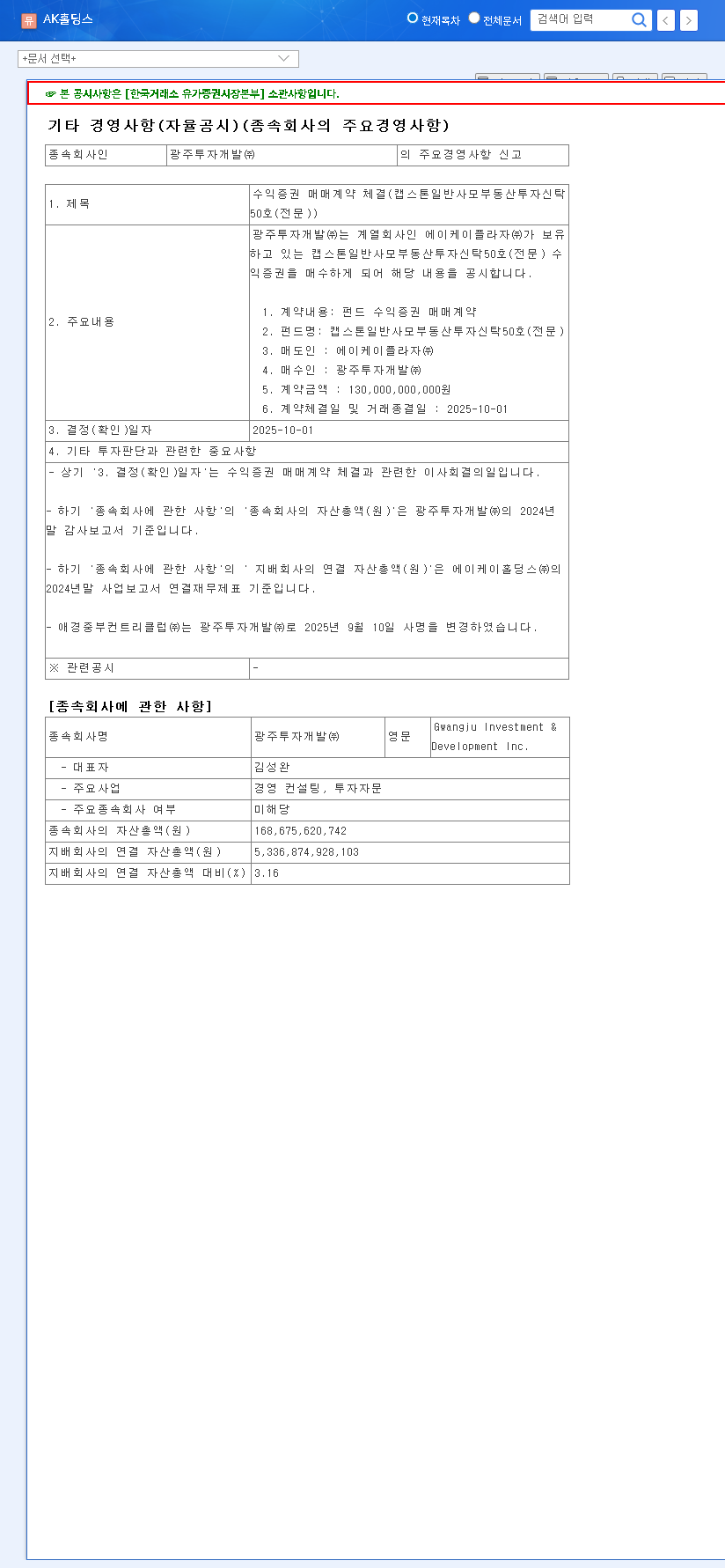
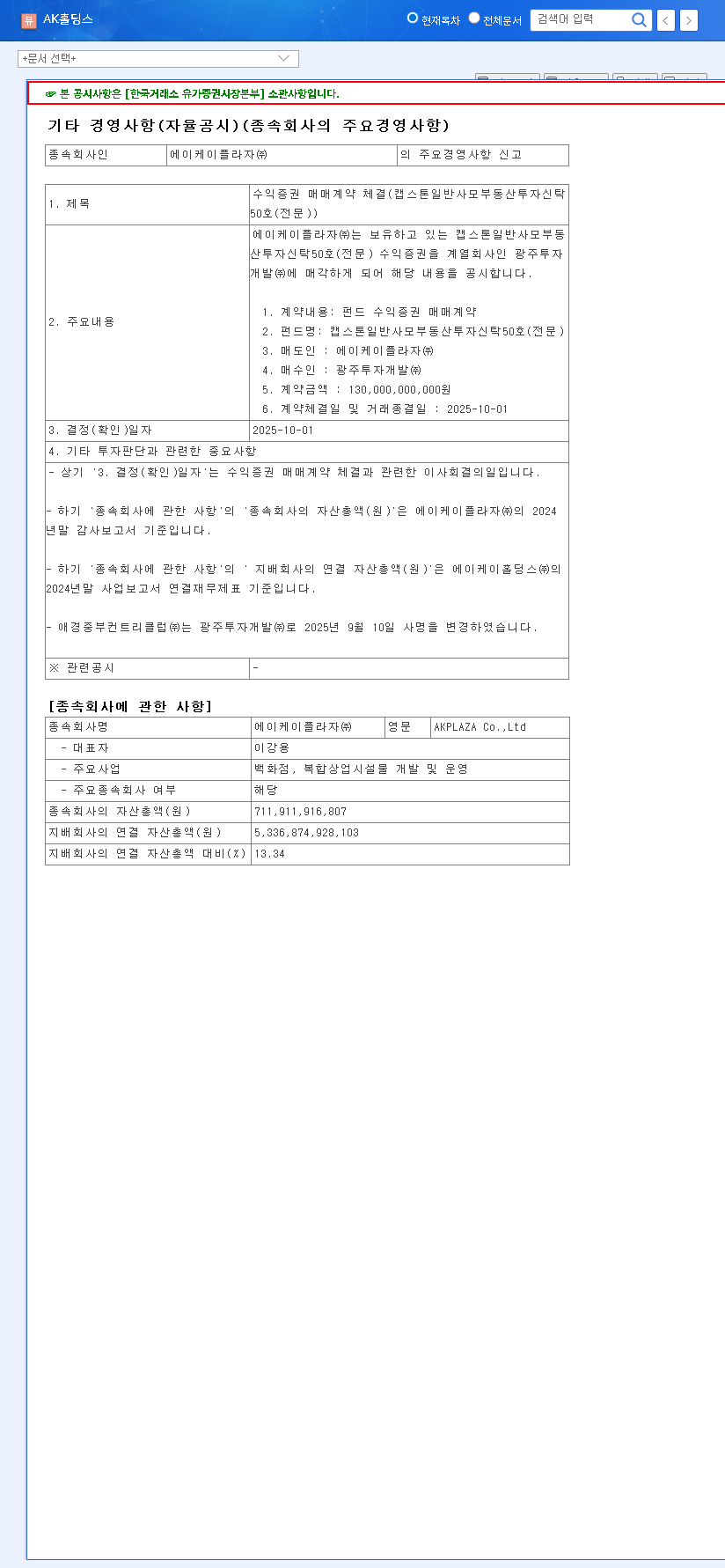
    On October 2, 2025, a definitive agreement was signed within the AK Holdings group. The core of the deal is the purchase of beneficiary certificates for the Capstone General Private Equity Real Estate Investment Trust No. 50 (Professional). Here are the key players:

    • The Buyer: Gwangju Investment Development Co., Ltd., a subsidiary of AK Holdings.
    • The Seller: AK Plaza Co., Ltd., an affiliate company also under the AK Holdings umbrella.
    • The Value: A substantial ₩130 billion.

    This move effectively transfers a significant real estate-related investment asset from one part of the group to another. The details of this intra-group sale were disclosed publicly, as per regulatory requirements. You can view the Official Disclosure (DART) for precise filing information.

    The Strategic Rationale: Why Now?

    At first glance, an internal transfer might seem like moving money from one pocket to another. However, such transactions are often driven by precise strategic goals. The primary motivation for this AK Holdings investment appears to be the optimization of the group’s overall asset portfolio and the enhancement of capital efficiency.

    This transaction is likely a calculated move to liquefy certain assets within AK Plaza, providing it with immediate capital, while consolidating real estate investment oversight under Gwangju Investment Development, potentially a more suitable vehicle for managing such assets long-term.

    By restructuring ownership, AK Holdings may be aiming to unlock value, improve the financial flexibility of AK Plaza, and streamline its investment management processes, which aligns with modern corporate finance practices for large conglomerates.

    Financial Impact on AK Holdings and Affiliates

    Positive Implications

    For AK Plaza Co., Ltd., the immediate benefit is clear: a ₩130 billion cash infusion. This enhances its financial liquidity, providing capital that can be used for debt repayment, new strategic investments, or strengthening its core retail operations. For the group, it represents a step towards more efficient asset allocation.

    Potential Risks and Downsides

    The burden shifts to Gwangju Investment Development Co., Ltd. The ₩130 billion outlay could strain its short-term cash flow and increase its leverage. Based on its 2024 financials, this could significantly impact its debt-to-equity ratio. Furthermore, the success of this deal hinges on the performance of the acquired real estate trust. If the investment underperforms, it could negatively affect the net income of both the subsidiary and, ultimately, AK Holdings.

    The Bigger Picture for AK Holdings

    On a consolidated basis, the direct impact of this AK Holdings transaction on operating profit is expected to be minimal. It’s an internal affair. However, it’s crucial to view this move within the context of AK Holdings’ current financial environment. The company is grappling with significant challenges, including the underperformance of its airline, Jeju Air, a high consolidated debt-to-equity ratio of 653%, and lingering legal risks. This transaction does not directly solve these fundamental issues.

    Comprehensive Analysis & Investment Strategy

    Our investment opinion remains “Neutral.” This transaction is best viewed as an internal strategic realignment rather than a fundamental game-changer. While it demonstrates proactive asset management, it does not alter the core risks facing the company. Investors should adopt a cautious and observant stance. Here is a suggested action plan:

    • Monitor Subsidiary Health: Keep a close watch on Gwangju Investment Development’s financial reports. Track its funding methods for this purchase and the reported returns from the real estate trust.
    • Focus on Core Fundamentals: Pay more attention to news concerning Jeju Air’s profitability and AK Holdings’ broader efforts to manage its high debt. For more on this, you might read about how to analyze corporate debt ratios.
    • Assess Macroeconomic Factors: Rising currency volatility and interest rate policies can significantly impact a highly leveraged company like AK Holdings. Monitor these external pressures.

    In conclusion, while the ₩130 billion subsidiary deal is a notable event, it should be seen as a single piece in the much larger and more complex puzzle of AK Holdings’ corporate strategy. Long-term value will be driven by the resolution of its core business challenges, not by internal asset shuffles alone.

    (006840) AK Holdings Transaction: In-Depth Analysis of the ₩130 Billion Subsidiary Deal 관련 이미지
  • (006840) AK Holdings Asset Sale (006840): A Deep Dive into the 130B KRW Move for Financial Improvement

    (006840) AK Holdings Asset Sale (006840): A Deep Dive into the 130B KRW Move for Financial Improvement

    A major strategic shift is underway at AK Holdings (006840) following a significant asset sale that has caught the attention of the market. Its subsidiary, AK Plaza Co., Ltd., has divested 130 billion KRW in assets, a move that prompts critical questions for investors. Is this a masterstroke for financial improvement or a potential drain on future profitability? This analysis will dissect the AK Holdings asset sale, providing you with the insights needed to refine your investment strategy.

    We will explore the nuances of this transaction, evaluate its impact on AK Holdings’ balance sheet and core operations, and contextualize it within the broader macroeconomic landscape. Let’s uncover what this move truly means for the future of AK Holdings.

    Dissecting the 130 Billion KRW Transaction

    On October 1, 2025, a pivotal transaction was finalized within the AK Holdings group. AK Plaza Co., Ltd., a cornerstone subsidiary, sold its beneficiary certificates in the ‘Capstone General Private Real Estate Investment Trust No. 50’. The buyer was Gwangju Investment Development Co., Ltd., an affiliated company, and the price was a substantial 130 billion KRW. This is not merely a transfer of assets; it represents a calculated reallocation of capital within the conglomerate, aimed at optimizing the group’s financial structure. For a complete and official record of this event, investors can refer to the Official Disclosure (DART).

    This internal asset sale is a classic corporate maneuver: trading a stable, long-term income-generating asset for immediate, substantial cash liquidity. The key for investors is understanding the strategic trade-off.

    The Upside: A Path to Financial Stability

    This large-scale capital infusion brings several potential benefits to the AK Holdings Group, primarily centered around bolstering its financial health.

    Drastic Improvement in Financial Soundness

    The most immediate impact is on the company’s balance sheet. With a consolidated debt ratio of a staggering 653% (as of H1 2025), the 130 billion KRW is a critical lifeline. This cash will likely be prioritized for debt repayment, which would significantly lower interest-bearing liabilities and reduce the financial burden, especially in a high-interest-rate environment as discussed in reports from sources like Bloomberg.

    Renewed Focus on Core Business Operations

    By divesting from a non-core real estate trust, AK Plaza can redirect its capital and management attention back to its primary business: operating department stores and shopping malls. This could fuel investments in e-commerce integration, store renovations, and enhancing the customer experience, thereby strengthening its competitive position in the challenging retail market.

    Potential Risks and Investor Considerations

    However, a prudent investment strategy requires examining the potential downsides of the AK Holdings asset sale.

    • Sacrifice of Stable Income: Real estate investment trusts are designed to provide consistent income through dividends or rent. This reliable revenue stream is now gone. While potentially small compared to the group’s overall revenue, its loss could impact net profitability if the new capital isn’t deployed effectively to generate higher returns.
    • Questions of Valuation: For any inter-company transaction, it is crucial to assess whether the 130 billion KRW price reflects the true market value of the asset. Investors should be vigilant for any signs that the asset was sold at a discount, which could be detrimental to long-term shareholder value.
    • Ambiguity of Fund Utilization: The ultimate success of this move hinges on how the proceeds are used. While debt reduction is the most likely scenario, the company could choose to reinvest in new ventures or distribute it to shareholders. A clear, strategic plan from management is essential.

    Investment Guide: What’s Next for AK Holdings (006840)?

    Overall, this asset sale is a strategically defensive move that should be viewed as a net positive for financial improvement and risk mitigation. It provides AK Holdings with breathing room to navigate economic uncertainties and strengthen its core. The initial market reaction should be ‘cautiously optimistic’.

    An Investor’s Action Plan

    For those holding or considering an investment in AK Holdings (006840), here are key areas to monitor:

    • Post-Sale Financial Statements: Scrutinize the upcoming quarterly reports to see the tangible reduction in the debt-to-equity ratio and improvements in liquidity metrics.
    • Subsidiary Performance: Keep a close eye on the performance of key subsidiaries. Is Jeju Air’s recovery on track? Are Aekyung Chemical and Aekyung Industrial showing sustained growth? For more details, you can read our in-depth analysis of Jeju Air’s Q3 performance.
    • Official Company Communications: Watch for official announcements from AK Holdings regarding the specific allocation of the 130 billion KRW. This will reveal their strategic priorities.

    Frequently Asked Questions (FAQ)

    How much will AK Holdings’ financial structure improve with this asset sale?

    The 130 billion KRW cash infusion provides a significant opportunity to de-leverage the balance sheet. Given the high 653% debt ratio, using these funds for debt repayment could substantially improve key financial health indicators and reduce interest expenses.

    Could this sale negatively impact AK Holdings’ profitability?

    Yes, there is a potential for a minor reduction in stable, passive income that the real estate trust previously generated. However, if the funds are used to pay down high-interest debt or reinvested into higher-growth core operations, the net effect on profitability could be positive in the long run.

    What is the most important factor for investors to watch now?

    The most critical factor is the company’s official plan for the proceeds. A clear and effective strategy for using the 130 billion KRW—whether for debt reduction, strategic investment, or a combination—will be the best indicator of the long-term success of this asset sale.

    (006840) AK Holdings Asset Sale (006840): A Deep Dive into the 130B KRW Move for Financial Improvement 관련 이미지
  • AK Holdings Acquires ₩61 Billion in Income Securities: Impact on Financial Structure


    AK Holdings Acquires ₩61 Billion in Income Securities: Impact on Financial Structure 대표 차트 이미지


    1. What Happened? – AK Holdings’ ₩61 Billion Acquisition

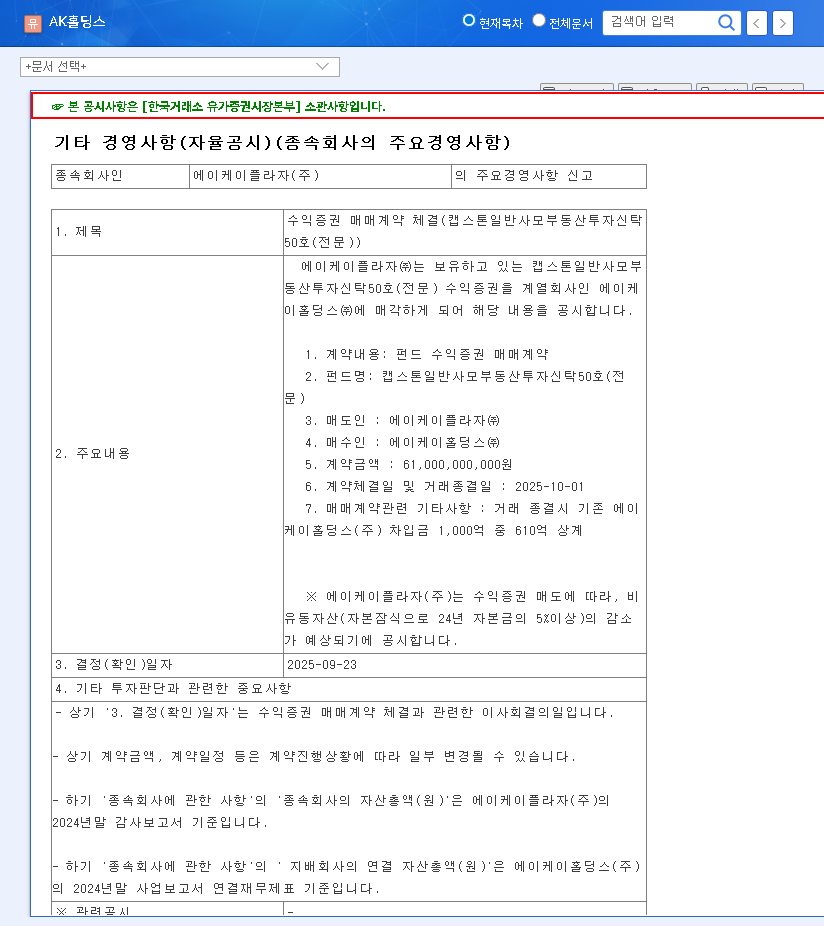
    AK Holdings has entered into an agreement to acquire income securities, specifically ‘Capstone Private Real Estate Investment Trust No. 50’, worth ₩61 billion from its subsidiary, AK Plaza. This allows AK Holdings to offset ₩61 billion of its existing ₩100 billion debt.

    2. Why This Decision? – Improving Financial Structure and Capital Efficiency

    The primary objectives of this transaction are to improve AK Holdings’ financial structure and enhance capital efficiency within the group. By offsetting debt, AK Holdings aims to reduce its liabilities and strengthen its financial health, while simultaneously providing AK Plaza with an opportunity to secure operating funds.

    3. What’s the Impact? – Positive Effects and Potential Risks

    • Positive Effects:
      • Debt reduction and improved financial structure for AK Holdings
      • Increased liquidity for AK Plaza
      • Enhanced financial stability for the entire group
    • Potential Risks:
      • Volatility risk associated with income securities, particularly influenced by real estate market conditions
      • Impact of reduced non-current assets on AK Plaza’s future operations

    4. What Should Investors Do? – Close Monitoring is Crucial

    Investors should consider both the positive impact on AK Holdings’ financial health and the potential risks associated with the volatility of income securities. Closely monitoring the underlying assets and returns of the securities, as well as AK Plaza’s future operational plans, is crucial. Furthermore, continuous attention to macroeconomic conditions, especially real estate market trends and interest rate fluctuations, is necessary.


    FAQ

    What does this acquisition mean for AK Holdings?

    It’s a strategic decision aimed at improving AK Holdings’ financial structure and increasing capital efficiency within the group. The main goal is to reduce debt and enhance financial health through debt offsetting.

    What should investors pay attention to?

    Investors need to carefully consider the volatility of the income securities, potential changes in AK Plaza’s operations, and shifts in the macroeconomic environment.

    What are the underlying assets of the income securities?

    According to the information, the underlying asset is ‘Capstone Private Real Estate Investment Trust No. 50,’ suggesting a likely connection to real estate. Investors should verify the details through investment prospectuses or other relevant documents.


    AK Holdings Acquires ₩61 Billion in Income Securities: Impact on Financial Structure 관련 이미지
    AK Holdings Acquires ₩61 Billion in Income Securities: Impact on Financial Structure 관련 이미지


  • AK Holdings (006840) Half-Year Report Analysis: Jeju Air’s Deficit, What’s the Investment Strategy?

    1. AK Holdings’ 2025 Half-Year Results: What Happened?

    AK Holdings recorded consolidated revenue of KRW 931.9 billion, operating loss of KRW 27.3 billion, and net loss of KRW 21.8 billion in the first half of 2025. While sales slightly increased, both operating and net income turned to deficits. Jeju Air’s substantial losses are identified as the main cause of the consolidated earnings decline.

    2. Analyzing the Causes of the Sluggish Performance: Why These Results?

    Despite the recovery in international travel demand, Jeju Air recorded a large deficit due to high oil prices, rising labor costs, and a high debt ratio (653%). Other business segments also showed poor performance due to the slowdown in the department store industry and the downturn in the real estate market.

    3. AK Holdings Investment Strategy: So, What Should We Do?

    Currently, a ‘conservative wait-and-see’ approach is necessary for investing in AK Holdings. Close monitoring of Jeju Air’s financial restructuring and stabilization of oil prices and exchange rates is crucial. In the short term, Jeju Air’s turnaround will be the key to investment decisions, while in the mid-to-long term, the strengthening competitiveness of subsidiaries and securing the group’s overall financial soundness are crucial.

    4. Investor Action Plan: What to Do Right Now?

    • Short-term investors: Closely monitor Jeju Air’s performance and financial restructuring progress, and continuously check related news and disclosures.
    • Mid-to-long-term investors: Along with the possibility of Jeju Air’s turnaround, analyze the competitiveness and growth potential of subsidiaries such as AK Chemtech and AK Beauty, and establish an investment strategy from a long-term perspective.

    Frequently Asked Questions

    What are the main businesses of AK Holdings?

    AK Holdings is a holding company with a diverse business portfolio including chemicals (AK Chemtech), household goods and cosmetics (AK Beauty), air transportation (Jeju Air), department stores (AK Plaza), and real estate (AM Plus Asset Development).

    What is the most important point in this half-year report?

    The significant deficit of Jeju Air and the resulting decline in consolidated earnings. This raises concerns about the overall financial soundness of AK Holdings.

    Should I invest in AK Holdings?

    A ‘conservative wait-and-see’ approach is recommended at this time. It is essential to monitor Jeju Air’s turnaround and the strengthening of the group’s overall financial soundness. Investment decisions should be made at the investor’s own discretion and responsibility.