Tag: 006400

  • (006400) SAMSUNG SDI’s 3 Trillion Won Battery Supply Deal: A Deep Dive for Investors

    The news of a potential 3 trillion Won SAMSUNG SDI battery supply contract has sent shockwaves through the financial markets, creating a mix of excitement and uncertainty for SAMSUNG SDI investors. While the sheer scale of the deal suggests a monumental win, the company’s official stance remains cautious. This crucial ambiguity presents a pivotal question: is this a ground-floor investment opportunity or a speculative trap?

    This comprehensive analysis moves beyond the headlines to provide a data-driven evaluation. We will dissect SAMSUNG SDI’s current fundamentals, analyze the competitive landscape of the EV battery market, and assess the broader macroeconomic factors at play. Our goal is to equip you with the insights needed to navigate this volatility and make strategic decisions regarding your SAMSUNG SDI stock position.

    The 3 Trillion Won Announcement: What We Know

    Official Stance and Key Dates

    On November 4, 2025, in response to widespread market reports, SAMSUNG SDI issued a formal disclosure. The company acknowledged that discussions for a major battery supply are in progress but stressed that nothing is finalized. The official disclosure (Source) confirms a re-disclosure is scheduled within one month, by December 3, 2025, which will provide a definitive update.

    SAMSUNG SDI’s Position: “Currently in discussions regarding the reported battery supply, but nothing has been definitively confirmed.”

    This ‘unconfirmed’ status is critical. It has created a speculative environment where the market is pricing in the potential upside, but significant risk remains until the details are concrete. All eyes are on the upcoming December deadline.

    SAMSUNG SDI’s Health Check: Fundamentals & Market Position

    To understand the potential impact of this deal, we must first assess the company’s current state based on its H1 2025 performance and the competitive EV battery market.

    The Challenged Energy Solutions Division

    The core of SAMSUNG SDI’s business is facing headwinds. The global slowdown in EV market growth, exacerbated by high interest rates and delayed automaker production schedules, has led to a significant performance decline.

    • Financial Strain: The division posted an operating loss of 883.2 billion Won on sales of 5.94 trillion Won, a sharp decrease year-over-year.
    • Low Utilization: Critically low factory utilization rates (44% for small batteries, 24% for EMC) are eroding profitability, making a large new contract essential for operational efficiency.
    • Competitive Pressure: The company faces intense competition from rivals like LG Energy Solution and SK On, as well as Chinese manufacturers such as CATL. Staying ahead requires continuous innovation, as discussed in this in-depth market report from Bloomberg.

    Bright Spots: Electronic Materials & Financials

    In contrast, the Electronic Materials division is thriving, fueled by demand for AI semiconductors and OLED panels. Financially, the company is on reasonable footing with a healthy 82.7% debt ratio, though this could become a concern if the Energy Solutions division’s losses continue. A recent 1.65 trillion Won rights issue provides capital for future investment, which could be deployed to support this new contract.

    Potential Scenarios for the SAMSUNG SDI Battery Supply Deal

    The confirmation—or failure—of this 3 trillion Won contract presents two very different futures for the company’s stock.

    The Bull Case: A Confirmed, High-Quality Contract

    • Revenue & Profit Surge: A contract of this size would immediately boost revenues and, more importantly, increase factory utilization rates, which is the fastest path back to profitability for the Energy Solutions division.
    • Enhanced Market Credibility: Securing a new major automotive partner would diversify SAMSUNG SDI’s customer base and serve as a powerful validation of its battery technology and quality.
    • Positive Stock Momentum: Confirmation with favorable terms could be the catalyst that reverses the recent downturn in SAMSUNG SDI stock, attracting significant investor interest.

    The Bear Case: Failure or Unfavorable Terms

    • Market Disappointment: If the deal falls through or is significantly smaller than reported, the market’s optimistic expectations will evaporate, likely leading to a sharp stock price correction.
    • Profit Margin Concerns: In a competitive market, automakers are pushing for lower prices. A large contract signed with thin profit margins might boost revenue but fail to meaningfully improve the bottom line.
    • Prolonged Uncertainty: Any delay beyond the December 3rd deadline will extend the period of volatility and could be interpreted negatively by the market.

    Investment Strategy and Recommendations

    Navigating this period requires a clear-eyed, strategic approach. While the potential upside of the SAMSUNG SDI battery supply deal is high, the risks are equally pronounced.

    1. Monitor Information Closely: The single most important action is to watch for the official re-disclosure on or before December 3, 2025. This will be the definitive catalyst.
    2. Focus on the ‘Quality’ of the Contract: When the news breaks, look beyond the 3 trillion Won headline. The critical details are the profit margins, the duration of the supply, and the identity of the partner. These factors will determine the long-term value.
    3. Manage Risk: Given the binary nature of this event, it is prudent to avoid overly aggressive positions until there is clarity. Consider this a period for observation rather than heavy accumulation.
    4. Evaluate the Broader Context: Remember that this deal exists within the larger EV battery market. Keep an eye on competitor movements and the overall health of EV sales, which you can read about in our full analysis of the EV sector.

    In conclusion, SAMSUNG SDI is at a crossroads. A confirmed, profitable 3 trillion Won contract could reinvigorate its most important division and its stock price. Conversely, a negative outcome could deepen its current struggles. A cautious, informed, and patient approach is the wisest strategy for investors until the fog of uncertainty lifts.
  • (006400) SAMSUNG SDI Q3 Earnings Analysis (006400): Navigating Loss & Future Growth

    (006400) SAMSUNG SDI Q3 Earnings Analysis (006400): Navigating Loss & Future Growth

    The latest SAMSUNG SDI Q3 earnings report for 2025 sent a wave of concern through the market. With revenue falling short of expectations and a surprising shift to an operating loss, investors are understandably cautious. However, a deeper dive into the numbers reveals a more nuanced picture, including a positive net profit and a clear strategy for long-term dominance in the EV battery market.

    This comprehensive analysis unpacks the critical details behind the Q3 performance, evaluates the company’s strategic investments, and provides a forward-looking perspective for anyone considering an investment in Samsung SDI stock. Let’s dissect the challenges and uncover the significant opportunities that lie ahead.

    Breaking Down the SAMSUNG SDI Q3 Earnings Report

    On October 28, 2025, SAMSUNG SDI CO.,LTD (KRX: 006400) released its provisional third-quarter operating results, which immediately caught the attention of analysts. The key financial indicators presented a mixed, and largely challenging, picture when compared to market consensus. You can view the full filing here: (Official Disclosure).

    Key Financial Metrics vs. Market Expectations

    • Revenue: KRW 3,051.8 billion, which was 6% below the market’s expectation of KRW 3,242.3 billion.
    • Operating Profit: A loss of KRW -591.3 billion, a significant deviation from the anticipated loss of KRW -341.5 billion.
    • Net Profit: A surprising positive turn to KRW 47.9 billion, comfortably beating the consensus forecast of a KRW -170.5 billion loss.

    The Driving Forces Behind the Performance Slump

    The underperformance wasn’t caused by a single issue, but rather a confluence of macroeconomic pressures and strategic, forward-looking expenditures. Understanding these factors is key to any Samsung SDI investment thesis.

    1. Revenue Headwinds and Market Softness

    The 4.0% year-on-year revenue decrease stemmed from both the Energy Solution and Electronic Materials divisions. A global economic slowdown has tempered the previously explosive growth in the global EV market, leading major automakers to adjust production plans. This, combined with weakened demand for power tools and other IT devices, directly impacted sales volumes. The Electronic Materials division, while benefiting from AI semiconductor demand, couldn’t fully offset the volatility from inventory adjustments by its major customers.

    2. The High Cost of Future Growth

    The shift to an operating loss was driven by two primary factors: the reduced revenue increasing the burden of fixed costs, and a massive, deliberate increase in spending. Samsung SDI invested a colossal KRW 1.84 trillion in the first half of the year for capacity expansion. Furthermore, R&D expenses soared to 11.1% of revenue. While these investments weigh heavily on short-term profitability, they are essential for developing next-generation battery technologies (like the 4680 cell) and securing long-term market leadership. For more on industry trends, see this analysis of the EV battery market.

    Despite the short-term pain reflected in the Q3 operating loss, Samsung SDI’s aggressive investment in R&D and capacity is a clear signal of its commitment to capturing future growth and technological superiority.

    Future Outlook: Strategy, Competition, and Market Position

    While the Q3 report was challenging, Samsung SDI’s long-term growth story remains intact, underpinned by strategic partnerships and a focus on innovation.

    Strengthening Key Alliances

    Collaboration is central to Samsung SDI’s strategy. The definitive joint venture agreement with General Motors (GM) is a monumental step in solidifying its footprint in the crucial North American market. Similarly, the MOU with Hyundai Motor/Kia to co-develop specialized batteries for robotics opens up an entirely new and promising avenue for growth beyond the traditional EV space. These partnerships not only secure future demand but also de-risk capital-intensive expansion projects.

    Key Observation Points for Investors

    Moving forward, investors should monitor several key variables that will influence the trajectory of Samsung SDI stock:

    • Q4 Earnings and 2026 Outlook: Watch for signs of improved performance as customer inventory adjustments ease and seasonal effects kick in.
    • EV Market Re-acceleration: Any signs of renewed vigor in the EV market will be a powerful tailwind for the entire battery sector.
    • R&D Milestones: Progress reports on next-generation battery technologies, especially the mass production of 4680 cells, will be critical validation of the current investment strategy.
    • Competitive Landscape: Keep an eye on the pricing policies and technological announcements from key competitors in China and Europe.

    Frequently Asked Questions (FAQ)

    Q1: Why did SAMSUNG SDI’s Q3 earnings miss market expectations?

    The miss was due to a mix of a global economic slowdown impacting EV and IT demand, intensified competition, and significant, planned increases in facility and R&D investments, which raised short-term costs.

    Q2: Is the company’s large-scale investment a good or bad sign?

    In the short term, it negatively impacted operating profit. However, for a long-term Samsung SDI investment, it is a very positive sign. These expenditures are crucial for building future capacity and developing next-gen technology to maintain a competitive edge.

    Q3: What is the long-term outlook for Samsung SDI stock?

    The long-term outlook remains strong. The structural growth of the battery industry is undeniable. Samsung SDI’s technological leadership, strong customer partnerships (like GM and Hyundai), and focus on innovation position it well to capitalize on the eventual recovery and continued expansion of the EV and energy storage markets.

    (006400) SAMSUNG SDI Q3 Earnings Analysis (006400): Navigating Loss & Future Growth 관련 이미지
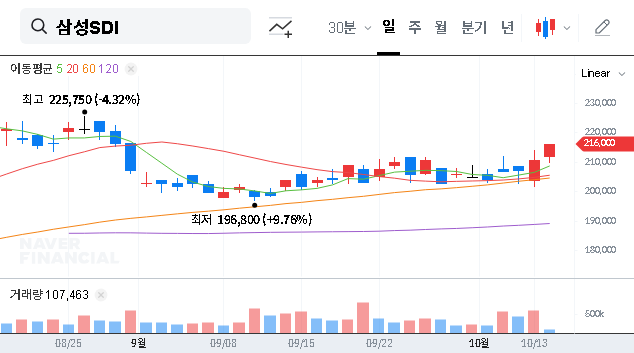
  • (006400) SAMSUNG SDI CO.,LTD (006400) Q3 2025 IR Analysis: A Turning Point for Stock Growth?

    (006400) SAMSUNG SDI CO.,LTD (006400) Q3 2025 IR Analysis: A Turning Point for Stock Growth?

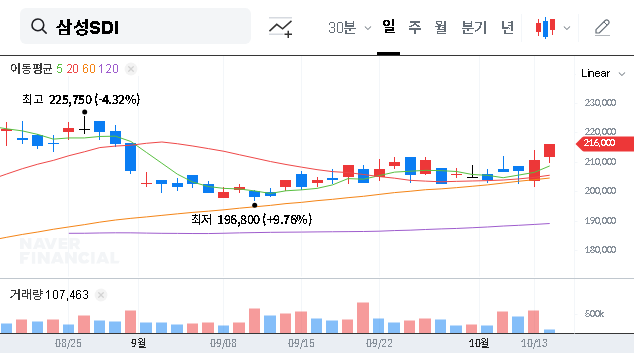
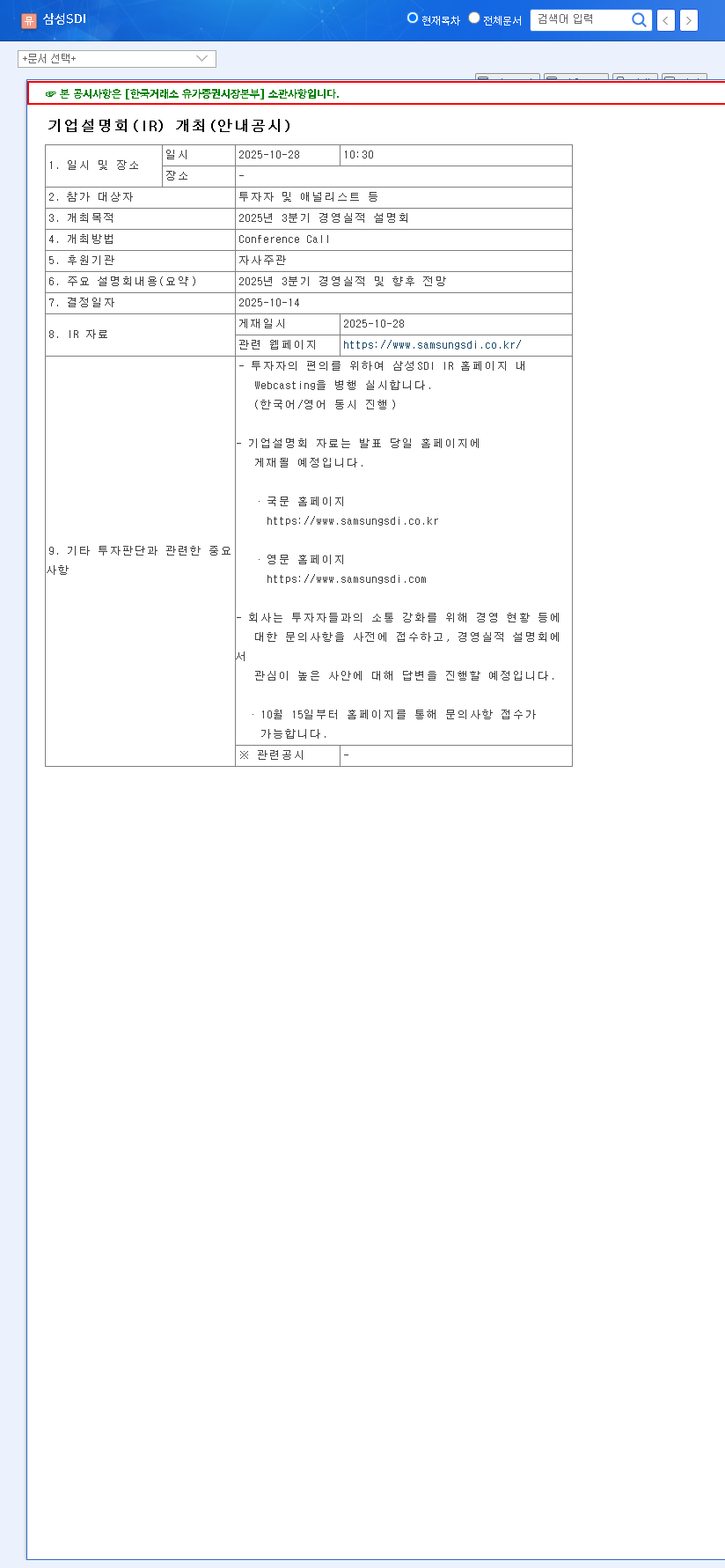
    The upcoming Q3 2025 Investor Relations (IR) conference for SAMSUNG SDI CO.,LTD (006400) on October 28, 2025, is poised to be a pivotal moment for investors. After a challenging first half marked by operating losses and underutilization in key segments, the market is eagerly awaiting a clear roadmap for recovery and future growth. This comprehensive Samsung SDI stock analysis will dissect the company’s current standing, evaluate the macroeconomic landscape, and outline the critical factors that will shape its trajectory, helping you make a more informed investment decision.

    From its strategic investments in next-generation battery technology to the restructuring of its Electronic Materials division, Samsung SDI is making bold moves. But will these be enough to overcome the headwinds of a slowing EV market and intense competition? This IR is the company’s chance to restore confidence and prove its long-term value proposition.

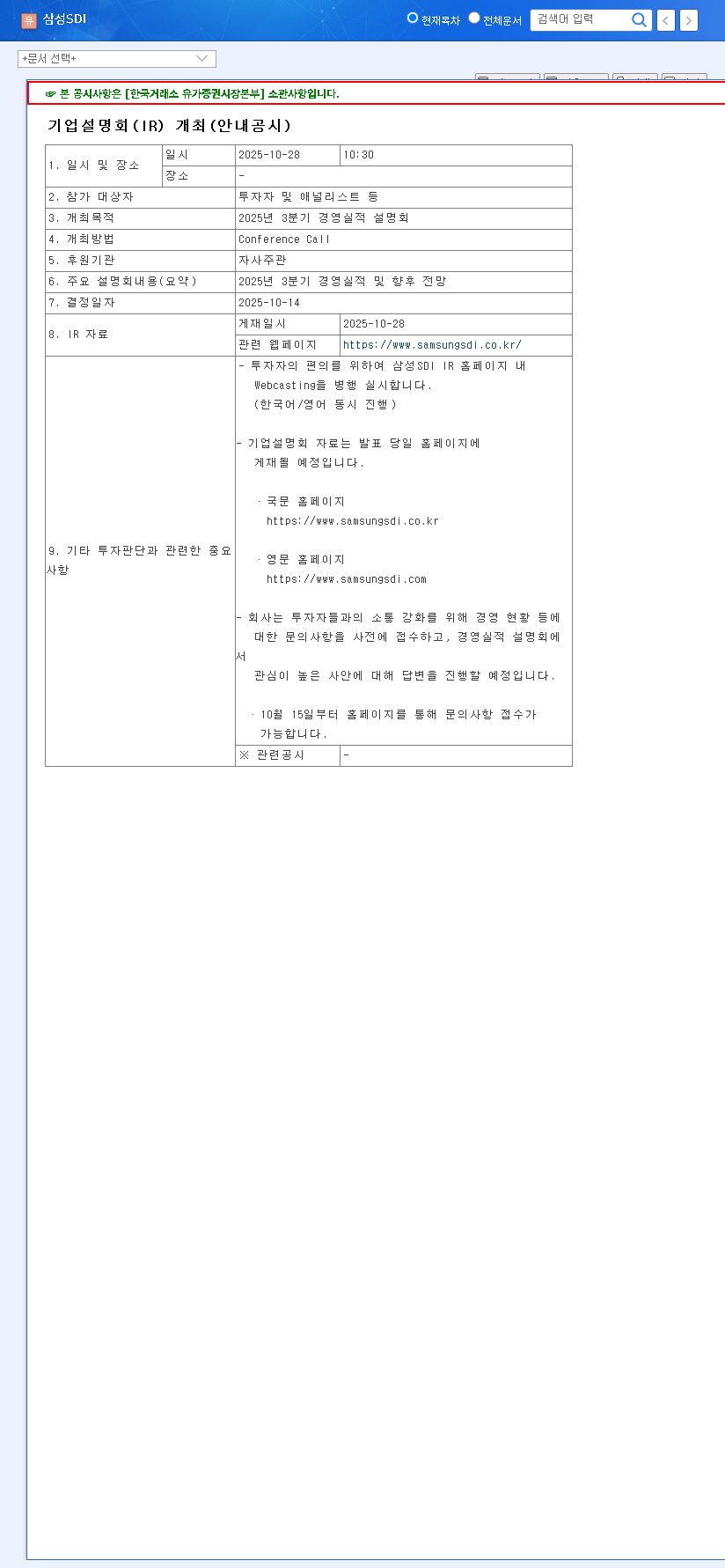
    Q3 2025 Investor Relations Event Details

    Samsung SDI will present its quarterly performance and provide crucial updates on its strategic direction. This event is a key opportunity for management to address investor concerns directly.

    • Company: SAMSUNG SDI CO.,LTD (006400)
    • Event: Q3 2025 Investor Relations (IR) Conference
    • Date & Time: October 28, 2025, 10:30 AM (KST)
    • Purpose: Announce Q3 2025 financial results and discuss the future business outlook.
    • Official Source: Investors can review the Official Disclosure on DART for formal documentation.

    Deep Dive: SAMSUNG SDI CO.,LTD’s Core Business Segments

    The company’s performance is driven by two distinct divisions, each facing its own set of opportunities and challenges. A thorough Samsung SDI stock analysis requires understanding the dynamics of both.

    1. Energy Solution Division (93% of Sales)

    This division, the company’s primary revenue engine, encompasses batteries for electric vehicles (EVs), energy storage systems (ESS), and small-sized applications. The first half of 2025 was tough, with sales down 28.6% and a significant operating loss. The low utilization rate for small-sized batteries (44%) has been a major drag on profitability.

    Despite near-term headwinds in the EV market, the long-term electrification trend remains intact. The key question for Samsung SDI is how it will navigate the current slowdown and capture growth in burgeoning areas like grid-scale ESS.

    Key factors to watch include progress on its all-solid-state battery technology, securing new long-term orders from major automakers, and strategies to improve capacity utilization. The global EV market is becoming increasingly competitive, with rivals like LG Energy Solution and CATL expanding aggressively. For more context, you can read about the global trends in the EV battery industry.

    2. Electronic Materials Division (7% of Sales)

    While smaller, this division is a high-margin business focused on semiconductor and display materials. The decision to divest its polarizing film business signals a strategic shift to concentrate on higher-growth areas. The explosive demand for AI is a significant tailwind, driving growth in materials used for advanced semiconductors and HBM (High-Bandwidth Memory).

    Investors will look for commentary on how Samsung SDI plans to capitalize on the AI boom and what new material innovations are in the pipeline. This division’s consistent profitability provides a crucial buffer against the volatility in the Energy Solution segment. For more on this sector, see our guide on investing in the semiconductor supply chain.

    Financial Health and Strategic Outlook

    In May 2025, SAMSUNG SDI CO.,LTD successfully raised KRW 1.65 trillion through a rights offering. These funds are being deployed into aggressive facility investments, primarily to expand battery production capacity. While this dilutes existing shareholders in the short term, it’s a necessary step to secure long-term growth.

    The Samsung SDI future outlook will be heavily influenced by how efficiently this new capital is used to generate returns. The IR presentation must provide clear metrics and timelines for these investments to reassure the market.

    Key Questions for the IR Conference

    • What is the concrete plan to improve the utilization rate of the small-sized battery lines?
    • Can you provide an updated timeline for the mass production of all-solid-state batteries?
    • How is the new order pipeline for EV batteries shaping up for 2026 and beyond?
    • What are the expected synergies and profitability improvements from the Electronic Materials business restructuring?

    Investment Thesis and Recommendation

    Currently, a ‘Hold’ recommendation seems prudent for 006400. The company possesses undeniable long-term growth potential, underpinned by its technological prowess and strategic investments. However, significant short-term uncertainties and profitability challenges cloud the immediate outlook.

    The upcoming Q3 2025 IR is the critical catalyst. A convincing presentation that addresses the key questions above and provides a clear, credible path to improved profitability could shift this rating to a ‘Buy’. Conversely, a lack of clarity or further negative guidance could increase downside risk.

    Disclaimer: This analysis is for informational purposes only and is not investment advice. All investment decisions should be made based on your own research and risk tolerance.

    (006400) SAMSUNG SDI CO.,LTD (006400) Q3 2025 IR Analysis: A Turning Point for Stock Growth? 관련 이미지
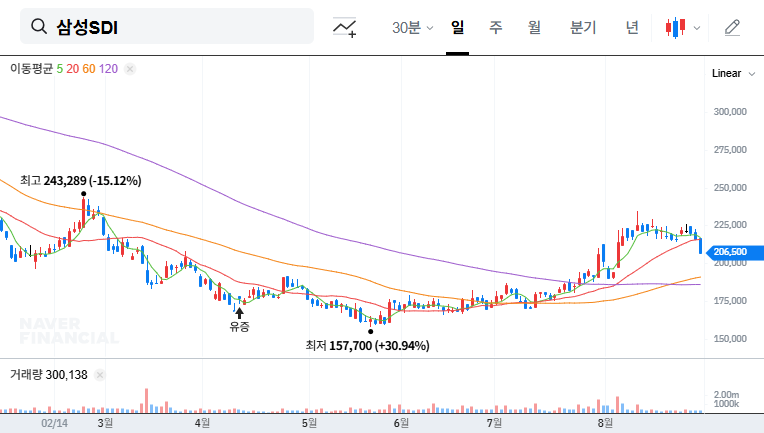
  • Samsung SDI Donates ₩340 Million: Impact on Stock Price?

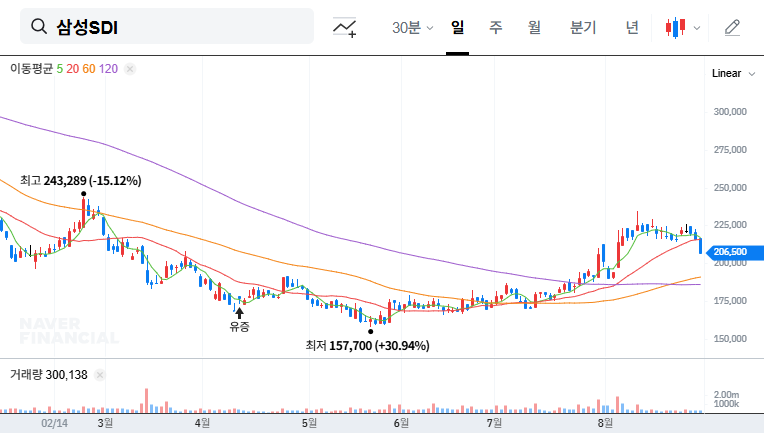
    Samsung SDI Donates ₩340 Million: Impact on Stock Price? 대표 차트 이미지

    1. Background of Samsung SDI’s ₩340 Million Donation

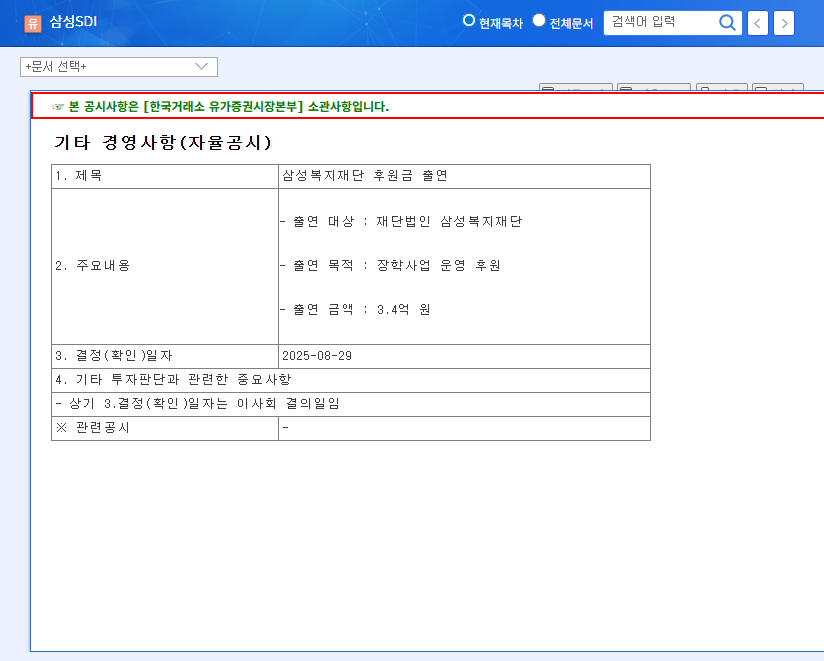
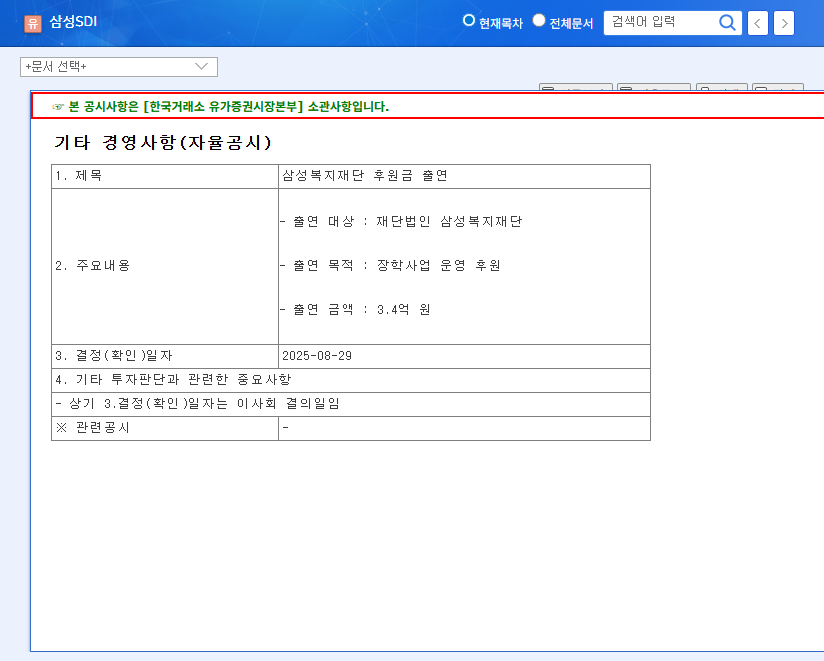
    Samsung SDI’s board of directors approved a ₩340 million donation to the Samsung Welfare Foundation to support scholarship programs. This initiative aims to contribute to the development of future generations and fulfill the company’s social responsibility.

    2. Impact on Stock Price: Minimal Direct Effect

    The ₩340 million donation is negligible compared to Samsung SDI’s total assets. Therefore, the direct impact on short-term financial performance and stock price is expected to be minimal. Macroeconomic and internal factors, such as performance in the energy solutions division, are likely to have a greater influence on the stock price. Historically, small donations and CSR activities have rarely had a significant impact on Samsung SDI’s stock.

    3. Investment Implications: Focus on Fundamentals

    This donation should be viewed as part of Samsung SDI’s corporate social responsibility efforts. Investors should focus on fundamental factors such as earnings, business competitiveness, and financial health when considering investment decisions. A comprehensive investment analysis should consider market conditions, industry outlook, and competitive landscape.

    Will Samsung SDI’s ₩340 million donation affect its stock price?

    The donation is relatively small and is not expected to have a significant direct impact on the stock price.

    What are the key factors to consider when investing in Samsung SDI?

    Investors should consider fundamental factors such as earnings, competitiveness, financial health, as well as market conditions and industry outlook.

    What is the purpose of Samsung SDI’s donation?

    The donation aims to support the Samsung Welfare Foundation’s scholarship programs and contribute to the development of future generations.

    Samsung SDI Donates ₩340 Million: Impact on Stock Price? 관련 이미지
  • Samsung SDI Invests ₩14.8B in Future: Cultivating Software Talent for Competitive Edge

    Samsung SDI Invests ₩14.8B in Future: Cultivating Software Talent for Competitive Edge 대표 차트 이미지

    1. The Significance of the ₩14.8B Investment

    Samsung SDI’s contribution of ₩14.8 billion to the ‘Samsung Young SW·AI Academy’ signifies a commitment to fostering software skills in young professionals. This transcends mere corporate social responsibility and represents a strategic long-term investment in securing crucial software talent for future industrial competitiveness.

    2. Why Invest in Software Talent Now?

    Samsung SDI is currently facing challenges due to sluggish performance in its energy solutions division. However, continuing investments in the future remains vital. Software competency is essential for strengthening battery technology competitiveness and fostering new business ventures, serving as a core strategy for securing long-term growth.

    3. Can This Investment Change Samsung SDI’s Future?

    In the short term, the ₩14.8 billion investment is unlikely to significantly impact financial indicators or stock prices. However, from a long-term perspective, it’s expected to have positive effects, including enhancing corporate image, strengthening ESG management, and securing future talent. Acquiring skilled software professionals can lead to technological innovation and new business development, ultimately contributing to increased corporate value.

    4. Key Considerations for Investors

    • • Performance improvement strategies and results in the energy solutions division
    • • R&D investment outcomes and commercialization of new technologies in the SW/AI field
    • • Future talent acquisition and development strategies

    Investment decisions should not be based solely on CSR activities. It’s crucial to comprehensively evaluate Samsung SDI’s core business recovery and future growth potential before making informed investment choices.

    Q: Is Samsung SDI’s ₩14.8B investment just a donation?

    A: It’s not simply a donation, but a strategic investment aimed at securing future competitiveness. The intention is to establish long-term growth engines through fostering software talent.

    Q: Will this investment positively impact Samsung SDI’s stock price?

    A: The short-term impact on the stock price is expected to be minimal, but in the long run, it can positively contribute by enhancing corporate image and ESG management.

    Q: What is the future outlook for Samsung SDI?

    A: Although currently facing performance challenges, future-oriented investments like fostering software talent are a positive sign. However, continuous monitoring of the core business’s performance recovery is essential.

    Samsung SDI Invests ₩14.8B in Future: Cultivating Software Talent for Competitive Edge 관련 이미지