Tag: 005290

  • (005290) DONGJIN SEMICHEM Q3 2025 Earnings Analysis: Deep Dive into 005290 Stock’s Future

    (005290) DONGJIN SEMICHEM Q3 2025 Earnings Analysis: Deep Dive into 005290 Stock’s Future

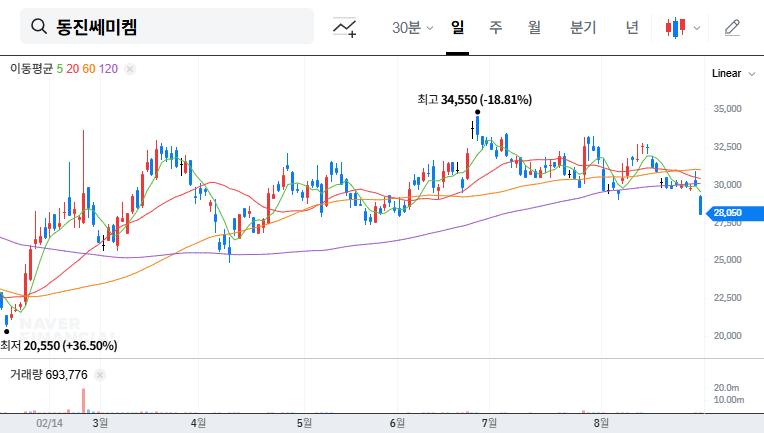
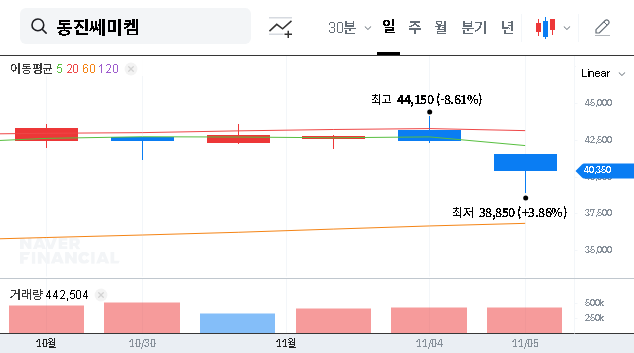
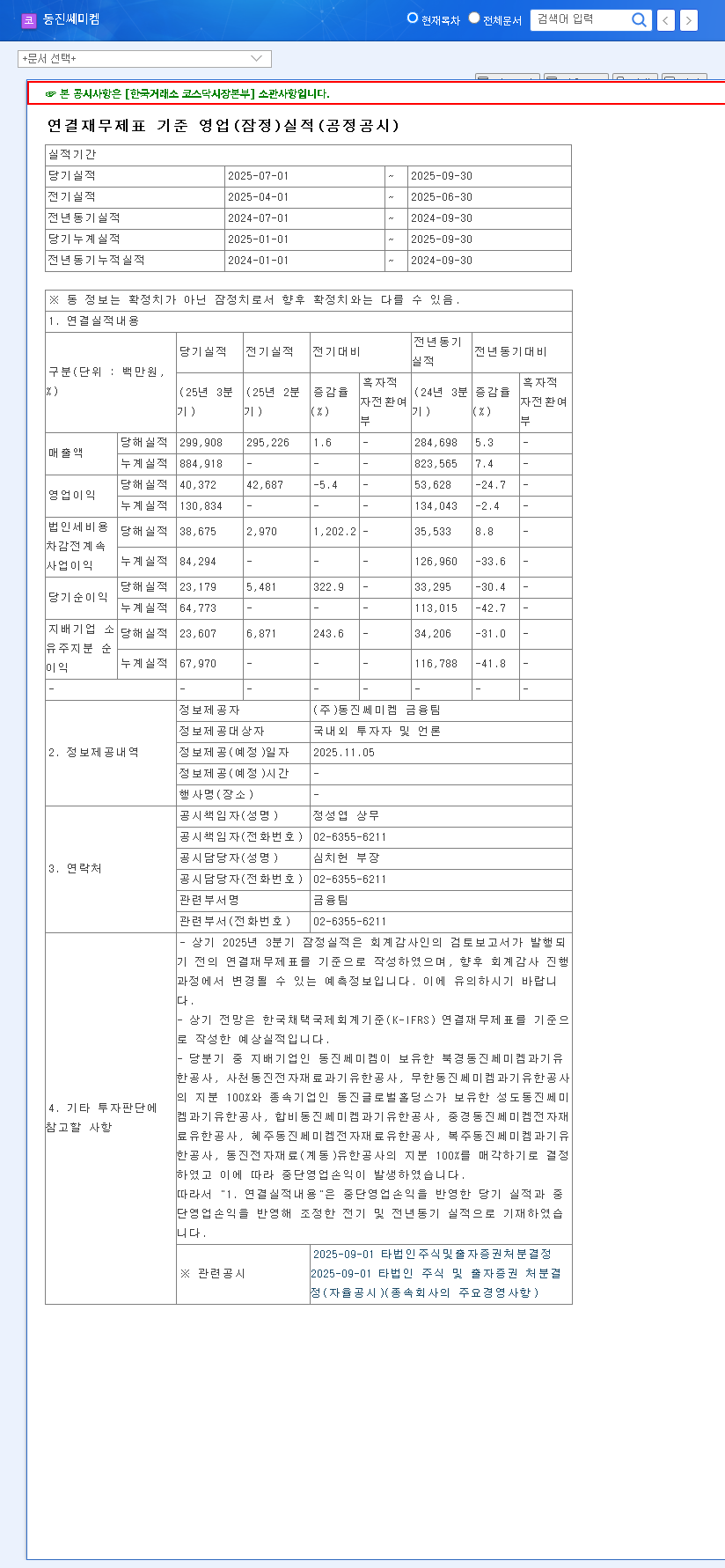
    On November 5, 2025, the release of the DONGJIN SEMICHEM Q3 2025 earnings report sent ripples through the investment community. The provisional consolidated figures for DONGJIN SEMICHEM CO., LTD. (KRX: 005290) revealed a noticeable dip in key metrics, sparking immediate concerns about the company’s short-term trajectory. Both revenue and operating profit fell short of expectations, raising a critical question: is this a temporary setback or a sign of deeper issues? This comprehensive DONGJIN SEMICHEM analysis aims to look beyond the headline numbers.

    We will dissect the factors contributing to the quarterly slump, evaluate the company’s resilient core businesses, and assess the long-term potential of its strategic growth initiatives. By examining the full picture—from macroeconomic pressures to internal cost structures—we provide investors with the context needed to understand the true value proposition of DONGJIN SEMICHEM stock and make more informed decisions.

    The Q3 2025 Earnings Report at a Glance

    The official disclosure presented a challenging quarter for the company. The numbers, when compared both quarter-on-quarter (QoQ) and year-on-year (YoY), paint a picture of contraction.

    Q3 2025 Provisional Consolidated Results:
    Revenue: KRW 299.9 billion (down 20.4% QoQ, down 16.3% YoY)
    Operating Profit: KRW 40.4 billion (down 24.9% QoQ, down 34.9% YoY)
    Net Income: KRW 23.6 billion

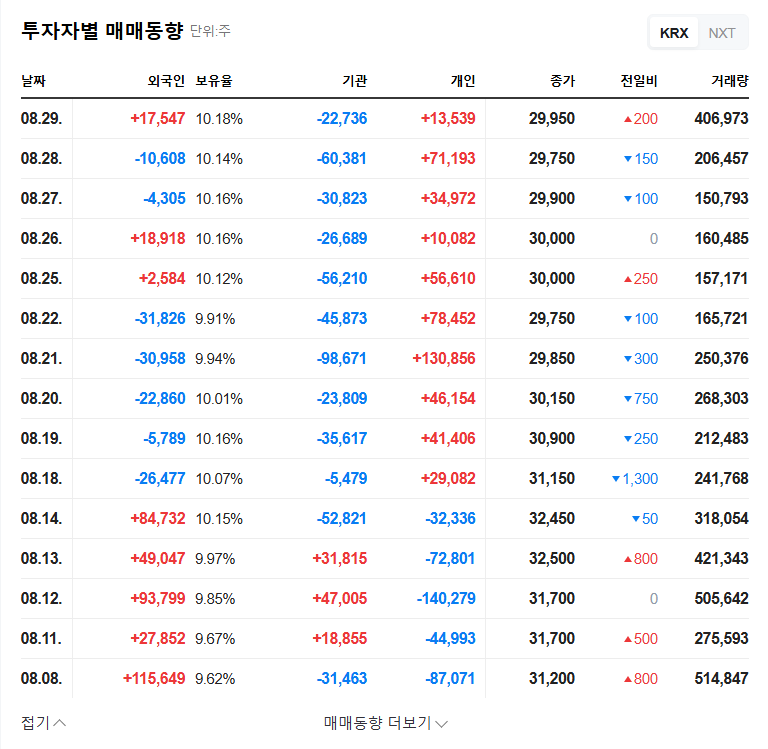
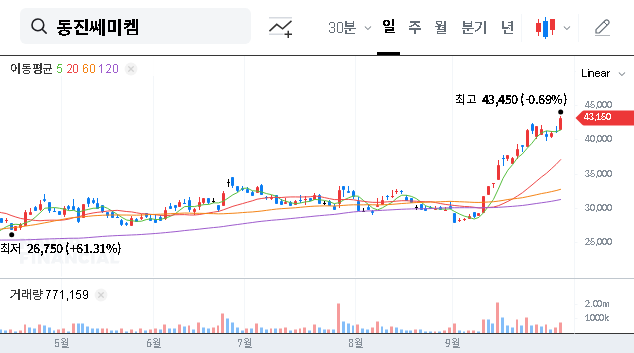
    These figures clearly missed market expectations and triggered immediate downward pressure on the DONGJIN SEMICHEM stock price. The official financial data can be reviewed in the Official Disclosure filed on DART.

    Why the Slump? A Multi-Factor Analysis

    The underperformance in the 005290 earnings report wasn’t caused by a single issue, but rather a confluence of industry-specific headwinds and broader economic factors.

    1. Headwinds in the Display Materials Segment

    While the semiconductor materials business remained a robust pillar, accounting for a significant portion of the company’s revenue, the display segment faced considerable challenges. Intensifying competition, particularly from Chinese manufacturers, has led to pricing pressures. Furthermore, fluctuating capital expenditure plans from major display panel clients created demand uncertainty, directly constraining revenue growth in Q3.

    2. Persistent Cost Burdens and Macroeconomic Pressures

    External economic forces played a significant role. The elevated USD/KRW exchange rate (around KRW 1,315) increased the cost of imported raw materials, squeezing profit margins. Although oil prices showed a downtrend, which could offer future relief, the impact of prior cost increases and volatile raw material prices continued to weigh on Q3 profitability. This is a common challenge for global manufacturers, and a deeper dive into managing supply chain risk is crucial for long-term stability.

    3. Strategic Investments Impacting Short-Term Profit

    DONGJIN SEMICHEM is not standing still. The company is actively investing in future growth engines, including materials for secondary batteries (for electric vehicles) and fuel cells. These crucial R&D and facility investment costs, while essential for long-term value creation, directly impacted short-term profitability in Q3. This reflects a classic trade-off between current earnings and future growth.

    Beyond the Quarter: Long-Term Growth Drivers Remain Intact

    Despite the disappointing DONGJIN SEMICHEM Q3 2025 earnings, the company’s fundamental strengths and long-term outlook offer a more optimistic perspective.

    • Semiconductor Leadership: The company holds a formidable position in semiconductor electronic materials, especially advanced photoresists (e.g., EUV, ArF) critical for next-generation chip manufacturing. As the global semiconductor industry, analyzed by institutions like Gartner, continues its push towards miniaturization and complexity, demand for DONGJIN’s core products is set to grow.
    • New Growth Engines: The investments in secondary battery and fuel cell materials position DONGJIN to capitalize on the global shifts towards electric mobility and clean energy. Successful commercialization in these areas could unlock significant new revenue streams and drive substantial long-term corporate value.
    • Stable Financials: With over KRW 1 trillion in total equity, the company maintains a stable capital structure. Its debt-to-equity ratio is improving, providing a solid foundation to navigate short-term volatility and fund future growth initiatives.

    Investor’s Action Plan: Key Monitorables for DONGJIN SEMICHEM

    For those conducting a thorough DONGJIN SEMICHEM analysis, the focus must now shift to the future. Here are the critical points to monitor moving forward:

    • Q4 Rebound & Annual Guidance: Can the company recover in the fourth quarter? Close attention should be paid to the Q4 results and the company’s official forecast for the full year 2025 and outlook for 2026.
    • New Business Milestones: Look for concrete announcements regarding the commercialization timelines, customer acquisitions, or technological breakthroughs in the secondary battery and fuel cell segments.
    • Cost Management Execution: Monitor the company’s strategies for mitigating the impact of foreign exchange rates and raw material costs. Improved operational efficiency will be key to restoring profitability.
    • Global Market Strategy: Assess how DONGJIN adapts to the evolving dynamics in the Chinese display market and the global semiconductor landscape.

    In conclusion, while the DONGJIN SEMICHEM Q3 2025 earnings were undoubtedly a disappointment, they reflect short-term pressures rather than a collapse of the company’s long-term investment thesis. The core semiconductor business remains strong, and strategic bets on future technologies are promising. Cautious observation and a focus on the key milestones listed above will be essential for investors navigating the current uncertainty.
    (005290) DONGJIN SEMICHEM Q3 2025 Earnings Analysis: Deep Dive into 005290 Stock's Future 관련 이미지
  • (005290) Dongjin Semichem Company Split: A Deep Dive for Investors on Shareholder Value

    (005290) Dongjin Semichem Company Split: A Deep Dive for Investors on Shareholder Value

    The recent announcement regarding the Dongjin Semichem company split has generated significant buzz in the investment community. This pivotal restructuring separates the core business into two specialized entities: the surviving Dongjin Semichem, focused on high-growth electronic materials, and the newly formed Dongjin Innovachem, dedicated to the foaming agents business. Far more than a simple division, this is a calculated strategy to unlock specialization, drive innovation, and ultimately enhance shareholder value. For investors, understanding the nuances of this split is critical. According to the Official Disclosure, this move is designed to create two more agile and competitive companies. This comprehensive analysis will explore the strategic rationale, dissect the prospects of each new entity, and provide a clear action plan for making informed investment decisions.

    The Core Strategy Behind the Dongjin Semichem Company Split

    A corporate spin-off or split is a powerful tool used to streamline operations and unlock hidden value. The primary motivation for the Dongjin Semichem company split is to create two distinct, highly focused organizations that can better navigate their respective markets. This strategic uncoupling allows each business to pursue tailored growth strategies, allocate capital more efficiently, and respond with greater agility to industry-specific challenges and opportunities.

    Sharpening Business Focus and Specialization

    The electronic materials and foaming agents markets have vastly different dynamics. The former is driven by rapid technological innovation and deep integration with semiconductor giants, while the latter relies on scale, supply chain efficiency, and industrial application. By separating them, each management team can concentrate its expertise and resources on securing a competitive advantage in its specific global market, without being constrained by the priorities of the other division.

    Maximizing Management Efficiency and Agility

    A leaner corporate structure fosters faster, more professional decision-making. The new entities will be able to react swiftly to market shifts, customer demands, and technological breakthroughs. This improved management efficiency is crucial for both the high-velocity electronics sector and the competitive industrial materials space, leading to more effective implementation of business-specific strategies and a better allocation of resources.

    The ultimate goal of this strategic division is clear: to foster long-term, sustainable growth for both companies, which in turn is expected to significantly enhance corporate and shareholder value.

    A Tale of Two Companies: Post-Split Deep Dive

    Following the split, investors will hold shares in two distinct companies, each with its own unique profile and growth trajectory. Let’s analyze what the future holds for each.

    1. The New Dongjin Semichem: A Titan in Electronic Materials

    The surviving entity, Dongjin Semichem, will consolidate its position as a powerhouse in the electronic materials business. It will continue supplying core materials for the ever-expanding semiconductor and display industries. Its competitive edge lies in its ability to co-develop solutions with major manufacturers and its in-house synthesis capabilities. With the robust growth of the global semiconductor market and expanding display demand, particularly from China, stable revenue growth is anticipated. Furthermore, its investment into renewable energy is a key long-term catalyst. R&D in areas like fuel cells (MEA manufacturing) and secondary batteries (CNT conductive materials, silicon anode materials) could unlock significant new revenue streams and position the company at the forefront of green technology. You can learn more about related industry trends in our analysis of the semiconductor market.

    2. Dongjin Innovachem: Forging a New Path in Foaming Agents

    The newly established Dongjin Innovachem will inherit the foaming agents business, providing it with an independent foundation for growth. Its products are essential in diverse industries like footwear, construction materials, and automotive interiors, offering a stable revenue base. The key growth driver to watch is the commercialization of Microspheres, a high-value-added product with the potential to significantly boost sales and profitability. An efficient supply chain, supported by its Indonesian subsidiary, will help maintain a competitive edge in the global market.

    Financial Outlook & What to Expect for Dongjin Semichem Stock

    Recent financial performance has been strong, with first-half sales reaching 744.9 billion KRW and operating profit hitting 112.3 billion KRW, showcasing solid fundamentals. Post-split, each company’s independent growth is expected to maintain this positive trajectory. From a market perspective, the enhancement of corporate value through specialization is expected to have a positive long-term impact on the Dongjin Semichem stock price (and the new Dongjin Innovachem stock). However, investors should be prepared for potential short-term volatility as the market digests the split. Over time, the stock prices of the two companies will likely diverge based on their individual performance, a concept well-explained by experts at high-authority financial sites like Investopedia.

    Investor Action Plan: Navigating the Split

    While the long-term outlook is promising, proactive monitoring is key. Here are the crucial points for investors to focus on during this transition:

    • Monitor Split Execution: Ensure the split process unfolds smoothly and according to the announced timeline. Any delays or complications could introduce uncertainty.
    • Analyze Segment Performance: Once separated, closely track the quarterly financial reports and business performance of both Dongjin Semichem and Dongjin Innovachem to evaluate their independent progress.
    • Track Renewable Energy Milestones: For Dongjin Semichem, progress in its renewable energy R&D (fuel cells, batteries) will be a critical indicator of its long-term growth potential beyond its core business.
    • Observe Macroeconomic Factors: Keep an eye on variables like raw material costs, currency exchange rates, and interest rates, as these can impact the profitability of both new entities.

    In conclusion, the Dongjin Semichem company split represents a significant and strategic turning point. By creating two specialized, agile companies, it paves the way for focused growth and enhanced competitiveness. For investors with a long-term perspective, this strategic realignment could present a compelling opportunity to capitalize on the distinct potential of both the electronic materials and foaming agents markets.

    (005290) Dongjin Semichem Company Split: A Deep Dive for Investors on Shareholder Value 관련 이미지
  • Dongjin Semichem Divests Stake for ₩124.1B, Focusing on China Joint Venture

    Dongjin Semichem Divests Stake for ₩124.1B,  Focusing on China Joint Venture 대표 차트 이미지

    1. What Happened?: Dongjin Semichem Divests 30% Stake in Overseas Subsidiary

    On September 1, 2025, Dongjin Semichem announced its decision to divest 30% of its stake in a specific overseas subsidiary for ₩124.1 billion. The expected disposal date is May 31, 2026.

    2. Why This Decision?: Investment Recovery and China Joint Venture

    This divestment aims to recover the initial investment and secure funds for a joint venture in the Chinese display materials market. Dongjin Semichem’s strategy is to strengthen its presence and secure future growth engines in the Chinese market.

    3. What’s Next?: Improved Financial Structure and Growth Momentum Expected

    • Financial Impact: The influx of ₩124.1 billion is expected to significantly improve the financial structure, solidifying the foundation for future investments and business expansion.
    • Business Impact: The China joint venture is expected to enhance competitiveness in the display materials market and secure new growth engines. However, the success of the joint venture needs careful consideration.
    • Stock Price Impact: A short-term stock price increase is expected due to the positive assessment of the investment recovery. However, the mid-to-long-term stock price trend will depend on the performance of the joint venture.

    4. Investor Action Plan: Key Investment Points to Check

    • Analyze Growth Potential of China Joint Venture: Evaluate the potential for success by analyzing the specifics of the joint venture, competitive landscape, and market outlook.
    • Confirm Use of Divested Funds: Check the specific plans for utilizing the recovered funds and assess their alignment with the company’s long-term growth strategy.
    • Monitor Macroeconomic and Industry Trends: Continuously monitor macroeconomic variables such as exchange rates, interest rates, and raw material prices, along with trends in the display industry.

    Frequently Asked Questions

    Q: What does this divestment mean for Dongjin Semichem?

    A: This divestment has two key implications for Dongjin Semichem: improved financial structure and entry into the Chinese display market. Securing ₩124.1 billion enhances financial stability, and the investment in the China joint venture secures future growth engines.

    Q: What should investors be aware of?

    A: It’s crucial for investors to carefully analyze the potential success of the China joint venture, the plan for utilizing the recovered funds, and macroeconomic and industry trends before making investment decisions.

    Q: What is the future outlook for Dongjin Semichem?

    A: While this divestment is likely a positive factor, the mid-to-long-term corporate value depends on the success of the joint venture and how the funds are utilized.

    Dongjin Semichem Divests Stake for ₩124.1B,  Focusing on China Joint Venture 관련 이미지
    Dongjin Semichem Divests Stake for ₩124.1B,  Focusing on China Joint Venture 관련 이미지
  • Dongjin Semichem Divests Chinese Subsidiaries: Strengthening Financial Structure and Growth Momentum

    Dongjin Semichem Divests Chinese Subsidiaries: Strengthening Financial Structure and Growth Momentum 대표 차트 이미지

    1. What Happened?

    On September 1, 2025, Dongjin Semichem announced its decision to sell a portion (30%) of its stake in three Chinese subsidiaries (Beijing Dongjin Semichem, Sichuan Dongjin Electronic Materials, and Wuhan Dongjin Semichem) for KRW 62.1 billion. The expected date of the sale is May 31, 2026.

    2. Why the Divestiture?

    This divestiture is more than just recovering investment funds; it’s a strategic move to facilitate a joint venture related to display materials in China. The secured funds will be used to improve financial structure and invest in new businesses.

    3. How Will This Divestiture Impact Dongjin Semichem?

    Positive Impacts

    • Improved Financial Structure: The inflow of KRW 62.1 billion will strengthen financial soundness, including reducing debt ratios.
    • Investment in New Businesses: The secured funds will be used for investments to secure new growth engines.
    • Strengthened Competitiveness in the Chinese Market: The joint venture will further solidify the company’s position in the Chinese market.

    Negative Impacts and Considerations

    • Potential for Disposal Losses: Losses may occur if the disposal price is lower than the book value.
    • Exchange Rate Fluctuations: Actual disposal proceeds may vary due to exchange rate fluctuations.

    4. What Should Investors Do?

    This divestiture can be interpreted as a positive signal for Dongjin Semichem’s long-term growth. However, it’s crucial for investors to make informed decisions by continuously monitoring variables that may arise during the disposal process. Particular attention should be paid to exchange rate fluctuations and the possibility of disposal losses.

    Frequently Asked Questions

    Will Dongjin Semichem continue its operations in China after the divestiture?

    Yes, as only a portion (30%) of the stake is being sold, Dongjin Semichem will maintain its influence in the Chinese market. Furthermore, it plans to strengthen its competitiveness within the Chinese market through the joint venture utilizing the funds from the divestiture.

    How will the proceeds from the divestiture be used?

    The proceeds will be used to improve financial structure and invest in new growth engines. Specific investment plans will be announced later.

    Will this divestiture positively impact the stock price?

    Generally, improving financial structure and securing new growth momentum have a positive influence on stock prices. However, continuous monitoring is necessary as stock price volatility can occur due to market conditions and other variables.

    Dongjin Semichem Divests Chinese Subsidiaries: Strengthening Financial Structure and Growth Momentum 관련 이미지
    Dongjin Semichem Divests Chinese Subsidiaries: Strengthening Financial Structure and Growth Momentum 관련 이미지
  • Dongjin Semichem (005290) Q2 2025 Earnings Analysis: Revenue Growth, but Profitability Decline. What’s Next?

    1. Q2 Earnings: What Happened?

    Dongjin Semichem reported revenue of KRW 376.8 billion, operating income of KRW 53.8 billion, and net income of KRW 6.9 billion for Q2 2025. Compared to the previous quarter, revenue increased by 2.39%, but operating income decreased by 8.03%, and net income saw a significant drop.

    2. Profitability Decline: Why?

    The primary reason for the decline in profitability despite revenue growth is presumed to be rising costs or increased SG&A expenses. The exact cause will need to be confirmed through future disclosures. The significant decrease in net income compared to Q1 may be attributed to factors such as increased non-operating expenses and higher tax burdens.

    3. Investment Strategy: What Now?

    • Short-term perspective: A cautious approach is necessary considering the potential for increased stock price volatility. It is crucial to confirm additional information regarding the causes of the decline in profitability.
    • Mid-to-long-term perspective: The robust revenue growth and investment in new businesses are positive factors. However, it is important to monitor macroeconomic risks such as exchange rate fluctuations and the possibility of interest rate hikes. It will be crucial to check for improvements in profitability in future earnings announcements.

    4. Investor Action Plan

    • Check earnings announcements: Confirm detailed information on the cause of the Q2 earnings decline through future disclosures.
    • Monitor macroeconomic indicators: Pay close attention to changes in macroeconomic indicators such as exchange rates and interest rates.
    • Refer to corporate IR materials: Understand management’s future strategy through corporate presentations and investor relations materials.

    Frequently Asked Questions

    What are the key takeaways from Dongjin Semichem’s Q2 earnings?

    While revenue increased compared to the previous quarter, both operating income and net income decreased. The significant drop in net income, in particular, raises concerns about profitability management.

    Why did profitability decrease?

    Rising costs, increased SG&A expenses, etc., are presumed to be the cause, but the exact details need to be confirmed through future disclosures.

    Should I invest in Dongjin Semichem?

    Caution is advised in the short term due to expected stock price volatility. The company’s robust business growth and investments in new businesses are positive for the mid-to-long term, but macroeconomic risks should be considered.