Tag: 004830

  • (004830) DCKSUNG Indonesia Expansion: A ₩13.8B Deep-Dive for Investors

    (004830) DCKSUNG Indonesia Expansion: A ₩13.8B Deep-Dive for Investors

    The recent DCKSUNG Indonesia expansion represents a pivotal moment for the South Korean synthetic leather giant. As DCKSUNG CO.,LTD confronts weakening domestic fundamentals, its ₩13.8 billion acquisition of an Indonesian subsidiary is a bold move to secure a new growth engine. But is this a strategic masterstroke or a risky bet that could further strain its finances? This comprehensive analysis explores every facet of the deal to provide investors with a clear, data-driven perspective.

    We will dissect the acquisition’s background, evaluate the potential rewards against the inherent risks, analyze the macroeconomic landscape, and offer a conclusive investment recommendation for DCKSUNG CO.,LTD.

    The Landmark Announcement: A New Chapter in Indonesia

    On November 6, 2025, DCKSUNG CO.,LTD officially disclosed its decision to acquire a 99.9% stake in the newly formed PT. DUKSUNG ECOTECH INDONESIA. The ₩13.8 billion (approx. 15% of total capital) cash investment, detailed in the Official Disclosure (DART), is a strategic play to penetrate the burgeoning Southeast Asian synthetic leather market. The final acquisition is slated for completion by December 31, 2026.

    This isn’t just an acquisition; it’s a calculated pivot towards global markets, designed to offset domestic challenges and unlock new revenue streams in one of the world’s most dynamic economic regions.

    Why Now? The Rationale Behind the Expansion

    The timing of the DCKSUNG Indonesia expansion is driven by a combination of internal pressures and external opportunities. Understanding both is key to evaluating the strategy.

    Internal Pressures: Weakening Financial Health

    DCKSUNG’s financial performance in the first half of 2025 painted a concerning picture, necessitating a strategic breakthrough:

    • Declining Revenue: H1 2025 revenue fell to ₩73.9 billion, a sharp 41% decrease year-over-year.
    • Shrinking Profitability: Operating profit dropped by 43.4% to ₩5.04 billion, with the profit margin contracting from 6.8% to 5.1%.
    • Rising Debt Concerns: A staggering 282.6% increase in short-term borrowings has raised red flags regarding financial soundness, despite a manageable debt-to-equity ratio.

    External Opportunity: The Indonesian Market Potential

    Indonesia presents a compelling case. As a major manufacturing hub for global footwear and apparel brands, it offers a large, growing domestic market for synthetic leather. By establishing a local presence, DCKSUNG aims to gain a competitive edge through reduced logistics costs, local sourcing, and proximity to major clients. This move aligns with broader trends in our analysis of the synthetic leather market, which points to significant growth in Southeast Asia.

    A Balanced Scorecard: Risks vs. Rewards

    Any major international venture carries a mix of potential upsides and significant risks. The DCKSUNG Indonesia expansion is no exception.

    Potential Positives (The Rewards)

    • New Growth Engine: Tapping into the ASEAN market can offset declining domestic sales and create a vital new revenue stream.
    • Enhanced Competitiveness: Local production reduces shipping costs and tariffs, allowing for more competitive pricing for global brands manufacturing in the region.
    • Risk Diversification: Geographic expansion reduces dependence on the South Korean market and mitigates regional economic risks.

    Potential Negatives (The Risks)

    • Financial Strain: The ₩13.8 billion cash outlay could exacerbate existing financial weaknesses and increase liquidity risk in the short term.
    • Execution & Integration: Navigating cultural differences, local regulations, and integrating a new workforce presents significant operational challenges.
    • Currency Volatility: Fluctuations between the Indonesian Rupiah (IDR) and the Korean Won (KRW) could adversely affect profitability and the value of repatriated earnings.

    Investor Action Plan & Final Recommendation

    Given the high stakes, a cautious and informed approach is essential. While the long-term strategic vision is sound, the short-term execution risks are substantial. The market, as noted by sources like Reuters, remains skeptical pending tangible results.

    Investment Opinion: Conservative Approach Recommended. The potential for future growth is clear, but it is overshadowed by the immediate financial burden and operational uncertainties. Investors should wait for concrete signs of successful integration and profitability from the Indonesian subsidiary before considering a position.

    Key monitoring points for the future include:

    • Quarterly performance reports from PT. DUKSUNG ECOTECH INDONESIA.
    • Management’s progress on improving the core business’s profitability.
    • Updates on financial structure and debt management.

    Ultimately, the success of the DCKSUNG Indonesia expansion will depend on meticulous execution, transparent communication with shareholders, and a swift return to financial stability. Until then, caution is the wisest course of action.

    (004830) DCKSUNG Indonesia Expansion: A ₩13.8B Deep-Dive for Investors 관련 이미지
  • Deokseong (004830) Treasury Stock Disposal: Impact Analysis and Investment Strategy


    Deokseong (004830) Treasury Stock Disposal: Impact Analysis and Investment Strategy 대표 차트 이미지


    Deokseong Decides to Dispose of 9.6% Treasury Stock: What Happened?

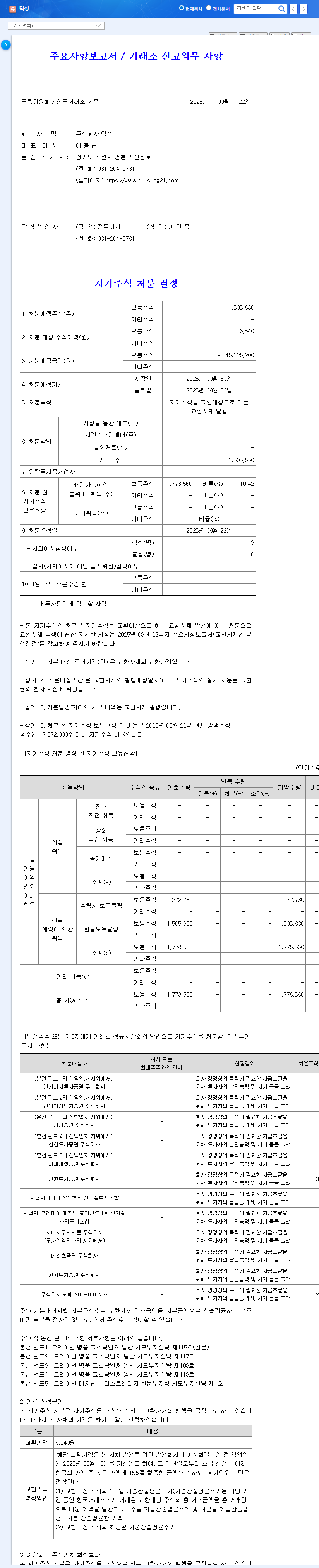
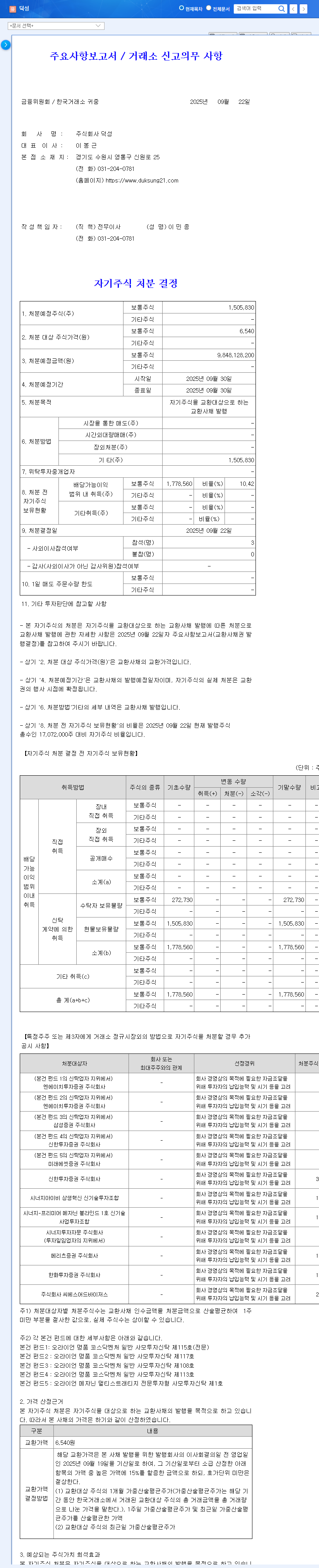
    On September 22, 2025, Deokseong decided to dispose of 1,505,830 common shares (9.6% of total outstanding shares, approximately KRW 9.8 billion). The purpose of the disposal is to issue exchangeable bonds with treasury stock as the exchange target.

    Why the Treasury Stock Disposal?

    The main purpose of this treasury stock disposal is to raise funds through the issuance of exchangeable bonds. Issuing exchangeable bonds generally has the advantages of lowering interest burdens or providing flexible maturity structures. Deokseong is expected to utilize the secured funds for improving financial structure, business expansion, and R&D investment.

    How Will This Impact the Stock Price?

    • Positive Impact: Expected increase in corporate value through improved financial structure and securing growth momentum. Deokseong’s sales and operating profit in the first half of 2025 increased by 32.7% and 39.3% year-on-year, respectively, showing robust growth. This positive fundamental, combined with the potential for further growth through fundraising, can be expected to create a synergistic effect.
    • Negative Impact: Potential stock dilution due to the increase in the number of outstanding shares. However, the impact may be limited depending on the conversion conditions of the exchangeable bonds and market conditions.

    Investor Action Plan


    Frequently Asked Questions (FAQ)

    What is the purpose of Deokseong’s treasury stock disposal?

    To raise funds through the issuance of exchangeable bonds. The secured funds will be used for improving financial structure, business expansion, and R&D investment.

    Does treasury stock disposal negatively affect the stock price?

    There is a possibility of stock dilution due to the increase in the number of outstanding shares, but the impact may be limited depending on the conversion conditions of the exchangeable bonds and market conditions. Corporate growth through fundraising may positively affect the stock price.

    What are the key points to consider when investing?

    Consider the detailed conditions of the exchangeable bonds, Deokseong’s future performance and financial soundness, and changes in the macroeconomic environment.


    Deokseong (004830) Treasury Stock Disposal: Impact Analysis and Investment Strategy 관련 이미지
    Deokseong (004830) Treasury Stock Disposal: Impact Analysis and Investment Strategy 관련 이미지


  • Deoksung Issues 9.8 Billion Won Convertible Bonds: What’s Next for the Stock?

    Deoksung Issues 9.8 Billion Won Convertible Bonds: What's Next for the Stock? 대표 차트 이미지

    1. Deoksung’s 9.8 Billion Won Convertible Bond Issuance: What Happened?

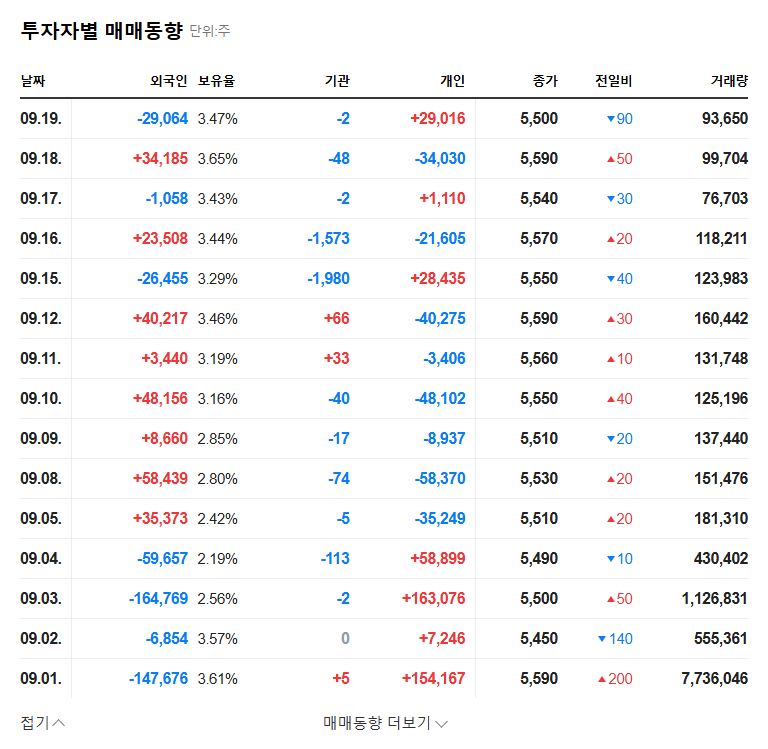
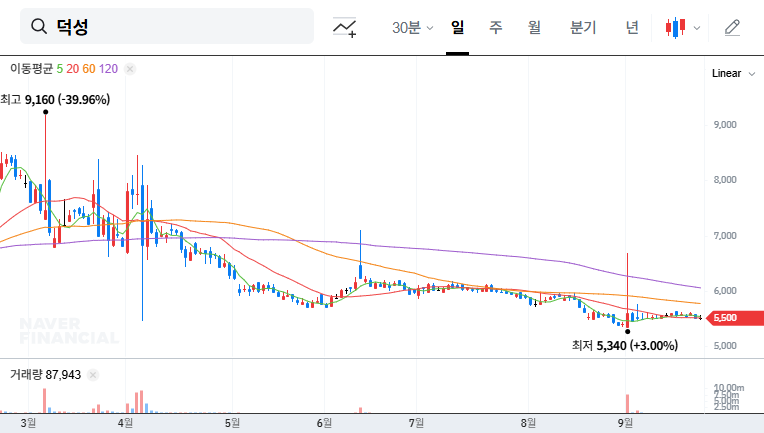
    On September 22, 2025, Deoksung announced its decision to issue 9.8 billion won in convertible bonds through private placement. The conversion price is set at 6,540 won (current market price: 5,500 won), with the conversion period starting on October 14, 2025, and ending on September 23, 2030. Key investors include Shinhan Investment Corp. and CS Advisors.

    2. Why Issue Convertible Bonds?

    Deoksung aims to secure funds for operating expenses and investments in new business ventures through this convertible bond issuance. The company is expected to focus on bolstering its synthetic leather division, which has seen declining sales, and accelerating investments in future growth engines such as new materials and secondary battery films.

    3. What’s the Impact on the Stock Price?

    • Positive Factors:
      • Expectations of new business investments fueled by increased capital.
      • Potential for short-term stock price increase due to the conversion price being higher than the current market price.
    • Negative Factors:
      • Concerns about increased financial burden due to the already high debt-to-equity ratio (266.90%).
      • Risk of non-conversion if the stock price falls.
      • Macroeconomic uncertainties (high interest rates, exchange rate fluctuations, etc.).

    In conclusion, this convertible bond issuance presents both opportunities and risks. While there’s potential for a short-term stock price boost, long-term performance hinges on Deoksung’s success in its new business ventures and maintaining financial health. Continuous monitoring is crucial.

    4. What Should Investors Do?

    Investors should make informed decisions by considering Deoksung’s financial status, business outlook, and the macroeconomic environment. Rather than reacting to short-term stock price fluctuations, a thorough analysis of Deoksung’s long-term growth potential is essential.

    What are convertible bonds?

    Convertible bonds are bonds that can be converted into shares of the issuing company’s stock. Investors can receive interest payments until maturity or convert the bonds into stock if the share price rises, potentially earning a profit.

    Will this convertible bond issuance positively impact Deoksung’s stock price?

    It could act as a short-term catalyst for stock price appreciation, but the long-term impact depends on Deoksung’s performance in new businesses and its financial health.

    What are the key considerations for investors?

    Investors should carefully consider the high debt-to-equity ratio, the risk of non-conversion if the stock price falls, and macroeconomic uncertainties before making investment decisions.

    Deoksung Issues 9.8 Billion Won Convertible Bonds: What's Next for the Stock? 관련 이미지
    Deoksung Issues 9.8 Billion Won Convertible Bonds: What's Next for the Stock? 관련 이미지
  • Deoksung (004830) H1 2025 Earnings Report Analysis: Can it Seize Opportunities Amidst Crisis?

    1. What Happened? Deoksung’s H1 2025 Earnings Analysis

    Deoksung’s H1 2025 sales decreased by 41% year-on-year to KRW 73.9 billion, and operating profit fell by 43% to KRW 5.04 billion. Intensified competition in the main synthetic leather business and the external economic slowdown are analyzed as the main causes of the sluggish performance. In particular, the low operating rate of the synthetic resin division (42.28%) shows the urgent need for strategies to improve profitability.

    2. Why Did This Happen? Background of Sluggish Performance and External Environment Analysis

    Deoksung’s poor performance was influenced not only by internal factors but also by the external environment. The unstable macroeconomic environment, including volatility in international oil prices, rising KRW/USD and KRW/EUR exchange rates, and global supply chain bottlenecks, weighed on Deoksung’s profitability. Also, high interest rates added to the financial burden by increasing borrowing costs.

    3. What’s Next? Deoksung’s Future Prospects and Growth Potential

    Deoksung is actively investing in the development of eco-friendly synthetic leather and resins, striving to secure future growth engines. This R&D investment is expected to provide long-term growth momentum. However, whether earnings will recover, the success of new businesses, and cost efficiency will be important variables determining Deoksung’s future.

    4. What Should Investors Do? Investment Implications and Action Plan

    Investors considering investing in Deoksung should consider the current sluggish performance and external uncertainties. Preparation for short-term stock price volatility is necessary, and a thorough evaluation of the company’s mid- to long-term growth strategy and execution capabilities is essential. A cautious investment approach is necessary until visible signs of an earnings rebound appear.

    What are Deoksung’s main businesses?

    Deoksung’s main businesses are the manufacturing and sale of synthetic leather and synthetic resins.

    How was Deoksung’s performance in the first half of 2025?

    Deoksung’s sales in H1 2025 decreased 41% year-on-year to KRW 73.9 billion, and operating profit fell 43% to KRW 5.04 billion.

    What are Deoksung’s future growth drivers?

    Deoksung is focusing its investments on developing eco-friendly synthetic leather and resins to secure future growth engines.

    What should investors be aware of when investing in Deoksung?

    Investors should consider the current sluggish performance and external uncertainties and carefully evaluate the company’s mid- to long-term growth strategy and execution capabilities.