Investors in SHINHUNG CO.,LTD (004080) are facing a complex picture. A recent disclosure on November 3, 2025, revealed a change in major shareholder ownership, a move often scrutinized for its implications on management. But does this signal of stability outweigh the company’s troubling financial performance? This analysis provides a detailed SHINHUNG investment strategy, dissecting the shareholder report, evaluating the underlying fundamentals, and offering a clear path forward for current and prospective investors.
This isn’t just about a minor shift in percentages; it’s about understanding the strategic intent behind the numbers and how it aligns—or conflicts—with the company’s financial health. We’ll help you see the complete picture.
Decoding the SHINHUNG Shareholding Change
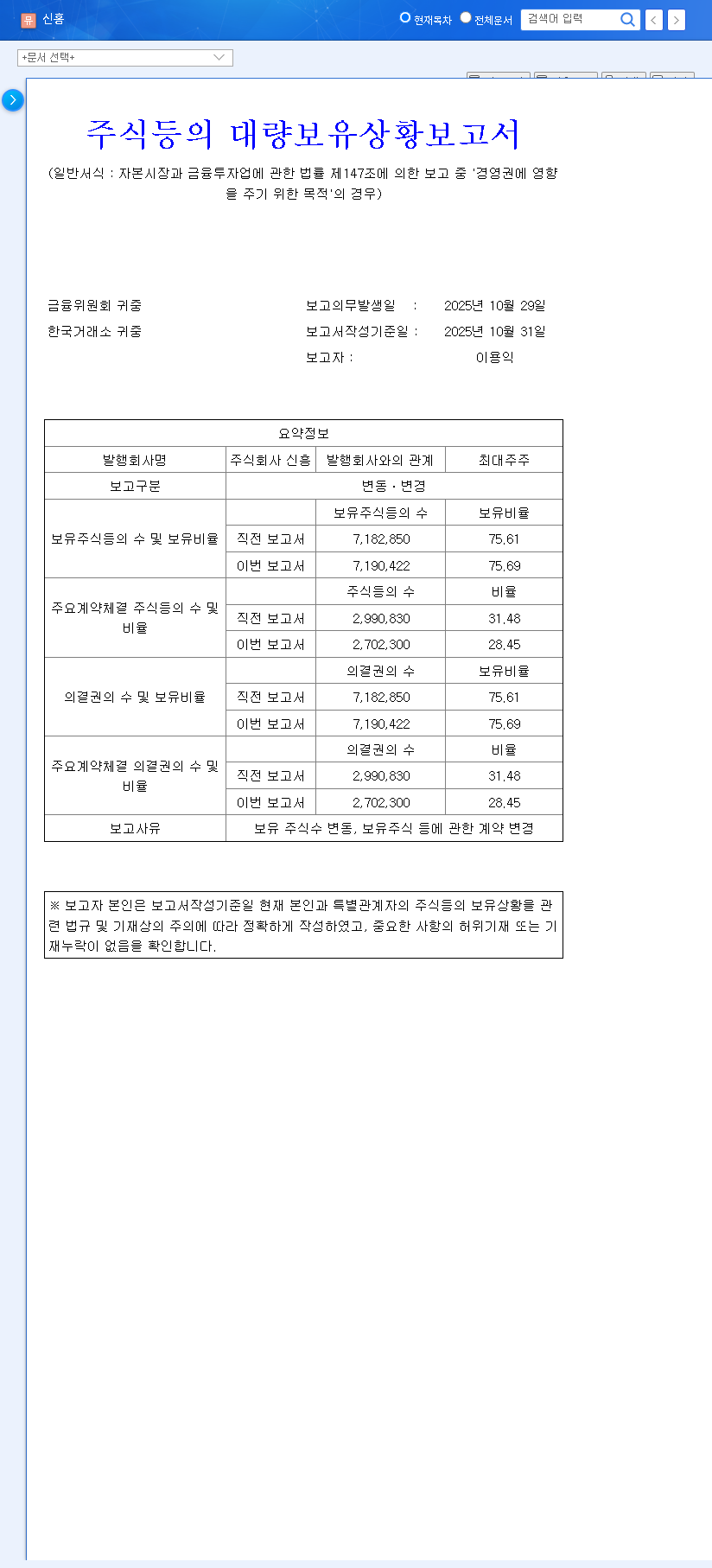
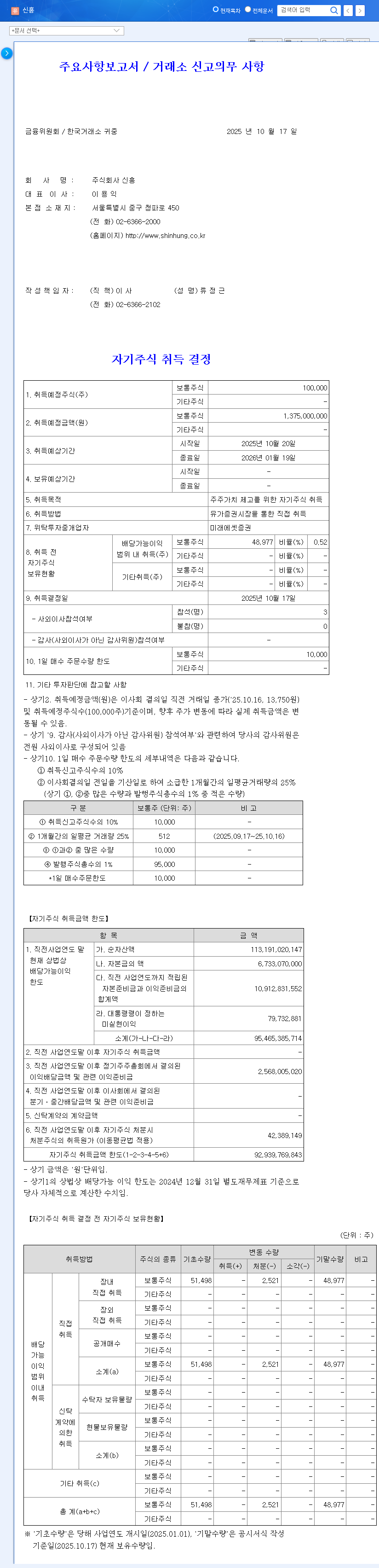
On November 3, 2025, a disclosure was filed concerning the holdings of Lee Yong-Ik and three related parties. While the headline number seems minor, the details offer insight into the controlling shareholders’ intentions. Investors can review the complete filing via the Official Disclosure (DART Report).
Key Details from the Report:
- •Total Shareholding Change: A marginal increase of 0.08 percentage points, moving from 75.61% to 75.69%.
- •Stated Purpose: Explicitly declared as ‘influence on management rights,’ signaling a clear intent to maintain and potentially strengthen control.
- •Internal Movements: While some individuals (Kim Yang-Soon and Lee Hyun-Sook) sold small amounts, key corporate entities like DV Holdings (+8,368 shares) and Shinsungchijae (+3,723 shares) were net buyers, consolidating the core group’s position.
Investment Analysis: The Bull vs. Bear Case
The Bull Case: A Vote for Management Stability
The primary positive takeaway from the SHINHUNG shareholding change is the reinforcement of management stability. For long-term investors, a committed and stable leadership team is paramount. It reduces the risk of sudden strategic shifts or internal power struggles that can disrupt operations. The net purchases by related corporate entities suggest confidence from within regarding the company’s future direction, even amidst current financial headwinds. This move can be interpreted as management ‘doubling down’ on their long-term vision, which can foster investor confidence and lay the groundwork for a future recovery.
The Bear Case: Alarming Fundamental Weaknesses
Despite the positive signal on governance, the SHINHUNG fundamentals paint a concerning picture. Stability means little if the underlying business is deteriorating. A comprehensive SHINHUNG stock analysis must weigh these critical issues:
- •Deteriorating Profitability: In the first half of 2025, revenue fell 6% year-over-year. More alarmingly, operating profit plummeted by 26.8% and net profit by 19.1%. This indicates severe margin compression and an inability to control costs relative to sales.
- •Worsening Financial Health: Borrowings more than doubled, causing the debt-to-equity ratio to spike from a very healthy 1.55% to a more concerning 5.78%. While still low in absolute terms, the rapid rate of increase is a significant red flag that requires monitoring.
- •Macroeconomic Headwinds: The persistent high-interest rate environment inflates borrowing costs, directly impacting the bottom line. Furthermore, exposure to foreign currency debt makes SHINHUNG vulnerable to fluctuations in the KRW/Euro and KRW/USD exchange rates, adding another layer of risk.
The Final Verdict: A Prudent SHINHUNG Investment Strategy
Considering the conflicting signals, a prudent SHINHUNG investment strategy calls for a cautious and neutral stance. The minor shareholding increase is too small to catalyze a significant stock price rally on its own. The market will, and should, remain focused on the company’s ability to address its fundamental challenges. Real upward momentum can only be expected when tangible signs of a turnaround appear.
Investors should add SHINHUNG to a watchlist and monitor the following key performance indicators before committing capital. For broader context, it’s also wise to read market analysis from authoritative sources like Bloomberg’s industry reports and compare SHINHUNG’s performance with key competitors discussed in our analysis of the Korean dental market.
Key Monitoring Points for Investors:
- •Quarterly Earnings Turnaround: Look for a stabilization and subsequent recovery in both revenue and operating profit margins in the upcoming financial reports.
- •Debt Management: Watch for any strategic initiatives aimed at reducing the new debt load or improving the company’s cash flow to service it.
- •Market Share Trends: Analyze SHINHUNG’s competitive position within the dental device industry. Is it losing ground to rivals, or is this an industry-wide slowdown?
Frequently Asked Questions (FAQ)
Is the SHINHUNG shareholding change a strong buy signal?
No. While the 0.08% increase in the major shareholders’ stake is a positive sign for management stability, it is far too small to be considered a strong buy signal on its own. The company’s weak fundamentals are a much more significant factor for the stock price at present.
What are the biggest risks facing SHINHUNG CO.,LTD right now?
The primary risks are continued deterioration in revenue and profitability, a rising debt burden in a high-interest-rate environment, and potential loss of market share in the competitive dental device sector. Foreign exchange volatility also poses a threat due to foreign currency-denominated debt.
What should an investor do with SHINHUNG stock?
A cautious ‘hold’ or ‘wait-and-see’ approach is advisable. The current SHINHUNG investment strategy should focus on monitoring the company’s financial results for signs of a concrete turnaround before considering a new or larger position.