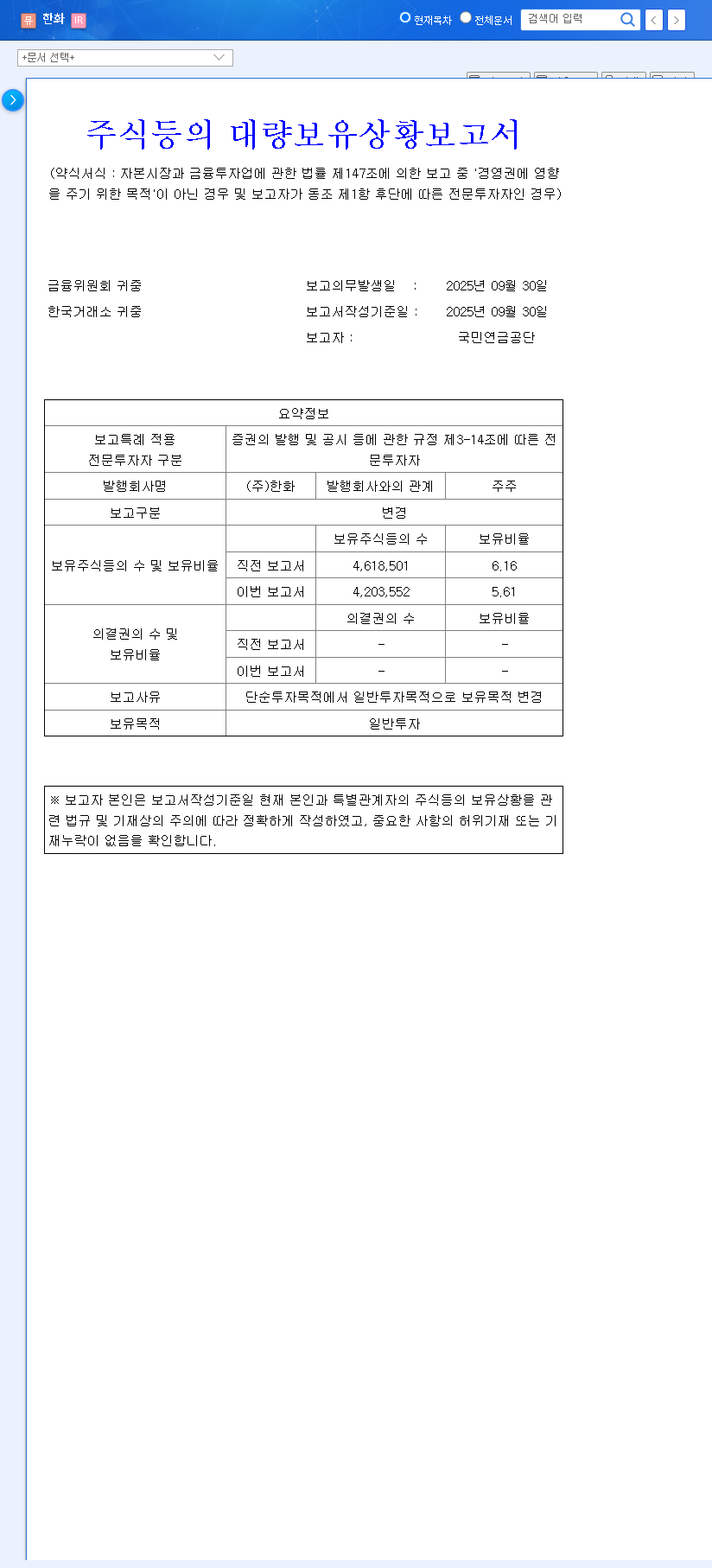
Tag: 000880

  • (000880) HANWHA CORP Q3 2025 Earnings Analysis: Deep Dive into the Shocking Miss & Investor Outlook

    (000880) HANWHA CORP Q3 2025 Earnings Analysis: Deep Dive into the Shocking Miss & Investor Outlook

    The preliminary HANWHA CORP (㈜한화) Q3 2025 earnings report, released on November 6, 2025, has sent significant shockwaves through the financial markets. The figures revealed a drastic underperformance against all expectations, qualifying as a severe ‘earnings shock’ that has raised fundamental questions about the company’s health and future trajectory. Both revenue and operating profit experienced a staggering decline, signaling deep-rooted issues that investors cannot afford to ignore.

    This comprehensive analysis will dissect the official preliminary numbers, explore the multifaceted reasons behind this sharp downturn, and assess the potential impact on Hanwha Corp’s stock price and long-term corporate value. By understanding the core drivers of this performance crisis, investors can gain the critical insights needed to navigate the uncertainty and make well-informed decisions regarding their Hanwha Corp stock analysis.

    The Q3 2025 Preliminary Earnings by the Numbers

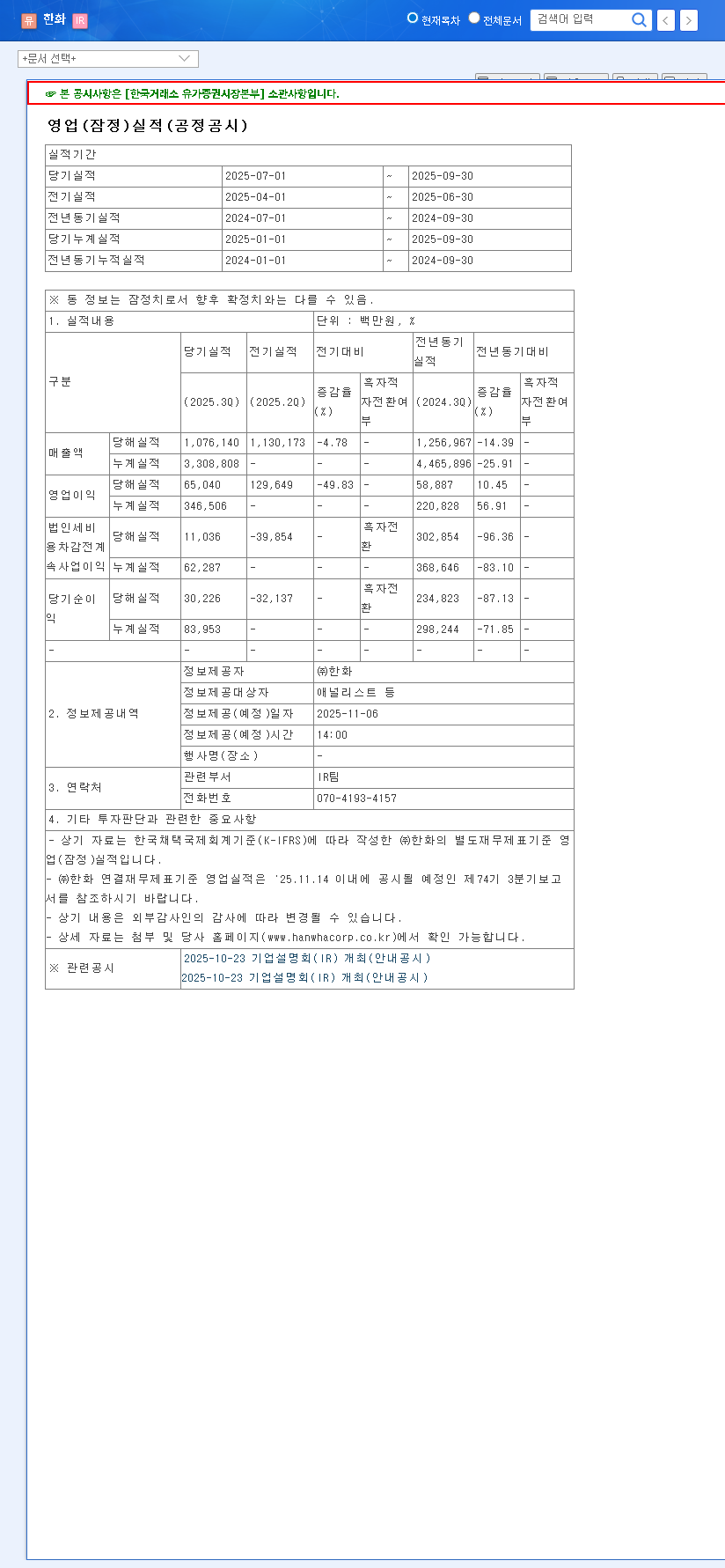
    The preliminary figures fell dramatically short of market consensus and historical performance. The data, sourced from the company’s official filing, paints a stark picture of the challenges faced during the quarter. The official filing can be viewed here: Official DART Disclosure.

    Hanwha Corp’s Q3 2025 preliminary results show a revenue of 1,076.1 billion KRW (-93.4% vs. market estimate) and an operating profit of 65.0 billion KRW (-92.5% vs. market estimate), indicating an unprecedented decline.

    • Revenue: 1,076.1 billion KRW, a shocking 93.4% collapse from the market estimate of 16,377.9 billion KRW.
    • Operating Profit: 65.0 billion KRW, representing a 92.5% plunge from the anticipated 865.9 billion KRW.
    • Net Income: A meager 30.2 billion KRW, reflecting the severe drop in operational profitability.

    These figures are not just a minor miss; they represent a fundamental break from trend, with revenue declining approximately 94% from the previous quarter (Q2 2025) and 91% from the same period last year (Q3 2024). This suggests systemic issues rather than a one-off event.

    What Caused the Hanwha Corp Earnings Shock?

    The dramatic decline in Hanwha Corp performance appears to be the result of a perfect storm of internal and external pressures. The weakness seems to be widespread across its diversified portfolio, compounded by a challenging global macroeconomic environment.

    Pressure on Key Business Segments

    Hanwha’s conglomerate structure, typically a source of stability, may have exposed it to concurrent downturns across several core sectors.

    • Chemicals & Materials: This segment is highly sensitive to global economic activity. A slowdown, coupled with oil price volatility and waning demand for petrochemical products, likely compressed margins and reduced revenue significantly.
    • Aerospace & Defense: While typically a strong performer, this segment may have suffered from a lack of major new contracts in the quarter or faced unforeseen cost overruns on existing projects, impacting profitability.
    • Renewable Energy (Solar): Increased competition, supply chain disruptions, or shifting government subsidy policies globally could have negatively impacted the solar division’s performance.
    • Financial Services: The insurance and investment arms are vulnerable to financial market volatility. Changes in solvency ratios or poor investment returns could have dragged down the group’s overall results. For more on sector-wide issues, see our latest report on the Korean financial sector.

    Adverse Macroeconomic Headwinds

    The global economic landscape provided little relief. Several key indicators, as widely reported by financial news outlets like Reuters, pointed towards a challenging environment for multinational corporations like Hanwha:

    • Sustained High-Interest Rates: Central banks’ policies to curb inflation have increased borrowing costs, squeezing corporate margins and dampening investment appetite.
    • Exchange Rate Volatility: Sharp fluctuations in the KRW/USD and other key currency pairs can erode the value of overseas earnings and increase the cost of imported raw materials.
    • Global Trade Instability: Fluctuations in key shipping indices, such as the China Containerized Freight Index, signal instability in global trade, impacting both logistics costs and demand.

    Market Impact and Outlook for Hanwha Corp Stock

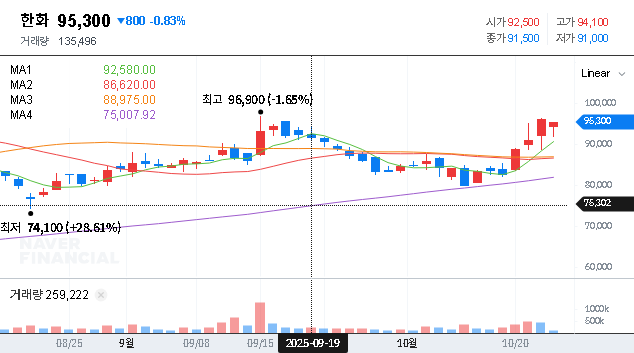
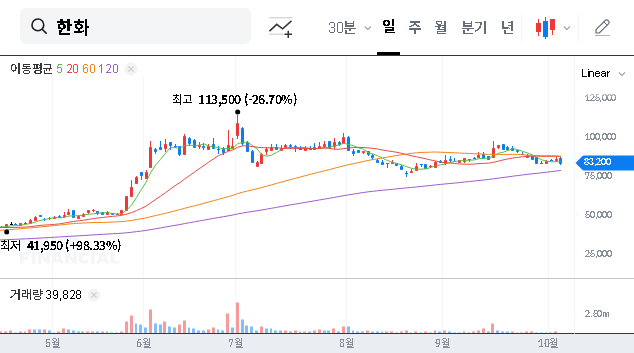
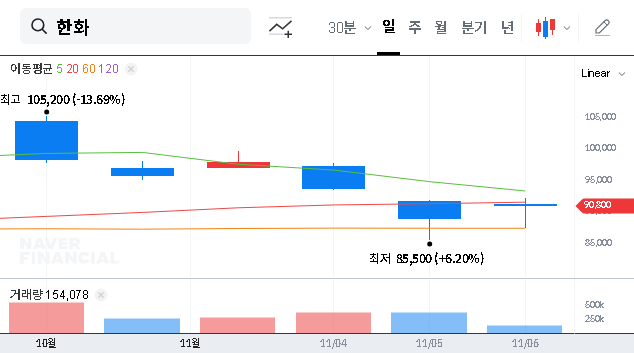
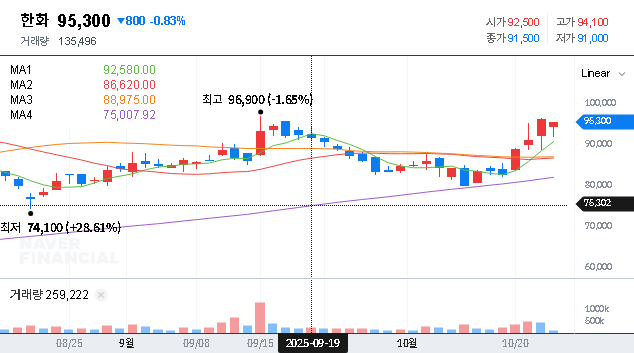
    This poor HANWHA CORP Q3 2025 earnings report is expected to have a significant and immediate negative impact on the company’s stock price and overall investor sentiment, which was already trending downwards.

    Short-Term Consequences

    • Accelerated Stock Price Decline: The market will likely price in these fundamental weaknesses, leading to a sharp sell-off and further downward pressure on the stock.
    • Foreign Investor Exodus: Foreign investors, who have been reducing their holdings, may see this as confirmation of underlying issues, leading to further capital flight.
    • Potential Credit Rating Review: Credit agencies will be watching closely. Sustained underperformance could trigger a credit rating downgrade, increasing future borrowing costs.

    Mid-to-Long-Term Implications

    The severity of the miss suggests the need for strategic action. The company may be forced to consider major changes to regain investor confidence and ensure long-term stability.

    • Pressure for Restructuring: Management will face immense pressure to undertake significant business restructuring, including divesting non-core or underperforming assets to focus on profitable core operations.
    • Reduced Investment Capacity: Poor cash flow and profitability will constrain the company’s ability to fund new investments in future growth engines, potentially weakening its long-term competitive position.

    Investor Action Plan: Navigating the Crisis

    Given the gravity of the HANWHA CORP Q3 2025 earnings report, a cautious and defensive strategy is warranted for current and prospective investors.

    Recommendations for Investors

    A wait-and-see approach is advisable until there is greater clarity from the company.

    • Demand Transparency: Wait for Hanwha’s management to provide a detailed, transparent explanation for the performance drop and present a credible, concrete plan for recovery.
    • Monitor Key Events: Closely watch for the final, audited Q3 report, the upcoming Q4 earnings announcement, and any news related to corporate restructuring, asset sales, or changes in senior management.
    • Re-evaluate Your Thesis: Investors should re-evaluate their original investment thesis for Hanwha Corp. The structural issues implied by these results may fundamentally alter the company’s risk-reward profile.
    (000880) HANWHA CORP Q3 2025 Earnings Analysis: Deep Dive into the Shocking Miss & Investor Outlook 관련 이미지
  • (000880) HANWHA CORP IR Event (Q3 2025): A Deep Dive for Investors on Earnings & Strategy

    (000880) HANWHA CORP IR Event (Q3 2025): A Deep Dive for Investors on Earnings & Strategy

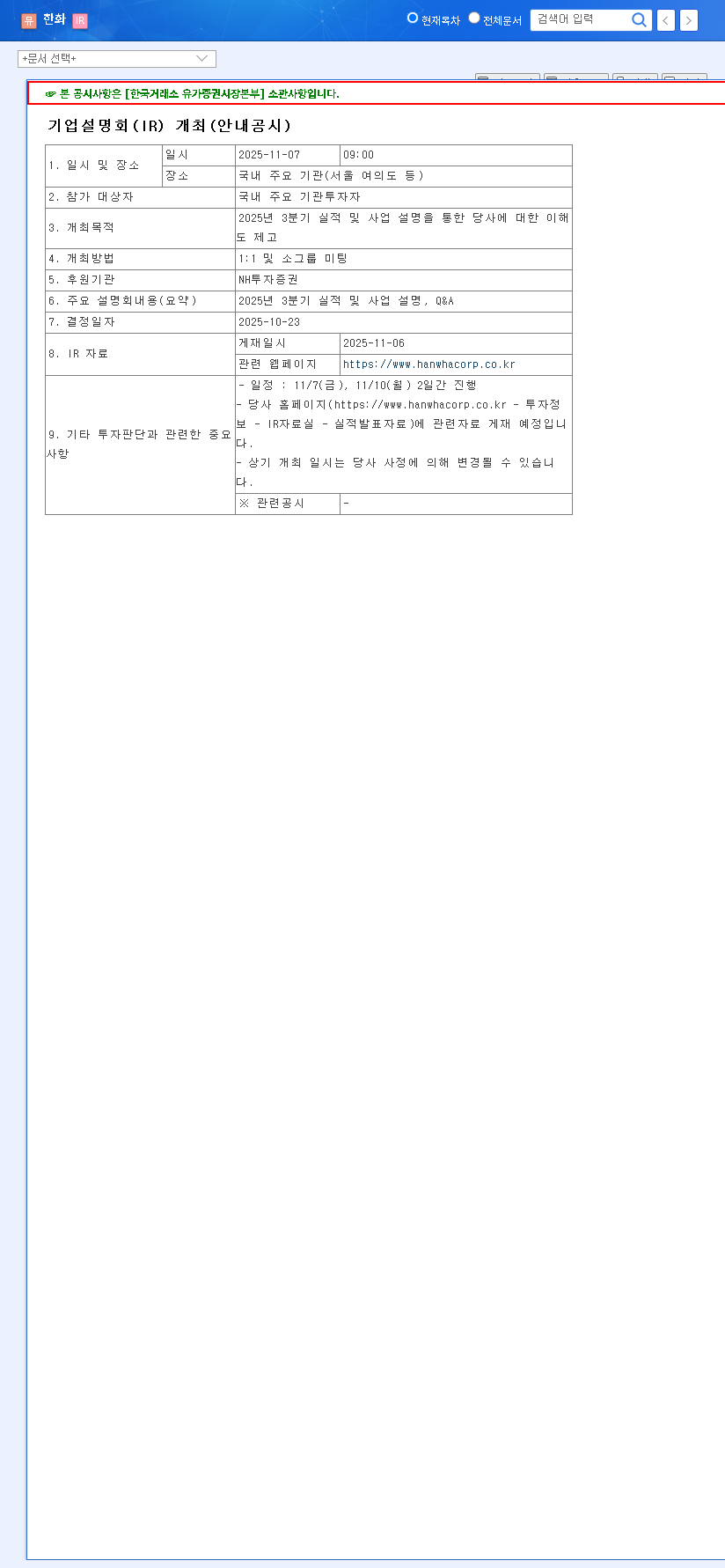
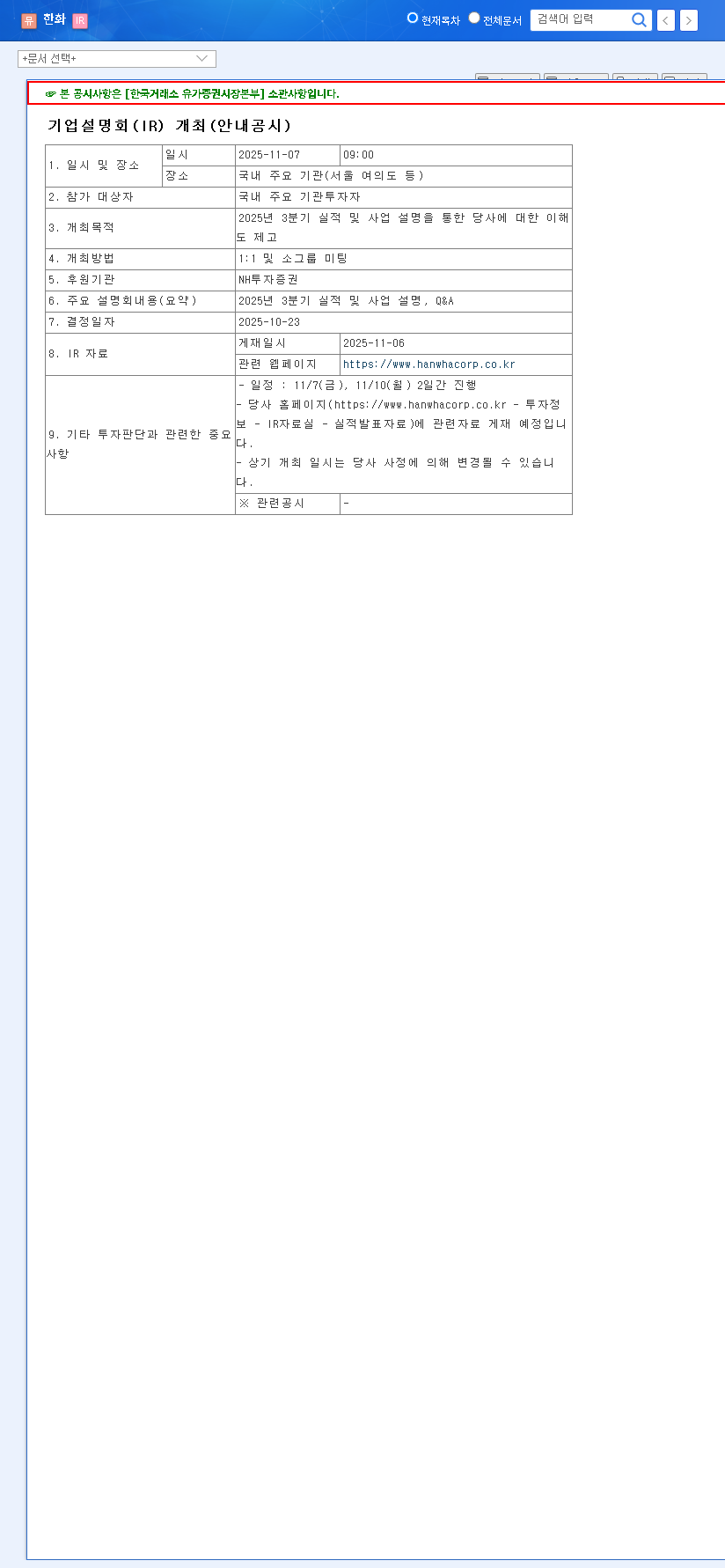
    The upcoming HANWHA CORP IR event on November 7, 2025, represents a pivotal moment for the company and its investors. This is far more than a routine earnings call; it’s a comprehensive presentation of the company’s performance, strategic direction, and future outlook. For current and prospective shareholders, this event is a critical opportunity to gain direct insight from management and assess the long-term value proposition of Hanwha Corp stock.

    This in-depth analysis will dissect the key components of the Hanwha investor relations meeting, explore the potential market impacts—both positive and negative—and provide a strategic action plan to help you make informed decisions.

    Event Details: The Q3 2025 HANWHA CORP IR Event at a Glance

    Hanwha Corp has formally announced its Investor Relations (IR) conference call to discuss its third-quarter performance and forward-looking business strategy. Here are the essential details:

    • Date & Time: November 7, 2025 (Thursday) at 09:00 AM KST
    • Primary Focus: Announcement of Hanwha Q3 2025 earnings, detailed review of business segment performance, and strategic outlook.
    • Key Feature: An interactive Q&A session with senior management, providing a direct line of communication for institutional investors.
    • Official Disclosure: The event details have been filed as per regulatory requirements. Source: DART Filing

    Why This IR Event Carries Significant Weight

    Investor relations events are crucial barometers of a company’s health and trajectory. They can significantly sway market sentiment and stock valuation. Let’s examine the potential outcomes of the Hanwha Corp IR event.

    Potential Positive Catalysts

    A well-executed IR event can build substantial investor confidence. If Hanwha reports earnings that beat analyst expectations or provides a bullish forecast, we could see a positive market reaction. Key drivers include:

    • Unveiling Hidden Value: Management may highlight progress in high-growth sectors like aerospace, defense, or green energy that the market has not fully priced in.
    • Increased Transparency: Clear, direct communication about the Hanwha business strategy and financial health can alleviate investor concerns and build long-term trust.
    • Positive Future Guidance: A strong outlook for Q4 and beyond, backed by solid data, could trigger a stock rally. For more on market analysis, you can refer to authoritative sources like Bloomberg.

    Potential Negative Headwinds (Risks)

    Conversely, the event also carries risks that could lead to selling pressure. Investors should be cautious of the following:

    • Earnings Miss: If the Hanwha Q3 2025 earnings fall short of market consensus, it could disappoint investors and lead to a short-term price decline.
    • Vague or Cautious Guidance: A lack of clarity on future strategy or overly conservative guidance can create uncertainty and anxiety among shareholders.
    • Negative Q&A Disclosures: Difficult questions during the Q&A could bring unforeseen challenges or risks to light, negatively impacting sentiment.

    “The November 7th IR event is a truth serum for Hanwha Corp. The narrative that management presents—and how convincingly they defend it during the Q&A—will dictate the stock’s trajectory for the next quarter. Investors will be scrutinizing everything from profit margins in the defense sector to the capital expenditure plans for their solar division.”

    Investor Action Plan: How to Prepare

    To navigate the HANWHA CORP IR event effectively, a proactive approach is essential. Consider the following strategic steps:

    • Review Pre-Event Analysis: Before the event, familiarize yourself with analyst expectations and recent company news. Understanding the consensus makes it easier to spot surprises.
    • Listen to the Tone: During the call, pay attention not just to the numbers, but to the tone of management. Are they confident, cautious, or evasive? This can be very revealing.
    • Focus on the Q&A: The questions asked by analysts often pinpoint the market’s biggest concerns. Management’s responses provide unscripted insights into their thinking.
    • Monitor Post-Event Reaction: Keep an eye on stock price movement, trading volume, and analyst report updates in the days following the event to gauge the market’s final verdict. For a deeper understanding of their operations, you can read our guide on Understanding Hanwha’s Core Business Verticals.

    Frequently Asked Questions

    What is the main objective of this IR event?

    The primary goal is to enhance investor understanding of HANWHA CORP through the Q3 2025 earnings announcement and business explanations, and to strengthen communication with the market via a live Q&A session.

    Could this event positively impact HANWHA CORP’s stock?

    Yes. If the event leads to enhanced corporate transparency and the disclosure of hidden growth drivers not fully recognized by the market, such as new technologies or contracts, investor sentiment could improve significantly.

    What are the potential negative impacts on the stock?

    Potential risks exist. If Q3 earnings fall short of market expectations, or if business explanations are unclear and fail to instill confidence in future prospects, it could lead to selling pressure and a decline in the stock price.

    (000880) HANWHA CORP IR Event (Q3 2025): A Deep Dive for Investors on Earnings & Strategy 관련 이미지
  • (000880) HANWHA CORP (000880) Q3 2025 IR: A Comprehensive Investor’s Guide

    (000880) HANWHA CORP (000880) Q3 2025 IR: A Comprehensive Investor’s Guide

    The upcoming HANWHA CORP IR for Q3 2025 is a pivotal event for investors tracking stock ticker 000880. Scheduled for November 6, 2025, this investor relations briefing is far more than a simple earnings release. It’s a critical window into the conglomerate’s strategic direction, the health of its core businesses, and its outlook for future growth. For those invested or considering a position in HANWHA, understanding the nuances of this event is key to making informed decisions. This comprehensive guide will dissect what to expect, analyze potential stock impacts, and outline a strategic approach for investors.

    Event Overview: The Q3 2025 HANWHA CORP IR Briefing

    HANWHA CORP (000880) officially announced its upcoming investor relations (IR) briefing for the third quarter of 2025. This crucial event will provide a detailed look at the company’s financial performance and operational status.

    • Date & Time: November 6, 2025, at 2:00 PM KST
    • Agenda: Presentation of Q3 2025 earnings, comprehensive business status update, and an interactive Q&A session with management.
    • Official Source: The announcement was filed with the regulatory body. You can view the Official Disclosure on DART.

    With a market capitalization hovering around 7.14 trillion KRW, this HANWHA investor relations event is a primary channel for the company to manage market expectations and communicate its long-term vision directly to its shareholders and the broader financial community.

    “Investor briefings like this are where a company’s narrative meets its numbers. For a complex entity like HANWHA, the Q&A session is often more telling than the prepared remarks, revealing management’s confidence and priorities.”

    Analyzing the Potential Stock Price Impact

    The HANWHA CORP IR will inevitably influence its stock price. The impact can be categorized into short-term reactions and long-term valuation shifts.

    Short-Term Volatility

    In the immediate aftermath of the briefing, expect potential stock volatility. The market will react swiftly to several key factors:

    • Earnings vs. Consensus: Did the HANWHA Q3 2025 earnings beat, meet, or miss analyst expectations? A significant beat could trigger a rally, while a miss could lead to a sell-off.
    • Forward Guidance: Management’s outlook for Q4 and the upcoming year is arguably more important than past performance. Optimistic guidance can fuel buying pressure.
    • Major Announcements: News of new contracts, strategic partnerships, or divestitures can cause sharp price movements.

    Mid- to Long-Term Re-evaluation

    Beyond the initial reaction, this IR provides the data for a more profound re-evaluation of HANWHA’s intrinsic value. Long-term investors will be assessing the company’s strategic roadmap. If the briefing effectively communicates a clear path to sustained growth in high-value sectors, such as Hanwha’s aerospace and defense division, it could lead to a gradual, sustained increase in stock price as institutional investors and analysts update their models. This HANWHA stock analysis hinges on the credibility and execution of the strategy presented.

    Strategic Action Plan for Investors

    A prudent investor should prepare for the HANWHA 000880 IR with a clear plan. Here is a three-step strategy to navigate the event and its aftermath:

    1. Pre-IR Preparation: Do Your Homework

    Before November 6, gather baseline information. Review past earnings reports to understand trends. Read the latest analyst reports and market consensus estimates from reputable financial sources like Bloomberg or Reuters. Understand the key performance indicators (KPIs) for HANWHA’s main segments: defense, solar energy, chemicals, and finance.

    2. During the IR: Active Listening and Analysis

    Pay close attention to both the quantitative and qualitative information presented. Listen for details on revenue mix, profit margins, capital expenditure plans, and debt levels. The tone and confidence of the management team during the Q&A session can provide invaluable insights into their conviction in the company’s strategy.

    3. Post-IR: Prudent Decision-Making

    Avoid knee-jerk reactions to short-term price swings. Integrate the new information from the IR with your prior research. Did the results confirm your investment thesis, or do they challenge it? A mid- to long-term perspective is often more profitable than trying to time the market’s immediate reaction. Consider if the new information warrants adjusting your position based on a re-evaluated long-term outlook for the company.

    In conclusion, the HANWHA CORP Q3 2025 IR is a significant event that offers both opportunities and risks. By conducting thorough preparation and disciplined analysis, investors can leverage the information provided to make strategic decisions that align with their long-term financial goals. We wish you success in navigating this important milestone.

    (000880) HANWHA CORP (000880) Q3 2025 IR: A Comprehensive Investor's Guide 관련 이미지
  • (000880) Hanwha K-ICS Ratios Revealed: Hanwha Life Stable, Carrot General Insurance a Red Flag for Investors

    (000880) Hanwha K-ICS Ratios Revealed: Hanwha Life Stable, Carrot General Insurance a Red Flag for Investors

    Hanwha Corporation investors are facing a mixed financial report following a recent disclosure on the Hanwha K-ICS (Korean Insurance Capital Standard) status for its key insurance subsidiaries. While legacy arms like Hanwha Life show stability, the digital-first Carrot General Insurance has triggered a significant red flag, revealing a dangerously low insurance solvency ratio that demands immediate attention and raises questions about the group’s overall financial health.

    This comprehensive analysis will break down the latest figures, explain the critical importance of the Korean Insurance Capital Standard, and provide a clear-eyed view of the potential impact on Hanwha Corporation’s stock and future strategy. Understanding these dynamics is crucial for any investor navigating the complexities of Hanwha’s diversified portfolio.

    The Disclosure: Unpacking Hanwha’s K-ICS Status

    What is the Korean Insurance Capital Standard (K-ICS)?

    Before diving into the numbers, it’s essential to understand what K-ICS represents. Implemented as a more stringent solvency framework, the Korean Insurance Capital Standard requires insurers to assess their assets and liabilities based on current market value, providing a more realistic picture of their financial resilience. A ratio of 100% is the regulatory minimum, signifying an insurer has just enough capital to cover unexpected losses. Ratios well above this threshold are considered healthy. You can learn more about the general principles of insurance capital adequacy from authoritative financial sources.

    Subsidiary Performance Breakdown (June 2025)

    Hanwha Corporation’s amended half-year report provided the first official look at these revised solvency figures. The full data can be reviewed in the Official Disclosure (DART Report). Here are the key takeaways for each of the Hanwha financial subsidiaries:

    • Hanwha Life Insurance: 160.6% – A stable and healthy ratio, comfortably above the 100% minimum. While this is a slight dip from the previous year’s 163.7%, it confirms the company’s robust financial footing, which is a positive anchor for the group.
    • Hanwha Non-Life Insurance: 214.3% – An outstanding result. This figure is a significant improvement from 209.3% in 2024, showcasing excellent capital management and strengthening financial health. This performance is a clear positive for the group’s overall stability.
    • Carrot General Insurance: 67.08% – The source of major concern. This insurance solvency ratio represents a dramatic collapse from 156.24% the previous year. Falling significantly below the 100% regulatory line signals acute financial distress and raises alarms about its viability without immediate intervention.

    The severe drop in Carrot General Insurance’s K-ICS ratio is the single most critical risk factor for Hanwha Group’s financial segment, potentially requiring a significant capital injection that could weigh on the parent company’s resources.

    Why This Matters: Investor Impact and Strategic Risks

    The stability of Hanwha Life and Non-Life provides a strong foundation, but the crisis at Carrot General Insurance creates a significant overhang. Here’s how these conflicting signals affect the investment thesis for Hanwha Corporation.

    The Burden of Carrot General Insurance

    A sub-100% K-ICS ratio is not just a number; it triggers serious consequences:

    • Regulatory Scrutiny: Financial authorities will likely impose corrective measures, demanding a swift and credible plan to restore capital levels.
    • Mandatory Capital Injection: Hanwha Group will almost certainly need to inject a substantial amount of capital into Carrot, diverting resources that could have been used for growth in other sectors.
    • Negative Market Sentiment: Financial instability in a key subsidiary can erode investor confidence in the entire group’s risk management capabilities, potentially leading to a stock price decline.

    Investor Action Plan & What to Watch Next

    Given the mixed Hanwha K-ICS results, investors must adopt a cautious and observant stance. The path forward for Hanwha Corporation’s stock will largely depend on how management addresses the Carrot situation while leveraging the strength of its other divisions.

    Key Monitoring Points for Investors:

    • Carrot’s Turnaround Plan: Watch for official announcements from Hanwha regarding the size and timing of capital injections, business model restructuring, or potential strategic partnerships for Carrot. The clarity and decisiveness of this plan will be a major market catalyst.
    • Performance of Other Divisions: Assess whether the profits and stability from Hanwha’s other segments (defense, chemicals, solar) are strong enough to offset the financial drain from its insurance arm. For more on this, see our analysis of Hanwha’s Diversified Business Portfolio.
    • Macroeconomic Headwinds: Keep an eye on interest rates and exchange rates, which directly impact insurance liability valuations and can further complicate K-ICS management for all insurers.

    In conclusion, while the financial health of Hanwha’s core insurance businesses is reassuring, the crisis at Carrot General Insurance presents a clear and present danger to the group’s short-term performance. Investors must closely monitor Hanwha’s strategic response to this challenge, as it will be a defining factor for the company’s valuation in the coming months.

    (000880) Hanwha K-ICS Ratios Revealed: Hanwha Life Stable, Carrot General Insurance a Red Flag for Investors 관련 이미지