Tag: 케이피에프

  • (024880) KPF Stock Cancellation: A Deep Dive into Boosting Shareholder Value & Investment Strategy

    (024880) KPF Stock Cancellation: A Deep Dive into Boosting Shareholder Value & Investment Strategy

    The recent announcement of a large-scale KPF stock cancellation has captured the attention of the market. But what does this corporate action truly signify for current and prospective investors? This move, often seen as a bullish signal, goes beyond mere accounting to reflect a company’s confidence in its future and commitment to its shareholders. This analysis will delve into the specifics of KPF’s decision, dissect the company’s underlying financial health, and provide a clear outlook on what this means for your investment strategy.

    The Details of the KPF Stock Cancellation

    KPF (케이피에프) formally announced its strategic decision to cancel a significant number of its own shares. As detailed in the Official Disclosure filed on November 14, 2025, the key details are as follows:

    • Shares to be Cancelled: 666,206 common shares.
    • Total Value: Approximately 3.1 billion KRW, utilizing treasury shares previously acquired by the company.
    • Scheduled Cancellation Date: November 24, 2025.

    This process, also known as treasury stock retirement, permanently removes these shares from circulation. Unlike a simple buyback where shares can be reissued, a cancellation reduces the total outstanding share count, creating a direct and lasting impact on key financial metrics.

    Why Cancel Shares? The Impact on Shareholder Value

    A stock cancellation is a powerful tool in a company’s financial arsenal. It is often interpreted by the market as a sign that the management believes its stock is undervalued. By reducing the supply of shares, the value of the remaining shares is theoretically increased. For a deeper understanding, you can learn more about stock buybacks and cancellations from authoritative financial sources. For KPF, this move is expected to deliver several key benefits:

    • Increased Earnings Per Share (EPS): With fewer shares to divide the net income among, the EPS automatically increases, making the stock appear more profitable and attractive to investors.
    • Enhanced Shareholder Value: The principle of scarcity applies. A smaller pool of outstanding shares means each share represents a larger ownership stake in the company, potentially driving up the stock price.
    • Positive Market Signaling: This action signals management’s confidence in the company’s financial stability and future earnings potential. It is a tangible commitment to a robust KPF shareholder value policy.

    A Closer Look at KPF’s Financial Analysis

    To understand the context of the stock cancellation, we must perform a thorough KPF financial analysis based on its Q3 2025 results. The decision wasn’t made in a vacuum but against a backdrop of mixed financial signals.

    Areas of Concern

    The company faced some headwinds. Consolidated revenue saw a slight year-on-year decrease of 3.5% to 568.77 billion KRW, with operating profit also dipping by 3.6% to 33.31 billion KRW. These figures were primarily influenced by reduced sales in the marine cable segment and volatility in raw material costs. Furthermore, while the debt-to-equity ratio has improved, it remains relatively high at 133.4%, indicating a need for continued financial discipline.

    Positive Growth Indicators

    Conversely, there are strong positive signals. KPF’s cash flow from operating activities showed a remarkable improvement, soaring to 40.69 billion KRW. This demonstrates a robust recovery in the company’s core ability to generate cash. Strategically, KPF is strengthening its global footprint by establishing TMC Texas Inc., a move aimed at penetrating the lucrative North American market. This, combined with the stock cancellation, points to a proactive strategy focused on long-term growth and investor confidence.

    In this context, the KPF stock cancellation appears to be a strategic move to signal strength and reward shareholders amidst a period of operational transition and strategic investment.

    Investor Outlook and Action Plan

    For investors, this news presents a complex but largely positive picture. The immediate effects of improved EPS and enhanced shareholder value could provide a short-term boost to the stock. However, a sustainable increase in value depends on the company’s ability to address its fundamental challenges.

    Key factors to monitor include:

    • Fundamental Profitability: The price appreciation from the cancellation will only be sustained if KPF improves its core profitability and manages risks like market competition and shipbuilding industry fluctuations.
    • Success of Growth Initiatives: The performance of the new U.S. entity and efforts to strengthen the fastener and automotive parts businesses will be critical indicators of long-term success.

    In conclusion, while the KPF stock cancellation is a highly positive signal of management’s commitment to shareholder returns, investors should base their decisions on a comprehensive review of the company’s long-term growth strategy and its progress in improving fundamental profitability. A deeper understanding of how to analyze a company’s financial statements will be invaluable. This event should be seen as one important piece of a much larger investment puzzle.

    (024880) KPF Stock Cancellation: A Deep Dive into Boosting Shareholder Value & Investment Strategy 관련 이미지
  • (024880) KPF TMC Share Sale: A ₩14 Billion Strategic Move & Investor Guide

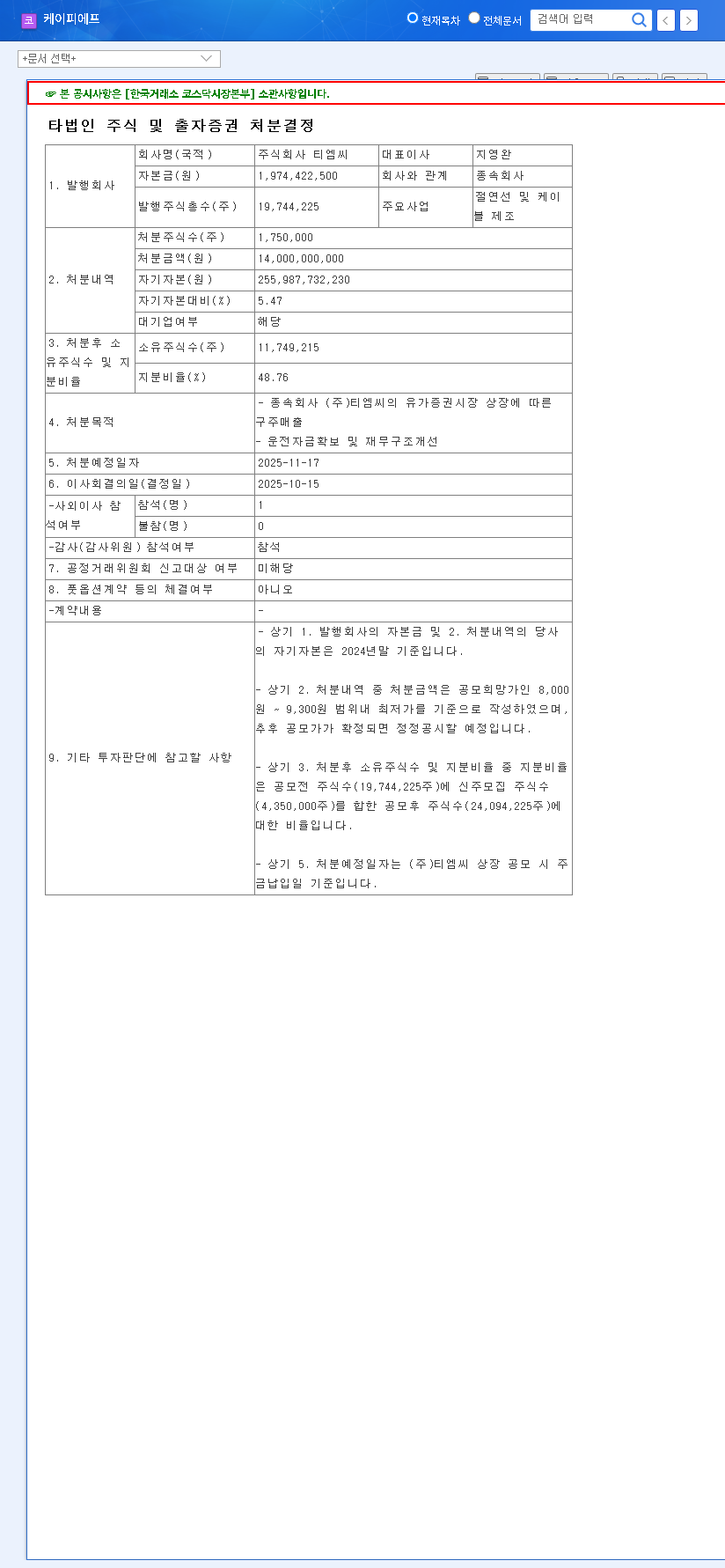
    (024880) KPF TMC Share Sale: A ₩14 Billion Strategic Move & Investor Guide

    The recent announcement of the KPF TMC share sale has sent ripples through the investment community. KPF (ticker: 024880), a prominent player in its industry, has unveiled a plan to dispose of a significant ₩14 billion stake in its subsidiary, TMC. This strategic maneuver coincides with TMC’s highly anticipated listing on the KOSPI market, creating a complex scenario filled with both opportunity and risk for current and prospective investors. This comprehensive KPF investment analysis will dissect the motivations behind this decision, evaluate the potential financial impacts, and provide a clear roadmap for what to monitor in the coming months.

    Dissecting the KPF TMC Share Disposition

    The Core Details of the Transaction

    On October 15, 2025, KPF formally announced its decision to sell approximately ₩14 billion worth of shares in its subsidiary, TMC, via a secondary offering. This move is timed to leverage the momentum from the TMC KOSPI listing. According to the Official Disclosure filed with DART, this disposition represents 5.47% of KPF’s total capital. Consequently, KPF’s ownership stake in TMC will be reduced, though it will maintain a controlling interest at 48.76%.

    Strategic Rationale: Why Now?

    The decision behind the KPF share disposition is not merely about cashing out; it’s a multi-faceted strategy aimed at strengthening the company’s foundation. The key objectives are:

    • Capitalizing on the IPO: The listing of a subsidiary provides a prime opportunity for the parent company to unlock value and recoup its initial investment at a favorable market valuation.
    • Securing Vital Working Capital: An infusion of ₩14 billion in cash provides significant liquidity, enhancing operational flexibility and reducing reliance on external financing.
    • Improving the Financial Structure: The proceeds can be used to pay down debt, which lowers the company’s debt-to-equity ratio and strengthens the balance sheet, making KPF a more attractive and stable investment.

    For investors, the ₩14 billion KPF TMC share sale represents a pivotal moment, blending immediate financial strengthening with long-term strategic questions about growth and governance.

    Opportunities and Risks for KPF Investors

    The Bull Case: Positive Impacts and Growth Momentum

    The immediate and most tangible benefit is the significant cash injection. This ₩14 billion, representing about 12.6% of KPF’s market capitalization, bolsters short-term stability. Beyond this, the capital unlocks new avenues for growth. KPF will have the resources to invest in R&D, explore strategic M&A opportunities, or expand into new markets. This move could be a precursor to exploring KPF’s future growth sectors. Furthermore, a successful TMC KOSPI listing could lead to a positive re-evaluation of KPF’s remaining 48.76% stake, creating substantial unrealized value on its books.

    The Bear Case: Potential Risks and Volatility

    No strategic decision is without its risks. The reduction in ownership to 48.76% slightly weakens KPF’s direct control over TMC, potentially changing the dynamic from a subsidiary to an affiliate. More critically, the success of this move is heavily dependent on TMC’s post-listing performance. Investors should understand the inherent risks associated with Initial Public Offerings (IPOs). If TMC’s stock falters due to market conditions or underwhelming performance, the value of KPF’s retained shares will also decline. Finally, the ultimate success hinges on how prudently KPF allocates the new capital. A poor investment strategy could squander the benefits of this liquidity event.

    Investor Action Plan: Key Factors to Monitor

    To make an informed decision on KPF stock, investors must remain vigilant and closely track several key developments until the scheduled disposition date of November 17, 2025, and beyond:

    • TMC IPO Performance: Scrutinize the IPO pricing, initial market reception, and early trading performance. The success of the TMC KOSPI listing is the primary catalyst for KPF’s valuation.
    • KPF’s Capital Allocation Strategy: Look for official communications from KPF detailing their plans for the ₩14 billion. Will it go towards debt repayment, a special dividend, or new growth initiatives?
    • Financial Ratio Improvements: Monitor KPF’s quarterly reports following the cash infusion. Look for tangible improvements in key metrics like the debt-to-equity ratio and current ratio.
    • Market & Regulatory Updates: Stay informed about any changes in market sentiment or regulatory hurdles that could impact the timeline or terms of the KPF share disposition.

    In conclusion, the KPF TMC share sale is a calculated move to de-risk KPF’s balance sheet and unlock new potential. While it introduces new variables, diligent monitoring of the factors above will empower investors to navigate this period effectively and make strategic decisions based on a clear understanding of the evolving situation.

    (024880) KPF TMC Share Sale: A ₩14 Billion Strategic Move & Investor Guide 관련 이미지