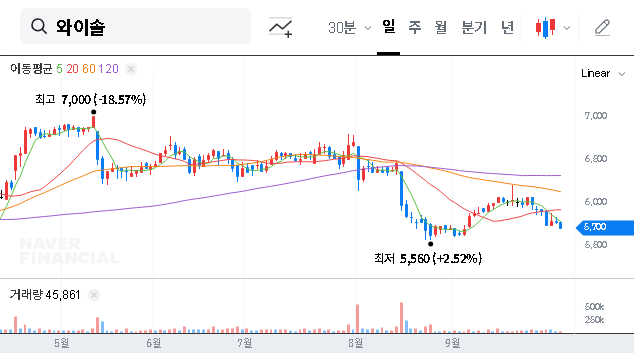
In a significant move capturing market attention, WiSoL Co., LTD. recently announced a substantial ₩6.5 billion WiSoL share buyback and cancellation. This decision comes at a critical juncture, as the company grappled with a notable performance decline in the first half of 2025. The key question for investors is whether this action is a powerful signal of renewed commitment to enhancing shareholder value and a catalyst for a stock price rebound, or if it will prove to be a temporary boost to market sentiment without addressing core issues.
This comprehensive analysis will explore the key details of the WiSoL share buyback, provide a thorough fundamental analysis of the company’s current health, and dissect the potential impacts on its stock price and future prospects to help investors make more informed decisions.
Breaking Down the ₩6.5 Billion WiSoL Share Buyback
On November 12, 2025, WiSoL Co., LTD. formally announced its decision to acquire and subsequently cancel 1,032,452 of its own common shares. This transaction is valued at approximately ₩6.5 billion, a figure that represents a significant 4.21% of its total market capitalization (₩155.8 billion at the time of announcement). According to the Official Disclosure filed with DART, the shares are scheduled to be acquired through on-market purchases by November 18, 2025, before their official cancellation. This aggressive move is often interpreted as a company’s management believing its stock is undervalued.
WiSoL Fundamental Analysis: A Look Under the Hood
To understand the context of the buyback, a deep dive into WiSoL’s fundamentals is crucial. WiSoL specializes in RF Front-end modules, critical components for 5G communication and smart devices. While the long-term industry trend is favorable, the company’s H1 2025 report painted a challenging picture.
Current Financial Performance
- •Revenue & Profitability Decline: Consolidated revenue for the first half of 2025 fell by 19.9% year-on-year to ₩163.379 billion. More alarmingly, the company posted an operating loss of ₩32.558 billion, a stark indicator of deteriorating profitability.
- •Inventory Challenges: A major contributor to the losses was a significant ₩37.96 billion inventory valuation loss, suggesting issues with demand forecasting or a slowdown in the smartphone market, particularly from its Chinese subsidiary.
- •Financial Health Metrics: On a positive note, the debt-to-equity ratio improved to a healthy 12.1%. However, cash flow from operating activities saw a decrease, highlighting the operational pressures.
Strategic Diversification and Market Environment
WiSoL is not standing still. The company is actively diversifying into high-growth areas like automotive electronics (전장) and the NB-IoT market. Achieving the IATF16949 quality management certification is a crucial step, opening doors to supply components to major global automakers. However, macroeconomic headwinds, such as fluctuations in the KRW/USD exchange rate, continue to pose a risk for an export-reliant business like WiSoL.
While the WiSoL share buyback is a strong vote of confidence from management, its long-term success is entirely dependent on the company’s ability to navigate short-term performance issues and execute its diversification strategy effectively.
Implications for WiSoL Stock and Shareholder Value
A share buyback of this magnitude has several direct and indirect consequences for investors and the market’s perception of WiSoL stock.
The Positive Signal
- •Enhanced Per-Share Metrics: By reducing the number of outstanding shares, the buyback will automatically increase key metrics like Earnings Per Share (EPS) and Book Value Per Share (BPS), directly boosting shareholder value on paper.
- •Improved Market Sentiment: The decision demonstrates a strong commitment to shareholder returns and management’s belief in the company’s intrinsic value, which can provide a much-needed positive catalyst for investor confidence.
Points of Caution
While positive, the buyback’s impact must be weighed against the company’s operational reality. Critics may argue that the effect could be temporary without a fundamental turnaround in performance. The ₩6.5 billion could have been used for R&D, strategic acquisitions, or shoring up working capital. The sustainability of any stock price rally will depend on tangible business improvements, not just financial engineering. For more analysis on similar companies, you can see our report on Top 5G Component Stocks to Watch.
Conclusion: A Long-Term Perspective is Essential
The WiSoL share buyback is undoubtedly a positive event for shareholders in the short term. It provides a clear signal of management’s confidence and directly enhances per-share value. However, investors should view this as one piece of a much larger puzzle.
The ultimate trajectory of WiSoL stock will be determined by its ability to resolve its inventory issues, return to profitability, and successfully expand into new markets. Therefore, a prudent investment strategy involves treating the buyback as a short-term momentum driver while closely monitoring the company’s fundamental progress in the coming quarters. Look for signs of improving operational efficiency and new contracts in their diversified business segments before committing to a long-term position.
Leave a Reply