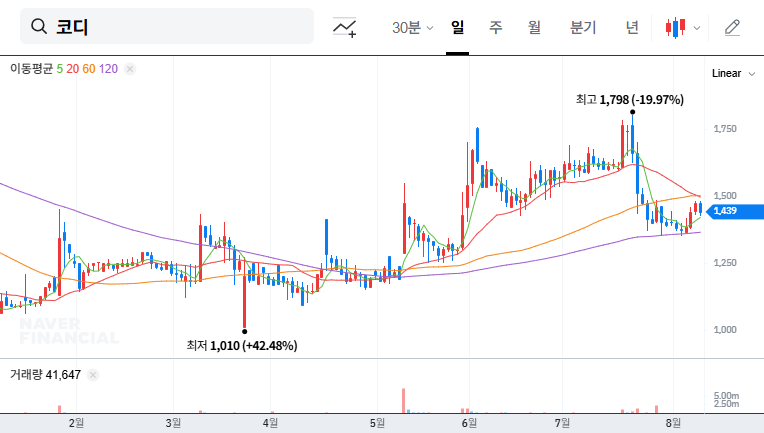
The latest KODI Q3 earnings announcement has sent ripples of concern through the investment community. For a company, KODI Co.,LTD. (KOSDAQ: 080530), that only months ago seemed to be on a path to recovery, these preliminary results represent a jarring pivot. The semi-annual report painted a picture of improving financial health and a strong turnaround in its core cosmetics business. Now, investors are left asking a critical question: what went wrong?
This comprehensive KODI stock analysis will dissect the official Q3 2025 financial figures, explore the stark discrepancy between promise and performance, and provide a clear-eyed outlook for current and potential investors. We aim to equip you with the insights necessary to navigate this uncertainty and make informed decisions about your KODI holdings.
The Q3 2025 Preliminary Earnings Shock
On November 10, 2025, KODI released its preliminary consolidated financial performance, which fell significantly short of market expectations. The numbers, detailed in the Official Disclosure (DART Report), revealed a clear downward trend.
The core takeaway from the KODI Q3 earnings is not just a slowdown, but a reversal of the positive momentum investors were banking on from the first half of the year.
Key Financial Figures:
- •Revenue: KRW 16.8 billion, marking a noticeable decrease from Q2 2025.
- •Operating Profit: KRW 0.3 billion, a steep decline indicating squeezed margins or rising costs.
- •Net Profit: KRW 0.3 billion, mirroring the poor operating performance.
When contextualized, this performance is alarming. The trend from late 2024 through Q3 2025 shows a consistent erosion of both top-line revenue and bottom-line profitability. This raises serious questions about the sustainability of the company’s business model in the current economic climate.
Disconnect: Where Did the Positive Fundamentals Go?
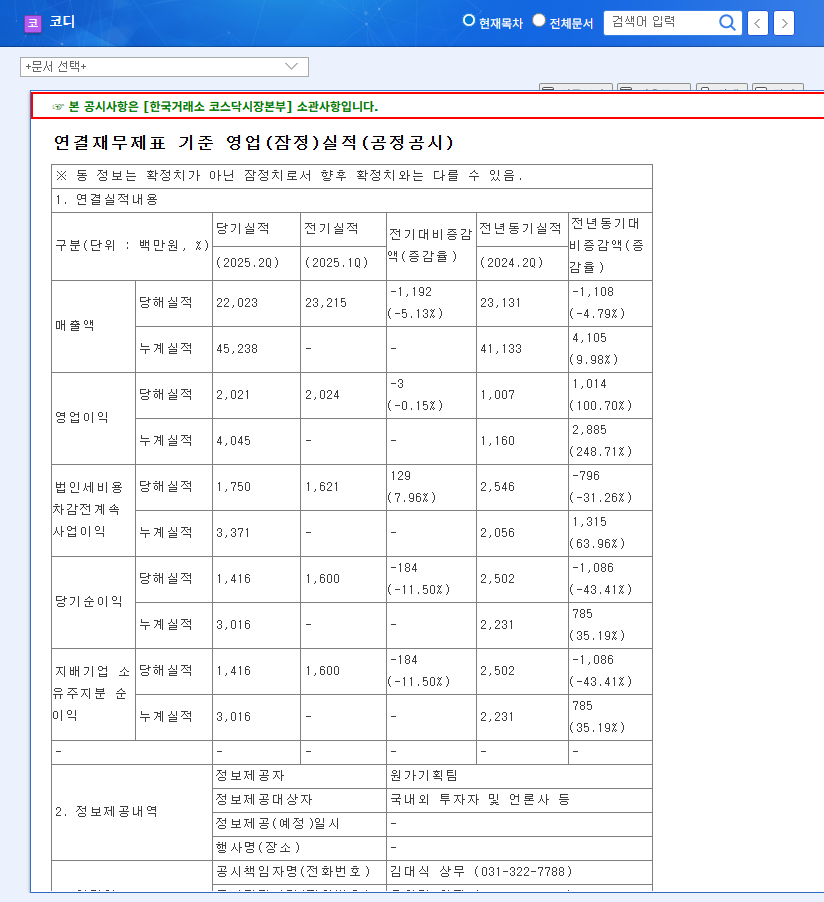
The shock from this KODI financial report is amplified by its stark contrast with the optimism of the June 2025 semi-annual report. That report highlighted several key strengths that now appear to have vanished.
The Promises of the Semi-Annual Report
- •Cosmetic Sector Strength: This segment, representing over 82% of revenue, had turned a corner with a KRW 4.034 billion operating profit.
- •Improved Financial Health: The debt-to-equity ratio plummeted from 88.73% to a much healthier 42.40%, signaling strong balance sheet management.
- •Favorable Market Conditions: A booming K-Beauty export market, anticipated relief in logistics costs, and a weaker Korean Won were all expected to act as tailwinds.
Potential Reasons for the Decline
So, what could explain this disconnect? Several factors may be at play. The core cosmetics business may have faced unexpected and fierce competition, or a faster-than-anticipated slowdown in key export markets. Furthermore, the previously noted 45.68% reduction in R&D spending could be stifling innovation, making it harder to compete. Without a robust pipeline of new products, growth can easily stagnate. The sluggish container business also continues to be a drag on overall performance. For more general guidance on evaluating company health, you can review our guide on how to analyze quarterly earnings reports.
Market Impact and Investor Outlook
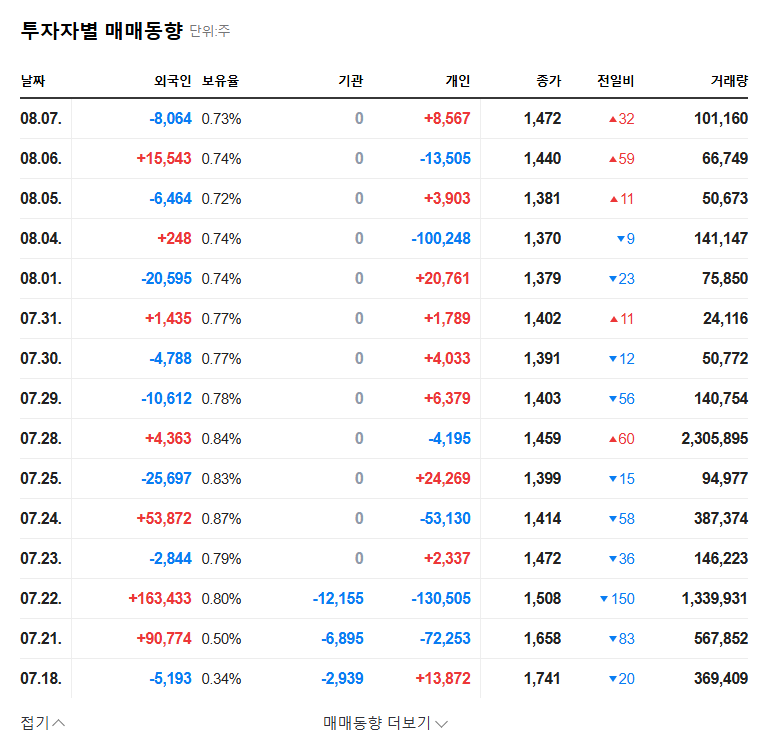
The implications of the KODI Q3 earnings are significant. In the short term, negative investor sentiment is likely to place considerable downward pressure on the 080530 stock price. More importantly, it casts doubt on the company’s ability to maintain long-term growth. A healthy balance sheet is attractive, but its appeal diminishes rapidly if it isn’t backed by tangible operational success and profitability.
The market will be desperately seeking clarity. Investors and analysts will be watching closely for the full, audited report and any subsequent investor relations (IR) calls to understand the specific drivers of this poor performance. Was it a one-off event, or is this the beginning of a new, negative trend?
Action Plan for KODI Investors
Given the uncertainty, a prudent and cautious approach is warranted. Here’s what to look for from the company and how to position yourself as an investor.
What KODI Needs to Do
- •Communicate Transparently: Management must proactively address the poor results, explain the root causes, and present a clear, credible strategy for recovery.
- •Re-evaluate Strategy: This includes reassessing R&D investment to fuel long-term growth and demonstrating tangible results from new business ventures like medical devices or cryptocurrency.
- •Focus on Core Profitability: Outline specific cost-efficiency measures and plans to regain momentum in the crucial cosmetics division.
What Investors Should Do
This is a time for patience, not panic. Rushing to a decision based on this preliminary data would be unwise. Wait for the company’s full report and official response. Use this time to conduct your own due diligence. Analyze the performance of KODI’s competitors in the K-Beauty space. If they are also struggling, it may point to industry-wide headwinds. If they are thriving, it points to company-specific issues at KODI. A wise strategy is to observe the company’s next steps before committing further capital.
Leave a Reply