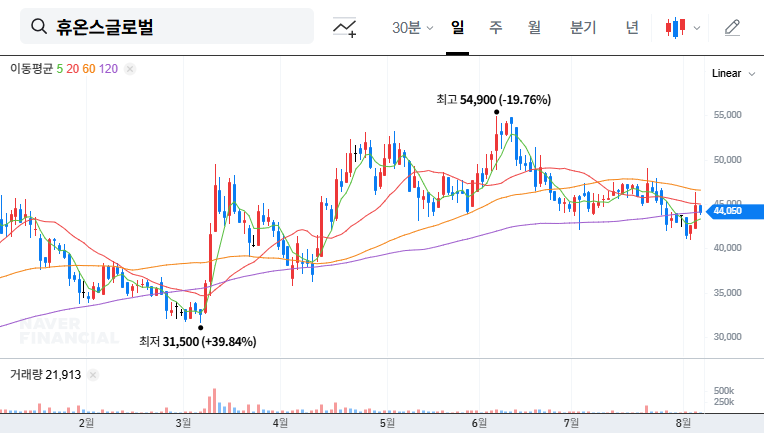
The recent announcement regarding the Huons Global treasury shares disposal has sent ripples through the investment community. On November 10, 2025, the company unveiled a strategic move to issue exchangeable bonds, a decision that carries significant implications for its stock price, financial health, and future growth trajectory. For investors, understanding the nuances of this corporate finance maneuver is paramount to making informed decisions.
This comprehensive analysis will deconstruct the announcement, explore the underlying financial fundamentals, and evaluate the potential positive and negative impacts. We’ll provide a clear, data-driven perspective to help you navigate the complexities of this pivotal event and strategize your investment approach.
The Core Announcement: Disposing of Treasury Shares
Huons Global Co., Ltd., a company with a market capitalization of KRW 730.5 billion, formally disclosed its plan in a report titled “Report on Material Matters (Decision to Dispose of Treasury Shares)”. This wasn’t a minor adjustment; it was a significant financial event. You can view the Official Disclosure on the DART system for complete details.
The key details of the transaction are:
- •Shares Disposed: 360,158 common shares.
- •Total Value: Approximately KRW 23.1 billion.
- •Stated Purpose: To serve as the underlying asset for the issuance of exchangeable bonds.
Essentially, Huons Global is converting its own repurchased shares into a tool for fundraising. This is a common but complex strategy that requires careful analysis. For more on this topic, investors can explore guides on corporate finance strategies.
Context: Financial Health & Economic Headwinds
To understand the ‘why’ behind this decision, we must examine the company’s recent performance and the broader macroeconomic environment as detailed in its 2025 half-year report.
Macroeconomic Pressures
- •Interest Rates: Rising rates in the US and Europe are increasing corporate financing costs globally, making traditional loans more expensive.
- •Exchange Rates: Currency volatility, particularly with the Euro and US Dollar, creates uncertainty for import costs and export competitiveness.
- •Operating Costs: While oil and freight rates have stabilized, they remain a key variable impacting profitability.
Huons Global’s Financial Snapshot
The company’s internal finances reveal a mixed picture. While the debt-to-equity ratio is a healthy 42.91% and cash reserves are sufficient, there are signs of strain:
Consolidated revenue, operating profit, and net income have all decreased year-over-year. This performance slowdown, particularly in separate revenue streams, suggests that the holding company’s core operations are facing challenges that necessitate strategic financial action.
While subsidiaries are investing in R&D for long-term growth, these activities place a short-term burden on finances. This context makes the decision to raise capital via exchangeable bonds a logical, albeit risky, next step.
Potential Stock Impact: The Upside vs. The Downside
How will the market react to the Huons Global treasury shares transaction? The outcome hinges on a balance of potential benefits and inherent risks.
The Bull Case (Positive Impacts)
- •Strategic Capital Injection: The KRW 23.1 billion raised can fuel R&D, fund new business ventures, or finance strategic acquisitions, potentially creating significant long-term value.
- •Financial Flexibility: This move provides a cushion and allows the company to pursue growth opportunities without being constrained by its recent performance dip.
- •Improved Balance Sheet: If bondholders later exchange their bonds for shares, it increases the company’s equity base and can lower the debt-to-equity ratio, signaling financial strength.
The Bear Case (Negative Impacts)
- •Share Dilution Risk: The most significant concern is future dilution. When bonds are exchanged for shares, the total number of outstanding shares increases, which can decrease the value of each existing share. This is a critical factor for current stockholders.
- •Increased Interest Burden: Exchangeable bonds are still a form of debt and require regular interest payments, which will add to the company’s expenses and could pressure short-term profitability.
- •Negative Market Perception: In the short term, the market might interpret this move as a sign of financial distress or a cash crunch, leading to a negative stock price reaction. Authoritative sources like Bloomberg often report on such market sentiment.
Investment Thesis & Final Recommendation
The disposal of Huons Global treasury shares is a strategic pivot born out of necessity and ambition. Given the recent slowdown in performance, this capital raise is crucial. The success or failure of this move will depend entirely on the company’s execution.
Investment Opinion: Cautious Observation.
For investors, the immediate path forward is one of vigilance. The absence of prior market expectation for this event, combined with lackluster performance, creates short-term uncertainty. It is essential to monitor two key areas:
- •Capital Allocation: Watch for announcements detailing exactly how the KRW 23.1 billion will be spent. Prudent, growth-oriented investments would be a strong positive signal.
- •Market Reaction & Bond Terms: Observe the initial stock price reaction and scrutinize the final terms of the exchangeable bonds, especially the conversion price, which will determine the extent of future dilution.
In the mid-to-long term, focus on tangible results: improved business performance and a stronger financial position. This event is a critical turning point for Huons Global, and its handling will define its investment appeal for the foreseeable future.
Leave a Reply