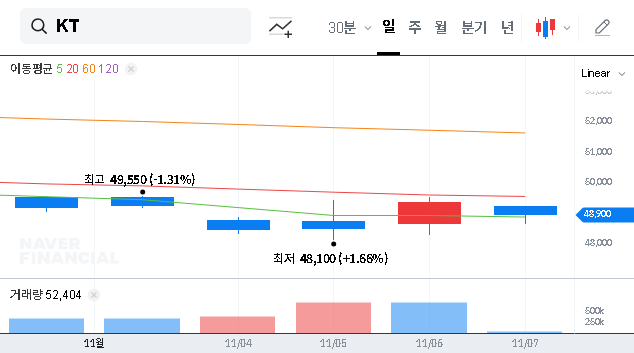
The latest KT CORPORATION earnings report is more than just a set of impressive figures; it’s a powerful testament to the company’s bold and successful pivot. The recent announcement of their provisional earnings for Q3 2025 clearly demonstrates that their strategic transformation into an AICT (AI Transformation Company) is not just a plan on paper—it’s a reality that is already yielding results far exceeding market expectations. This comprehensive analysis will dissect how KT CORPORATION achieved these remarkable results, explore the strategic pillars of its AICT transformation, and outline the future growth potential and potential risks for investors.
For anyone seeking critical insights into the future of a company evolving from a telecommunications giant into a diversified, AI-driven innovator, this report provides an essential guide to understanding KT CORPORATION’s trajectory.
Breaking Down the Strong KT CORPORATION Earnings
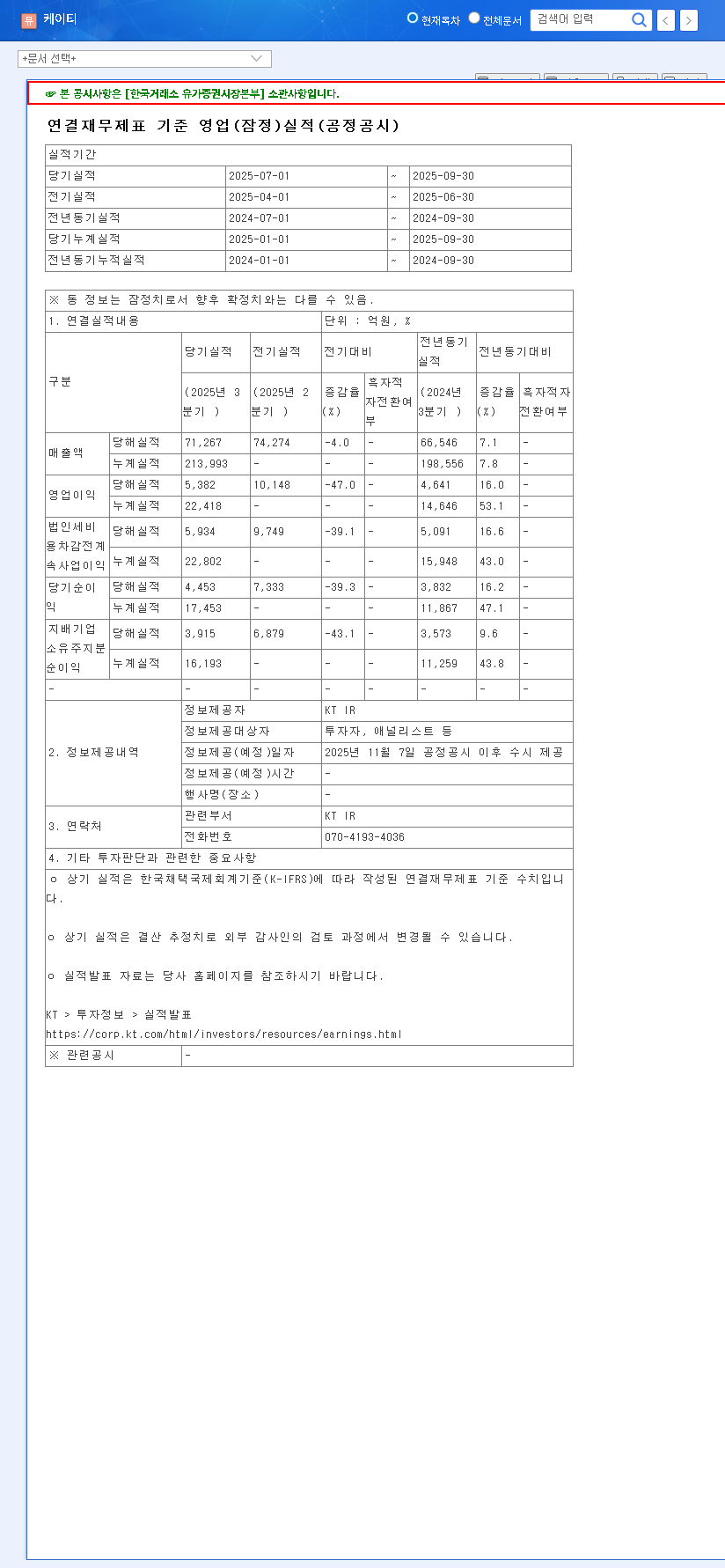
On November 7, 2025, KT CORPORATION announced its provisional operating results, which were met with positive reception for decisively surpassing consensus forecasts. Both top-line revenue and core operating profit showcased robust health and significant growth, signaling strong operational efficiency and market demand.
- •Revenue: KRW 7.1267 trillion, a 3.0% beat over the market expectation of KRW 6.9196 trillion.
- •Operating Profit: KRW 538.2 billion, a significant 4.8% above the expected KRW 513.5 billion.
- •Net Profit: KRW 391.5 billion, which was a marginal 1.0% below the consensus of KRW 395.4 billion.
While the net profit showed a slight dip, the outperformance in revenue and operating profit points to a healthy core business and successful growth initiatives. These figures confirm that the company’s strategic direction is not only sound but is actively accelerating financial performance.
The Engine of Growth: The KT AICT Transformation
This strong performance is a direct result of KT CORPORATION’s dedicated push to evolve beyond a traditional telco. The KT AICT transformation is a multi-faceted strategy focused on integrating artificial intelligence and digital transformation (DX) across its entire business portfolio.
Strengthening Core AI/DX Capabilities
A cornerstone of this strategy is the enhancement of AI Transformation (AX) capabilities. A pivotal move has been the strategic partnership with Microsoft, designed to leverage global expertise and accelerate KT’s role as a leader in AI-based digital transformation for its enterprise clients. This is coupled with a disciplined portfolio realignment, where non-core subsidiaries are divested to sharpen focus on high-growth, high-profitability sectors like cloud, AI, and enterprise DX solutions.
The successful execution of the AICT strategy is about more than just technology; it’s about fundamentally reshaping the business to capture new value in the digital economy.
Expanding into New Growth Frontiers
KT is actively seeking new growth engines. The recent addition of ‘facility leasing business’ to its corporate objectives signals a strategic entry into markets like the home appliance subscription model. This move leverages KT’s vast customer base and operational infrastructure to create new, recurring revenue streams outside of traditional telecom services. This diversification is a key element of their long-term resilience strategy.
Financial Health and Shareholder Commitment
A stable financial foundation is critical for funding such an ambitious transformation. As of the first half of 2025, KT’s balance sheet remains robust, providing the necessary firepower for sustained investment in R&D and CAPEX. The company’s financial health is validated by consistently stable credit ratings from top international agencies like Moody’s (A3) and S&P (A-). These details are publicly available in the company’s Official Disclosure filed with DART.
Furthermore, KT is enhancing its investment appeal through proactive shareholder return policies. The introduction of quarterly dividends and a program of share buybacks and cancellations demonstrates a strong commitment to delivering value back to its investors. This approach is becoming a key differentiator in the competitive South Korean telecom market.
Potential Risks and Investor Considerations
Despite the positive momentum, a prudent investor must consider potential headwinds. The telecom market remains fiercely competitive, with constant pressure on 5G Average Revenue Per User (ARPU). Additionally, the AICT transformation requires significant capital expenditure (KRW 845.8 billion in Q2 2025 alone), which could place short-term pressure on profitability. The global trend towards massive AI infrastructure investment, as reported by leading technology analysts, means that managing CAPEX is a universal challenge. Regulatory changes and ongoing litigation also remain as potential risks that require diligent management.
Investor Action Plan: What to Watch
For those considering an investment in KT CORPORATION, the latest earnings report is a strong bullish signal. However, continued monitoring of key areas is crucial:
- •Pace of Monetization: Track the revenue growth and profitability of the AI, cloud, and DX business segments. How quickly can these new ventures translate to the bottom line?
- •Risk Management: Monitor the company’s handling of regulatory issues and any ongoing litigation, as these can impact corporate value.
- •Shareholder Policies: Ensure the company continues to follow through on its shareholder return promises, reinforcing trust and investment stability.
- •Macroeconomic Factors: Analyze how changes in interest rates and exchange rates could affect KT’s investment plans and financial results.
Frequently Asked Questions
What were KT CORPORATION’s key performance indicators in its latest earnings report?
KT CORPORATION reported revenue of KRW 7.1267 trillion and operating profit of KRW 538.2 billion, exceeding market expectations by 3.0% and 4.8% respectively. Net profit was KRW 391.5 billion, slightly below expectations.
What does KT CORPORATION’s AICT transformation entail?
The AICT (AI Transformation Company) transformation is KT’s core strategy to enhance its AI-based digital transformation (DX) capabilities. The goal is to evolve into a company that creates new value across various industries, moving beyond its traditional role as a telecommunications provider.
What are the main risk factors for KT CORPORATION?
Key risks include intensified competition in the telecom market, short-term profitability pressures from increased AICT transformation investments, substantial CAPEX execution, and potential impacts from government regulations and litigation.
Leave a Reply