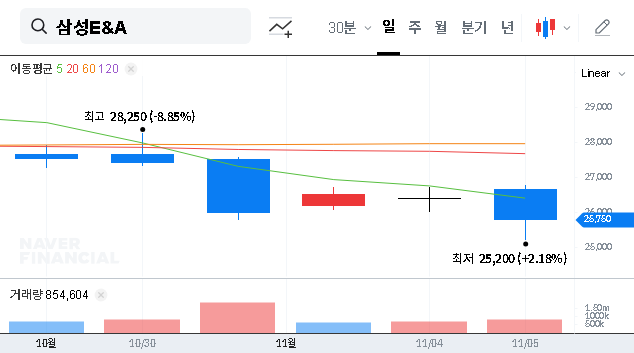
This comprehensive SAMSUNG E&A CO.,LTD financial analysis explores the significant challenges facing the engineering giant ahead of its critical Investor Relations (IR) conference on November 6, 2025. Once a dominant force in the global plant industry, the company is now navigating severe financial headwinds, with projections showing a stark decline in revenue and a substantial operating loss for 2025. This IR is more than a standard update; it’s a pivotal moment that will likely shape the company’s trajectory and influence Samsung E&A stock performance for the foreseeable future.
Can management present a credible turnaround strategy? This article delves into the company’s deteriorating financial health, the root causes behind the downturn, and provides an essential action plan for investors to evaluate the upcoming announcements.
The Alarming Numbers: SAMSUNG E&A CO.,LTD’s 2025 Financial Forecast
The market sentiment surrounding SAMSUNG E&A CO.,LTD is deeply pessimistic, and the numbers justify the concern. The company’s recent performance and future projections paint a grim picture of a business in distress. Below is a breakdown of the key financial indicators that highlight the severity of the situation:
- •Plummeting Revenue: Projections show a staggering drop from KRW 11.48 trillion in 2022 to an estimated KRW 4.69 trillion in 2025.
- •Profitability Collapse: After seeing operating profit fall from KRW 175.8 billion in 2022 to just KRW 19.1 billion in 2024, the company is forecast to suffer a massive operating loss of KRW -308.0 billion in 2025.
- •Negative Margins: The operating profit margin is expected to invert, falling from a healthy 15.32% in 2022 to a deeply negative -6.55% in 2025.
- •Persistent Net Losses: The bottom line shows no relief, with the company expected to continue recording net losses through 2025.
Root Causes of the Financial Decline
The troubles at SAMSUNG E&A CO.,LTD are not the result of a single issue but a combination of internal financial mismanagement, project-related pressures, and external market vulnerabilities.
1. Severely Weakening Financial Soundness
A core concern is the rapid deterioration of the company’s balance sheet. The Debt-to-Equity ratio has climbed from 92.27% in 2022 to an uncomfortable 114.65% in 2024, signaling increased reliance on borrowing. More alarmingly, the Current Ratio—a key measure of short-term liquidity—has plummeted from a robust 340.96% to a precarious 58.09% in the same period. A ratio below 100% can indicate potential trouble in meeting short-term obligations. This is a major red flag for investors performing a Samsung E&A financial analysis.
2. Project Pressures and Business Portfolio Risks
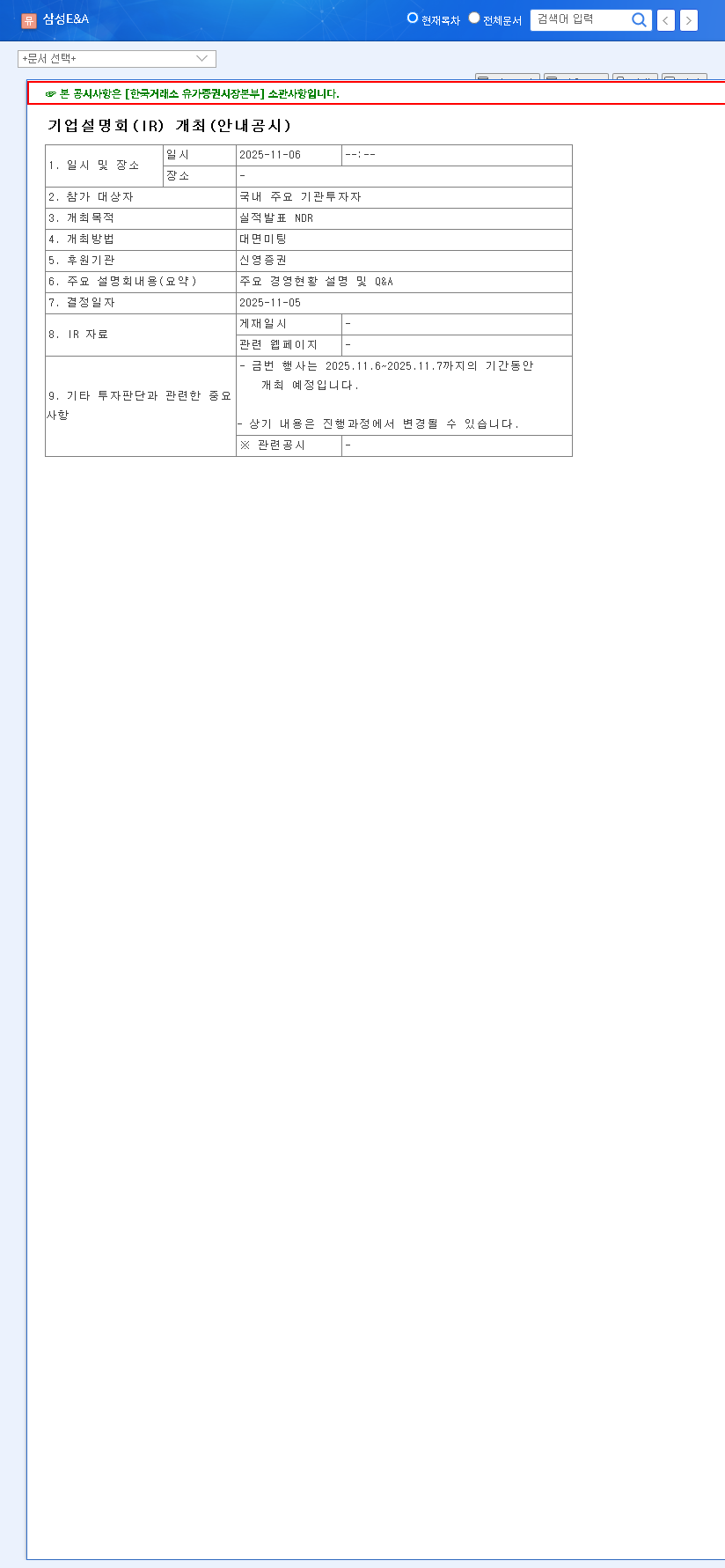
Recent corrections to business reports have revealed more detail about ongoing projects. While a KRW 10 trillion backlog of contracts provides some revenue visibility, many are set to conclude by 2025, creating a revenue cliff without significant new orders. Furthermore, the rising accounts receivable and unbilled costs associated with these large-scale projects are straining cash flow. These issues were detailed in the company’s amendment to its business report, as seen in this Official Disclosure (Source: DART).
The reliance on a few large, expiring projects creates a significant revenue gap that the company must urgently address. Securing new, profitable orders is not just a goal—it’s an operational necessity.
3. High Sensitivity to Exchange Rate Volatility
With a global footprint, SAMSUNG E&A CO.,LTD is highly exposed to currency fluctuations. The company estimates that a mere 5% shift in exchange rates could alter its net profit by approximately KRW 100 billion. The recent volatility in the KRW/EUR exchange rate, in particular, poses a significant and unpredictable risk to its bottom line.
The November 6 IR: A Make-or-Break Moment
This upcoming IR is the company’s primary platform to confront these issues head-on and restore shattered investor confidence. The market will be looking for more than just acknowledgments of the problems; it will demand a clear, credible, and actionable plan for recovery. For more on market analysis, you can refer to authoritative sources like Bloomberg’s market coverage.
Investor Action Plan: What to Watch For
Investors should approach the IR with a critical mindset. The future of Samsung E&A stock hinges on the substance of the presentation. Pay close attention to the following areas:
- •New Order Strategy: Vague promises won’t suffice. Look for specific targets, identified markets, and a tangible pipeline of potential high-margin projects.
- •Cost Reduction & Profitability Roadmap: How will the company stop the financial bleeding? Demand concrete figures on cost-cutting initiatives and a clear path back to positive operating margins.
- •Balance Sheet Restoration Plan: What steps will be taken to address the rising debt and critically low liquidity? This could involve asset sales, debt restructuring, or capital raising.
- •Future Growth Engines: Beyond traditional plant engineering, what is the vision for diversification? Are there plans to expand into renewable energy, digital transformation, or other high-growth sectors? For a broader context, consider reading our guide to investing in the industrial sector.
Conclusion: A Cautious Outlook
The SAMSUNG E&A CO.,LTD 2025 outlook is fraught with risk. While the company’s legacy and existing backlog provide a foundation, they are insufficient to overcome the current financial storm. The upcoming IR will be a crucial test of leadership’s ability to steer the ship back on course. Investment decisions should be deferred until after a thorough analysis of the IR content, as the potential for further downside remains significant if the company fails to deliver a convincing recovery plan.
Leave a Reply