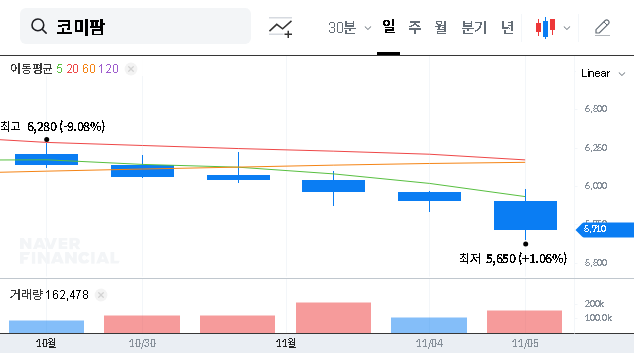
In a strategic move that has caught the eye of the market, KOMIPHARM INTERNATIONAL CO., LTD. recently announced a significant KOMIPHARM self-stock acquisition program. The company has committed to buying back 2 billion KRW worth of its own shares, a decision that prompts critical questions for current and potential investors. Is this a defensive maneuver to bolster a fluctuating stock price, or a confident declaration of underlying value and a commitment to enhancing KOMIPHARM shareholder value? This comprehensive analysis will explore the decision’s immediate and long-term implications, providing a detailed look into the company’s core operations, the promising PAX-1 development pipeline, and the overall financial landscape to help you formulate a well-informed investment strategy.
The 2 Billion KRW Share Buyback: A Closer Look
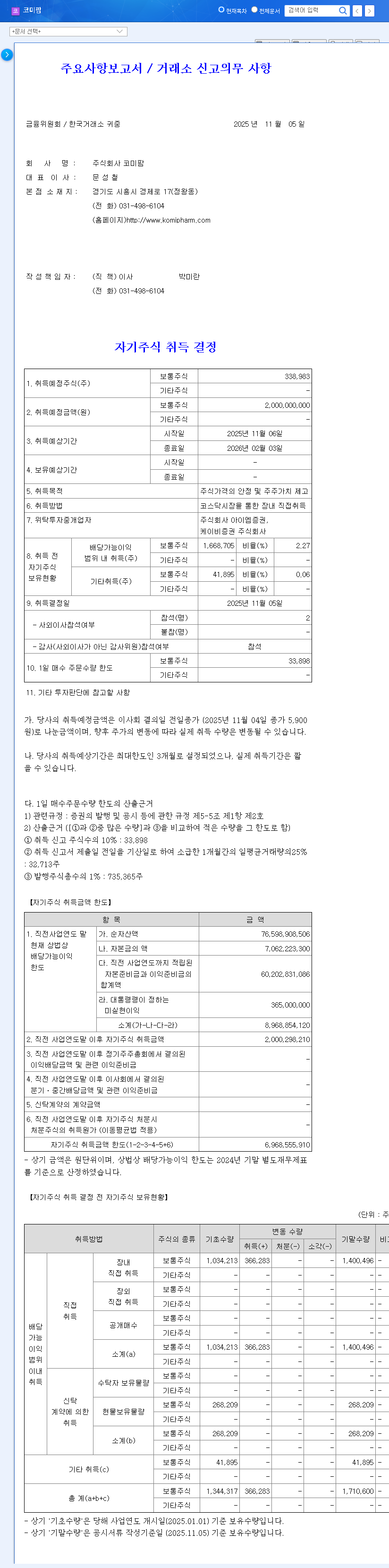
On November 5, 2025, KOMIPHARM officially disclosed its plan to acquire 338,983 shares of its common stock, valued at approximately 2 billion KRW. The acquisition will be conducted via direct open-market purchases on the KOSDAQ. According to the Official Disclosure on DART, the primary objectives are stock price stabilization and the enhancement of shareholder value. While this buyback represents a modest 0.46% of the company’s market capitalization, it serves as a powerful signal of management’s confidence in the company’s future prospects and its commitment to its investors.
A share buyback, regardless of size, is often interpreted by the market as a signal that the company’s management believes its stock is undervalued. It’s a tangible investment in the company’s own equity.
KOMIPHARM Fundamentals: Stability Meets Innovation
To understand the context of the buyback, a KOMIPHARM stock analysis must go deeper than a single corporate action. The company operates on two parallel tracks: a stable, revenue-generating core business and a high-potential, innovative R&D pipeline.
Core Business: Animal Pharmaceuticals
KOMIPHARM maintains a robust position in the animal pharmaceutical sector. This division provides a steady stream of revenue, grounding the company’s more speculative ventures. Key recent developments include successful field trials for its ASF vaccine in the Philippines and sales approval for its PED vaccine in China, both of which reinforce its market leadership and international presence. This stability is crucial as it helps fund the company’s more ambitious projects.
Future Growth Engine: PAX-1 Development
The true long-term value for KOMIPHARM lies in the success of PAX-1, its innovative oral anticancer drug. This drug is particularly noteworthy for its astounding 98% blood-brain barrier (BBB) penetration rate, a critical feature for treating brain cancers like glioblastoma. The successful PAX-1 development could revolutionize treatment paradigms. The designation as an Orphan Drug (ODD) by the US FDA not only provides market exclusivity incentives but also validates the drug’s potential significance. Ongoing clinical trials across Australia, Taiwan, South Korea, and the USA are the key milestones that investors are watching closely. For more technical details, you can read our deep dive into PAX-1’s clinical trial data.
Analyzing the Impact of the Self-Stock Acquisition
The KOMIPHARM self-stock acquisition carries several implications for investors, blending immediate psychological benefits with long-term financial mechanics.
- •Enhanced Investor Confidence: The buyback demonstrates a proactive commitment to KOMIPHARM shareholder value, providing a layer of stability and trust during a period of heavy R&D investment and financial uncertainty.
- •Improved Financial Metrics: By reducing the number of outstanding shares, the company can increase its Earnings Per Share (EPS) and Return on Equity (ROE), making the stock appear more attractive on a per-share basis. As authoritative sources like Bloomberg often report, these metrics are closely watched by institutional investors.
- •Limited Short-Term Price Impact: Given the acquisition’s small scale (0.46% of market cap), its direct power to drive the stock price up is limited. It’s better viewed as a price support mechanism rather than a catalyst for a major rally. A sustained upward trend will require positive news from the PAX-1 trials.
A Smart Investment Strategy for KOMIPHARM
Investing in KOMIPHARM requires a nuanced approach that balances the stability of its current operations with the high-risk, high-reward nature of its pharmaceutical research.
Key Considerations for Your Portfolio:
- •Adopt a Long-Term Horizon: The company’s ultimate value is inextricably linked to the success of PAX-1. Investors should focus on clinical trial milestones and regulatory updates rather than short-term price fluctuations.
- •Monitor Financial Health: While the current buyback is manageable, keep a close eye on the company’s debt levels and cash flow. High R&D costs are necessary but must be sustained without jeopardizing financial stability.
- •Contextualize the Buyback: View the self-stock acquisition as a piece of a larger puzzle—a signal of confidence that complements the broader narrative of innovation. Its greatest impact will be psychological, especially when paired with positive R&D news.
In conclusion, the KOMIPHARM investment thesis is a story of dual potential. The share buyback is a positive, shareholder-friendly action that shores up confidence. However, the transformative growth potential that justifies the investment risk resides squarely in the labs and clinical trials of PAX-1. Diligent monitoring of both aspects is the cornerstone of a prudent investment strategy.
Leave a Reply