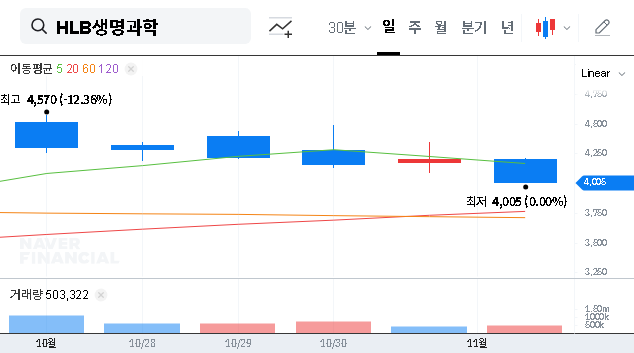
The recent announcement of the HLB Life Science Exchangeable Bond (EB) issuance has ignited intense debate among investors. The decision to issue KRW 7.1 billion in bonds with a remarkably high exchange price presents a fascinating puzzle. Is this a strategic masterstroke signaling unshakeable confidence in future breakthroughs like Riboceranib, or a high-stakes gamble born from financial necessity? This in-depth investment analysis will dissect the details of the EB issuance, evaluate the underlying financial health of HLB Life Science, and provide a clear framework for assessing the potential opportunities and risks for your portfolio.
The KRW 7.1 Billion Exchangeable Bond Issuance: Key Details
On November 3, 2025, HLB Life Science CO., LTD. confirmed its decision to issue KRW 7.1 billion in Exchangeable Bonds. This private placement was made to foreign investors, including notable entities like LMR Multi-Strategy Master Fund Limited. An Exchangeable Bond gives the bondholder the right to exchange the bond for shares of the company’s stock at a predetermined price. The most striking detail, which has captured the market’s attention, is the exchange price. For a comprehensive overview, you can view the Official Disclosure (Source: DART).
Here are the essential terms of the deal:
- •Issuance Amount: KRW 7.1 Billion
- •Exchange Price: KRW 48,917 (approximately 12 times the current stock price of KRW 4,005)
- •Coupon/Maturity Rate: 5.0%
- •Payment Date: November 13, 2025
- •Exchange Period: December 23, 2025 – November 3, 2030
Why Now? Financial Pressures and Strategic Imperatives
This fundraising move is a direct response to HLB Life Science’s current financial reality and its ambitious future. The primary goal is to secure capital for its key new drug pipelines, headlined by the highly anticipated Riboceranib FDA Journey, while also expanding its Medicare and medical device business segments. Given the company’s financial standing, the 5.0% coupon rate represents a relatively stable financing path.
A look at the company’s 2025 semi-annual report reveals a narrative of widening losses, rising debt, and negative operating cash flow, making this capital infusion not just strategic, but essential for liquidity and continued R&D investment.
The financial statements underscore the urgency. A consolidated net loss of KRW 83.3 billion, a rising debt-to-equity ratio of 41.84%, and negative operating cash flow paint a picture of a company burning through capital in pursuit of a breakthrough. In this context, the HLB Life Science Exchangeable Bond is an unavoidable step to bridge the gap between current expenses and future revenue from its drug pipeline.
Stock Impact Analysis: Bull vs. Bear Case
This EB issuance carries a dual-edged impact on the HLB Life Science stock price and overall corporate valuation. Investors must weigh the optimistic signals against the substantial underlying risks.
The Bull Case: A Vote of Confidence
- •High Exchange Price Signal: An exchange price 12 times the current stock price is a powerful statement. It suggests that sophisticated investors see a clear path to massive value creation, likely tied to the successful commercialization of Riboceranib. This can create a positive feedback loop, attracting more long-term investors. For more on market sentiment, see analysis from authoritative sources like Bloomberg.
- •Improved Financial Runway: The capital injection provides a crucial lifeline, extending the company’s operational runway. This allows management to focus on executing its R&D and commercialization strategy without the immediate pressure of a liquidity crisis.
- •Reduced Interest Burden: The 5.0% coupon rate may be more favorable than other forms of debt, helping to alleviate the strain of finance costs on the income statement.
The Bear Case: Significant Risks Ahead
- •The Conversion Challenge: Reaching an exchange price of KRW 48,917 is a monumental task. Failure to achieve tangible, value-driving milestones could make conversion impossible, leading to market skepticism and damaging investor confidence.
- •Potential Share Dilution: If the stock price does surge past the exchange price, the subsequent conversion of bonds into shares will increase the total number of shares outstanding, diluting the ownership stake of existing shareholders.
- •Maturity Repayment Burden: If the bonds are not converted by 2030, HLB Life Science will be obligated to repay the principal. For a company with historically negative cash flow, this could create a significant financial cliff and future liquidity crisis.
Investor Action Plan & Final Verdict
Investing in HLB Life Science requires a vigilant, milestone-based approach. The HLB Life Science Exchangeable Bond issuance amplifies both the potential reward and the risk. Investors should focus their due diligence on the following key areas:
- •Riboceranib Commercialization Progress: This is the single most important catalyst. Monitor all news related to the FDA NDA filing for Riboceranib as a first-line liver cancer treatment. Success here is the primary driver that could justify the high exchange price.
- •Financial Health Trajectory: Scrutinize quarterly reports for any signs of financial improvement. Key metrics include a narrowing net loss, improving operating margins, and, most critically, a shift towards positive operating cash flow.
- •Macroeconomic Factors: Keep an eye on interest rate trends and overall market sentiment for biotech stocks, as these can influence borrowing costs and investor appetite.
In conclusion, this EB issuance is a high-conviction bet by both the company and its new investors on a transformative future. While it provides a vital financial bridge, the destination on the other side—a stock price exceeding KRW 48,917—is still distant and dependent on near-flawless execution. A cautious, well-researched approach is paramount.

Leave a Reply