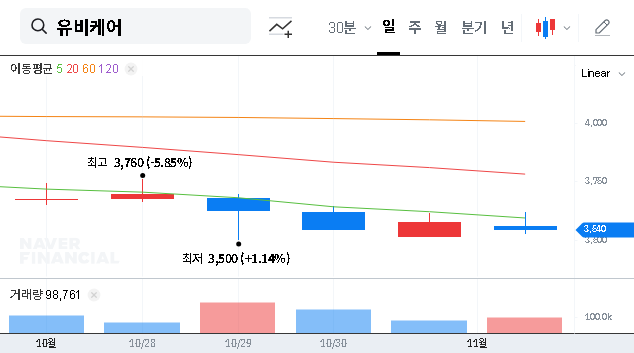
The latest UBCARE Q3 2025 earnings report has sent ripples through the investment community, painting a complex picture of a company at a crossroads. While UBCARE CO., LTD. (유비케어) managed to post a slight increase in revenue, a notable decline in operating and net profits has raised significant questions about its underlying financial health and future trajectory. This analysis will provide a comprehensive breakdown of the report, diagnose the core causes of this profitability squeeze, and offer a forward-looking perspective for investors.
We will explore how strategic investments in AI and digital healthcare are weighing on short-term results and what the current macroeconomic climate means for the company’s path forward. This deep dive offers the essential UBCARE stock analysis needed to navigate the challenges and opportunities ahead.
Breaking Down the UBCARE Q3 2025 Earnings Report
According to the preliminary operating results, UBCARE’s financial performance for the third quarter of 2025 reveals a critical disconnect between top-line growth and bottom-line results. These figures, released in their official corporate filing (Source: Official DART Disclosure), lay out the core numbers:
- •Revenue: KRW 50.6 billion (a slight increase quarter-over-quarter)
- •Operating Profit: KRW 3 billion (a significant decrease)
- •Net Profit: KRW 1.9 billion (a notable decline)
The trend is concerning. After a brief recovery in profitability in late 2024, the downward slide has resumed in 2025. The most alarming signal is the drop in operating profit despite higher revenues, pointing toward fundamental issues in cost structure or business segment performance.
Unpacking the Core Reasons for Profitability Deterioration
Several factors are converging to erode UBCARE’s margins. Understanding them is key to assessing the company’s ability to orchestrate a turnaround.
1. Margin Compression and Rising SG&A Costs
The preliminary operating profit margin stands at a low 5.93%. This is a direct result of two pressures: declining sales in the lower-margin distribution business and a simultaneous increase in Selling, General, and Administrative (SG&A) expenses. These expenses often include crucial investments in marketing, R&D personnel, and administrative overhead. The inability to translate higher revenue into higher profit suggests that cost controls are not keeping pace with growth, or the revenue mix is shifting towards less profitable activities.
2. Financial Complexities from Subsidiary Investments
Corporate structuring has introduced new financial variables. The consolidation of Vivbros Co., Ltd. has increased intangible assets (goodwill) on UBCARE’s balance sheet. While this reflects the value of the acquisition, it also carries future risk. Goodwill must be tested for impairment annually, and if its value is deemed to have decreased, it can lead to significant write-downs that hurt net income. The deconsolidation of Crener Healthcom Co., Ltd. further complicates year-over-year comparisons, making a clear analysis of UBCARE profitability more challenging.
3. The Lag Between Innovation Investment and Monetization
UBCARE is commendably investing in future growth engines like AI-powered contact centers and advanced digital healthcare platforms. However, these ambitious projects require substantial upfront capital and operational expenditure. Currently, these investments are a drag on profitability without contributing meaningfully to revenue. This highlights a classic growth-stage dilemma: the immediate need for profit versus the long-term imperative to innovate. The market is now keenly watching for a clear strategy to monetize these technological advancements.
UBCARE finds itself at a critical juncture: balancing long-term innovation with the immediate need for improved cost control and profitability. The path to monetizing its advanced digital healthcare solutions is now under intense scrutiny.
Investor Outlook: Navigating the Path Forward
Given the challenges highlighted in the UBCARE Q3 2025 earnings, investors should adopt a cautious and analytical approach. In the short term, the disappointing results may exert downward pressure on the stock price. The long-term trajectory, however, will be defined by management’s ability to execute on several key fronts.
Key Areas for Investor Scrutiny
- •Profitability Improvement Strategy: Look for concrete plans to enhance cost efficiency, particularly in the distribution segment, and to rein in SG&A growth.
- •Monetization Milestones: The company must demonstrate tangible progress in turning its AI and digital health investments into revenue streams. This aligns with broader trends in the Korean digital healthcare market, where profitability is becoming a key differentiator.
- •Transparent Communication: Proactive and clear communication from management regarding these challenges and their strategic solutions will be crucial for restoring market confidence. Investors can gain further context by reading reports on the global digital health market from authoritative sources like reputable business analysts.
In conclusion, while UBCARE holds a strong position in a promising industry, its current profitability issues are a significant hurdle. The Q3 2025 results serve as a wake-up call. The company’s future success, and its stock’s performance, will depend entirely on its ability to navigate these operational and financial challenges while proving the long-term value of its technological bets.

Leave a Reply