In a significant development for immunology, Curocell’s CD19 CAR-T therapy is making a landmark pivot from oncology to autoimmune disease. The company’s lead candidate, CRC01, is now entering a clinical trial for Lupus treatment, signaling a potential paradigm shift in how we manage complex autoimmune conditions and highlighting the incredible versatility of its proprietary OVIS™ platform.
This move is more than a simple pipeline expansion; it represents a new frontier for cell therapy. By targeting the root cause of the disease, this approach could offer a lasting solution for patients suffering from severe, refractory Systemic Lupus Erythematosus (SLE). Let’s explore the details of this announcement and its profound implications.
Understanding Systemic Lupus Erythematosus (SLE)
Systemic Lupus Erythematosus is a chronic autoimmune disease where the body’s immune system mistakenly attacks its own tissues and organs. This can lead to widespread inflammation and damage in the joints, skin, kidneys, blood cells, brain, heart, and lungs. The disease is characterized by periods of illness, called flares, and periods of remission. For many patients, especially those with severe, treatment-resistant forms, the unmet medical need is substantial. According to the Lupus Research Alliance, finding more effective and durable treatments is a top priority for the medical community.
A Landmark Clinical Trial for Curocell’s CRC01
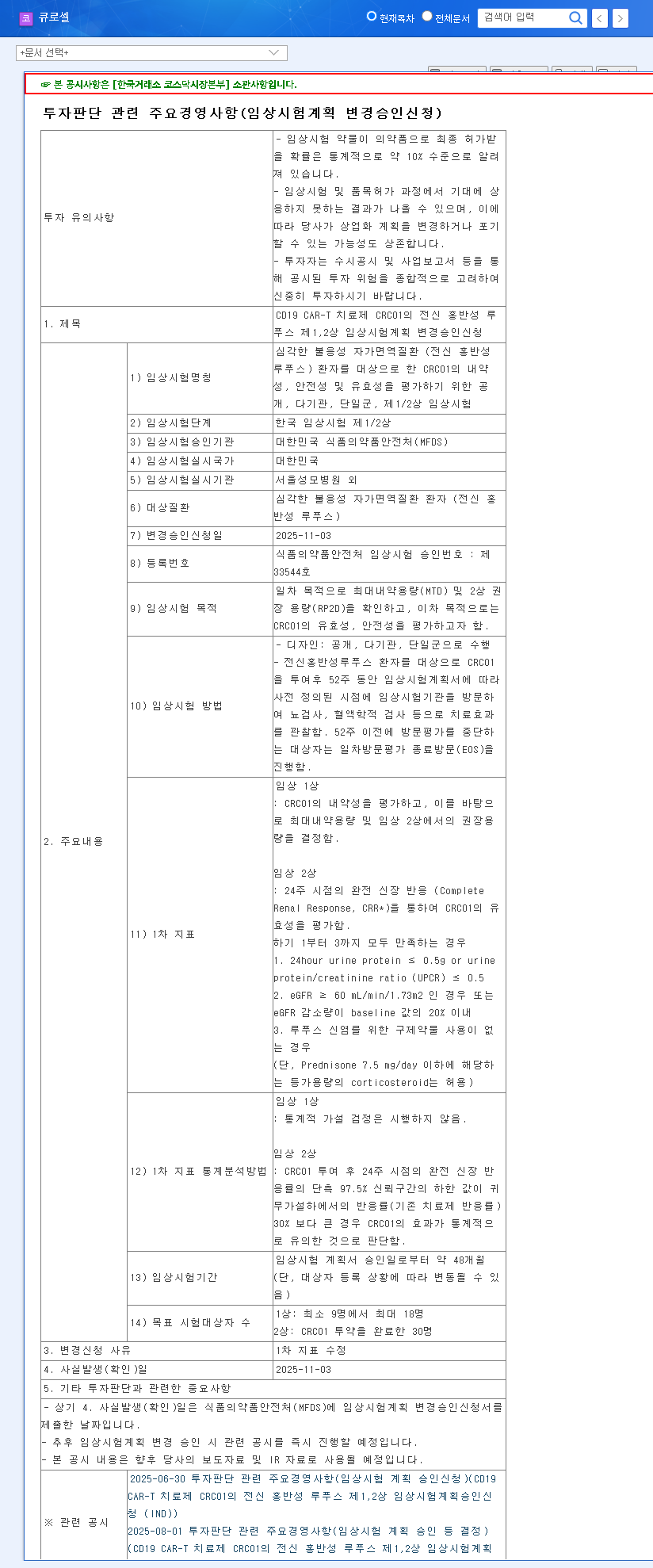
On November 3, 2025, Curocell Inc. formally submitted an application to the Ministry of Food and Drug Safety (MFDS) in South Korea to amend the clinical trial protocol for its CRC01 therapy. This Phase 1/2 trial will now include patients with severe, refractory Systemic Lupus Erythematosus. This pivotal study is designed as an open-label, multi-center, single-arm trial to assess the safety, tolerability, and preliminary efficacy of this innovative treatment. The filing was confirmed in an Official Disclosure, providing transparency to investors and the public.
Key Trial Objectives
- •Confirm the Maximum Tolerated Dose (MTD) and Recommended Phase 2 Dose (RP2D) for CRC01 in SLE patients.
- •Evaluate the initial efficacy and long-term safety of the therapy over a 52-week observation period.
- •Gather crucial data to support further development in a broader autoimmune disease setting.
The Technology: How OVIS™ Powers Curocell CD19 CAR-T
The science behind this trial is fascinating. In both B-cell cancers and autoimmune diseases like Lupus, rogue B-cells are a primary culprit. Curocell’s CD19 CAR-T therapy works by genetically re-engineering a patient’s own T-cells to recognize and eliminate cells that express the CD19 protein, effectively ‘resetting’ the immune system by depleting the problematic B-cell population.
Curocell’s Competitive Edge: The OVIS™ Platform
What sets Curocell apart is its innovative OVIS™ platform. This technology is designed to overcome the limitations of first-generation CAR-T therapies. It enhances the killing power and persistence of the therapeutic T-cells by simultaneously suppressing two critical immune checkpoint receptors: PD-1 and TIGIT. This dual-action approach aims to create a more robust and durable therapeutic effect.
The application of the OVIS™ platform to autoimmune disease is a powerful validation of its versatility. It proves the technology is not just an oncology solution but a broad immunomodulatory tool with the potential to address a wide spectrum of diseases.
Market Impact & Investor Outlook
This expansion into the vast autoimmune market could be a game-changer for Curocell, which is already on track to launch CRC01 for Diffuse Large B-cell Lymphoma (DLBCL) in 2025. Here’s a breakdown of the potential impacts and risks.
Positive Catalysts for Growth
- •New Revenue Streams: Successfully entering the multi-billion dollar autoimmune market diversifies Curocell’s pipeline and creates significant long-term value.
- •Technology Validation: Proves the OVIS™ platform’s broad applicability, enhancing the company’s scientific credibility and valuation.
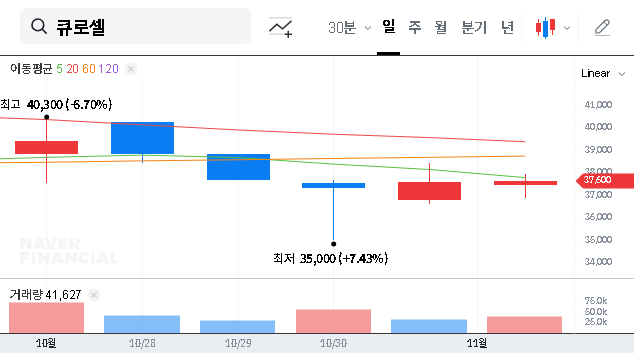
- •Increased Market Attention: Pioneering a new therapeutic area will attract significant investor and partner interest, potentially boosting stock performance.
Navigating the Potential Risks
- •Clinical Uncertainty: Early-stage trials carry inherent risks, and the long-term safety profile of CAR-T in autoimmune disease is still being established.
- •Financial Burden: Clinical trials are expensive, adding to R&D costs for a company that is not yet profitable.
- •Competitive Landscape: As the potential of cell therapy in this area becomes clear, competition will inevitably increase. Learn more about the basics by reading our guide to Understanding CAR-T Cell Therapy.
Conclusion: What Investors Should Watch
Curocell’s expansion into Lupus treatment is a profoundly positive step that reinforces its long-term growth potential. While excitement is warranted, prudent investors should remain focused on key milestones, including interim clinical data, the company’s funding strategy, and the commercial performance of CRC01’s upcoming oncology launch. This move firmly positions Curocell as a leader not just in CAR-T, but in the future of advanced immunology.
Leave a Reply