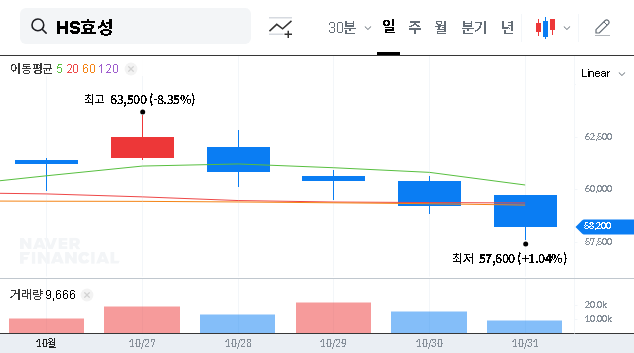
In a landmark move signaling a significant strategic shift, HS HYOSUNG Corporation (487570) has officially entered the highly competitive HS HYOSUNG secondary battery materials market. This decision, executed through its subsidiary HS HYOSUNG Advanced Materials, involves a major partnership with global materials giant Umicore NV. The venture focuses on the next-generation silicon carbon composite anode material market, a critical component for the future of electric vehicles (EVs) and energy storage. This bold investment is poised to become a new growth engine for the conglomerate, but it also introduces considerable financial risks and competitive pressures. This comprehensive analysis will explore the strategic rationale, financial implications, and long-term outlook for investors monitoring this pivotal development.
This strategic pivot into secondary battery materials is not just a diversification play; it’s a calculated move to secure a leadership position in the materials technology that will power the next generation of green energy solutions.
The Strategic Alliance: HS HYOSUNG and Umicore Join Forces
Details of the Landmark Investment
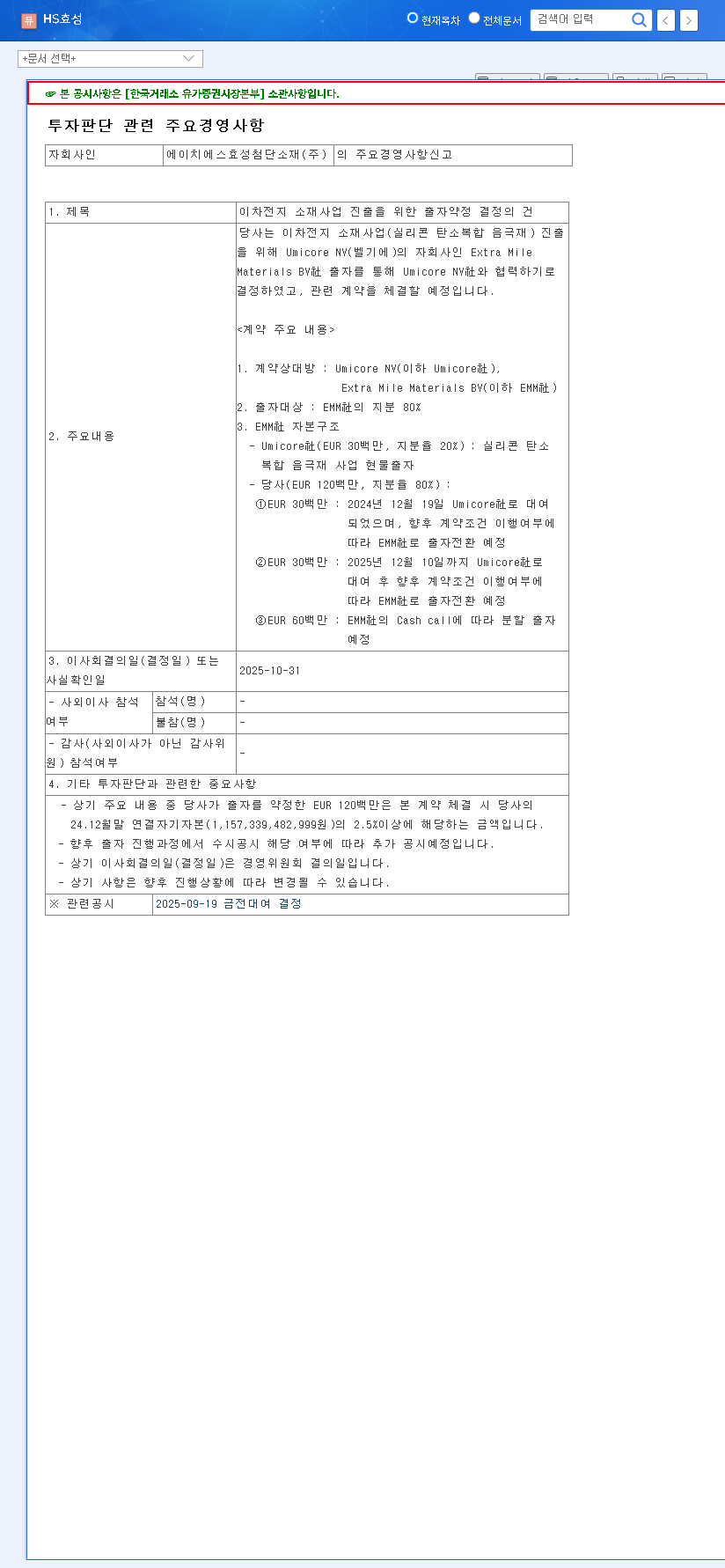
The core of this new venture is the acquisition by HS HYOSUNG Advanced Materials Co., Ltd. of an 80% stake in Extra Mile Materials BV (EMM Co.), a subsidiary of Belgium-based Umicore NV. The transaction, valued at approximately KRW 177 billion, marks HS HYOSUNG‘s official entry into the silicon carbon composite anode material market. This is not a tentative first step but a decisive leap into a sector poised for exponential growth, driven by the global transition to electric mobility. For detailed financial specifics of the deal, investors can refer to the Official Disclosure (DART).
Why Secondary Battery Materials are the Future
The move into secondary battery materials is a direct response to global megatrends. The demand for high-performance rechargeable batteries is skyrocketing, fueled by the booming EV market and the need for large-scale energy storage systems. Silicon carbon composite anodes are a key next-generation technology because they can store significantly more energy than traditional graphite anodes, leading to longer-range EVs and faster charging times. By entering this market, HS HYOSUNG is positioning itself to capitalize on this multi-billion dollar industry, as detailed in reports from market analysis firms like BloombergNEF. This strategy diversifies its portfolio beyond its successful but mature businesses in tire cords and industrial yarns, securing a vital new engine for future growth.
Investment Analysis: Balancing Opportunity and Risk
A large-scale investment into a new, competitive field presents a dual-sided coin of immense opportunity and significant risk. Investors must carefully weigh the short-term financial burdens against the potential for long-term, high-margin growth.
Financial Impact: Short-Term Strain for Long-Term Gain?
- •Capital Outlay: The KRW 177 billion investment is a substantial cash outflow that will immediately impact HS HYOSUNG Advanced Materials’ balance sheet, potentially increasing its debt ratio and straining short-term cash flow.
- •Growth Potential: If the HS HYOSUNG secondary battery venture succeeds, it could generate significant revenue and high profit margins, ultimately strengthening the company’s financial foundation and delivering substantial shareholder value.
- •Currency Risk: As a Euro-denominated investment, fluctuations in the EUR/KRW exchange rate present an ongoing financial risk that could affect both the initial cost and future profitability.
Business & Market Dynamics
- •Technological Edge: The HS HYOSUNG Umicore partnership is critical. It provides immediate access to Umicore’s world-class R&D and established technology, mitigating the risks of starting from scratch and accelerating the path to market leadership.
- •Synergistic Potential: HS HYOSUNG can leverage its deep expertise in advanced materials, including its cutting-edge carbon fiber technology. Carbon fiber is a key component in battery enclosures and can potentially be integrated into anode structures, creating powerful synergies. Learn more about our analysis of the carbon fiber market here.
- •Intense Competition: The anode material market is fiercely competitive, with established players and new entrants vying for market share. Success will depend on rapid innovation, cost-effective scaling, and securing long-term contracts with battery manufacturers.
Investor Outlook & Key Considerations
For investors, this development transforms HS HYOSUNG into a company with a significantly higher growth ceiling, but also a higher risk profile. A cautious yet optimistic approach is warranted. While short-term stock price volatility is likely due to the financial uncertainties, the long-term sentiment could turn highly positive if the company demonstrates clear progress in its new venture.
The key is to monitor milestones: successful technology integration with Umicore, progress on scaling production, and initial customer contracts. If these are achieved, the investment will prove to be a masterstroke. Given the high-growth nature of the secondary battery materials industry and the strong strategic partnership, the long-term investment opinion remains “Positive”, though vigilance is advised during the initial integration and ramp-up phases.
Leave a Reply