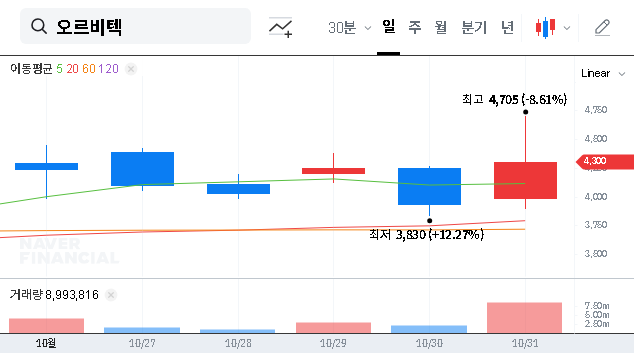
On October 31, 2025, Orbitech Co., Ltd. (046120) announced a strategic financial maneuver that caught the attention of the market: a capital increase of approximately KRW 1 billion. For current and potential investors, news like the Orbitech capital increase raises critical questions. Is this a sign of strength and a foundation for future growth, or is it a necessary measure to patch underlying financial weaknesses? This decision provides a crucial window into the company’s health, its strategic priorities, and the future trajectory of Orbitech stock.
In this comprehensive investor analysis, we will dissect the announcement, evaluate Orbitech’s financials, and weigh the potential rewards against the inherent risks. Our goal is to equip you with the insights needed to make a well-informed investment decision regarding Orbitech.
Decoding the Orbitech Capital Increase: What Investors Need to Know
The company disclosed its decision through an official filing, detailing a third-party allotment to raise capital. According to the Official Disclosure on DART, the move involves issuing new common shares. While relatively small compared to its market cap, the specifics are vital for a complete investor analysis.
Key Figures at a Glance
- •Total Amount Raised: Approximately KRW 1 billion.
- •New Shares Issued: 268,982 common shares.
- •Issuance Ratio: ~1% of total outstanding shares.
- •Issue Price: KRW 3,714 per share.
- •Investor: Hypertrust Syndicate.
- •Key Dates: Payment on Nov 10, 2025; Listing on Nov 25, 2025.
A Look Under the Hood: Orbitech’s Financials
To understand why Orbitech is raising capital, we must examine the company’s recent financial performance. The 2025 semi-annual report paints a picture of a company facing significant headwinds, particularly in its core business operations.
Profitability Challenges in Core Segments
Despite operating in promising industries, Orbitech’s main revenue streams are under pressure:
- •Nuclear Business (48.9% of sales): The largest segment recorded an operating loss in the first half of the year, a major red flag indicating an urgent need for operational efficiency.
- •ISI Business (11.4% of sales): This segment is also facing deepening profitability issues, struggling to convert revenue into profit.
- •Aerospace Business (39.7% of sales): While showing signs of a post-pandemic recovery, high cost ratios are suppressing margins and weighing on overall profitability.
The core issue for Orbitech is not a lack of revenue opportunities, but a fundamental struggle to generate profit from its primary operations. The capital increase can be seen as a direct response to a very weak cash flow from operating activities.
Investor Impact: Pros vs. Cons of the Capital Raise
For investors in Orbitech stock, this capital increase presents a classic double-edged sword. It’s crucial to weigh the potential benefits against the inherent risks.
The Bull Case: Potential Positives
- •Improved Financial Soundness: The KRW 1 billion injection can be used to pay down debt or fund daily operations, providing immediate relief to the balance sheet.
- •Fuel for Growth: These funds could be allocated to R&D, new business ventures, or technology upgrades to enhance long-term competitiveness.
- •Minimal Share Dilution: At just 1% of total shares, the immediate dilutive effect on existing shareholders’ value is limited, reducing a common investor concern.
The Bear Case: Key Concerns & Risks
- •A Temporary Fix: If the root causes of poor profitability and high costs aren’t addressed, this capital is merely a band-aid on a more serious wound.
- •Signal of Weakness: Relying on external funding instead of generating cash internally can be interpreted by the market as a sign of operational distress.
- •Execution Risk: The positive impact depends entirely on how effectively management utilizes the new capital. A clear, strategic plan for its use is paramount. For more on this, you can read our guide on analyzing corporate financial strategy.
Strategic Outlook: Your Orbitech Investment Checklist
Given the conflicting signals, a cautious and watchful approach is warranted. While the capital raise shores up the company’s finances in the short term, the long-term value of Orbitech stock hinges on a fundamental operational turnaround.
Overall Investment Stance: Neutral
Investors should monitor several key areas before committing further. The following factors will be critical in determining if the Orbitech capital increase is a stepping stone to success or a stopgap measure.
- •Capital Utilization Plan: Watch for official announcements on exactly how the KRW 1 billion will be spent. Is it for high-return investments or simply covering operational shortfalls?
- •Quarterly Earnings Reports: The next few earnings calls are crucial. Look for improvements in operating profit margins and a reduction in cost ratios within the Nuclear and Aerospace segments.
- •Cash Flow Statements: Pay close attention to the ‘Cash Flow from Operating Activities’ line. A sustained positive trend here would be the strongest indicator of a genuine recovery.
Frequently Asked Questions (FAQ)
What is the scale of Orbitech’s latest capital increase?
Orbitech is raising approximately KRW 1 billion by issuing 268,982 new common shares, which represents about 1% of the total shares outstanding.
How might this capital increase affect Orbitech’s stock price?
In the short term, the impact may be muted due to the small dilution. The long-term effect on Orbitech stock will depend entirely on whether the funds are used effectively to solve the company’s core profitability problems.
What are the main issues with Orbitech’s core businesses?
The primary issue is a lack of profitability. The Nuclear and ISI business segments recorded operating losses in the first half of the year, and the Aerospace segment suffers from high costs that suppress margins.
What is the recommended investment stance on Orbitech (046120)?
A ‘Neutral’ stance is recommended. The company’s situation is mixed, with the short-term benefit of the capital raise being offset by significant, unresolved issues in its fundamental business operations. A wait-and-see approach is prudent.

Leave a Reply