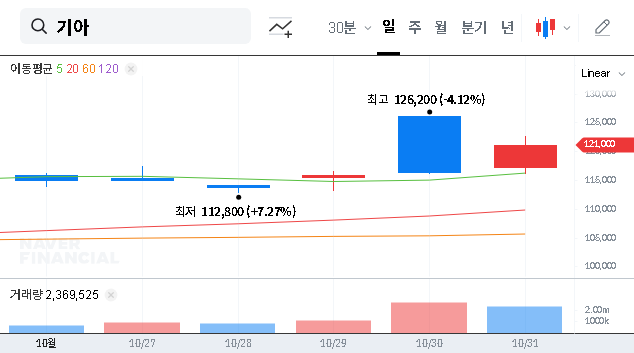
An in-depth analysis of KIA CORPORATION stock reveals a company at a pivotal moment, underscored by two major announcements: the release of its H1 2025 Semi-Annual Report and a strategic decision on the disposal of treasury shares. For investors evaluating Kia’s future, these events offer a crucial roadmap. This article provides a comprehensive breakdown of Kia’s financial health, its aggressive electrification strategy, and the implications of its latest corporate actions, presenting a clear investment thesis for both short-term and long-term horizons.
Kia’s strong fundamentals, combined with strategic initiatives like employee stock compensation and a focus on high-value electric vehicles, create a compelling, long-term growth narrative despite macroeconomic headwinds.
H1 2025 Report: A Foundation of Solid Growth
The H1 2025 Semi-Annual Report paints a picture of a company executing its strategy effectively. The financial and operational highlights confirm a positive outlook, reinforcing the underlying strength of the KIA CORPORATION stock thesis. Key performance indicators point towards sustained momentum and robust health.
Key Strengths from the Report
- •Impressive Profitability: Kia reported a revenue growth of 6.7% year-over-year, driven by strong sales of higher-margin HEV/EV models in key markets. Critically, it maintained a strong operating profit margin of 10.1%, a testament to its brand power and increasing Average Selling Price (ASP).
- •Electrification Leadership: The strategic launches of new models like the EV3 and EV4 are not just expanding the portfolio; they are winning accolades and capturing market share. The EV3’s ‘Car of the Year’ awards signal strong consumer acceptance and technological leadership in a competitive space. For more on this trend, see our deep dive into the global EV market.
- •Rock-Solid Financials: With a low debt-to-equity ratio of 64.58% and significant cash reserves, Kia’s balance sheet is exceptionally healthy. This financial stability provides a crucial buffer against market volatility and funds continued R&D in future technologies like autonomous driving.
Treasury Stock Disposal: A Smart Move for Long-Term Value
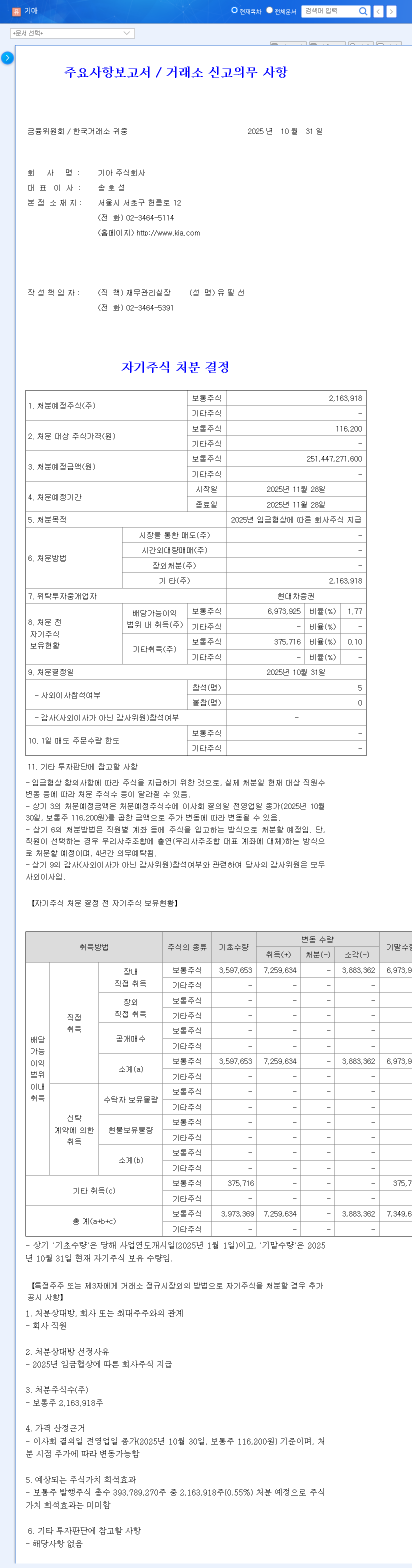
On October 31, 2025, Kia announced its decision to dispose of 2,163,918 shares of treasury stock, valued at approximately KRW 251.4 billion. While the term “disposal” can sound alarming, the context is overwhelmingly positive. This move is not a dilutive sale on the open market but a strategic allocation designed to bolster the company from within.
The primary purpose is to grant shares to employees as part of the 2025 wage agreement. This aligns employee interests directly with shareholder value, fostering a culture of ownership and incentivizing performance. As detailed in the Official Disclosure (DART), the volume represents a tiny fraction of total outstanding shares, meaning any direct impact on the KIA CORPORATION stock price will be negligible. The long-term benefit of a highly motivated workforce, however, is significant.
Investment Outlook & Key Risk Factors
Synthesizing the data, we maintain a ‘Buy’ recommendation for KIA CORPORATION stock, particularly for investors with a long-term perspective. The company’s proactive strategy and robust fundamentals position it well to navigate the evolving automotive landscape.
Investment Thesis Summary
- •Short-Term (6-12 Months): Expect potential volatility due to macroeconomic factors like interest rates and geopolitical tensions. However, the momentum from new model launches (EV3, Tasman) could provide positive catalysts and support the current stock valuation.
- •Long-Term (2-5 Years): The growth potential is exceptionally high. Kia’s leadership in electrification, strong brand equity, and stable financial footing are powerful drivers for future appreciation in the KIA CORPORATION stock price.
Potential Risks to Monitor
No investment is without risk. Investors should monitor the following external factors:
- •Global Economic Conditions: A significant global recession could dampen consumer demand for new vehicles. For broader context, refer to analyses from authoritative sources like Bloomberg’s economic outlook.
- •Intensifying EV Competition: The EV market is becoming crowded. Kia must continue to innovate to fend off price pressure from both legacy automakers and new entrants.
- •Protectionist Trade Policies: The implementation of high tariffs in key markets, particularly North America, could impact sales and profitability.
Disclaimer: This analysis is based on publicly available information. Investment decisions carry risk, and investors are responsible for their own choices. It is advisable to consult with a financial professional before making any investment.
Leave a Reply