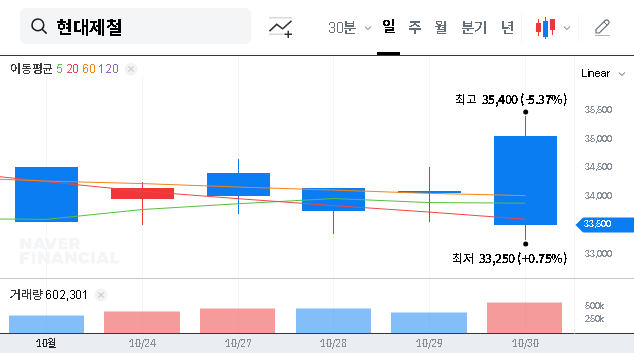
The latest HYUNDAI STEEL COMPANY earnings report for Q3 2025 has sent a clear and unsettling message to the market: the steel giant is facing significant headwinds. The company’s provisional financial results, released on October 30, 2025, revealed a dramatic shortfall against market expectations, with revenue plummeting and net income shockingly swinging to a loss. This performance has raised critical questions among investors about the company’s trajectory and the stability of Hyundai Steel stock.
This comprehensive analysis will dissect the Q3 2025 financial results, explore the macroeconomic storms brewing behind the numbers, and provide a strategic outlook for investors navigating this turbulent period. We’ll examine the causes, the potential impacts, and the road ahead for one of the industry’s key players.
The Q3 2025 Earnings Report: A Closer Look at the Numbers
The disparity between market consensus and actual performance was stark. The official figures paint a picture of a company struggling against a challenging economic backdrop. Let’s break down the key performance indicators that missed the mark:
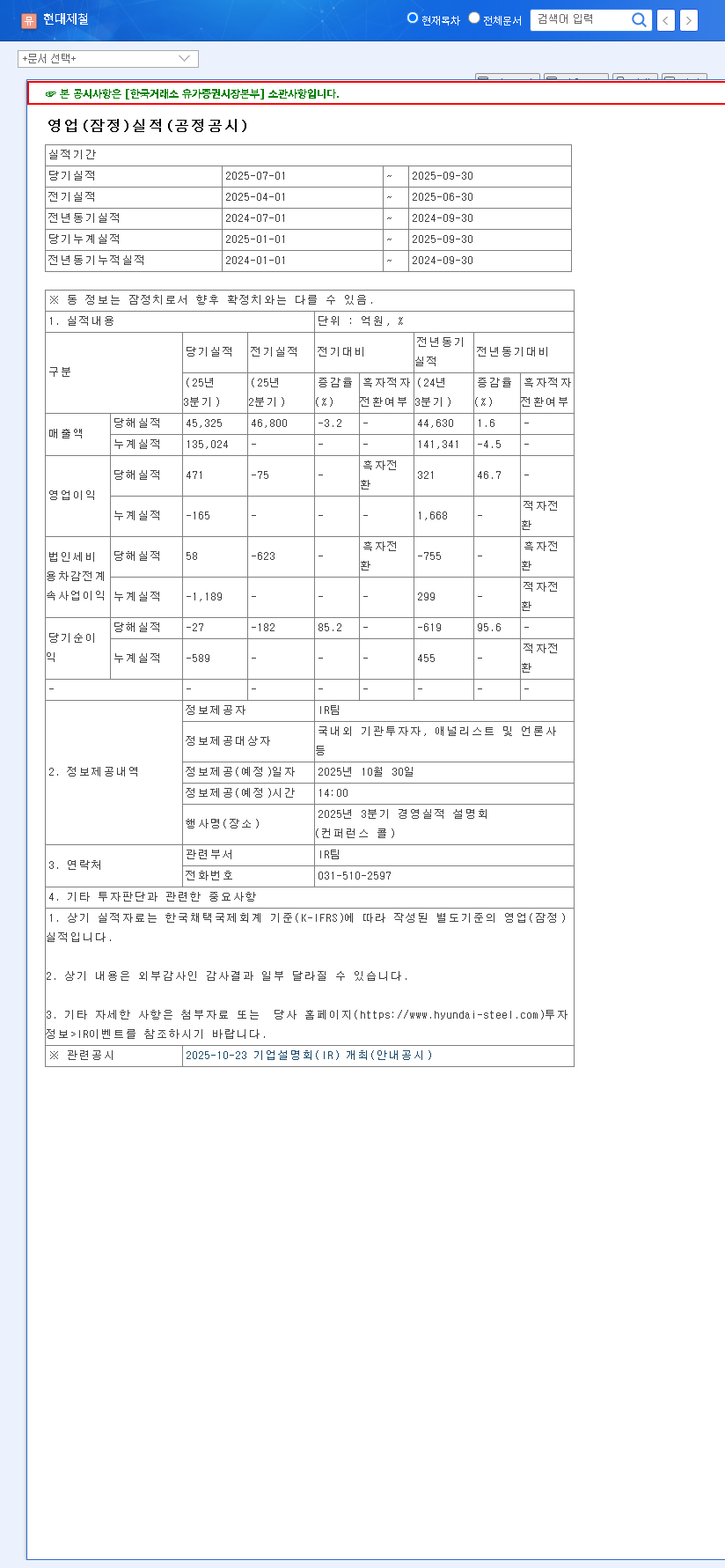
- •Revenue: The company reported actual revenue of KRW 45,325 billion, a steep 20.99% below the expected KRW 57,367 billion. This significant drop underscores the severe impact of weakening global steel demand.
- •Operating Profit: At KRW 471 billion, the operating profit was less than half of the anticipated KRW 1,023 billion—a staggering 53.96% miss. This highlights a severe deterioration in profitability beyond just lower sales volumes.
- •Net Income: Perhaps the most alarming figure was the net income, which turned to a loss of KRW 27 billion, a 107.07% deviation from the expected profit of KRW 382 billion. This shift indicates that mounting costs and other financial pressures are eroding the bottom line completely.
For full transparency and detailed figures, investors are encouraged to review the company’s Official Disclosure filed with DART.
Why the Downturn? Analyzing the Macroeconomic Pressures
This poor performance isn’t an isolated event but a symptom of wider industry and global economic malaise. Several converging factors contributed to Hyundai Steel’s challenging quarter.
Global Economic Slowdown and Weak Steel Demand
The primary culprit is a pervasive global economic slowdown. Major economies are grappling with inflation and high interest rates, leading to a sharp contraction in key steel-consuming sectors like construction and manufacturing. As global projects are delayed or canceled, the demand for steel products has fallen, directly impacting Hyundai Steel’s sales volume and pricing power. For more context, you can review analysis from leading bodies like the World Steel Association.
Volatility in Raw Materials and Currency
The steel industry is highly sensitive to the costs of raw materials like iron ore and coking coal. While some input costs have stabilized, market volatility remains a threat to profit margins. Furthermore, currency fluctuations, particularly a stronger US dollar against the Korean Won, can negatively affect KRW-denominated profits and add another layer of financial complexity to import/export operations.
“The Q3 results for Hyundai Steel are a clear signal that macroeconomic headwinds are now translating into significant fundamental pressure. The focus for management must pivot aggressively towards cost control and strategic realignment to weather this storm.”
What’s Next? Future Outlook and Strategic Pivots
The immediate future will likely be challenging for the Hyundai Steel stock price, with downward pressure expected. The weak Q3 earnings report has understandably eroded investor confidence. However, the company’s long-term response will be what truly defines its future value.
Key Focus Areas for Hyundai Steel’s Recovery:
- •Aggressive Cost Management: Expect a renewed focus on operational efficiency and aggressive cost-cutting measures to protect and restore profitability.
- •Re-evaluation of Capital Expenditure: Large-scale projects, such as the planned electric arc furnace (EAF) in North America, may face reassessment or delays as the company prioritizes financial stability.
- •Focus on High-Value Products: Shifting the product mix towards high-value-added steel for industries like automotive and shipbuilding will be critical for improving margins.
- •Accelerating Green Transition: The long-term trend towards sustainable, low-carbon steel remains. Investing in eco-friendly technologies is not just about compliance but also about securing a competitive advantage for the future. You can learn more in our guide on analyzing industrial stocks in the green economy.
Investor Action Plan: Key Factors to Monitor
For those invested in or considering an investment in HYUNDAI STEEL COMPANY, a cautious and informed approach is paramount. The negative HYUNDAI STEEL COMPANY earnings report necessitates careful monitoring of several key indicators:
1. Macroeconomic Recovery: Keep a close eye on global PMI data, construction sector health, and automotive production figures. A rebound in these downstream industries is the most critical catalyst for a recovery in steel demand and prices.
2. Company’s Profitability Initiatives: Watch for announcements and results from the company’s cost-cutting programs. Are they effectively improving margins in subsequent quarterly reports?
3. Strategic Updates: Pay attention to official communications regarding major overseas investments and progress on the transition to eco-friendly production methods. These are vital for assessing the company’s long-term growth strategy.
In conclusion, while the Q3 2025 results are deeply concerning, they reflect a broader industry downturn. The path forward for Hyundai Steel will depend on disciplined execution of its cost-saving and strategic initiatives. Investors should remain vigilant, balancing the short-term risks against the company’s long-term potential in a cyclical industry.
Disclaimer: This analysis is for informational purposes only and does not constitute investment advice. All investment decisions should be made based on personal research and consultation with a financial professional.
Leave a Reply