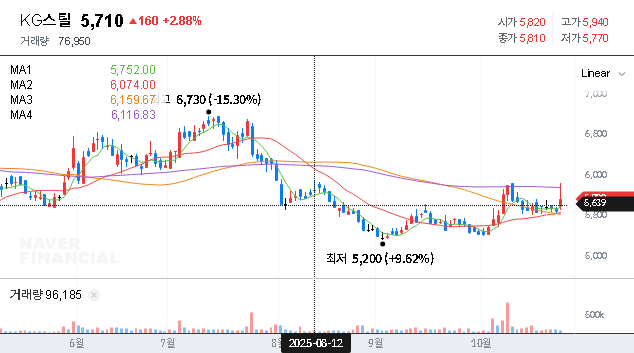
The recent KG DONGBUSTEEL Q3 2025 earnings report has sent ripples of concern through the investment community. The preliminary results revealed a significant and unexpected downturn, missing market consensus on nearly every key metric and swinging to a net loss. This performance raises critical questions about the company’s trajectory amidst a challenging global economic landscape.
This comprehensive analysis dissects the disappointing financial results, explores the fundamental drivers behind the slump, and provides essential investor guidance. Can KG DONGBUSTEEL navigate this storm and engineer a rebound? We delve into the data to offer a clear perspective on what investors should watch next.
A Breakdown of the KG DONGBUSTEEL Q3 2025 Earnings Shock
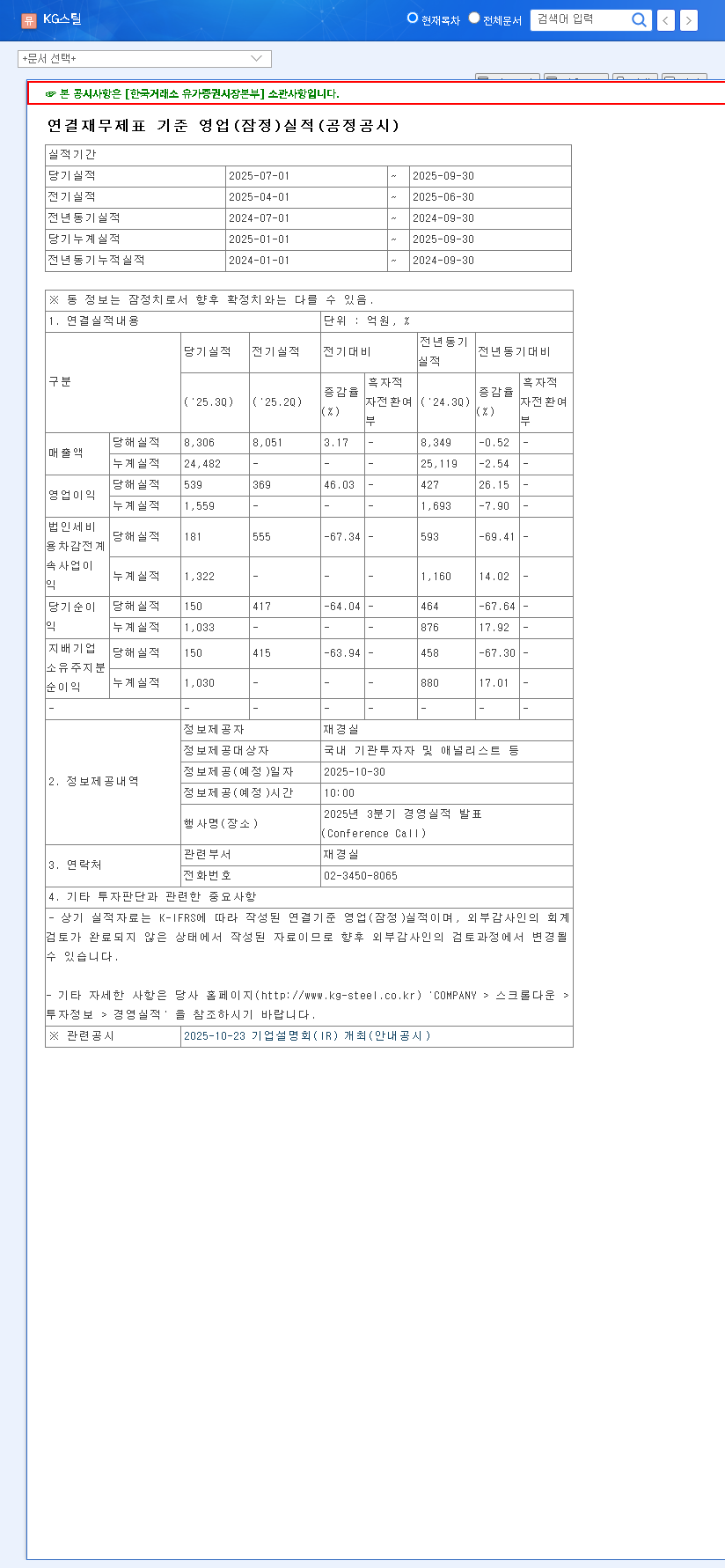
KG DONGBUSTEEL’s preliminary financial report for the third quarter of 2025 fell drastically short of market expectations, painting a stark picture of the headwinds it faces. The official numbers, which can be cross-referenced with the company’s Official Disclosure on DART, reveal a troubling trend.
- •Revenue: Reported at KRW 703.8 billion, a significant 14% below the market estimate of KRW 815.3 billion.
- •Operating Profit: Came in at KRW 22.6 billion, a staggering 44% below the consensus estimate of KRW 40.6 billion.
- •Net Profit: The company recorded a net loss of KRW -10.3 billion, a sharp reversal that raises immediate concerns about profitability and financial stability.
When compared to the prior quarter (Q2 2025) and the same period last year (Q3 2024), the decline is even more pronounced. Revenue dropped 12.6% and 15.7% respectively, but the erosion in operating profit was far more severe, highlighting a critical squeeze on margins.
The sharp turn to a net loss is a major red flag, indicating that cost pressures and revenue decline have completely eroded the company’s bottom-line profitability for the quarter.
Analyzing the Root Causes of Poor Performance
The disappointing KG DONGBUSTEEL Q3 2025 earnings are not the result of a single issue, but a confluence of intense external pressures and internal challenges. A detailed steel market analysis reveals several key factors.
1. Faltering Demand and Price Erosion
The primary culprit is the widespread global economic slowdown. As detailed by organizations like the World Steel Association, demand in key steel-consuming sectors has weakened considerably. For KG DONGBUSTEEL, this translated to sluggish orders from the automotive, construction, and home appliance industries. This weak demand created intense downward pressure on steel product prices, directly impacting the company’s top-line revenue.
2. Mounting Cost Burdens and Margin Compression
While revenue fell, costs escalated. The persistently high Won/Dollar exchange rate (averaging around KRW 1,400 in Q3) significantly inflated the cost of imported raw materials like iron ore and coking coal. Coupled with rising international energy prices, this created a perfect storm for cost management. The company was unable to pass these higher costs onto customers in a weak demand environment, leading to the severe 44% miss in operating profit.
3. Unfavorable Macroeconomic Headwinds
Beyond specific industry trends, the broader macroeconomic climate remains hostile. Persistently high interest rates have increased corporate borrowing costs and dampened investment, further stalling activity in front-line industries. Geopolitical uncertainties continue to disrupt global supply chains and fuel raw material price volatility, making long-term planning exceptionally difficult. You can explore our previous analysis of steel market trends for more context.
Future Outlook & Investor Guidance for KG DONGBUSTEEL Stock
Given these results, the short-term outlook for the KG DONGBUSTEEL stock is likely to be negative. A cautious, defensive stance is warranted. However, long-term investors should monitor several key catalysts that could signal a fundamental recovery.
- •Global Demand Recovery: The most crucial factor is a rebound in global economic activity, particularly in construction and manufacturing.
- •Cost Management & Efficiency: Watch for strategic initiatives aimed at improving production efficiency and securing more favorable raw material contracts.
- •High-Value Product Mix: Success in developing and marketing differentiated, high-value-added steel products could help insulate the company from commodity price swings.
- •Financial Hedging: Effective strategies to manage currency and interest rate risks will be vital for protecting the bottom line.
While the current situation is concerning, KG DONGBUSTEEL benefits from a stable management structure under KG Ecosolution Co., Ltd., and ongoing investments in R&D and ESG initiatives. These factors provide a foundation for long-term value creation. Investors should weigh the immediate risks against this long-term potential, making decisions based on a thorough evaluation of upcoming quarterly reports and evolving macroeconomic data.
Leave a Reply