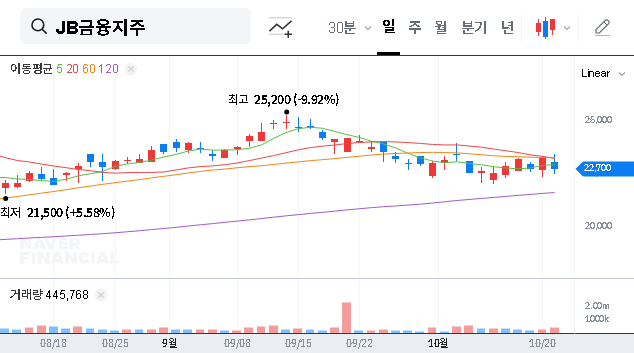
In a significant move to bolster shareholder confidence, JB Financial Group has recently announced a substantial ₩40 billion treasury share cancellation. This strategic decision sends a powerful message about the company’s robust financial health and unwavering commitment to enhancing shareholder value. For investors, this action prompts critical questions: What are the immediate and long-term effects on the stock? And how does this fit into the broader picture of the company’s fundamentals and the macroeconomic landscape?
This comprehensive investment analysis unpacks the nuances of the JB Financial Group share cancellation, evaluates its H1 2025 performance, identifies key risk factors, and provides a forward-looking perspective for potential investors. If you’re considering adding JB Financial Group stock to your portfolio, this is essential reading.
The ₩40 Billion Share Cancellation: A Signal of Strength
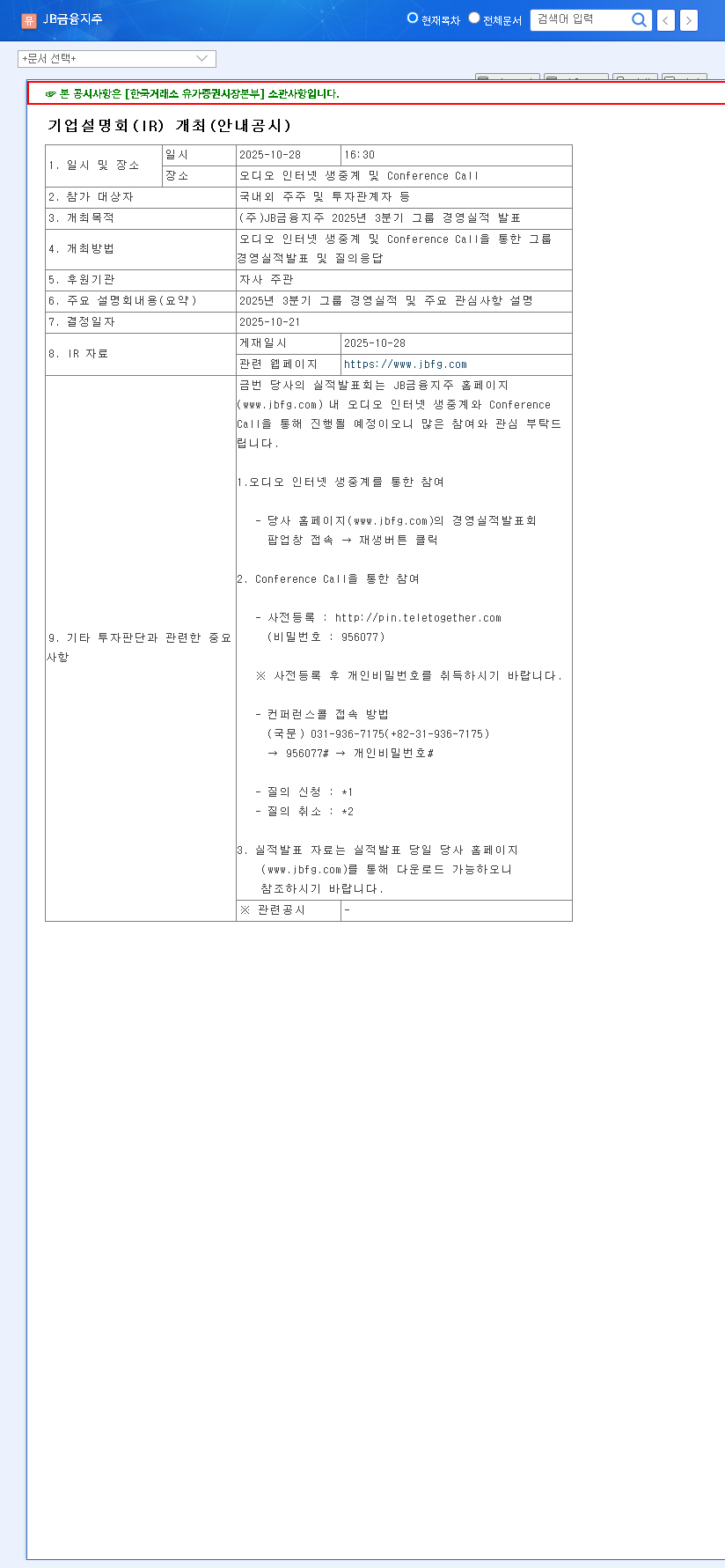
On October 28, 2025, JB Financial Group’s board approved the cancellation of 1,805,869 common treasury shares, valued at approximately ₩40 billion. This figure represents 0.94% of the company’s total market capitalization. The official details of this decision can be reviewed in the company’s public filing (Official Disclosure).
A share cancellation, or share buyback and retirement, is a direct method of returning capital to shareholders. By reducing the number of outstanding shares, the earnings attributable to each remaining share (Earnings Per Share, or EPS) increases, which can make the stock more attractive and potentially drive up its price. This action is widely seen as a bullish signal, indicating that management believes the company’s stock is undervalued and has confidence in its future earnings.
“A share cancellation of this magnitude is more than just a financial transaction; it’s a clear declaration of management’s confidence in future profitability and a tangible commitment to increasing shareholder value.”
In-Depth Fundamental Investment Analysis
Beyond the share cancellation, a thorough investment analysis of JB Financial Group requires a look at its core strengths and potential weaknesses, based on H1 2025 performance.
Strengths: A Foundation of Stability and Growth
- •Consistent Profitability: A consolidated net profit of ₩370.4 billion shows a stable earnings base, even in a challenging economic climate.
- •Industry-Leading Ratios: Return on Equity (ROE) of 13.1% and Return on Assets (ROA) of 1.11% are top-tier, showcasing superior profitability. An exceptionally low Cost-to-Income Ratio (CIR) of 35.8% highlights highly efficient operations.
- •Robust Capital Adequacy: With a BIS capital ratio of 14.36% and CET1 ratio of 12.40%, the group comfortably exceeds regulatory requirements, ensuring financial resilience.
- •Diversified Growth Engines: Strong performance from subsidiaries like JB Woori Capital, strategic overseas expansion in Cambodia and Vietnam, and a forward-thinking digital transformation strategy point to sustainable future growth. For more on this, see our analysis of emerging market banking.
Concerns & Risk Factors to Monitor
- •Gwangju Bank Performance: A 7.9% year-over-year decline in net profit suggests vulnerability to macroeconomic headwinds, particularly concerning potential non-performing loans in real estate project financing (PF).
- •Asset Quality Metrics: An uptick in Gwangju Bank’s NPL ratio and JB Woori Capital’s real estate PF delinquency rate warrants close observation as signs of potential credit risk.
- •Interest Rate Pressure: A declining Net Interest Margin (NIM) at Jeonbuk Bank could signal broader pressure on profitability for the entire banking sector as interest rates stabilize or fall.
- •Macroeconomic Headwinds: The broader economic environment, including a cooling real estate market and the rise of FinTech competition, presents ongoing challenges. Authoritative sources like Reuters provide regular updates on these global financial trends.
Overall Assessment and Investment Outlook
The JB Financial Group share cancellation is an unequivocally positive development for current and prospective shareholders. It underscores a strong balance sheet and a management team focused on delivering value. This action is likely to provide a supportive tailwind for the stock price in the short to medium term.
However, long-term shareholder value is ultimately driven by fundamental performance. Investors must weigh the positive signal of the buyback against the existing challenges. The company’s ability to navigate asset quality concerns, adapt to the interest rate environment, and successfully execute its digital and overseas strategies will be the true determinant of its long-term success.
In conclusion, while the share cancellation makes JB Financial Group an attractive proposition, prudent investors should maintain a balanced view. It is crucial to monitor the identified risk factors and the company’s strategic responses continuously.
Key Takeaways for Investors
- •Positive Signal: View the share cancellation as a strong vote of confidence from management in the company’s intrinsic value.
- •Monitor Fundamentals: Pay close attention to quarterly reports for trends in asset quality (NPL ratios), net interest margins, and the performance of key subsidiaries.
- •Long-Term Vision: Evaluate the progress of digital transformation and international expansion as key drivers of future growth beyond the traditional banking model.
Disclaimer: This article is for informational purposes only and does not constitute investment advice. All investment decisions should be made with the consultation of a qualified financial professional.
Leave a Reply