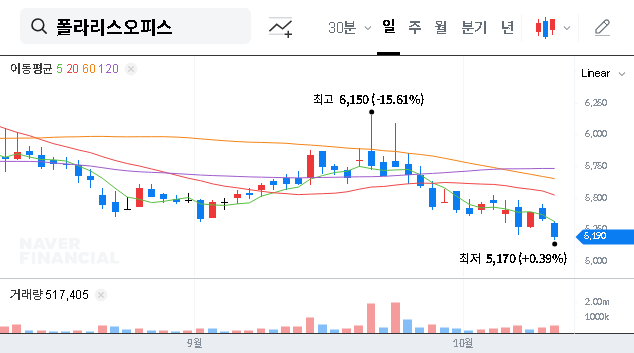
A recent disclosure from Polaris Office Corp. has sent ripples through the investment community. While the CEO’s overall shareholding remains unchanged, a significant corporate reshuffling has occurred: a Polaris Office Corp. special related party change. This move saw Polaris SeWon Co., Ltd. exit the picture, replaced by the intriguing addition of Handysoft Co., Ltd. For investors, this isn’t just a trivial administrative update; it’s a potential signal of a new strategic direction, particularly in the company’s ambitious push into AI-driven solutions. This analysis will dissect the official disclosure, evaluate the company’s fundamentals, and explore the potential synergy with Handysoft to provide a clear investment outlook.
We will explore what this structural shift means for the Polaris Office stock forecast and whether the new alignment can genuinely fuel its long-term growth engines. Is this the catalyst for a new era of innovation, or simply a lateral move with limited impact?
Deconstructing the Disclosure: The Core of the Change
On October 24, 2025, a large shareholding status report was filed, detailing a pivotal adjustment within the holdings of CEO Jo Sung-woo. The key takeaway is not the quantity of shares but the identity of the holder. You can view the full details in the Official Disclosure (Source: DART).
The Key Transaction Details
- •Total Shareholding: Remains constant at a stable 28.17%, ensuring management control.
- •Party Removed: Polaris SeWon Co., Ltd. sold 1,680,414 common shares, resolving its status as a special related party.
- •Party Added: Handysoft Co., Ltd. acquired the exact same number of shares (1,680,414), becoming a new special related party.
This one-for-one swap is a calculated maneuver. It suggests a strategic pivot, ending a previous cooperative relationship with Polaris SeWon and initiating a new, potentially more synergistic alliance with Handysoft. For investors, this is the central piece of the puzzle.
This isn’t a simple change in name on a shareholder registry. It’s a clear signal of strategic realignment, pointing towards a future where IoT and AI convergence could become central to Polaris Office Corp.’s growth narrative.
Evaluating the New Partner: What is Handysoft?
To understand the impact of the Polaris Office Corp. special related party change, we must first understand Handysoft. Handysoft is a well-established player in the tech industry, specializing in two key areas:
- •Internet of Things (IoT): Developing technologies that connect physical devices to the internet for data exchange and control.
- •Intelligent Building Systems (IBS): Creating smart infrastructure for buildings that automates controls for lighting, security, and HVAC.
The Potential for AI-Driven Synergy
The strategic fit becomes immediately apparent. Polaris Office is aggressively expanding its AI-powered software and collaboration platforms. By partnering with Handysoft, Polaris could integrate its AI capabilities with real-world physical systems. Imagine Polaris’s AI collaboration tools managing smart office environments, or its software platform analyzing data from a network of IoT devices. This Handysoft synergy could unlock new B2B markets and create a powerful, integrated product ecosystem that competitors would struggle to replicate.
Fundamental Analysis of Polaris Office Corp.
While the new partnership is exciting, a sound investment decision requires a look at the company’s core health. Polaris Office Corp. operates a diversified portfolio, which presents both strengths and weaknesses.
- •Core Software (8.1% Revenue): The AI-enabled office suite and SaaS model is the key future growth driver.
- •Stable Cash Cows (28.7% Auto Parts, 31.3% Chemicals): These legacy businesses provide stable revenue and high operating margins, funding the innovation in other areas.
- •Developing Areas (17.2% API/CDMO, 14.5% AI/F&C): The AI Convergence unit is currently a cost center, but holds immense potential. The pharmaceutical business provides further diversification.
Financially, the company has improved its balance sheet, reducing its debt-to-equity ratio to a healthy 16.08%. However, while revenue is up 27.6% year-on-year, operating profit has decreased, primarily due to investments in the AI division. This is a classic growth-phase scenario: sacrificing short-term profit for long-term market capture. As noted by industry analysts at Bloomberg, macroeconomic factors like interest rates and currency volatility remain a risk for its export-heavy segments.
Investor Outlook: What This Means for Your Portfolio
The Polaris Office Corp. special related party change should be viewed as a mid-to-long-term strategic indicator rather than a short-term stock price catalyst.
Investment Strategy: Key Monitor Points
- •Watch for Concrete Plans: The market will be looking for specific announcements about joint projects between Polaris Office and Handysoft. Tangible plans will be a strong positive signal.
- •Monitor AI Division Profitability: Keep a close eye on quarterly earnings reports. A clear path to profitability for the AI Convergence Business Unit will validate the company’s strategy. You can learn more about this sector in our deep dive into AI stocks.
- •Assess Macroeconomic Impact: Pay attention to how fluctuations in exchange rates and raw material costs affect the profitability of the company’s non-software divisions.
In conclusion, this strategic shift is a compelling development for Polaris Office Corp. It reinforces the company’s commitment to becoming an AI-centric powerhouse. While risks related to execution and short-term profitability remain, the potential long-term reward from a successful synergy with Handysoft is significant. Investors with a mid-to-long-term horizon should view this change as a positive step in the company’s evolution, warranting a closer watch on future announcements and performance metrics.
Leave a Reply