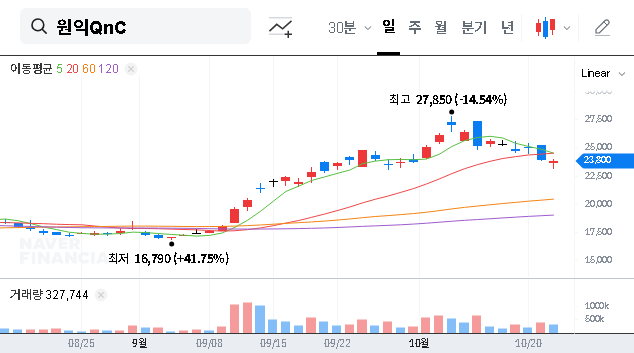
WONIK QnC Capital Increase: Growth Catalyst or Investor Risk?
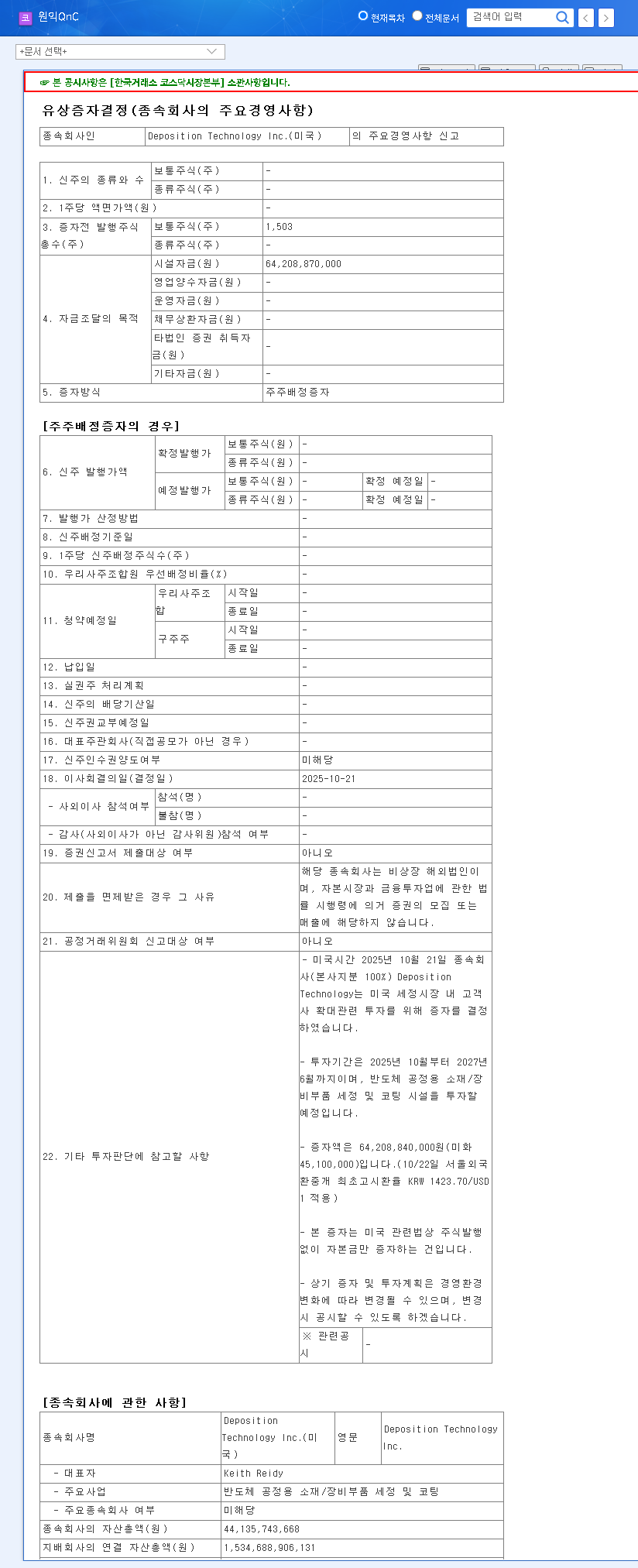
The recent announcement of the WONIK QnC capital increase has sent ripples through the investment community. On October 22, 2025, the company unveiled a plan to raise significant funds for its U.S. subsidiary, Deposition Technology Inc. (DTI). This strategic move is positioned as a powerful catalyst for future growth, aimed at expanding production capacity in the competitive semiconductor components market. However, for existing shareholders, the news is a double-edged sword, raising immediate and valid concerns about potential share dilution risk. This in-depth analysis will dissect the key details, weigh the potential opportunities against the inherent risks, and provide a clear action plan for investors navigating this pivotal moment for WONIK QnC stock.
While the capital injection into DTI promises long-term growth, investors must carefully evaluate the short-term impact of share value dilution and information uncertainty surrounding the deal’s structure.
Deconstructing the Announcement: Key Details
WONIK QnC has officially decided on a capital increase via a shareholder allotment method, targeting 64.2 billion KRW. These funds are earmarked exclusively for a significant DTI facility investment. For context, DTI is a crucial subsidiary specializing in deposition technology vital for semiconductor manufacturing, making this a strategic, not just financial, maneuver. Here are the core facts from the official filing:
- •Company: WONIK QnC CORPORATION (Market Cap: ~625.7B KRW)
- •Event: Capital Increase via Shareholder Allotment
- •Fundraising Goal: 64.2 Billion KRW (approx. 10.3% of market cap)
- •Purpose: Facility investment funds for Deposition Technology Inc. (DTI)
- •Source: Official Disclosure (DART)
The Strategic Imperative vs. The Financial Risk
Every major corporate action carries a balance of opportunity and risk. The WONIK QnC capital increase is a textbook example of this dynamic. Let’s explore both sides of the coin.
The Upside: Seizing Growth Opportunities
The primary motivation is clear: aggressive growth. By channeling funds into its DTI subsidiary, WONIK QnC aims to achieve several long-term objectives. Enhanced production capacity allows DTI to meet rising global demand for semiconductor components, potentially capturing greater market share. These funds can also fuel R&D, leading to technological advancements that solidify DTI’s competitive edge. A stronger, more profitable subsidiary ultimately translates to improved consolidated performance and increased enterprise value for the parent company, WONIK QnC.
The Downside: The Core Risk of Share Dilution
The most significant concern for current investors is the immediate share dilution risk. A capital increase involves issuing new shares, which increases the total number of outstanding shares. Consequently, the ownership stake and earnings per share for existing shareholders are reduced. A fundraising round amounting to 10.3% of the company’s market capitalization is substantial and can exert downward pressure on the stock price. Compounding this risk is the uncertainty from the initial report, which cited a ‘0.0 shares/per share’ allotment ratio. This lack of clarity creates confusion and can sour market sentiment until precise details are provided.
A Proactive Investor’s Action Plan
Given the mix of long-term potential and short-term uncertainty, a cautious and informed approach is paramount. Investors should focus on gathering more information and analyzing the following key areas:
- •Demand Clarity on Allotment: The top priority is seeking clarification on the exact terms of the shareholder allotment. The ‘0.0’ figure is untenable and must be explained through subsequent company announcements.
- •Scrutinize the Fund Usage Plan: Look for detailed breakdowns of how the 64.2 billion KRW will be deployed. Vague plans are a red flag; concrete details on equipment, technology, and timelines are essential. It’s important to learn how to analyze corporate financial statements for such details.
- •Evaluate DTI’s Market Position: Research DTI’s specific role in the semiconductor supply chain. Is its technology a leader? Who are its main competitors? The success of this investment hinges on DTI’s ability to execute.
- •Monitor Market and Analyst Reactions: Keep an eye on reports from financial analysts and the broader market reaction as more information becomes available. Understanding the institutional perspective provides valuable context. For more on the core concepts at play, resources like Investopedia offer excellent explanations on topics like share dilution.
Frequently Asked Questions
What is the primary goal of the WONIK QnC capital increase?
The main objective is to secure 64.2 billion KRW to fund facility expansion and technology enhancement for its US-based subsidiary, DTI. This is a strategic investment intended to bolster production capacity and secure long-term growth in the semiconductor components market.
How might this capital increase affect WONIK QnC’s stock price?
In the short term, the stock price may face downward pressure due to concerns about share dilution risk. However, if the market believes the investment in DTI will generate significant future returns that outweigh the dilution, the stock could see positive momentum in the long term as the growth story becomes reality.
Ultimately, the WONIK QnC capital increase is a calculated risk. The company is trading short-term shareholder value dilution for a chance at significant, long-term strategic growth. For investors, this requires patience, diligence, and a close watch on forthcoming details to make an informed decision.
Leave a Reply